Wang Tao of DJI: A Reconciliation with the World
Ten years ago, Wang Tao left a quote in an interview with China Entrepreneur magazine that was later repeatedly cited by various media outlets: "The world is incredibly stupid."
Those years were probably the noisiest in Chinese business. Everyone was eager to step into the spotlight, busy grabbing the microphone and telling stories. Only Wang Tao chose to remain silent after that statement—no speeches, no interviews, and hardly any public statements.
As a result, the outside world's understanding of him was frozen at that moment. Those words were like a hard - to - remove label, stuck on him and on DJI. They brought both admiration and one - sided interpretations.
This year marks the 20th anniversary of DJI's founding and the moment when the company's sales exceeded 100 billion. At this time, Wang Tao, who has always been "mysterious," actively broke his past silence.
Wang Tao said that his silence in the past decade was because he had been going through a transformation, like a soft - shelled crab that hadn't finished molting. Recently, he "molted" unconsciously and then realized it was time to refresh the outside world's perception.
He chose an honest conversation to lay out all his obsessions, misjudgments, epiphanies, and thoughts over the past 20 years.
This is not about the success story of a company. It's more like looking back at how a person gradually understood the business philosophy of an enterprise over a long period and transformed into a more mature and complete self.
Realize Talent, Bear the Cost
Often, the boundaries of an entrepreneur's cognition are also the boundaries of the enterprise.
If an entrepreneur's mind is chaotic and anxious, the organization's strategy will inevitably waver and lack a long - term main line. If an entrepreneur is arrogant and easily falls into unconscious self - satisfaction, the organization is likely to fall into bureaucracy and formalism.
Before "molting," Wang Tao was a paranoid genius.
He had an innate intuition and pure love for products and technology, as well as the arrogance and rebelliousness often associated with geniuses.
His rebellious and paranoid side made him indifferent to worldly rules such as exams and studying in his early years. When starting his business, he ignored his tutor's advice and bet on helicopters, which he had loved since childhood.
His genius side made DJI invincible in "creating things."
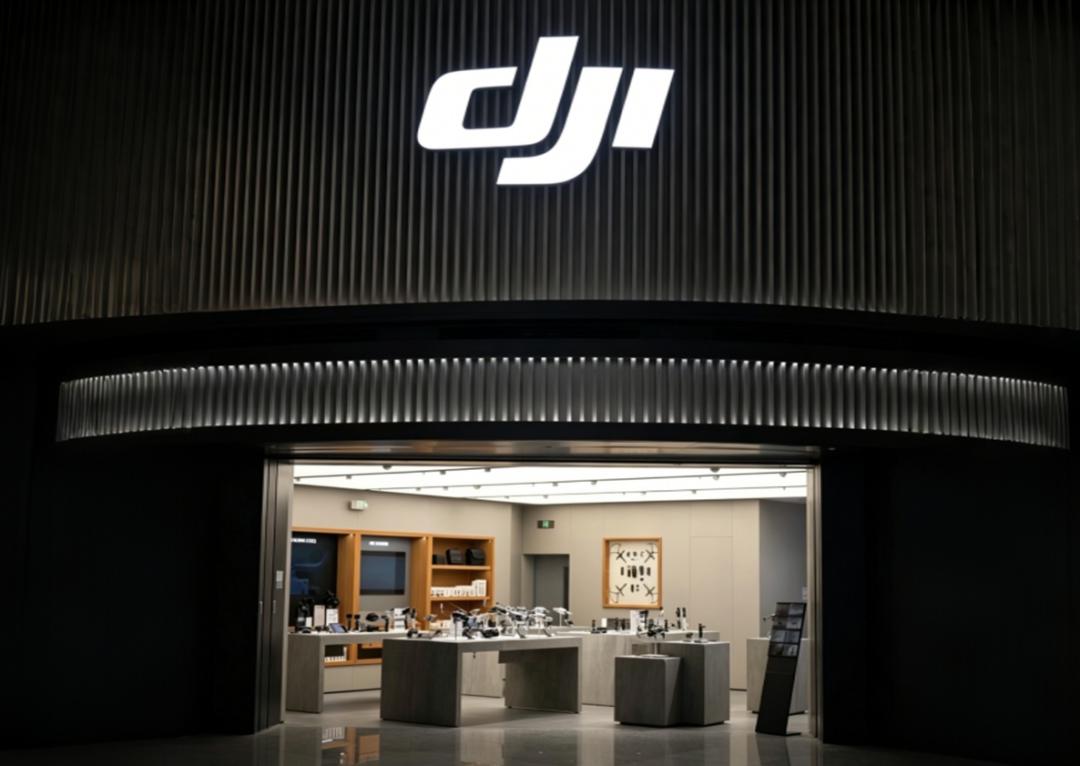
In the early stage, while his peers were still deep in thought, Wang Tao had already led DJI on a wild run along the product and technology path, planting the flag of Chinese innovation at the top of the global technology industry.
It's worth mentioning that this achievement, which is worthy of being written into the history of Chinese hardware innovation, didn't seem difficult to him.
And this is exactly the problem—everything came too smoothly.
Good times are often a "curse" for geniuses.
The reason is that whether facing success or failure, people always instinctively look for attributions that fit their self - narrative.
Geniuses can always achieve things that most people can't through their talent and judgment. Each positive feedback reinforces their self - narrative. And a genius founder not only has to fight against this cognitive inertia but also against the information cocoon that naturally forms within the organization.
Ultimately, this closed - loop may turn into a cage, making people gradually lose their perception of the real world. Both Steve Jobs in the early days and Huang Zhang, known as the "Chinese Steve Jobs," more or less confirmed this.
Therefore, in 2024, when Jensen Huang, the CEO of NVIDIA, returned to his alma mater, Stanford University, to give a speech, he gave the following success advice to the geniuses in the audience: "I hope everyone here has the opportunity to experience a lot of pain and suffering."
Looking back at Wang Tao's words "The world is incredibly stupid," it's like Jack standing on the bow of the Titanic, shouting "I'm the king of the world" facing the sea—believing that he could conquer the world, not caring about redundant rules, and not accommodating the mediocrity and roughness of reality.
He used this logic to drive himself and polish products, and unconsciously, he used it to measure the whole world.
However, Jack standing against the wind couldn't predict the iceberg hidden beneath the sea. Similarly, his immature cognition eventually touched the boundaries of reality.
At that time, DJI was full of geniuses. After a series of victories, they believed that "We can do anything," and these victories also covered up hidden problems such as ego conflicts and management deficiencies.
This is actually a common problem for all enterprises—growth is the best "painkiller." When the business growth rate far exceeds the organizational growth rate, the risk awareness will naturally fade. It's not until the tide recedes and problems emerge that people will find that the long - ignored organizational and management shortcomings have already led to a crisis, and the marks are so deep.
Wang Tao admitted: "We were like herbaceous plants with lush leaves, growing wildly. Everyone wanted to be the shiny leaves, and no one wanted to be the silent roots and stems. When the number and area of the leaves exceeded the load of the roots and stems, collapse was inevitable."
This even included himself. Wang Tao revealed in an interview that at that time, he was addicted to making products and almost let the "wild growth" within the company go unchecked.
As Peter Drucker said, management is the organ of an organization. During this wild run, DJI's management system construction couldn't keep up with its rapid expansion, so it couldn't avoid the cost that most growing enterprises would experience.
At that time, DJI's procurement, R & D, and sales departments each formed independent "kingdoms." Corruption was serious, and it could even be said that "the rites and music were in ruins." Wang Tao, who once "thought the world was too stupid," eventually became part of this huge makeshift organization.
Fortunately, this growing pain didn't capsize the giant ship of DJI. Instead, it was like a basin of cold water that extinguished Wang Tao's former arrogance and pride and became the origin of his subsequent awakening and transformation.
Wang Tao's Transformation: From "Creator" to "Builder"
Around 2017, DJI was already an unshakable hegemon in the global consumer - grade drone market. Almost all of Wang Tao's goals about "winning" at the beginning of his entrepreneurship had been exceeded.
However, standing on the construction site of the newly - started "Sky City," Wang Tao, who had built the drone empire with his own hands, vaguely felt that "Something is wrong." The company was advancing by leaps and bounds, but he felt that the world was unreal, that he didn't deserve his current achievements. He didn't know what an ideal company should be like, and he didn't know how a person should live.
This confusion might be the beginning of his awakening and evolution.
The philosopher Rupert Spira once pointed out that in the comfort zone within the cognitive boundary, the ego will feel extremely safe. But when one surpasses and breaks through the cognition, the ego will feel disintegration and extinction, thus generating strong internal doubts and resistance.
Therefore, people often say that the size of the ego is inversely proportional to the amount of knowledge. The more comprehensive and profound one's understanding of the world is, the more one will realize one's own insignificance.
Wang Tao at that time seemed to be on the verge of such a cognitive breakthrough.
Before that, he once regarded himself as a genius. But then he found that many seemingly great innovations were essentially a form of plagiarism. There was no genius who could create something out of nothing. There were only "porters" who integrated, combined, and engineered existing technologies in the world.
The transformation of this narrative from "heroes create the times" to "the times create heroes" is not a negation of the past but a more profound and sober understanding of things.
The "wild growth" of the company made him see another cruel truth. Without necessary supervision, rules, and good cultural guidance, any genius team will fall apart in the "ruins of rites and music."
Therefore, this struggle is not only a spiritual practice of smashing one's own ego but also an ultimate leap that a genius founder must complete, from being a "creator" to a "builder."
Driven by this, Wang Tao returned to the road from the mountaintop to face his "incompetence"—starting from scratch to climb the peak of management.

He spent a full eight years on this learning.
He dissected the company he had brought up with his own hands bit by bit, just like he used to disassemble helicopter models in his mind when he was a child, taking out goals, processes, systems, etc., and feeling his way forward.
The outside world once interpreted some of the adjustments during this period as Wang Tao's centralization of power and dictatorship. But in Wang Tao's eyes, he doesn't like power and doesn't enjoy domination. "If I 'need power,' it's because I want to do this thing well, so I need it."
Even so, he still admitted that management is easier said than done.
In his eyes, management is ten times more difficult than making products.
If the young Wang Tao 20 years ago hand - made hardware during his graduation project, etched PCBs by himself, and was eager to make the helicopter fly stably on the day of the defense, then after experiencing the growing pain of the organization, he had to admit that stably operating a company is much more difficult than making a machine not fall.
"Making products is 1 point in difficulty for me, while management is about 10 points. Product ability was something I naturally acquired in my twenties, and I basically reached the peak as soon as I started. But for management, we spent half of our efforts to make up for it."
Behind this huge difference is probably the divergence of two worldviews.
The world of products is closed and certain, and there are often solutions, even optimal solutions. As long as one is willing to persevere and pursue perfection, even through tens of thousands of "drone crashes" to attribute and iterate all out - of - control scenarios, one can always get things right.
The world of management is gray, with no once - and - for - all solutions, only trade - offs and balances of phased and multiple goals.
A hundred years ago, Taylor used the "scientific management theory" to push the efficiency of the factory assembly line to the peak. However, due to extreme exploitation, the worker turnover rate soared, ultimately creating a labor crisis.
The reason is that an organization is not a machine but a pendulum swinging between chaos and order. And the basic unit that affects everything is precisely individual people with independent wills and flesh and blood.
This is why most excellent organizations regard "putting people first" as the core principle of organizational construction. Only by finding people who are in sync with the organization and fit each other can friction and conflicts be reduced and resolved.
Wang Tao at that time didn't understand human nature or management and couldn't understand this point. He recruited many inappropriate people. Facing organizational disorder, he only wanted to be the "Monkey King" and beat the "demons and ghosts" to death. He couldn't tolerate even a grain of sand in his eyes, and finally made everyone feel insecure, accumulating a lot of emotions inside and outside the organization.
After years of management practice, he began to understand that the growing pain back then was not entirely the problem of people.
"If you give others a lot of temptations and opportunities but require them not to be tempted at all, it's against human nature. When farmers are threshing, birds fly down to peck a few mouthfuls. Birds don't even have the concept of 'stealing.'"
Now, he has gradually learned to coexist with the weaknesses and fragility of human nature and the grayness of management. Even when he sees "demons and ghosts," he first preaches to them.
On the other hand, he has also developed his own management philosophy: "I now regard the company as a system with continuous entropy increase and management as a process of continuous entropy reduction."
From this perspective, Jensen Huang's insistence on an extremely flat organizational structure, where dozens of senior executives report directly to him, may also be an embodiment of forcibly reducing entropy with personal will.
The first cosmic velocity in the physical sense is the minimum velocity for an object to overcome gravity and fly stably around the earth. And what Wang Tao calls the "first cosmic velocity of management" depends on organizational ability and is the critical point for a company to move from being ruled by people to self - driving.
He sets this threshold at 70 points. Once crossed, the organization will enter the self - driving track, not only "producing" senior managers but also allowing the CEO to shed the management burden and focus on the strategic direction and cultural foundation, which has a similar meaning to the transformation from "telling the time" to "building the clock" in Built to Last.
After eight years, DJI's organizational ability has gradually increased from 30 points to 65 points.
It's only one step away from getting rid of gravity, but the closer it gets to that threshold, the more ability and cost are required, which are increasing exponentially.
In Wang Tao's view, before the company reaches the "first cosmic velocity of management," the main source of entropy reduction is still the top leader. For DJI, that's himself.
This time, Wang Tao no longer tries to "resist" but makes himself and the company move in the same direction.
Let Go of the Ego, and You'll Be Free
From Steve Jobs and Elon Musk to Ren Zhengfei and Zhang Yiming, the innate endowments of founders mainly determine the starting height of an enterprise. However, continuous self - iteration is the core variable that determines how far an enterprise can go and whether it can evolve.
So - called self - iteration is not just about exploring better organizational forms or management arts but about self - disenchantment and self - transcendence—having a calm farewell to the immature self.
However, most founders can't reach this stage in their entire lives.
After all, "dissecting" oneself is against human nature. It requires breaking the authority obtained through countless successes, actively admitting one's own defects, ignorance, and limitations, and also tearing down the cognitive wall built by the ego that once sheltered oneself from the wind and rain.
But Wang Tao did it.
What drove him to complete this transformation was both the growing pain of DJI and his long - standing pursuit of the inner world.
According to Wang Tao's recollection, his epiphany came from a conversation between Zigong and Confucius. Zigong said that he could be "poor without being obsequious and rich without being arrogant," but Confucius told him that a higher realm was "not even having such thoughts."
This made him realize that the relationship between people can actually go beyond models such as wealth and interest exchange, that is, to jointly seek the truth.
After he understood the essence of business and organization and his inner world became more mature and complete, he no longer needed the ego to arm himself and felt more free.
In Wang Tao's view, in the first half of his life, he was driven by the ego of "I want to be the world's first" and "I want to win." After gradually "molting," he found that these young people's egos were actually not valuable. "The 'I' in 'I create, I produce' is a poison."
He also added the second half of the sentence to his shocking words ten years ago: "The world is incredibly stupid, and so am I."
Zhang Yiming once said that the opposite of the ego is the pattern.
Wang Tao used to understand competition almost entirely in terms of "winning," which made him say the harsh words of "not letting the opponent make money." Now, despite the complex public opinions outside, he still focuses on himself, saying that the competition is the competition, and one shouldn't trip others up.
The contrast between before and now is essentially an upgrade of the competition concept—from fighting to the death in a two - dimensional plane to growing upwards in a three - dimensional space and surpassing the past self.
Previously, when an employee left the company, Wang Tao's first reaction was to "prevent, block, and resist." Now, he has gradually realized that talents are never the