Next, Apple will have as many iPhones as Xiaomi has mobile phones.
For a long time, the iPhone has been a very streamlined product line. Apple releases flagship products every September in a clear and restrained manner, making profits through high margins. In contrast, domestic mobile phone brands like Xiaomi adopt a multi - product strategy, competing with the iPhone and targeting markets not covered by Apple.
However, starting next year, the number of new iPhones will be the same as that of Xiaomi's main brand, covering price ranges from 3,000 yuan to 15,000 yuan.
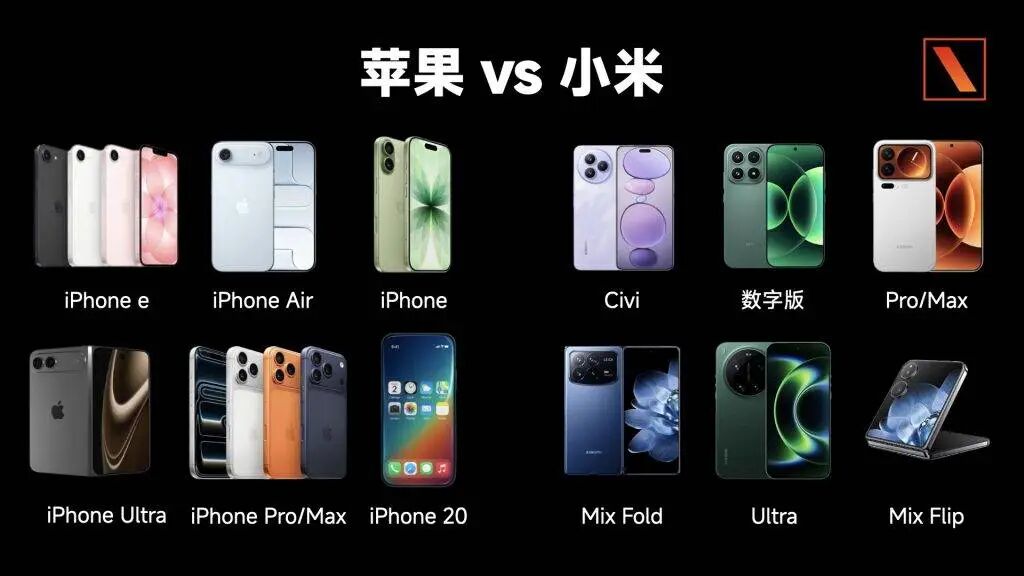
Finally, Apple is no longer satisfied with launching products only once a year. They want to turn the iPhone into a new business that operates throughout the year, stimulates consumption all year round, and allows for price adjustments at any time.
Seven iPhones a year, covering all price ranges
According to Bloomberg, from the second half of this year to the first half of next year, Apple is expected to launch six new iPhones at the autumn and spring product launches:
Autumn 2026 product launch: iPhone 18 Pro, iPhone 18 Pro Max, Foldable iPhone Ultra
Spring 2027 product launch: iPhone 18e, iPhone Air 2, iPhone 18.
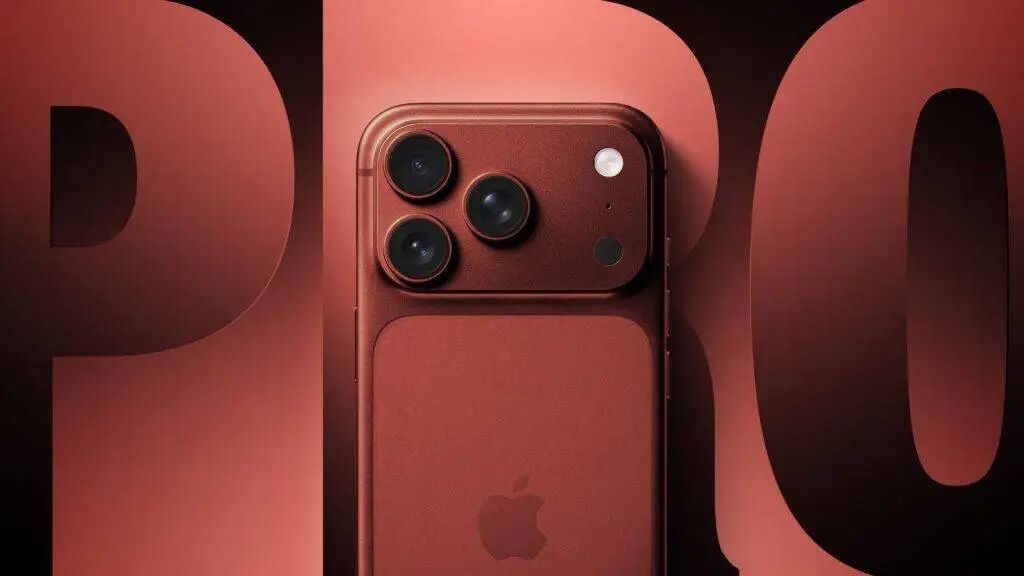
The iPhone 17 Pro series was redesigned inside and out last year, so there will be no changes in the appearance of the iPhone 18 Pro series this year. The main upgrades are as follows:
- The Dynamic Island area will be reduced by 35% and may become a punch - hole in the upper - left corner.
- A20 Pro chip with 2nm process.
- The imaging system is equipped with a variable aperture, and the aperture of the telephoto lens is increased.
- The camera control buttons are simplified, the capacitive touch function is completely removed, and only the most basic pressure - sensing function is retained.
- A new "wine red" color scheme.
- The battery capacity is expected to be increased to 5100mAh.
However, we all know that the real star this year will be Apple's first foldable iPhone, which may be officially named "iPhone Ultra".
This week, Nikkei reported that the foldable iPhone has entered the trial - production stage but has encountered setbacks, and its shipment may be postponed. Bloomberg, however, provides different information: Although the complexity of the new display and the phone may lead to a shortage of in - stock supply in the weeks after the launch of the foldable iPhone, Apple still plans to release it after the iPhone 18 Pro series goes on the market.
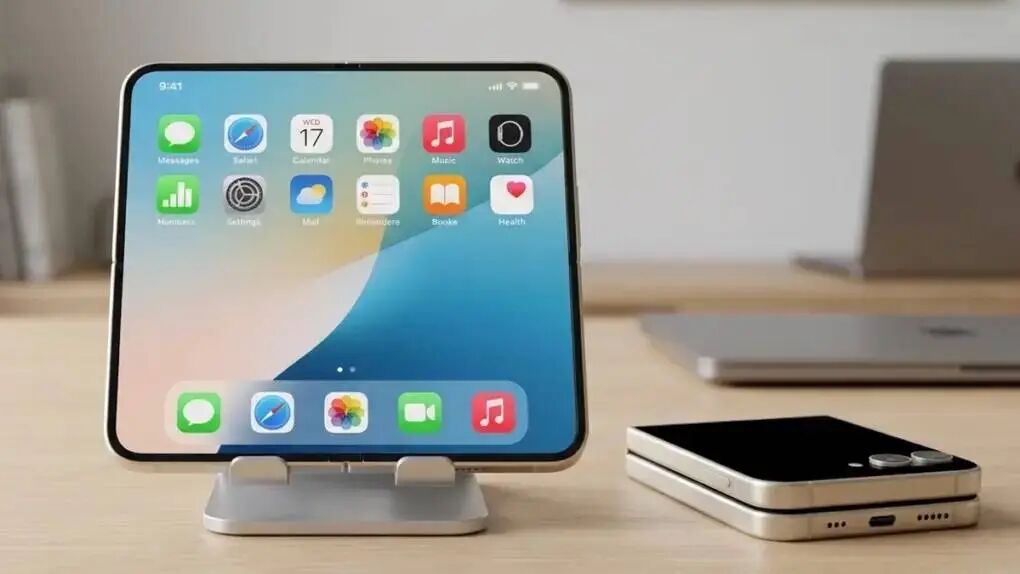
Insiders revealed that Apple engineers have solved two major pain points: the quality of the foldable screen and the durability of the phone. The foldable iPhone is expected to achieve a "truly crease - free" design. To keep the thickness of the unfolded state within 5 millimeters, Apple has abandoned the Face ID module and the telephoto lens and adopted a Touch ID on the power button.
Different from foldable phones on the market, the outer screen of the foldable iPhone is 5.5 inches, with a nearly square ratio, and when unfolded, it becomes a 7.8 - inch landscape - mode display, more like a horizontal iPad Mini. Apple plans to adjust iOS 27 to make the apps on the foldable iPhone similar to those on the iPad.
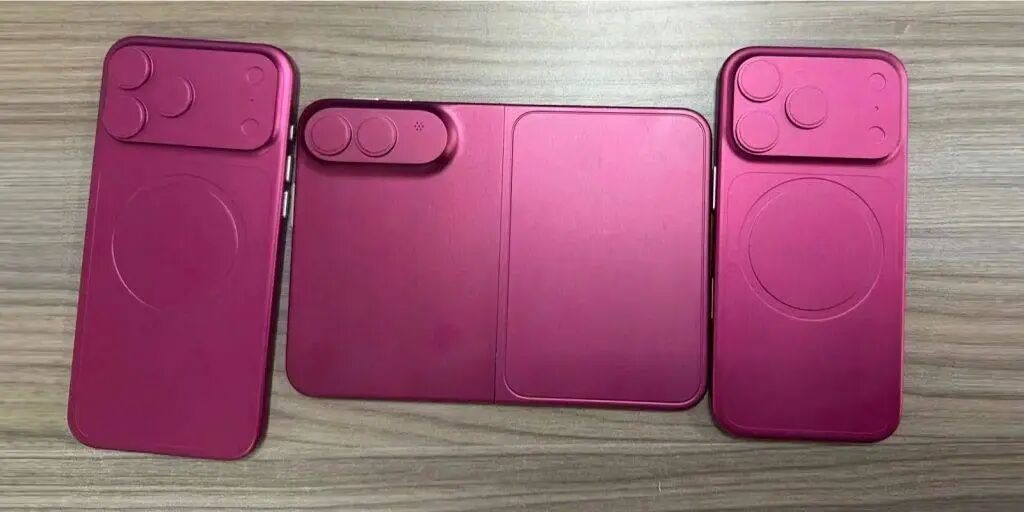
Models of iPhone 18 Pro/Max and the foldable iPhone
It is certain that the foldable iPhone will not be cheap. Its starting price may exceed $2,000, equivalent to about 13,000 yuan.
The iPhone 18, originally scheduled to be launched at this year's autumn product launch, will be postponed to next spring and will be released together with the iPhone 18e.
This change clearly indicates that Apple wants to further differentiate the iPhone 18 from the iPhone Pro in terms of positioning. According to rumors, the updates to the iPhone 18 will be very minor, with almost no changes in the appearance design. The updates will mainly focus on internal configurations such as the A20 chip and 12GB of RAM.
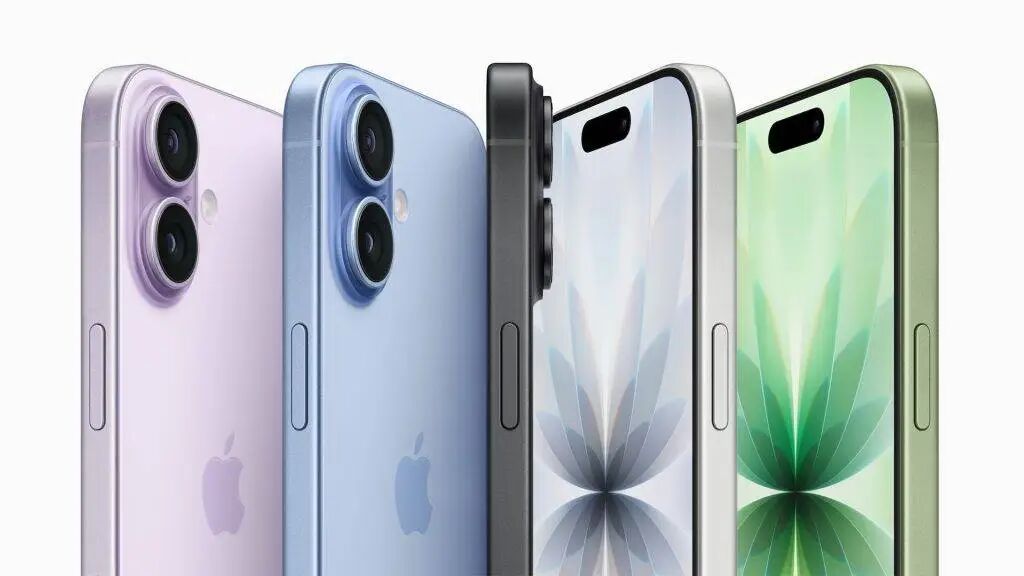
More interestingly, the iPhone Air, which was thought to have been cancelled, will also have an iteration next year. According to The Information, Apple is redesigning the iPhone Air. The key update is the addition of a second rear - facing camera, most likely a 48 - megapixel ultra - wide - angle camera. While improving the configuration, Apple will also further reduce the weight of the phone, increase the battery capacity, and even add a vapor chamber similar to that of the iPhone 17 Pro.
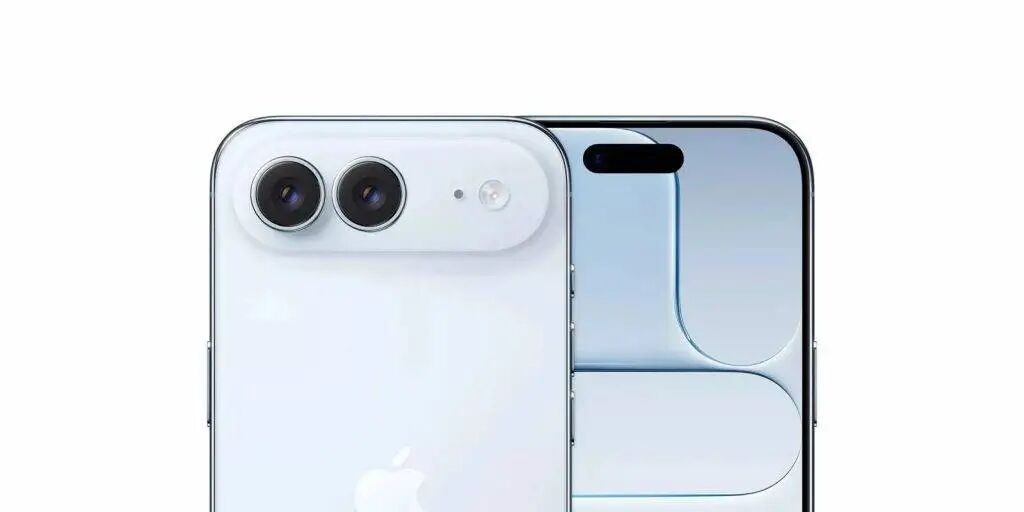
Concept image of iPhone Air 2
Since the internal space of the current iPhone Air is already utilized to the maximum, it is difficult to accommodate a second camera. Apple will almost have to redesign the internal structure of the iPhone Air 2 from scratch. Apple will also use a thinner Face ID module to further save space.
In short, starting from the iPhone 18 series, Apple will release six iPhones: iPhone Ultra, iPhone 18 Pro Max, iPhone 18 Pro, iPhone Air 2, iPhone 18, and iPhone 18e.
But that's not all. 2027 will be the 20th anniversary of the iPhone's release. Apple plans to launch a commemorative iPhone with an unprecedented curved - glass design.
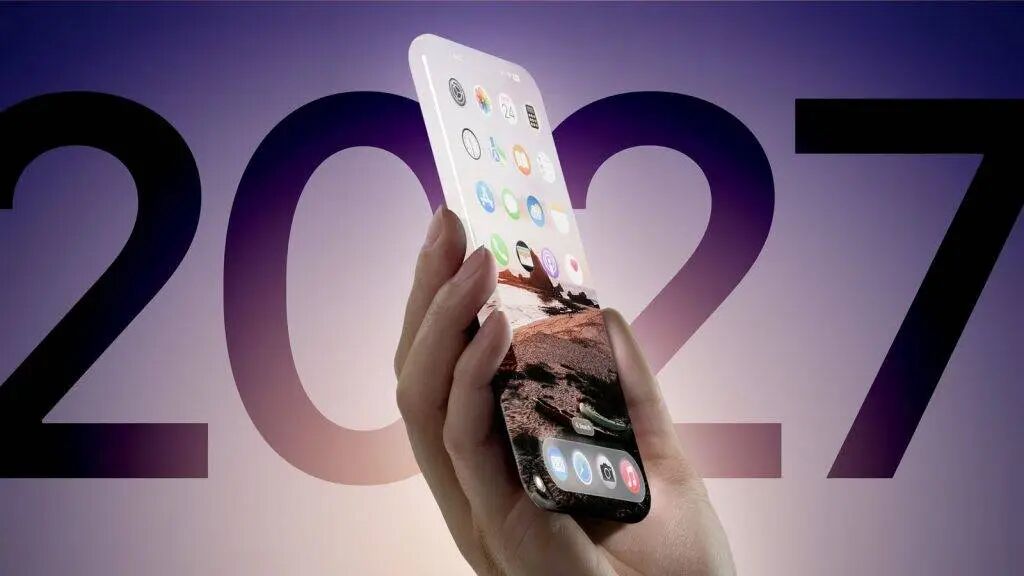
This device, codenamed V72 internally, will be an "all - glass" iPhone. The glass on the screen and the back will be curved along the four edges, completely eliminating the black borders of the screen. It is not yet clear whether the screen itself will be curved.
The middle frame of the phone will be compressed into an extremely narrow metal strip located in the middle of the current iPhone, used to place the phone's buttons.
If the foldable iPhone is also updated annually, Apple will release seven iPhones next year.
According to Bloomberg, John Ternus, the then - head of hardware engineering and the "top successor" to Apple's CEO, led this major change to the iPhone. This strategy is known as the "three - year plan", starting with the major upgrade of the iPhone 17 Pro and the release of the iPhone Air last year, followed by the launch of the foldable iPhone this year, and ending with the 20th - anniversary iPhone next year.
By launching more SKUs, the iPhone is evolving from a single phone to a family of phones covering price ranges from 3,000 to 20,000 yuan, catering to consumers from entry - level to ultra - high - end.
From one iPhone per year 10 years ago, to the dual - version iPhone 6 and iPhone 6 Plus, to the iPhone SE entering the entry - level market, and then to four iPhones being updated annually in 2020, Apple has finally adopted the "multi - model" strategy, aiming to cover all price segments above 3,000 yuan. In the future, there will be an iPhone available for selection every approximately 2,000 yuan:
- 3,000 - 4,000 yuan range: iPhone e
- 5,000 - 6,000 yuan range: Standard iPhone
- 7,000 - 8,000 yuan range: iPhone Air
- 8,000 - 9,000 yuan range: iPhone Pro
- 9,000 - 10,000 yuan range: iPhone Pro Max
- 10,000 - 20,000 yuan range: 20th - anniversary iPhone, iPhone Ultra (predicted)
Targeting both low - end and high - end markets, making full use of A - series chips
"Buying an iPhone" will be completely changed.
In the past, Apple was not averse to targeting the low - end market, but it rarely launched new products specifically for the entry - level segment. This part was mainly filled by "old iPhones". Both Apple's official website and third - party e - commerce platforms continue to sell basic - model iPhones from one or two years ago, with prices generally 1,000 - 2,000 yuan lower than the new models.
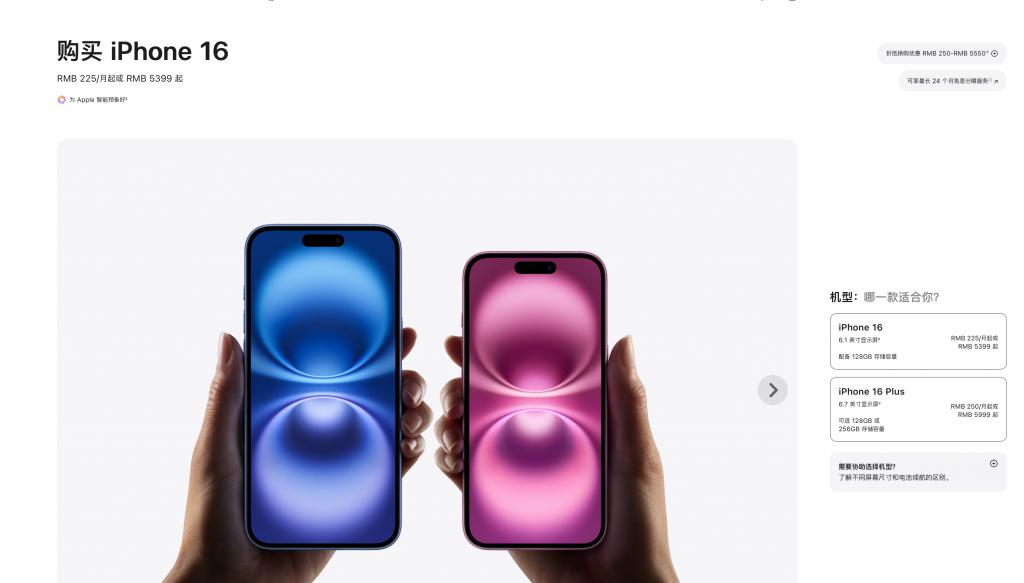
The iPhone 16 is still on sale on the official website
Although old iPhones can still perform well, not everyone is willing to buy a phone that is two years old. After all, buying an old model means it will receive two years less software updates, and its performance may decline over time.
Now, Apple offers a better option: the iPhone "e" series.
Using a "crippled - core" version of the same chip as the standard model but with one less core, it can provide performance close to that of flagship phones. It can also utilize the otherwise wasted chip inventory. Most of the other components are also readily available, providing consumers with a "new" iPhone at a lower price.
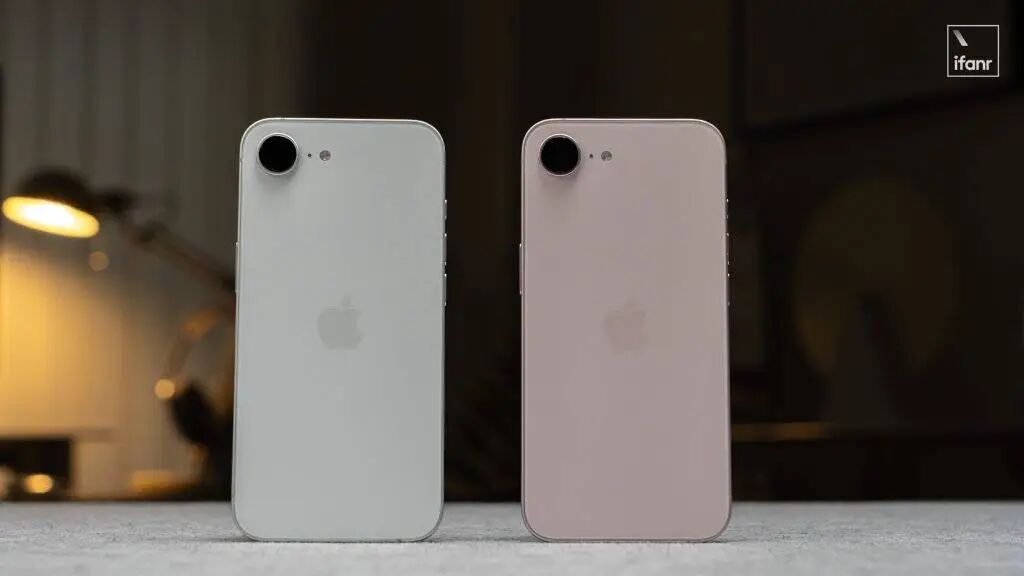
In contrast to targeting the low - end market, Apple is also trying to break through the current ceiling of the iPhone and target the high - end market.
The iPhone Air was an attempt to promote the phone based on its appearance design and feel, similar to the selling points of large - screen or high - end imaging phones. However, this product was not successful and failed to attract consumers.
The foldable iPhone is the next attempt. Domestic manufacturers like Huawei have proven that foldable flagship phones can be positioned and priced higher than top - of - the - line straight - screen phones. This market is more mature than the "light and thin" flagship market. Relying on the iPadOS ecosystem, the wide - screen and large - screen features of the foldable iPhone have more room for development.
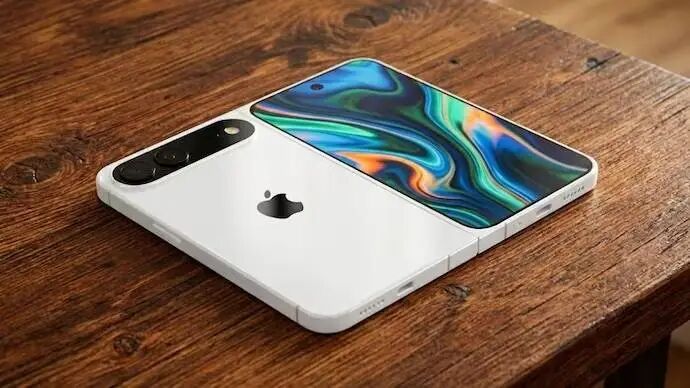
Obviously, Apple is no longer satisfied with the existing price segments of the iPhone. They want to expand the reach of the iPhone, covering both the low - end and high - end markets.
The confidence and reason for this are the A - series chips.
Apple's utilization rate of A - series chip inventory has reached an extremely amazing level. Counting the seven iPhones to be released next year, as well as the iPad mini, the iPad (digital version), and the new MacBook Neo, there are already more than ten SKUs built around the A - series chips within Apple, and most of them will be updated annually.
Products like the iPhone e series, the iPad mini, and the MacBook Neo even use the inventory of A - series chips with missing cores. Apple hardly needs to make additional production investments and instead turns "waste" into "treasure".
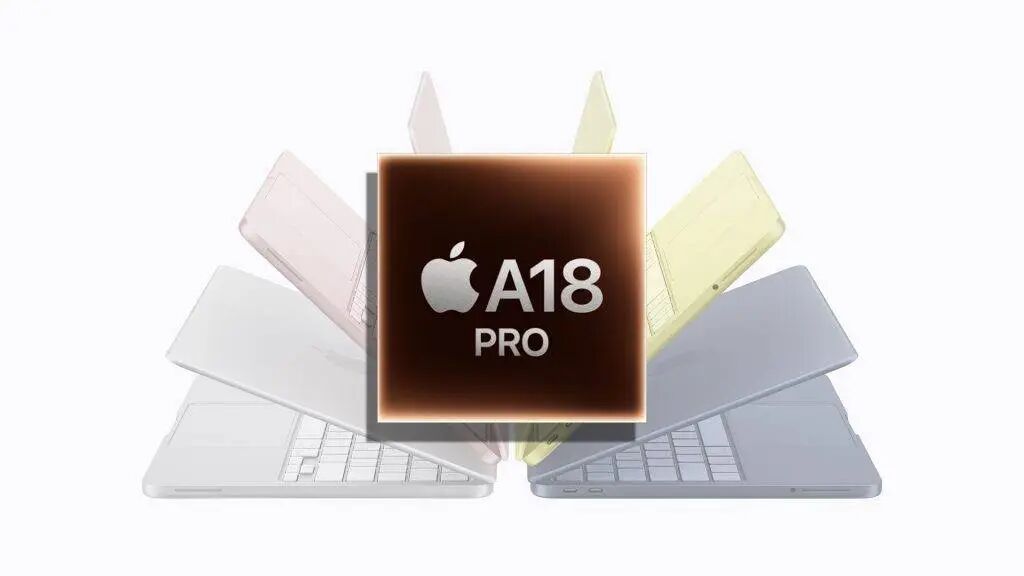
This week, technology media Culpium reported that due to the unexpectedly high sales of the MacBook Neo, the inventory of the original A18 Pro processors was quickly depleted, and Apple may have to reproduce these two - year - old chips.
Chips are products with high investment and slow returns. The A - series chips are updated annually, with R & D costs reaching the level of one billion dollars. The price of the A16 chip, which was launched about four years ago, has reached $100 per unit, but its leading edge only lasts for one or two years.
In the past two years, the prices of components, especially memory, have skyrocketed. The price of new 2nm - process chips will also increase accordingly. Apple's cost pressure has increased sharply, and it is necessary to spread the cost.
Since making chips is so expensive, Apple naturally cannot miss any opportunity to generate revenue. More iPhones using A - series chips should be sold, and the "crippled - core" and old - inventory chips should also be consumed. After all, the performance of the A - series chips is indeed strong. Even the "crippled - core" A18 Pro from two years ago is still quite powerful when used in a computer.