GLP Collaborates with Huawei: Integrating Infrastructure and Technology to Create a Diversified and Synergistic Second Growth Curve
On the 3rd of this month, GLP and Huawei signed a comprehensive strategic cooperation agreement in Shanghai, finalizing three cooperation directions: digital foundation, energy transformation, and new - quality empowerment.
In fact, GLP, which has been deeply involved in the Chinese market for more than two decades, has already initiated its transformation from a logistics facility service provider to a new - economy infrastructure operator. Its national logistics and industrial park network, as well as the practice of building computing power centers and green energy networks, serve as the core asset foundation for this cooperation.
The collaboration between GLP and Huawei is essentially based on the complementarity of core resources. Through the integration of infrastructure and technology, they aim to explore a scalable commercial path for comprehensive quality - improvement, efficiency - enhancement, and empowerment solutions in the field of new - economy infrastructure.
Strategic Cooperation: Leap in Industrial Service Capability
GLP's strategic cooperation with Huawei this time is a strategic upgrade based on its own asset endowment, strengthening the synergy in multiple fields such as intelligent computing centers, digital new energy, and logistics and industrial infrastructure.
As a leading enterprise in the scale of domestic logistics park networks, against the backdrop of the continuous explosion of AI computing power demand, GLP's logistics park resources have a natural advantage in transforming into computing power centers.
The commercial feasibility of this transformation model for existing assets has been verified by actual operation data and cases. Its Changshu Southeast Logistics Park has been successfully converted into a data center, with the construction period shortened by more than five months compared to the industry average, and 100% delivery has been completed. In 2025, the annual revenue of GLP's computing power center business increased by 32% year - on - year, and the delivered IT load exceeded 420MW.
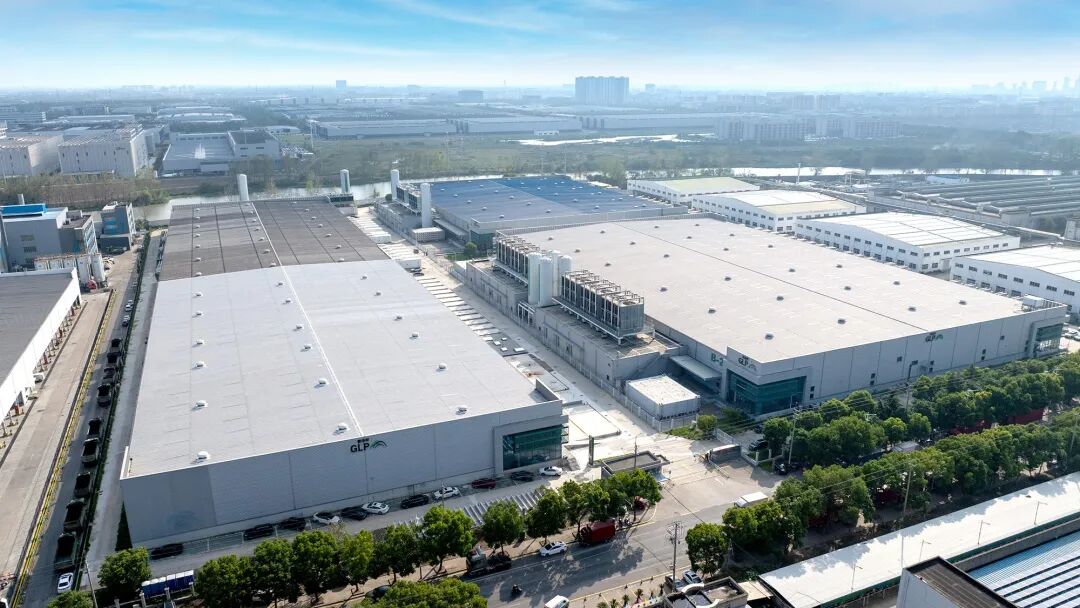
GLP Changshu Southeast Phase I Data Center
The high - energy - consumption characteristic of computing power centers makes energy cost control and stable supply of green energy the core restrictive factors for the development of computing power business, which is another core track that GLP has pre - arranged.
Currently, the grid - connected scale of GLP's new energy business has exceeded 1.4GW, and it has built a complete new - energy infrastructure including distributed and centralized photovoltaics and wind energy, with the basic ability to provide green energy for parks and computing power centers.
Huawei's technological advantages in the field of digital energy are highly consistent with GLP's demand for building an integrated "source - network - load - storage" energy system in the park, which also becomes an important entry point for their cooperation.
According to the cooperation plan, the two sides will focus on promoting cooperation in heavy - truck ultra - fast charging and customized energy storage, focusing on the scenario of logistics industrial parks and meeting the actual operational needs such as power replenishment for heavy trucks and power consumption in high - energy - consumption links within the park.
The cooperation on computing power centers relies on Huawei's capabilities in data centers, computing power networks, and full - stack ICT technology to jointly improve the operating efficiency and green level for customers from the hardware and operation levels.
Core Barriers: Triple Support of Physical Layout, Capital Operation, and Scenario Resources
GLP's rapid layout in the field of new infrastructure and its in - depth strategic cooperation with Huawei are not accidental but stem from three resource endowments accumulated over the years.
As an institution with both professional asset operation and market - oriented investment management capabilities, its advantage lies in the multiple superposition of physical node layout, capital cycle operation, and offline scenario resources, which is also the core difference between it and pure Internet companies and single data center service providers.
The first - mover advantage in physical node layout is the most basic and difficult - to - replicate barrier for GLP. After more than two decades of in - depth development, GLP's logistics and industrial parks cover more than 70 cities across the country, mainly focusing on core hub nodes, serving the efficient supply - chain operation needs of more than 2,500 enterprise customers.
This physical foundation can form in - depth synergy with its existing computing power center and new energy businesses. The networked layout of national logistics industrial parks provides the location, site, and customer foundation for the construction of computing power centers, and the energy consumption needs of logistics industrial parks and computing power centers create a stable consumption scenario for the new energy business.
Zhao Mingqi, the CEO of GLP China, once said that both logistics warehousing and computing power centers are energy consumers. Deeply integrating new energy with infrastructure asset operation can achieve significant synergistic effects.
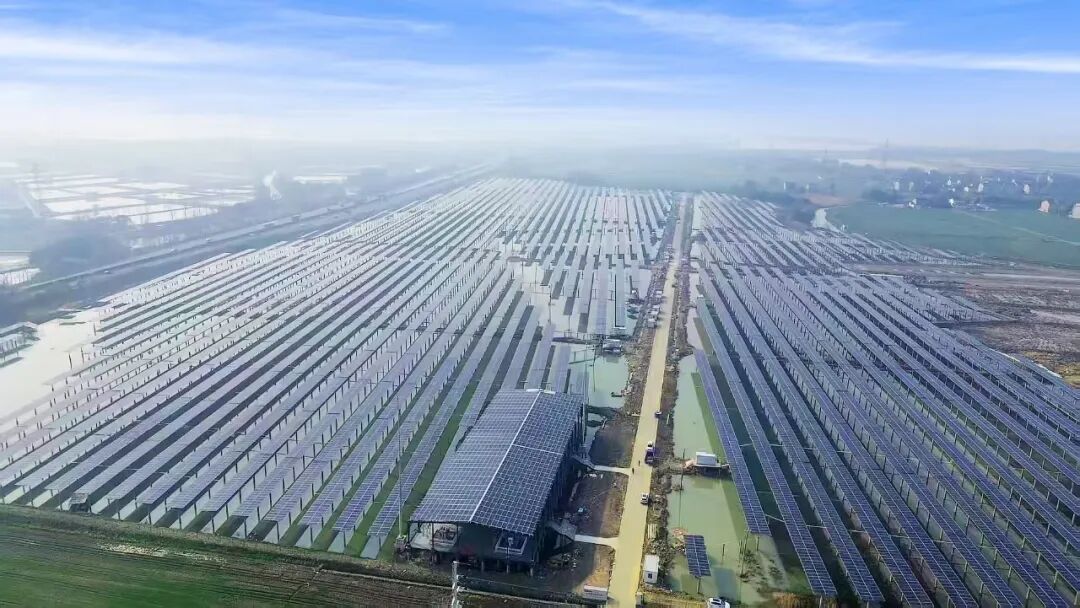
GLP Wujiang East Taihu Lake Fishery - Photovoltaic Complementary Project
On the other hand, capital cycle ability is the key support for GLP to achieve steady expansion in the field of new infrastructure.
Different from traditional infrastructure operators, GLP adopts a dual - wheel - driven model of investment management and industrial operation. It does not simply rely on its own funds for asset construction. Instead, through the market - oriented operation of REITs and private funds, it realizes the securitization of existing assets, quickly recovers funds, and then invests them in the layout of new infrastructure.
In 2025, GLP's computing power center business introduced a strategic investment of 2.5 billion yuan from the state - owned assets of Quzhou, Zhejiang. Attracting long - term capital such as local state - owned assets may prove the industry's recognition of its computing power new - infrastructure layout and also provide capital support and ecological extension for the subsequent continuous expansion of its business.
In addition, a large amount of offline scenario resources are an important foundation for GLP to enhance asset value and implement technologies. Currently, GLP's services cover multiple fields such as e - commerce, cold chain, and manufacturing. The daily operations of more than 2,500 enterprise customers in the park form diverse and high - frequency offline operation scenarios, which become a natural test field for the deployment of intelligent equipment and intelligent systems.
The actual operation data of the park scenarios can in turn feed back to the iterative optimization of technologies, forming a positive cycle of "scenarios feeding back technologies, and technologies enhancing asset value", enabling the commercial value of physical assets to continuously increase in the digital transformation.
Business Logic: Why "Infrastructure + Technology"?
The core business logic of the in - depth cooperation between GLP and Huawei lies in the two - way complementarity of space operation and digital technology. The two sides give full play to their respective core advantages to realize the value amplification after resource integration. While exploring the commercial value of new - economy infrastructure, they also seize the market development opportunities in their respective tracks.
By introducing Huawei's technology, GLP can promote the intelligent and carbon - neutral upgrade of park operation, help enterprise customers in the park improve operational efficiency and reduce operational costs, and thus enhance the market profitability of customers.
The improvement of customer experience and business efficiency can further enhance the customer stickiness of GLP's space and services, enabling it to maintain a competitive edge in the park leasing and industrial service markets, and ultimately achieve the continuous improvement of the commercial value of physical assets and broaden its profit boundary.
For Huawei, GLP is a high - quality test field and a large - scale sales channel for the implementation of its technologies and equipment.
As a globally leading provider of ICT and digital energy solutions, Huawei's products such as servers, energy - storage equipment, and network equipment need large - scale offline application scenarios for technology verification and market promotion. GLP's national park network and computing power center layout happen to provide such a scenario foundation.
Conclusion
Through the integration of "infrastructure + technology", the cooperation between infrastructure providers and technology providers to explore the digital and green commercial value of physical assets is opening up greater imagination space for the development of new - economy infrastructure.
The core value of this cooperation is ultimately reflected in the all - round empowerment of park customers. The overall intelligent and carbon - neutral upgrade of the park can create a better operational environment for park customers and help enterprises enhance their market competitiveness.
The cooperation implementation logic centered on customer needs also enables the value of infrastructure to truly serve industrial development and inject impetus into the high - quality development of more enterprises.