On-the-spot visit to the children's smartwatch market: After the implementation of the new national standard, brands like Xiaotiancai and Huawei are still "fighting their own battles".
Four months ago, the State Administration for Market Regulation and the Standardization Administration of China officially approved and issued the mandatory national standard GB 46859 - 2025 "Safety Technical Requirements for Children's Smartwatches". This is also the first mandatory national standard specifically targeting children's smartwatches in China. This new national standard for children's smartwatches will be officially implemented on January 1, 2027.
One of the important reasons why this new national standard has sparked such a high level of discussion in a short period is that it begins to address the most fundamental issues of children's smartwatches, such as network security, personal information protection, content security, and social interaction restrictions. Among these, the new national standard clearly states that children's smartwatches should support the addition of friends across different brands. Does this mean that the social barriers among the same - brand products in the children's smartwatch market, which have existed for a long time, are likely to be gradually broken?
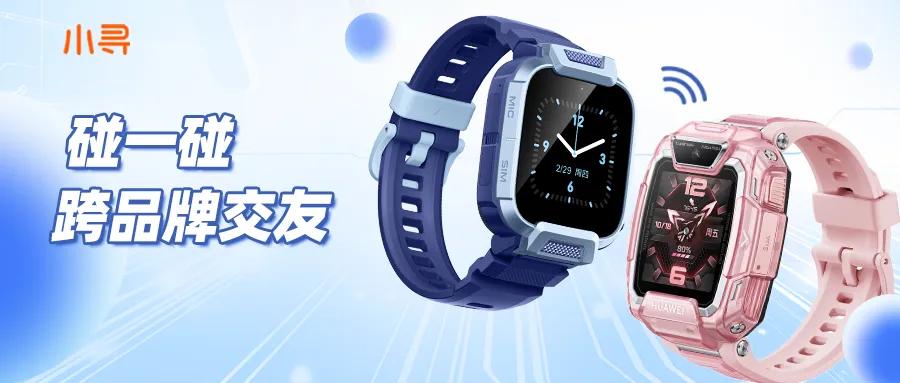
(Image source: Xiaoxin)
With these questions in mind, Lei Technology (ID: leitech) visited offline physical stores of children's smartwatch brands such as Xiaotiancai, Xiaomi, Huawei, and Honor, and had conversations with store clerks and parents to find out their views on the new national standard.
The New National Standard Is Here, but Offline Stores Don't Feel Threatened
As the first new national standard for children's smartwatches, the core of "Safety Technical Requirements for Children's Smartwatches" lies in the word "safety". Issues such as positioning accuracy, call and data security, personal information protection, application permissions, advertising and induced consumption, and prevention of addiction are the most common concerns of parents.
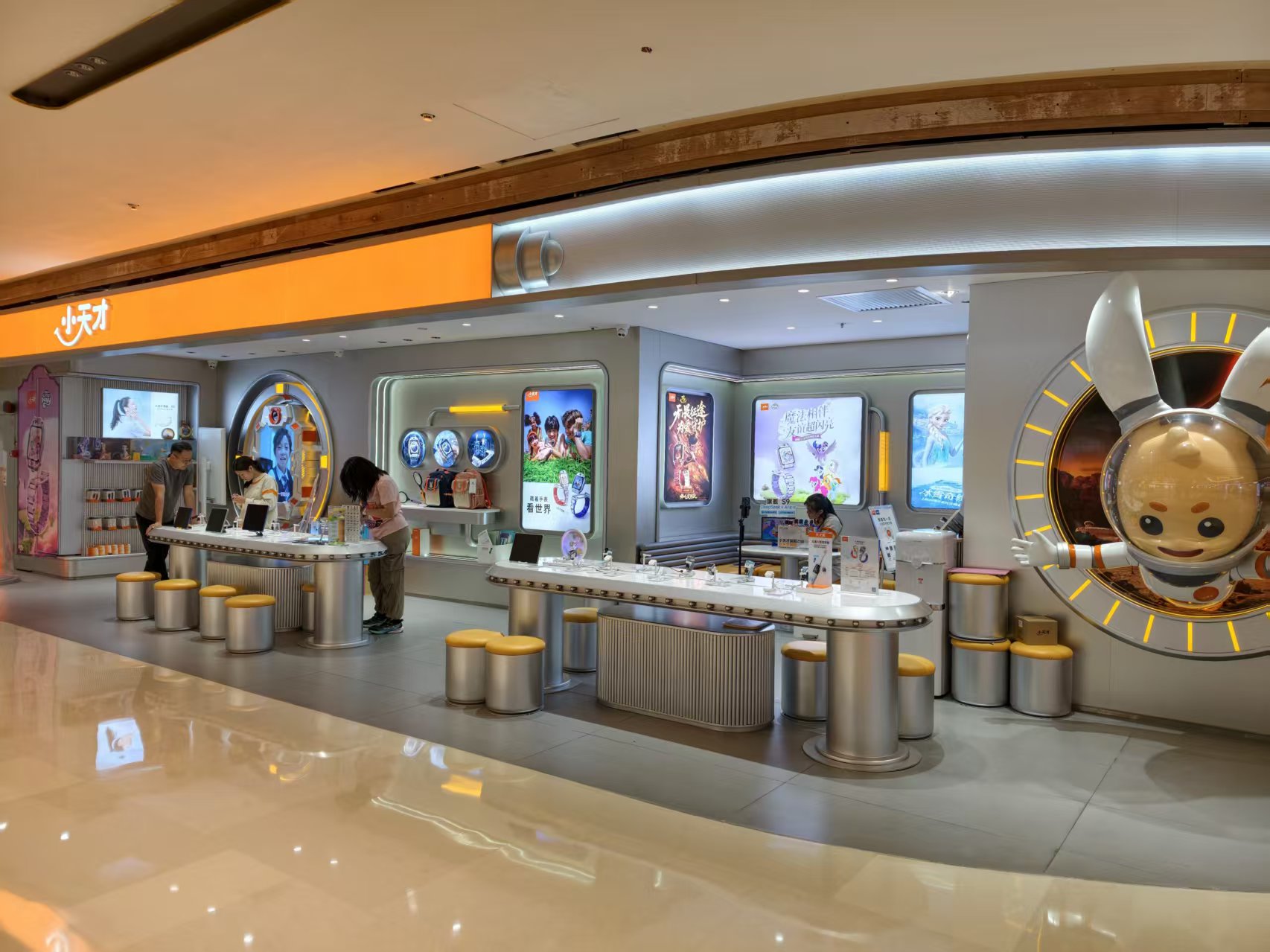
Armed with this new national standard, we visited several mainstream brand stores and counters in Tianhe City and Zhengjia Square in Guangzhou, including Xiaotiancai, Xiaomi, Huawei, and Honor, to see if the offline market had already felt the changes in advance. The results were quite unexpected.
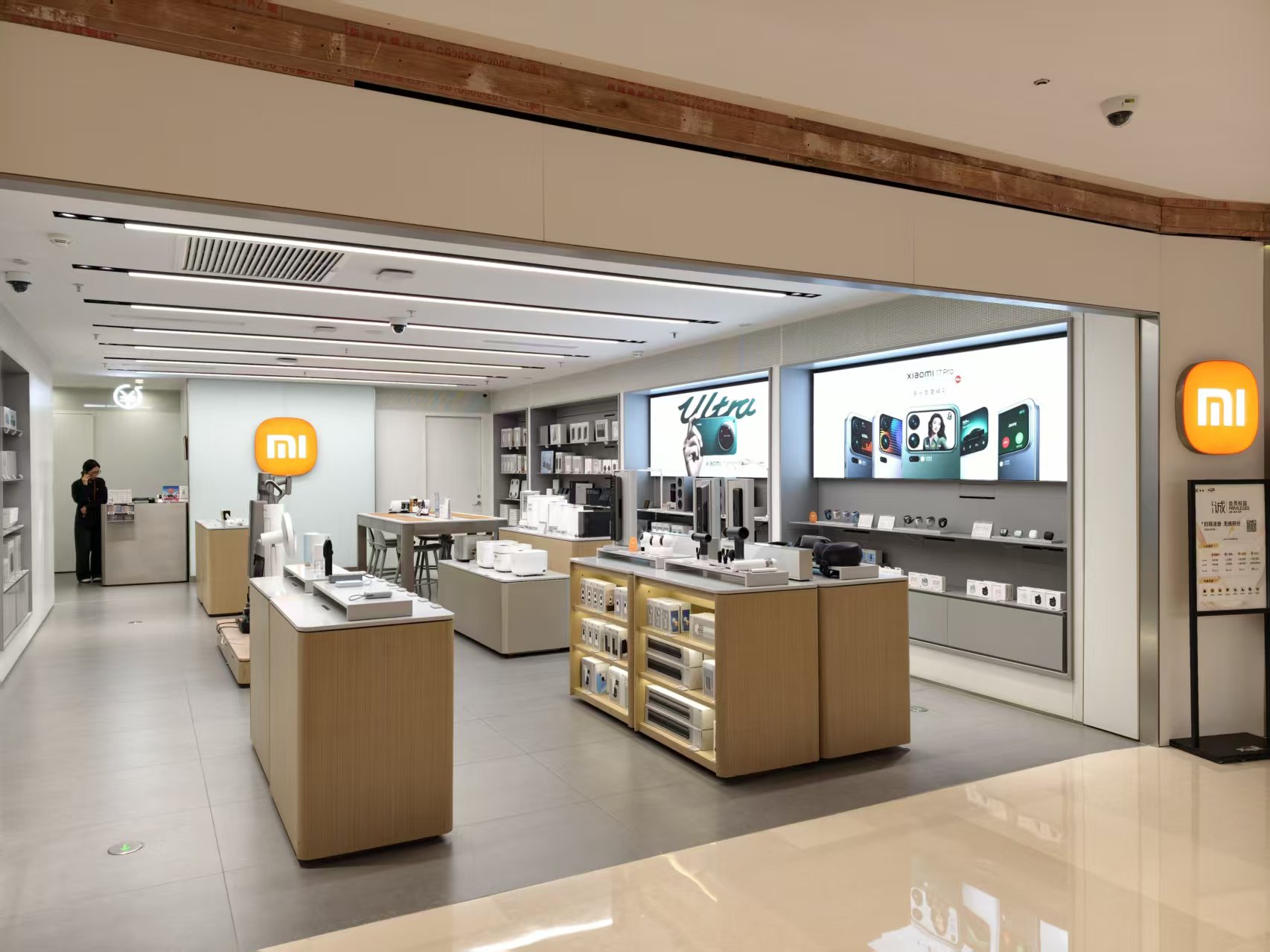
(Image source: Lei Technology on - site shooting)
Most store clerks actually didn't know that the new national standard had arrived, let alone being familiar with its details. Not to mention the clause about adding friends across brands, which is most likely to spark discussions in the industry, even content such as positioning accuracy, advertising push, and permission management, which are more closely related to sales pitches, were not mentioned much.
It's not hard to see that although the new national standard has been released for four months, brands don't seem to be as panicked as they were during the previous national subsidies or memory price hikes. This is actually understandable. After all, the release of a standard doesn't mean an immediate shift in the market. Especially in the category of children's smartwatches, which highly rely on channels, sales experience, and brand recognition, policy signals first reach the media, then the industry, and finally are gradually known to parents.
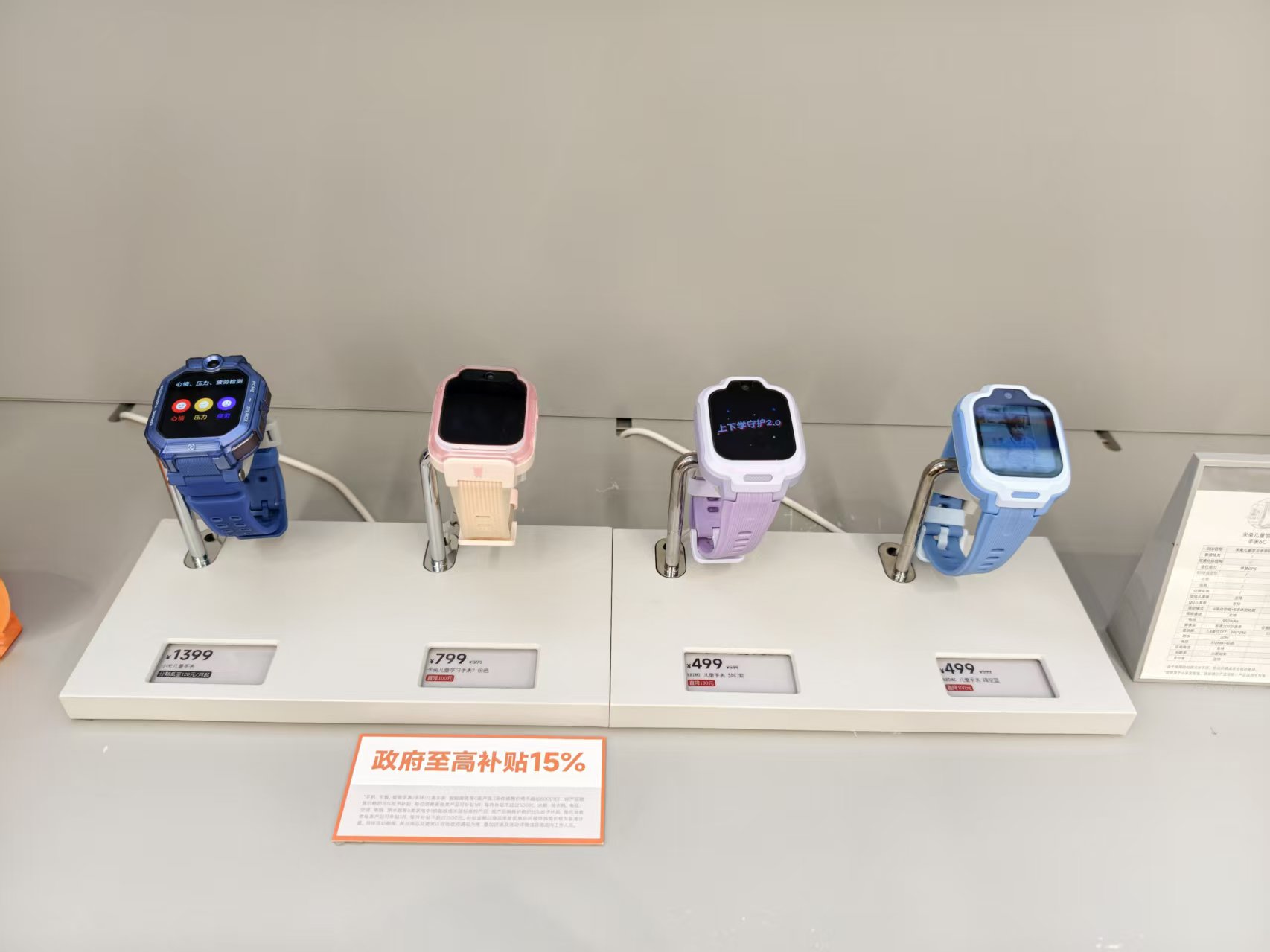
(Image source: Lei Technology on - site shooting)
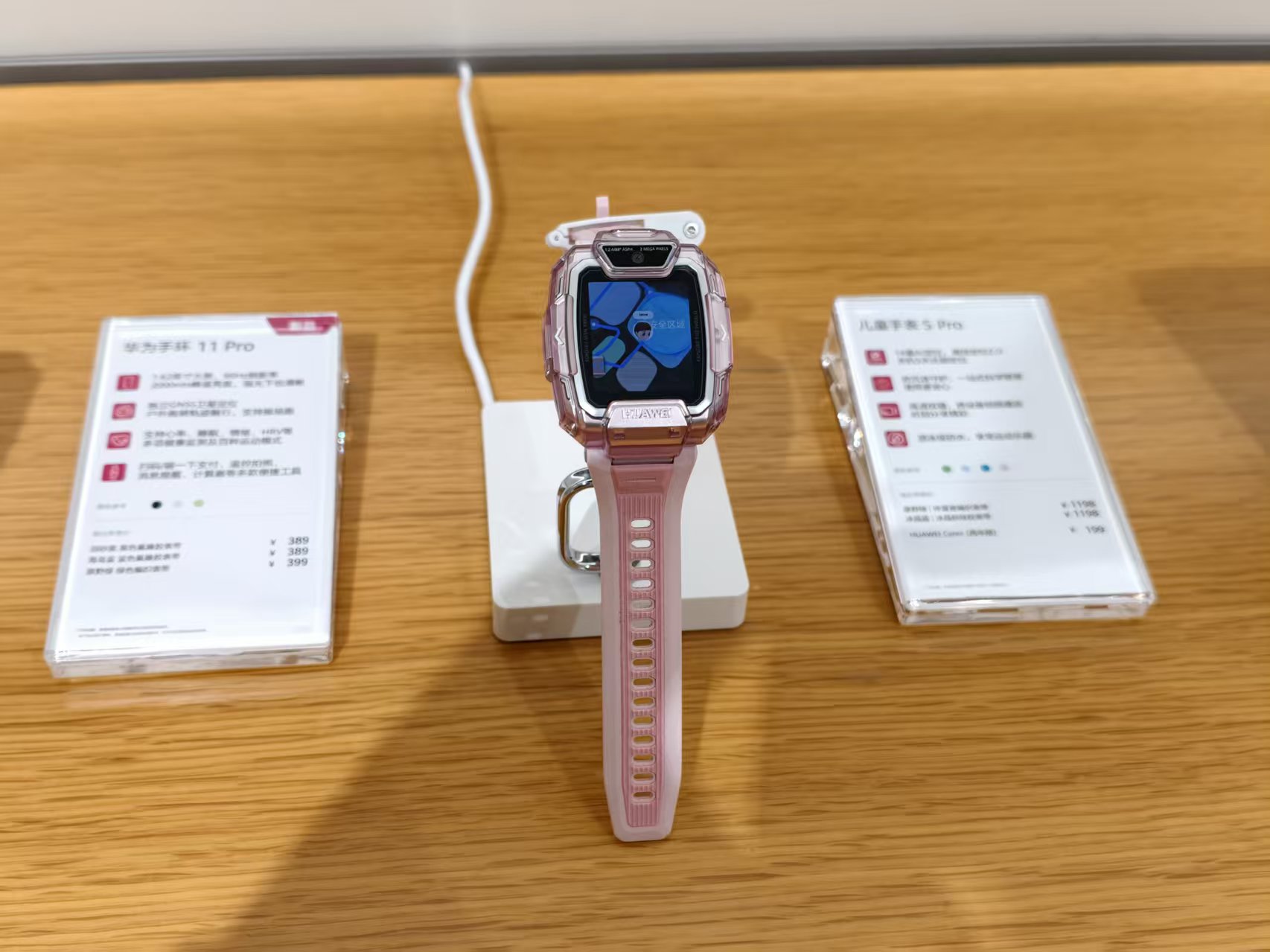
However, it would be inaccurate to conclude that children's smartwatch brands are slow to respond to safety issues. At least from our on - site visits, leading brands have actually done a lot of work on the most core safety foundation of the new national standard. Whether it's Xiaotiancai, Huawei, Xiaomi, or Honor, store clerks almost always mention functions such as parent - side positioning, trajectory viewing, contact management, payment restrictions, information encryption, and usage time control. In other words, many requirements mentioned in the new national standard are things that leading brands have already been doing for a long time.
This is actually what makes children's smartwatches very different from other smart devices. When adults buy watches, they may focus on appearance, sports functions, or brand image. When parents buy children's smartwatches for their kids, their primary concern is usually safety. Whether the positioning is accurate, the call is stable, strangers can be restricted, children can be prevented from randomly clicking functions, and parents can control the usage boundaries are the basic criteria for a children's smartwatch to enter a family. For example, a Xiaomi store clerk told Lei Technology (ID: leitech) that many parents are most concerned about positioning and safety when choosing a children's smartwatch, and they prefer fewer entertainment and social functions.
That's why the first impression from this offline visit is that the new national standard has brought a rather contradictory calm to children's smartwatch stores. Although the standard has been announced, the stores don't seem to pay much attention. However, many brands have already taken the lead in developing the underlying capabilities related to safety. This seemingly contradictory phenomenon actually reflects the most real situation in the current children's smartwatch market.

(Image source: Lei Technology on - site shooting)
However, when it comes to another core change in the new national standard - the social barrier, the situation is completely different.
The Social Wall of Children's Smartwatches Hasn't Been Broken Yet
Article 4.18 of "Safety Technical Requirements for Children's Smartwatches" clearly states that children's smartwatches should allow the addition of friends across brands, and this function also needs to be effectively managed by the watch management terminal. On the surface, this is just a requirement for function interoperability. Dig deeper, and it actually aims to break the closed - loop social logic that has prevailed in the children's smartwatch market for many years.
In fact, in the past, when many parents bought children's smartwatches for their kids, it seemed they were purchasing for positioning, calling, and safety. But when they got into the store, the decision - making factors were often not that simple. Whether a child can quickly add classmates as friends at school and smoothly enter the peer group often plays a more decisive role in the purchase decision than product parameters.
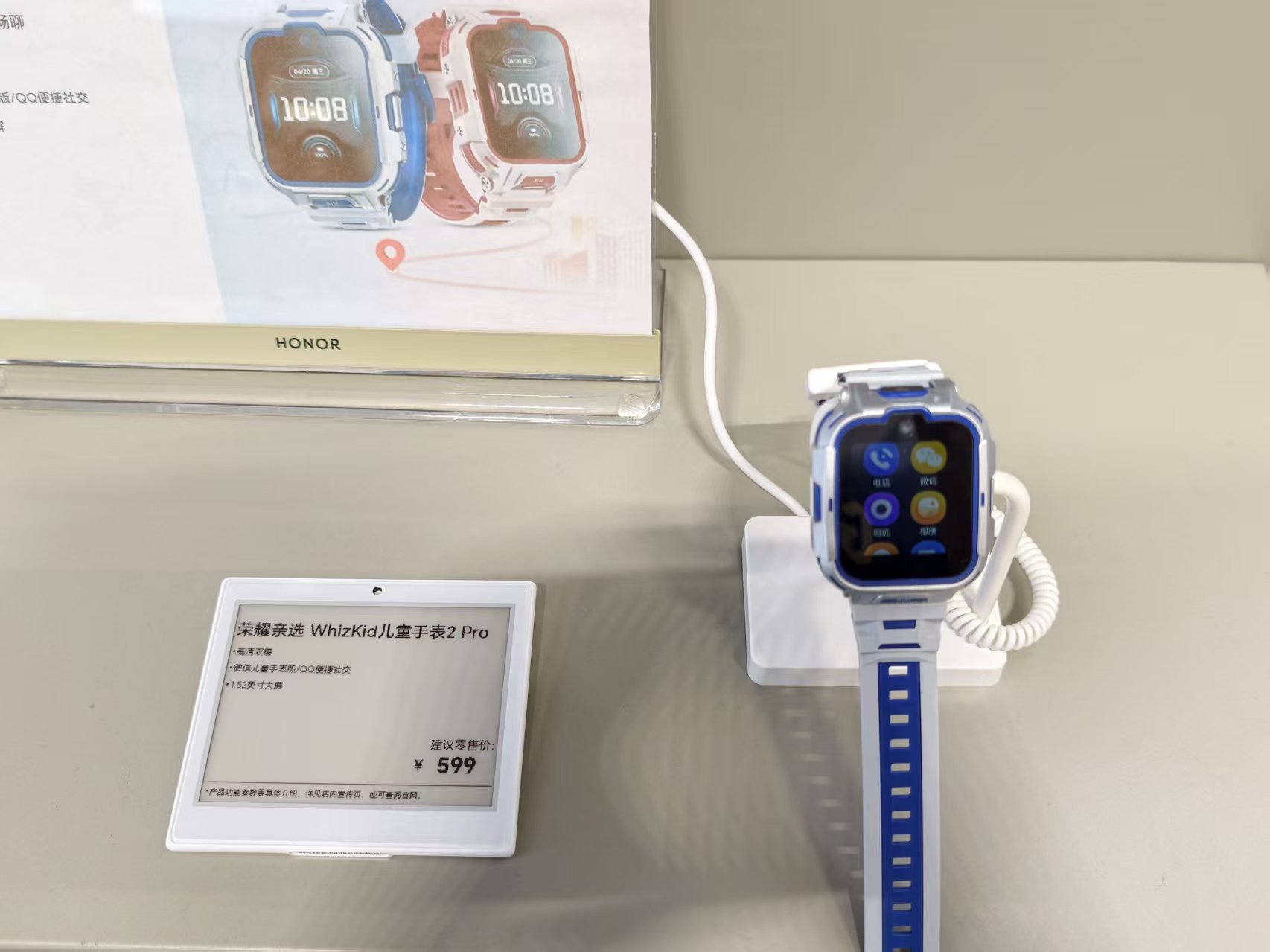
(Image source: Lei Technology on - site shooting)
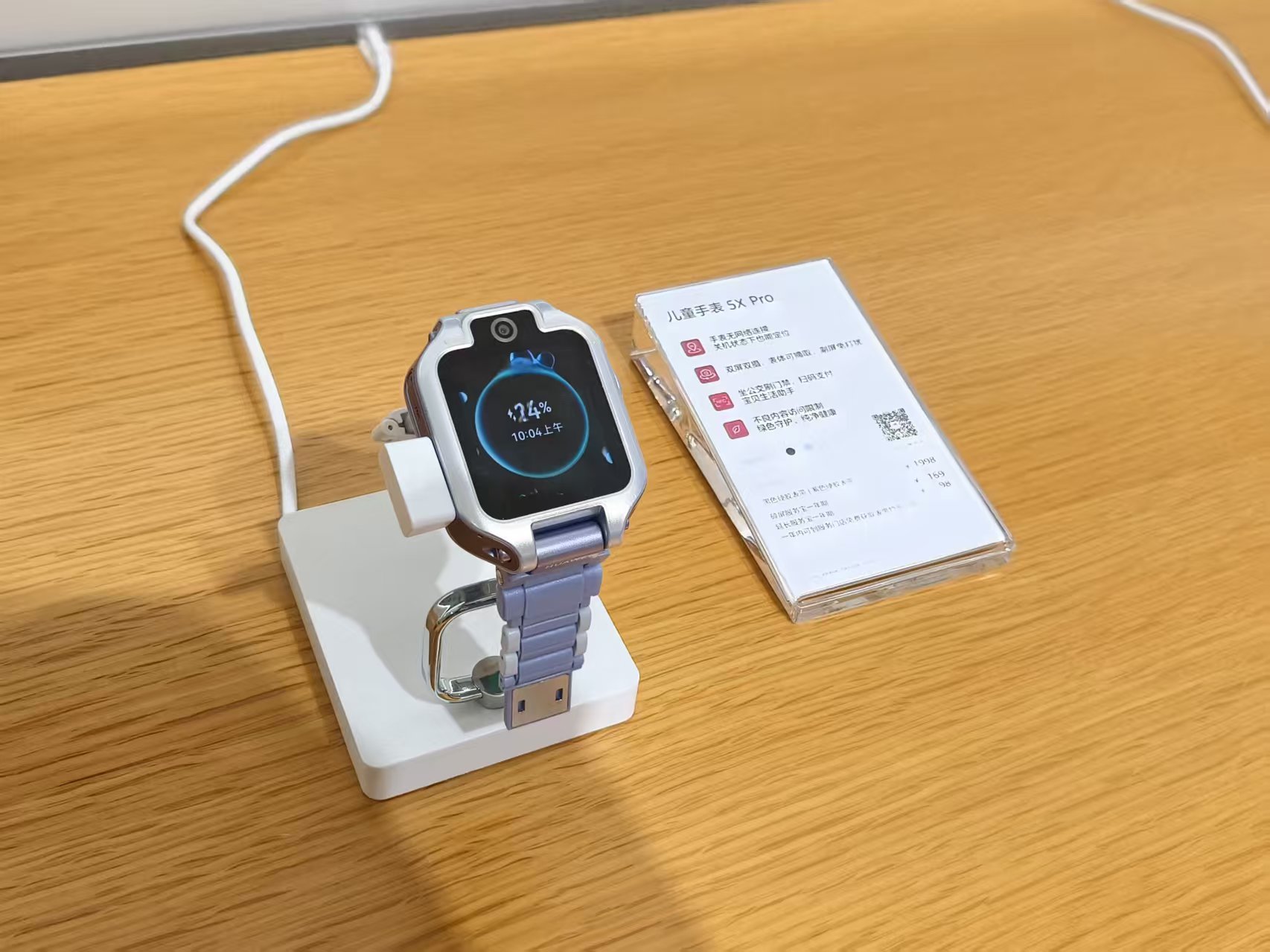
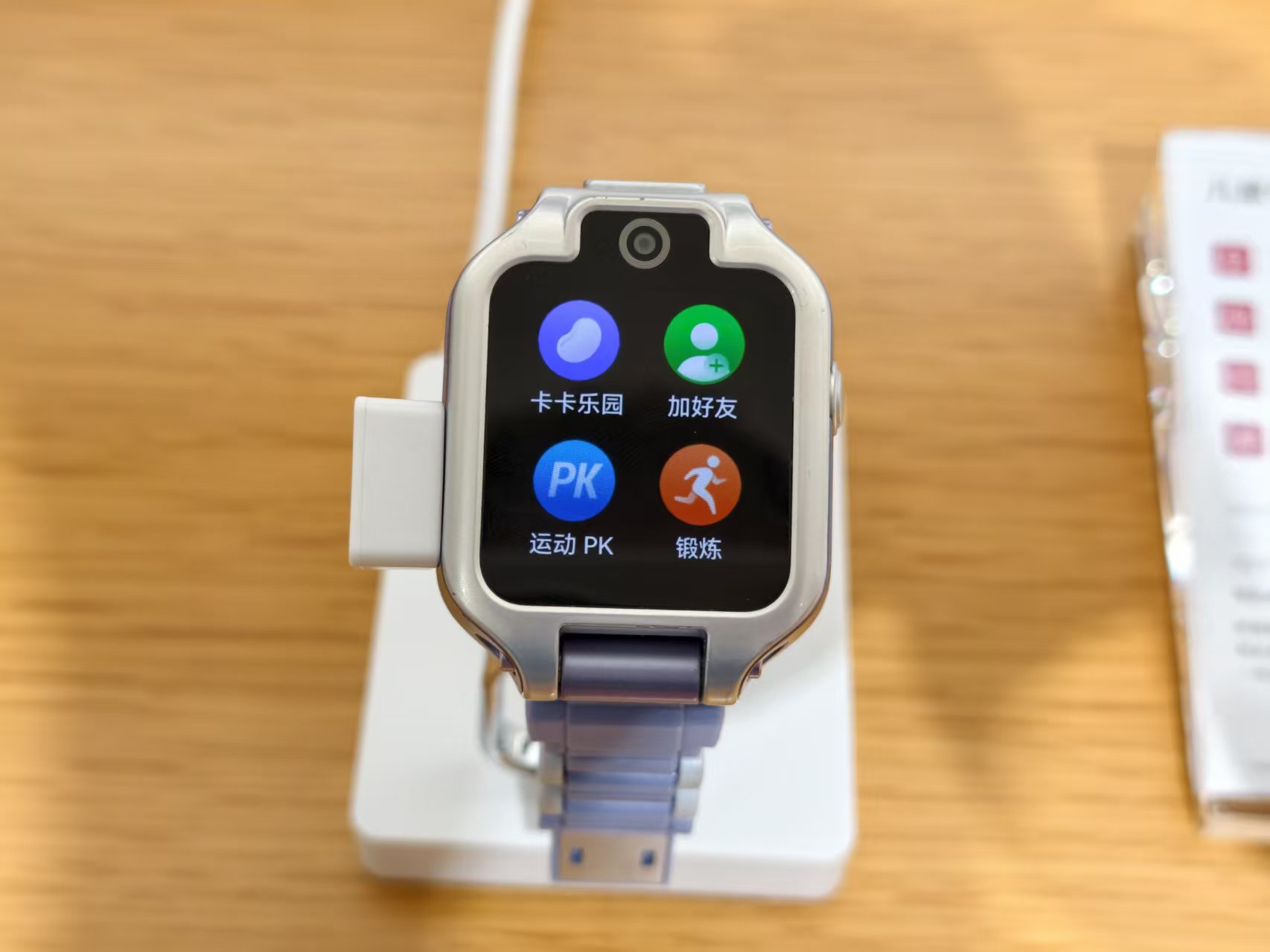
When Lei Technology (ID: leitech) visited offline stores, store clerks from Xiaomi and Honor both said that the currently available products do not support adding friends across brands. Of course, children's smartwatches have always supported adding contacts from the address book, but this is clearly different from the quick friend - adding logic of "bumping" or "scanning" between kids. The former requires parental authorization, which is more like adults establishing connections for their kids. It can achieve basic communication but is difficult to replace the instant, natural, and socially - intuitive interaction between kids.
One store clerk also straightforwardly told Lei Technology that kids often ask for a specific brand not because they understand the configuration but because their classmates are using it. However, parents don't really want children's smartwatches to have social functions. A Xiaomi store clerk said that some parents are worried that the social functions in children's smartwatches may affect their kids' growth, and it's difficult to filter out bad information in time.
(Image source: Lei Technology on - site shooting)
Previously, "Consumer Report" publicly reported that in some social circles and chat groups of phone watches, minors were keen on expanding their friend lists, exposed to content like "finding a couple" or "finding a best - friend", and even some pirated and bad information. Xiaotiancai's customer service responded at that time that adding friends requires parental consent, and bad remarks and pictures will be blocked.
This is actually different from what Lei Technology expected. Although the new national standard has broken the social barrier, parents don't really support this decision. They even think that adding friends to each other is not something that kids at this age should consider.
Therefore, including the function of adding friends across brands in the new national standard is not simply to encourage kids to make more friends. Instead, it aims to find a balance between two long - standing conflicting demands. On one hand, it wants to break the brand barriers so that kids' social circles are no longer restricted by brand ecosystems. On the other hand, it emphasizes that this function must be effectively managed by the watch management terminal, which means that parents' guardianship rights cannot be bypassed. To put it more simply, the standard doesn't really want to turn children's smartwatches into a more free - flowing social platform. Instead, it wants to ensure that kids' social lives are not locked in by brands while still remaining within the scope of parental supervision.
(Image source: Lei Technology on - site shooting)
The problem is that it's not easy to implement this in practice. According to data from LOTU Technology, in the online market for children's smartwatches in China in 2025, Xiaotiancai led with a 30.3% sales share. In the full - channel list in the first half of the year, Xiaotiancai even took a 35.3% sales share.
(Image source: Lei Technology on - site shooting)
This is why we heard offline that Xiaotiancai store clerks weren't too worried about sales after learning about the new national standard's requirement for open cross - brand friend - making. From their perspective, this confidence is understandable. The brand image is well - established, kids still ask for it by name. Although parents may think it's expensive, they often make decisions based on their kids' social needs. We met a parent who brought her daughter to choose a watch on - site. The parent said that the school no longer allows watches on campus, but it's still more reassuring for the kid to wear one when going out on weekends. When it comes to why they chose Xiaotiancai, it all boils down to the kid's preference.
To put it simply, a children's smartwatch is naturally a safety tool, but it has long ceased to be just a tool with only safety value. Kids see it as an entry point for social interaction. Therefore, the most difficult part of implementing the new national standard is how to gradually move children's smartwatches away from the old closed - loop social logic without completely cutting off kids' normal social needs. The new national standard's direction of breaking the social wall is correct, but how long it will take for the wall to actually crumble may have to be answered by time and the next round of product updates.
The New National Standard Raises the Bar for Children's Smartwatches
Looking at the situation in offline stores and the new national standard together, the children's smartwatch market is likely to enter a stage that emphasizes more on thresholds and trade - offs in the future. In the short term, it may not necessarily be easier to sell due to the new regulations. The judgments of several store clerks in the stores are quite consistent. There isn't an obvious change in sales yet. The summer vacation is the traditional peak season, and the real market reaction remains to be seen.
It's usually not the leading brands that will feel the pressure first. From our on - site visits, mainstream products like those from Xiaotiancai, Huawei, Xiaomi, and Honor have already developed relatively comprehensive basic capabilities in positioning, safety, information protection, and parental control. Most of the core requirements in the new national standard already have corresponding solutions from these brands. Instead, products that are likely to be affected by the raised threshold are those with low prices, vague function boundaries, and that attract users by simply piling up configurations and imitating the experiences of leading brands. The children's smartwatch market has not been small in recent years. According to LOTU Technology, the full - channel sales volume of children's smartwatches in China reached 16.4 million units in 2025, and the average price in the online market was about 510 yuan. Some niche brands outside the leading ones still occupy a small part of the market. For them, the arrival of the new national standard may bring some technical thresholds and affect their positions in the market.
(Image source: Lei Technology on - site shooting)
This makes people wonder if there will be a co - existence of "regular troops" and "rogue players" in the future children's smartwatch market. However, at least in the mainstream offline market, there will be less and less room for the gray area.
It's not hard to see that the biggest change brought by this new national standard may not be to suddenly transform the children's smartwatch market into a brand - new one. Instead, it makes this category finally return to the right development path. Given that parents have safety needs and kids have communication needs, children's smartwatches still have a strong reason to exist. In the future, the industry will need to answer more specific questions, such as which functions should be retained, which boundaries should be tightened, and what value is worthy of the word "children". Offline stores haven't fully felt the change in the market trend yet, but from the moment the standard was released, the next round of