Interview with a former Alibaba executive and CEO of Tmall Design Home: After burning tens of billions in recent years, how can the home improvement industry move forward?
Text by Peng Qian
Edited by Qiao Qian
Ma Xuejun describes himself as "bitter and resentful."
He spent more than a decade in traditional industries and internet entrepreneurship. During his tenure at Alibaba, his online alias was "Guo Dalu." He was in charge of projects aiming at the internet transformation of the real - world industries, including Tmall Supermarket, Tmall Medicine, Tmall Home Improvement, Tmall Pre - sale, Miaoxiansheng, and Miao Street, without exception. These innovative businesses from scratch couldn't grow solely relying on Taobao's traffic.
Doing home improvement was like a long - drawn - out gamble for him. In 2010, Ma Xuejun was in charge of the home improvement business on Tmall. From the "Tmall Aifangchao Home Improvement Experience Hall" covering over 30,000 square meters in Beijing, to the "Designer Taoke" using 3D software, and participating in the incubation of the so - called "Internet Home Improvement" of "Home Improvement E - Station." Looking back, he believes these projects only improved the local efficiency, not the overall industrial efficiency. Consumers didn't feel the change and were still dissatisfied with the service results.
After leaving Alibaba to work at Yunfeng Fund in 2016, Ma Xuejun still didn't give up. He looked at various home improvement startup projects and found some projects with good ideas and teams, but still "couldn't find that feeling at all, and in the end, didn't invest a single cent."
The home improvement industry is a large - scale market. According to the data from the China Building Decoration Association, the total output value of the building decoration industry (including home improvement, building materials, and the entire home furnishing industry chain) will be about 6.2 - 6.5 trillion yuan in 2025. However, even the leading companies are not doing well. At the beginning of 2026, the total losses of 24 listed home furnishing/home improvement companies will exceed 24 billion yuan. Juranzhijia, Red Star Macalline, and Meike Home Furnishing have all issued pre - loss warnings.
Internet giants such as Alibaba, JD.com, and ByteDance have successively and repeatedly entered the market, but so far, none of them has fundamentally changed the basic situation of the industry, which is highly involuted, asset - heavy, with high debt and high risks. Moreover, consumers' decoration experience hasn't changed perceptibly.
Ma Xuejun believes that the problem in this industry is not about productivity. On the contrary, every productive role in the entire chain, including decoration companies, designers, workers, and suppliers, has been extremely involuted. Successive entrepreneurs always think they've found new opportunities, but "after climbing over the hill, they find someone has already been there." As a result, they only increase the involution in a certain link without promoting the progress of the industry.
In June 2020, he chose to leave Yunfeng Fund and claimed to stake his "reputation" to find a model for upgrading the home improvement industry again. After more than five years of exploration, his model received hundreds of millions of investment from Tmall in August 2025. He cooperated with Tmall to launch the brand "Tmall Designer's Home," and Ma Xuejun serves as the CEO of Tmall Designer's Home. Recently, Tmall Designer's Home will officially announce its launch.
Will this be a real industrial revolution or just another competition for profit between capital and traditional industries? 36Kr had an in - depth conversation with Ma Xuejun. The following is the edited dialogue:
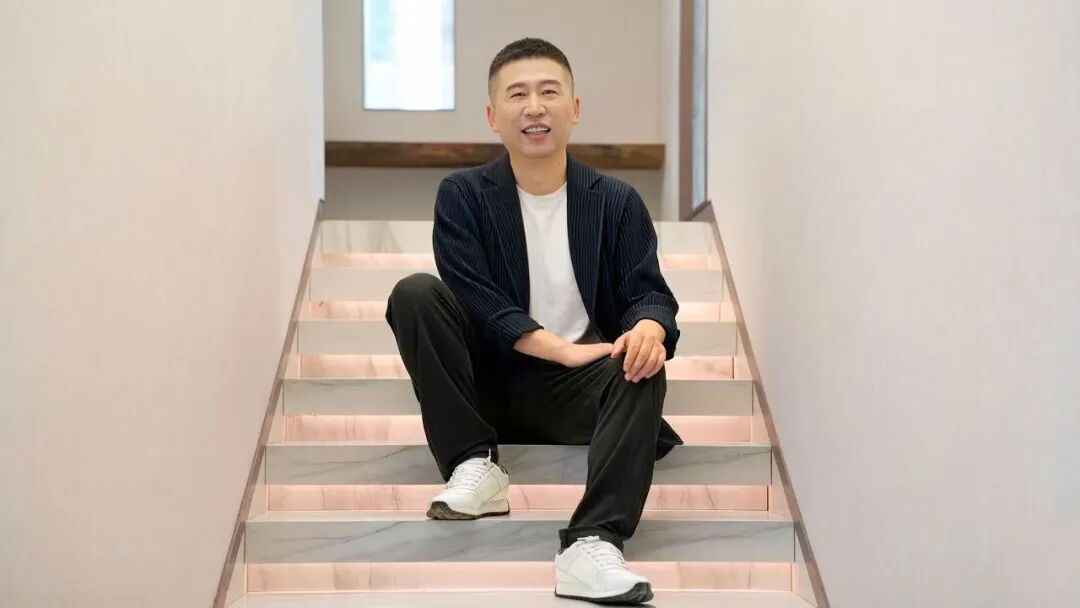
Ma Xuejun, CEO of Tmall Designer's Home
"My characteristic is 'bitter and resentful'"
36Kr: The home improvement industry is like thousands of troops trying to cross a single - log bridge. Why do you want to take on this tough challenge?
Ma Xuejun: I always believe that the internet changes the information flow, not the industry. Currently, even AI is just about the equalization of knowledge and hasn't changed the industry. Before joining Alibaba, I was involved in projects that were "bitter and resentful." I was an entrepreneur for 16 years, mainly engaged in one - stop enterprise logistics services, which was also a "bitter and resentful" business. Around the early 2000s, we had a GMV of nearly 1 billion yuan, which was a huge figure at that time.
By chance, I joined Alibaba in 2010. Almost all the things that were difficult to be e - commersified at that time were assigned to me. These were all internet - related projects integrating online and offline, such as Tmall Supermarket, Tmall Medicine, Tmall Home Improvement, Tmall Auto, Tmall Pre - sale, Miaoxiansheng, Miao Street, and 88 VIP. I built them from scratch. It was also because of this opportunity that I started to learn about the home improvement industry.
Undoubtedly, I didn't have to choose to start a business at that stage. If I had to, as a person who had "seen the world," I wouldn't normally choose to start a business in the home improvement industry. But during that period, I was inexplicably filled with a sense of mission: I have the connections, resources, and physical strength that ordinary entrepreneurs rarely have, as well as the experience and lessons accumulated over the years. If I stake my "reputation" to give it a try, at worst, I'll "lose my reputation." After all, so many experts in this industry have failed over the years, so it's not that embarrassing.
36Kr: After leaving Alibaba, you went to Yunfeng Fund first. What impact did this experience have on you?
Ma Xuejun: These three years of investment greatly strengthened my understanding of the home improvement industry. Since 2010, I've made quite a few attempts in home improvement. Looking back, these projects only improved the local efficiency or were just tools. The overall industrial efficiency didn't improve, and consumers weren't more satisfied. During my three years at Yunfeng, I also looked at various home improvement startup projects. I wanted to find projects with good ideas and teams, but in the end, I still couldn't find that feeling and didn't invest a single cent.
36Kr: But by 2020, the real estate industry's golden age had passed. What are the opportunities and challenges of entering the market at this time?
Ma Xuejun: Even if the real estate bubble hadn't burst, this industry would still be full of challenges. When I said I was going to start this business, a big shot in the capital circle told me, "Brother, more than 100 billion yuan has been invested in this industry in recent years," meaning it's not easy. So it has little to do with the cycle. I still saw some different entry points.
Be the "water, electricity, and coal" of the home improvement industry and incubate "super individuals"
36Kr: What's the current positioning of the company?
Ma Xuejun: From consumer demand to implementation, it's end - to - end connected with the same data source. My WeChat signature is "Narrow Gate, Broad Road": Only by entering the "narrow" gate can one walk on the broad road. In essence, it's about differentiation. "Involution" is the opposite of what we do. The root cause of involution is homogenization.
36Kr: What personal observations do you have about the involution in the home improvement industry?
Ma Xuejun: First, let's talk about a phenomenon. Consumers are dissatisfied, and the NPS (Net Promoter Score) has always been negative. But when we break it down, each single link in the whole process from customer acquisition to decoration has been optimized to the extreme, leaving little room for improvement. The fundamental problem in this industry is that everyone is doing the same thing and is in a state of involution. When you think you've found a pain point and an opportunity after climbing over the hill, you'll find that someone has already done it. Nowadays, as soon as a customer buys a house, they can receive 10 calls within a day.
36Kr: So what's different about your model?
Ma Xuejun: Simply put, it's a full - set end - to - end industrialized and digitalized solution that supports personalized lifestyles.
Currently, the models in the market are either the whole - house decoration model with sufficient industrialization but insufficient personalization, or the model where designers provide personalized designs, which are actually the integration of the work of a dozen or so different professional companies and numerous workers from unknown sources. A large amount of communication between people is involved in the middle, and each role basically uses their own tools and systems. Therefore, in theory, personalization can't improve system efficiency and can't significantly reduce mistakes.
Specifically, our model has three core components: CID. C (CUSTOMIZED) represents better satisfaction of consumer values, such as the satisfaction of various values including the personalization of aesthetics and lifestyle, lower total price, worry - free and fast service, environmental protection, and safety; I (INDUSTRIALIZED) represents industrialization, turning the process into an industrial logic, with a set of systems for design and implementation of craftsmanship, methods, procedures, working hours, and prices; D (DIGITALIZED) represents digitalization. From consumer demand, including the customization of air - conditioning, floor heating, fresh air, smart switches, water and electricity points, and various construction work, all the way to floor plans, elevations, renderings, budgets, lists, quotes, construction drawings, construction sequence arrangements, process management, completion, and after - sales service, everything must be on a digital platform with the same data source.
In this way, we've launched five industrial infrastructure platforms: an end - to - end personalized home improvement operating system platform, a full - category selected supply chain platform, a full - trade skilled performance platform, a full - role Alipay - guaranteed transaction platform, and a large - scale physical experience store that is friendly to all - shared designers. These five platforms form the "water, electricity, and coal" of the home improvement industry.
Whether it's designers and designer studios, new industrial workers, real estate agents, decoration companies, or dealers' stores in various channels, these roles can open their own "studio" flagship stores on the "Tmall Designer's Home" channel on Taobao. Connected to the users on Tmall, with the empowerment of our five platforms, they become "super individuals": a person can have the capabilities of a fully - structured large - scale decoration company and a renovation company under the platform's empowerment.
36Kr: There have been numerous home improvement startup projects and internal innovations in large companies. Why can you succeed?
Ma Xuejun: I do have a unique weapon. Apart from being grateful for the arrival of AI, which has solved several thorny problems for us, we've also put in a lot of hard work. For example, we've spent an immeasurable amount of time and energy and involved many excellent talents. We first exhaustively listed, then classified and abstracted the knowledge in the minds of experienced craftsmen regarding air - conditioning, floor heating, fresh air, smart lighting, water and electricity, gas, whole - house customization, and the craftsmanship, methods, working hours, procedures, and prices of various trades including assembly. Then we generated code and used AI and algorithms to connect them. For many years, the company has only focused on R & D and hasn't done any business. We've also done a lot of decoration projects for customers. Each order is a verification of our product concept rather than just a business deal.
36Kr: Can you give a real - life example of how to make consumers save money and service providers earn more?
Ma Xuejun: We filmed a documentary of several real - life cases for this press conference. One of the protagonists is a carpenter. He was originally called to repair a customer's kitchen cabinet but finally turned it into an order for a whole - kitchen renovation: The kitchen was too old, and partial repair was not as good as a complete replacement. He used our tools on - site to generate a floor plan, corresponding renderings, list, and quote according to the owner's new requirements in less than ten minutes. If a decoration company were to complete this process, the comprehensive cost would be about 3,000 yuan. Later, he took on this project himself. As the project manager, supervisor, and installer of the kitchen cabinet and ceiling, he increased his income by at least 2,000 yuan. In this way, the customer saved 3,000 yuan, and he earned 2,000 yuan more. All of this is the result of the support of our five systems.
Another example is the optimization of the whole - house customization supply chain. The suppliers directly reduced the price by 20% on the original basis. We just changed a business clause: The supplier's system is connected to ours, and we provide the suppliers with all the files containing full production information, and the factory can directly start production. If there are any mistakes in size, etc., I'll take the responsibility. People in the industry know that the one - time installation pass rate in this industry is about 60%, and it usually takes 2 - 3 times or even 5 - 6 times to complete the delivery. The 20% is just the budget that the suppliers used to waste transferred to us. Of course, this is also the result of the technical data connection, our precise measurement data accurate to plus or minus one millimeter, and our comprehensive capabilities in overall design and industrialized implementation processes.
36Kr: The industry says that if the delivery problem isn't solved, the industry has no solution. What's your view?
Ma Xuejun: This statement emphasizes the importance of delivery and the difficulty of solving it. Over the years, the model of having in - house workers, the model of first formulating enterprise standards (SOP) and training workers before they start work have achieved some success in several companies. However, I think this model isn't the most efficient and long - term stable solution and doesn't solve the most fundamental problem of delivery.
Similar problems have occurred in the take - away, taxi, and express delivery industries before, and now they've all been improved to a level where they can operate smoothly and consumers are generally satisfied. The essential reason isn't training or having in - house workers but a mechanism that can mobilize the initiative of participants.
We've launched the "socialized full - trade skilled performance platform" model: a model with real - name registration, deposit, standards, assessment, rewards and punishments, and room for growth. Several companies are also practicing this socialized model, and our biggest feature is that we have standards for assessment and incentives: 1. Industrial foundation - the measurement data is accurate to plus or minus one millimeter, and it's completed and output by the platform; 2. Because of our ability to BIM - model at the smallest granularity, we can complete the construction drawings for all nodes of the whole - house construction according to craftsmanship, methods, procedures, working hours, and prices. Generally, there are more than 500 construction drawings for a whole house, and they can be automatically generated by our design platform within a few minutes.
Each construction drawing is a contract with clear standards: when to start, when to finish, how much it costs, execution standards, and acceptance standards. Workers can grab or be assigned orders on our skilled performance platform. After the workers complete the construction and it passes the acceptance, the account - transfer information will immediately appear on their mobile phones.
Therefore, the premise for implementing the socialized model is to have standards, and only then can assessment, rewards, and punishments be carried out. As long as there are areas not covered by the standards, Tmall Designer's Home will act as the backup party. This fully mobilizes the self - driving ability of workers and has been deeply recognized by industrial workers in our actual implementation.
36Kr: I heard that you're also deeply applying AI capabilities.
Ma Xuejun: AI is definitely a good thing for us. Our usage is divided into two levels: AI and traditional algorithms. In the customer - acquisition stage, we use a lot of AI. For example, when a designer needs to understand the consumers' unrestrained lifestyle, aesthetics, and budget, and connect them together. Without AI in the past, human designers couldn't extract and record all the labels, and 60 - 70% of them would be lost. Now AI can help us listen to the dynamic needs of each member of the owner's family and connect them with our background metadata, labels, and dictionary system.
However, in the in - depth and implementation stages, we use a lot of traditional algorithms because from a product logic perspective, the performance craftsmanship needs to support an accuracy of plus or minus one millimeter.
After Alibaba joined, our entire system's underlying layer has been connected to several modules of Alibaba Cloud Qianwen, making the business model of "AI + traditional industry" likely to be officially implemented here.
However, it must be said that the improvement of local