Big tech companies are involved, and "Agent Host" has become the hottest track right now.
In the past two years, the tech circle has repeatedly discussed what the "carrier" of AI should be. Is it AI glasses, AI headphones, or an AI ring?
Now, the latest answer is the "Agent Computer," also known as the Agent Box or Agent Host by some.
Let's temporarily call it the "Agent Computer," a type of "computer" specifically designed to run Agents like "Lobster."
Theoretically, it can at least make your "Lobster" stronger and more understanding of you. It can run 24/7, save on token fees, and allow you to keep your accumulated data, context, and Skills in your own hands, preventing restrictions from companies or cloud AI platforms and enabling free migration.
Of course, the functions promoted by such products are not limited to the above.
The industry has responded extremely quickly. In just the past month, the first batch of "Agent Computer" products have emerged en masse - from startups like Mianbi Intelligence, Wuyun Innovation, Tiiny AI, Fanling Artificial Intelligence, and Violoop to hardware manufacturers like Ugreen and Lenovo. There are also rumors that some large Internet companies are preparing such products.
It can be said that a new track has taken shape.
The question is, what should an Agent Computer look like, and what is its core? What's the necessity of building a "dedicated computer" for AI? Will it become a standard for everyone in the future?
01 The First Batch of "Agent Computers" Begin to Appear in Batches
Today's Agent Computer products do not have a unified form. They present a very typical early - stage technology characteristic: path divergence, undefined paradigms, and everyone is exploring the boundaries.
GeekPark has contacted the earliest group of entrepreneurs currently developing "Agent Computers" and found that three types of paths are emerging simultaneously:
Peripheral School: Add an "AI Plug - in" to Existing Computers
Products that choose this path do not replace existing computers but add a "brain plug - in" to ordinary computers. They are usually connected to existing PCs or Macs in the form of peripherals (boxes), enabling the computers to acquire AI capabilities, and they are plug - and - play.
For example, Violoop, which was previously reported by GeekPark. After "Lobster" became popular, they quickly completed two consecutive rounds of seed and angel financing worth tens of millions of yuan within a month.
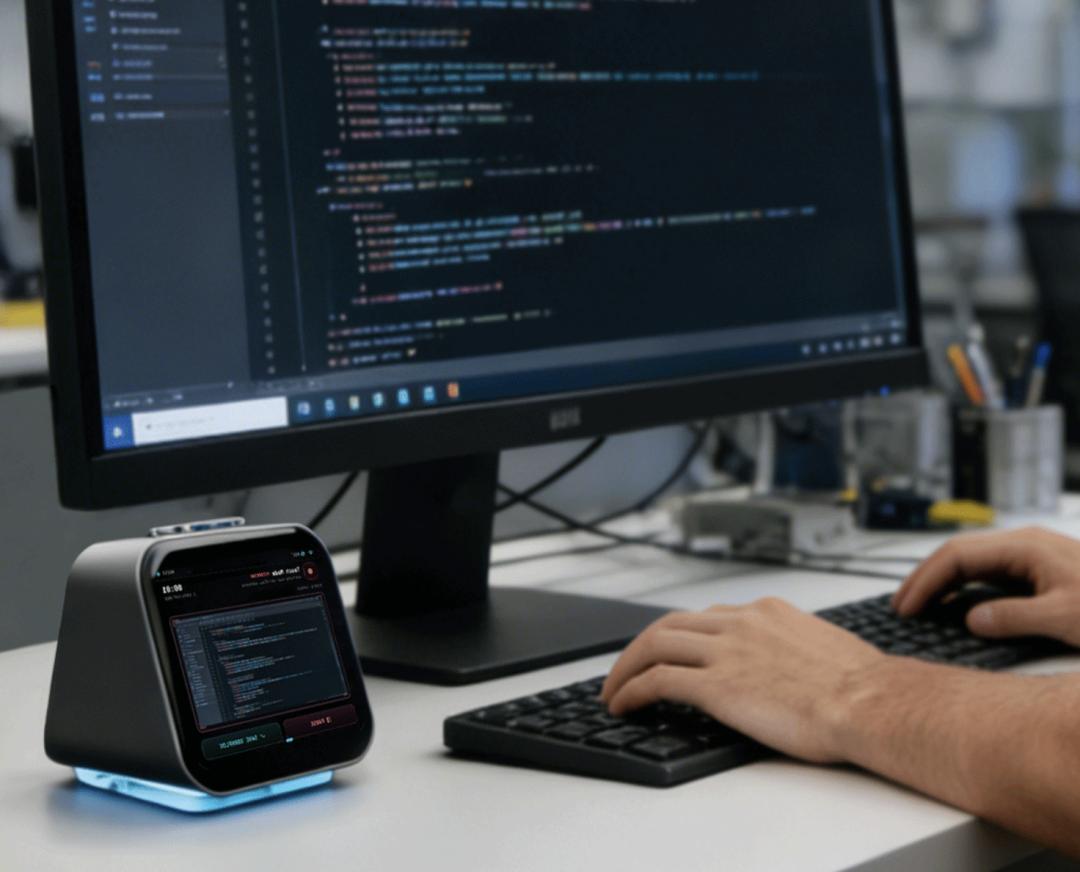
Violoop is shown in the bottom - left corner and can be placed on the desktop | Image source: Violoop
Violoop is only the size of a palm. It is directly connected to the computer via an HDMI cable, with a built - in local inference chip and a dedicated Agent system. It does not occupy the computer's computing resources and can run personal AI without relying on the cloud. It allows AI to run continuously locally, view the screen, operate the mouse and keyboard, and automatically process tasks such as files, emails, and schedules.
Users only need to issue instructions, and Violoop can execute them autonomously. It emphasizes local priority, keeping data, workflows, and preferences in the device as much as possible, turning an ordinary computer into an "AI computer."
Tiiny AI Pocket Lab, launched by the AI Infra company Tiiny AI, is also a popular product. It is portable and can be powered by a power bank, equivalent to a small "local AI supercomputer."
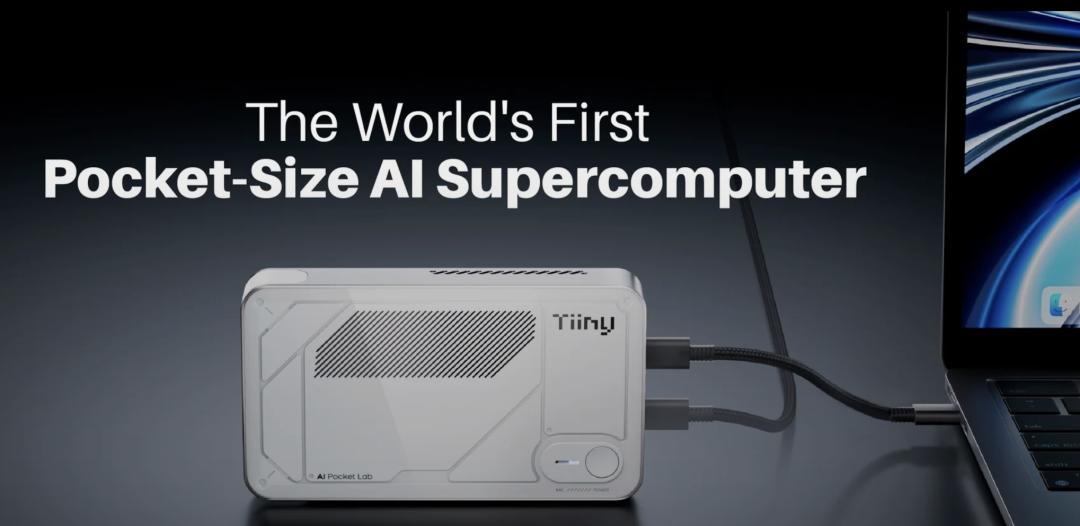
This is the Tiiny AI Pocket Lab, which can run large models locally and is plug - and - play | Image source: Tiiny AI official website
It is used by directly connecting to the computer via USB - C. The computer is responsible for display and daily operations, while the Tiiny AI Pocket Lab mainly supports one - click deployment of local large models (up to 120B), keeping personal data and Agent workflows in the Tiiny AI Pocket Lab device as much as possible, reducing cloud dependence and even achieving zero token consumption.
The market for such products is extremely hot. The Tiiny AI Pocket Lab raised $3 million in crowdfunding on Kickstarter in less than a month. Moreover, Eco Lee, the vice - president and head of commercialization at Tiiny AI, told GeekPark that they receive invitations from multiple investment institutions every week.
Reconstruction School: Build a New Host from Scratch for Agents
This school is the most radical, designing a hardware - software integrated device for Agents from scratch: new hardware, new software, new interactions, new permission frameworks, and even redefining "what a computer should look like."
The logic of such products is probably that if Agents are really the execution subjects in the future digital world, they should not continue to reside in computers designed for "humans." Traditional computers are organized around keyboards, mice, windows, and desktops, while Agent hosts are organized around continuous operation, memory, tool invocation, and automatic execution. That is to say, it is not a "computer with AI" but a "computer built for AI."
For example, Wuyun Innovation (Zettlab), which was recently interviewed in - depth by GeekPark, is about to launch an Agent computer without a screen, keyboard, or mouse. It runs 24/7 at home, with a built - in dedicated AI chip and local model, allowing "Lobster" to run smoothly right out of the box.

Sneak peek of the upcoming Agent Computer | Image source: Zettlab
Users can remotely control it through smart devices such as computers and mobile phones.
Theoretically, all of the user's multimodal data, Skills, and memories are stored in the hardware and can be migrated to other devices at any time, truly realizing "portable personal AI assets." Moreover, the massive multimodal data stored in the device can be accurately retrieved through its self - tuned edge - side model.
In addition, the EdgeClaw Box launched by the edge - side model company Mianbi Intelligence, which is equipped with its own MiniCPM edge - side model, follows a similar concept. They package hardware + enhanced "Lobster" + industry skills together, emphasizing out - of - the - box usability and reducing the deployment threshold.
Evolution School: Develop Agent Capabilities from Existing Smart Hardware
This school does not build new machines from scratch but develops Agent functions from devices such as NAS and mini - hosts that already have the ability to operate 24/7.
For example, Ugreen, a NAS manufacturer, announced the integration of the MiniMax large model, enabling the out - of - the - box use of "Lobster." Similarly, Lenovo's YOGA AI Mini (comparable to the Mac mini) and Think AI Tiny host, with their self - developed "Lobster" DingClaw built - in, eliminate complex deployments and are targeted at the personal consumer market and enterprise office scenarios respectively.
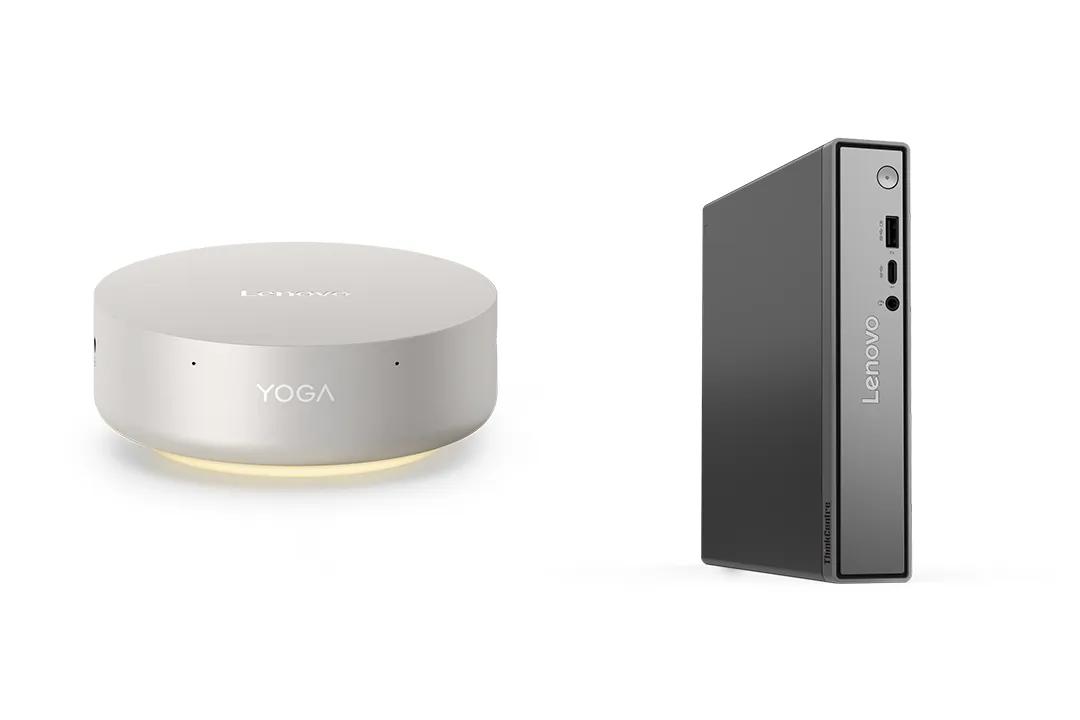
Two upcoming AI - native intelligent terminals - YOGA AI Mini and Think AI Tiny | Image source: Lenovo Group official WeChat account
The common feature of such products is that they can reuse the existing mature hardware supply chain and even do not need to open up new product lines. After transformation at the AI software level, they can quickly launch products to meet the needs of Agents.
Therefore, the participants in this school are more diverse. For example, Chatoys, an AI toy and digital life technology service provider, launched ClawHouse. A team with game development background combined a virtual lover with a mini - host, binding the emotional interaction Agent to local hardware and giving "Lobster" a customizable virtual image.
At the same time, they support enterprise customization and going global, and have also "crossed over" to become players in this track.
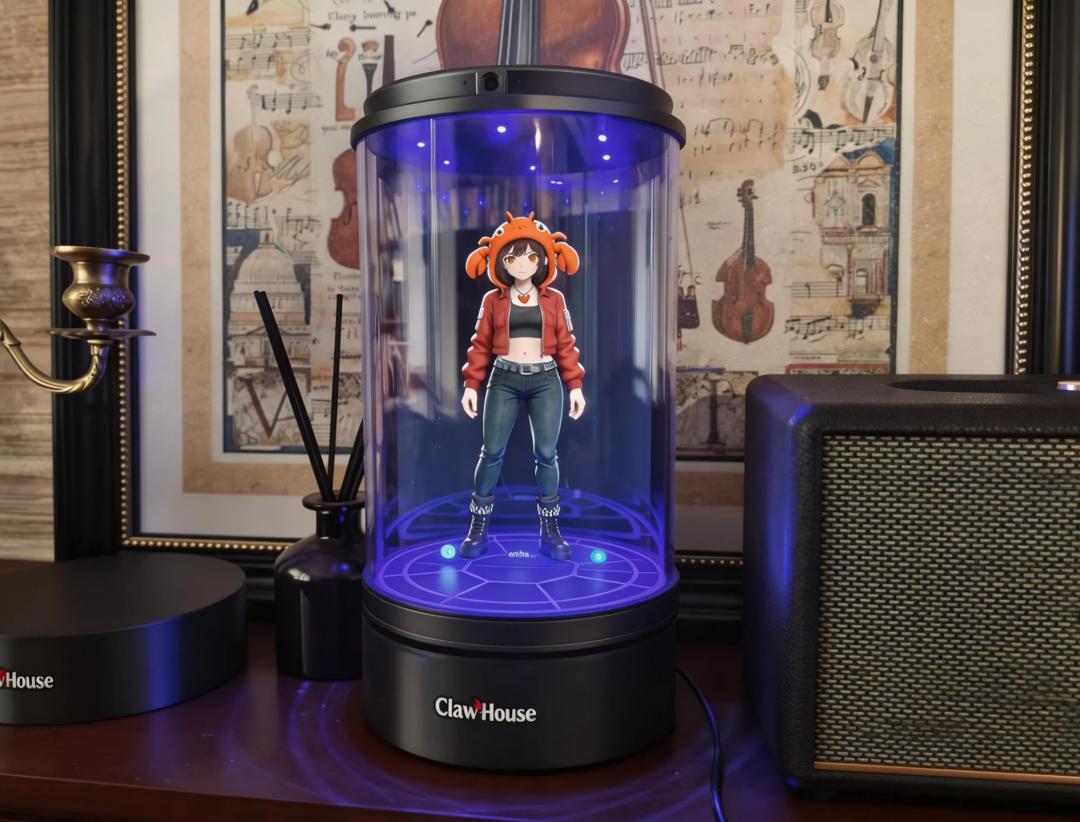
Actual photo of ClawHouse, with a 3D holographic cartoon image for interaction | Image source: ChaToys
Overall, although the three paths seem different in form, they have the same goal: to create a more cost - effective, secure, personalized, and hardware - software integrated "Lobster," turning AI from a platform's ability into an individual's asset.
02 Building a Dedicated Computer for AI is Essentially a Response to Human "Anxiety"
If we only understand the Agent Computer as a "hardware product," we will underestimate this track.
In the past few months, a consensus has emerged in the AI field: After AI gradually acquires the abilities of understanding, memory, planning, and execution, it will no longer be humans operating software one by one, but Agents operating on behalf of humans.
This is why more and more entrepreneurs and product teams are starting to believe that Agents need their own "computer."
What the Agent Computer provides is essentially a runtime for Agents to run continuously. That is, a "bottom - layer system environment" for Agents to run continuously, schedule tasks, manage memory, and invoke tools.
From this perspective, the Agent Computer is solving at least 4 core problems, which also happen to be the 4 types of anxiety that people face in the AI era.
First, it's about cost.
Those who have used "Lobster" know that if a long - term online Agent completely relies on the cloud, every inference, every task decomposition, and every tool invocation will incur continuous costs, which is very expensive, especially with the continuous increase in token prices.
A more realistic approach is the division of labor between the "cloud + local": the top - notch cloud large models are responsible for complex reasoning and decision - making, while the local models are responsible for execution, privacy data processing, and repetitive work.
Many entrepreneurs said that in the long run, the Agent Computer will form an end - cloud collaboration model of "the cloud makes decisions, and the edge side executes."
In the view of Eco Lee, the vice - president and head of commercialization at Tiiny AI, the popularity of their product in overseas crowdfunding also confirms this point.
He told GeekPark that the growth rate of users of open - source models/Agents has exceeded that of cloud models.
These users are not only using them for scientific research and coding. General entertainment, writing, and information processing are also core scenarios. A key reason for people's enthusiasm for open - source models is cost - effectiveness and local controllability - which is undoubtedly a necessity in the current situation of increasing token consumption.
Second, it's about the control of personal data.
The capabilities of an Agent depend not only on the model but also on its understanding of the user, and the basis of understanding is data.
The problem is that most of this data is currently scattered across different cloud platforms and does not truly belong to the user.
In the view of Guo Yanan, the founder of Wuyun Innovation, the larger the data volume, the higher the value, and the data scale brings great future imagination. Currently launched large models are essentially a collection of public - domain data, and public data has been basically mined.
As public - domain data is exhausted, the value of private - domain data will become even more important. Many standardized operating procedures (SOPs) are not available to large models and are only mastered by industry professionals. Therefore, personal and industry private - domain data will generate great value in the future.
Therefore, the core significance of the Agent Computer is to store the user's private - domain data of preferences, habits, tasks, judgments, and knowledge in local devices, which are controlled by the individual.
This may be a new source of value for everyone in the future.
Third, it's about the assetization of personal experience.
When an Agent participates in your work for a long time, it will gradually learn your judgment methods, expression habits, and task processes. These accumulations are no longer just chat records but form a "skill."
In today's system, these experiences often belong to the platform or the company. The core logic of some company layoffs is to "distill" employees' job experiences and skills into AI models and transform them into the company's skills, which is actually depriving employees of their personal digital assets.
Eco Lee believes that in the AI era, an individual's core assets will be their own judgments and personal experiences. Everyone should pay attention to the accumulation of personal data and the training of AI avatars to avoid becoming a "victim" of AI development.
Moreover, these assets should be able to be migrated to new devices to continue growing and become part of personal competitiveness.
Fourth, it's about the management ability of context.
Whether an Agent is "useful" essentially depends on whether it has continuous context.
It needs to remember your preferences, historical tasks, key documents, and behavior trajectories for a long time to form truly effective decision - making abilities.
Therefore, the core of the next - generation competition is no longer the ability of a single model but the control of context. Whoever can better manage the user's data, permissions, skills, and task flows will be closer to the next - generation operating system.
This also brings a key change. In the view of Guo Yanan, the founder of Wuyun Innovation:
In the past, platforms competed for "human attention"; in the future, the real competition will be for the attention of Agents.
As the number of Agents continues to grow, the context they rely on will directly determine their behavior boundaries and decision - making results. Controlling the context is equivalent to controlling the Agents.
"Private - domain data is the core asset of the future, and context is the new - generation OS," Guo Yanan believes.
It seems that the ideology represented by the Agent Computer is actually both a response to people's various AI anxieties and the awakening of "individual consciousness."
03 Will Big Companies Win?
When a new computing paradigm emerges, big companies will almost certainly enter the field. Today, both consumer electronics manufacturers and Internet companies are moving towards the direction related to Agent Computers.
However, there is a very delicate contradiction in this track:
The core selling point of the Agent Computer is personal data sovereignty, while the past business models of big companies are often based on monopolizing user data. This conflict means that even if big companies have resources, they may not have a natural advantage.
Users will worry about data abuse, entrepreneurs will emphasize local priority, and the market will naturally lean towards a "decentralized" narrative. That is to say, the competition in the Agent Computer field is not only a hardware competition but also a trust competition.
However, if big companies can truly achieve transparent permissions and controllable data, they still have a chance to become infrastructure - level players in this era.
As for the future, the Agent Computer may have three endings.
The first is to be absorbed by PCs or mobile phones.
If the edge - side AI of future mobile phones and computers is powerful enough to support the