Silent cabins have "moved down" from airports to study rooms: prices have plummeted, and individual market orders have overtaken B2B orders.
Some time ago, Lei Technology (ID: leitech) also made its first visit to the venue of the China International Furniture Fair (CIFF) in Guangzhou. Originally, we just wanted to see what intelligent furniture there was and the current development of ergonomic chairs. Unexpectedly, we also discovered another interesting "furniture" - the silent cabin.
I still remember seeing this thing for the first time in the waiting hall of Baiyun Airport in Guangzhou. Then, I also saw similar spaces in Alibaba's headquarters in Hangzhou, ByteDance's headquarters in Beijing and other places. In the blink of an eye, it has become quite popular. In the past few years, silent cabins (or soundproof cabins, silent workstations) have mostly appeared in the form of "public phone booths" in airport waiting lounges, media centers of large exhibitions, or in the open - designed offices of Internet giants.
However, at the scene of the Guangzhou Furniture Fair, through on - site visits and observations of the booths of several mainstream acoustic brands, Lei Technology found that their target group is no longer just the B - end. Instead, they are starting to focus on the C - end, that is, the individual user group. A salesperson described this industry like this : "The silent cabin is 'going downmarket'."
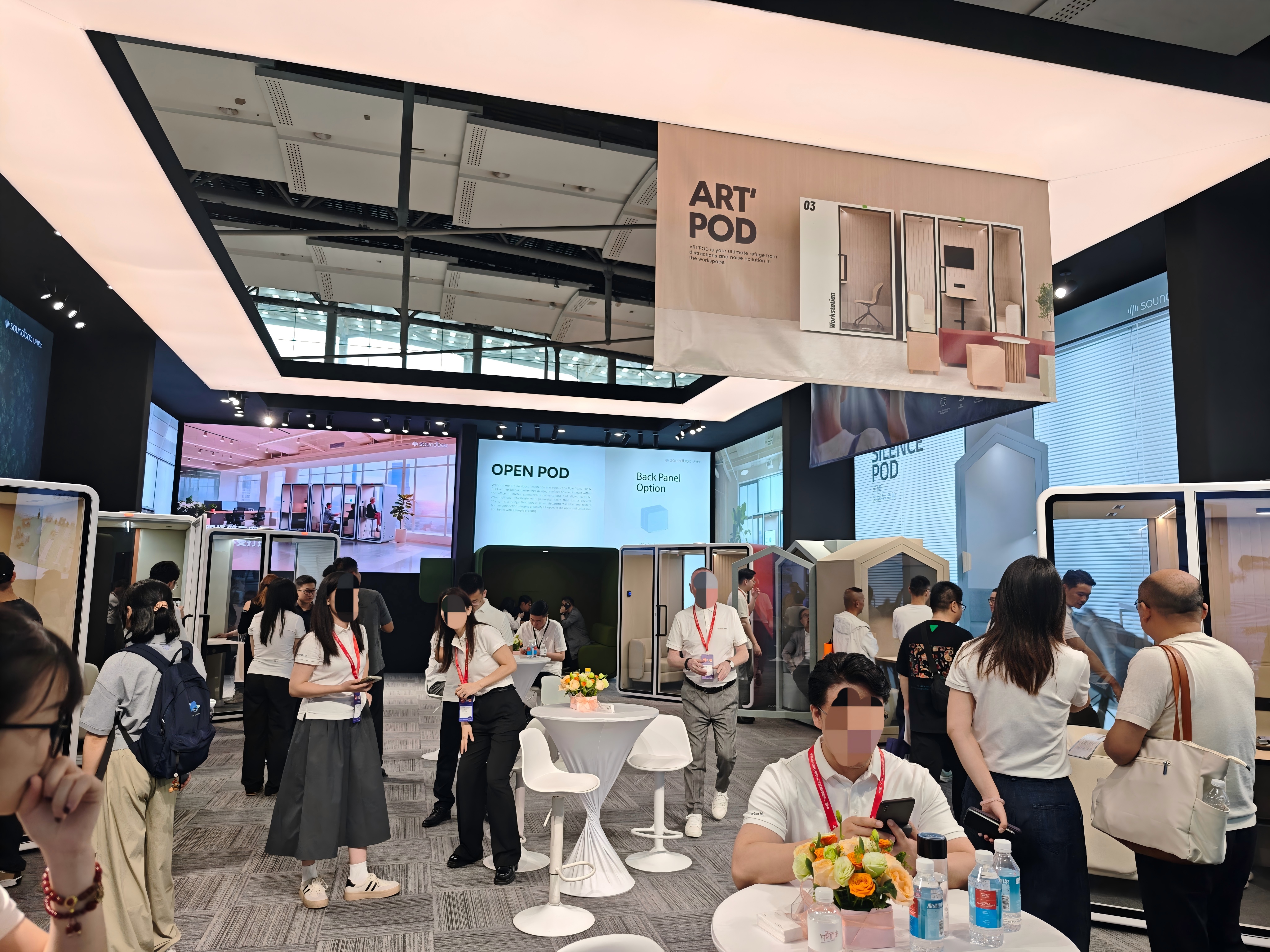
Image source: Lei Technology
The so - called "going downmarket" here does not mean the decline of the market. Instead, it means that the silent cabin is moving from the B - end to the C - end and quickly entering the mid - and low - end markets. To be honest, this is something that Lei Technology (ID: leitech) never thought of before.
In in - depth exchanges with the on - site staff of leading brands such as Sound Doctor and He Gao, they revealed to Lei Technology that in the past two years, the direct orders from individual consumers have increased rapidly. The demand in the individual market is not only "not small", but may even exceed the traditional B - end procurement in the future. Is the silent cabin really that popular?
Is AI making the silent cabin more "understanding" and cheaper?
Although the silent cabins we are familiar with have only appeared in the past decade or so, the need to find a private small space to make a phone call or do other things can be traced back to the 19th century. The phone booths that we are familiar with in movies and TV shows first appeared on the streets of Berlin. This may be the earliest private space facility set up on the street by humans for communication and other behaviors.
However, if we really want to talk about something directly related to the silent cabin, it has to be the silent rooms used by music staff, which later evolved into silent booths for individuals. However, because of the very high requirements for noise suppression (both inside and outside), the cost is extremely high, and it is almost impossible to popularize.
As for the origin of the modern - style silent cabin, it is quite interesting. The root cause of its birth is the previously popular "open - plan office". Although the open - plan office breaks the barriers between superiors and subordinates, it also leads to increasingly prominent noise problems. Finally, on the basis of the silent room, designers designed a silent cabin that can be modularly disassembled and installed and is equipped with an independent ventilation system.
In essence, the silent cabin is a highly enclosed physical space. The design logic of early products was very simple and crude: wrap people up with thick enough panels. However, in actual experience, this "physical isolation" brings serious side effects - the stuffy feeling caused by poor air circulation and the claustrophobia caused by the enclosed space.
Therefore, with the iteration of products, thick sound - insulating glass + multi - layer composite sound - absorbing structure + concealed ventilation system have gradually become the mainstream. Especially for products targeting the individual home market, due to factors such as usage time and environment, consumers' requirements for experience actually far exceed the needs of office workers who only use it for about ten minutes occasionally.
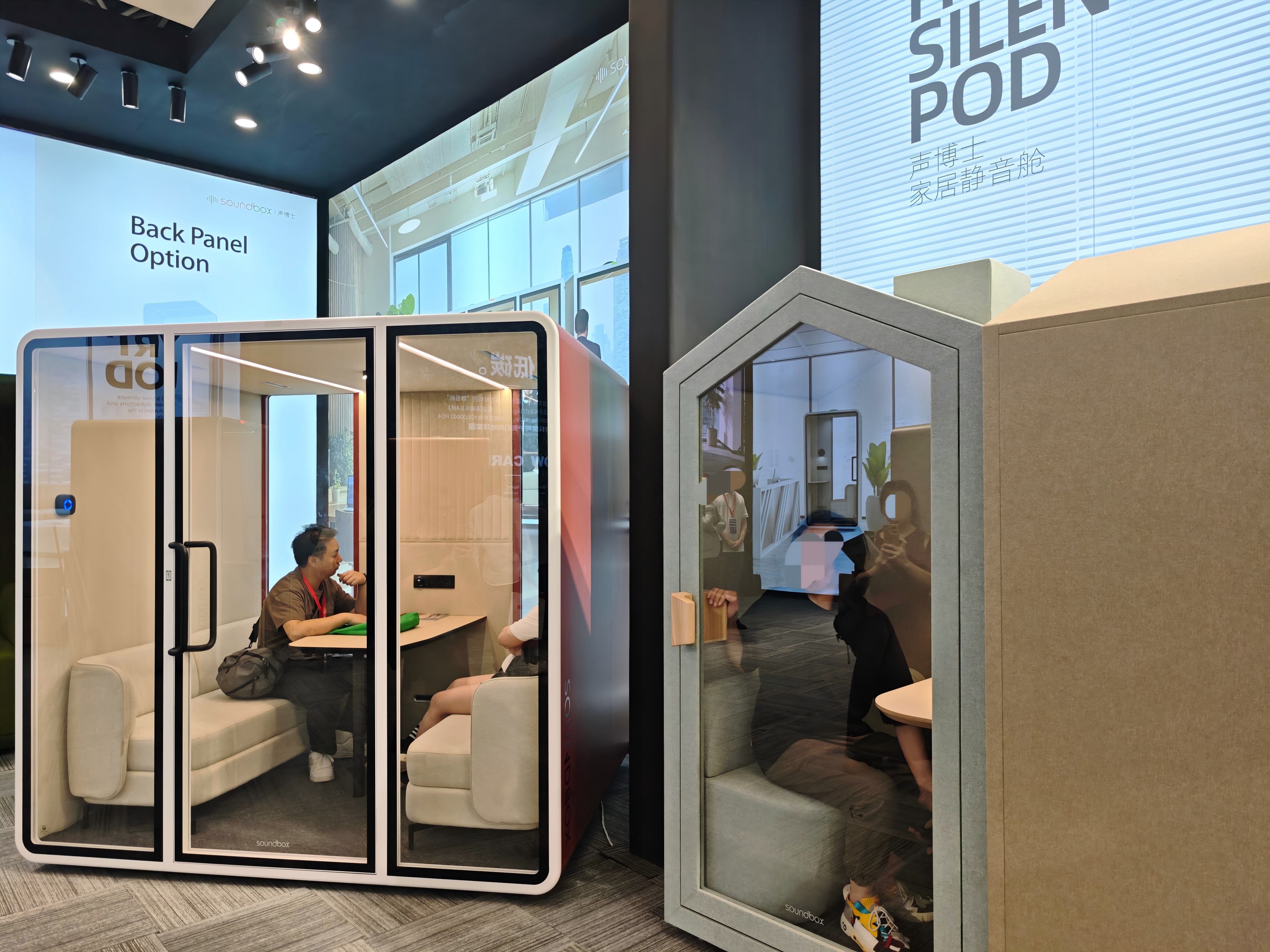
Image source: Lei Technology
Therefore, how to make the silent cabin more comfortable and more "affordable" has become a new demand. At the exhibition site, Lei Technology (ID: leitech) noticed that the flagship silent cabins of many mainstream brands have deeply integrated AI functions. With the help of AI's autonomous decision - making and data reasoning capabilities, the silent cabin offers a different experience.
First of all, of course, is the familiar AI voice control. Users don't need to manually fine - tune parameters such as light brightness and color temperature. They only need to say "Adjust the light to the mode suitable for reading/studying/resting", and the AI will automatically execute the relevant environmental plan to make the light and environmental settings more in line with the user's needs.
During the on - site test, I simply said "I want to take a rest", and the light in the cabin automatically adjusted to a color temperature of 2700K. The air - conditioning temperature dropped from 26°C to 24°C, and the light brightness was adjusted to 30Lux (to ensure that you won't fall into a deep sleep during a short rest and can wake up quickly), allowing you to see the surrounding environment but not be in complete darkness.
When I asked how to completely solve the intrusion of external light sources, the on - site staff's answer was "blackout curtains", which was also quite simple and crude. However, later in the exhibition hall of another brand, they said that high - end models can be equipped with electro - chromic glass, which can greatly reduce the intrusion of external light sources and has a better effect than traditional smart dimming glass.
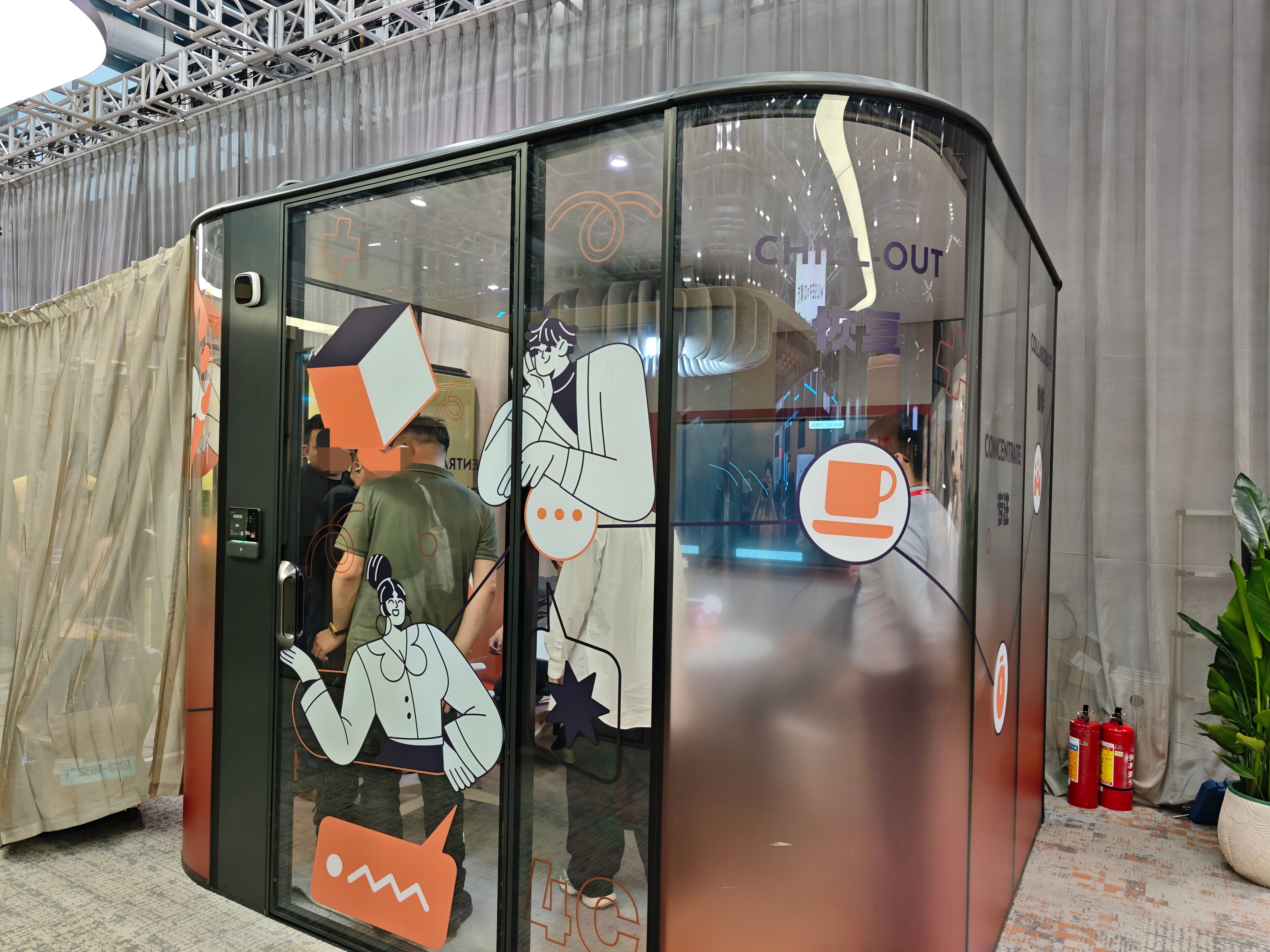
Image source: Lei Technology
Interestingly, AI not only solves the problems of use and comfort but also solves the problem of noise reduction cost.
In the past, in order to achieve a noise elimination effect of more than 35dB, silent cabins often needed to use multi - layer thick and complex acoustic structures, including carbon - plastic composite boards, high - density damping sound - insulating felts, aviation aluminum, and hollow laminated sound - insulating glass. This brought extremely high material costs and transportation and handling costs, making it difficult for them to enter ordinary families (they also take up a large area).
The rise of large AI models has greatly reduced the development cost of active noise reduction algorithms and significantly improved the effect of active noise reduction. This has given silent cabin manufacturers a new way of "using computing power to replace materials". I noticed on - site that most silent cabins do not take up much space, and the thickness of the sound - insulating walls is not high. The on - site staff also attributed the reason to "AI active noise reduction".
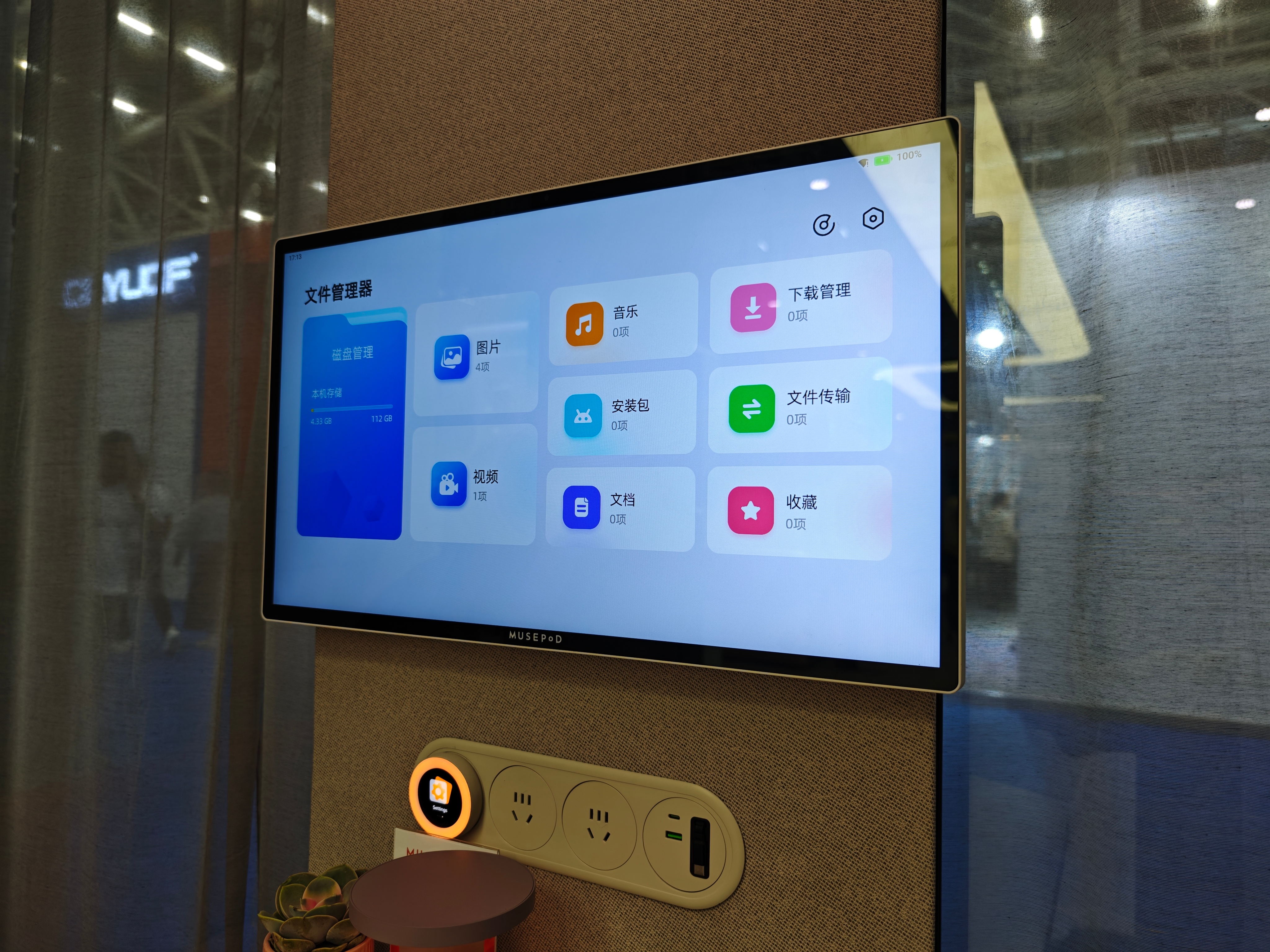
Image source: Lei Technology
Moreover, active noise reduction can easily solve the low - frequency noise that traditional sound - insulating materials have difficulty dealing with, rather than simply relying on piling up materials. It can be said that manufacturers can use lighter and lower - cost environmentally friendly panels to build the basic structure, and leave the remaining noise reduction tasks to the AI active noise reduction system to make up. Finally, a comprehensive noise reduction effect similar to or even better than that of traditional heavy - duty silent cabins can be achieved (usually, the sound pressure level difference between the inside and outside can be controlled at about 25dB to 30dB).
According to the salesperson of Sound Doctor, today's silent cabins have generally achieved lightweight design. Only two people are needed to complete the handling and installation when the product is delivered to the door by express, which has almost cleared the last obstacle for the product to enter ordinary families. So, who exactly is putting a silent cabin at home?
A cost - effective "private space"
Although the optimization of technology and cost has provided the conditions for the silent cabin to "go downmarket", the real reason for consumers to be willing to spend 10,000 to 20,000 yuan to buy a two - square - meter "box" is the "hustle and bustle" of modern life - these are the exact words of the salesperson.
The staff told Lei Technology that for modern people, a quiet space is sometimes more expensive than other things. Take a common residential community as an example. If you live on a low floor, you must often hear the noise of children playing downstairs. If there are large and many open spaces downstairs, you may also be bothered by square - dance aunts.
Even if you live on a high floor, the shouting during a party upstairs, the sound of the neighbor's daughter practicing the piano on the left, and the angry scolding of parents tutoring their children on the right - there is always one kind of noise that will touch your nerves. Especially for some people who are very sensitive to noise, once they try it on - site, they will basically place an order directly.
At this point, the staff also invited Lei Technology (ID: leitech) to experience the effect of the silent cabin in person. If you have participated in a large - scale exhibition, you know that the noise level at the scene is even comparable to that of a busy street corner. At that time, when I walked into that small silent cabin and closed the glass door, I suddenly had a sense of unreality: the world outside the glass was still crowded with people, but there was almost no sound around me.
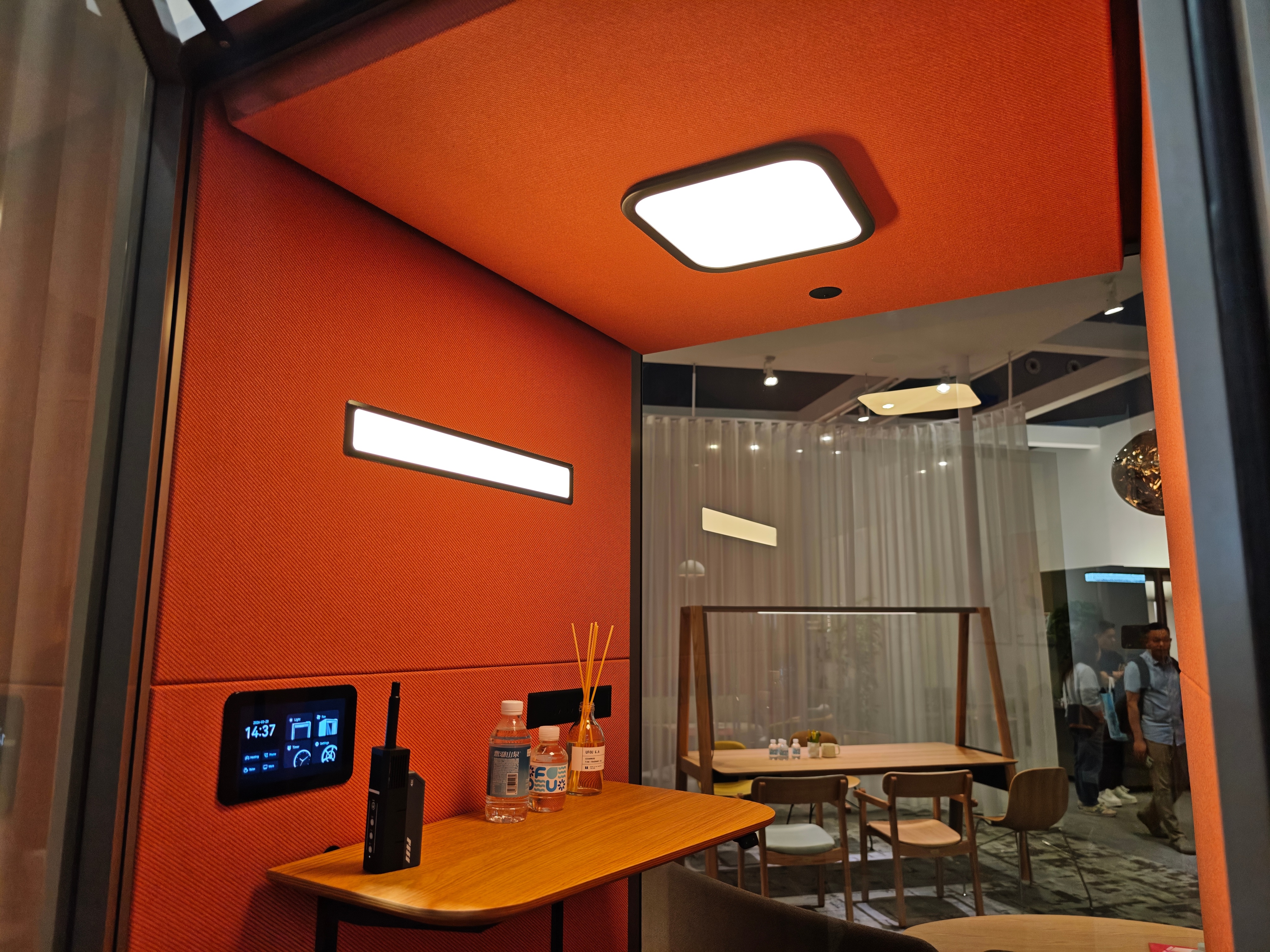
Image source: Lei Technology
It may be a bit of an exaggeration to say that there is no sound at all, but when I calmed down, I even felt that I could hear my own breathing. This experience is really wonderful, like cutting out a private space in the middle of a busy city. If a person who likes quietness experiences the silent cabin at the exhibition, I don't doubt that he will directly swipe his card to place an order.
The staff sat in with me and continued to introduce: "Now many buyers are parents. The school district houses they buy are often old and shabby, with poor sound insulation and a messy surrounding environment. In this case, if they don't want to waste time on commuting, putting a silent cabin at home is the most suitable option, which can provide a completely quiet and focused learning space for their children."
He even shared a case with Lei Technology: A high - school girl in Shanghai was introverted and shy and always dared not speak loudly in front of others. As a result, although her written English score was very good, her oral English score was very poor. Later, her mother bought a silent cabin and demonstrated in person that people outside couldn't hear what was said inside. So the girl studied and practiced oral English in it every day, and her total English score directly increased from 130 to 140.
Although Lei Technology (ID: leitech) thinks this case is a bit exaggerated, from the perspective of college entrance examination candidates, spending only 10,000 to 20,000 yuan to get an absolutely quiet private study space, I guess many parents are willing to pay. After all, this thing is not only beneficial to children but also to parents (they don't have to stop watching TV or chatting to create a quiet environment anymore).
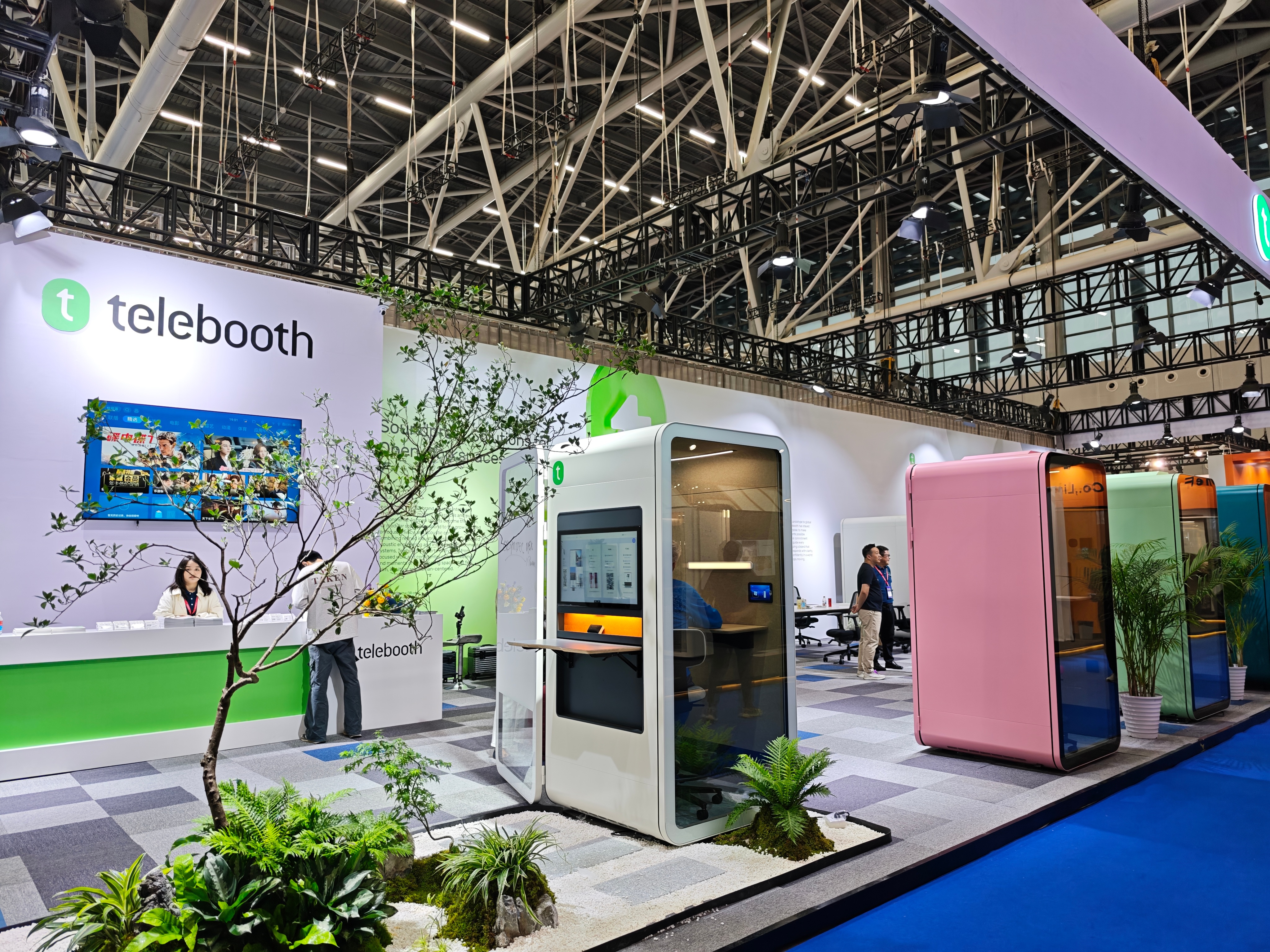
Image source: Lei Technology
In addition, the intelligent reservation system, which was originally used by enterprises to check the idle status of silent cabins, has now directly become a "study supervision system". Parents can check the usage time and opening/closing time of the silent cabin in the cloud and directly evaluate their children's learning status. I can only say that today's children are quite pitiful.
In addition to being used for studying, the salesperson also introduced to Lei Technology (ID: leitech) the "special models" designed for different musical instruments. For example, there is a model that can fit a complete upright piano. Practicing the piano in it, you don't have to worry about complaints from neighbors anymore.
There is even a model for brass instruments such as trumpets. It strengthens the noise reduction of mid - and high - frequency sounds and also has a certain sound - absorbing design, so that the sound of the instrument won't rebound repeatedly in the cabin and make the practitioner feel numb. Considering the cost of learning musical instruments, if you don't have the ability to buy a villa in the city, the silent cabin is probably the most cost - effective "practice room".
Lei Technology (ID: leitech) highly agrees with this. Because when I used to live in a community, someone across the street dozens of meters away practiced the saxophone on the balcony every night (the sound was very clear). If the person's level wasn't good enough, they would probably have been complained about long ago.
In addition, freelancers and people who often need to work remotely actually have a lot of demand for silent cabins. Especially for those whose children are still minors and in a noisy stage, you can't beat or scold them (it's the nature of children). At this time, if you want to have some private space and time of your own, the best choice may really be the silent cabin.
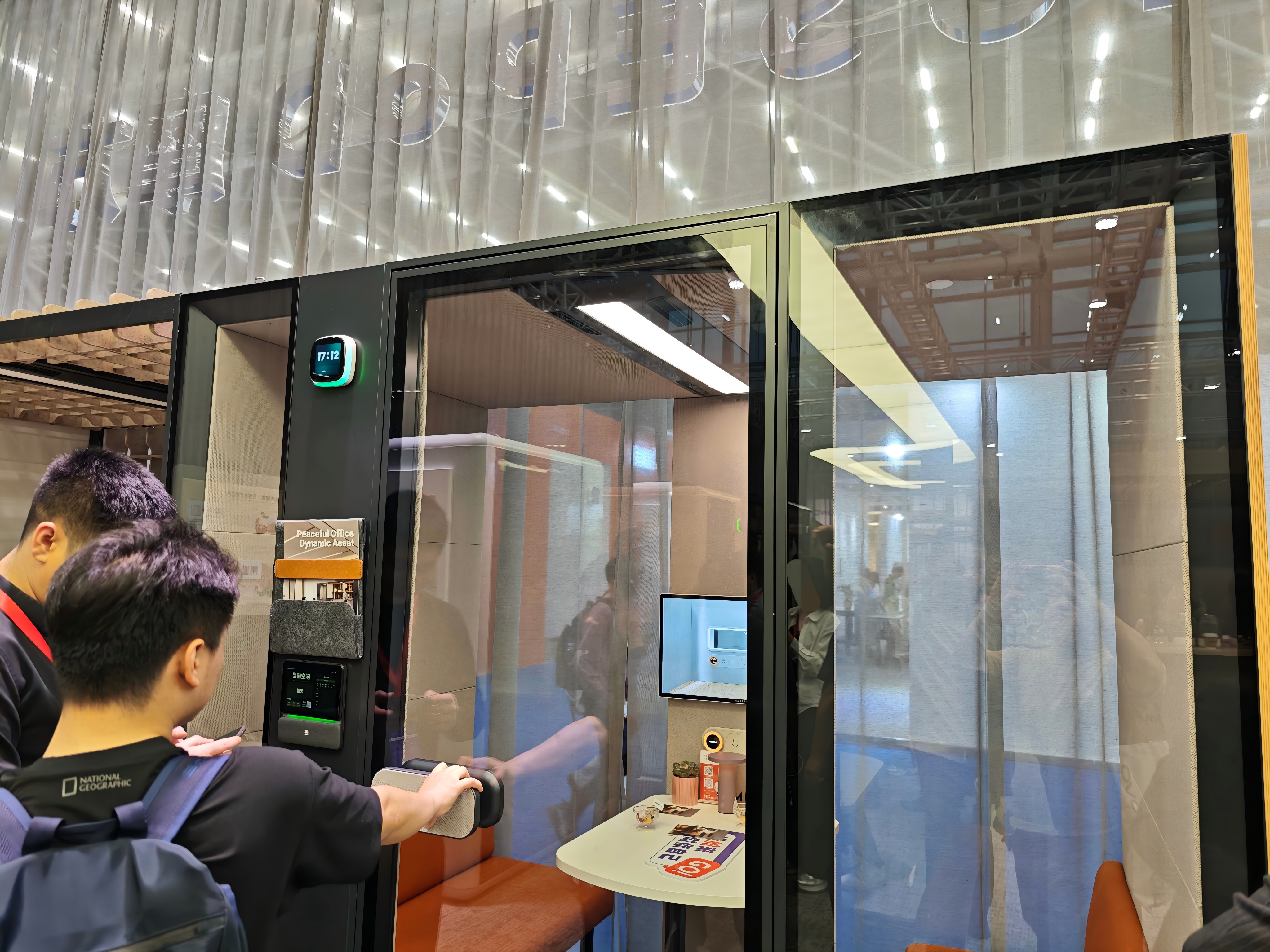
Image source: Lei Technology
To be honest, if I were one of the above - mentioned types of people, I would probably not be able to resist placing an order. After all, the benefits are obvious, and the cost is not high (compared with the multi - million - yuan housing prices in first - tier cities). There are even enterprises planning to launch a secondary handling service for disassembly and recycling. However, since it is still in the discussion stage, they specifically asked Lei Technology (ID: leitech) not to disclose their identities.
In the view of Lei Technology (ID: leitech), this idea is really good. After all, apart from buyers such as freelancers and musical instrument enthusiasts, the current major individual consumers are "college entrance examination candidates". And