AI voice interaction has spawned a "must-have" product category.
Early last year, Vibe Coding became a global buzzword.
It has spawned a subtle programming trend: in the process of collaborating with AI to write code, developers gain a smooth, almost flow-state interactive experience.
The days of typing code line by line are gone. People have gradually realized that whether it is Vibe Coding or Vibe Design, the core appeal lies in bypassing the formulaic rules and logic that require manual memorization in mainstream creation tools and programming languages, and achieving WYSIWYG of demands with natural language.
Soon, people realized that the end point of "Vibe" is not for users to input a sentence and pick a usable solution from a pile of generated results, but to speak directly, to refine and iterate demands in the process of communication.
Speaking is the most direct and smoothest carrier for human beings to express their intentions.
A group of programmers and content creators began to share their surreal daily work routines: in a quiet office area, they direct Cursor and Claude Code to modify code through a microphone, and reply to emails quickly with simple oral instructions. These people are less like the traditional "code farmer" developers, and more like directors in a broadcast studio.
At the same time, an interesting phenomenon is taking place: due to the bulky traditional microphones, more and more people are clipping the wireless lavalier microphones originally designed for short video shooting on their collars and connecting them to computers.
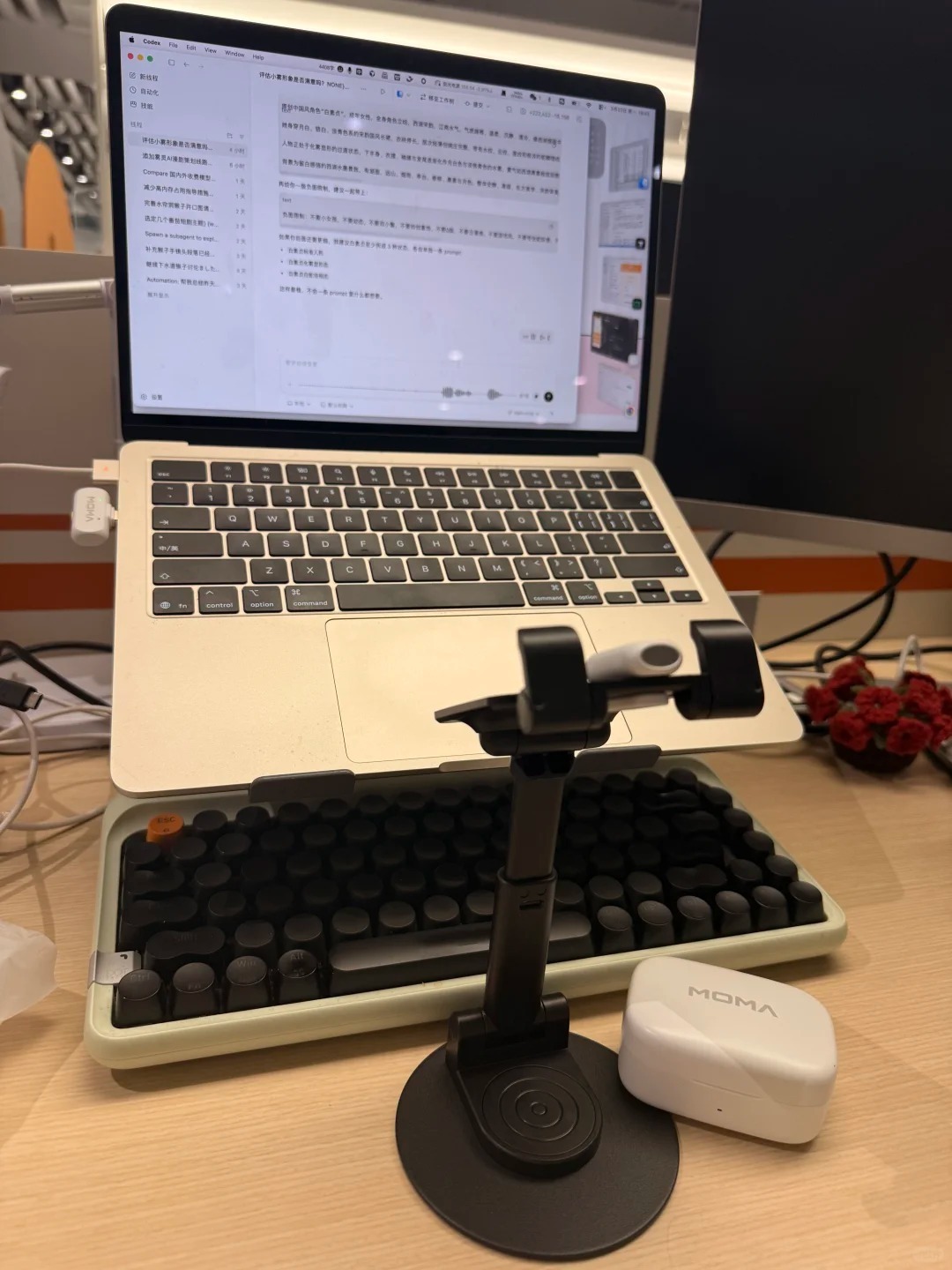
This "repurposed" hardware has unexpectedly become the most practical device in AI voice interaction scenarios, thus giving birth to a new hardware category, a rigid-demand category that is explored, verified and defined by users themselves.
01 Voice interaction is becoming the "third hand"
Before every big explosion of content productivity, machines will move closer to human instinctive behaviors and intentions, making the path of human-computer interaction shorter and more direct.
From code with rigorous grammar, to prompt engineering, to more and more daily natural language input, and finally directly to voice interaction, it has spawned applications like Typeless that can transcribe human speech into intentions, further shortening the path from thinking, speaking to output.
Voice interaction also has a rigid demand driving force: the multi-round conversations and long-term tasks between humans and AI are increasing, and the information density exceeds the load of text input.
In the past, people's demands for AI were to ask a question or generate an image, and they did not have obvious pain points when typing.
Now people treat AI as their assistant and colleague, throwing a large amount of materials to it every day to discuss, plan and modify together, only to find that the speed of typing can never catch up with the speed of thinking and expression.
The most powerful interaction method between people has always been face-to-face conversation, and the trend of human-computer interaction will be the same.
As a voice interaction tool with a very simple product logic, Typeless has suddenly become a rigid-demand tool for a large number of heavy AI users, and Doubao also launched a voice input method immediately. The two-way recognition between users and manufacturers stems from the fact that the value of aligning thinking and expression in the AI era is being amplified, and there will be more and more tools that can be called by direct speaking.
It can be said that voice interaction is becoming the "third hand" for AI developers and creators, but it is not just a third hand. It also invisibly creates a meeting space for humans and AI, allowing AI as the second brain to align with the human primary brain.
In this newly formed meeting space, a key question begins to emerge: what kind of equipment is still needed to make the interaction smooth enough?
The users themselves came to the conclusion that what they need is a sound pickup device that can recognize sound clearly, be worn all day long, and protect privacy in public spaces.
The clear and demanding demand points to a fairly mature hardware category - wireless lavalier microphone. In the peripheral sharing of Vibe Coding, the LARK series wireless lavalier microphones from Hollyland have also become popular.
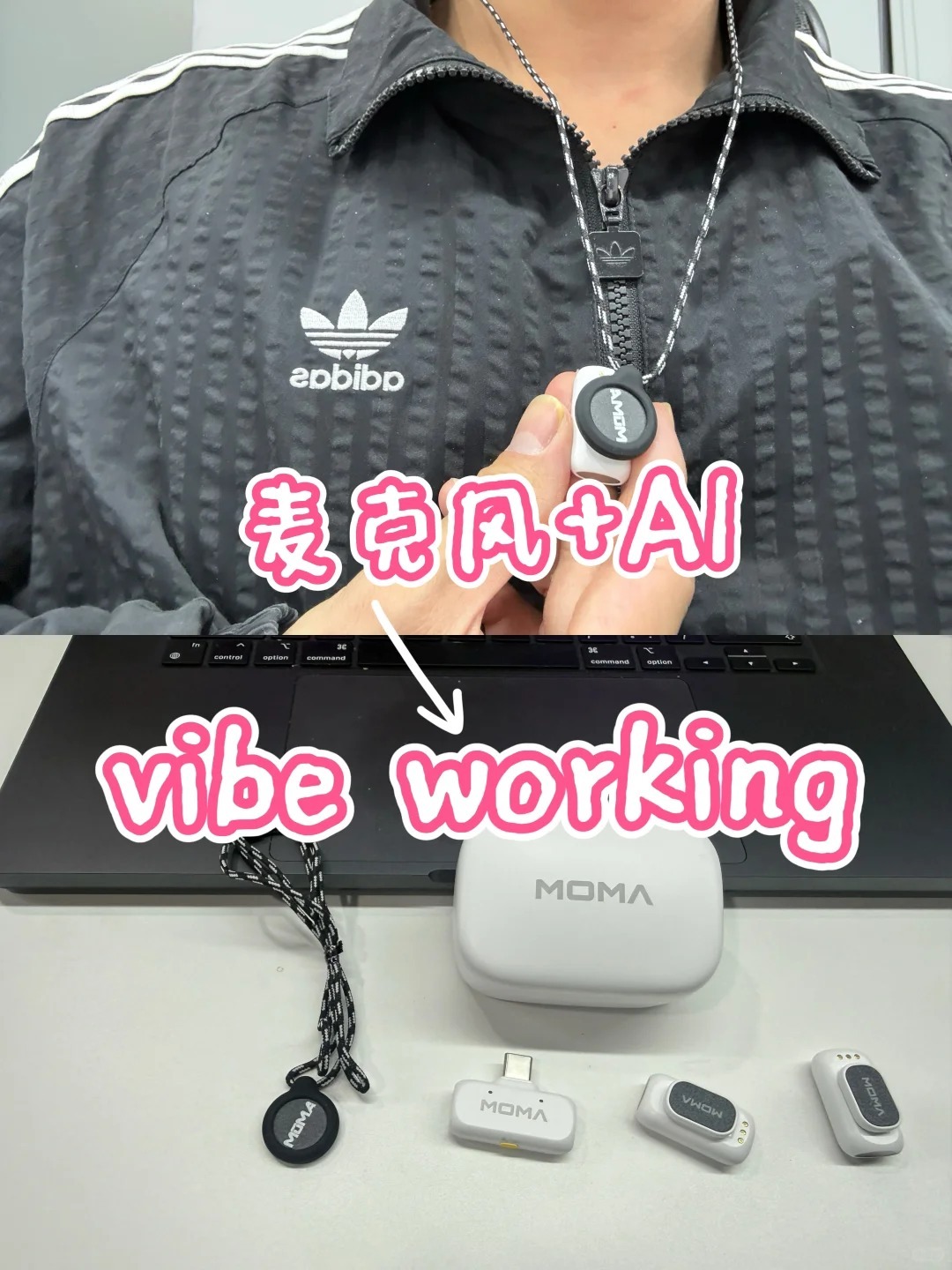
Hollyland, a domestic manufacturer that has been deeply engaged in the audio technology field for more than ten years, achieved great success during the short video boom in 2020: it released its first wireless microphone and became a hit riding the east wind of self-media content creation. Today, Hollyland, which focuses on the high-end market of personal sound pickup equipment, has taken the leading position in the innovative track of wireless lavalier microphones.
The wireless lavalier microphone, which was originally born in the hotbed of short videos and served video creators and anchors, has now been actively discovered and selected by users in the surging wave of AI voice interaction.
In this typical early innovator-driven track, the choice of any product is not the result of education and marketing, but the answer given by global users in real scenarios.
02 Why does AI voice interaction need new hardware?
Before understanding why AI voice interaction can give birth to a new hardware category, we need to understand a question first: speech recognition technology has reached 90 points, why is voice interaction still not smooth enough?
On the way for a new technology to become mainstream productivity, the most unexpected obstacles often come from social psychology.
A simple example. In an open office, when more people are talking, the continuous oral instructions in the office not only create unnecessary noise, but more importantly, they will expose work content and cause privacy data leakage.
It is even worse for people who create in cafes. In a quiet public space, communicating with other people seems much more "normal", but communicating with AI requires overcoming a greater sense of expression shame, which will cut off the "flow state" of creation.
In order to balance efficiency and privacy, people began to take an adaptive strategy: deliberately lowering their voice, leaning close to the screen, and using a faint breath sound that is almost inaudible to people around them to forcibly draw a private human-computer collaboration area. The built-in microphone of the computer has a long sound pickup distance, and after lowering the voice, the recognition rate drops sharply.
Speaking loudly causes trouble, and speaking softly makes AI unable to understand. A typical contradiction appears: the application layer is ready, but the experience is stuck at the physical layer.
It is under this obstacle that heavy AI users have begun a long exploration of hardware, sharing their solutions on Reddit and X. They have tried gaming headsets, Bluetooth headsets, and even professional conference headsets, until someone shared the experience of using Hollyland's wireless lavalier microphone, and everyone found that the effect was surprisingly good.
Near-field sound pickup solves the problem of environmental noise, and whispers can also be clearly captured; the wireless and lightweight body design allows users to walk around, and wearing it all day is almost unnoticeable, so they can communicate with AI immediately whenever they have an idea. In this way, Hollyland's wireless lavalier microphone has "unexpectedly" become the most suitable productivity peripheral for AI interaction at present.
This discovery of cross-scenario usage began to spread in small circles.
At first, it was independent developers, including many OPC (one-person companies), who direct the "army" of AI from product design, coding to testing and operation all by themselves. In the past, they consumed a lot of tokens every day by sitting in the same place and typing on the keyboard. Wireless lavalier microphones allow them to open a more elegant way of working: after saying a few words, the Agent can run at any time.
Later, product managers, content creators, and knowledge workers also began to join in. The work of these people is trivial and requires a large number of structured documents to be output, and most of their time is spent in meetings and typing, so their productivity is fragmented. The change in work scenarios brought by wireless lavalier microphones is that they can now almost use fragmented time to direct AI to do "all work" by voice, and then use block time to adjust and iterate. The fit of productivity needs makes this group quickly turn their personal experience of equipment selection into a group standard configuration.
These early adopters have one thing in common: they are extremely sensitive to efficiency, and the density and depth of AI interaction far exceed ordinary people. Therefore, these people will constantly think, communicate and try new equipment in order to upgrade efficiency.
Having solved the problem of why AI voice interaction needs professional peripherals, the next question is: what kind of professional peripherals does AI voice interaction need? Whisper recognition, mobility, and non-inductive wearing, these three core demands have been repeatedly mentioned.
Whisper recognition is a rigid demand, because people need to protect their privacy in public spaces and do not want people nearby to hear what work they are handling.
Mobility means that people's collaboration with AI happens anytime and anywhere, not limited to the work that needs to be done in front of the screen. They don't want to be tied to the computer, and can continue to let AI complete tasks while waiting for a meeting or even pouring a glass of water.
Non-inductive wearing reflects physical and psychological comfort. If a peripheral requires your continuous attention, it will inevitably interrupt your thinking and make you use the tool cautiously. The best tool is the one that makes you forget its existence.
These three core demands are enough to form a new product category.
The Hollyland LARK series has achieved the ultimate of these three demands under the current sound pickup logic, and has been verified by the video creator group for a long time, which makes users feel that the most suitable peripheral for AI interaction at present is the wireless lavalier microphone, not other product forms.
The single transmitter of LARK M2 weighs only 9 grams (a one-yuan coin weighs about 6 grams), and you can hardly feel its existence when you wear it on the collar. The magnetic design allows you to put it on and take it off in just one second, so users can forget the device all day long. Whenever they need to whisper to AI, they have enough sense of security: the microphone is right by their mouth.
The dual-channel design of LARK A1 may seem a bit advanced today, but it accurately caters to people's future expectations for AI Agents. Soon, AI will participate in meetings as a meeting member, and different people in the meeting will send voice commands to the same AI assistant. At that time, single-channel devices will become a bottleneck.
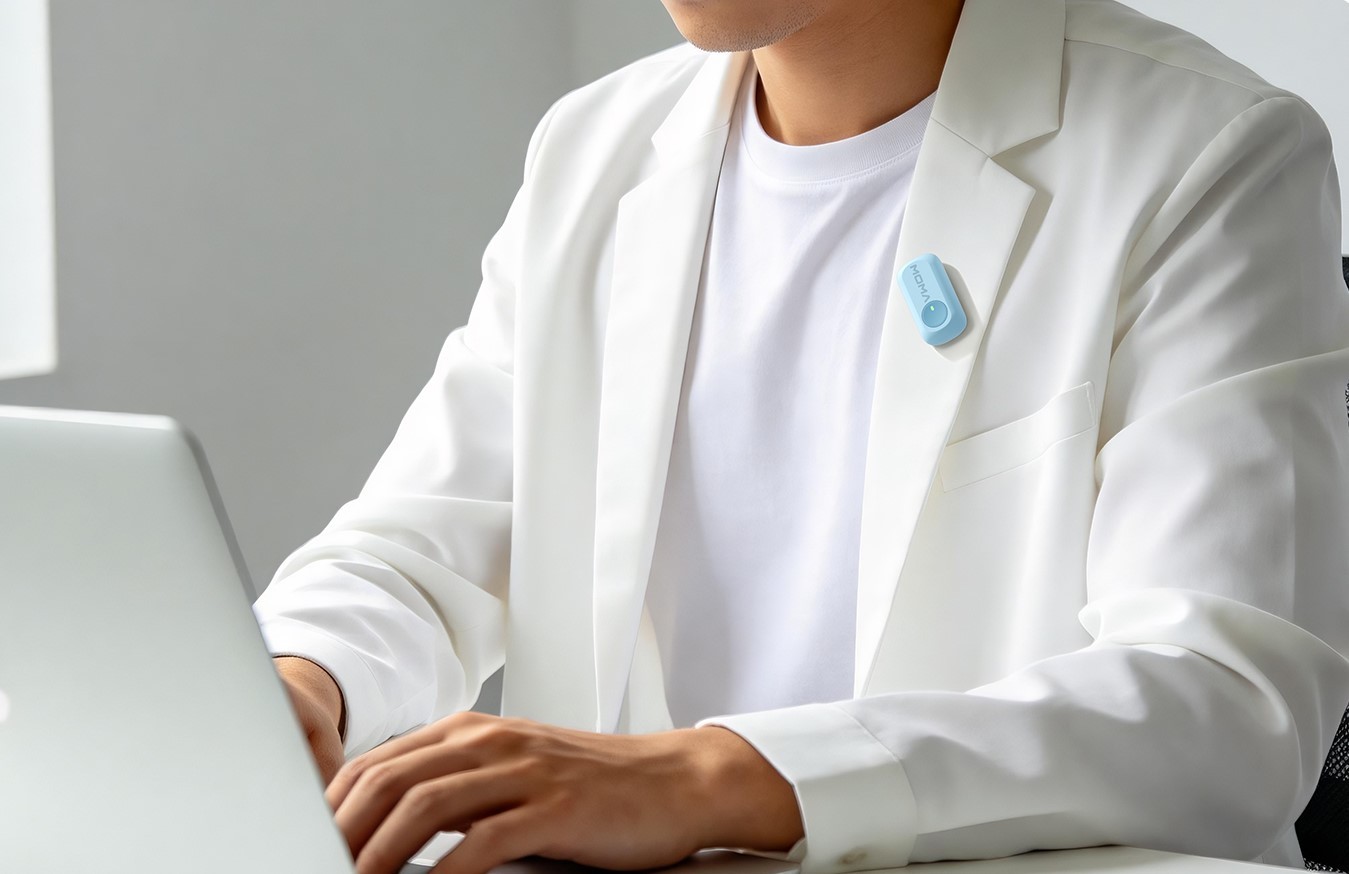
Hollyland product LARK A1
As a domestic audio technology manufacturer whose wireless microphones have reached top sales and even defined the category of "wireless lavalier microphone", Hollyland has two irreplaceable advantages in its moat.
First of all, it is a complete audio technology stack composed of dedicated wireless protocol, dual-channel recording and intelligent noise reduction algorithm. This technology stack enables low-voice interaction to have anti-interference ability, and provides product experience born for high signal-to-noise ratio input. The complexity of the technology stack determines that the sound pickup effect of Hollyland LARK series is the best among the current portable personal sound pickup devices.
The second point is that Hollyland's product strategy has always been ahead of the needs of the times.
Under the trend of short video creation, many manufacturers have entered the personal sound pickup equipment market, and the market was once uneven. In this uneven market, Hollyland stood out, daring to "bet" that professional sound pickup will become a national trend, and made wireless microphones into lighter and smaller high-end productivity devices.
Therefore, Hollyland's core users have always been early adopters standing at the forefront of the times.
From short video bloggers around 2020 to the AI voice interaction collaboration group this year, this group of people will never wait passively, they will actively look for the best products and quickly reach a brand consensus.
03 Professional sound pickup will become a "graphics card-level" rigid demand
In the future, the application trend of natural language interaction will inevitably give birth to a number of new dedicated interaction devices, and voice interaction microphones are just one of the categories.
New hardware will provide new experience and efficiency upper limits, and eventually change from optional items to mandatory items.
The rise of the graphics card industry provides a reference analogy. In the early stage of PC development, integrated graphics could meet most needs. However, with the improvement of game picture quality, the popularization of video editing, and 3D modeling becoming the norm in more home scenarios, general-purpose computing power can no longer meet the requirements of accuracy and efficiency, and discrete graphics cards have also changed from a hardcore choice to the standard configuration of more ordinary people.
At first, the market once thought that not everyone needed a discrete graphics card, but the facts show that the hardware category that can bring experience and efficiency upgrades has a higher market ceiling than imagined.
Voice interaction devices will also go through a similar inflection point.
Now, light AI users can completely use the built-in microphone of their mobile phones or laptops to do occasional voice search and send voice commands. When voice interaction becomes the mainstream input method, the richness of applications will be expanded rapidly. Discussions on social media are emerging, and sharing the hardware devices used in their AI workflows has become a topic of continuously rising popularity.
At the same time, the graphics card is not just a piece of hardware, behind it there is a complete ecosystem driving optimization, developer tools, and application adaptation. Similarly, the value of professional microphones in the era of AI voice interaction is not limited to the microphone itself.
In the future, "Hollylands" still have many technical problems to solve, such as deep collaborative optimization with operating systems and AI applications, audio preprocessing for specific microphone models, voice wake-up in low-power state, seamless switching of multiple devices, etc. Making easy-to-use hardware products is only the first step. As a manufacturer deeply engaged in both audio algorithm and hardware fields, Hollyland also has certain advantages in the trend of hardware ecologization.
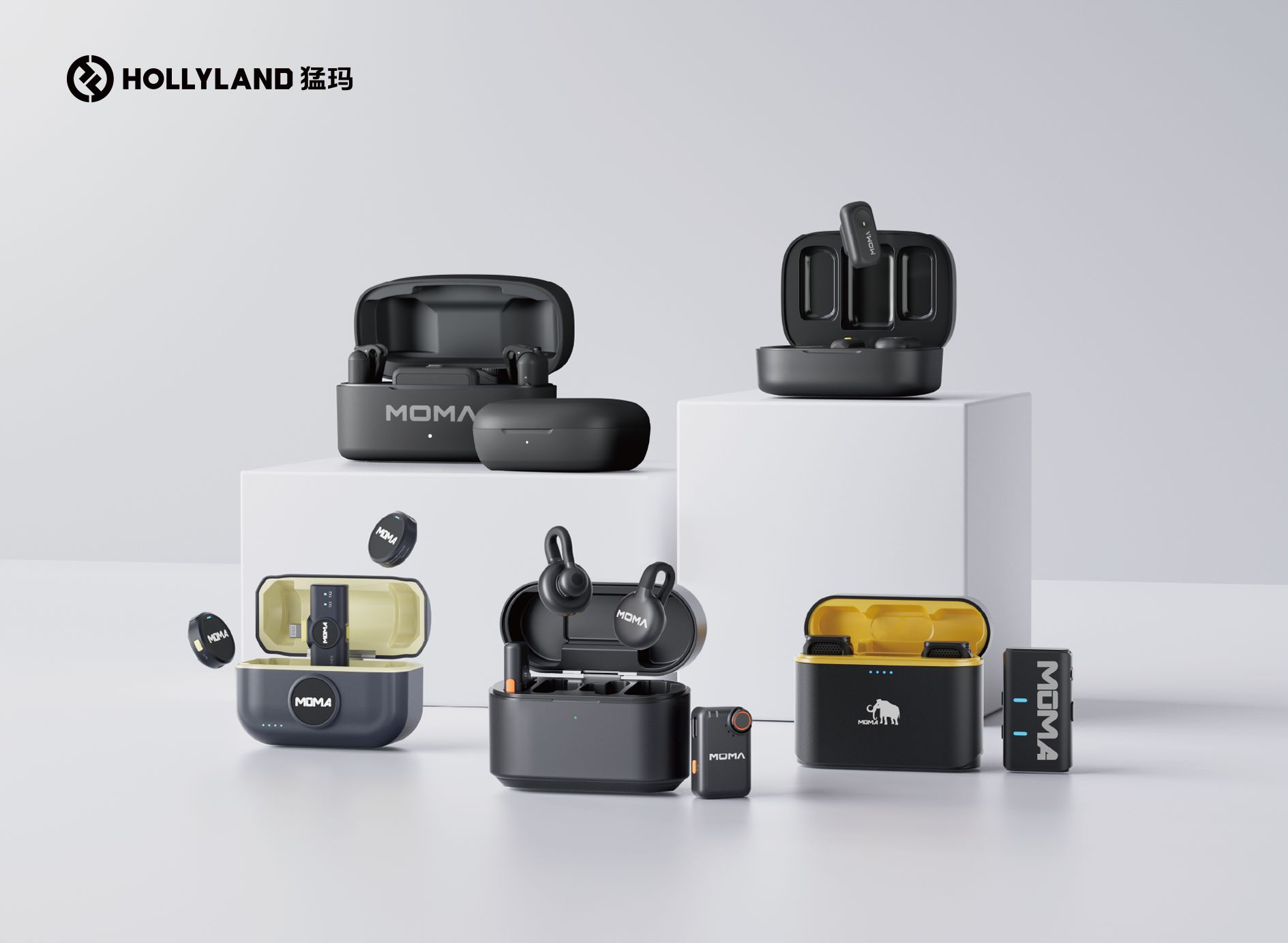
Hollyland full range of microphones
Of course, the maturity of the segmented market takes time.
Privacy is a practical obstacle. Just as AI glasses have been solving the problem of sound leakage, when speaking in public spaces, users need to be convinced that their instructions will not be heard by other people, so that they can express themselves freely.
Habit is another variable. From keyboard to voice, people need to re-establish the memory of wake-up operation.
But there is no doubt that the direction is clear. In this era of instant output by speaking, AI begins to truly understand human beings, and more and more developers and creators realize that the upper limit of human-computer collaboration experience cannot be compromised.
A wireless microphone with high sensitivity, strong noise reduction and stable connection will soon become the standard configuration of human-computer interaction, helping people focus on more important things: real-time thinking, clear expression, and continuous creation.