Backed by AfterShokz Investment, an AI Company Developed a "Hardware Version of OpenClaw" | Exclusive from 36Kr
Text by | Deng Yongyi
Edited by | Su Jianxun
When the OpenClaw storm swept across the globe, Zeng Xiaodong, the founder of Boundless Ark, didn't feel excited. Instead, he felt a sense of "finally being seen".
"OpenClaw is essentially an Agent framework. At its core is an Agent that can write code, which can be placed on cloud servers or computers," he told Intelligent Emergence. "Our AIOS is also essentially an Agent framework, but it's an OpenClaw on the hardware side. Robots, headphones, and glasses can all run on this OS."
Since its establishment in 2024, Boundless Ark has been working on this. Zeng Xiaodong named this paradigm Vibe Hardware - using natural language for hardware development, and AI can write programs, adjust drivers, and complete the entire application R & D and deployment on its own.
Currently, Boundless Ark has established a product system from hardware products to the OS, including the AIOS "EVA", as well as a hardware and product ecosystem that includes the AI education robot "Qiduoduo AI Learning Companion".
Recently, Boundless Ark also completed two consecutive rounds of Pre - A financing. The investors include the globally renowned wearable device brand AfterShokz, Guoruiyuan Fund, Hengsong Capital, Shanghai Angel Club, and EC Capital served as the exclusive financial advisor.
In the past year, Boundless Ark has quickly completed 4 rounds of financing, with a cumulative financing amount of hundreds of millions of yuan.
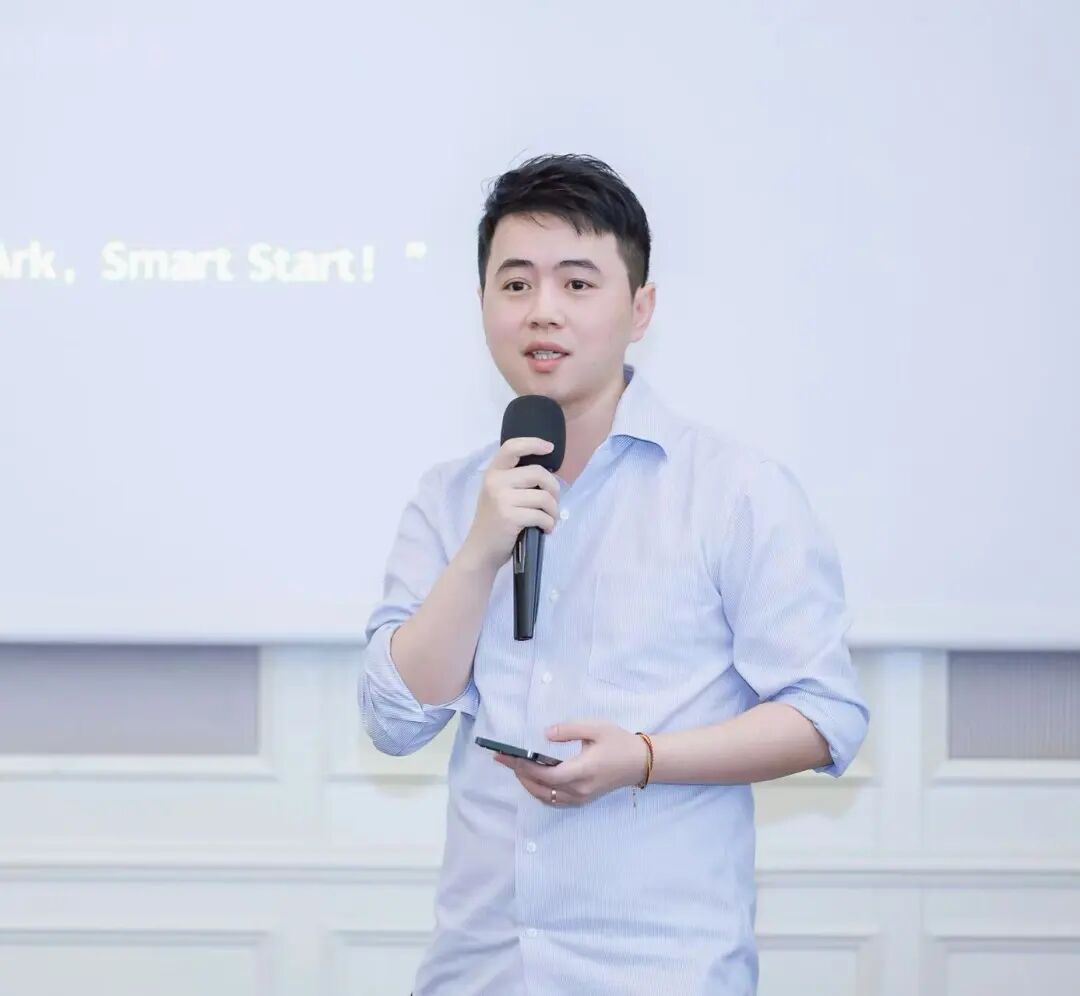
△Zeng Xiaodong, the founder of Boundless Ark
Zeng Xiaodong, the founder of Boundless Ark, worked at Alibaba and Ant Group for 10 years. He incubated hardware products from scratch, such as face - recognition payment, Alipay Box (with tens of millions of sales), and Tao Coffee (China's first unmanned supermarket).
Having experienced the entire process from hardware product development to system development in the AI 1.0 era, Zeng Xiaodong said, "I believe the most potential lies in developing the kernel itself, that is, the OS. But it's impossible to develop the kernel out of thin air, so I need to complete a hardware product from end to end first."
The goal of Boundless Ark is not to be a single large - model company or hardware company. Instead, it aims to create an AI operating system (AIOS) framework for the new generation of intelligent terminals, enabling different forms of devices to run and iterate on a unified base.
After the "Crayfish" Moment, the Paradigm of AI Hardware Development Has Changed
After the "crayfish" OpenClaw became a huge hit, Harness Engineering also became a hot topic in Silicon Valley.
As the model's capabilities become stronger, what really determines whether an Agent is useful is no longer the model itself, but the environment in which the model runs. What tools can it call? How does it understand the current state? How is the feedback loop designed? This "environment" is the Harness.
What EVA OS does is Harness Engineering in the hardware field. "It can be understood that EVA OS is the hardware version of the Context Model. It adds value to the OS rather than replacing it," Zeng Xiaodong said.
He repeatedly emphasized to Intelligent Emergence that EVA OS is not trying to be another HarmonyOS. In the era of traditional operating systems (Android, Linux, ROS), it wasn't that the AI capabilities were insufficient, but that there was a lack of an intermediate layer that allows AI capabilities to run natively on hardware.
What exactly does this "intermediate layer" need to do?
Previously, it took at least 3 people, 2 - 3 months, and a certain cost to tune a complete AI hardware link and make it service - ready. However, after installing EVA OS, developers only need to describe their requirements in natural language. The AI understands the environment of the hardware it's on and writes the APP on its own. On average, it only takes half an hour to turn the edge side into a real - time interactive AI with memory and the ability to adjust in real - time.
This development paradigm is based on the strong coupling between EVA OS and hardware. If the AI doesn't understand the complete context of the hardware it's on - such as the chip's computing power, which sensors are online, how much memory is left, and the connection status of peripherals - it's impossible to develop any APP on it. This is the biggest challenge and the core barrier of EVA OS.
Recently, Boundless Ark has cooperated with a robotic arm company. After connecting the development board equipped with EVA OS to the robotic arm, the AI first tunes the driver on its own, fixes bugs, and then starts to explore independently. When the engineer issues the instruction "Pick up something for me", EVA OS can write programs and try things out on its own.
"EVA OS can try things out on its own because it knows the connection status between the development board and the arm. This is completely different from the past," Zeng Xiaodong said. In the past, engineers had to read the driver documentation themselves, troubleshoot various hardware bugs, and then tune the system step by step, enabling the hardware to break away from the traditional OS model of "pre - installed APP + abstract hardware".
To run efficiently on edge devices with limited computing power, EVA OS adopts an efficient architecture that combines cloud and local resources. EVA OS can achieve a voice delay of less than 250ms and a multi - modal feedback of less than 350ms, which is a significant improvement compared to the industry - wide solution with a voice delay of around 600ms.
The logic of EVA OS is to keep the tasks that can be completed on the hardware edge side locally and only send complex inferences to the cloud. High - frequency interaction links such as voice recognition, TTS, and visual perception are placed on the edge side, eliminating the need for cloud computing every time.
The edge - side model undertakes three layers of capabilities: memory, execution, and interaction - remembering user habits, calling tools, and providing an interaction interface. The cloud retains general knowledge and complex inferences, while the edge side is responsible for turning these capabilities into something that can actually run on the hardware. Running the perception model entirely on the edge side can reduce costs by 70% - 92%.
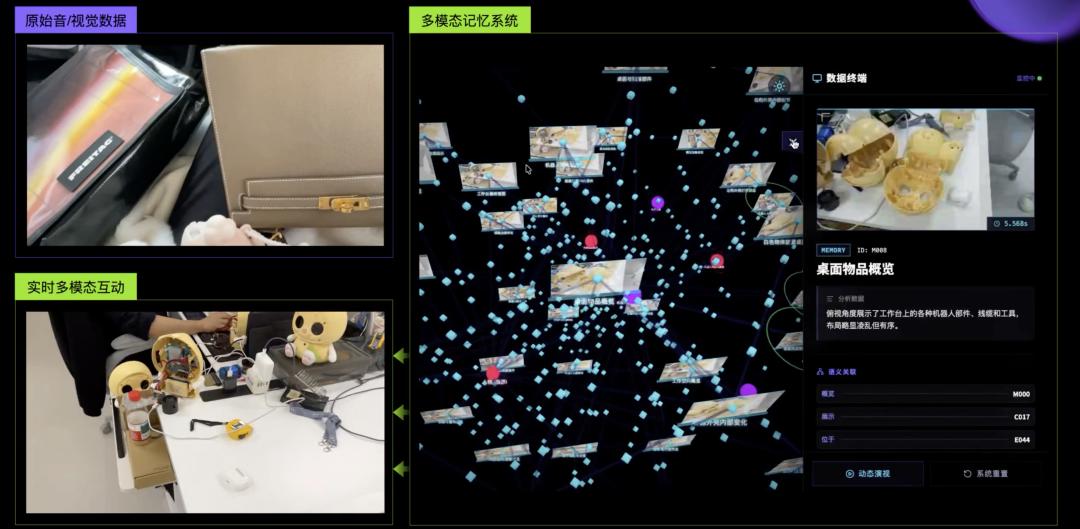
△The memory ability of EVA OS can recall key frames of an image and answer corresponding questions, such as the location of an object in a video.
After this round of financing, Boundless Ark will also release a new hardware terminal, EVA Pi. Zeng Xiaodong said that it will be a "hardware terminal that can write code and update itself autonomously".
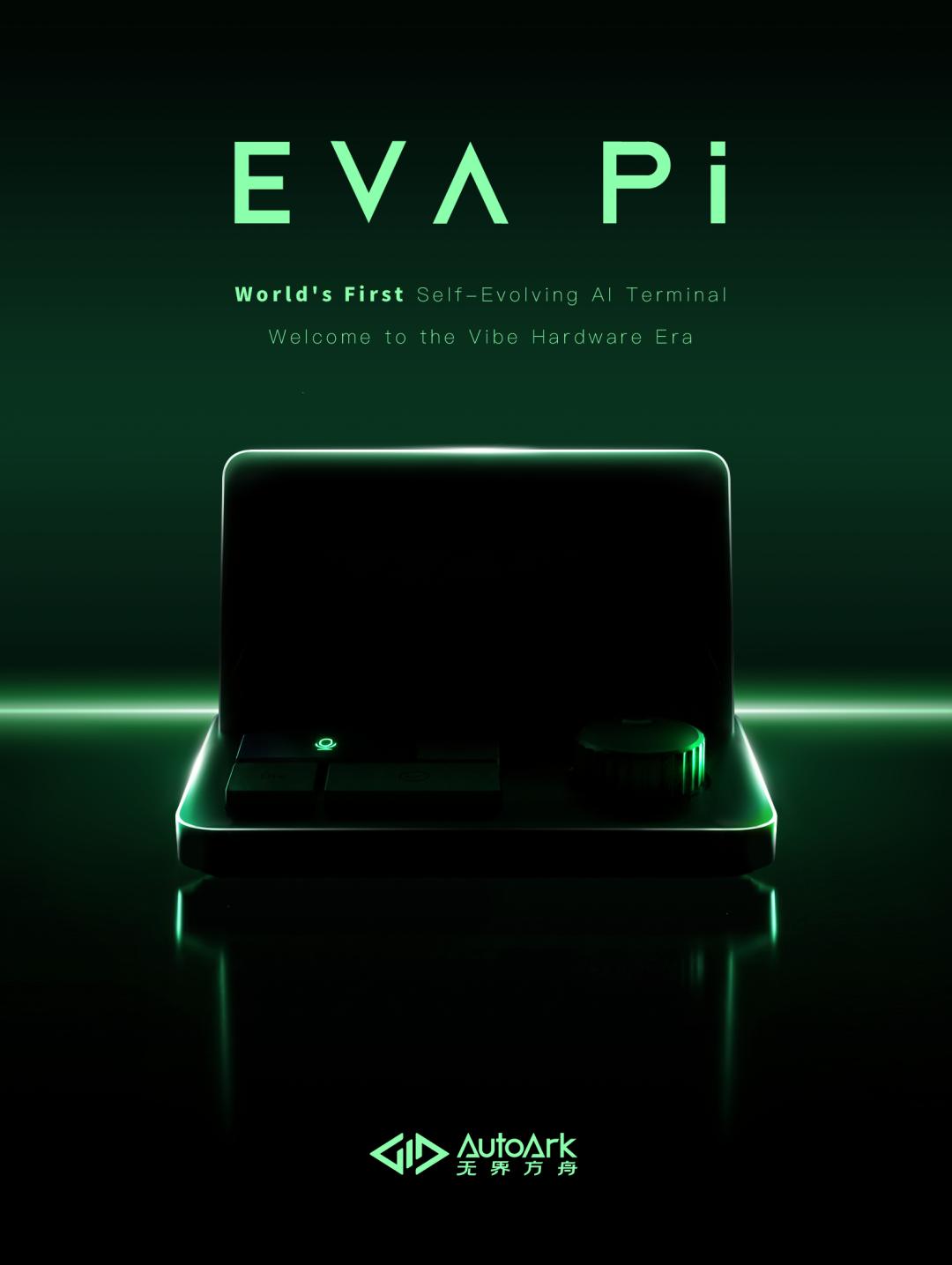
△Image source: Boundless Ark
EVA Pi integrates EVA OS and can perceive all the context on the hardware side in real - time (sensors, drivers, link status, and operation feedback), and complete the development, deployment, and iteration of AI applications natively on the edge side.
Currently, more than 2,500 enterprises and R & D units have applied EVA OS 1.0, which was released more than 3 months ago, to their hardware product R & D. The product categories cover AI headphones, AI glasses, desktop robots, smart wristbands, in - vehicle intelligent butlers, robotic arms, and other categories. The partners include globally renowned wearable device and embodied intelligence leading enterprises.
The End - to - End Model Determines the Existence of AIOS
When communicating with Zeng Xiaodong, you can strongly feel his insistence on the end - to - end approach.
In the first half of 2024, the large - model field was still in the storm of language models, and the technical route for multi - modal interaction had not yet converged. The only reference was the demonstration at the GPT - 4o press conference - but at that time, OpenAI hadn't even opened its API.
At that time, the vast majority of AI hardware companies chose the "serial" route - connecting modules such as ASR (voice recognition), large language models, and TTS (voice synthesis) like a production line to complete corresponding tasks. This route is relatively mature and cost - effective. "But the problems are also obvious: there is serious information loss between modules. For example, emotions, tones, and continuity are all lost, and the delays are stacked layer by layer, resulting in many bugs to be fixed," Zeng Xiaodong said.
He didn't choose this direction. Instead, he led a team of 7 people and, after nearly a year, launched an end - to - end multi - modal base model that can run on the hardware side. This is the foundation of EVA OS.
This stems from Zeng Xiaodong's previous "entrepreneurial" experiences at Ant - during the process of incubating face - recognition payment, Alipay Box, and Tao Coffee, he repeatedly hit the same wall: There is a huge gap between AI algorithms and terminal hardware, and the intermediate layer is severely lacking.
Looking back at Boundless Ark's choice, in essence, it's because in the future, end - to - end models must run on various edge devices at a lower cost. This is the opportunity for start - up companies. If you only focus on vertical models on the software side, it's too easy to be swallowed up by base - model manufacturers.
For example, since 2024, Boundless Ark has been exploring the field of AI education through the "Qiduoduo AI Learning Companion". While the giants in the base - model field generally entered the AI + education track from the second half of 2024 to 2025, Boundless Ark had a head start of about half a year to a year.
Currently, Boundless Ark's self - developed end - to - end model can handle voice recognition, voice synthesis, visual understanding, and language reasoning with a single model, greatly reducing information loss.
The self - developed end - to - end route first opens up more hardware categories and scenarios.
"Our edge - side model can complete both voice recognition and TTS with a single model. It doesn't require a GPU and can run entirely on the CPU, with a memory usage of no more than 1G," Zeng Xiaodong said.
In the overseas market, devices such as headphones and glasses face extremely unstable network environments. Hardware equipped with EVA OS can complete voice recognition, voice synthesis, and basic translation without an internet connection.
The Qiduoduo AI Learning Companion is the first implementation case of EVA OS - an AI education robot for children aged 3 - 10.
Zeng Xiaodong calls the Qiduoduo AI Learning Companion the hardware "showroom" of EVA OS. Currently, if we only calculate the hardware usage time such as AI conversations and AI reading, excluding APP usage, the average daily usage time of the Qiduoduo AI Learning Companion by users is as high as 145 minutes.
The self - developed model also brings a differentiated interaction experience. This is largely because the end - to - end model doesn't require "translation" between different modalities. Voice and visual signals are directly associated with the language model - it can perceive emotions, capture context changes in continuous conversations, and respond more like a real person.
The cost advantage is also crucial. The self - developed end - to - end model reduces the voice cost to one - twentieth of the industry - wide solution. Therefore, the Qiduoduo AI Learning Companion can be sold at a price of around 1,000 yuan, with no subsequent subscription fees.
Two years ago, Zeng Xiaodong and a team of seven bet on the uncharted end - to - end hardware route. Two years later, EVA OS has been iterated to the third version, and Boundless Ark is incubating more To C hardware categories and collaborating with more and more product categories, such as AI glasses and AI headphones.
The evolution speed of models still far exceeds people's imagination. However, Zeng Xiaodong said that the bigger bet has just begun.
Developing an operating system for AI hardware is not a new concept. Around 2017, a group of robot OS start - up companies emerged in China, trying to build an ecosystem like Android. Few were successful. Tmall Genie and Xiaomi Smart Speaker quickly occupied the market through subsidies, but they defined the "smart speaker" category rather than the "intelligent agent", directly squeezing the living space of vertical OSs.
Cost is an even more fatal problem - at that time, to pursue high performance, only mobile - grade chips could be used, with a single - chip cost as high as several hundred dollars. Even if the terminal was sold for two or three thousand yuan, the company was still losing money.
Zeng Xiaodong believes that the opportunities in the large - model era are fundamentally different from those in the AI 1.0 era. "There is no real winner in the field of AI hardware operating systems globally yet. The window period may only be the next two or three years."
To some extent, large models have redefined the interaction mode of hardware - content no longer needs to be pre - installed, and AI generates it on its own. The cost of low - power AI chips has dropped to a commercially viable range. The end - to - end model enables a start - up company with a small team to connect the entire link from the model to the hardware. "The right time, place, and people are all here. The conditions that were lacking in the previous wave are all met this time."
Currently, Boundless Ark has fully adopted Vibe Hardware internally, and the hardware iteration speed has become once a day. To become a company that can develop AIOS, Zeng Xiaodong has been promoting an organizational change since last year - all employees are involved in Vibe Coding. Whether they are engineers, product managers, or operators, everyone's work is centered around code.
"When all the actions of a company's employees are centered around Vibe Coding, all your data becomes structured. After structuring, real intermediate - layer optimization becomes possible," he said.

Welcome to follow

Welcome to communicate
This article is from the WeChat official account "Intelligent Emergence". Author: Deng Yongyi. Republished by 36Kr with permission.