AI is suffering from "power hunger", and China firmly holds the "granary".
Have you noticed that in recent years, foreigners seem to be experiencing a collective awakening of the "Chinese bloodline."
First, they flocked to China in groups for tourism, making "China Travel" the key to getting high traffic on TikTok. Then, there was a boom in cross - border medical care, with many coming to China for medical treatment, physical examinations, and even surgeries.
Now, this trend of "taking advantage of the socialist system" has also reached the AI circle.
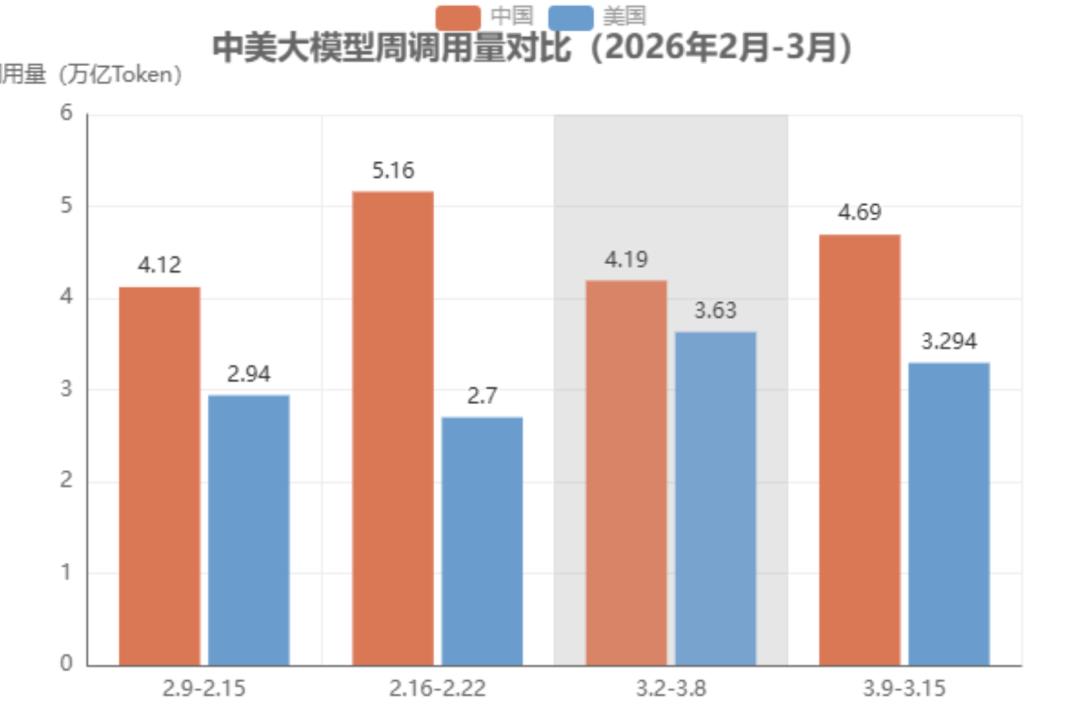
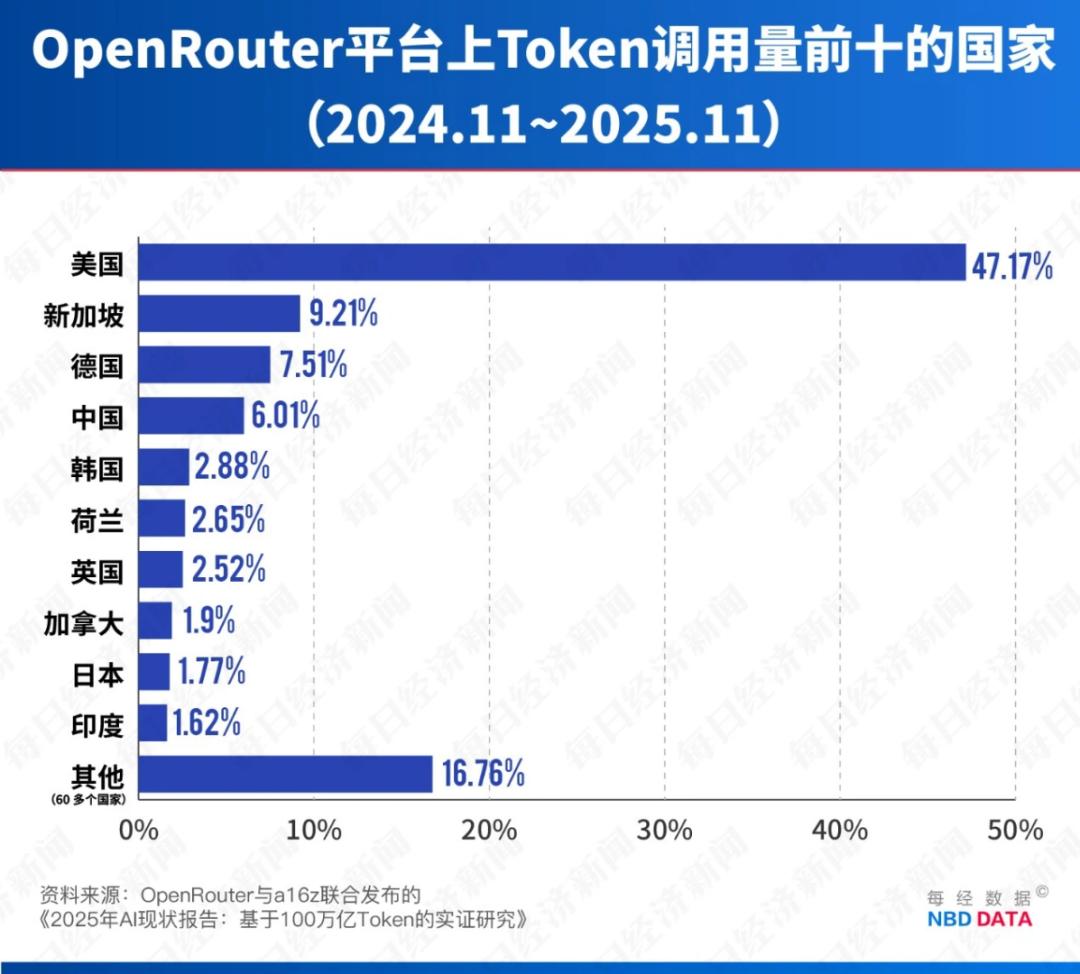
According to OpenRouter, a global AI model aggregation platform, since mid - February this year, the number of calls to Chinese models has exceeded that of American models. American users account for as high as 47%. More and more overseas developers are starting to make batch calls to the APIs of Chinese large - scale models.
There's no way around it. Our Chinese models are so "cost - effective." For the same task, using an American model might cost $5, while using a Chinese model only costs $0.3. It's like getting a huge discount on the bill. Who wouldn't be tempted?
At first glance, this might seem like a story of a price war. But if you think deeper, where does the confidence of domestic models in this "price war" come from? Ultimately, it's the power supply that provides the support.
This makes me think of a recent long article titled "AI is a Five Layer Cake" published by Huang on his personal blog.
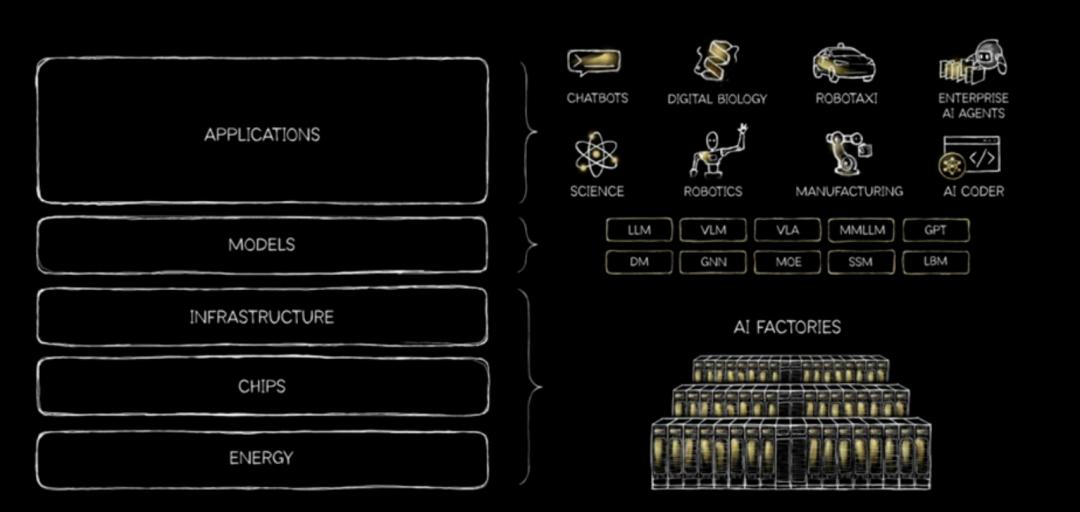
In the article, he proposed the "five - layer cake" model of the AI industry, breaking down AI into five levels: energy, chips, infrastructure, models, and applications. He repeatedly emphasized: Every successful application will drive down all the levels below it, all the way to the power plant that keeps it running.
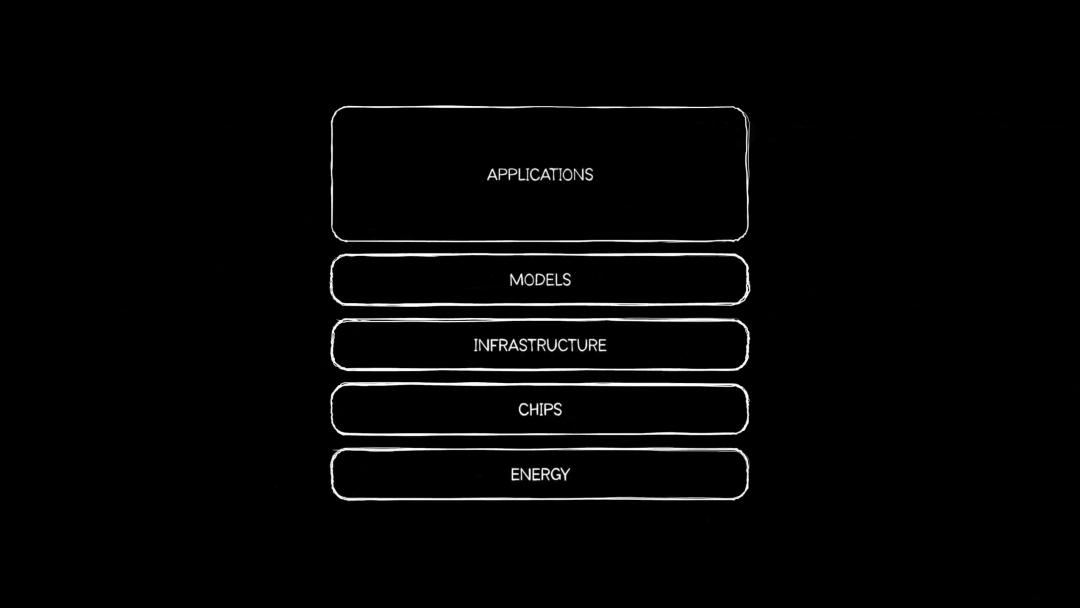
According to Huang, we've only just taken the first bite of the AI "five - layer cake." In the future, AI will not just be an application or a model. It will become an indispensable infrastructure in modern society, just like the Internet.
By that time, the demand for electricity from AI may be "endless."
01
AI's appetite is growing
In the past two years, we've gotten used to using AI for chatting, writing copy, and drawing pictures. But at the beginning of this year, an open - source tool called OpenClaw completely changed the situation.
OpenClaw can operate 24/7, and it's not limited to just chatting. It can even operate a computer, click the mouse, and fill in forms on its own, truly freeing your hands!
Of course, such a capable AI agent doesn't come cheap. For just a simple conversation, the number of Tokens consumed in one interaction might be just a few hundred. But to complete a specific task, from execution to delivery, it can consume hundreds of thousands or even millions of Tokens.
Someone joked online: "Raising an AI 'lobster' is more expensive than raising a postgraduate student."
Although it's a joke, it reveals a reality: When AI starts to 'work,' its energy consumption curve rises steeply.
The data recently released by OpenAI also confirms this: In some agent tasks, the Token consumption of GPT - 5.4 is 47% less than that of its previous generation.
Why are they desperately trying to reduce consumption? Because the cost pressure from the application layer has actually been passed on to the model layer. The model layer has to find ways to respond with a better architecture and cheaper inference. And the improvement of the model layer's efficiency ultimately depends on the chip layer.
At the just - concluded GTC conference, Huang Renxun previewed the next - generation GPU architecture, Feynman - the world's first AI chip with a 1.6 - nanometer manufacturing process, which is expected to be launched in 2028.
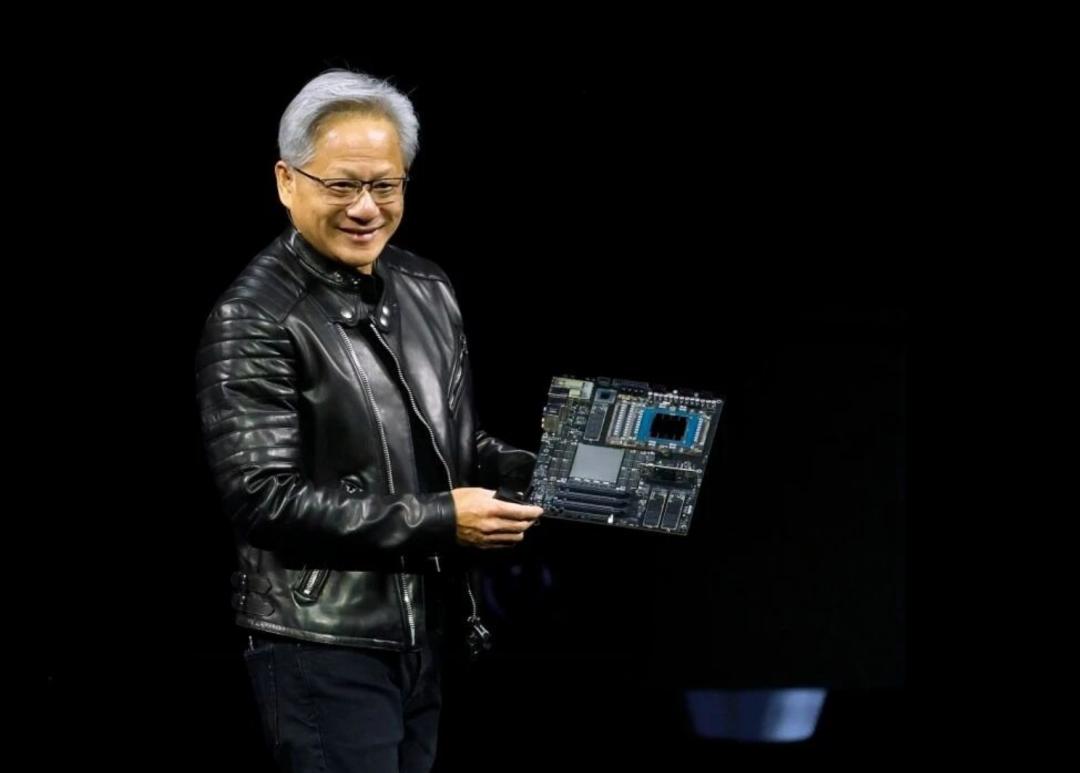
But the most astonishing thing is its power consumption: a single chip can exceed 5 kilowatts.
What does that mean? It's equivalent to having 50 electric heaters running in your home simultaneously, with the heat concentrated in a space as small as a fingernail.
Why is it so extreme? Because the model layer is calling for "cheaper and faster computing power," and the chip layer has to increase the power consumption and performance.
However, the existing power supply system can't support a 5 - kilowatt chip. The power supply voltage has to be increased from 220 volts to 800 volts, the same level as that of high - speed trains. The heat - dissipation material has to be upgraded from copper to diamond because only diamonds can withstand such high temperatures.
Huang Renxun even said that the ultimate solution might be to build a small nuclear reactor next to each AI factory.
You can see that the application drives the model, the model drives the chip, the chip drives the infrastructure, and ultimately, it all depends on the energy layer. That's why Huang wrote in that article: "Energy is the first - principle of AI and the fundamental constraint on how much intelligence a system can generate."
If you want AI to become smarter, you first have to ask the power grid.
02
The end of AI is power
The end of power is China
If what Huang Renxun described is the insatiable demand for energy from AI, then in this game, China holds the very card that others lack the most.
Last year, China's total social electricity consumption exceeded 1 trillion kilowatt - hours, ranking first in the world, more than twice that of the United States. Especially during the peak electricity - consumption period in summer, the monthly electricity consumption exceeded 100 billion kilowatt - hours for two consecutive months. Facing such a severe test, we neither imposed power cuts nor raised prices.
Behind this is China's achievement of "power accessibility." 46 UHV projects have established a large - scale channel for "power transmission from the west to the east" and "power supply from the north to the south."
In the US market, no one wants to invest in upgrading the power grid or wait for the return period. While the US hesitates, China has already built the power lines and power stations. By adhering to a national - level coordinated approach, China turns the wind and solar energy in the west into computing power in the east and then into globally tradable digital services.
At this time, an interesting concept has become popular: Tokens are China's real power export.
We all know how difficult traditional power export is. Cross - border power grids, long - distance power losses, and geopolitical barriers mean that the profit per kilowatt - hour is only a few cents. But Tokens are different. In essence, they are a digital encapsulation of power. One kilowatt - hour of electricity (costing $0.2 - $0.3) enters the data center, drives the GPU computing power, generates Tokens, and is then called by overseas developers through the API interface, with payment made based on the number of Tokens.
The "Eastern Data and Western Computing" initiative allows data centers to be built directly in areas rich in green power. The low - cost green power from wind and solar energy in the west is directly converted into computing power and then sent to the world via optical cables.
There are no containers, no customs, and no tariffs, only data packets flying through undersea optical cables. The power never leaves the Chinese power grid, but its value has already completed cross - border delivery.
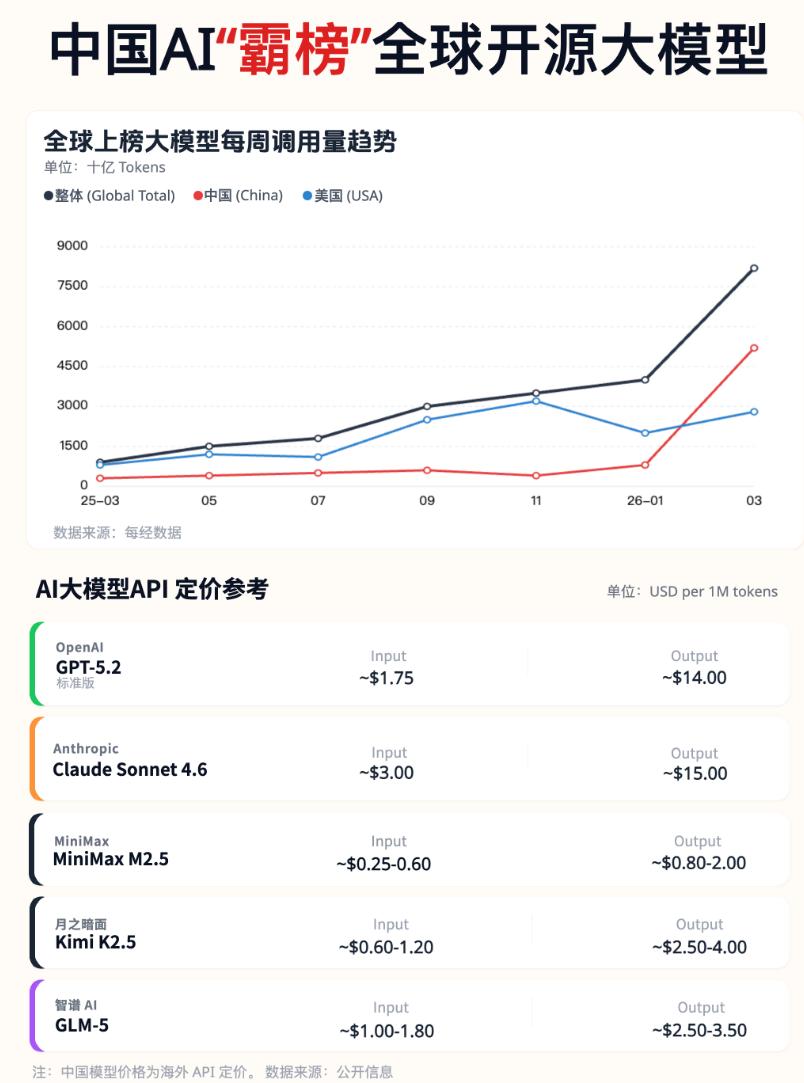
From February 9th to 15th, 2026, data from OpenRouter, a global AI model API aggregation platform, showed that the number of calls to Chinese models reached 4.12 trillion Tokens, exceeding the 2.94 trillion of the United States for the first time. Among OpenRouter users, American developers accounted for 47%, while Chinese developers only accounted for 6%. Overseas users have voted with their money for Chinese models.
Why? Because they are cheap.
For the same code - writing task, the American model Claude Opus 4.6 costs $5 per million Tokens, while the Chinese models MiniMax M2.5 and Zhipu GLM - 5 only cost $0.3, more than 16 times cheaper.
But this "cheapness" doesn't come out of nowhere. It's the result of the superposition of three advantages:
First, technological architecture innovation. Chinese models generally adopt the Mixture of Experts (MoE) architecture and don't involve all components. For a model with hundreds of billions of parameters, when it receives a simple question, it only wakes up a small part of the "expert network." This "on - demand activation" is itself a refined dispatch of power.
Second, energy cost advantage. China's industrial electricity price is about 40% lower than that in Europe and the United States. The price of green power (wind/solar) in the west is as low as $0.2 per kilowatt - hour. When this difference in electricity cost is reflected in the operating cost of large - scale models, Chinese models have a natural "power premium."
Third, supply - chain advantage. From transformers to UHV equipment, from solar panels to data centers, China has the most complete power equipment manufacturing chain in the world. When the United States wants to build a power plant, it even has to import transformers from China. This is not a joke; it was said by Wang Jian, an academician of the Chinese Academy of Engineering, in an interview.
These three advantages are transmitted layer by layer and finally condensed into the ultimate cost - effectiveness of Tokens.
03
Who is using sparingly
Who can afford to use
Looking back at Huang Renxun's "five - layer cake" model, you'll find that the competition between China and the United States in the AI resource chain has formed a peculiar misaligned competition.
The United States holds the most advanced chip technology but is suffering from severe power anxiety. Due to the delay in grid connection, Microsoft has to build its own gas - turbine power station. Google has signed a high - cost power purchase contract with a nuclear power enterprise. In Michigan and Virginia, it has been announced that the electricity prices for 67 million local residents in the United States will increase by 20% to 30% in 2026.
In an energy system centered around capital, no one wants to take responsibility for long - term investment. When the power supply is tight, the price is raised until users can't afford it, and the demand naturally shrinks. This pure profit - seeking logic is not really friendly to the general public.
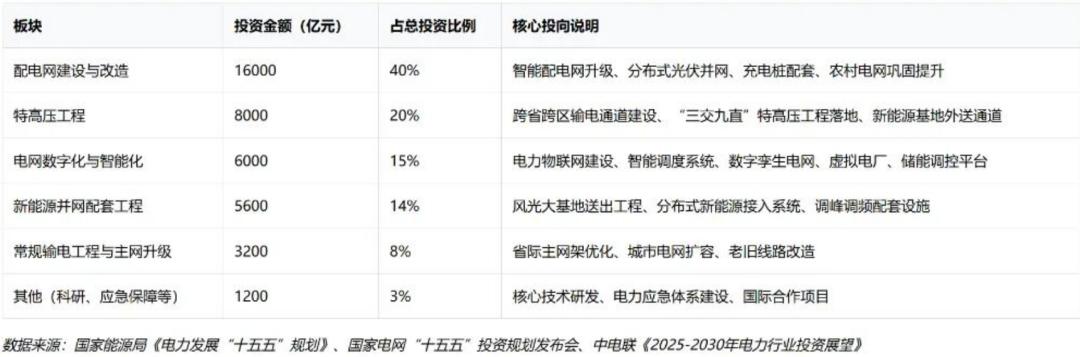
China is taking a completely different path: regarding power as a public resource. The State Grid has previously announced that it plans to invest 4 trillion yuan in fixed - asset construction during the 15th Five - Year Plan period, a 40% increase compared to the 14th Five - Year Plan period. While other countries are still struggling with the current power supply, we've already laid out our strategy in advance.
So, when someone asks "Why can Chinese AI be so cheap," the answer is not just the low electricity price or just the technology. It's a whole set of systematic capabilities: strong power infrastructure, efficient dispatch mechanisms, continuously advancing chips and algorithms, and a system willing to invest in the long - term.
This set of systematic capabilities is finally condensed into the ultimate cost - effectiveness of Tokens, making global developers vote with their feet.
04
Conclusion
In the past few decades, China has been accustomed to the narrative of being the "world's factory." We sold physical products, used containers for transportation, and earned hard - earned money.
But the emergence of Tokens shows us a new possibility: turning power into computing power, computing power into intelligence, and intelligence into globally tradable digital services.
The power doesn't leave the country, but its value has already completed cross - border delivery.
This is not overtaking on a curve but overtaking by changing lanes.
Of course, this race is far from over. The bottleneck of high - end chips, the shortcoming of brand recognition, and the pressure on industry profits are all challenges that we must face up to.
But one thing is certain: in the wave of AI's heavy industrialization, energy is the ultimate hard constraint, and China holds the strongest card.
This time, we're at the starting point of the resource chain.
This article is from "Youth Observation Institute." Author: Qingping Chuiguo, Editor: Wuxin Chaliu Liuchengzhi. It is published by 36Kr with permission.