36Kr Exclusive | A Lithium Manganese Iron Phosphate Cathode Material Manufacturer Secures Hundreds of Millions in New Funding to Expand Power Battery Production Capacity
Author | Qiao Yujie
Editor | Yuan Silai
Hard Kr has learned that recently, Jiangsu Hengchuang Nano Technology Co., Ltd. (hereinafter referred to as "Hengchuang Nano") officially announced the completion of the delivery of hundreds of millions of yuan in its Series B financing. This round of financing was invested by Yinchuan Yucheng Phoenix Science and Technology Innovation Fund, and Da'an Capital served as the financial advisor for this round of financing. The funds will be mainly used for the company's production capacity layout in Yinchuan, Ningxia, and the planning and construction of a production line for lithium manganese iron phosphate (LMFP) cathode materials with an annual output of 130,000 tons (30,000 tons in the first phase). At the same time, the company's base in Yancheng will further expand its production.
Hengchuang Nano was established in 2022, focusing on the R & D, production, and sales of lithium manganese iron phosphate cathode materials, the core materials for new energy batteries. Its products currently cover multiple application scenarios such as new energy vehicles, two - wheeled electric vehicles, and energy storage systems.
As a technology route that has attracted much attention in recent years, lithium manganese iron phosphate is regarded as one of the important upgrade directions of lithium iron phosphate. In terms of material characteristics, by introducing manganese into the lithium iron phosphate system, lithium manganese iron phosphate can increase the voltage platform from about 3.4V to about 3.8V, driving an increase in energy density of about 5% to 20%. And on the cost side, it is significantly lower than the ternary material system that relies on metals such as nickel and cobalt. Compared with the lithium iron phosphate system, lithium manganese iron phosphate can achieve a better cost per kilowatt - hour.
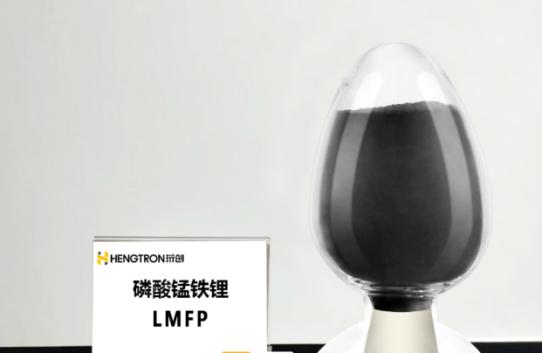
(Image source/official website)
Dr. Yao Weiguang, the chairman of Hengchuang Nano, introduced to Hard Kr that as the manganese content increases, the material is prone to the problem of manganese dissolution during the cycling process. Focusing on this core problem, the company has carried out systematic innovation in material structure and preparation technology. Among them, the "solid - liquid two - phase method" is one of its key technologies. This method can achieve atomic - level uniform distribution of manganese and iron in the same crystal phase, thereby improving the stability of the material structure. At the same time, the company continues to optimize the carbon coating technology and multi - element doping, making the crystal structure more complete and further suppressing the problem of manganese dissolution.
Based on the above technical routes, Hengchuang Nano has achieved more than 2000 cycles in high - temperature cycling performance, and the high - temperature storage time exceeds one and a half years. Some indicators are even better than the ternary material system.
In addition, the construction of the patent system is the most core competitive barrier for Hengchuang Nano. By buying out the core patents of Dow Chemical in the field of lithium manganese iron phosphate and combining continuous independent R & D, the company has built a complete patent system covering material composition, structural design, and application methods. Currently, the company has nearly 100 authorized invention patents, including 78 invention patents. The patent network covers 32 major countries and regions around the world. It is the only enterprise in the world that has achieved a global patent layout in the field of lithium manganese iron phosphate.
From the perspective of the specific patent structure, Hengchuang Nano's layout is not limited to a single dimension but forms a combined barrier of multiple patent families. According to Dr. Yao Weiguang, in terms of component patents, Hengchuang Nano covers the formula range with a manganese content of more than 70% in China and more than 50% internationally.
On this basis, the company also has patents related to the carbon - oxygen bond structure and a patent protection scope for the mixed - doping system with ternary materials. That is, it also has patent coverage in the mixed - doping scenario where the proportion of lithium manganese iron phosphate is 5% to 95%. This means that the company not only establishes protection for the "formula itself" of the material but also forms an extended constraint on its application methods, thus having more say in the process of technological evolution.
In terms of commercialization progress, Hengchuang Nano's current customers are mainly concentrated in the fields of leading consumer electronics and two - wheeled vehicles, and it has achieved large - scale shipments. From 2024 to 2025, the company's sales volume in the lithium manganese iron phosphate material market ranked first in the country for two consecutive years, with a market share of about 40 - 50%.
In the field of power batteries, the company will start supplying relevant enterprises at the end of 2026, covering multiple application directions such as heavy - duty trucks, passenger cars, and PHEVs. Currently, the products have entered the B - sample and C - sample verification stages of customers.
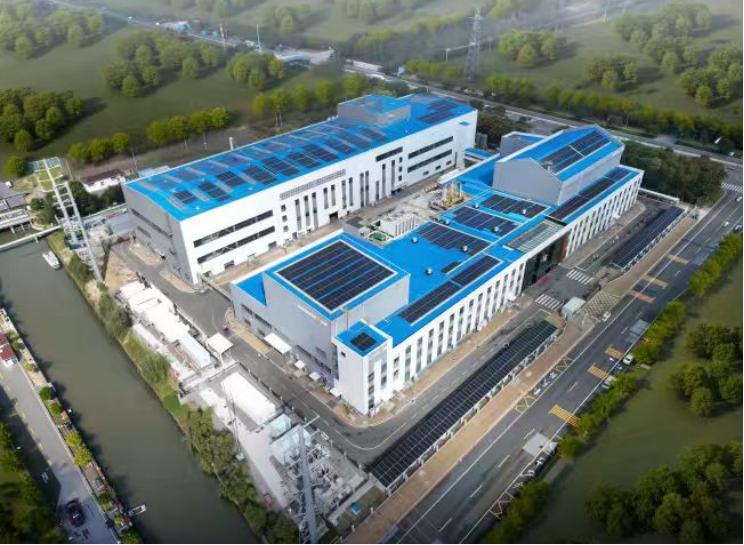
Yancheng headquarters (Image source/enterprise)
The Yinchuan base, which is the key investment target of this round of financing, will become an important production base for the company in the power battery market. Compared with the production capacity structure of the Yancheng base, which mainly has a single - line capacity of 5,000 to 10,000 tons, the single - line scale of the Yinchuan project will be further enlarged, and the process design will be upgraded according to the needs of power batteries. At the same time, the Ningxia region has obvious advantages in energy costs such as electricity prices and gas prices, which helps to reduce the overall production cost and enhance the large - scale competitiveness.