The world's largest unicorn in optical computing chips is going public, with Tencent and Baidu participating in the investment.
According to a report by Zhidx on March 31st, on March 30th, Lightelligence, a Shanghai-based unicorn in AI optical interconnection and optical computing, officially submitted its prospectus to the Hong Kong Stock Exchange.
Lightelligence's business can be traced back to 2017 when Dr. Yichen Shen founded the business in the United States and China. The aim was to use top - notch optical computing technology to establish efficient real - world connections and lay the foundation for AI.
High - speed interconnection is a key path to drive the expansion of AI computing power. In the field of optical interconnection and optical computing, Lightelligence leads both globally in technology and in commercialization. It has moved beyond the pilot stage and achieved the deployment of products and solutions in large - scale computing clusters.
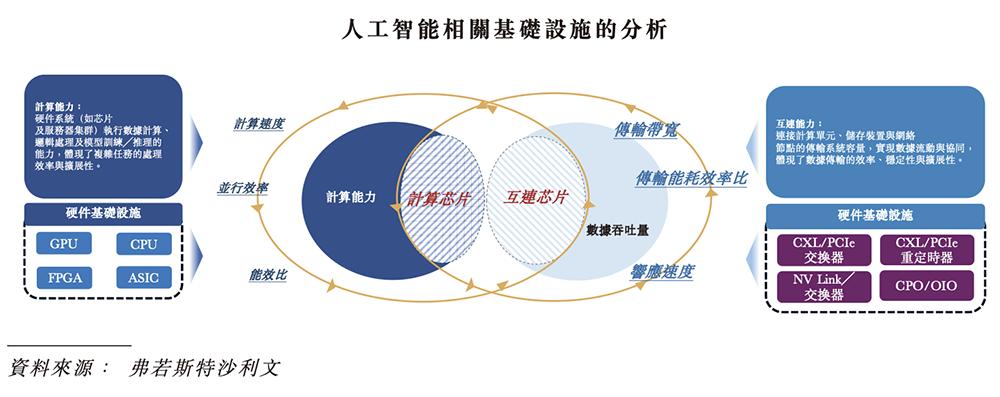
As of December 31, 2025, the company had achieved commercial deployment with 44 customers, supporting several thousand - GPU clusters and increasing the average model floating - point operation utilization (MFU) by more than 50%.
According to Frost & Sullivan, in terms of revenue in 2025, Lightelligence ranked second in the Chinese Scale - up optical interconnection market and ranked first in the world in the cumulative shipment volume of optical computing chips.
As of March 23, 2026, Lightelligence is one of the few global and the first Chinese supplier with an optical interconnection super - node solution and has cumulatively deployed more than 5,000 card clusters.
The company also launched China's first xPU - CPO optoelectronic co - packaging prototype system, which co - packages the optical engine and the computing chip (xPU) on the same substrate to shorten the transmission distance.
Tencent, Shanghai CMCC Fund, and China Reform Holdings Corporation are the leading senior independent investors of Lightelligence. Its investors also include Zhongke Chuangxing, Baidu Bigwill under Baidu Group, etc.
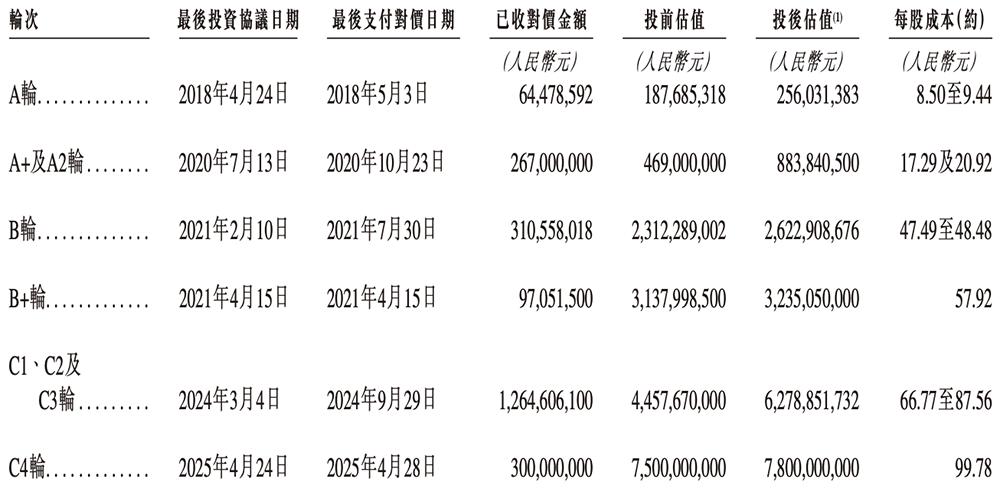
After the Series C4 financing in 2025, its valuation reached 7.8 billion yuan.
01.
Founded by MIT Ph.D.s, with an annual revenue of over 100 million,
Both ICT giants and AI chip companies have placed orders
Lightelligence is an early and large - scale participant in the global optoelectronic hybrid computing power field. It uses core silicon - photonics technology to drive the industry's transformation from electrical computing to optical computing and promotes innovation in the two fields of optical computing and optical interconnection.
Yichen Shen is the founder, chairman, executive director, and CEO of Lightelligence. He holds a Ph.D. in physics from the Massachusetts Institute of Technology. In June 2017, he published a cover paper in the international top - tier academic journal Nature Photonics as the first author, proposing for the first time a method for deep learning using coherent nanophotonic circuits, which is widely regarded as a breakthrough in the optoelectronic hybrid computing power field.
Dr. Huaiyu Meng, the co - founder, executive director, and CTO of Lightelligence, holds a Ph.D. in electrical engineering from the Massachusetts Institute of Technology. During his studies, he participated in the R & D of multiple core devices in the world's first on - chip optical network project as a core member. In 2018, he published a paper in the journal Nature, elaborating on the research results of integrating photonics and silicon nano - electronics to achieve a new - generation on - chip system.
In addition to the two founders who are committed to continuously expanding the boundaries of optoelectronic hybrid computing power technology, the core management team of Lightelligence has an average of more than 20 years of experience in the semiconductor industry. Team members have held important positions in global well - known semiconductor technology companies such as NVIDIA, Qualcomm, UNISOC, and Graphcore.
Its R & D department is led by Dr. Huaiyu Meng. As of March 23, 2026, it has a total of 174 employees, accounting for 67.2% of the total number of employees; it holds 150 authorized patents, of which about 80% are invention patents, and has 260 invention patents under application, more than half of which support both optical interconnection and optical computing.

According to Frost & Sullivan, Lightelligence has the largest patent portfolio among startups in the global optoelectronic hybrid computing power field.
In 2023, 2024, and 2025, Lightelligence's revenues were 38 million yuan, 60 million yuan, and 106 million yuan respectively, with net losses of 414 million yuan, 735 million yuan, and 1.342 billion yuan respectively, and R & D expenses of 280 million yuan, 352 million yuan, and 479 million yuan respectively.
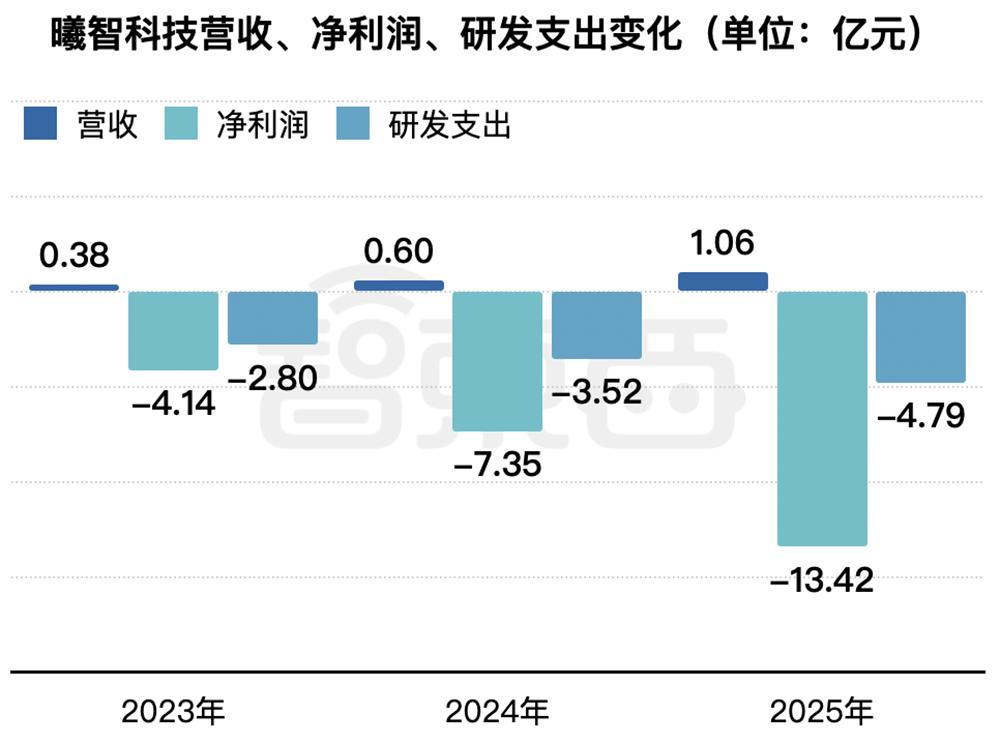
▲ Changes in Lightelligence's revenue, net profit, and R & D expenditure from 2023 to 2025 (Chart by Zhidx)
During the same period, the comprehensive gross profit margins were 60.7%, 53.5%, and 39.0% respectively.
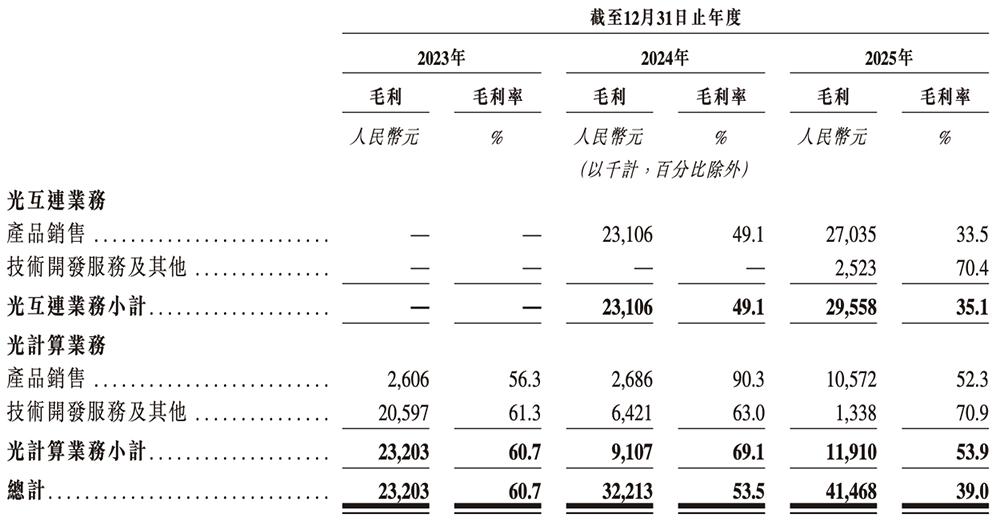
Lightelligence is still in the early stages of monetization and commercialization. It mainly focuses on developing optoelectronic hybrid computing power technology, has moved beyond the pilot stage, and achieved the deployment of specialized technology products.
Its revenue growth in 2024 was due to the first mass - production of a Scale - up product, and the revenue growth in 2025 was also due to the first mass - production of its Scale - up product.
Lightelligence's optical interconnection revenue mainly comes from the sales of Scale - up and Scale - out products. From 2024 to 2025, the revenue from Scale - up products accounted for more than 70%.
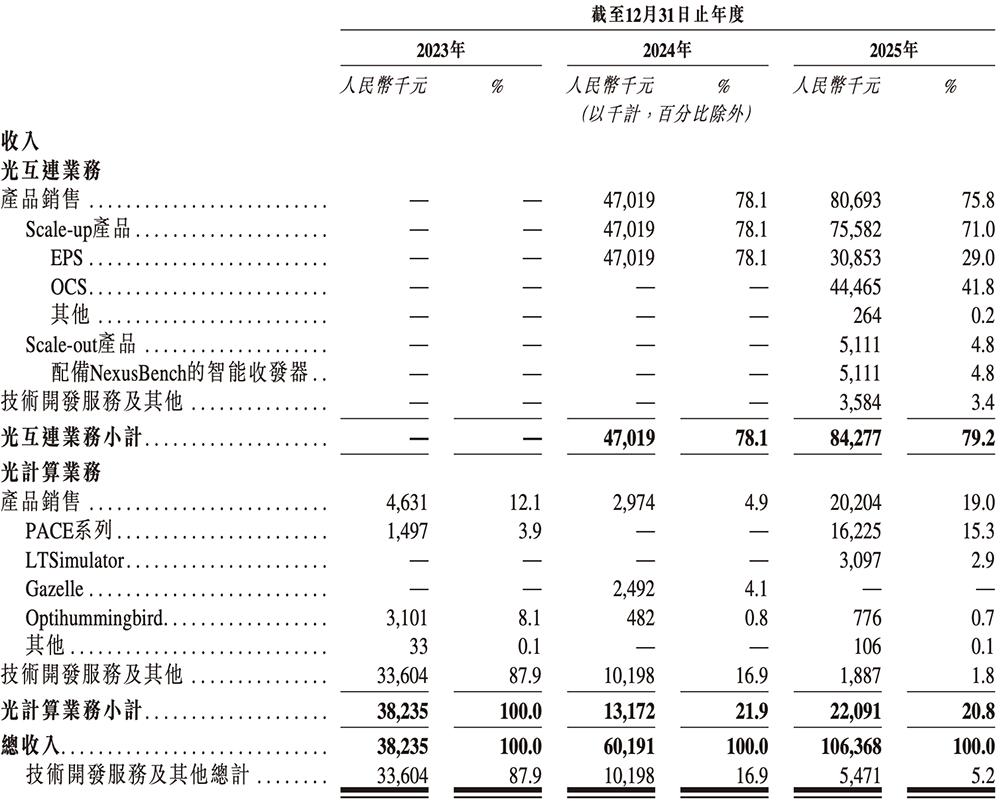
The selling price of Scale - up products has increased. At the same time, the company has invested more resources in R & D of products with higher performance, more functions, and wider market applications, such as the newly developed Scale - up OCS, which was put into mass production in December 2025 and has become the main product driving the annual revenue growth in 2025.
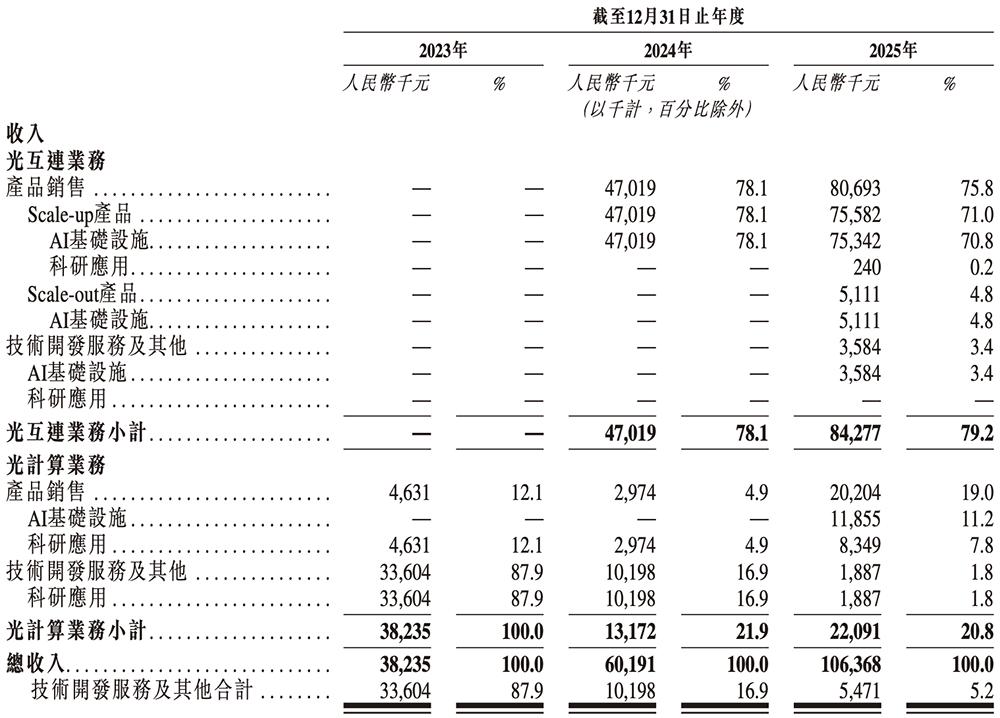
Its optical interconnection products and services are mainly deployed in data centers as AI infrastructure, including the construction of super - nodes; optical computing products and services were initially mainly used in scientific research scenarios. Since 2025, optical computing hardware has been directly used in commercial AI infrastructure.
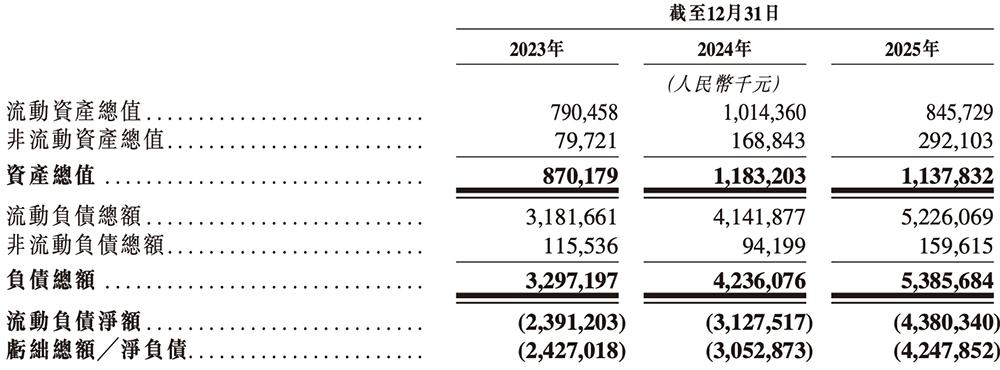
The consolidated balance sheet of Lightelligence is as follows:
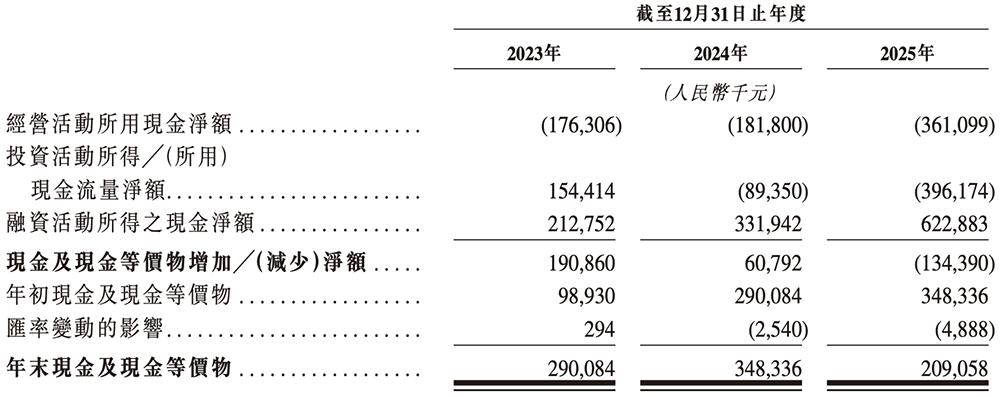
The cash flow is as follows:
Lightelligence has a solid revenue reserve and is expected to continue to grow rapidly in the near future.
Specifically, in the fourth quarter of 2025, Lightelligence received multiple purchase orders from a major Chinese communication equipment and ICT infrastructure supplier (including about 8,200 Scale - up OCS modules) and an AI computing chip developer (including about 2,000 Scale - up OCS modules),
all of which involve Lightelligence's Scale - up OCS solutions, with a total value of about 87.3 million yuan.
These purchase orders were initially delivered and accepted at the end of 2025 and are expected to be fully completed in 2026. According to the current delivery and acceptance schedule, 56% of the total contract value (excluding VAT) was recognized as revenue in 2025, and the remaining 44% is expected to be recognized as revenue in 2026.
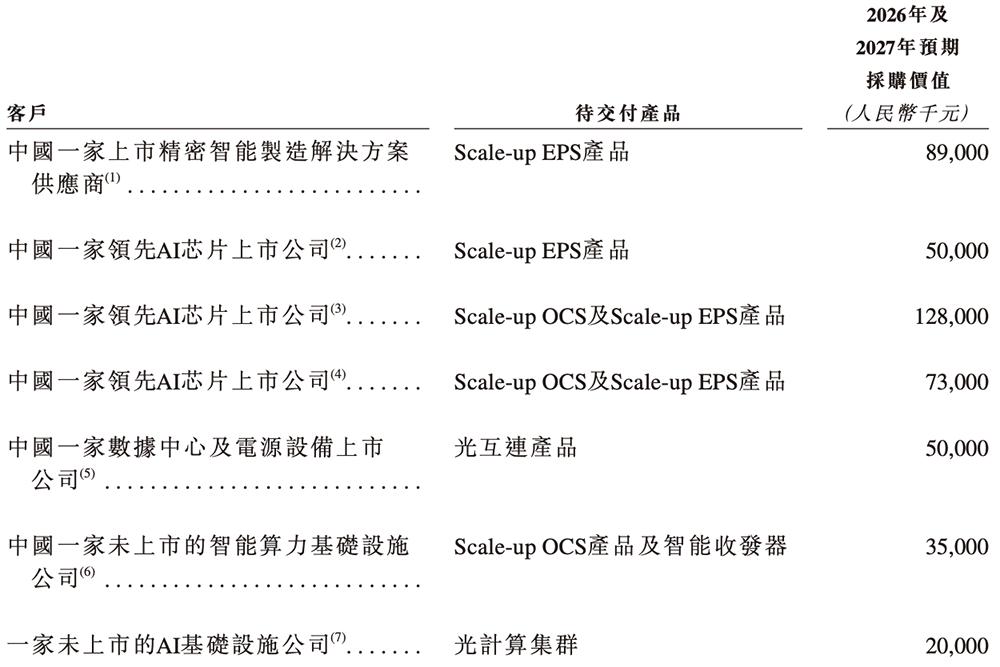
In addition, Lightelligence has signed multiple framework agreements and letters of intent with several well - known customers for the purchase of optical computing products and optical interconnection solutions.
Among these customers, at least 5 are listed companies, and the rest are leading enterprises in their respective industries. All customers are reputable companies and independent third parties. According to the relevant letters of intent, most of the purchase amounts are expected to be realized in 2026 and 2027, indicating a strong commercialization momentum.
In addition, Lightelligence has reached more than 15 design - in cooperation agreements with multiple GPU manufacturer partners for its Scale - up optical interconnection products and does not rely on any single partner. The cooperation is at different stages from initial exploration to mature implementation.
02.
Ranks first in the world in the shipment volume of optical computing chips
The prospectus shows that the demand for AI interconnection products in China is much higher than in other regions, reflecting the strong momentum of China in the field of AI development. The rapid expansion of the Chinese AI computing and interconnection market provides broad commercialization opportunities for next - generation technologies such as optical interconnection and optical computing.
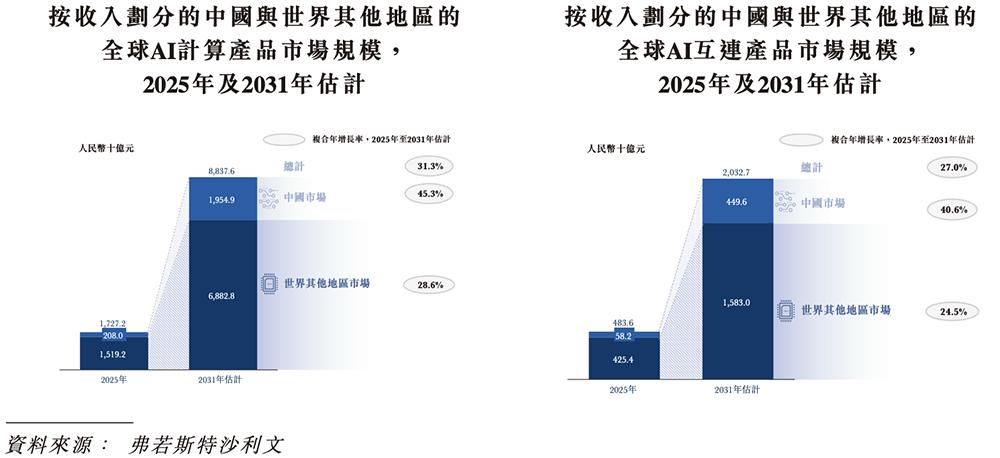
According to Frost & Sullivan, as of 2025, the market penetration rate of optical computing chips in Chinese AI inference chips was less than 0.5%, and it is expected to reach 20% by 2040. By 2031, the market sizes of the Chinese Scale - up optical interconnection and optical computing markets are expected to reach 270.4 billion yuan and 2.546 billion yuan respectively.
Lightelligence is expected to gain a first - mover advantage in the global optoelectronic hybrid computing power market.
1. Optical interconnection
Scale - up optical interconnection technology is designed specifically for Scale - up connections between chips and is a high - speed data transmission technology.
Large - scale optical interconnection products mainly include Linear Pluggable Optics (LPO), Near - Package Optics (NPO), Co - Packaged Optics (CPO), and Optical Circuit Switching (OCS).
LPO uses a simplified linear drive architecture and is currently the mainstream solution for long - distance inter - board and inter - cabinet connections in super - nodes.
NPO brings the optical engine closer to the computing or switching chips, shortens the electrical wiring distance, and improves signal integrity and transmission efficiency. It is an important transitional form towards CPO.
CPO tightly integrates the optical engine with the switch ASIC or AI accelerator chip in the same package or substrate, achieving the highest bandwidth density and lowest energy consumption. It is regarded as the core solution for the next - generation ultra - large - scale clusters.
OCS realizes large - scale switching and traffic scheduling between computing nodes through all - optical cross - connections. Compared with traditional electrical switching, it has lower power consumption and greater port expansion capabilities, thus supporting the network interconnection of ultra - large - scale AI computing clusters.
Compared with electrical interconnection solutions, optical solutions have lower latency, higher bandwidth, and higher energy efficiency.
Lightelligence's optical interconnection solutions are used to improve the computing