Can the NB-IoT "cattle networking" from a decade ago regain its vitality with heavy investment from the godfather of Silicon Valley venture capital?
Recently, Peter Thiel, known as the "godfather of venture capital" in Silicon Valley, announced that he would lead the investment in Halter, a New Zealand agricultural technology company. Simply put, this company mainly focuses on "putting AI collars on cows" to modernize livestock tracking and ranch management. Based on this ability, the company has achieved a valuation of up to $2 billion. In fact, as early as a decade ago when low-power wide-area Internet of Things (LPWAN) technologies such as NB-IoT and LoRa emerged, many domestic manufacturers had conducted in-depth explorations in livestock management. They had experimented with hardware like ear tags and collars to manage beef cattle and dairy cows, creating multiple "Internet of Cows" cases. However, most of them did not continue to operate later. The news of Peter Thiel's investment in Halter has attracted further attention from IoT practitioners. Can the "Internet of Cows" that emerged a decade ago regain its vitality?
Halter's Smart Livestock Management: More Than Just Putting Location Collars on Cows
Halter was founded in 2016. It initially promoted its system in New Zealand and Australia and then gradually expanded to the United States. Halter's core product is a smart livestock management system centered around "smart collars + virtual fences." Specifically, it encourages each cow to wear a solar-powered smart collar. The collar guides the cows' behavior through sounds and vibrations. Ranchers can remotely set the fence location, monitor the herd's activities, and control the grazing path through a mobile app, breaking free from the constraints of traditional wire fences and manual grazing. At the same time, the entire system also relies on dedicated base stations to build a stable communication network. Even in areas without public network coverage, it can achieve digital management and all - weather visual monitoring of the herd.
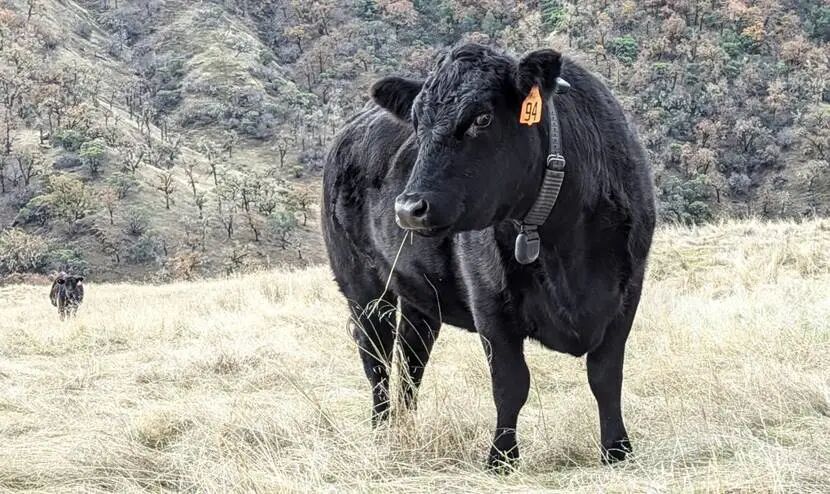
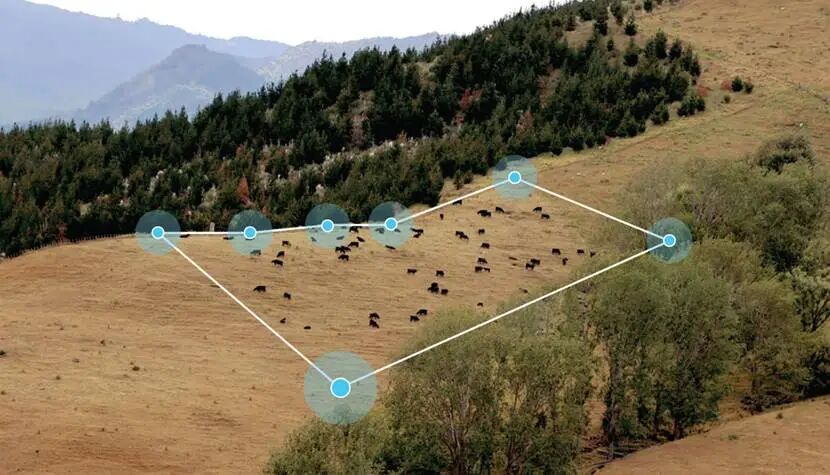
From a hardware perspective, this collar can track each cow's location, health status, body temperature, chewing behavior, and reproductive cycle through AI algorithms, collecting more than 6,000 data points per minute continuously throughout the day. The virtual fence is an even more disruptive feature. Farmers don't need to set up posts and nets. Instead, they can simply draw a line on the map through the mobile app, and that line becomes the fence. Every time a cow approaches the boundary, the collar will emit sounds and vibrations as a reminder, and the cow will naturally turn away. After seven to ten days of such training, they will stay within the designated area. Additionally, if you want to drive the entire herd to a new ranch or milking shed, you can do it with just a single tap on the button. Halter has given the entire system an official commercial name, cowgorithm, which means the cow algorithm.
During these processes, Halter has some unique technical capabilities. For example, it uses directional sounds and vibrations for active guidance. Cows will quickly learn that if they hear a sound in one ear, they will turn and walk in that direction. This enables farmers to guide the herd to the milking shed or between ranches. In Halter's vision, future ranches will no longer rely on barbed wire, horse - riding to drive the cattle, and high - intensity labor. Instead, they will achieve efficient, intelligent, and environmentally friendly grazing management through a series of "invisible fences."
According to Halter's public data, the company has currently served more than 2,000 ranchers and farmers in New Zealand, Australia, and the United States, and has shipped 1 million solar - powered collars. Halter's business model is a subscription model. The hardware is free, and the subscription fee is $5 - $8 per cow per month, which also depends on the herd size and the market. In addition, a one - time fee for the farm tower infrastructure is required.
Since its establishment, Halter has gone through multiple rounds of financing, and its valuation has increased by more than 20 times. In June 2025, it received $100 million in Series D financing led by BOND, and its valuation reached $1 billion for the first time, making it a unicorn. Just nine months later, its valuation doubled.
Why has Halter's valuation grown so rapidly? In the view of the company's founding team and investment institutions, this model is not just about putting collars on cows for management, nor is it just about replacing fences with cow collars. It offers higher value. On the one hand, Halter accumulates data and algorithms to explore higher productivity per acre. On the other hand, through virtual fences, it enables rotational grazing, achieving land regeneration management and protecting sensitive areas (such as riparian buffers and wetlands), facilitating the movement from ranches to fields. Through more precise grazing management, some of Halter's customers are now able to double the number of cows they can graze on their land.
Domestic IoT Practitioners' Decade - long Exploration: What Are the Lessons Learned?
After the news of Halter's financing came out, many domestic IoT practitioners felt quite emotional. As early as during the promotion of LPWAN technologies such as NB - IoT and LoRa in 2016, livestock management was one of the key exploration scenarios. Multiple models such as the Internet of Cows, the Internet of Sheep, and free - range chickens were implemented in many regions. For example:
In early February 2017, China Telecom, in cooperation with Huawei and Yinchuan Aote, launched the "Little Cowherd," a cattle Internet product based on NB - IoT. The "Little Cowherd" replaced the ZigBee communication method in the smart collar with NB - IoT technology. The collar data can be directly transmitted through the NB - IoT network. The management, breeders, and veterinarians of the dairy farm can obtain real - time information on the cows' physical signs through web pages or mobile clients.
In May 2017, Liu Qiangdong, the founder of JD.com, showed off the "JD Running Chickens" poverty - alleviation project. The running chickens must be free - range, and each chicken has a pedometer on its foot for supervision. Each chicken must run one million steps. Each chicken's leg ring is equipped with a unique ID for traceability, and the leg ring uploads data through the LoRa network.
Last year, the popular digital blogger "He Tongxue" released a new video saying that his team collaborated with Tuya to create an "AI Cow Search" smart hardware. This cow - searching system consists of a collar locator, a gateway, a LoRa relay base station, a cow intercom, and a mobile app. Since it is applied in the mountainous areas of Guangxi, the communication problem needs to be solved first. The solution deploys LoRa relay base stations and gateways in the cowsheds and on the mountain tops. The locator sends the location information to the relay base station, which then sends it to the gateway. The gateway then sends the location to the server and finally to the user's mobile phone.
There are many such projects, and practitioners have continued to explore the application of artificial intelligence and the Internet of Things in smart livestock management. However, after a decade of exploration, there doesn't seem to be a domestic manufacturer similar to Halter with a simple and clear product and model and a rapidly rising valuation. Nevertheless, years of exploration have also yielded some clear lessons.
From an experiential perspective, the technical solutions for livestock management in various complex scenarios have matured. In the past decade or so, practitioners have made numerous attempts to tackle technical issues in hardware, software, platforms, communication, etc., laying the foundation for smart livestock management. For example, in response to problems such as insufficient sensor accuracy of the initial collars, easy damage of the collars, and insufficient battery support, relevant industrial chain enterprises have continuously carried out various experiments, creating hardware products suitable for all kinds of environments and further reducing the price. Another example is that the communication methods have also been continuously improved. The NB - IoT and LoRa technologies have evolved over the past decade, with significantly improved reliability, reduced power consumption, and extended range. At the same time, the development of satellite IoT has also provided satellite connection services for cattle management.
However, the application of AIoT in smart livestock scenarios, especially the Internet of Cows, has not yet achieved scale. Compared with Halter, the following lessons can be summarized:
Firstly, there is insufficient in - depth exploration of AI capabilities and data. The earliest Internet of Cows scenarios focused on the connection level, and the exploration of intelligence and data was only at a relatively shallow level. To some extent, the problems solved were "optional" for farmers. Of course, the AI and big data technologies at that time were far less advanced than they are now. With the rapid advancement of relevant technologies, a solid foundation has been provided for the exploration of AI and big data, which can address the various pain points of farmers more deeply. For example, the AI algorithms and data - driven rotational grazing methods provided by Halter, as well as the improvement of productivity per unit area, seemed difficult to achieve a decade ago.
Secondly, the closed - loop business model has not been formed, which is a more important lesson. The ability to obtain continuous revenue is crucial. The entire Internet of Cows system involves a large amount of basic investment in hardware, platforms, base stations, etc., as well as the labor cost of putting collars on each cow. The upfront investment cost is huge, and the cost - benefit needs to be clearly defined. Many domestic Internet of Cows projects explored in the early stage were interrupted due to the lack of a sustainable business model. Halter's announced business model is a subscription model. Although the monthly subscription fee of $5 - $8 per cow is not cheap, relevant investment institutions believe that the lifetime total income of a dairy cow can reach $15,000 or more. Moreover, the problems of labor shortages on overseas farms, fence investment, and high - intensity labor can all be solved by Halter. Coupled with the long - term advantages of rotational grazing, optimized livestock carrying capacity, and land regeneration management, Halter has the potential to further increase its income. Therefore, there is no problem in forming a mature business model.
AI Accelerates Smart Livestock Management, and the Exploration of an Ecological Business Model Continues
Perhaps there are significant differences between the domestic livestock industry and that overseas, but the use of AIoT for intelligent management is an inevitable trend in the industry. The latest data from the Ministry of Agriculture and Rural Affairs shows that in 2025, the large - scale livestock and poultry breeding rate in the country reached 73%. The intelligentization of breeding production, the digitalization of operation management, and the data - based decision - making in business have constituted the "digital and intelligent competitiveness" of modern agricultural and livestock enterprises. Among them, the intelligentization penetration rate of leading enterprises has reached 92%, while that of small and medium - sized individual farmers is only 18%.
The Internet of Things connects all livestock such as cows, sheep, and pigs, and the rapid development of AI technology accelerates the process of smart livestock management. In the future, not only large - scale agricultural enterprises but also small individual farmers will see a significant increase in their intelligentization level. Data shows that by 2030, the penetration rate of intelligent devices among individual farmers will reach 55%, and AI technology will help individual farmers reduce their breeding costs by 30% and increase the product premium ability by 25%.
In this process, the business model remains a core prerequisite. The changes in the participants in the smart livestock ecosystem provide good support for the formation of a closed - loop business model. The promotion of policies and the involvement of financial capital are typical examples. For example, some local governments have launched the "Smart Breeding Project," providing 30% - 50% subsidies to individual farmers who purchase intelligent devices, and at the same time promoting a new model of "equipment leasing + data service."
In the "Guiding Opinions on Vigorously Developing Smart Agriculture" issued by the Ministry of Agriculture in 2024, it was proposed to guide financial institutions to increase financing support for smart agriculture construction projects and encourage financial institutions to innovate financial scenarios. At the end of last year, the three - department joint - issued "Notice on Promoting Mortgage Financing of Agricultural Facilities and Livestock" will guide new agricultural business entities with strong operational capabilities and large and medium - sized agricultural enterprises to carry out mortgage financing of agricultural facilities and livestock. The issuance of these policies strongly supports the exploration of the business model of the Internet of Cows + financial product innovation.
Putting a collar on each cow, a seemingly simple act, has now become a potential driving force for triggering a transformation in the trillion - dollar cattle - based breeding industry. With the entry of the godfather of Silicon Valley venture capital and the leap - forward progress of AI technology, the Internet of Cows applications established based on NB - IoT decades ago may be further upgraded and regain their vitality.
This article is from the WeChat public account "Internet of Things Think Tank" (ID: iot101), written by Zhao Xiaofei and published by 36Kr with authorization.