Elon Musk has another big move: Tesla will build a super chip factory.
On March 30, Tesla AI's official Weibo account announced that it has officially launched the TERAFAB Super Chip Factory project. It is expected to achieve a computing power output of over 1 terawatt (1TW) per year, which is approximately 50 times the current annual total computing power output of global AI chips. Elon Musk said that this will be the most ambitious chip manufacturing project in history to date.
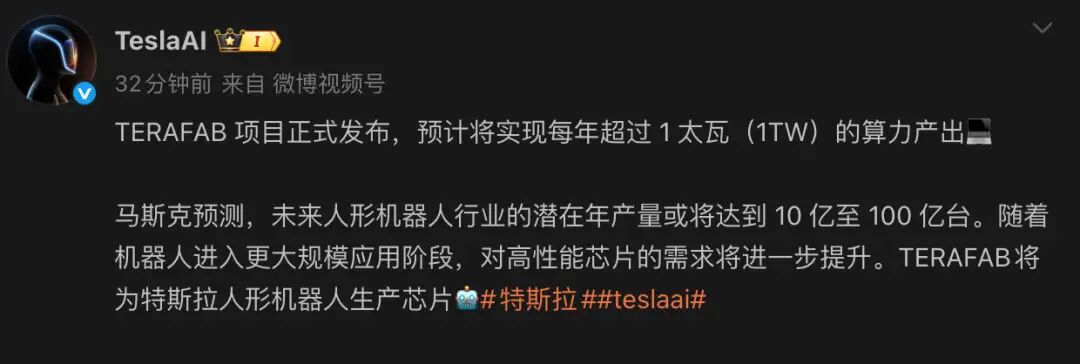
Tesla AI's post
Elon Musk predicts that the potential annual production of the future humanoid robot industry may reach 1 billion to 10 billion units. As robots enter a stage of larger - scale application, the demand for high - performance chips will further increase. TERAFAB will produce chips for Tesla's humanoid robots, with 80% of the chips supplied for space computing power and 20% for ground computing power.
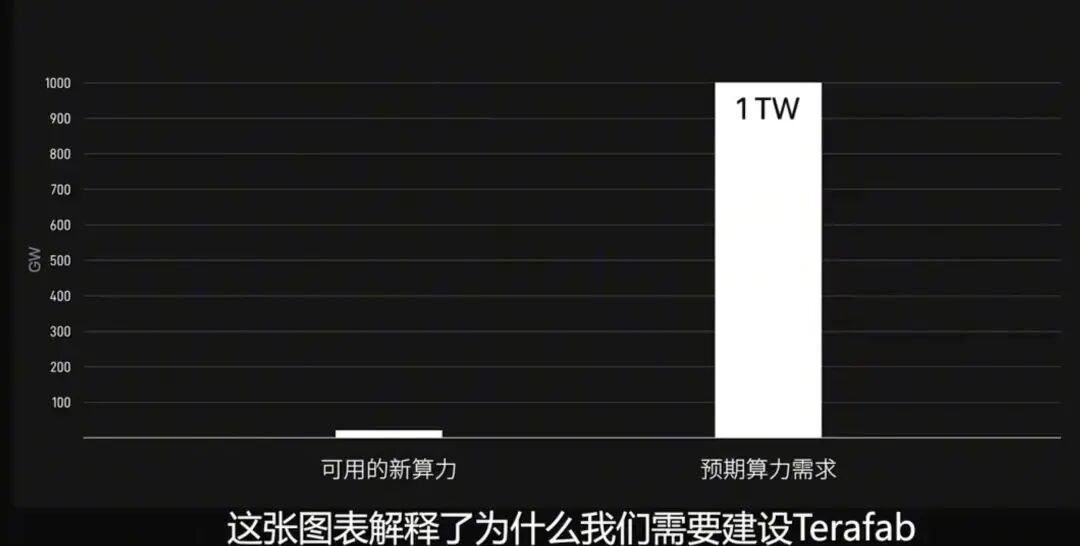
Tesla's expected computing power demand
Currently, the global production capacity of AI computing power is approximately 20 gigawatts per year. Elon Musk said that Tesla's existing business consumes over 100 billion chips annually. If Optimus achieves the goal of an annual production of 1 billion units in the future, the chip demand will be 50 times that of the current automotive business, while the total production capacity of global wafer fabs can only meet 2% of Tesla's demand. He said bluntly, "Either we build TERAFAB, or we won't have chips. We need chips, so we're building TERAFAB."
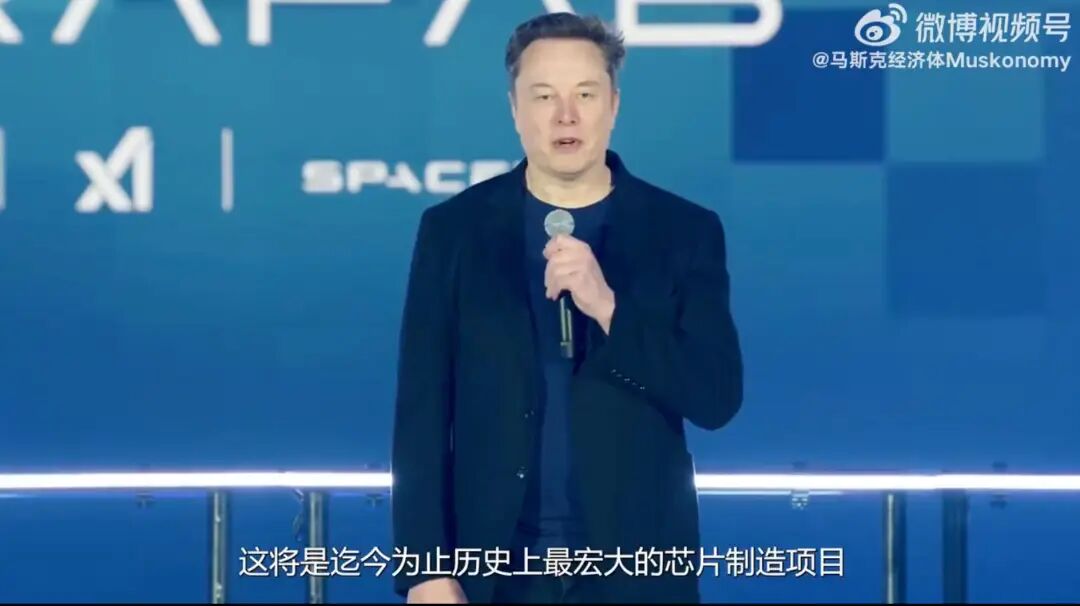
Elon Musk
According to Tesla's disclosure, the TERAFAB project is planned to have an annual production capacity of up to 100 billion to 200 billion advanced AI and storage chips, equivalent to a monthly wafer input of approximately 100,000 wafers. The total investment is expected to reach $20 billion.
The factory will be implemented in three phases. The first phase is the ground verification period from 2026 to 2028. The first Terafab prototype factory will be built, with a production capacity of 100 gigawatts. It will focus on producing Dojo3, FSD, and robot chips. Mass production will start in 2028, and the yield rate of advanced processes will be verified. The second phase is the full - production sprint period from 2029 to 2032. The computing power will gradually reach 1 terawatt per year. 80% of the production capacity will be shifted to the space side, and the annual delivery of hundreds of millions of tons of space materials will be launched. In 2032, the preliminary networking of space computing power will be formed. The third phase is from 2033 to 2040, during which robots will autonomously build factories and lay space infrastructure, and a cross - planet closed - loop of energy, computing power, AI, and aerospace will be established.
In terms of the technical path, the TERAFAB project will cover the entire industrial chain process from logic chips, storage chips to advanced packaging, and aim at the 2 - nanometer advanced process. Its product line is divided into two major categories: one is the "AI5" and subsequent "AI6" chips optimized for edge computing, which are mainly used in Tesla's Full Self - Driving (FSD) system, Optimus humanoid robots, and future driverless taxis; the other is the radiation - resistant high - performance "D3" chips designed specifically for the extreme space environment, which will provide computing power support for SpaceX's Starlink network, Starship program, and orbital AI data centers.
It is estimated that after the TERAFAB is put into production, Tesla's comprehensive chip cost can be reduced by 50% to 70%, the computing power electricity cost will be only 1/3 to 1/5 of that of ground - based photovoltaics, and the product iteration speed will be increased by 2 to 3 times.
A Gartner analyst said that the TERAFAB project will promote the efficient cross - scenario allocation of computing power resources and provide a new paradigm for the integration of the AI and aerospace industries. Although the challenges are huge, once successful, it will significantly enhance the resilience and diversity of the global chip industry.
As of the time of publication, the official website of the TERAFAB project has been officially launched. Currently, it is a simple page, only showing "Join Us On Our Journey" and the recruitment links of Tesla, SpaceX, and xAI. Tesla AI's Weibo also said that it will continue to update the progress of the TERAFAB project and make the project progress transparent and public.
This article is from the WeChat public account Jiemian News. Author: Li Kefeng. Republished by 36Kr with permission.