Adidas doesn't need the next Samba
Text | He Zhexin
Editor | Qiao Qian
As soon as it got dark, the lights in an old school building in Shanghai's Xintiandi came on, and people flocked in following the light. The former classrooms were decorated with different themes: displaying copies of Football Weekly, hanging vintage jerseys, or setting up stalls. People flowed back and forth between the upper and lower floors, as if they were visiting a makeshift flea market rather than a press conference.
But it was indeed a press conference. The star of the show was Adidas' newly released World Cup national team away jerseys. After 36 years, the three - leaf clover logo was back on the right front of these jerseys, which really made them look more fashionable. Later on the catwalk, these jerseys were incorporated into everyday outfits by excellent designers and fashion influencers, just one step away from hitting the streets.
The Superstar was also given a more prominent position. From the poster of Jennie, a member of Blackpink, on the staircase wall to the on - foot demonstrations by fashion bloggers on Xiaohongshu, the presence of this skate shoe was significantly higher than before. Its popularity had been on the rise in the past year, and it had appeared at various offline events, taking over the attention that had been on the Samba.
So, this seemingly theme - rich bazaar was actually answering the same question: when the Samba has filled the streets, where will Adidas go next?
A Product of the Old System
Looking back at the rise of the Samba, luck was indeed an important factor.
At the beginning of 2023, Adidas was still in a slump, with inventory, distribution channels, and brand sentiment all under pressure. It was at this time that the demand for the Samba suddenly exploded. In the words of CEO Bjorn Gulden, it was almost a "gift from the sky."
On the other side of the gift was uncertainty. Before he took office, the company "even planned to start expanding the production of the Samba at the end of 2024." After Gulden took office, he quickly decided to increase production and rapidly ramped up the output to millions of pairs in 2023. At the same time, through collaborations with Gucci and designer Grace Wales Bonner, he pushed the Samba to a broader cultural level. Google Trends showed that the search popularity of this shoe rose steadily in 2023 and reached its peak in 2024.
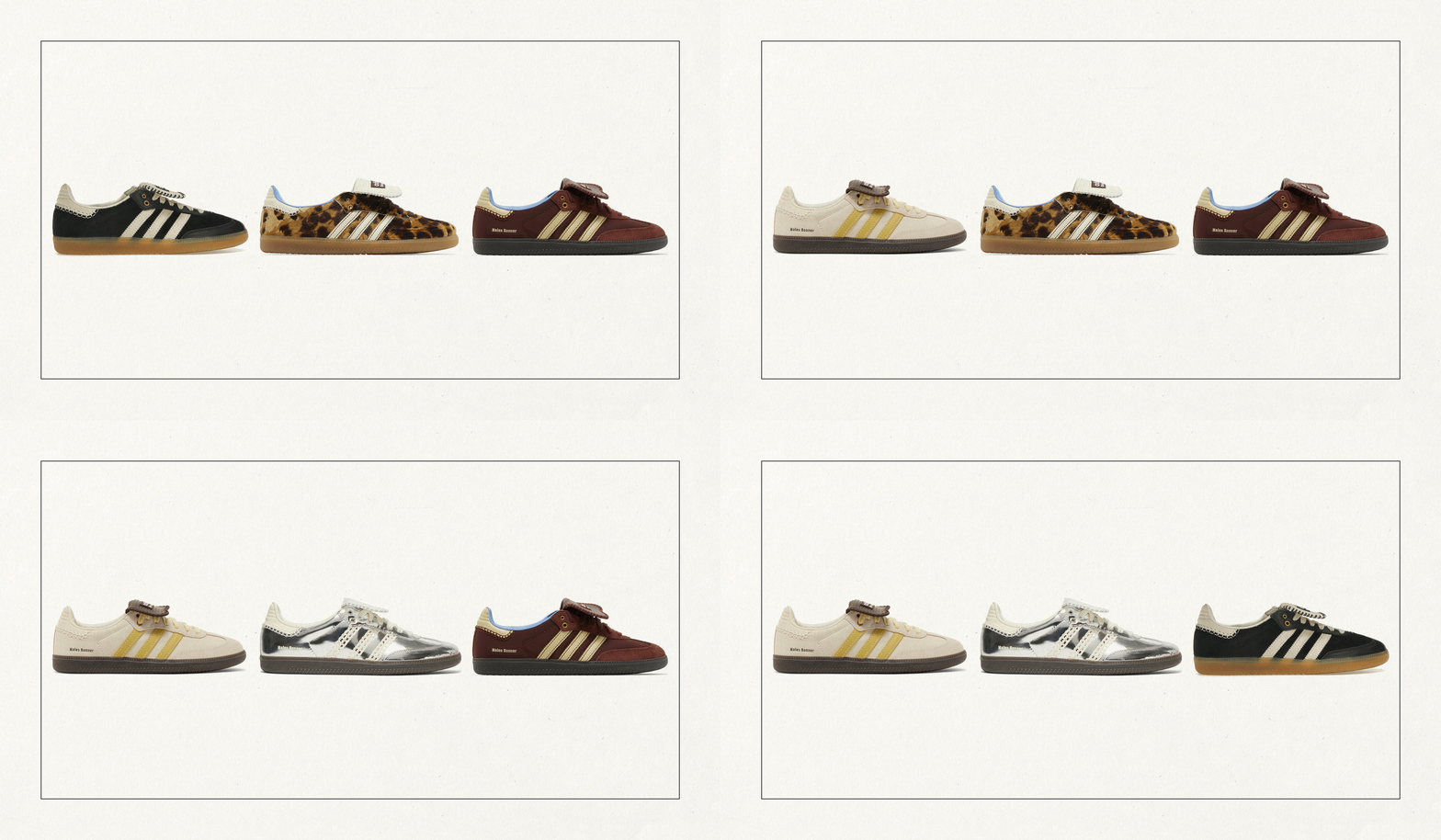
Grace Wales Bonner's design style, which reveals a wild side in its softness, is regarded as the contributor to the global popularity of the Samba.
But what really intrigued the outside world was not how this shoe became popular, but how it maintained such long - lasting vitality.
Part of the answer lies in the fact that Adidas never put all its eggs in one basket from the start. Gulden deliberately avoided emphasizing the Samba alone in almost all earnings calls and instead repeatedly mentioned "Terrace" - an overall concept that encompasses low - top vintage shoe models such as the Samba, Gazelle, Spezial, and Campus, originating from football terrace culture. These shoe models with similar appearances became popular in different regions at different times, significantly extending the lifecycle of this trend. According to Gulden, the third quarter of last year was even "the best quarter for the Terrace series."
This is why, despite the market constantly predicting "the next Samba," no real alternative has emerged. Similar shoe models launched by Nike, ASICS, or Puma have not been able to replicate this continuous growth in sales.
In 2024, Puma re - launched the Speedcat at a price similar to that of the Samba and enlisted popular K - pop stars to promote it, creating quite a stir on social media. According to J.P. Morgan analysts, the sales trend of the Speedcat was significantly weaker than expected, far from the company's target of selling 4 to 6 million pairs a year. By mid - 2025, Puma had lowered its full - year revenue forecast from low - single - digit growth to at least a 10% decline, and market news of a potential equity sale emerged in the same year.
Onitsuka Tiger, which is competitive in the fashion field, is restricted by its distribution channels and regional layout and is difficult to pose a large - scale threat to Adidas. The Nike x Jacquemus Moon Shoe, launched by Nike in collaboration with Jacquemus in the spring of 2025, performed well in the trial phase. However, its pricing and limited - edition strategy make it more of a supplementary product rather than a core item that can drive large - scale growth. To some extent, this also reflects Nike's caution about fully betting on the thin - soled shoe trend after missing the early stages of its emergence.
It was during this round of comparison that a more crucial question emerged: if competitors find it difficult to replicate the "Samba moment," does Adidas still have the ability to create another success of the same scale?
The answer may be no, and the reason lies not in the product itself, but in the change of the company's operating logic.
When the thin - soled shoe trend first emerged, Adidas was still driven by a "globally unified product" strategy - a single shoe model was promoted to all markets with concentrated resources, with unified supply, unified narrative, and unified rhythm, thus creating a large - scale cross - regional resonance in a short period of time.
However, after that, Adidas clearly shifted to a "local - for - local" operating model, splitting product decision - making power, product structure, and marketing resources to the regional level. Resource allocation also became more dependent on the short - term returns of each region. This mechanism can continuously produce regional best - sellers, but it naturally weakens the conditions for creating a globally unified best - seller.
Therefore, a product like the Samba, which requires long - term concentrated resources, cross - market synchronous growth, and tolerance for early - stage uncertainty, is more difficult to succeed under the new system. From this perspective, the Samba is more like a product of the old system - it benefited from that accidental cultural explosion and the subsequent rapid allocation of global resources.
No Need for the Next Samba
At a recent conference call, Gulden responded to the market's concerns about Adidas' dependence on the Samba for the first time.
"We no longer rely solely on the Samba - although for about 12 months, the state of 'having to rely on it' was actually quite uncomfortable. To be honest, if it hadn't been successful during those 12 months, I might not have even been able to renew my CEO contract."
In fact, while the Samba was still a global sensation, Adidas had already started to consciously reduce its investment in and exposure of the Samba. Take the Superstar, another shoe in the vintage culture line, as an example. The company began to pre - heat and increase its sales volume in 2023, and the sales are expected to peak this year. Another vintage shoe model, the Stan Smith, has also appeared in many fashion magazines since last year. GQ described the Stan Smith as "the originator of all white sneakers" in an article in 2025.
Gulden's bet on classic vintage shoe models was once considered a "risky move," and the company was regarded as "crazy" in the industry. However, the current result is that Adidas has a large portfolio of vintage shoe models and can almost flexibly activate any of them through marketing campaigns at any time.
At the same time, Adidas is also testing whether its ability to transform from the sports field to popular culture can be successfully replicated in multiple product categories.
The annual sales volume of the Adizero EVO SL series recently exceeded 10 million pairs - this figure is comparable to the estimated sales volume of the Samba. Although one belongs to the sports performance line and the other belongs to the vintage culture line, Adidas is sparing no effort to transform the EVO SL into a more fashionable product for daily use - from the upper material, mid - sole performance to the color, this effort is beginning to pay off.
The Hyperboost Edge, which has not been launched in the domestic market, is another example. It is a new product in Adidas' comfortable running market, which is also On's area of expertise. Adidas rarely mentioned On in its recent earnings report, saying that "the single - quarter revenue was on par with On." However, the large - scale production of the Hyperboost Edge will be a challenge in terms of price.
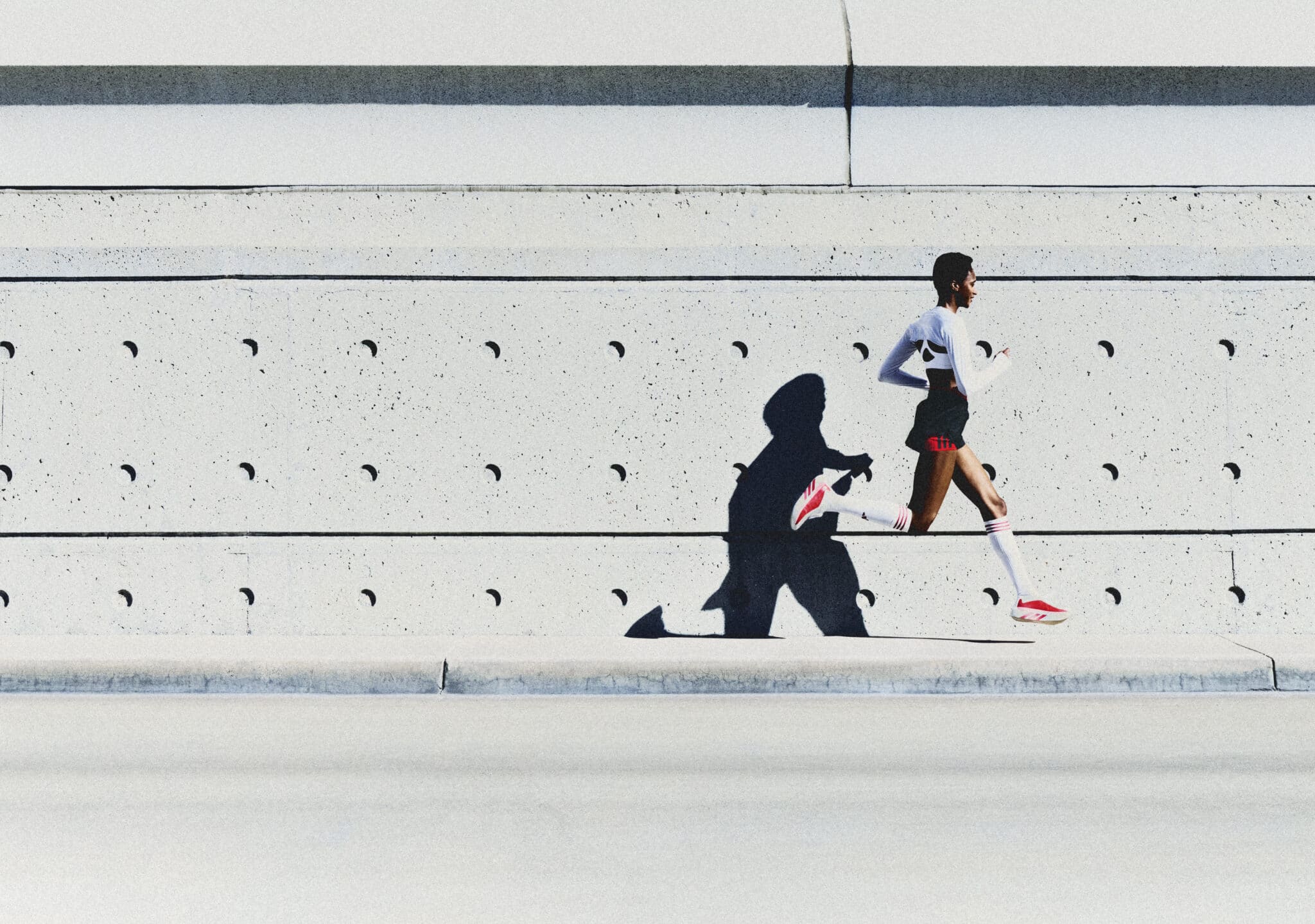
Will the Hyperboost Edge, which looks and performs like an advanced version of the Evo SL, be the next popular shoe for marathons?
Apparel is the least - mentioned category, but the figures speak for themselves. In 2025, Adidas' apparel revenue increased by 10% to 8.764 billion euros, accounting for 35% of the total revenue, while the proportion of footwear decreased slightly from 59% to 57%.
"Our clear goal is to expand a broader product portfolio and always create topics for the brand in the clothing field. To be honest, the platform for footwear is relatively limited, and fashion trends change less frequently," Gulden explained in detail. "If you can do well in clothing, then in addition to the performance and lifestyle footwear business, you will have a larger space to play in."
Gulden specifically mentioned in the conference call that the experiments of the design team with denim and knitted fabrics "had very good sales, especially online." A "new Chinese - style jacket" designed by the Chinese team unexpectedly went viral on the Internet - this is exactly what the "local - for - local" model can produce: no need for global unified bets, verified by regional teams, and then scaled up if successful.
Gulden also predicted that the mixed - style category that combines sports technical fabrics with the Originals vintage style will continue to expand in 2026, and the first series will be mainly for women's products.
"Turning around a company requires three elements: luck, timing, and effort. I don't know the proportion of each, but from the first day, I clearly saw that we had many good signs emerging, but the outside world just didn't realize it."
Gulden said this in 2023. Looking back three years later, it still holds true - just in the opposite direction. Those "unnoticed signs" have now grown into towering trees. Perhaps what really deserves to be questioned now is no longer "who will take over after the Samba," but whether a company has finally found its own rhythm when it no longer needs to bet on the sudden popularity of a single shoe model.