Lehua and Huang Xiaoming are both here: Who can really benefit from the robot rental business?
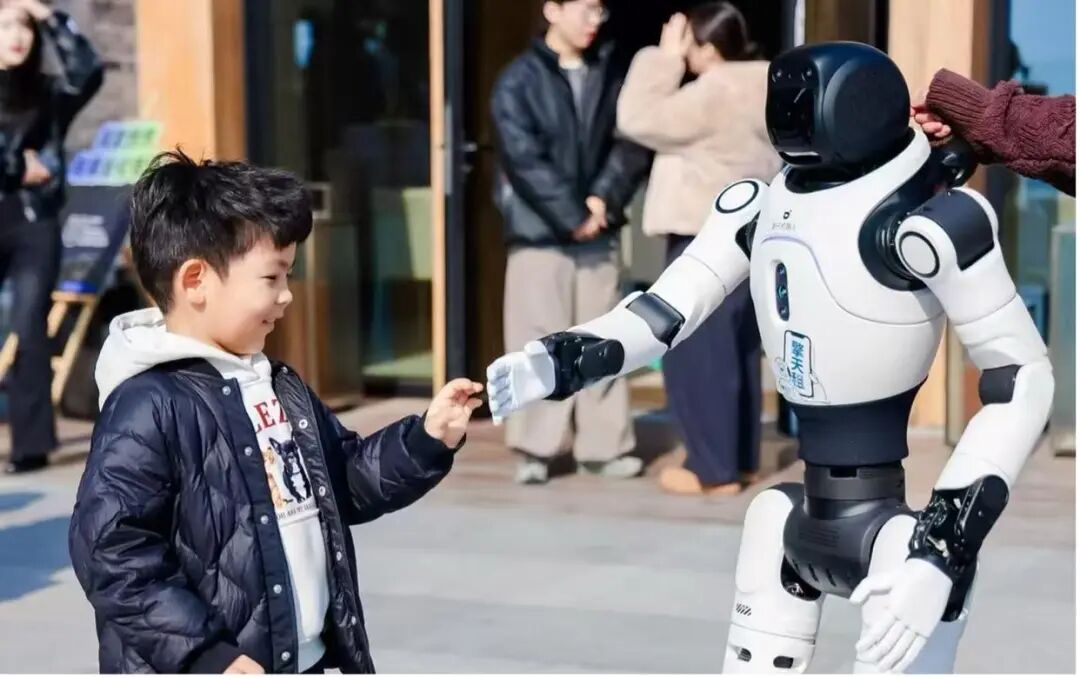
In the spring of 2026, the most magical story in China's business world took place among a group of iron lumps.
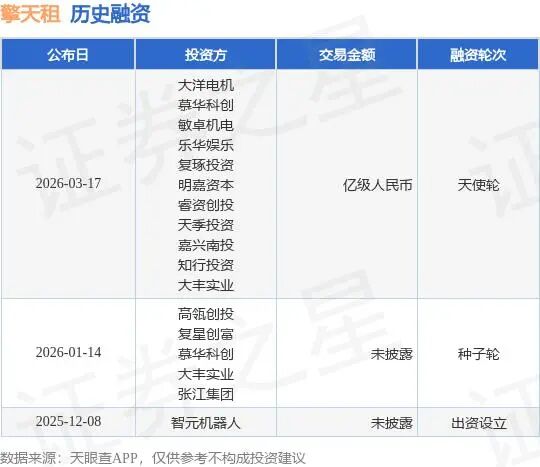
In mid-March, a robot leasing platform called Qingtianzu announced the completion of hundreds of millions of yuan in financing. Among the list of investors, in addition to hard technology capitals such as Dayang Motor and Muhua Kechuang, entertainment industry figures such as Lehua Entertainment and Huang Xiaoming's Mingjia Capital also appeared. The company has been established for only three months, and its valuation has soared to 3 billion yuan.
What does 3 billion yuan mean? According to data from iiMedia Research, the total output value of the entire Chinese robot leasing market in 2025 was only 1 billion yuan.
Just one year ago, the daily rental price of a humanoid robot could reach 20,000 yuan, and the booking schedule was arranged for a month later. One year later, the daily rental price of the same robot has dropped to 3,000 yuan, and they still have to promote it everywhere. Sometimes, it goes unnoticed for half a month.
The collapse of prices and the frenzy of capital occurred simultaneously in this track with a scale of less than 10 billion yuan, creating a highly absurd business picture.
Is this the prelude to the next billion-yuan windfall, or just a short-lived dream inflated by traffic and capital?
The stark contrast behind the excitement
For any business phenomenon, the first thing to look at is the price.
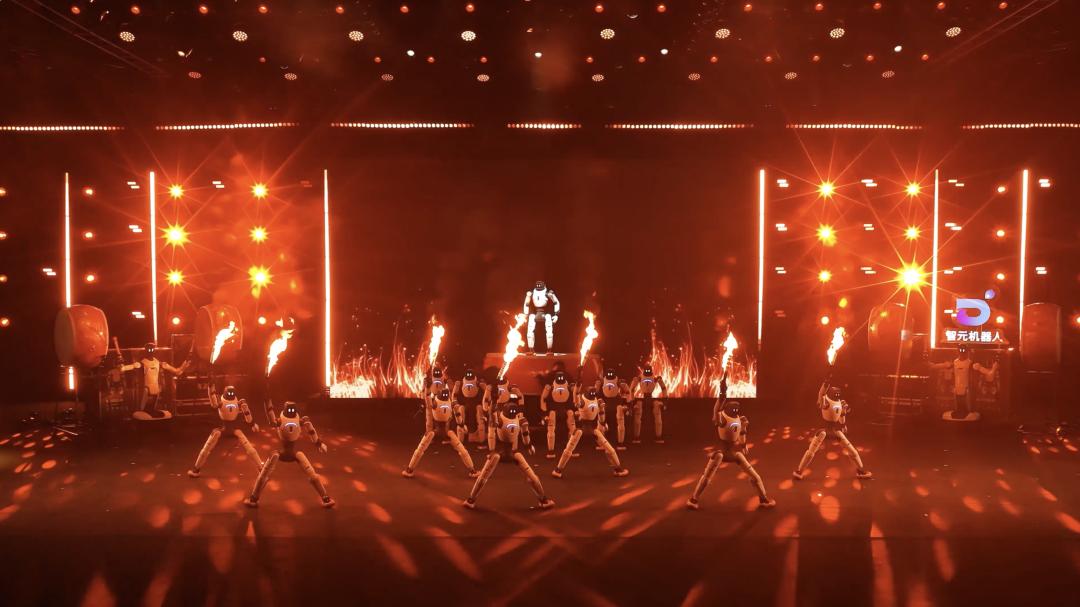
The price curve of robot leasing is extremely steep. During the Spring Festival Gala in 2025, the robots of Unitree Technology performed a yangge dance on the stage, which detonated the market overnight.
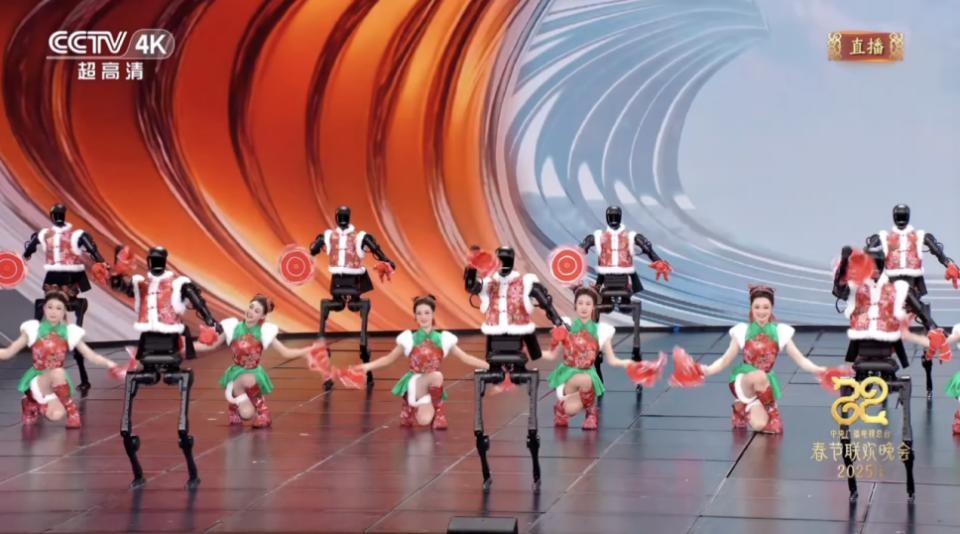
Source: Internet
At that time, the daily rental price of a Unitree G1 humanoid robot was as high as 20,000 yuan, and the booking schedule was full. It was extremely difficult to rent one. Xiaochen (a pseudonym), a leasing merchant, told the media that at that time, a robot could be rented out for 20,000 yuan a day. If it was rented out 15 times a month, the cost could be recovered in less than two months.
High profits attracted more and more players like a magnet.
According to a report by CCTV Finance, in 2025, more than 1,500 new robot leasing companies were established nationwide, a year-on-year increase of 48.1%. Retail investors, self-employed individuals, and even companies originally engaged in the rental of performing arts equipment flocked to this track.
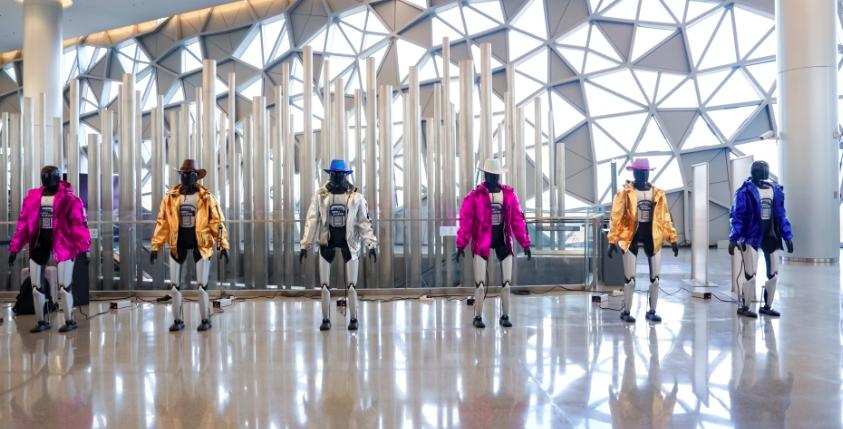
Source: Internet
The logic at that time was very simple: scarcity. The national robot shipment volume was limited, while the demand from scenarios such as commercial performances, annual meetings, store openings, and temple fairs surged like a tide. The imbalance between supply and demand led to soaring prices, and early entrants made a fortune.
But the good days were too short.
In the second half of 2025, the situation suddenly changed.
The supply side began to increase. Manufacturers such as Unitree, Zhipu, and Ubtech ramped up their production capacity, and the equipment was no longer a scarce commodity. At the same time, thousands of leasing merchants flocked in, and a price war was on the verge of breaking out.
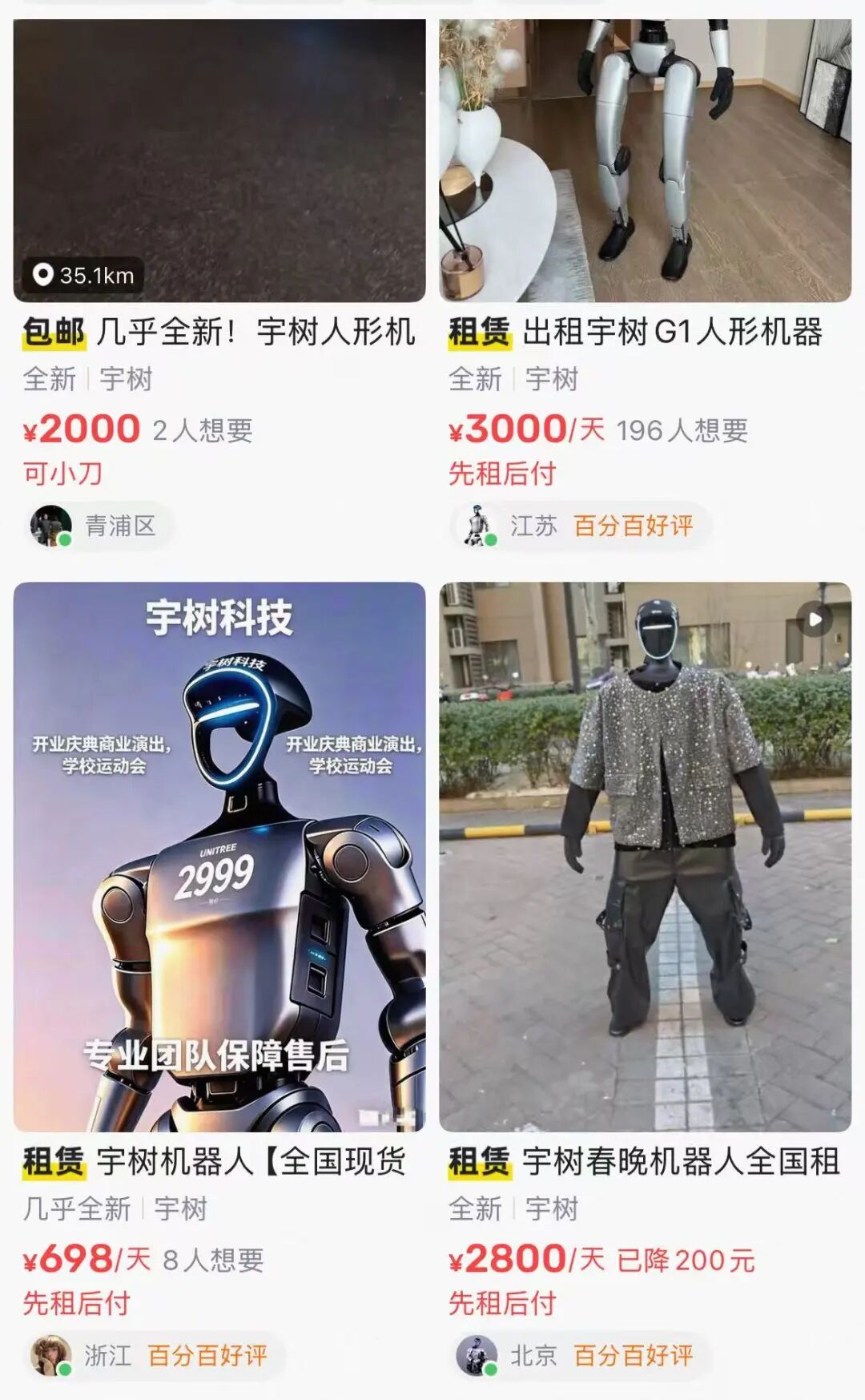
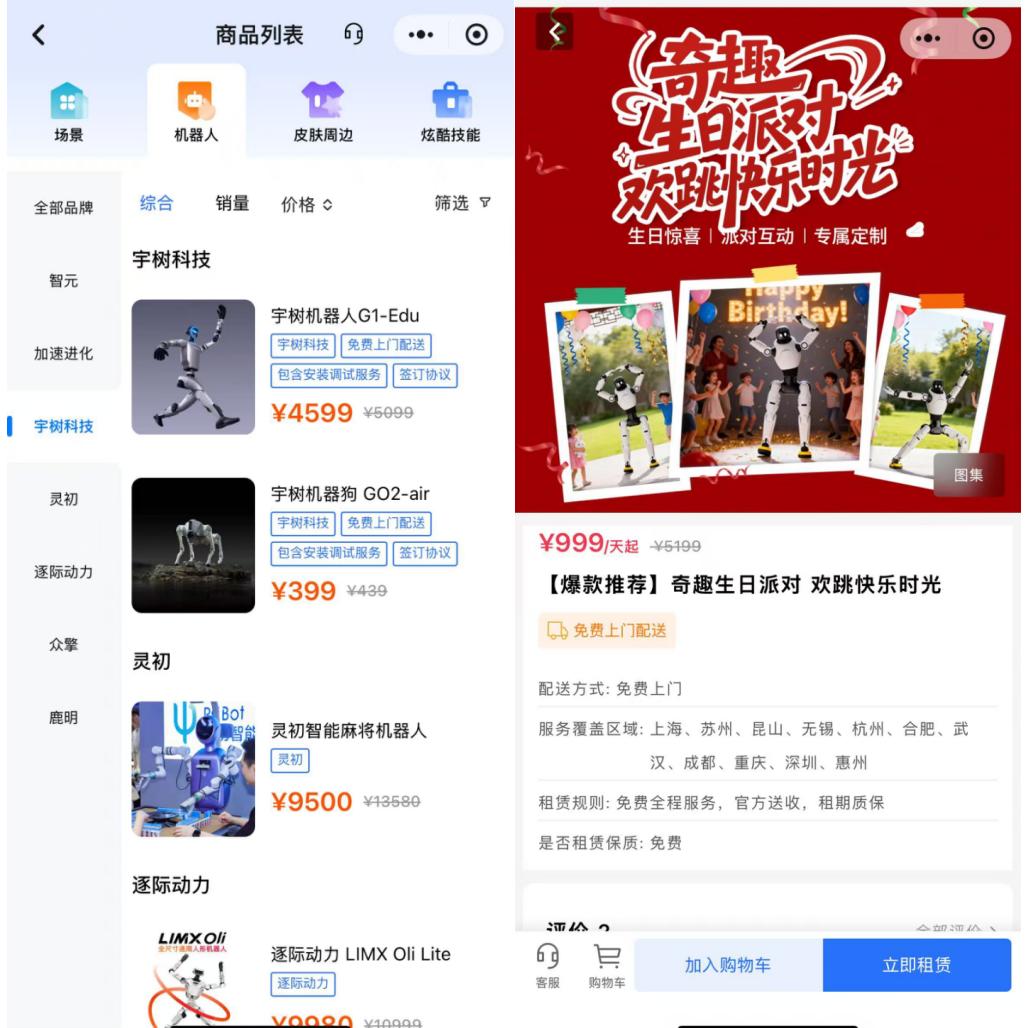
By the Spring Festival in 2026, the daily rental price of basic humanoid robots had generally fallen to the range of 3,000 - 5,000 yuan. Some platforms even offered an experience package for 999 yuan. Even the daily rental price of robot dogs was pulled down to start at 49 yuan. In just one year, the rental price of humanoid robots dropped by 80%.
Source: Internet
Xiaochen, a leasing merchant, bought several robots at a high price at the beginning of last year, and he still hasn't recovered the principal. "The depreciation rate of robots is higher than that of cars. When I bought them, they cost more than 300,000 yuan, but the market price has already fallen below the purchase price in less than a year." He started to sell the equipment at a low price on Xianyu, but no one was interested.
From a daily rental price of 20,000 yuan to no one interested at 3,000 yuan, the robot leasing market completed a roller-coaster-like turn from frenzy to cooling in less than a year.
Who is paying the bill? Who is making money?
While individual leasing merchants were in a desperate situation, capital chose another path: to build a platform with heavy investment.
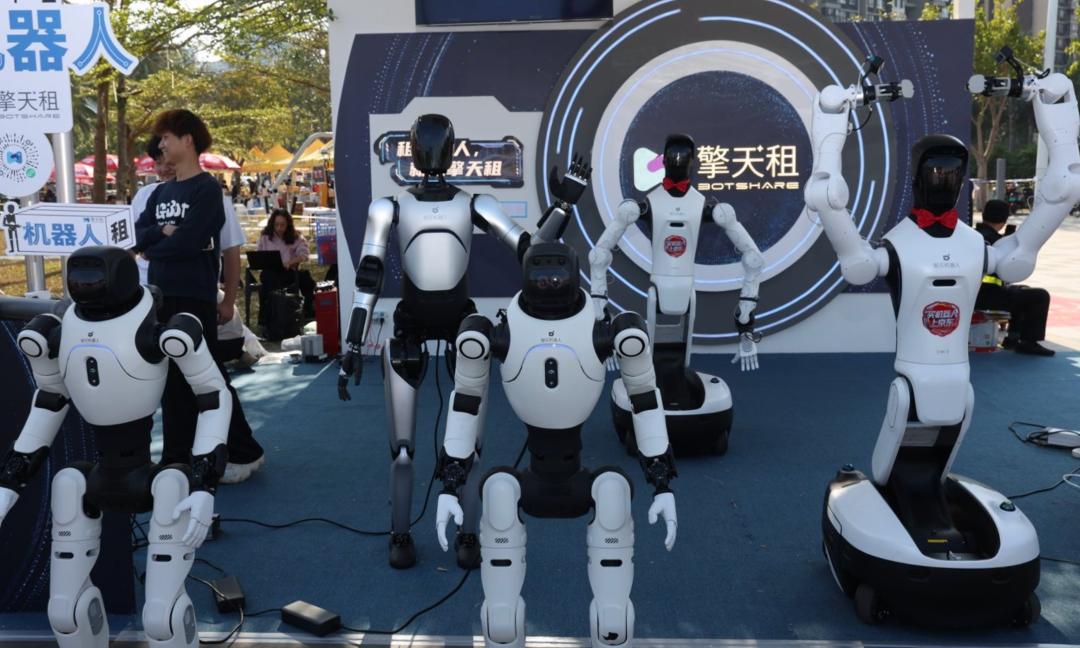
In December 2025, Zhipu Robot, in cooperation with Feikuo Technology and others, initiated the establishment of Qingtianzu, positioning it as the world's first robot leasing platform, adopting the "shared leasing + platform-based scheduling" model.
Source: Internet
Within three months, it completed three rounds of financing: the seed round, the angel round, and the angel + round. High - end Venture Capital, Fosun Chuangfu, Dayang Motor, Lehua Entertainment, Mingjia Capital, etc. all joined in.
Qingtianzu's ambition is not to make a more dazzling robot, but to build a deliverable system that can work.
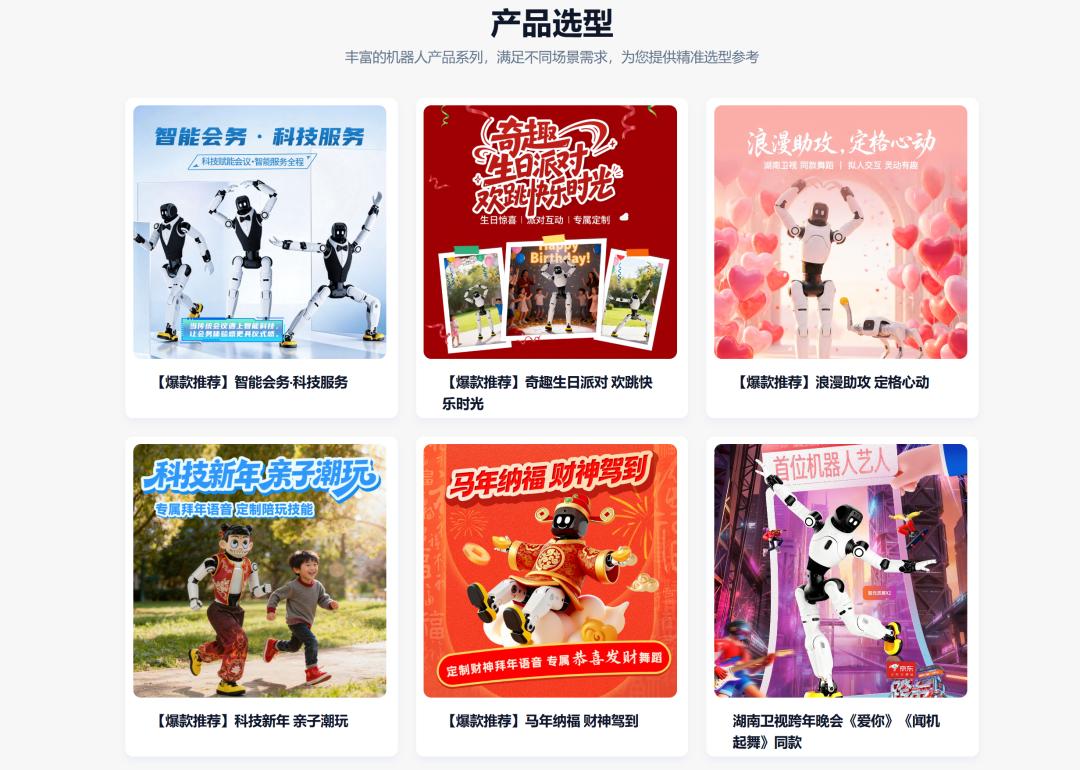
Its business model is not difficult to understand: one end of the platform is connected to more than 200 robot suppliers, and the other end is connected to customers with leasing needs - corporate annual meetings, mall openings, exhibition promotions, wedding entertainment, and even personal birthday parties.
After the customer places an order, the system automatically matches according to the distance, equipment inventory, and service provider ratings. The service provider brings the robot to the door and takes care of the whole process, including transportation, debugging, operation, and interaction.
Source: Qingtianzu official website
This model seems beautiful, but the real test lies in whether it can turn one - time delivery into a standardized and replicable service?
Li Yiyan, the CEO of Qingtianzu, admitted that the current profit model of the platform is to take a commission on the order service fee, but the service fee is waived during the promotion period, and profit is not considered for the time being.
Wang Mingfeng, the Chief Strategy Officer, said bluntly that the "999 - yuan national robot experience plan" launched by the platform "is not for making money, but a demand detector" to see if ordinary people are willing to pay for robot services.
Source: Internet
This is a typical way of burning money to gain the market. Use subsidies to attract new customers, use orders to support service providers, use scale to reduce costs, and finally build a national fulfillment network.
Qingtianzu's goal is to cover more than 200 cities in 2026, achieve a "2 - hour service circle", and recruit 1,400 city partners.
But problems also arise: When the subsidies are reduced and the traffic ebbs, will these users attracted by the "999 - yuan" continue to pay the bill?
Three business traps behind the excitement
If we extract robot leasing from the bustling appearance and reduce it to a business, we will find that its underlying logic is far from as beautiful as it seems.
The first trap: The demand is event - based, not continuous.
During the Spring Festival, entertainment performances and commercial marketing accounted for 65% of Qingtianzu's orders. These demands are naturally intermittent - companies don't hold annual meetings every day, malls don't have openings every week, and scenic spots don't have temple fairs every month. Once the festival is over, the order density will drop sharply.
Source: Internet
Pan Helin, a member of the Expert Committee on Information and Communication Economics of the Ministry of Industry and Information Technology, said bluntly that the current market "does not lack industrial robots, but lacks embodied intelligent robots with autonomous decision - making ability."
Most robots are currently in the stage of cerebellum development and need operators and remote controls to perform actions. They do not have autonomous decision - making ability. This means that the work they can do is still very limited.
The second trap: High delivery costs and diseconomies of scale.
What robot leasing sells is never just a piece of equipment, but a complete set of services that can operate. When a robot goes out for an event, it needs transportation, debugging, on - site engineers, and safety protection. Currently, the industry generally has "one technician for one robot", and this labor cost will not decrease proportionally as the rental price drops.
This leads to a paradox: the more orders there are, the larger the service team will be, and the management cost, training cost, and accident cost will all increase. When the price is driven down to rock - bottom, many orders are no longer profitable.
The third trap: The asset depreciation rate far exceeds expectations.
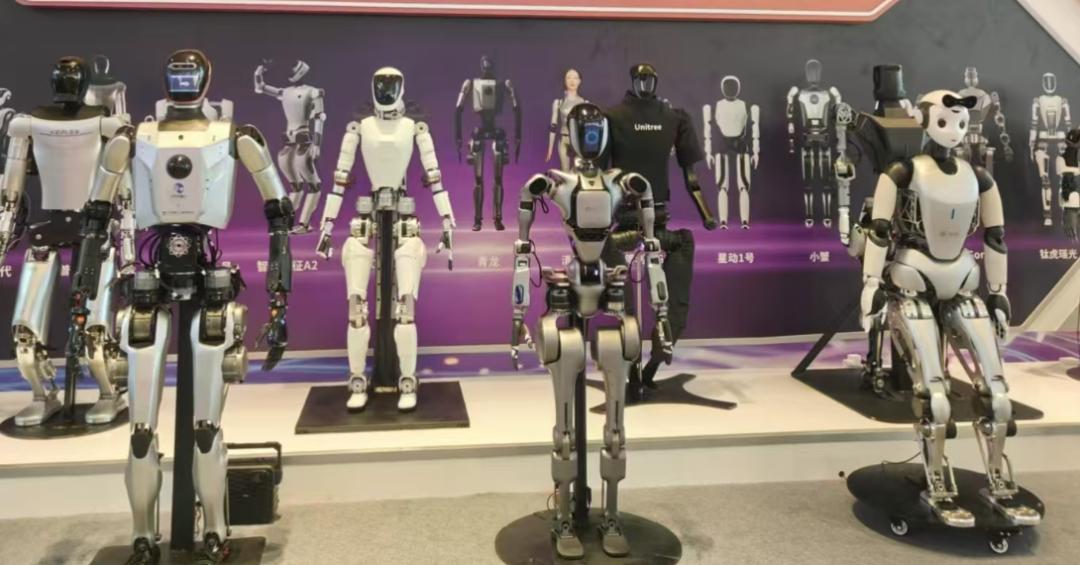
Robots are not real estate or gold. They are more like consumer electronics - with fast technological iteration and high depreciation speed. A robot worth 100,000 yuan may only be worth 50,000 yuan after one year. If the utilization rate is not high enough, even the depreciation cost cannot be recovered.
Xiaochen, the leasing merchant, calculated an account: During the Spring Festival last year, a robot could indeed be rented out for 5,000 yuan a day. But the Spring Festival only lasts for seven days. For the remaining more than 300 days, most of the time it is the off - season with "no orders for half a month".
Source: Internet
Many leasing merchants reported that on average throughout the year, if they can maintain 5 - 6 orders per month, it is already considered a good operation.
Calculated based on 5 orders per month and an average price of 2,500 yuan, the monthly income is 12,500 yuan, and the annual income is 150,000 yuan. But this is the gross income, and the cost has not been deducted.
More importantly, the cost cannot be saved at all. For each order, an engineer needs to be on - site, and the labor cost is 30,000 - 40,000 yuan a year; for cross - city orders, there are transportation and travel expenses, which are another 10,000 - 20,000 yuan; if the robot is damaged, the joint repair costs thousands of yuan; and equipment depreciation is inevitable. For a robot worth 100,000 yuan, the residual value will be zero in three to five years, and the annual depreciation alone will cost 20,000 - 30,000 yuan.
Adding up all these costs, the annual cost is at least 70,000 - 80,000 yuan. Subtracting 80,000 yuan from 150,000 yuan, there is 70,000 yuan left. But for this 70,000 yuan, you have to pray that there are no interruptions in orders throughout the year, the robot is not damaged, the platform does not increase the price, and the competition does not intensify.
Xiaochen said directly: "I've been busy for a year, and in the end, I'm working for the platform, the engineers, and the repairmen."
It's not that this business can't be done, but it's far from as profitable as it seems on paper. The excitement is for outsiders to see, and the profit is for oneself.
The superposition of these three traps makes robot leasing a business that becomes less and less profitable the busier it gets. The excitement is just an appearance, and long - term profitability is a challenge.
Who is making real money?
So, in this wave of enthusiasm, who has really made money?
First, the leading robot manufacturers are making money.