Investigation into the chaotic phenomenon of privately modifying the range of old new energy vehicles to "extend their lifespan"
"After driving a ride-hailing car for five years, the battery range has dropped from 300 kilometers to 140 kilometers. It's even worse in winter. With the air conditioner on, I have to recharge after just three trips. Replacing the original battery costs over 50,000 yuan, which is higher than the current residual value of the whole car. When selling it as a used car, the dealer only offers 30,000 yuan, not even enough to cover the cost." At a ride-hailing car parking lot in Tongzhou, Beijing, Driver Li pointed at the "external battery" installed in the trunk of his car, looking helpless and anxious.
This is not an isolated case. Currently, the number of new energy vehicles in China has exceeded 43 million. The first batch of large-scale commercial vehicles such as ride-hailing cars and taxis are now entering a high-incidence period of battery degradation. On one hand, there is the desperate situation of the "halved" residual value of used cars and high replacement costs. On the other hand, there is the rigid need to make a living from the car. Many car owners take risks and choose to privately install power batteries or range extenders to "extend the life" of their vehicles.
This real pain point has directly given rise to a large-scale illegal modification gray market. Online, they attract customers through short video and social platforms. Offline, there are modification workshops to undertake the construction. From parts supply to after-sales maintenance, a hidden one-stop service chain has already taken shape, becoming a blind spot that is difficult for supervision to reach.
"This kind of illegal modification problem has existed for a long time. The root cause is that in the early stage of new energy vehicle development, car companies basically did not consider the residual value of used cars and the subsequent battery degradation problem during development and production. Things always develop from immature technology in the early stage to maturity. However, during this process, the difficulties of car owners have been ignored." On March 26, Wang Zidong, a senior expert in the power battery industry, pointed out the crux of the industry in an interview with National Business Daily.
"Battery matching requires strict testing and calibration before use. Private modification simply cannot complete these processes, and there must be serious safety hazards." Wang Zidong repeatedly emphasized that he never recommends that users install batteries or range extenders by themselves. To solve the problem at the root, car manufacturers need to improve battery quality and slow down the degradation rate. More importantly, they should pay attention to the construction of the residual value system for new energy used cars.
The Rigid Need under the "Warranty Expiration Tide": The Car Owners' Helpless Choice
In 2026, the first batch of domestic commercial electric vehicles officially entered a large-scale "warranty expiration tide." For drivers who make a living from their cars, the most heart-wrenching reality is that "the car can still run, but the battery has already retired."
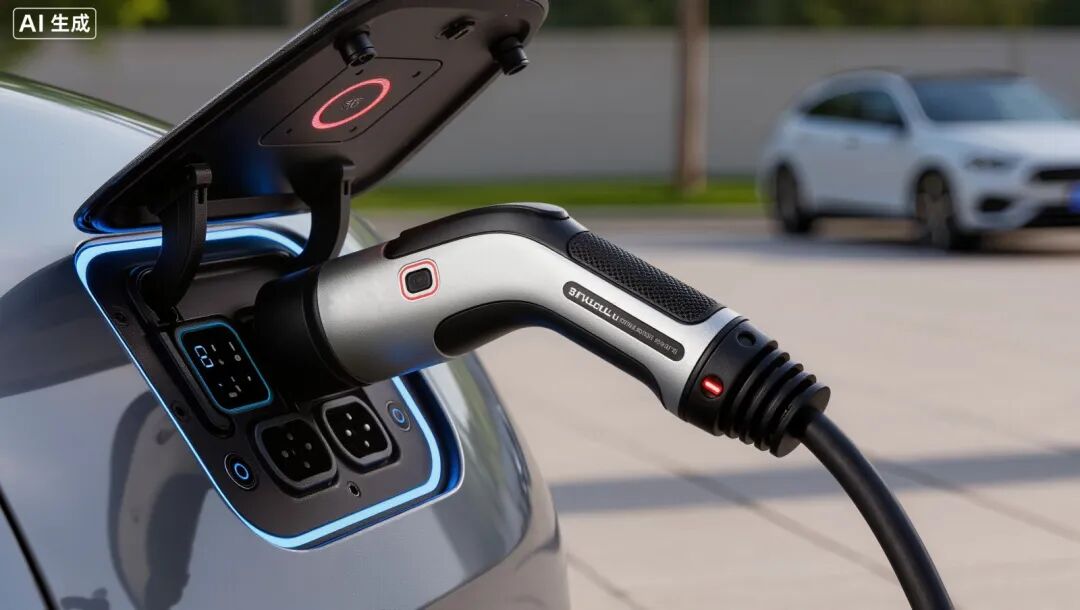
Image source: Media Asset Library of National Business Daily
Data reports show that under high-intensity use, the battery degradation rate of commercial vehicles far exceeds that of household cars. Household cars travel 10,000 to 20,000 kilometers a year, and the degradation is about 10% to 15% in six years. However, ride-hailing cars and delivery vehicles can travel 80,000 to 100,000 kilometers a year, and the degradation may reach 30% to 40% in three to four years. The battery health of some vehicles may even drop below 60%, and the "cliff-like shrinkage" of the battery range has become the norm.
What makes these car owners even more caught in a dilemma is that most car companies' battery warranty policies clearly exclude commercial vehicles. After the warranty expires, the quoted price for replacing an original battery is often 50,000 to 60,000 yuan, even exceeding the residual value of the vehicle itself. And replacing with a new car costs at least over 100,000 yuan including various costs. For drivers who rely on the daily turnover to make a profit, this is undoubtedly an unbearable expense.
"Installing an additional battery has become the only way out." A supplier of new energy vehicle battery modules revealed to reporters that their installation business currently covers the whole country, and commercial vehicle users account for more than 80%. "The price per kilowatt-hour of electricity is about 800 yuan, starting from 20 kilowatt-hours. A set costs at least 16,000 yuan, which is much cheaper than replacing the battery or buying a new car. Commercial vehicles are the drivers' livelihood. Frequent charging will delay taking orders, so extending the battery range is a rigid need. Many commercial vehicle companies even come to us for modification in batches."
The supplier admitted that this business was indeed non-standard and irregular in the past few years. There was neither warranty nor safety testing. However, as the number of out-of-warranty vehicles increases and the market demand skyrockets, "it is now moving towards standardization and having a warranty." According to the supplier, although the market scale of the installation business is not as large as that of mass-produced car companies, customized installations for commercial vehicles can already generate stable revenue. "There is no need to pursue large-scale mass production. As long as it accurately meets the commercial needs, it can survive, and the demand is still slowly growing."
Industry data shows that the demand for new energy vehicle modification in China has become an important growth pole in the overall modification market, accounting for about 35% of the overall market scale. Among them, the proportion of illegal modifications is relatively high, and the vast majority are concentrated in the field of commercial vehicles.
According to the Road Traffic Safety Law of the People's Republic of China, privately modifying the vehicle's power structure and the three-electric system is clearly illegal modification. Such vehicles not only cannot pass the special annual inspection for new energy vehicles but also will face warnings, fines, and orders to restore the original state. More importantly, in the event of an accident, the insurance company can directly refuse to pay compensation, and all losses need to be borne by the car owner. However, in the face of the rigid need to "survive," many car owners and modification merchants choose to ignore this red line.
Entangled with Fatal Hidden Dangers: The Deceptive "Compliance,"
The "Moving Bomb" Hidden in the Trunk
"The batteries we install are all brand - new large - brand battery cells and are insured by PICC (People's Insurance Company of China). It must be compliant. Otherwise, the insurance company would not provide insurance." Facing the reporter's doubts about illegal modification, the above - mentioned battery supplier said firmly, "Although the regulations do not allow private modification, users have real needs. As long as there is insurance coverage, it is enough for them."
However, after in - depth investigation, the reporter found that this is just the merchant's "marketing talk." PICC only insures the battery cell products themselves, not the modification behavior or the modified vehicle. In the event of a vehicle malfunction or accident caused by the modification, whether to pay compensation still needs to be determined by the insurance company of the vehicle itself, and such compensation is often directly rejected.
"As long as it involves changes to the three - electric system, regardless of whether the original circuit is changed or not, the insurance company will probably refuse to pay compensation in case of a problem." A senior car insurance salesman with eight years of experience told the reporter. They had handled a similar case before. "A car owner privately installed a range extender, and then the car caught fire due to spontaneous combustion. After investigation, the insurance company found that it was caused by illegal modification and directly refused to pay compensation. The car owner not only had to bear the loss of the burned - out vehicle but also had to compensate for the damaged property around."
What's even more terrifying is that the safety hazards brought by illegal modification are far more than just "insurance refusal." Many battery experts and vehicle development personnel interviewed by the reporter generally said that privately installing batteries and range extenders has three fatal hidden dangers and can be called a "moving bomb," which is also the key point repeatedly warned by the regulatory authorities.
The first hidden danger is the sharp increase in the risk of thermal runaway. Modified batteries do not have the original heat management system and protective structure. Most of them use non - standard parts, and their heat dissipation and compression resistance are greatly reduced. The fuel tanks of range extenders are mostly randomly placed in the collision energy - absorbing area of the trunk. In the event of a rear - end collision, it is very easy to cause fuel leakage and circuit short - circuit, which may then lead to spontaneous combustion. In January 2025, an illegally modified electric vehicle in Jinan, Shandong caught fire due to a short - circuit in the wires, burning 17 motorcycles and several cars, causing serious property losses.
The second hidden danger is the disorder of the electronic control system. Non - standard equipment will interfere with the normal logic of the original BMS (Battery Management System), leading to problems such as over - charging, over - discharging, and voltage fluctuations of the battery, which can easily induce battery cell swelling and then cause thermal runaway. More importantly, this kind of illegal modification lacks professional technical calibration and any risk prevention and control measures, which is equivalent to "driving naked."
The third hidden danger is the damage to the vehicle structure. The additional installed batteries and range extenders will increase the vehicle's load, damage the original chassis tuning and weight balance of the vehicle, greatly reduce the braking and handling stability, and significantly increase the risk of traffic accidents. In addition, the illegal modification market is also full of fake and shoddy parts. Most of the core parts have not passed the compliance testing, and the quality is uneven. Coupled with the lack of professional qualifications of most modification workshops and non - standard operation processes, the safety risk is further magnified.
Facing these hidden dangers, the above - mentioned supplier has a different view: "The external battery is like adding a 'power bank' to the vehicle. It will not change the original three - electric system of the vehicle. As long as the protocol matching is done well and the high - voltage cables are connected in parallel, there will be no safety problems." However, when asked about the risk of spontaneous combustion in a rear - end collision of a vehicle with an additional battery installed in the trunk, he also had to admit that "there are indeed certain hidden dangers."
The Dilemma of Breaking the Deadlock: Car Companies Are Unwilling to Step In,
The Policy Is Taking Action. When Will the Gray Market Exit?
On one hand, there is the rigid need of car owners. On the other hand, there are fatal safety hazards. Why don't car companies launch official battery installation packages to provide compliant solutions for car owners? Many industry insiders analyzed for the reporter that the core lies in three constraints that are difficult to break through.
The first is the high barriers of compliance and cost. Installing batteries or range extenders on old models requires re - conducting collision tests, calibrating the electronic control system, and applying for vehicle announcements. The R & D investment for a single model exceeds 10 million yuan. Moreover, the modified vehicles are difficult to meet the current safety and environmental protection standards, and the cost - performance ratio is far lower than that of launching new cars.
The second is that the warranty and recycling system is difficult to bear. Modification will completely disrupt the original warranty rules of the car factory. Once a quality problem occurs, it is extremely difficult to define the responsibility. Coupled with the high cost of recycling and disposing of old batteries, enterprises have almost no profit space, so they are naturally unwilling to get involved.
The third is that it conflicts with the product iteration logic of car companies. The core business model of car companies is new car sales, and official installation will reduce the replacement willingness of old car owners, which is contrary to the orientation of the iterative upgrade of the new energy vehicle industry. "There are three new products in a year, and technology and experience are constantly being updated. There is no need to spend energy on 'patching up' old cars." A marketing system manager of a well - known new energy car company said bluntly. Now the country strongly advocates "trading in the old for the new," and the replacement cost has been significantly reduced compared with before. Privately modifying old vehicles poses a high risk and is not cost - effective.
The manager believes that the current demand for range extension is just a "temporary transition" in the industry's development. With the progress of battery technology and the continuous improvement of charging infrastructure, the range anxiety of new energy vehicles will no longer be a long - term pain point for users, and the demand for illegal modification will also decrease accordingly.
It is worth noting that 2026 is known as the "Year of Compliance" for the Chinese car modification market. The General Office of the State Council has listed car modification as an emerging field to be key - cultivated. The graded and classified management policies and standard systems are gradually being implemented, which are defining a legal path for the modification industry.
At the same time, new policies are also gradually solving the core problems of car owners. After the new policies related to the recycling and utilization of new energy vehicle power batteries are implemented, third - party formal institutions are allowed to participate in battery repair, replacement, and remanufacturing. The price of remanufactured batteries is expected to drop significantly, and there will be a formal warranty.
Many industry experts believe that with the gradual improvement of the battery recycling system, the popularization of official battery replacement services, the improvement of the circulation mechanism for new energy used cars, and the natural iteration and withdrawal of commercial vehicles, the gray market for illegally increasing the range will gradually shrink. With the accelerated standardization of policies in the car modification industry and the continuous increase in the supply of compliant modification services, the living space for illegal modification will be further squeezed, promoting the industry to develop in a safe, compliant, and orderly direction.
However, in the gap between the implementation of policies and the industry's iteration, those illegally modified vehicles that are still "running naked" are still "moving bombs" on the road. How to speed up the process of breaking the deadlock, solve the survival dilemma of commercial vehicle owners, and maintain the bottom line of public safety is still an urgent problem to be solved.
Original title: Investigation into the Chaos of Privately Modifying the Range of Old New Energy Vehicles to "Extend Their Lives": High Incidence of Battery Degradation in Commercial Vehicles, "Cliff - like Shrinkage" of the Range, Rigid Need Gives Rise to a Gray Market, and Three Barriers Hinder the Official Upgrades of Car Companies
This article is from the WeChat official account "National Business Daily". Author: Sun Tongtong. Editors: Jin Mingyu, Yu Tingting, Xiang Jianglin. Republished by 36Kr with permission.