Has the world's most powerful Disney Legal Department actually been sued by Huawei?
What? Disney, the seemingly upright and honest company, has actually been sued!
When I first saw this news, I really couldn't hold back my laughter. As the number one copyright maniac in the Western Hemisphere, the reputation of Disney's legal department is so powerful that it can overcome any obstacle, which has been widely talked about by netizens around the world.
To use a well - known joke, if you were stranded on a desert island one day, all you needed to do was draw a Mickey Mouse and you'd be saved. Because Disney's legal team would fly a plane to arrest you for infringement and rescue you by the way.

So, which heroic figure has managed to put this rights - protecting maniac in the defendant's seat and vented the anger of people around the world?
The answer is the mysterious force from across the ocean: Longgang's "Pizza Hut of Lawsuits", Huawei's legal department.
Surprising, isn't it? Exciting, right?
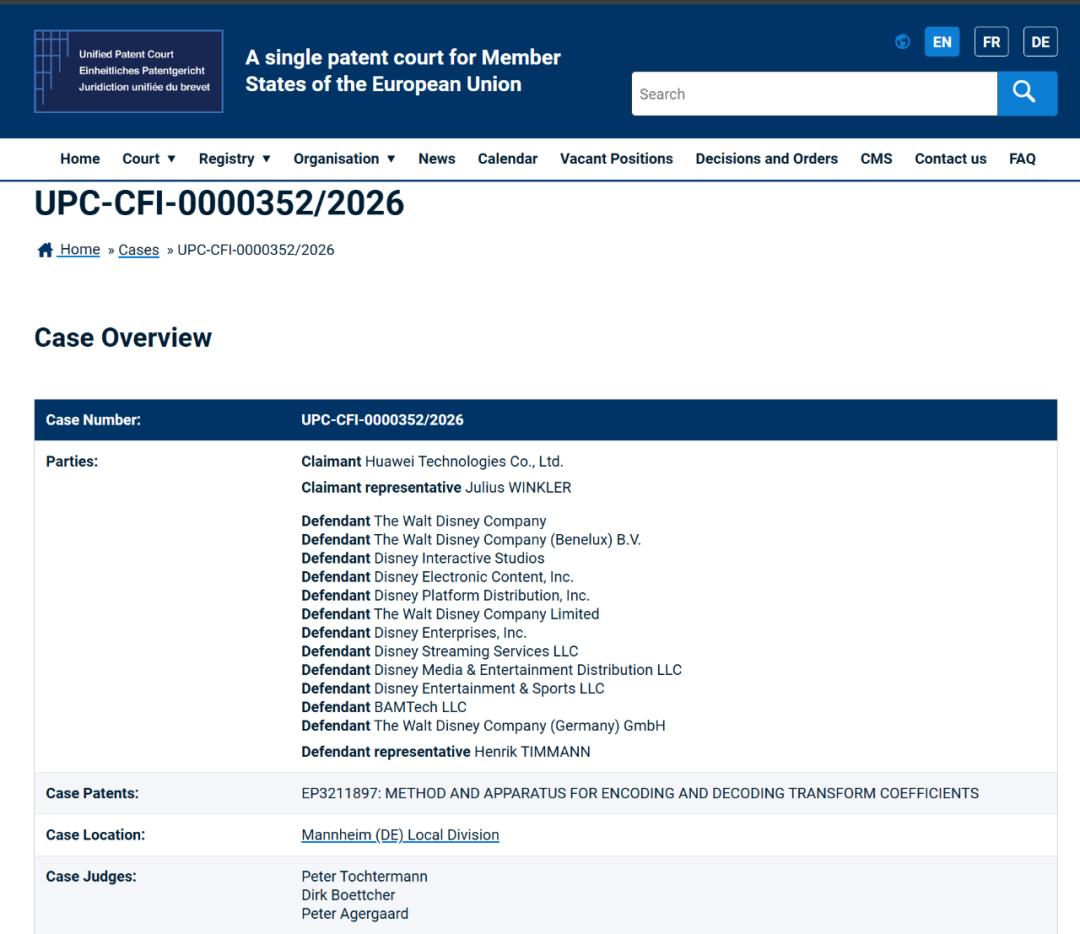
You heard it right. In January 2026, Huawei filed a lawsuit against Disney at the Local Branch of Mannheim of the Unified Patent Court (UPC) in Europe.
A company in Shenzhen that sells communication equipment and mobile phones goes all the way to Europe to sue a movie studio that loves to sue others. Isn't this a bit of an outrageous cross - border move?
Actually, it's not just Disney. In March 2026, Huawei also launched a new round of patent encirclement against Meta at this court and in Brazil.
Well, it seems that this wave is not targeting just one company. Everyone here is a defendant.
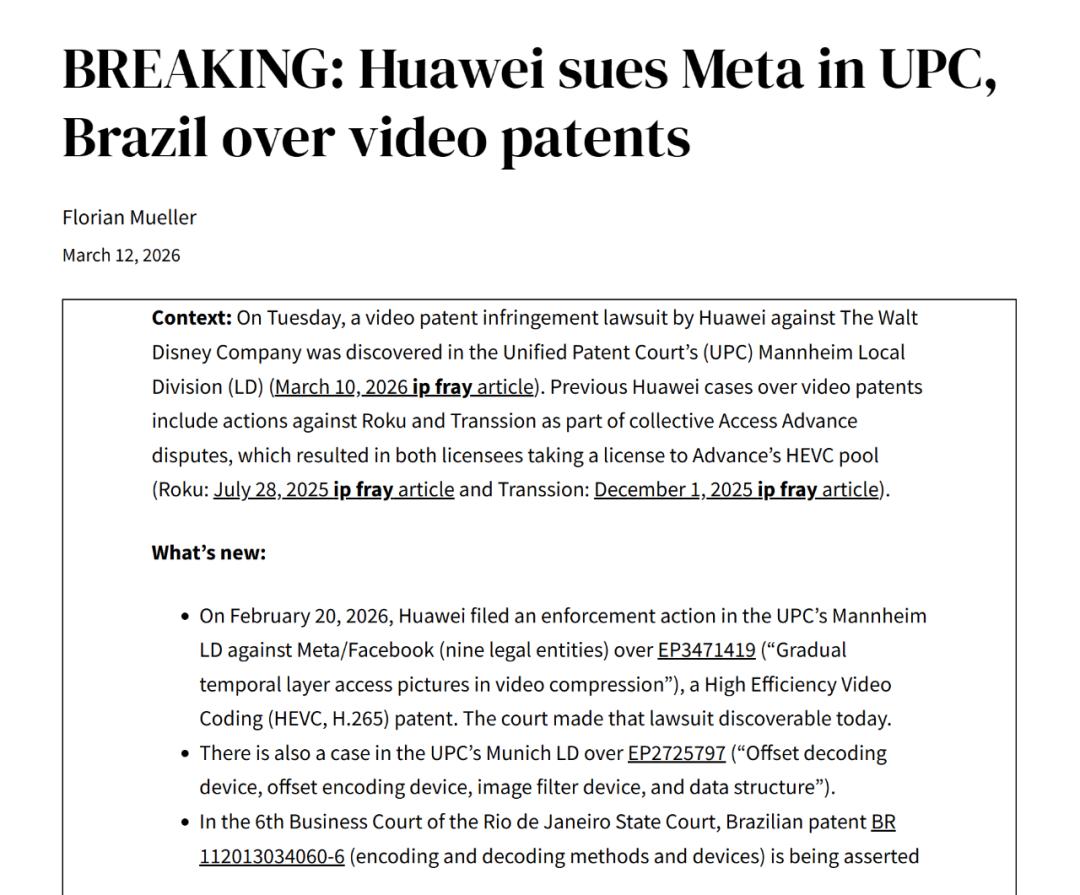
As for why Huawei is suing Disney, simply put, it's because Disney has infringed on Huawei's patent.
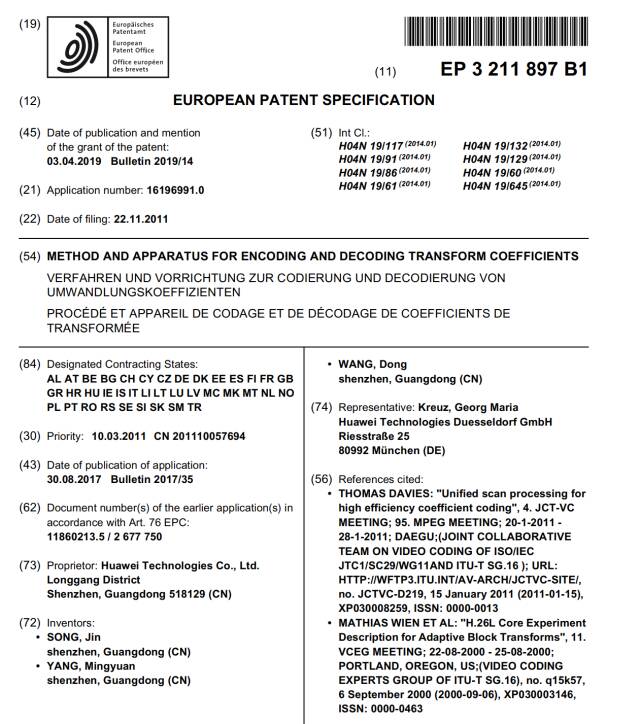
From the indictment, we can see that Huawei is accusing Disney of infringing on a patent code - named EP3211897: "Method and apparatus for encoding and decoding transform coefficients"
What on earth does this name, which sounds like it could make liberal arts students faint on the spot, mean?
I'm not very knowledgeable, but I did some research and found that this actually refers to a hardware technology that we use every day but don't really notice:
HEVC (also known as H.265) video coding standard.
To talk about this, we have to start from the whole process of video coding. (For a detailed introduction, you can watch the video about the video bit - rate in the film and TV style. There isn't enough space here to write it all down.)
In short, video coding is a technology that allows you to watch videos smoothly.
If you were to store every frame of a newly - shot film exactly as it is and send it to you, a two - hour 4K movie would fill up your phone's memory. Even with a gigabit broadband connection at home, it would take forever to download.
So, video coding is essentially for compressing files. And the compression method is very ingenious.
In a movie, often in a single shot, only the protagonist's body is moving while the background and other things remain static. So, by recording the differences between the first frame of this shot and each subsequent frame, we can know all the information about the entire shot.
For example, if you want to copy a top student's homework and 90% of the answers on your papers are the same, the fastest way is not to copy the whole paper again, but to record the differences between you two. These differences are called residuals.
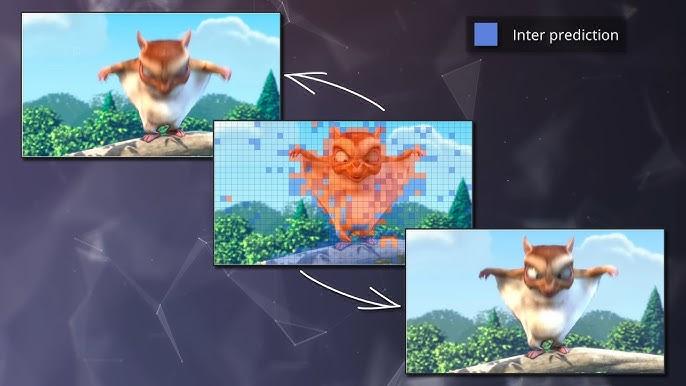
This method of compressing videos through residuals appeared very early. Take the H.264 standard that emerged in 2003 as an example. An 88 - gigabyte video could be compressed to just over 800 megabytes.
The HEVC standard, which was born in 2013, has an extremely bold goal: To cut the data volume required by H.264 in half while maintaining a similar picture quality!
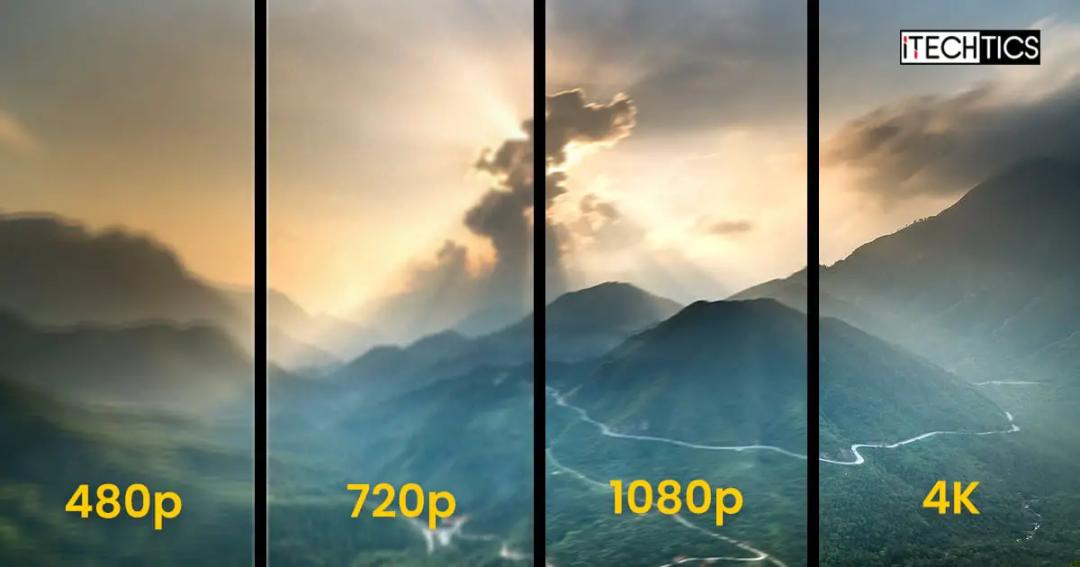
Thanks to this halving - level compression ability, we have moved from the era of full - bit 480p picture quality to being able to watch 4K and HDR videos smoothly on our phones and tablets today.
Then, what's so great about Huawei's EP3211897 patent?
Well, the workflow of HEVC is roughly divided into four steps:
First, cut the picture into blocks. Then, calculate the prediction map. Next, subtract the prediction map from the original picture to get the error (residual). Finally, convert these errors into a series of "transform coefficients" and write them into the final data stream.
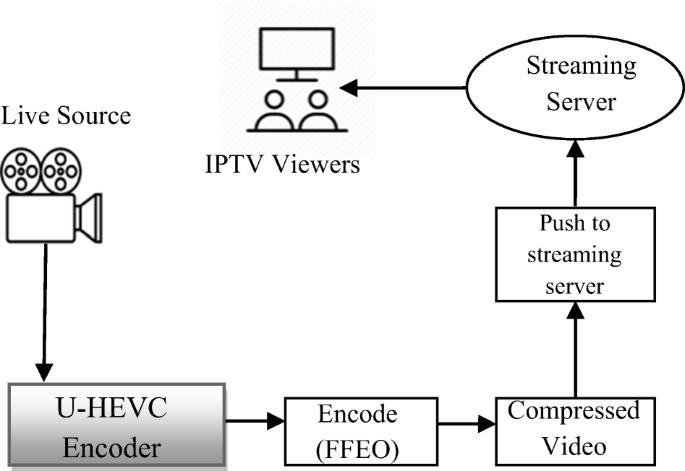
What we mentioned earlier about finding residuals only completes the first step. These differences themselves are also a large amount of data and can't be directly stored in the phone. So, next, the encoder has to further process these residuals into a digital form.
After this step, the picture on the screen is no longer made up of colors but becomes a coefficient matrix composed of numbers. Usually, the more important information is concentrated in the upper - left corner, and the further you go to the lower - right, the more likely you are to see large areas of zeros.
At this point, the real challenge begins. Because the encoder not only needs to know whether a position is zero but also which positions are non - zero, how large the values are, and whether they are positive or negative.
Huawei says in this patent that the previous coding method is like looking at this table back and forth many times.
The first time, circle which cells are not empty. The second time, circle which cells have values greater than 1. The third time, copy how large these values are. The fourth time, finally add whether these values are positive or negative.
The problem is that this method is really stupid. The same table is looked at back and forth several times, and the same batch of data is processed in different ways by the system. The system can't stand it either.
Moreover, not only is the encoding process troublesome, but the decoding process also suffers.
So, the people at Huawei came up with a solution. How did they do it?
First, split a large data table into smaller ones for processing. For example, an 8×8 data block can be split into four smaller ones; each 4×4 block has exactly 16 coefficients.
Then, the system follows a pre - defined scanning order, processes 16 coefficients at a time, organizes information such as "non - zero positions, which values are greater than 1, absolute values, and signs" as much as possible in the same way, and then puts them into the data stream uniformly.
There is also a clever idea in this scanning order. Scanning from the area with more zeros at the bottom can significantly reduce redundant counting.
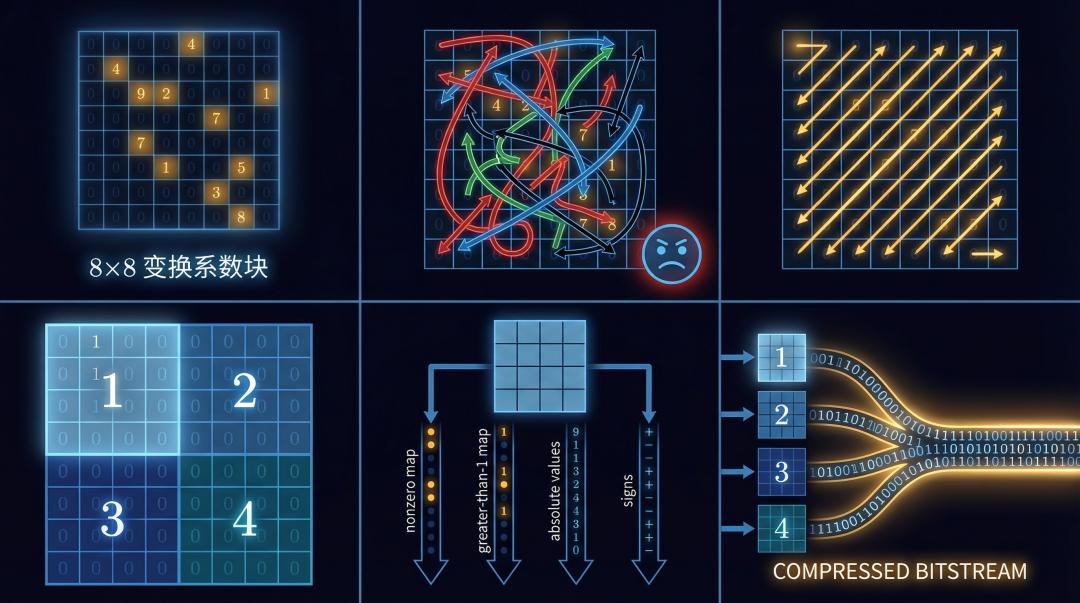
In short, it changes the original chaotic and repetitive accounting process into a more organized one. It's like having a large ledger before, flipping through different pages every day.
Huawei's method is to split the large ledger into smaller pages and then follow a fixed route to record page by page.
This may seem like just a small mathematical trick and not very eye - catching.
But considering the business scale of streaming platforms, this accounting action has to be repeated trillions of times in tens of billions of videos every day...
Even if Huawei's method can save 1 bit each time, when multiplied by this huge data volume, it is extremely significant. What is saved are the company's bandwidth costs, server power consumption, and electricity bills.
So, if you think of the entire HEVC video compression technology as a "shit mountain", then this patent is the bottom brick. There are many patents from different companies in HEVC, and without any of them, it just won't work.
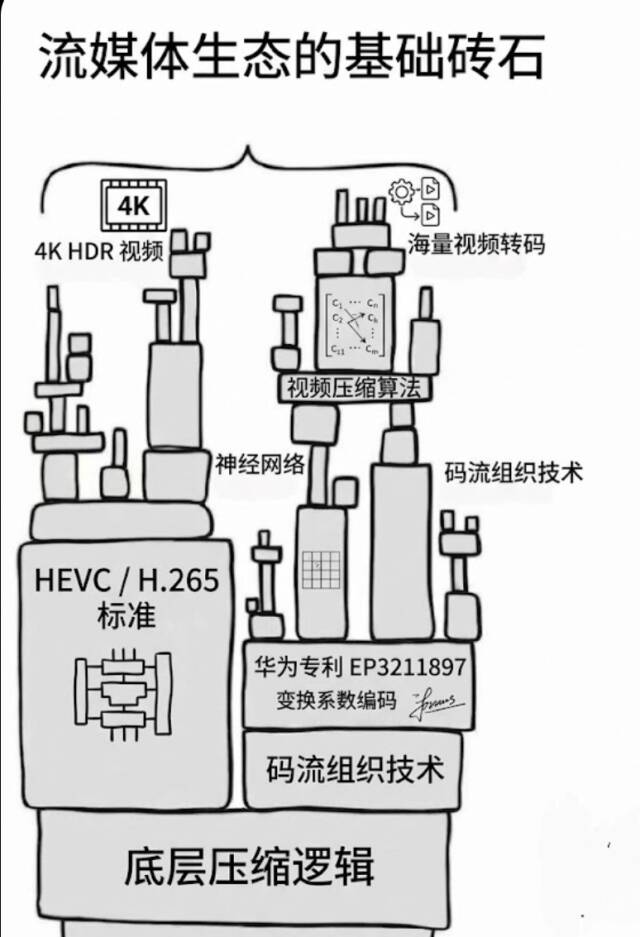
Those in the know must be saying, HEVC is not Huawei's alone. It's a public standard composed of thousands of patents!
That's right. HEVC is promoted by everyone. The standard is like a general blueprint, but when it comes to implementation, it involves different parts fees from many patent holders.
This has led to a long - standing pain point: The charging ecosystem of HEVC has long been as chaotic as a vegetable market. In the past, when collecting patent fees, everyone targeted mobile phone and TV manufacturers that sold devices. For example, copyright organizations like Via LA and HEVC Advance each collected their own fees.
But in recent years, the trend has changed. Streaming media has become more and more popular. They sell movie tickets and membership fees on one hand, and use others' underlying compression technology on the other.
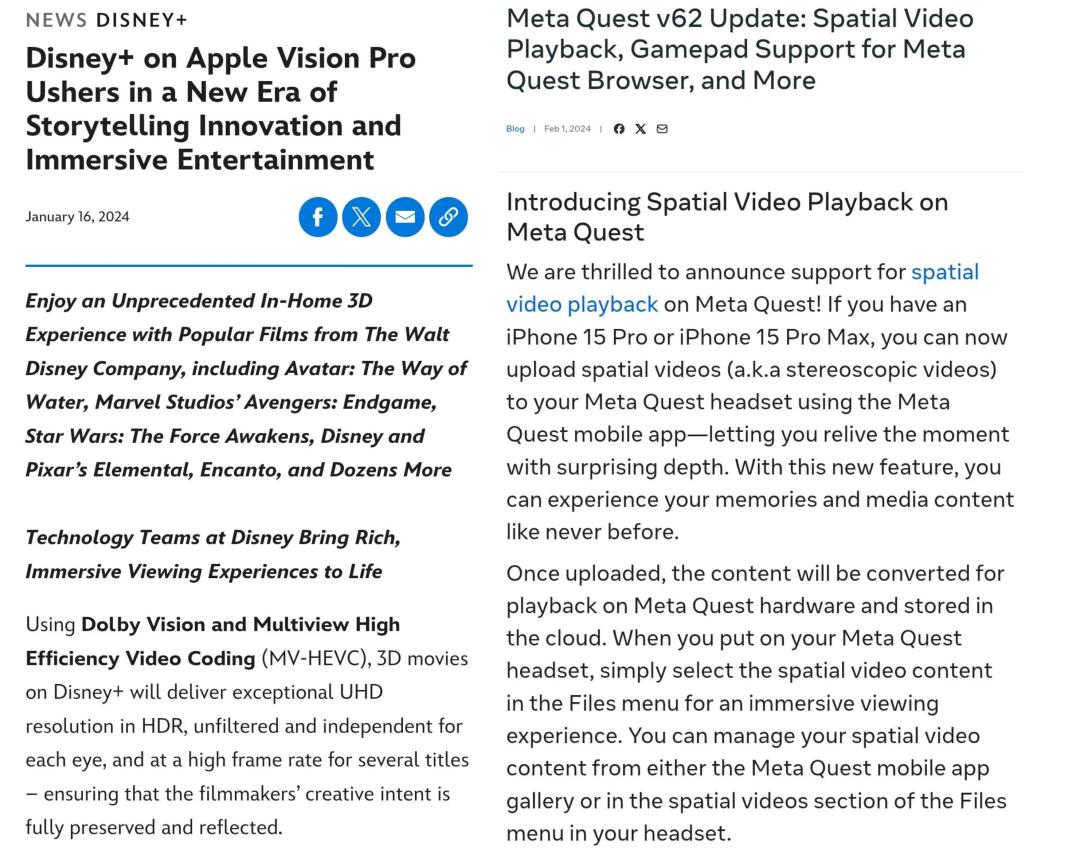
Platforms like Disney and Netflix are no longer just simple content distribution channels! They have become technology operators that actually control large - scale encoding, transcoding, and code - stream organization. For example, Disney+ clearly uses the MV - HEVC format to bring 3D movies to Apple Vision Pro.
In the past, the charging ecosystem of HEVC mainly made money from hardware companies, asking for tolls. Unexpectedly, in recent years, these streaming platforms have also been using the standard crazily. How can this be tolerated?
So, in October 2023, the veteran patent pool (equivalent to a toll station) Avanci launched Avanci Video, clearly stating that it would implement one - stop charging for "internet streaming services". In 2025, the patent pool Access Advance launched VDP, also specifically targeting "video distribution providers".