$7 billion: Joseph Tsai's 20-year "family matter" is laid bare
The largest US dollar fund raise in China this year has emerged. In the last week of March, Blue Pool Capital completed the fundraising for its first private equity fund, with a scale of $1 billion, equivalent to approximately 7 billion RMB.
Blue Pool Capital was founded in 2014 by Joe Tsai, a co - founder of Alibaba Group. Initially, it only served the wealth management needs of the Tsai family, making it a typical "single - family office." However, this time its identity has changed. The "Riverside Fund," a private equity fund of Blue Pool Capital, is raising funds from global LPs (Limited Partners) for the first time, and has stepped into the role of an "operator."
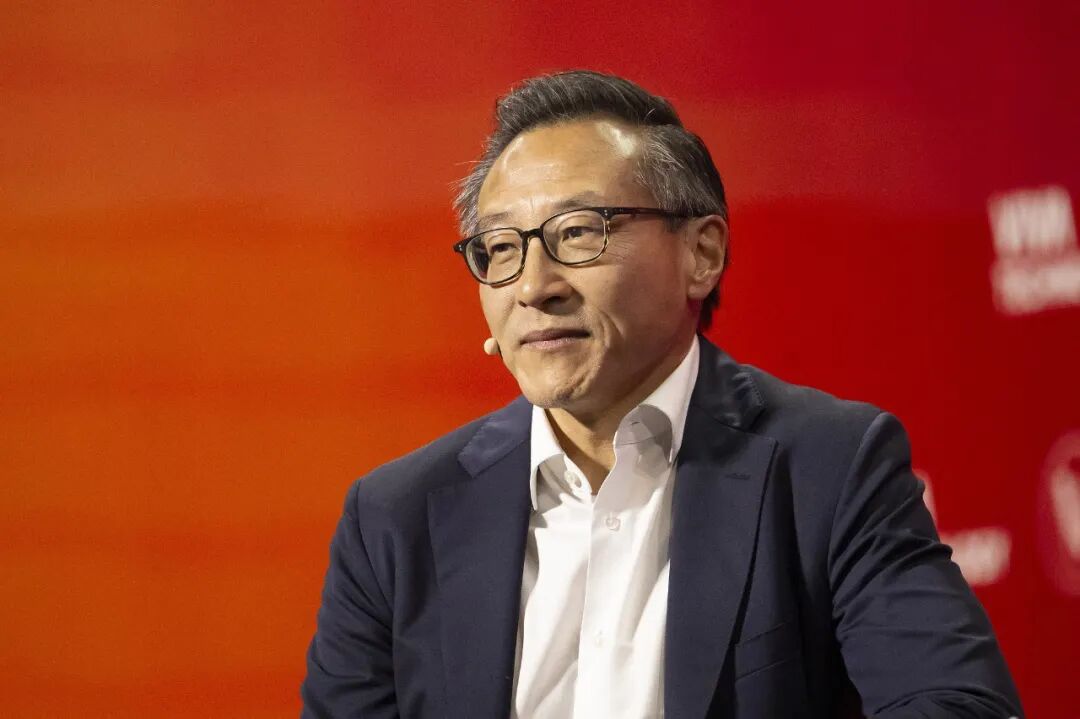
Just two days before the fundraising, Joe Tsai attended the special seminar on "Technological Innovation and Future Industrial Development" at the China Development Forum. At the seminar, he mentioned that if the past few decades were the "accumulation period" for Chinese technology, then today it has entered an explosive period of "flourishing in all aspects."
According to China Fund News, in recent years, Blue Pool Capital has come across some large - scale trading opportunities that exceeded the investment capacity of its original funds. This directly led to the decision to establish an independent fund and raise funds externally.
However, the investment performance of Blue Pool Capital has provided confidence for this transformation. Pitchbook data shows that in the past 10 years, the institution has achieved a gross internal rate of return of approximately 55%, ranking it among the top 10% of funds established since 2016. Its investment portfolio includes star projects such as ByteDance and SpaceX.
At the China Development Forum, Joe Tsai focused on discussing AI. "Manufacturing + AI is a must - answer question, not an optional one," he said, adding that the ultimate goal of AI is to popularize its applications and benefit society.
This statement echoes the investment direction of Blue Pool Capital's new fund. It has clearly listed "Artificial Intelligence (AI) and Software as a Service (SaaS)" as one of its three major investment directions. Talking about AI implementation at the forum and betting on the AI track in investment: Joe Tsai's two lines converge at the same node.
He has completed another identity reconstruction in his career and has the opportunity to become one of the iconic figures deeply involved in global capital allocation. In the era of AI, he has stepped in again to "attack."
01
The Man Who Gave Up a Six - Figure Salary
In 1964, Joe Tsai was born in Taiwan. His family is quite prestigious in the legal circle of Taiwan. His grandfather was a well - known lawyer, and his father, Tseng Tsai, was one of the first scholars in Taiwan to obtain a Doctor of Jurisprudence degree from Yale University. Later, he also founded a law firm. Growing up in such an environment, Joe Tsai inevitably followed a similar path.
In 1986, he graduated from Yale University with a major in economics and then went to Yale Law School for further studies, obtaining a Doctor of Jurisprudence degree. After graduation, he joined Sullivan & Cromwell, a long - established top Wall Street law firm. He found that although the lawyer's job was decent, it lacked the creativity and initiative he desired. A few years later, he switched to the venture capital department of Investor AB in Sweden, responsible for investment business in the Asian region. It was this job that brought him to China and to Hangzhou.
In the summer of 1999, in Room 202, Unit 1, Building 16, Fengheyuan, Hubin Garden, Hangzhou, a four - bedroom apartment, a group of young people were gathered around a whiteboard for a meeting. The air was stuffy, and several computers were buzzing. There were more than a dozen pairs of slippers scattered outside the door. A well - dressed man was standing in front of the whiteboard, explaining shares and rights in fluent English.
Joe Tsai later recalled his state when he first changed jobs. A few months ago, he was still a vice - president in the investment circle with an annual salary of $700,000. At this moment, he was drawing an organizational structure diagram on the blackboard with a monthly salary of 500 RMB.
Many people were curious about his motivation. Joe Tsai later mentioned the scene in an interview. When he first entered that apartment, he found about 10 toothbrushes by the sink: "I thought, my god, these people live, breathe, and work in this room 24 hours a day, 7 days a week." He was deeply inspired when he left: "Not only because of Jack Ma's vision and charm, but also because many people were willing to follow him. I think the most important thing is that he showed everyone what the future would look like."
He secured the first "life - saving money" for Alibaba. Relying on his connections and reputation on Wall Street, he led a $5 million angel - round financing led by Goldman Sachs. This money might be more important than any subsequent financing because it came at the moment when Alibaba most needed to be "seen."
In the following two decades, Joe Tsai has always been the leader of Alibaba's capital operations. In 2005, he promoted the acquisition of Yahoo China and facilitated Yahoo US to invest $1 billion in cash in Alibaba, obtaining a 40% stake. This deal not only brought much - needed funds to Alibaba but also made Yahoo, its competitor in the e - commerce field, its shareholder. In 2012, Alibaba repurchased some shares from Yahoo for a transaction amount of $7.6 billion, which was one of the largest share repurchases in the Chinese Internet industry at that time.
In 2013, he stepped down as Alibaba's CFO and became the executive vice - chairman of the group's board of directors. Since then, he has led a series of important investments in companies such as AutoNavi Maps, Youku Tudou, and Cainiao Network, gradually building Alibaba's business ecosystem. In 2014, Alibaba was listed on the New York Stock Exchange, setting a global record for the largest IPO. As the second - largest individual shareholder, Joe Tsai's net worth soared to billions of dollars.
In 2023, he became the chairman of the board of directors of Alibaba Group, 24 years after he joined the company.
02
From "Family Office" to "Platform"
According to multiple media reports, in 2004, Joe Tsai founded a small family office in Hong Kong, China, which was his fifth year at Alibaba. The company had received investment from SoftBank and was expanding rapidly. Ten years later, this family office got an official name - Blue Pool Capital.
It is said that Joe Tsai personally chose the name "Blue Pool," which symbolizes the investment philosophy of depth, calmness, and long - termism. For a long time, Blue Pool Capital has been extremely low - key. Its official website has only one page, with no publicly disclosed investment portfolio, no media interviews, and even Joe Tsai himself rarely talks about it in public. This is in line with the operating style of many family offices: not seeking exposure but only seeking returns.
However, this does not mean that it is inactive. As of 2022, the asset management scale of Blue Pool Capital has exceeded $50 billion, making it one of the top family offices in Asia. Its investment footprint spans the globe, covering companies such as ByteDance, SpaceX, Tabby (the "Huabei" in the Middle East), FogPharma (a biopharmaceutical R & D company), and even Epic Games, the developer of the game "Fortnite," across multiple fields such as consumption, technology, biomedicine, and fintech.
Among them, the most profitable investment was the layout of Blue Owl Capital, an asset management company. The company went public through a SPAC (Special Purpose Acquisition Company), and its stock price soared. Blue Pool Capital's book floating profit exceeded 200%. This deal demonstrated Joe Tsai's sophisticated vision in the field of financial investment - he was not chasing the trend but found a target with growth potential in the asset management track that many people ignored.
Sports assets are also one of his investment focuses. In 2019, he and his wife, Ming - Hua Wu, bought the New York Liberty, a WNBA team, for more than $10 million. At that time, this deal did not attract much attention, as this amount of capital was not a large sum in the field of sports investment.
But by June 2024, the valuation of this team soared to $450 million, setting a new record for the highest valuation of a women's professional sports club. In the same year, he also sold part of his stake in the Brooklyn Nets, an NBA team, with a total transaction valuation of $6 billion. When he bought the Nets in batches, he spent about $3 billion, which doubled in just a few years. These two sports - related investments have become the most prominent cases in Joe Tsai's diversified asset allocation.
These investments may seem scattered, but there is a relatively clear thread: Joe Tsai does not pursue short - term arbitrage but aims at assets with long - term value that can withstand market cycles.
However, Blue Pool Capital does not seem to be satisfied with this. In recent years, it has come across some large - scale trading opportunities, and Joe Tsai and his team began to think about a question: Should they step out of the "family" boundary and raise funds externally?
The answer was revealed in the second half of 2025, when the global capital was re - evaluating asset values. Blue Pool Capital launched the fundraising for its first private equity fund, with a target scale of $750 million. Eventually, the fund was over - subscribed, reaching a scale of $1 billion.
03
"Ultimate Judgment"
If there is a core keyword in Joe Tsai's current investment portfolio, it must be AI.
In 2024, Alibaba clarified its development strategy of "Putting Users First, Driven by AI." In the "Letter to Shareholders," it stated bluntly: "In the next decade, no industry will be immune to the disruption brought by AI." According to Alibaba's latest financial report, the total capital expenditure in fiscal year 2025 is approximately 86 billion to 92.5 billion RMB, with the vast majority invested in AI computing power, data centers, and self - developed chips. This figure is already close to one - tenth of Alibaba's annual revenue.
At the just - concluded China Development Forum, Joe Tsai gave his judgment on the development of AI in China. He believes that there are four major factors for the sustainable development of AI in China: First, the country's strategic layout in power infrastructure - in the past decade, China has invested an average of $90 billion annually in power transmission, providing sufficient power supply and cost advantages for the AI industry; Second, the belief in win - win and open - source - in 2025, the global download volume of Chinese open - source models led the world, making AI no longer the "privilege" of a few giants; Third, the deep integration of manufacturing and AI - China's manufacturing value - added accounts for nearly 30% of the global total, and the massive industrial data generated has become the core resource for training industrial AI; Fourth, the vast market and application potential.
Actually, Blue Pool Capital had quietly laid out in AI earlier. From public information, it participated in the Series D financing of Tabby, a Middle Eastern fintech platform. This company, known as the "Huabei in the Middle East," deeply applies AI technology to drive credit decisions. It also invested in NEX Team, a "basketball/sports + artificial intelligence" platform, which applies AI technology to sports scenarios.
This forms a "tacit" parallel with Alibaba's heavy investment in AI. Joe Tsai promotes the AI strategy at Alibaba and invests in AI projects at Blue Pool Capital. These two lines seem independent but actually serve the same judgment: AI is the core variable in the next decade.
Looking back at Joe Tsai's investment career, he started from Wall Street, went to the lakeside in Hangzhou, and then to Central, Hong Kong. In 27 years, he witnessed the rise of the Chinese Internet from scratch and also experienced the shift of capital from chasing model innovation to re - evaluating hard technology.
"Chinese technology has the will and ability to provide certainty in an uncertain environment." This is a statement by Joe Tsai at this year's China Development Forum. There is no grandeur or impassioned speech, and it is even a bit plain. But perhaps this is his way of looking at this era - finding certainty in uncertainty.
This article is from the WeChat official account "China Entrepreneur Magazine" (ID: iceo - com - cn), written by Li Xiaotian and Ma Jiying, edited by Zhang Hao and Ma Jiying, and published by 36Kr with authorization.