The booming longevity economy in Silicon Valley has its commercial path written on our faces.
"The first people who can live to be 1,000 years old may have already been born."
This is a bold prediction made by Max Hodak in a recent interview. In 2016, he co - founded the brain - computer interface company Neuralink with Elon Musk. Now, he has started a new company called Science, which also focuses on the brain - computer interface field and is regarded as a strong competitor to Neuralink in the industry.
His confidence stems from the non - linear explosion of brain - computer interfaces and cutting - edge biotechnologies. However, for the sensitive capital market, although the ultimate vision of "living to 1,000 years old" is grand, investors are more concerned about: Where can the large - scale "Longevity Economy" technological revolution achieve commercialization and monetization the fastest?
The answer is not the distant brain or internal organs, but the largest and most intuitive organ of the human body - the skin.
Skin health and medical aesthetics technology are officially moving from "lifestyle consumption" into the core territory of "serious medical care." Behind this is the collective recognition of the "Skin Longevity" logic by top global investors. Different from the traditional concept of "skin health" that focuses on treating diseases (such as acne and eczema), "Skin Longevity" emphasizes the long - term management of actively delaying aging and maintaining the youthful state of the skin - which is highly consistent with the hottest investment theme of the longevity economy in Silicon Valley.
How high is the degree of consistency?
In 2023, Sam Altman personally invested $180 million (half of his total liquid assets) in Retro Biosciences, a biotech company. Its core goal is to extend human healthy lifespan by 10 years through cutting - edge biotechnologies. In January 2025, without any phase - I clinical data, the company launched a $1 billion Series A financing based on its vision and aimed for a valuation of up to $5 billion. This fully demonstrates the capital market's enthusiastic optimism about the longevity economy track. Its financing materials even predict that the company's market value will exceed that of Eli Lilly and Novo Nordisk and approach that of Alphabet and Microsoft.
In 2022, Altos Labs made its official debut with a startup capital of $3 billion. The core financial backers behind it include Jeff Bezos, setting a record for the largest single - round financing in biotech history. The sole goal of this company is to "reverse human aging." One year after completing the financing, Altos Labs recruited 4 Nobel laureates and scientists, offering them "sports - star - level" annual salaries starting from one million dollars and equity incentives.
Since then, the financing situation in the global longevity field has become even more intense. In 2024, the financing amount reached as high as $8.5 billion, a year - on - year surge of 220%, comparable to the peak of the AI investment bubble. More macroscopically, according to UBS's 2026 annual outlook report, the annual revenue of the global longevity economy market is expected to soar from $5.3 trillion to $8 trillion.
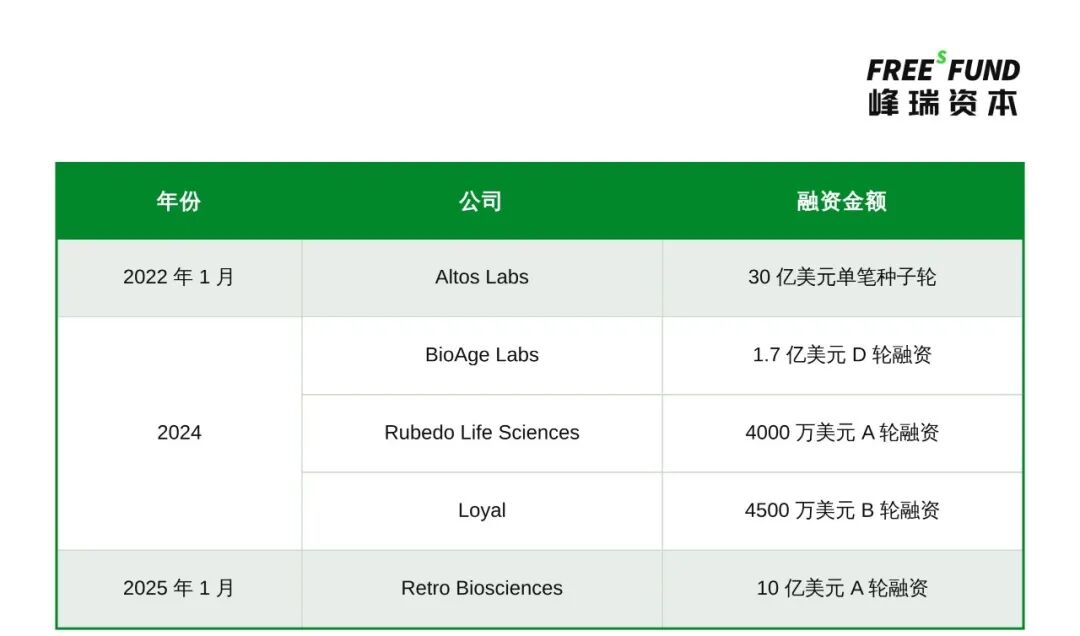
Table of financing in the longevity economy field. Data source: Compiled from public information.
This frenzy is not limited to the face. The tentacles of capital have quickly extended to the blue ocean of "Scalp Longevity." Just this month, the scalp anti - aging brand KilgourMD, founded by Stanford dermatologists, announced the completion of a Series A financing. This company completed a $5 million seed - round financing just half a year ago. The core business narrative of this brand is in line with the current industry consensus: Abandon the "superficial work" of traditional hair care products and directly target the fields of hair follicle - level repair and even "turning gray hair black" to reverse aging.
As Sam Altman and others pursue, the ultimate goal of investing in the longevity economy field has never been simply "living to 150 years old," but "being as healthy as a 40 - year - old at 120 years old." This shift in concept from "extending lifespan" to "extending healthy lifespan" is the fundamental reason why the longevity economy is so attractive to the capital market.
The reason why "Skin Longevity" has become a hot part of the longevity economy is that pure "anti - aging" technologies may take 10 - 20 years to enter clinical applications. Investors are increasingly aware that the skin, as the largest organ of the human body (accounting for about 16% of the total body weight and having a surface area of 1.5 - 2 square meters) , and the most intuitive sign of aging, is both a verification scenario for longevity technologies and the application field that can generate revenue the fastest.
To understand in detail why "Skin Longevity" has become the new focus of global medical investment, we need to look at three dimensions:
First, it is the subversion of the technological paradigm - from traditional "physical filling" to precise delivery based on cell signals;
Second, it is the reconstruction of the valuation system - how medical hard technologies enable the medical aesthetics track to obtain dozens of times of high premiums, which has been verified by the South Korean market;
Finally, it is the reshaping of the industrial pattern - how "Silicon Valley innovation + Made in China" will become the new paradigm in this global frenzy.
The following is a detailed breakdown of these three dimensions by Dr. Zang Xiaoyu, the founder of Fengrui - invested company N1 Life.
Author Introduction
Zang Xiaoyu, also known as Janice Zang, is a Ph.D. in chemistry from Stanford University. She studied under Professor Paul A. Wender, a member of three major academies in the United States. She focuses on the research of peptide chemistry and targeted drug delivery systems and has in - depth knowledge of skin drug delivery technologies. She founded N1 Life in Silicon Valley, the United States in 2019 and later established Xin'an Biotechnology (Suzhou) Co., Ltd. She has long - term scientific research and clinical cooperation with international top - tier research institutions such as Stanford University. Currently, she has established formal cooperation with more than 10 companies in the pharmaceutical and health fields. She has been selected into the National Key Talent Project's Qiming Young Talent Program and won the title of Suzhou Young Scientist.
01 Molecular Innovation: The Ultimate Battlefield is in the Delivery System
The Paradigm Shift from "Filling" to "Signal Transduction"
Regenerative Aesthetics has become a high - frequency term. The industry is collectively abandoning the "filling mindset" - no longer satisfied with simply "filling holes" with inert materials such as hyaluronic acid, but turning to a more fundamental question: How to send "youth signals" to skin cells and let the cells restore their youthful state by themselves?
Several types of molecules are becoming the focus:
1. Polydeoxyribonucleotide (PDRN) has occupied an important position in South Korean medical aesthetics tourism. This molecule extracted from salmon DNA can activate fibroblasts and promote collagen synthesis. The popularity of products such as Rejuran (commonly known as the salmon needle) essentially verifies the feasibility of the "biological signal molecule" route.
2. Exosomes are another cutting - edge direction. These nanoscale vesicles secreted by cells carry signal molecules and can regulate the behavior of surrounding cells. The Beauty Independent 2026 beauty trend report shows that exosomes are rapidly moving from laboratory concepts to market applications.
3. Peptides are the core ingredients in the skincare field in 2026. Consumers are actively seeking effective ingredients for "next - generation scientific skincare," and peptides are reshaping the competitive landscape of high - end anti - aging skincare. From the La Prairie Platinum Multi - Peptide cream that costs thousands of dollars, to Augustinus Bader's TFC8® peptide technology that achieved a $1 billion valuation, to Biologique Recherche pushing peptides to the level of epigenetic regulation - peptides have been upgraded from supporting ingredients to the core engine driving brand premiums and technological barriers. It is estimated that the market size will exceed $6.6 billion by 2033. The key to determining the outcome in the next stage is no longer "what peptides are used," but "how to deliver the peptides to the right place" - encapsulation and delivery technologies are becoming the real dividing line.
The Precision of Delivery Systems and the Transfer of Pharmaceutical Technologies
No matter how advanced the molecules are, if they cannot penetrate the skin barrier and reach the target cells, they can only remain at the data level of "in vitro experiments." This is why delivery technologies have become a key bottleneck.
1. The Evolution from Passive to Active
Traditional transdermal patches rely on passive diffusion based on concentration gradients - with low efficiency and slow speed. New systems are starting to use active delivery technologies: Iontophoresis uses a weak electric current to actively "push" drugs through the skin barrier; microneedle arrays directly penetrate the stratum corneum physically. The "Transdermal Drug Delivery System Market Size and Forecast 2026 - 2035" report by Reserch Nester shows that by 2035, iontophoresis alone is expected to account for 22.2% of the transdermal drug delivery market.
2. The Transfer of Mature Technologies from the Pharmaceutical Field
More interestingly, mature delivery technologies in the pharmaceutical field are being transferred to the skin beauty field. These technologies have been verified in drug delivery, and the current problem is how to adapt them to the special organ of the skin:
Liposomes are the most mature nanocarrier systems. They can encapsulate both water - soluble and lipid - soluble active ingredients at the same time and improve permeability and bioavailability through fusion with the skin's lipid bilayer.
Polymer microspheres can achieve sustained and controlled release of active ingredients, prolong the action time of drugs in the local skin, and reduce the frequency of drug administration. This is especially important for anti - aging ingredients that need to be used for a long time.
Polymer nanoparticles can achieve a certain degree of targeted delivery through surface modification, increasing the enrichment of active ingredients in specific skin layers (epidermis, dermis).
3. The Innovative Breakthrough of Conjugation Technologies
Conjugation technologies in the pharmaceutical field are bringing new possibilities to skin delivery:
Although Antibody - Drug Conjugates (ADCs) are mainly used in tumor treatment, their design concept of "targeted carrier + active drug" is inspiring new ideas for skin - targeted delivery. If skin - specific targeting molecules can be found, it may be possible to achieve more precise delivery than existing methods.
Peptide - Drug Conjugates (PDCs) are closer to practical applications. By covalently conjugating delivery peptides with active ingredients, PDCs can break through the stratum corneum barrier and precisely deliver molecules to the deep layers of the skin or even the dermis. This is the cutting - edge direction of current peptide beauty technologies - the core competitiveness is no longer just the biological activity of the peptides themselves, but more importantly, how to make them reach the right place precisely.
This transfer and innovative integration of technologies from the pharmaceutical field to the beauty field are opening up a brand - new market space. When the precision of tumor drug delivery meets the consumer attributes of skin beauty, "medical - grade beauty" will truly move from concept to reality.
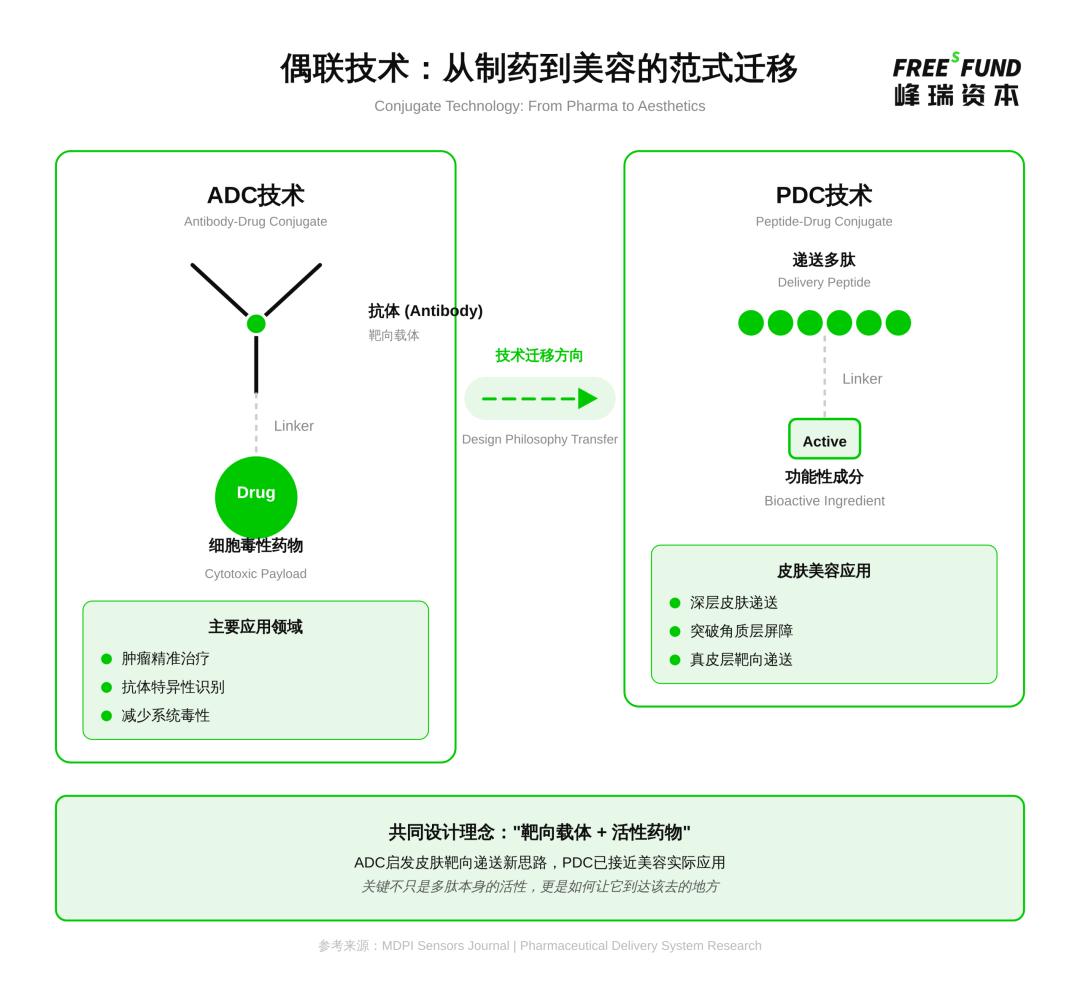
Data source: MDPI Sensors Journal | Pharmaceutical Delivery System Research
02 Reconstruction of the Valuation System and the Evolution Path of the South Korean Sample
When an industry begins to have pharmaceutical - grade supervision, a repeatable revenue model, and clinical evidence support, its valuation logic will undergo a qualitative leap. This is exactly the transformation that medical aesthetics technology is experiencing.
The scale of the global medical aesthetics equipment market is rapidly growing from $3.3 billion in 2024 to an estimated $9.7 billion in 2030, with a compound annual growth rate (CAGR) of 20%.
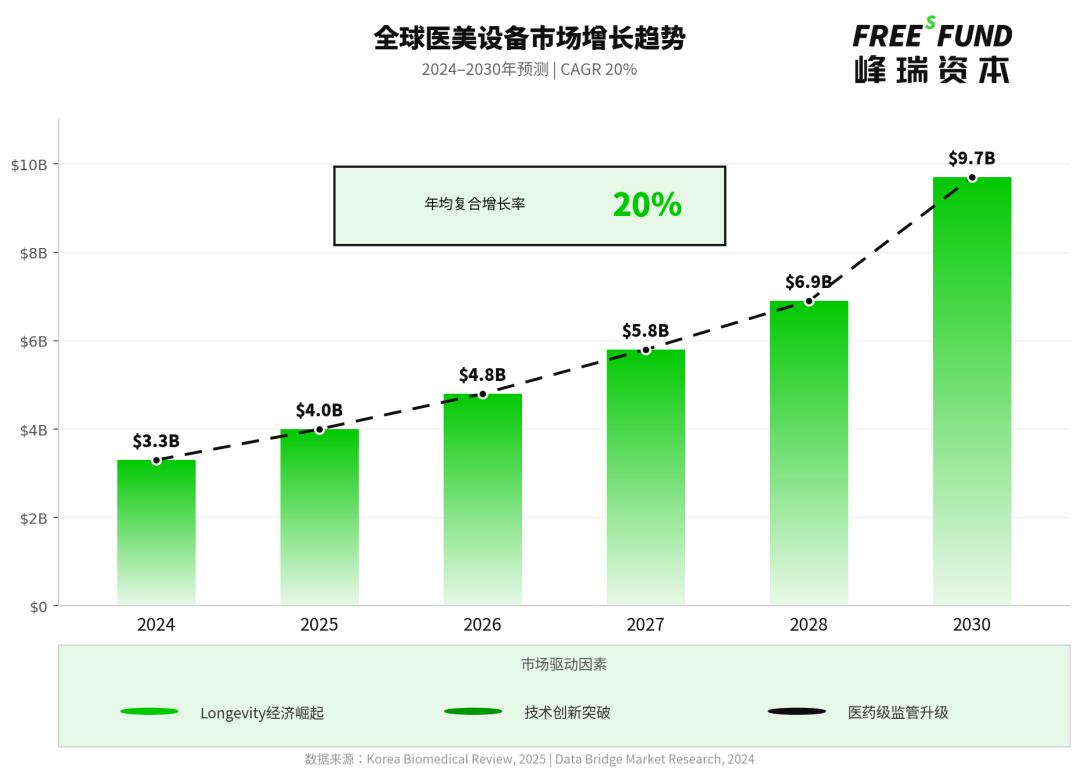
Growth trend of the global medical aesthetics equipment market. Data source: Korea Biomedical Review, 2025; Data Bridge Market Research, 2024.
What is even more noteworthy is the explosion at the drug delivery end. Reserch Nester shows that the market size of the Transdermal Drug Delivery System is expected to grow from $39.8 billion in 2025 to $115 billion in 2035, with a CAGR of 11.2%. The significance of this figure is that it is no longer simply a "skincare product market," but a real drug delivery technology market.
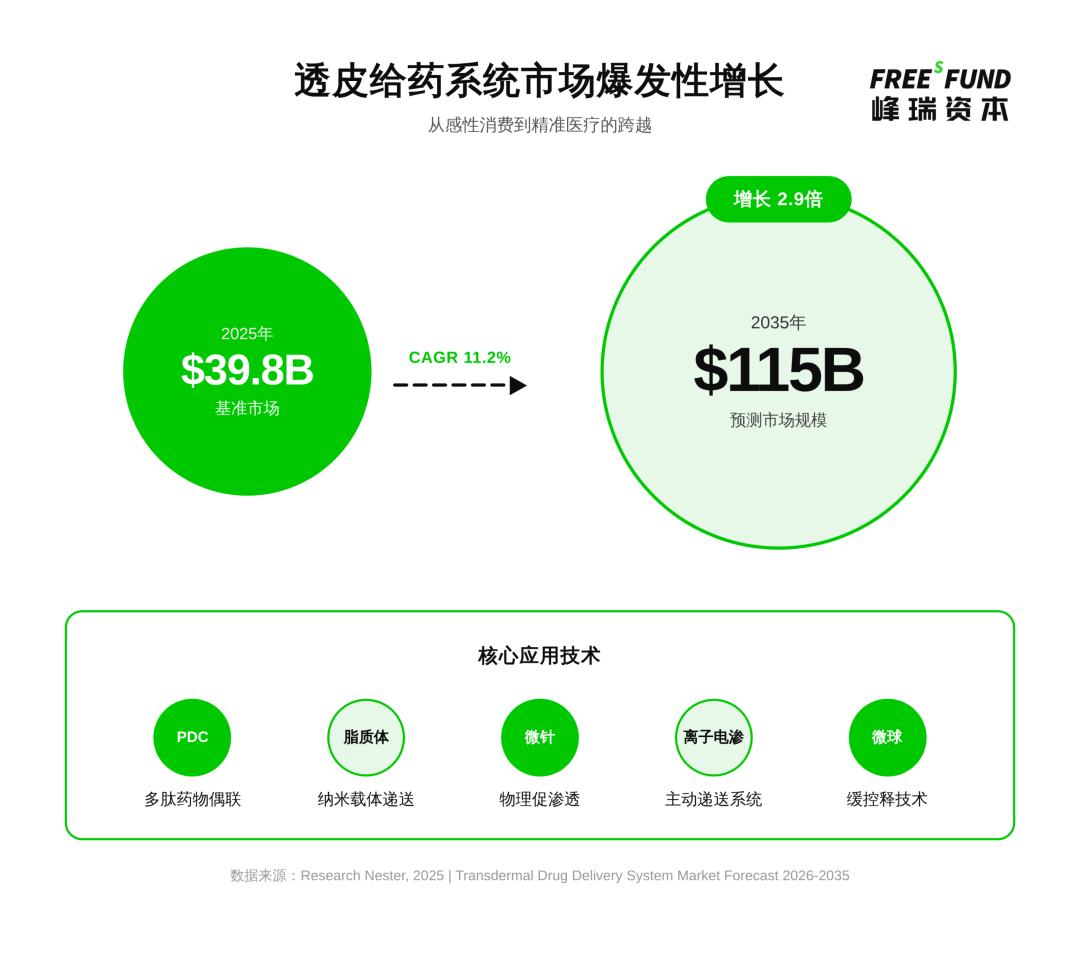
Data source: Research Nester, 2025 | Transdermal Drug Delivery System Market Forecast 2026 - 2035
But what really excites investors is not just the absolute growth rate, but the leap in valuation multiples. The EBITDA (Earnings Before Interest, Taxes, Depreciation, and Amortization) multiples of traditional cosmetics companies are usually in the range of 10 - 15 times, while those of medical device and biotech companies can reach 30 - 50 times. When the beauty industry begins to have pharmaceutical - grade technological barriers and regulatory moats, its valuation ceiling is completely opened up.
Classys: From a Hardware Manufacturer to the Infrastructure Layer
Let's take South Korea, where the medical aesthetics market is extremely developed, as an example.
Classys, a South Korean medical aesthetics equipment company, has performed outstandingly in the capital market. It has maintained an operating profit margin of over 50% for many consecutive years and has given an amazing forecast of $1 billion in sales and an operating profit margin of over 50% in 2030, showing a much stronger money - making ability than traditional beauty brands. Based on its great success in both business and capital, we conducted an in - depth analysis of its evolution path and found that it exactly interprets the transformation logic of the entire industry. On the surface, Classys is a hardware manufacturer of ultrasound and radio - frequency equipment. However, a careful study of its technology platform reveals that it has completed a transformation to the "infrastructure layer."
1. The Barriers Built by Pharmaceutical - Grade Certifications
Classys CEO Baek Seung - han once said in an interview that Classys' core product line covers the main technical paths of Energy - Based Devices (EBD): The flagship product Shrink Universe uses HIFU (High - Intensity Focused Ultrasound) technology. Since its launch in 2014, more than 18,000 units have been installed globally, occupying the first position in the South American HIFU market. As the fourth - largest medical aesthetics market in the world, the medical aesthetics equipment market in Brazil alone is worth up to $800 million;
The Volnewmer/Everesse series uses Monopolar RF technology. Through a revolutionary single - pulse energy transmission combined with a continuous water - cooling system, it significantly reduces the pain and time cost of treatment; while the micro - needle radio - frequency technology of the Quadsay series represents the next - generation precision treatment solution.
The common feature of these technologies is that they have all