Lenovo's Wang Shuai: From the Internet of Everything to the Internet of All Intelligences —— A Journey of Minutes, Bits, and Tokens for Global MVNOs
At a crucial juncture when the AI wave is reshaping the communication industry, on March 26th, the Mobile Resale Industry Ecosystem Development Conference was held in Zunyi. Dr. Wang Shuai, the vice president of Lenovo Group and the CEO of Lenovo IoT Connectivity, delivered a keynote speech titled "From the Internet of Intelligent Things to the Internet of Intelligent Agents - The Journey of Minutes, Bits, and Tokens for Global MVNOs" at the conference. He proposed that we are currently at a critical turning point from the "Internet of Intelligent Things" to the "Internet of Intelligent Agents." "Intelligence" is evolving from being an ability, a tool, or a function to becoming the main body of the world. The next - generation connection network is essentially a collaborative network of hundreds of millions of intelligent agents.
At the conference, Wang Shuai predicted four major evolution trends of the Internet of Intelligent Agents. Mobile virtual network operators (MVNOs) will cross the bubble cycle and embrace broader development prospects. They will join hands with ecosystem partners to achieve win - win results in the new era of the Internet of Intelligent Agents.
The following is the transcript of Dr. Wang Shuai's on - site speech:
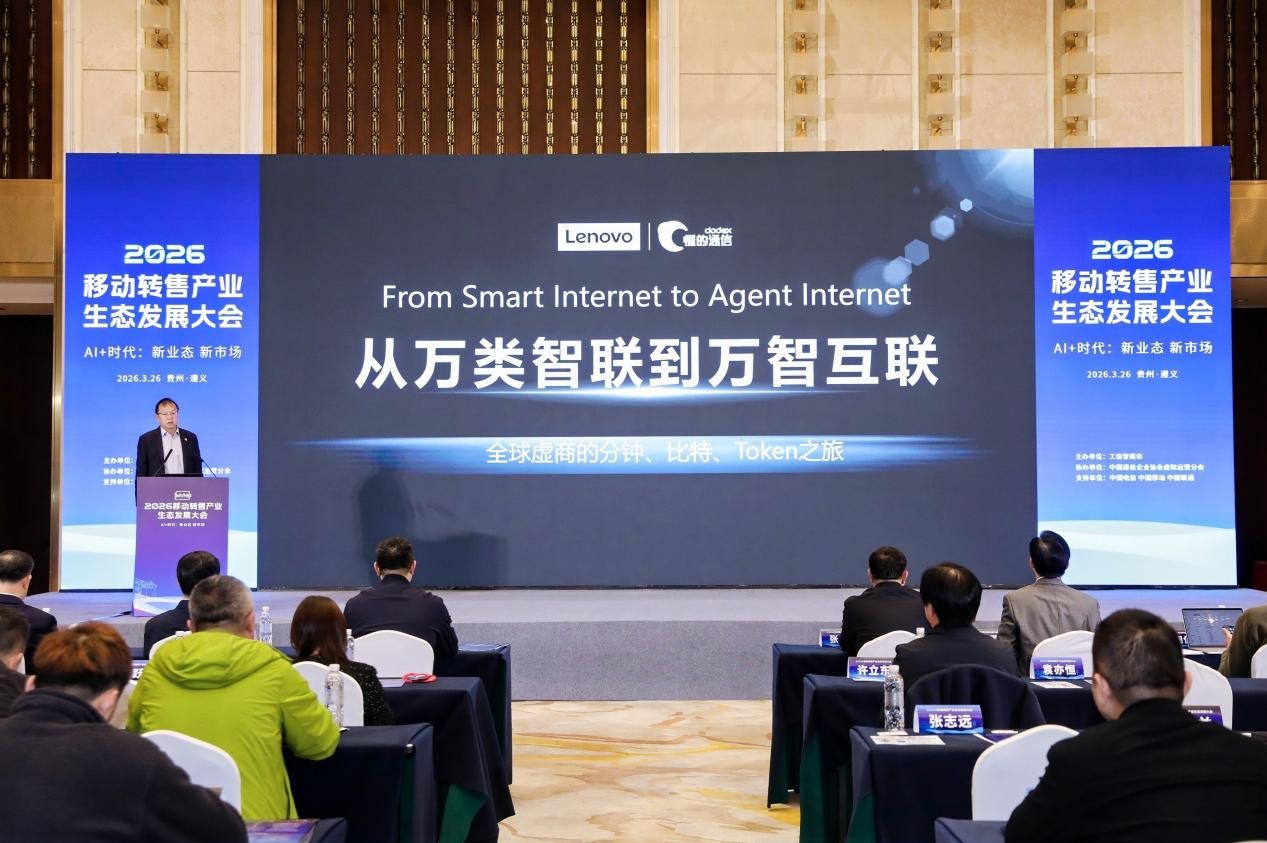
Distinguished leaders and guests, good day.
I'm Wang Shuai from Lenovo IoT Connectivity. I'm very glad to gather with you all in Zunyi today.
91 years ago, the Zunyi Conference was held. The Red Army recalibrated its direction at the most difficult moment. Today, the communication industry, especially the MVNO sector, has also reached a critical moment.
In a sense, we are also holding a "Zunyi Conference" for our industry.
About 10 years ago, at the global strategic launch conference marking the first anniversary of Lenovo IoT Connectivity, I delivered a keynote speech titled "From the Internet of Things to the Internet of Intelligent Things."
At that time, I put forward the concepts of the "Intelligent Internet" and the "Internet of Intelligence," and also predicted that "the opportunities for MVNOs would emerge at the intersection of the intelligent Internet, the sharing economy, and globalization."
Based on this judgment, we focused on intelligent connections to replace traditional functional communications. We promoted cross - regional, cross - network, cross - platform, cross - device, and cross - border globalization connections, and actively entered fields such as the Internet of Things, the Internet of Vehicles, and eSIM, and achieved some results.
Over the past 10 years, the Internet of Intelligent Things has indeed become a reality, and a new era is quietly emerging.
Recently, "Openclaw Lobster" has become extremely popular. It seems unreasonable not to raise lobsters. Even the company badge I'm wearing has been regarded as a lobster totem by my friends. On March 16th, Huang Renxun's GTC Conference sparked heated discussions. Lenovo was also invited to attend the conference. At the conference, Huang Renxun specifically sent blessings to Yuan Qing in person, saying, "This year will belong to you," which also put Yuan Qing on the hot search. On March 24th, China's official authorities officially named "Token" as "Ciyuán" in Chinese. I heard that some experts originally suggested naming it "Zhiyuán," but later found that there was a well - known robot company also named "Zhiyuán," and they had already registered the trademark...
Bits vs. Tokens, bytes vs. Ciyuán, everything is the best arrangement...
From the Internet of Intelligent Things to the Internet of Intelligent Agents
Then, the world is about to enter a brand - new stage. We will transition from the Internet of Intelligent Things to the Internet of Intelligent Agents.
The Internet of Intelligent Things essentially enables trillions of devices and various software services to be intelligently online. "Things" here not only refer to physical objects but also include various virtual forms of software, content, information, services, etc.
During this period, "intelligence" is more of an ability, a tool, or a means, and a powerful function provided by the system.
However, in the era of the Internet of Intelligent Agents, "intelligence" becomes the main body of the new world. Previously, we used "intelligence," but now "intelligence" is the main body. In the future, hundreds of millions of AI intelligent agents will operate collaboratively.
Four Evolution Trends from the Internet of Intelligent Things to the Internet of Intelligent Agents
The Internet of Intelligent Agents is not simply a technological upgrade but a systematic evolution that occurs simultaneously. I judge that this evolution has four major trends:
First, the subject of connection - from the Internet of Intelligent Things to the Internet of Intelligent Agents
In the past, we connected devices, people, and various digital services.
Now, we connect intelligent agents with cognitive and decision - making abilities, even including brain - computer interfaces. Because through brain - computer interfaces, people will also become intelligent agents in a sense. The communication relationship has also shifted from M2M (machine - to - machine) to A2A (intelligent agent - to - intelligent agent collaboration).
Second, the ability of connection - from communication to the integration of communication, perception, and intelligent computing
In the past, the core of communication was data transmission.
Now, communication undertakes more capabilities such as perceiving the environment, understanding information, scheduling computing power, and supporting decision - making. Connection will become an important module of the intelligent collaborative operation system.
Third, the measurement of connection - from minutes to bits, and then to Tokens
In the era of voice communication, we measured connections in minutes;
In the era of data communication, we measured connections in bits;
In the era of the Internet of Intelligent Agents, Tokens will become the new measurement of connection.
Fourth, the space of connection - from the Earth to the interstellar
Communication is evolving from the Earth's network to a full - coverage system integrating the sky and the Earth. 6G and NTN enable connections to reach the ocean, the sky, and the interstellar space.
The leap of an industry often starts with a cognitive mismatch
Historically, the communication industry has experienced multiple leaps. Sometimes, the real force that changes the industry is often just 5%.
Around 2001, the Chinese communication industry experienced an important turning point. There was a debate between "horizontal segmentation" and "vertical (digital) segmentation." Although the situation of China Telecom in the south and China Netcom in the north was formed later, the data business still quickly became independent from the voice system.
At that time, the industry still highly relied on the mature voice business, and the main measurement unit was minutes. Some people's awareness had awakened, but resources and actions did not shift with the change in perception.
In 2001, the proportion of data communication was only 5%. I guess no one at that time expected that in 2021, data communication would become the dominant form, and even voice was carried on data. The measurement unit of connection also changed from minutes to bits.
Looking back 20 years later, it was precisely that 5% back then that truly reshaped the entire industry.
Therefore, the leap of an industry often starts with a cognitive mismatch.
And today, we are standing at such a turning point again.
AI is pouring into the network, intelligent agents are emerging, and intelligent collaboration is happening everywhere. They may not be the current main body, but they are growing rapidly.
Maybe many years later, when we look back, we will find that the era of the Internet of Intelligent Agents started today.
The real turning point of an industry often occurs in the early stage when it is underestimated.
The world is developing at an accelerating pace. By 2036, we will definitely fully enter the era of the Internet of Intelligent Agents. AI will become the main body of the new world, and Tokens will become the main measurement unit.
What about 2046? Will humans continue to dominate the world, or will they be "pets" raised by AI?
Please allow me to answer this question with a lyric from Bob Dylan: "The answer, my friend, is blowin' in the wind. The answer is blowin' in the wind."
From traffic services to the emergence of intelligence: The Internet of Intelligent Agents reshapes the connection ecosystem
In the past 20 years, communication has gone through one - dimensional voice communication, two - dimensional network communication, three - dimensional data communication, four - dimensional AIoT communication...
After 20 years, communication is about to enter a new, higher - dimensional stage of the Internet of Intelligent Agents centered on the collaboration of intelligent agents.
From traffic services to the emergence of intelligence, the Internet of Intelligent Agents reshapes the industry ecosystem. When connections move towards intelligent collaboration, new service forms will emerge on the network. This also means that the industry will also go through different stages such as rapid development, bubble troughs, and re - acceleration. Industry participants will face the challenge of crossing the bubble cycle, and there will be a re - division of labor and reshuffle.
Basic telecommunications operators will build the infrastructure and digital foundation for AI connections, be responsible for large - bandwidth, large - computing - power, and a large number of basic general - service intelligent agents, and maintain network security and rule boundaries.
MVNOs, as more flexible and industry - closer participants, have new opportunities. They are not only resellers of connections but also providers of scenario - based services, integrators of capabilities, and operators and distributors of Tokens.
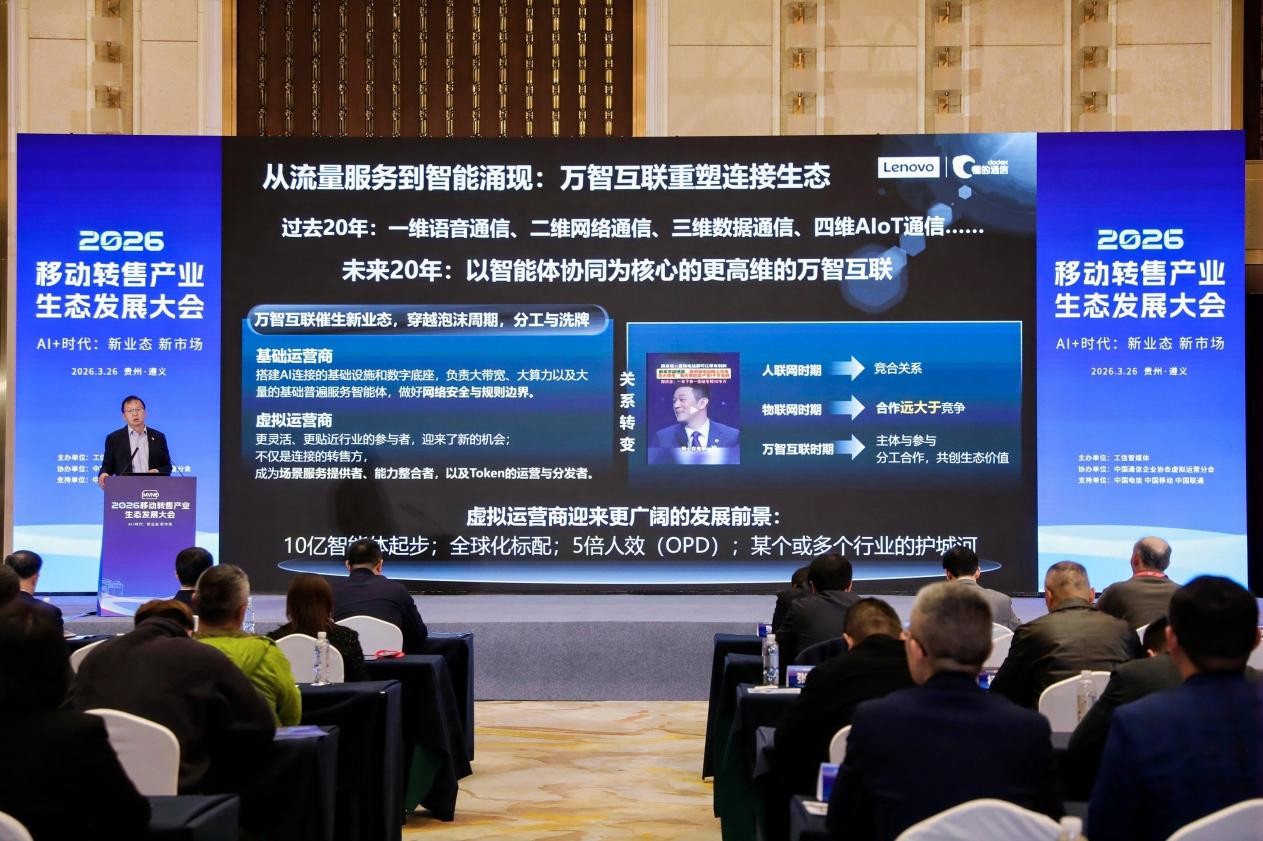
The relationship between basic telecommunications operators and MVNOs has also undergone a new transformation:
In the era of the Internet of People, basic telecommunications operators and MVNOs had a competitive - cooperative relationship;
In the era of the Internet of Things, basic telecommunications operators and MVNOs were partners where cooperation outweighed competition;
In the stage of the Internet of Intelligent Agents, basic telecommunications operators and MVNOs have a relationship of the main body and participants. They divide labor and cooperate to jointly create ecological value.
Let's change our thinking and look at a case in the new energy industry... The charging and battery - swapping network built by NIO is a "virtual power grid." NIO is a virtual power service operator. In the era of intelligent new energy, it has no competition with the physical power grid but only win - win cooperation.
More importantly, the entire "intelligent energy network system" composed of NIO's vehicles, battery - swapping stations, charging piles, and management platforms is not only a "virtual energy service operator." In the future, it will inevitably be upgraded to a "Token operator" in the era of the Internet of Intelligent Agents.
"One may use the good qualities of others to remedy one's own defects." NIO's innovative model of cross - border integration is definitely worth learning from and thinking about for the MVNO industry. By the way, the connection services from NIO's vehicles to battery - swapping stations and charging piles are all provided by Lenovo IoT Connectivity.
As mentioned earlier, in the era of the Internet of Intelligent Agents, the industry will experience a bubble cycle and a re - division of labor and reshuffle. However, as long as MVNOs give full play to their characteristics of innovation, flexibility, and being closer to the industry, they will surely cross the cycle, turn crises into opportunities, and embrace broader development prospects.
Here, I also boldly predict the future:
MVNOs without a starting scale of one billion intelligent agents will find it difficult to gain a foothold;
MVNOs that do not go global and do not have global standard - compliant services will find it difficult to grow sustainably;
MVNOs with a human - efficiency ratio less than five times that of basic telecommunications operators will find it difficult to survive. One - person companies (OPCs) may not be common, but one - person departments (OPDs) will surely be everywhere;
MVNOs lacking in - depth industry moats will find it difficult to make sustainable profits.
These four points are the opportunity boundaries and new industry thresholds for MVNOs in the era of the Internet of Intelligent Agents.
The Internet of Intelligent Agents - Let connections become AI
Will MVNOs become important players in the era of the Internet of Intelligent Agents?
The answer is yes. MVNOs need to transform into service providers with independent R & D and innovation capabilities, who understand both networks and industry scenarios and can integrate connection, computing power, and AI capabilities.
What Lenovo IoT Connectivity is building is exactly such a full - stack capability system.
Relying on Lenovo's global deployment and hybrid AI strategy, the AiConnect ecosystem of Lenovo IoT Connectivity integrates connection, computing power, and AI capabilities, serves diverse industrial scenarios (such as smart mobility, smart retail, and drones), and explores the distribution and operation mechanisms for intelligent agent connections and Tokens.
By integrating AI, big data, and computing power, we break the boundaries between communication and perception, achieve "connections that understand you," and make connections become AI.
The role of Lenovo IoT Connectivity has shifted to the unified organization and scheduling of connection, perception, computing power, and AI capabilities, becoming the service operator of the Internet of Intelligent Agents.
The AiConnect ecosystem builds the core capability system of the Internet of Intelligent Agents
In the process of intelligent agent communication gradually becoming a reality, what determines the industry pattern is the ability to implement capabilities and conduct large - scale operations .
In this direction, Lenovo IoT Connectivity has formed a systematic layout in multiple key capabilities. With the AiConnect ecosystem, it builds the core capability system of the Internet of Intelligent Agents. The Lenovo IoT Connectivity platform has connected over 80 million devices; it provides Internet of Vehicles services to over 60 automobile manufacturers and 7 million intelligent vehicles, supports over 2 million vehicles to go global. For every three connected vehicles going global, one is equipped with Lenovo IoT Connectivity services. At the same time, it serves over 1 million robots and over 1 million drone devices; the unmanned driving service has entered the trial - operation stage; it has become the number one brand for Internet of Vehicles, Internet of Things, and eSIM services for going global.
The company has obtained 109 patents and nearly 70 software copyrights and has been recognized as a national specialized and sophisticated "little giant" enterprise.
We have built the IoT Connectivity platform, the Soul eSIM platform, the IoT AI platform, the computing power management platform, the drone management platform, the energy management platform, the IoT Pulse platform, etc., to achieve the unified organization and scheduling of connection, computing power, and AI capabilities.
Currently, our AiConnect ecosystem has been implemented in multiple fields such as intelligent vehicles, drones & robots, new energy, and video networking, and has cooperated with many leading enterprises in the industry, such as NIO, BYD, as well as Zhiyuan, Ubtech, and Yunji, to connect the last mile of global intelligent connections.
Create a better life of human - machine symbiosis and the Internet of Intelligent Agents together
The next - generation connection network is essentially a collaborative network of hundreds of millions of intelligent agents.
Currently, intelligent agents are "embodied" in all connection subjects, including humans. Brain - computer interfaces, drones, robots, AIPC, and AI cars are no longer just devices that passively execute instructions but intelligent agents that can understand tasks, conduct reasoning, make decisions, and operate collaboratively with other systems.
When a large number of intelligent agents access the network, hundreds of millions of intelligent agents will operate online simultaneously in the future. They will continuously interact, collaborate in real - time, and jointly complete complex tasks.
In such an environment, connection services will evolve into a new network form: the intelligent agent collaborative network. The real value of connection lies in how much intelligent potential it awakens and how it triggers an intelligent explosion.
We will rely on the AiConnect ecosystem to accelerate our entry into the new world of "human -