AI photo frames "bring back" loved ones, and holographic girlfriends chat with you: These 8 pieces of hardware take AI to new heights.
The three - month exhibition wave has finally come to an end, and Xiaolei finally gets a chance to catch his breath.
Since entering 2026, artificial intelligence has become an undisputed major trend in the tech circle. All manufacturers are racking their brains to integrate new technologies into various devices. Even at the recently held AWE 2026, the official for the first time ever set up an AI hardware exhibition area. It seems that something is missing if a new product doesn't have this feature.
However, readers familiar with these industries should also know that at least more than half of these products are just modifications of existing hardware.
Those with a bit of technology will think about how to combine large models with real - world scenarios; those with little technology just add AI voice control and claim their products are AI hardware.

(Image source: Lei Technology, produced by Nano Banana 2)
Tired of those cold computing power parameters and the same old large - model shells, let's take a look at some interesting hardware with a slightly off - track tech tree today. The following eight products are all masters of creativity, with bigger and bigger ideas.
Without further ado, let's take a look at these products one by one to see how much real strength they have and how much is just a "IQ tax".
Vinabot AI: Bring the deceased back to life in a photo frame
Missing the deceased is probably one of the deepest emotional needs of human beings.
As the saying goes, seeing an object reminds one of a person. So we put their photos in photo frames and place them at home, then stare at the static photos, letting the hazy past fill our minds.
But now, with AI technology, perhaps you don't need to do this anymore.
Laihua, an AIGC brand from Shenzhen, has come up with an extremely hardcore solution. They choose to directly turn static photos into living things.

(Image source: kickstarter)
Yes, I'm talking about this Vinabot AI photo frame.
According to the official demonstration, the operation threshold of the Vinabot AI photo frame is extremely low. You just need to upload an old photo through the mobile app. After being processed by artificial intelligence algorithms and deep - learning models, the facial features in the photo can come to life vividly within a few minutes.
The actual effect is like the following, a bit like the Live2D on mobile phones.
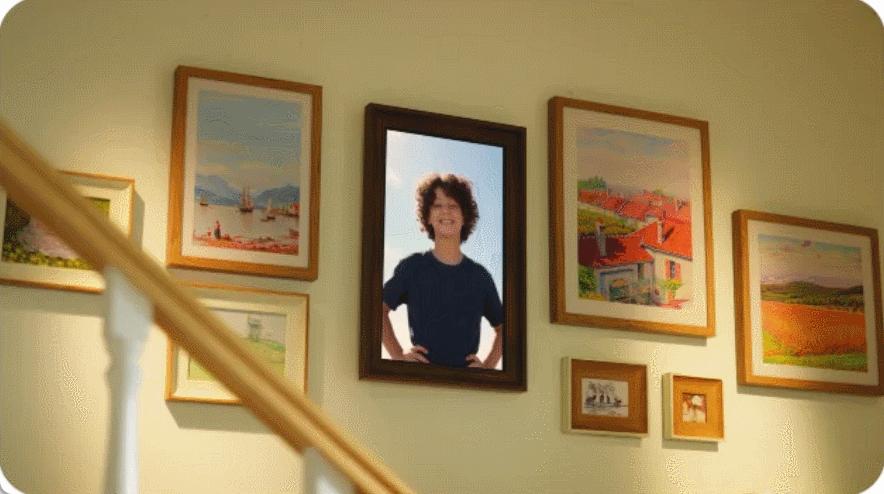
(Image source: kickstarter)
If you can provide an original voice recording, it can accurately imitate this person's voice.
Moreover, you can input the character's background information, personality and other settings. After connecting to the API of Gemini or ChatGPT, the character can have real - time voice chats with you, and the conversation content will be continuously saved and accumulated, making the character more and more real through context.
From Xiaolei's observation on video platforms, whether it's the subtle changes in the character's facial expressions or the matching degree between the mouth shape and the voice, it's much better than the digital humans of the previous two years.
For elderly people living alone, putting such a photo frame at home and importing photos of their children who are working outside, they can have a chat when they are bored, which can definitely provide a lot of emotional value.
For young office workers, they can also put a favorite anime character on their desks as a spiritual sustenance to relieve work pressure.
Honor Robot Phone: The phone becomes a robot
Nowadays, there is no shortage of phones with AI in the market, but what is lacking is a phone born for AI. And Honor's Robot Phone is exactly the latter.
Just looking at the front of the phone, the Honor Robot Phone is no different from an ordinary phone.
Turning to the back of the phone, you will find that its camera module is not fixed on the back of the phone body. Instead, it is installed on a miniature mechanical arm gimbal. The size of this camera is almost as large as that of the DJI Pocket 3.
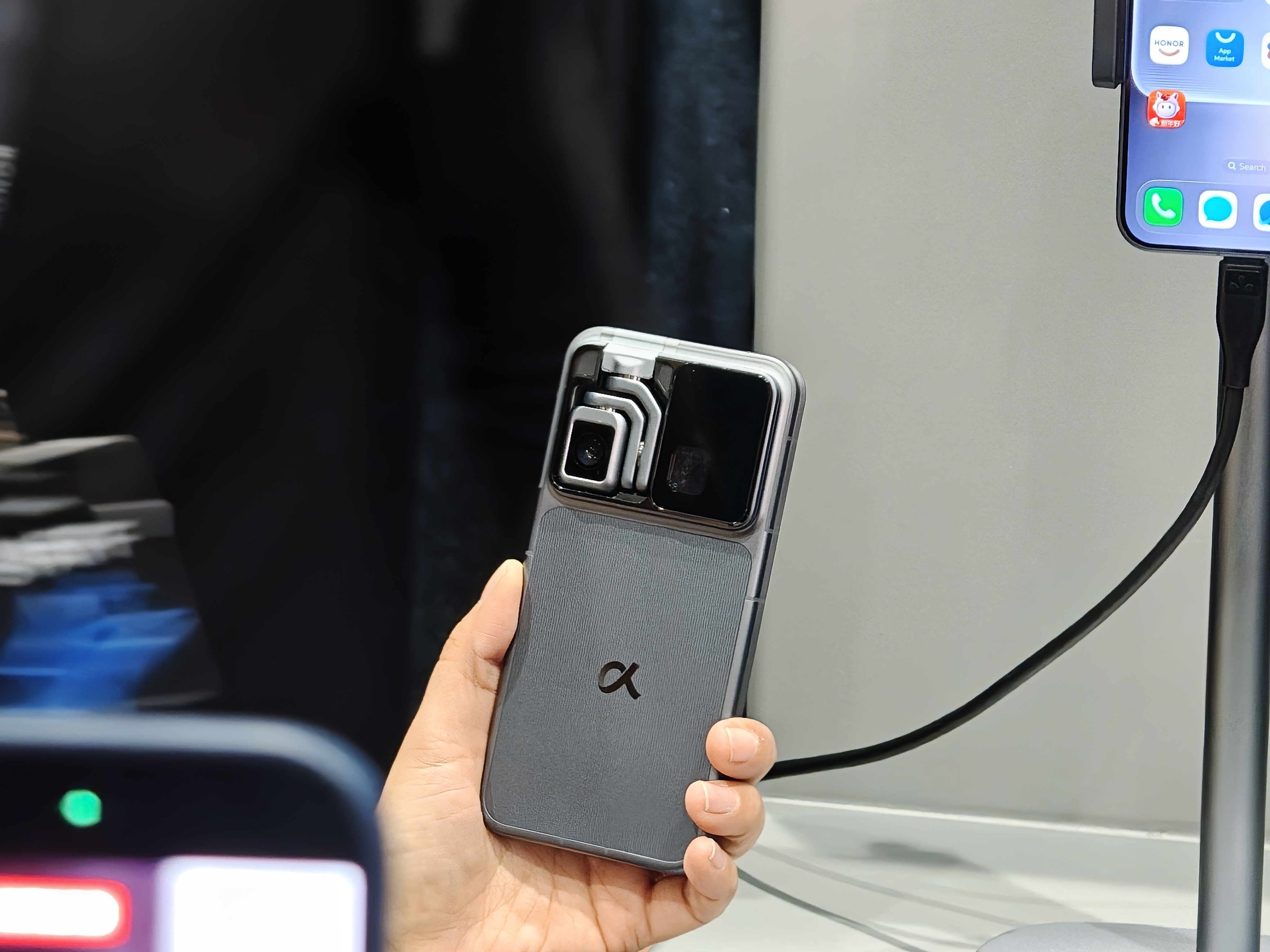
(Image source: Lei Technology)
According to the official introduction, the camera of the Honor Robot Phone consists of a three - axis mechanical anti - shake gimbal and a 200 - megapixel sensor, with the strongest anti - shake ability among mobile phones in the current industry.
In the demonstration at MWC 2026, in the face of constantly moving dancers, the Honor Robot Phone can still automatically follow the people and always keep them in the center of the frame. The violent hand movements and the dancers' free - style dancing do not affect its tracking effect at all.
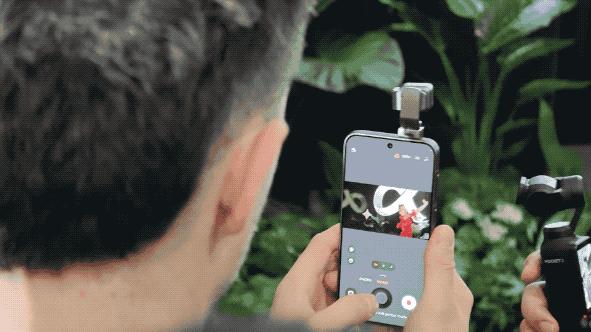
(Image source: Lei Technology)
Of course, if it's just an upgrade in imaging, this phone can at most be called a Camera Phone, which has nothing to do with "Robot".
Therefore, this camera also has a unique AI interaction method. It not only enables the phone to truly have vision but also allows it to enter the rhythm - based movement mode according to the changes in external music. In this mode, the camera gimbal will dance to the rhythm. Although it may seem a bit funny at first glance, in this process, we can clearly feel the high sensitivity of the Robot Phone's gimbal.
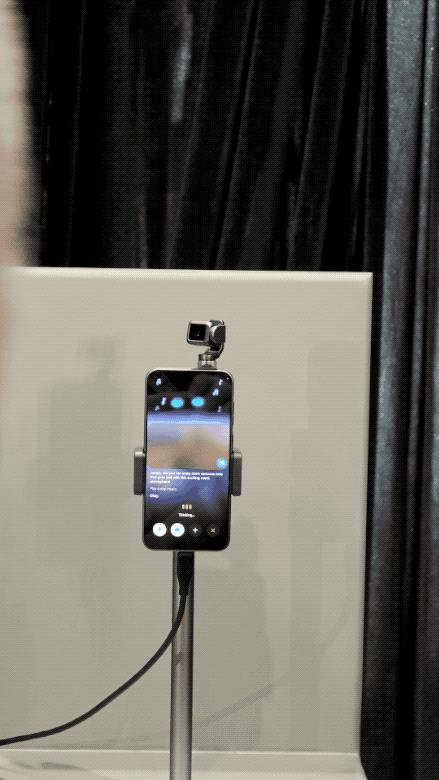
(Image source: Lei Technology)
Personally, I think that at least in terms of form, the Robot Phone has been bold enough.
In Honor's view, the value of the Robot Phone does not lie in being cool but in pushing the imaging competition from simply piling up specifications to a new direction: using a stable gimbal, automatic subject following, camera movement rotation, and AI scene understanding to form a new selling point.
Such bold innovation is indeed a new way to break the deadlock in the current mobile phone industry, which is generally suffering from homogenization.
Sweekar: An AI pet that never sheds hair
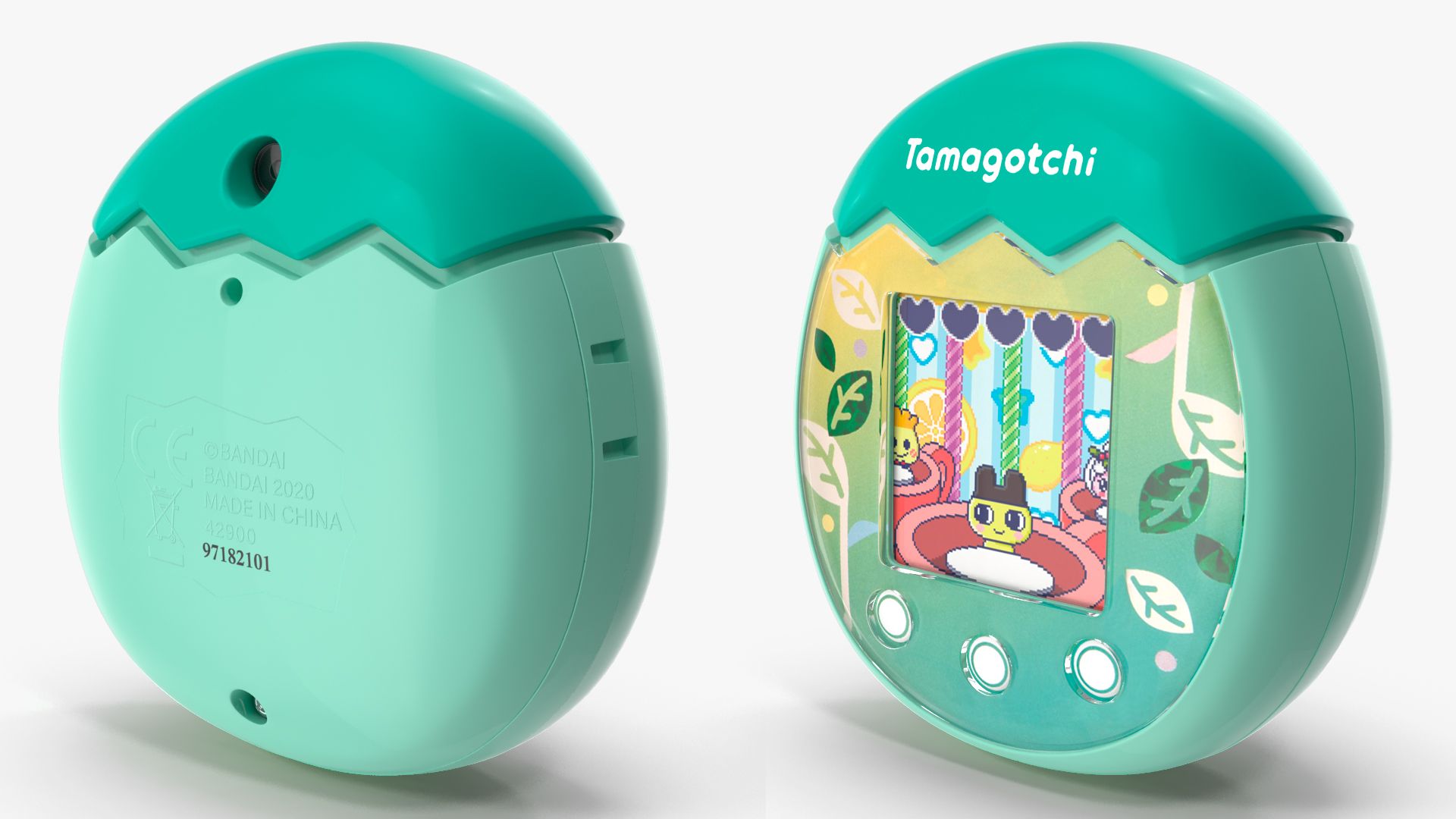
Have you ever played with Tamagotchi?
Regardless of gender, most of us in this generation played with domestic Tamagotchi when we were kids. This cheap game console that simulates raising virtual pets through feeding, cleaning, etc. almost became a must - have social tool for primary school students.
More than twenty years later, Sweekar hopes to bring this cyber - pet - raising experience into reality.

(Image source: takway)
Sweekar is an AI electronic pet developed by the startup company Takway. The product is designed in an egg shape, equipped with ears and a screen for displaying facial expressions, and offers three replaceable shells in pink, yellow, and blue.
This device weighs about 89 grams. It can not only sense your touch and kneading but also simulate a slight breathing rhythm and body temperature.
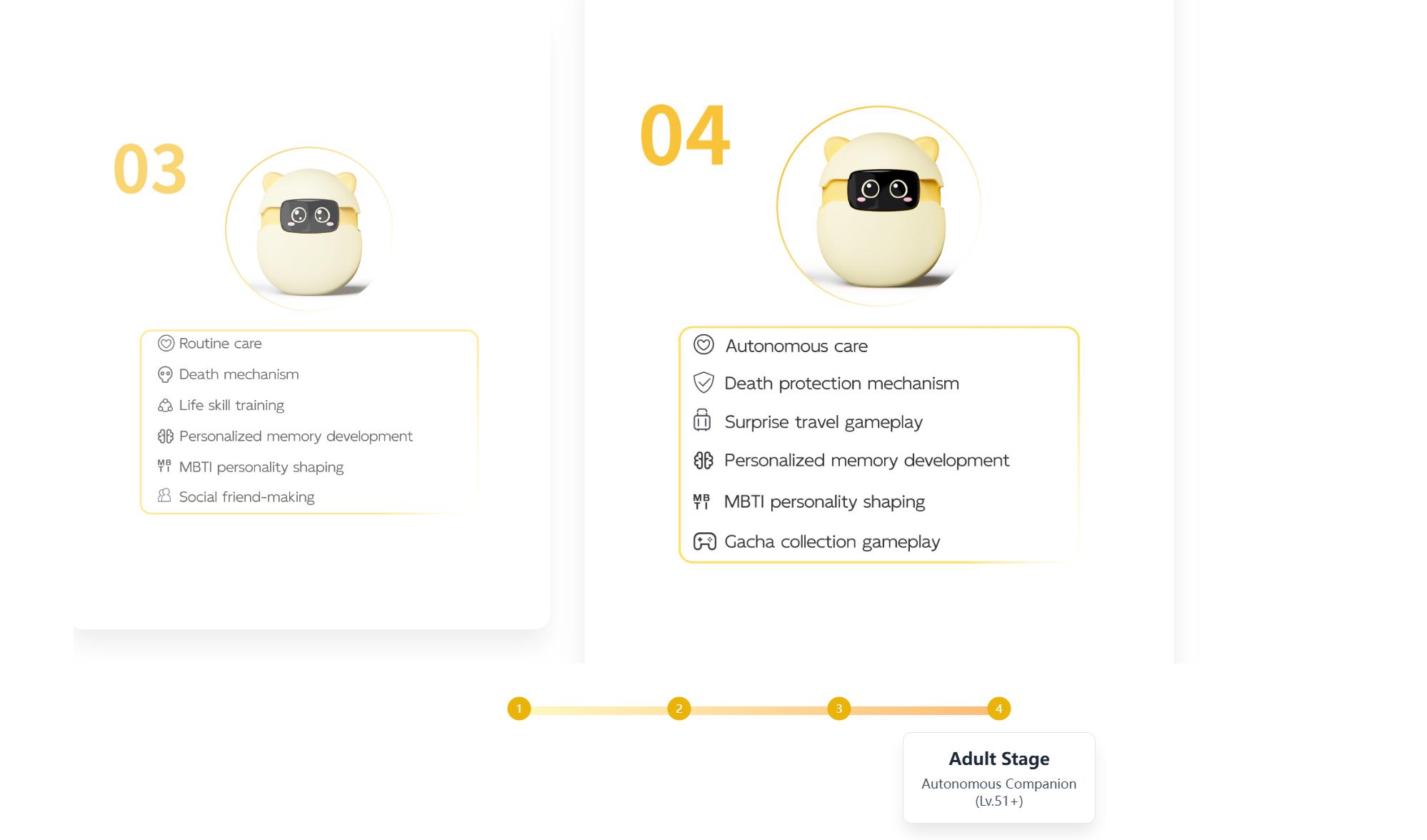
But these are not the key points. The key is that it has long - term memory ability and can remember about 300 daily interaction memories with the user. The user needs to continuously interact with and take care of Sweekar to let it go through four stages: hatching, infancy, adolescence, and adulthood to unlock all its functions.
(Image source: takway)
According to the description, if you ignore it, this thing will "die".
When you raise it to the adult stage, it can start to develop the habits of finding entertainment on its own and going to sleep on time, without you having to worry about it.
As for the price, the currently exposed overseas crowdfunding price is about $100 - $150.
Compared with buying a pure - bred real cat or dog and the subsequent high cost of cat food and medical treatment, this price is almost like making a friendly deal.
But looking further, from the early Tamagotchi to the Sony robot dog that cost tens of thousands of yuan a few years ago, the curse of the electronic pet industry has always existed.
(Image source: Tamagotchi)
The biggest weakness of such electronic products has never been the under - developed hardware technology but the problem of being left unused after the novelty wears off.
They lack the unpredictable life cycle of real life and the soft touch of real fur. Once users figure out all their interaction routines in two or three months, they will easily get bored and finally throw them into the bottom of the drawer to collect dust.
How to maintain the unpredictability of this little guy through continuous cloud software updates to keep users' long - term engagement is a hurdle that this product must overcome.
Glyde: An AI barber, no need to ask others for a haircut
If you think the above product has little practical value, then the following one may hit the nail on the head.
For many men, going to the barber shop every month is not only expensive but also a bit like a "gamble". You never know what kind of haircut the barber will give you. When you say "trim it a little shorter", he may just shave your head, and you'll have to wear a hat for the next month.
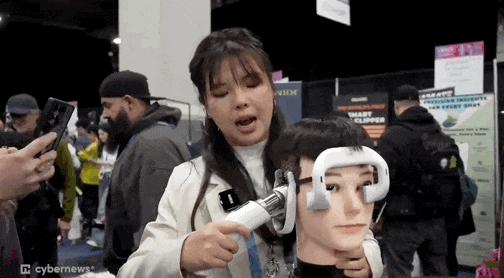
Kcool from Shenzhen brought a smart hair clipper called Glyde to the CES this year, claiming that it allows everyone to get the haircut they want.
(Image source: X)
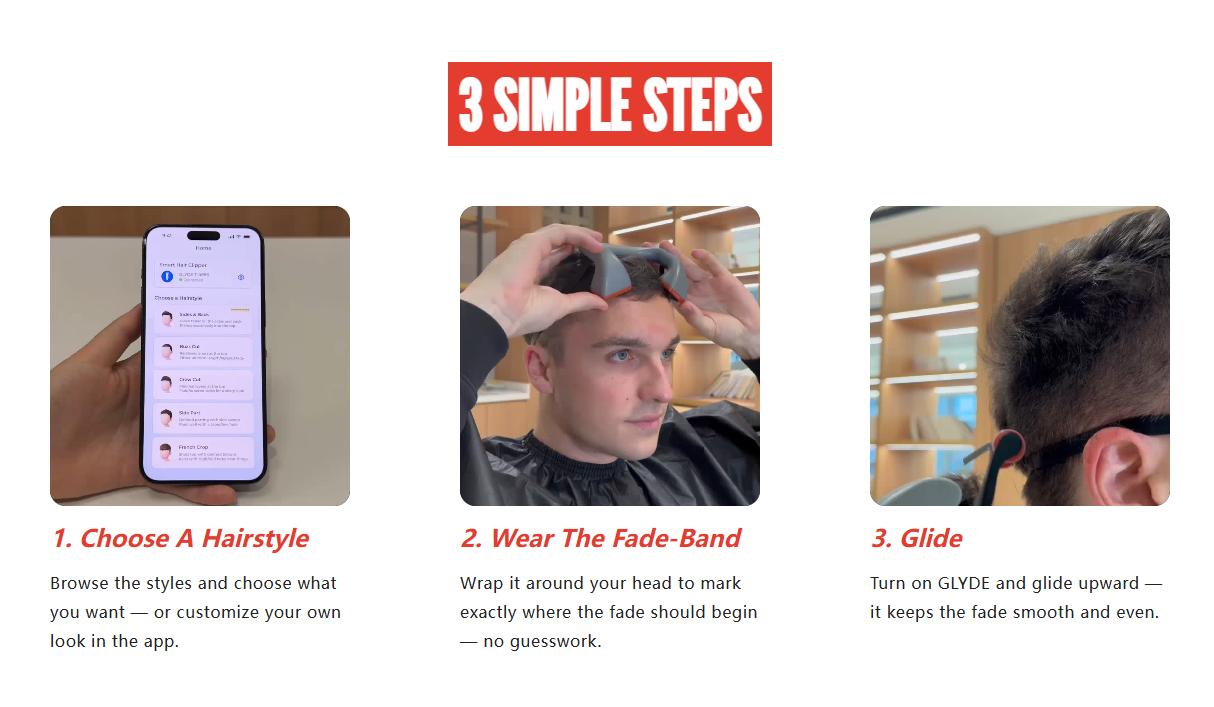
Before using it, you need to select a haircut style in the supporting app, which has various popular styles such as slicked - back hair, crew cut, and fade haircut.
After selecting the style, put on the positioning mask, and then you can start cutting.
Equipped with a series of sensors, adjustment wheels, protective devices, and movable parts, Glyde can achieve fool - proof hair cutting. When you move the clipper on your head, the AI will automatically control the retractable length of the blade according to the haircut style you selected.
For example, if you want a fade haircut, the hair should be longer as you go up. As you move the clipper upwards, when it reaches the area where the hair should be longer, the blade will automatically retract.
(Image source: Glyde)
The most amazing thing is its "anti - clumsy mechanism". If your hand shakes, or you move the clipper near the ear or to an area where you shouldn't cut, the blade will immediately retract and stop vibrating to prevent you from shaving your hair bald or scratching your scalp. In this way, even those without hair - cutting experience can try complex hairstyles.
It should be noted that this thing cannot cut hair automatically. You still need someone to help you with the haircut.
Currently, Glyde is only available for pre - sale overseas. Obviously, this product is not designed for users who often go to barber shops but targets overseas families that pursue cost - effectiveness and often do DIY haircuts at home.
In my opinion, although it may not revolutionize the hair - styling industry, it may reduce many "failed" bowl - cut hairstyles done by mothers.