Google enters the AI music arena. In a practical test, it can generate a 3-minute song with a single click and allows for fine control of paragraphs.
On March 26th, according to TechNode, Google released the AI music generation model Lyria 3 Pro on March 25th local time. As an advanced version of Lyria 3, which was released last month, Lyria 3 Pro is developed by the Google DeepMind team. The biggest upgrade is the significant increase in music duration, from the previous 30 seconds to 3 minutes. In addition, the model can understand the song structure. Users can specify sections such as the intro, verse, chorus, and bridge through prompts to finely control the complete song.
Simultaneous with the model upgrade, Google has also rolled out the Lyria 3 series across multiple product platforms, including Vertex AI, Google AI Studio, Gemini API, Google Vids, Gemini applications, and ProducerAI, covering the entire process from enterprise - level development to individual creation.
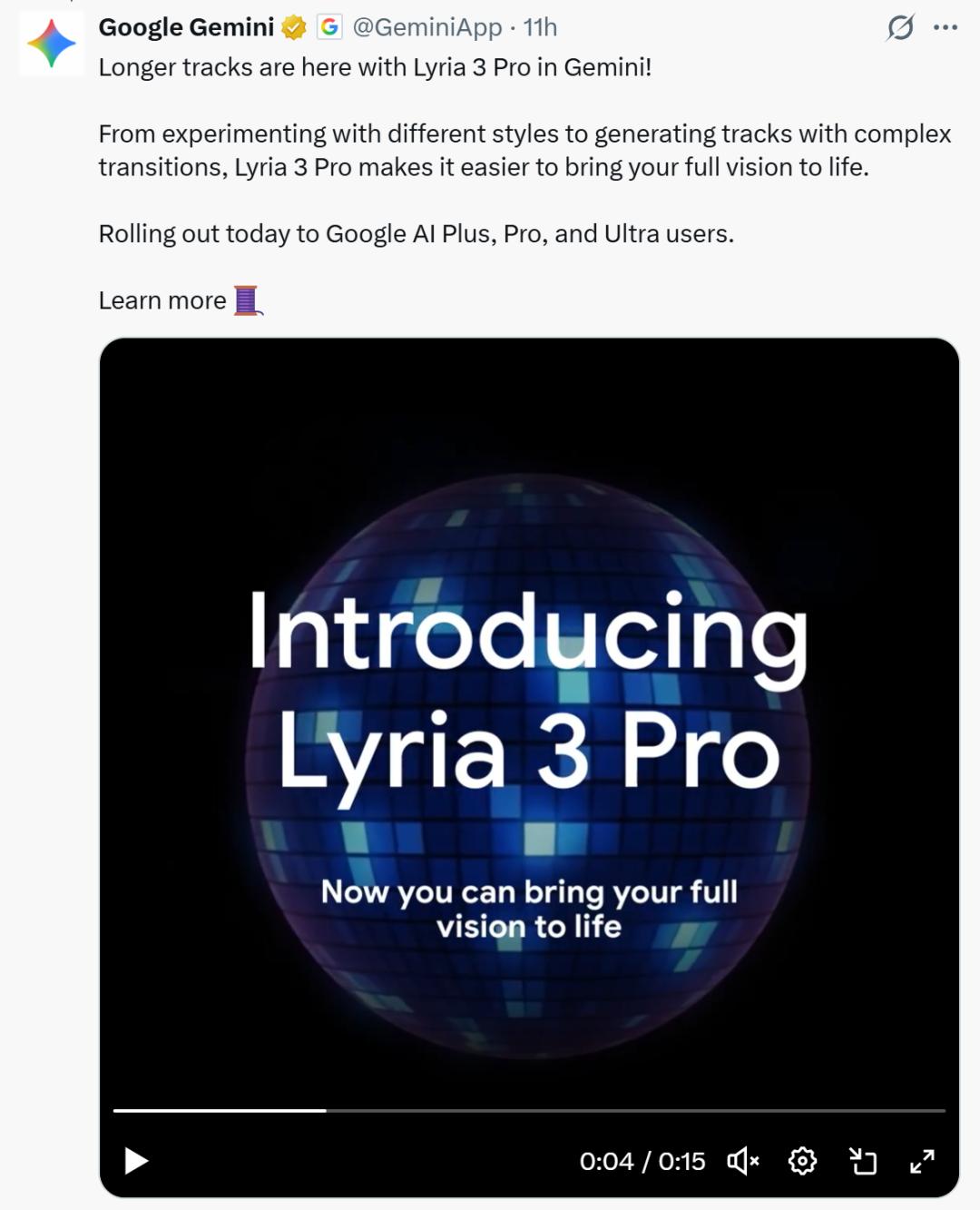
Google officially announced the new model Lyria 3 Pro (Source: X)
TechNode tried out the model on Google's ProducerAI platform and generated several songs.
First, I gave Lyria a photo of a seaside trip I took some time ago and asked it to generate music based on the photo.
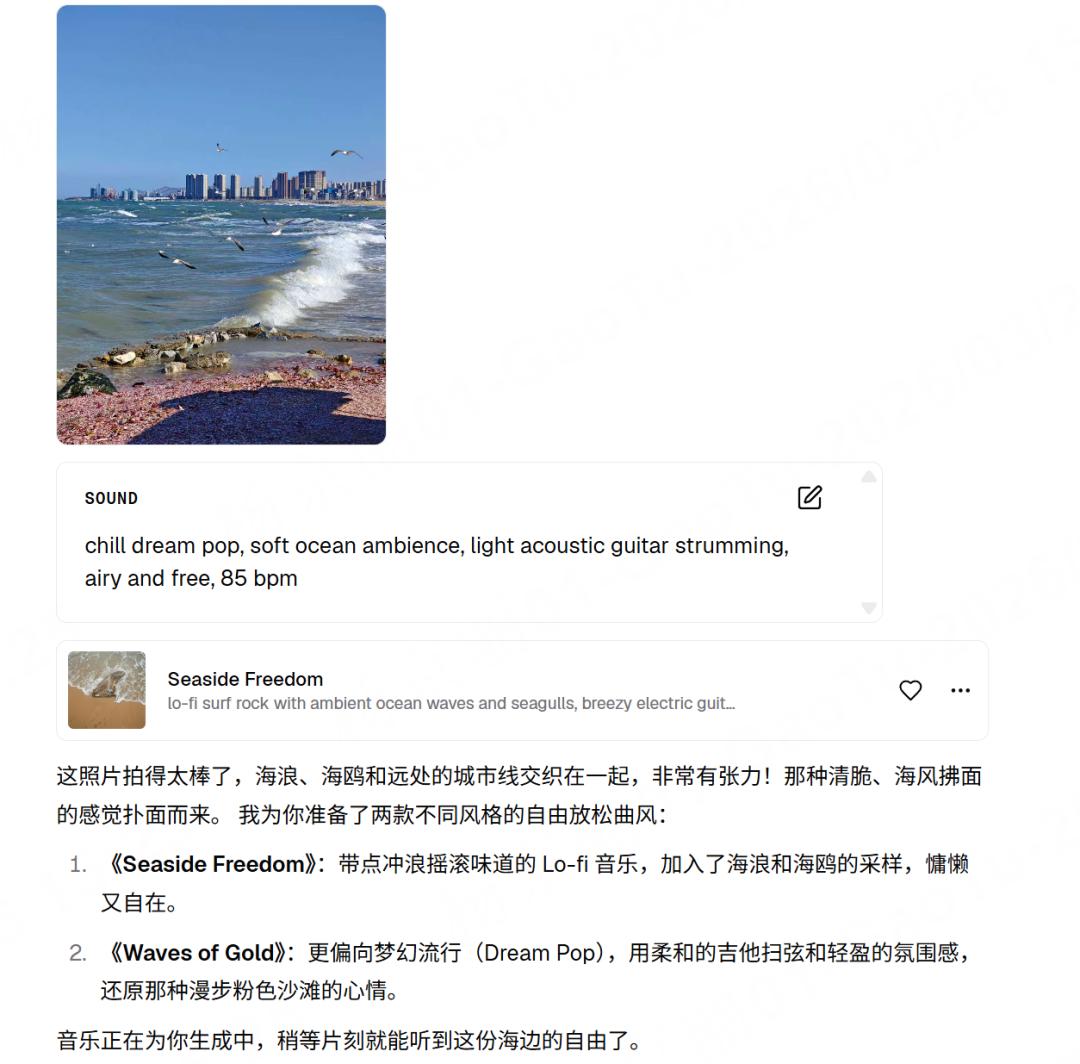
First of all, it had a clear understanding of the picture and quickly captured the element of seagulls in the frame. In less than a minute, the song was generated. The overall melody was played by an electric guitar, with seagull calls and waves as white noise, and maracas were used for rhythm. The overall sound quality was clear, natural, and smooth, with a strong sense of rhythm and layering, and one could feel the atmosphere of freedom from it.
Later, I asked it to create a traditional Chinese - style song. The prompt was as follows:
"Create a lyrical Chinese - style song with a mid - to low - pitched female voice. In addition to the melody, the accompaniment can include a flute, guzheng, or pipa, and the performance should be emotional."
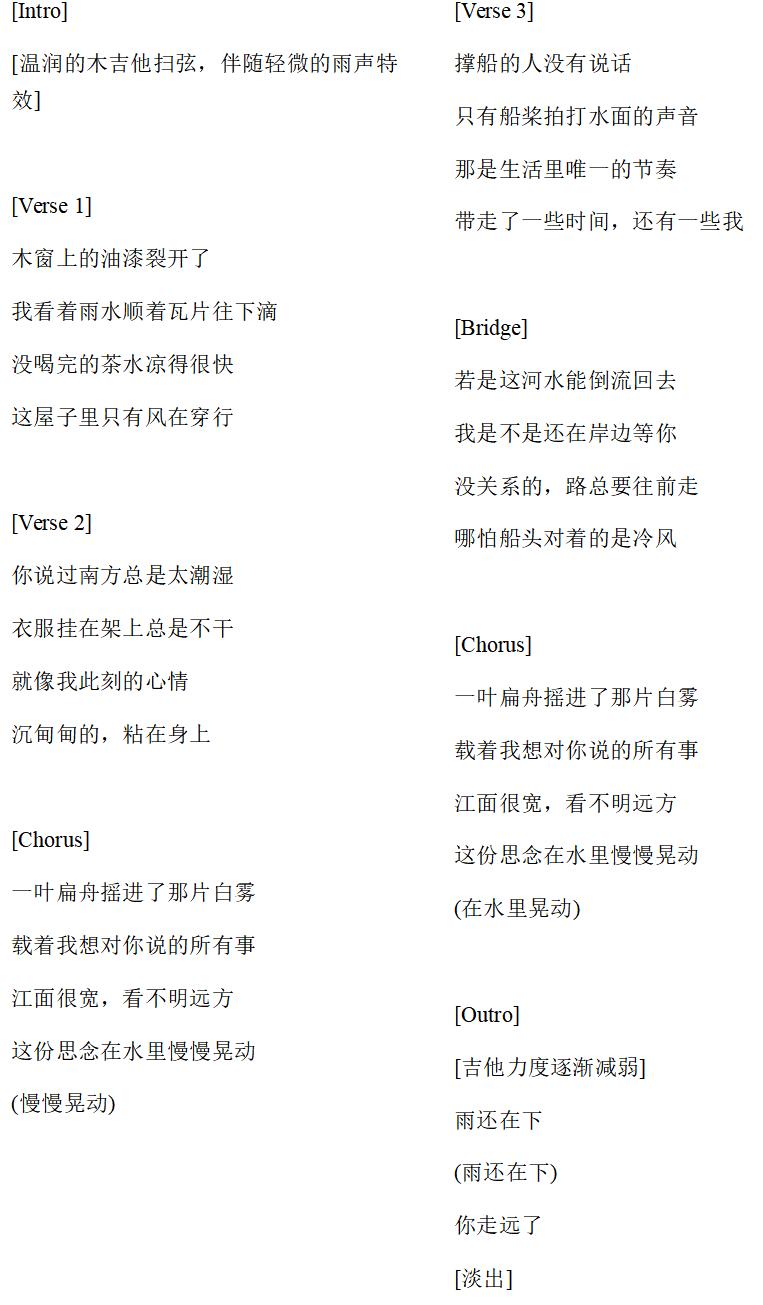
The lyrics generated by Lyria
Objectively speaking, the lyrics were mediocre. They didn't rhyme well and the language quality was a bit poor. However, the music sounded good. It could be seen that Lyria 3 Pro had a good understanding of the song. The chorus and verse were clearly defined, it understood the prompt clearly, the sound of the flute could be clearly heard, and the singing was full of emotion.
From the actual experience, Lyria 3 Pro has begun to have the ability to generate mature works. Therefore, the focus of Google's release this time is not only that "the model is stronger", but also that it quickly integrates this ability into multiple product entrances, allowing developers, enterprise users, and ordinary creators to use it directly.
01. Rolled out across 5 major platforms at once, covering everyone from developers to ordinary users
Lyria 3 Pro is now available for public preview on Google Cloud's Vertex AI, targeting users who need to generate audio on a large scale on - demand. Users can apply it to typical scenarios such as batch generation of game soundtracks, integration of creative tools, and embedding in music and video platforms.
Meanwhile, Google AI Studio and Gemini API for developers have also launched Lyria 3 Pro simultaneously, providing it alongside the previously released Lyria RealTime (real - time music generation ability). Developers can integrate these capabilities into their own applications.
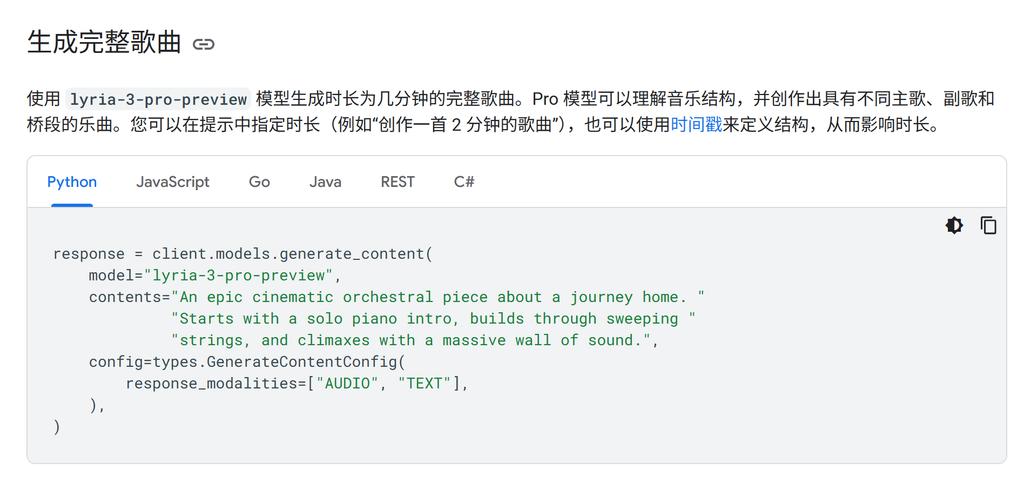
Introduction to Lyria 3 Pro on the API website (Source: Gemini API)
On the consumer side, Google's AI video creation app Google Vids has started to open Lyria 3 and Lyria 3 Pro to Google Workspace enterprise customers and Google AI Pro & Ultra paid subscribers this week. Users can add customized soundtracks to marketing videos, creative projects, etc. In the Gemini application, paid subscribers can now also use Lyria 3 Pro to generate longer music works, which are suitable for scenarios such as vlogs, podcasts, and teaching videos.
In addition, Google's previously launched collaborative music creation tool ProducerAI is also equipped with Lyria 3 Pro. Google said that ProducerAI is built by musicians. After being equipped with the new model, it provides an Agent - style experience, which can help artists, producers, and songwriters iterate on complete songs at all levels. It is currently open to free and paid users worldwide.
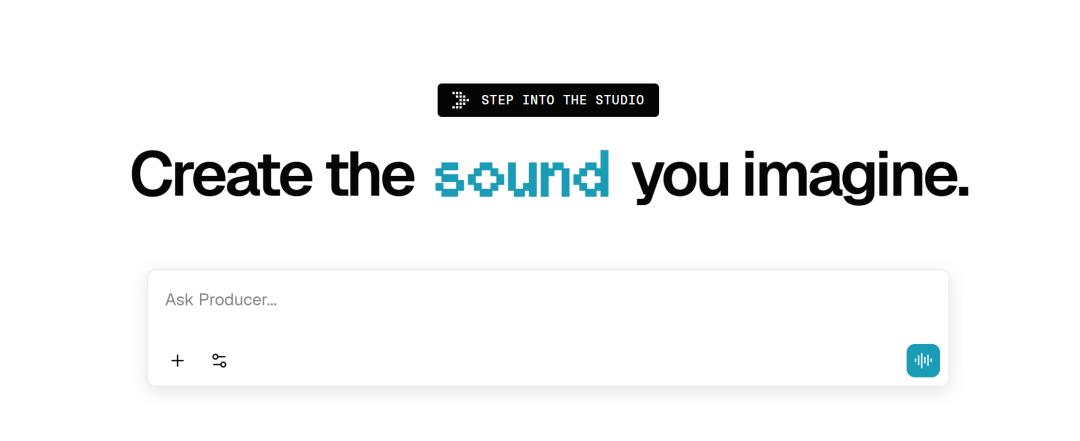
The collaborative music creation tool ProducerAI (Source: ProducerAI)
02. Grammy - winning producer takes the lead, Google polishes the Lyria 3 series through "industry co - creation"
Google emphasized that during the development of Lyria 3, it continuously collaborated deeply with the music industry. Previously, Google provided a set of experimental tools for musicians, producers, and songwriters through the Music AI Sandbox project. The feedback obtained from these collaborations had a profound impact on the R & D of Lyria 3.
In terms of practical application, Grammy - winning producer Yung Spielburg has used Lyria in the soundtrack creation process of Google DeepMind's short film "Dear Upstairs Neighbors".
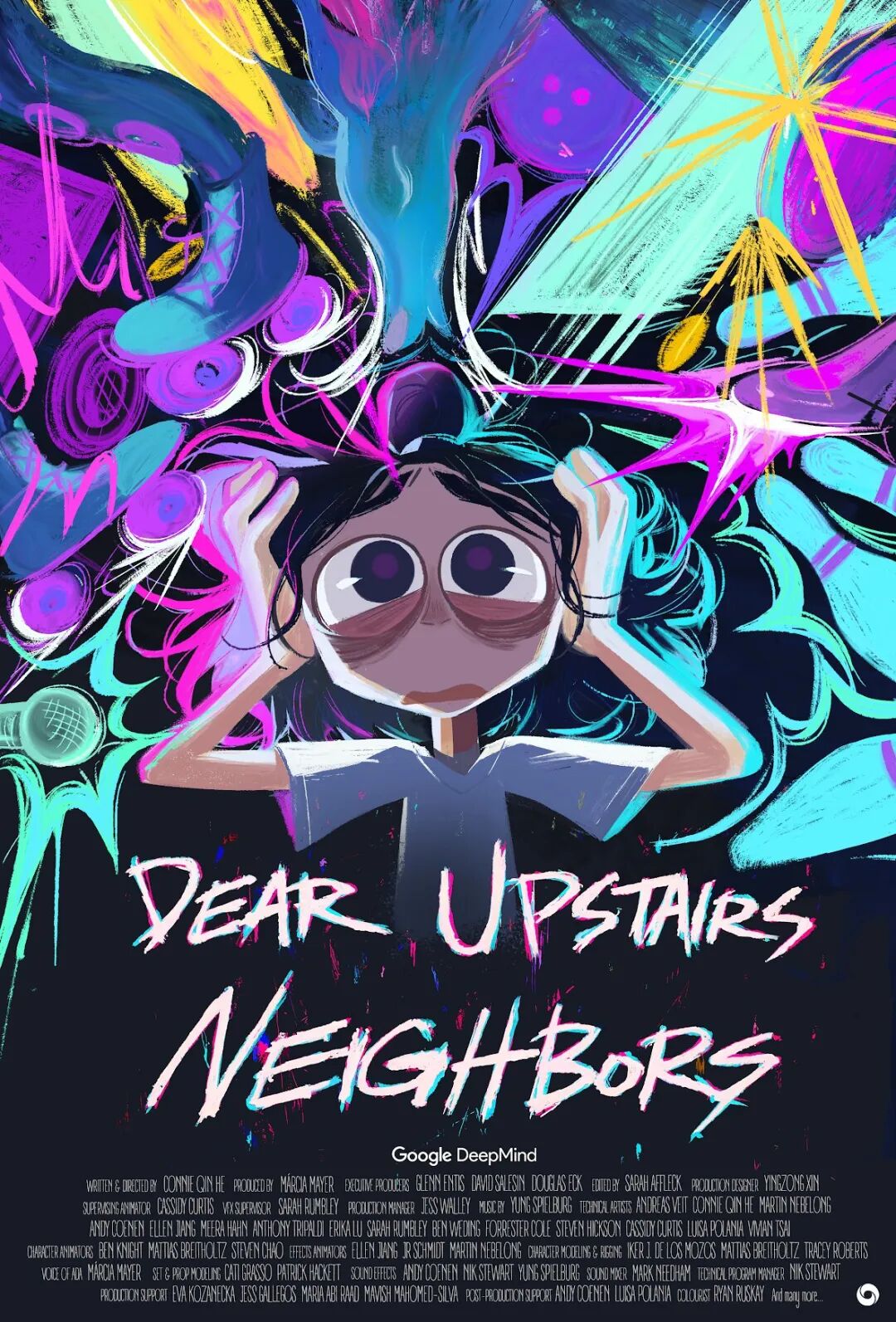
Poster of Google DeepMind's short film "Dear Upstairs Neighbors" (Source: Google)
Well - known DJ and producer François K is also using Lyria for iterative creation, and his works are about to be released. François K said in his evaluation: "After exploring a large number of music tools, the progress of Lyria 3 is amazing. Its fidelity and musicality are strong. The way I use generative AI tools has never been 'one - click generation'. Instead, I use it as a multi - functional component in my arsenal to polish my creativity with higher realism and precision."
03. Responsibility mechanism: Do not imitate artists' styles, all outputs are embedded with invisible watermarks
In terms of copyright liability, Google has set up multiple protections for Lyria 3. In terms of training data, Lyria 3 uses materials that YouTube and Google have the right to use in accordance with the terms of service, cooperation agreements, and applicable laws. In terms of artist protection, Lyria 3 and Gemini will not imitate the styles of specific artists. When users enter the name of a certain creator in the prompt, the model will only use it as a broad source of inspiration rather than replicating the style.
In addition, the system will also compare and filter the generated content to prevent the output from being highly similar to existing works. All audio generated by Lyria 3 and Lyria 3 Pro is embedded with a SynthID invisible watermark to identify AI - generated content.
04. Conclusion: From "able to generate" to "able to be commercialized", the real competition point of AI music has just arrived
Lyria 3 Pro has extended the duration of AI - generated music from 30 seconds to 3 minutes. AI music has moved from demos to complete works. Previously, AI music startups such as Suno and Udio have achieved a considerable user base through community promotion, but the common problem they face is that the ceiling of generation quality is limited by the model's capabilities.
When AI can generate game soundtracks, advertising music, and short - video BGM in batches, the first to be impacted is the copyright music library market. The "massive standardized soundtracks" on which platforms such as Epidemic Sound and Artlist rely for survival are exactly the categories that AI can most easily replace. The fact that Grammy - winning producers are the first to adopt AI also sends another signal: professional musicians no longer regard AI as a "competitor" but as a production tool. The creative process of the music industry is being reshaped. Of course, issues such as copyright ownership, the legal boundaries of style imitation, and the squeezing of the original creative ecosystem by AI - generated content still hang like the Sword of Damocles over the entire industry.
However, we can find that the competition in AI music is no longer about "whether it can generate", but about "who can enter the real commercial scenario first". In this sense, the competition has just begun.
This article is from the WeChat official account "TechNode" (ID: zhidxcom). Author: Yang Jingli, Editor: Li Shuiqing. Republished by 36Kr with permission.