Fundamentally changing the way of working, the value creation model, and the decision-making mechanism - AI is accelerating the disruption of everything.
The logic of global economic and social operation is being reshaped by AI.
Citi points out that in the decision-making mechanism, "Agentic AI" is transforming from an auxiliary tool into an autonomous decision-maker for independently executing tasks such as financial transactions; in terms of value creation, AI agents are breaking down the traditional SEO traffic distribution funnel, giving rise to the "Do It For Me" economy, and forcing business value to shift towards API interfaces; in terms of work methods, embodied intelligence is crossing the physical divide, and it is estimated that hundreds of millions of humanoid robots will reshape the global labor market by 2050.
As AI evolves from a single-task tool to an "Agentic" entity with autonomous decision-making capabilities, a structural transformation that reshapes the global labor force, computing infrastructure, and financial system has arrived.
Citigroup recently released a in - depth and significant report titled "Supercharged: AI and the New Age of Disruption". The report indicates that the evolution speed and scale of this wave of AI - driven technological trends have broken historical patterns.
Previous technological revolutions usually took decades to be digested. But today, AI is reshaping the operating logic of various industries, institutions, and even the entire society in real - time.
Yishai Fransis and Amit Nayyar, co - heads of European technology at the bank, stated bluntly in the preface of the report: "Elementary task - based systems have given way to powerful models. Without exaggeration, they will fundamentally change our way of life and challenge long - held beliefs about human experience."
The key to understanding this transformation is no longer about "what code a large model can write", but rather about seeing how it reconstructs the enterprise's technology stack, how it disrupts the Internet's traffic monetization funnel, and how it breaks through the physical ceiling of classical computing.
From a market perspective, the old investment narratives are no longer effective, and new capital flows have emerged.
01 Re - evaluation of Computing Infrastructure: The Peak of Classical Computing and the "Doubly Exponential" Leap of Quantum Computing
The market's enthusiasm for AI is most directly reflected in the huge capital expenditure.
The research and analysis in the report show that the annual capital expenditure on AI infrastructure, networks, and data pipelines globally has exceeded hundreds of billions of dollars. As enterprise - level AI applications shift from pilot projects to actual production, this investment scale continues to expand.
However, this brute - force "stacking of computing power" model is hitting a hard physical wall.
For half a century, classical computing has followed Moore's Law, with the number of transistors doubling every two years. But now, the miniaturization of transistors is approaching the physical limit.
"Computing is at a turning point," the report points out. "Classical architectures can no longer provide the step - by - step efficiency improvements required for large - scale AI training and high - fidelity simulations."

The picture is from the Citi report, the same below
This has triggered a structural transformation. Governments and enterprises are shifting their computing roadmaps towards dedicated accelerators, neuromorphic designs, and quantum computing systems.
For the capital market, infrastructure is no longer just computer rooms and servers; it has become a key national infrastructure for competition among countries. The anchor point of market sentiment is evolving from "who can get the most NVIDIA chips" to "who can solve the scarcity of computing power and energy."
Computing power and capital will be the most important constraints limiting AI progress.
To break through these constraints, quantum computing is accelerating from theory to practice. The report points out that quantum systems are advancing at a "doubly exponential" speed.
The greatest innovation opportunity in the future is not to completely replace existing systems with quantum computers, but rather a "hybrid system". That is, combining classical computing, accelerators, and quantum subsystems. In this framework, quantum computing will become a "capability multiplier" for AI and other computing - intensive applications.
02 The Economics of Embodied Intelligence: Autonomous Driving and Humanoid Robots Reshape the Labor Force
If AI remains only on digital screens, its impact on the macro - economy is limited. What the market really expects is the "implementation" of AI in the physical world.
Autonomous driving and humanoid robots are the core carriers of this narrative. The common theme in these two fields is "embodied AI" - enabling AI to have a body for perception, decision - making, and action in the real world.
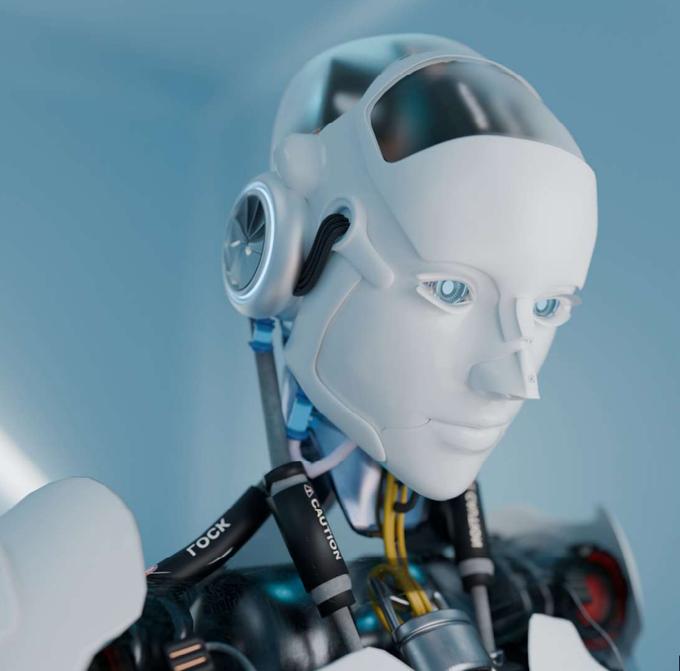
In the field of mobile travel, autonomous driving is shifting from "Advanced Driver - Assistance Systems (ADAS)" to "Agentic". AI is no longer just reminding drivers but can independently perceive, make decisions, and complete complex driving tasks.
What supports this transformation is the improvement of AI's multi - modal perception ability and the ability of virtual simulation environments to provide massive training data for models. From a macro - economic perspective, autonomous driving is regarded as a key solution to low logistics efficiency and labor substitution.
What is even more disruptive is the rise of humanoid robots.
Citi predicts that as hardware and training costs decrease, humanoid robots will move from niche markets to general labor platforms.
"We expect that by 2050, hundreds of millions of humanoid robots will appear in the global labor market. Their emergence will be driven by both cost reduction and ability improvement."
The aging population and the long - term labor shortage in the logistics, nursing, and construction industries have created a rigid demand for robot labor. By the middle of this century, this is destined to evolve into a super - market worth trillions of dollars.
Investors' focus has begun to shift towards ecosystems that can achieve "software - defined robots", master multi - modal AI, and have low - cost sensing technologies.
03 Deconstruction of Business Models: The Fragmentation of the Traffic Funnel and the "Do It For Me" Economy
If in the physical world, AI replaces blue - collar workers and drivers; then in the digital world, Agentic AI is disrupting the foundation of the entire Internet business model.
Traditional Internet trading platforms (such as classified ads, e - commerce, and online travel) rely heavily on Search Engine Optimization (SEO). The classic funnel for Internet traffic monetization in the past two decades has been: users search - click on links - browse and compare prices - place orders.
But this logic is collapsing.
"Agentic discovery is fragmenting the top of the funnel. AI assistants are increasingly acting on behalf of users for curation, comparison, and transactions, shifting traffic from traditional SEO - based interfaces to conversational and task - driven interfaces."
What does this mean? It means that the economics of users' access to traffic has been rewritten. The first - mover advantage of brands is weakened. If AI directly tells you "which car offers the best cost - performance and makes a test - drive appointment for you", users will no longer browse through pages on car information websites.
This poses an extremely fatal "prisoner's dilemma" for all Internet platforms.
Platforms can either choose to cooperate with AI agents, open APIs and structured data, but this faces the risk of brand marginalization and demand interception; or they can choose to resist, but may completely lose the massive high - frequency transactions brought by AI.
The report believes that in "high - consideration" consumer categories such as cars, real estate, and job hunting, AI will directly integrate identity verification, financing, insurance, and logistics, significantly shortening the long process from intention to transaction.
Along with this is the complete reconstruction of the payment system.
The "Do It For Me" economy is on the rise. In this ecosystem, intelligent AI agents conduct procurement, negotiation, and transactions on behalf of consumers and enterprises.

AI - driven systems can not only support instantaneous transaction routing and real - time fraud detection but also perform programmable operations using smart contracts. Meanwhile, stablecoins and tokenized deposits are reshaping the payment track.
This shift from a fragmented, batch - processing - based system to an API - driven, cloud - native infrastructure will enable 24/7 settlement and deeply embed payments into business processes.
For traditional banks and new digital banks (Neobanks), the era of just "acquiring customers" to tell stories is over, and the market focus has shifted to "profit or perish". If financial institutions cannot embed AI as a core capability into payment processes and risk management, they will face the risk of a serious erosion of their market share.
04 New Systemic Red Lines: Cyber Defense and AI Governance
On the other side of the productivity explosion is the systemic risk of security and governance. The weaponization of AI and the vulnerability of digital infrastructure are becoming key variables affecting macro - investment sentiment.
"Hybrid Warfare has become the new norm," Citi points out.
Modern conflicts have far exceeded the scope of traditional military forces, with cyber operations, information manipulation, and economic pressure intertwined. Cyber warfare is no longer just the responsibility of the security department but is at the core of corporate strategy and national economic planning.
As geopolitical tensions intensify, "information superiority" - the ability to ensure communication security, disrupt opponents' networks, and control strategic narratives - is becoming a decisive competitive advantage.
Therefore, global defense planners no longer rely on a single "silver - bullet" technology but emphasize a "layered, cost - effective defense model" integrating AI.
On the corporate side, when the scale of AI deployment reaches tens of thousands of employees, "Responsible AI" has changed from a slogan to a crucial compliance threshold.
The biggest bottleneck in effectively deploying AI lies in data quality, model risk management, and cross - functional AI literacy. AI companies that can establish a strict governance framework, ensure transparency, control risks, and achieve large - scale expansion are likely to become true global giants.
This is an era full of disruptions. In this supercharged cycle, the original moats are being filled, and new moats are being dug by computing power, algorithms, data structures, and physical perception capabilities.
This article is from the WeChat official account "Hard AI", author: Focused on technology R & D. Republished by 36Kr with authorization.