We've all misunderstood foldable screens.
Consumer electronics are driven by silicon but also follow the natural laws of the carbon - based world: survival of the fittest.
The mouse is over 60 years old, yet its form has hardly changed. In the 70 - year history of computers, they have evolved from filling a room to becoming household appliances and even personal belongings for everyone.
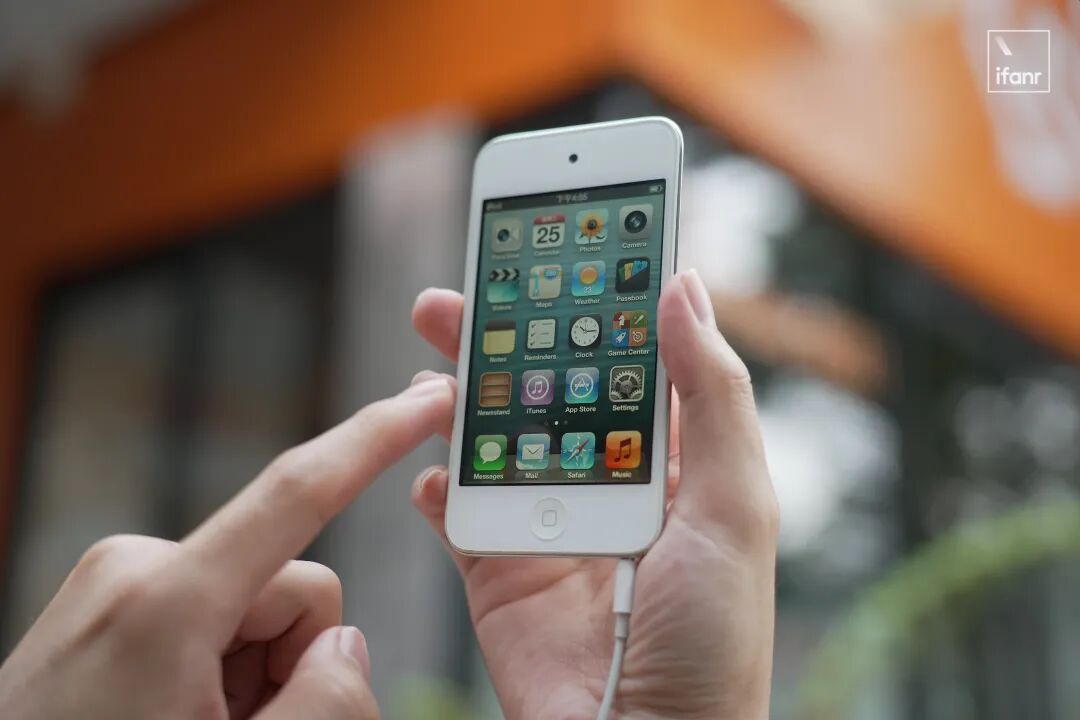
Many products like pagers, GPS navigation devices, and iPods didn't even have the chance to evolve before being replaced by other products and becoming the memories of a generation.
In the "Rearview Mirror of Tomorrow" column of ifanr, we will continuously examine those products of tomorrow that are in the process of evolution: From what ideas are they born? How do they survive in the face of change? How do they shape new lifestyles, and how are they changed by users?
There is always a group of people in life who can't accept any electronic products they consider "immature at this stage".
My friend K is a prime example of this group. He waited two and a half years from EarPods to AirPods and four years from the Home button to the "swipe - up to unlock" feature.
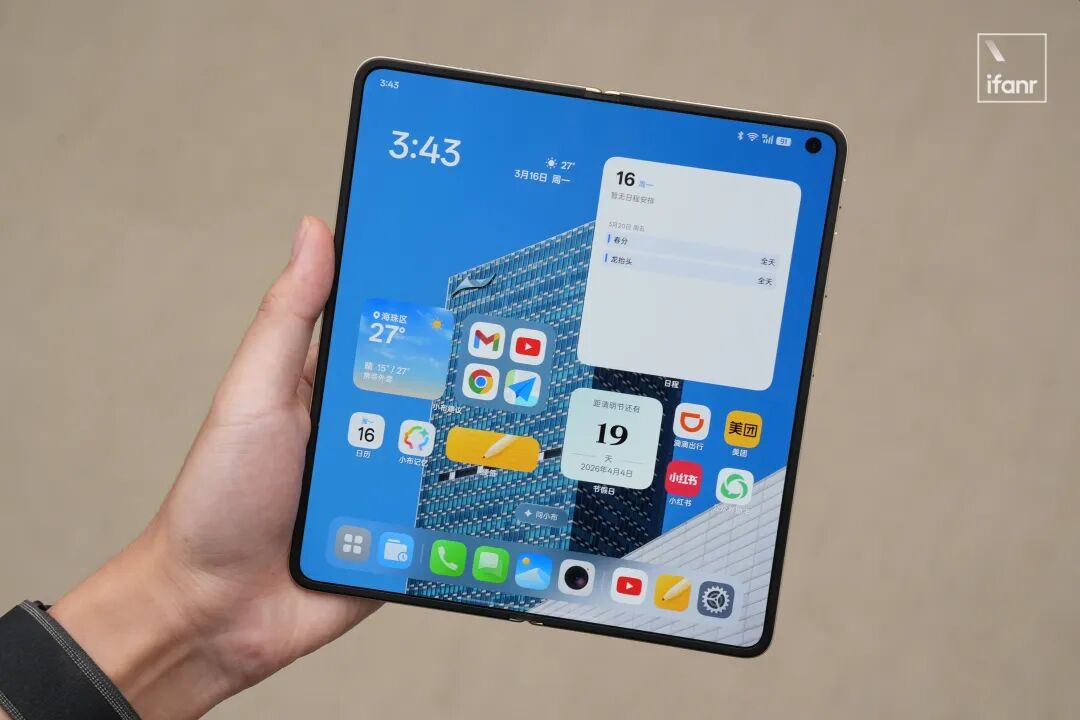
Recently, he took a fancy to the OPPO Find N6 in my hand.
As a friend of mine, who is an early adopter of consumer electronics technology products, K is no stranger to foldable screens.
For example, when I was dealing with a second - hand Z Flip a few years ago, he made the following comment:
I originally thought it could unfold into a seamless screen, but the crease always makes me feel like it's a "patched screen".
After K touched the Find N6, I could clearly see the wavering of this staunch conservative -
Compared with the previous Z Flip, the screen of the Find N6 is literally a product of a different era.
The Expectation Gap of Foldable Screens
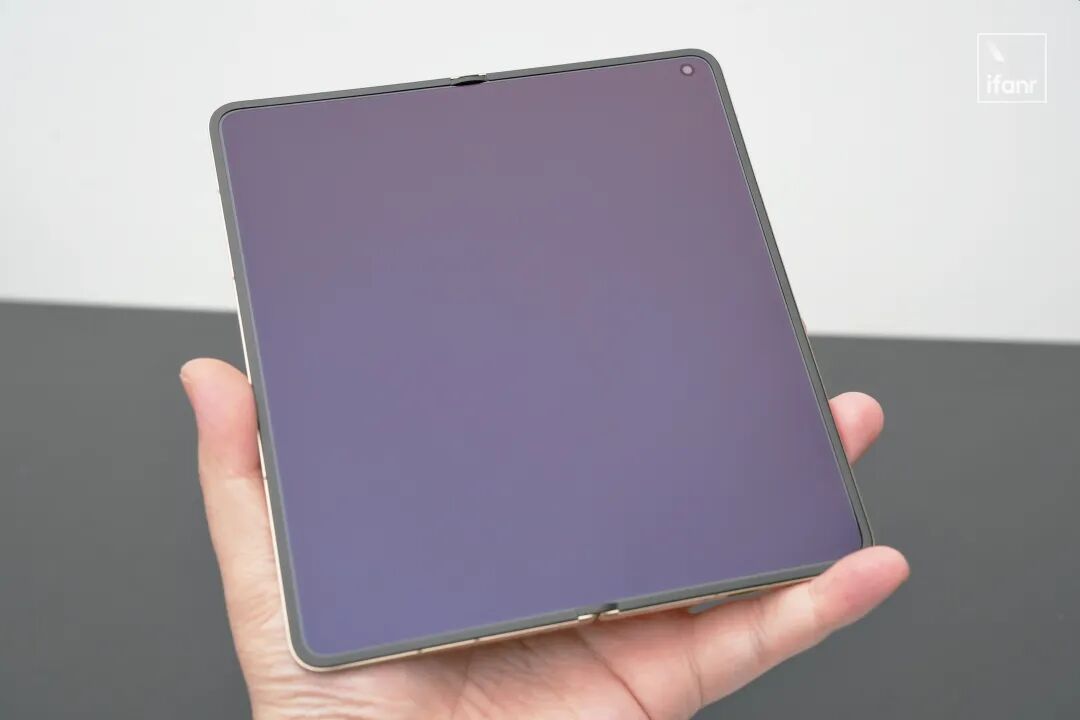
The most prominent and remarkable feature of this year's OPPO Find N6 is its internal screen, which is claimed to have an "invisible crease".
However, just as K commented on the Z Flip, there is actually another set of hidden logic in the relationship between "foldable screens" and "creases":
On the surface, people can't accept the creases because they ruin the visual and tactile experience, "breaking the sense of immersion" during use.
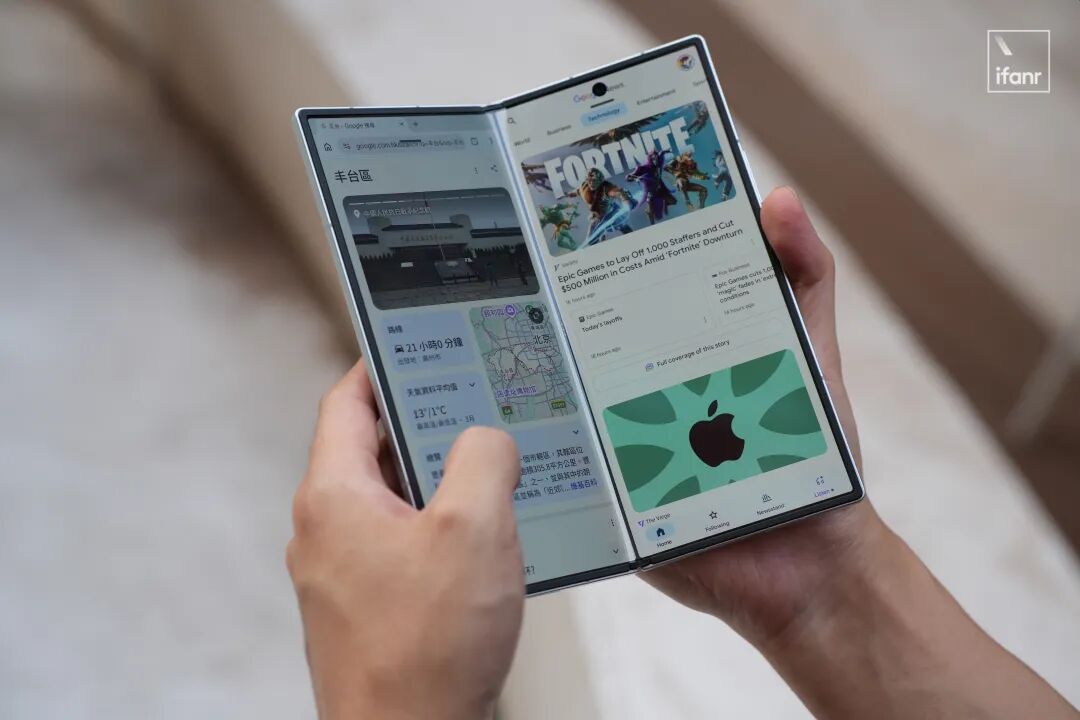
But getting back to the essence of the problem, the existence of foldable screens is actually to fulfill our wild fantasy that "humans will eventually be able to take out a 72 - inch TV from their pockets" -
The key of a foldable - screen phone has never been its foldability, but the ability to fit a large screen in your pocket!
In other words, the previous criticism of "creases" often wrongly focused on the level of "creases ruining the foldable - screen experience".
What creases really destroy is our subconscious perception of a complete screen:
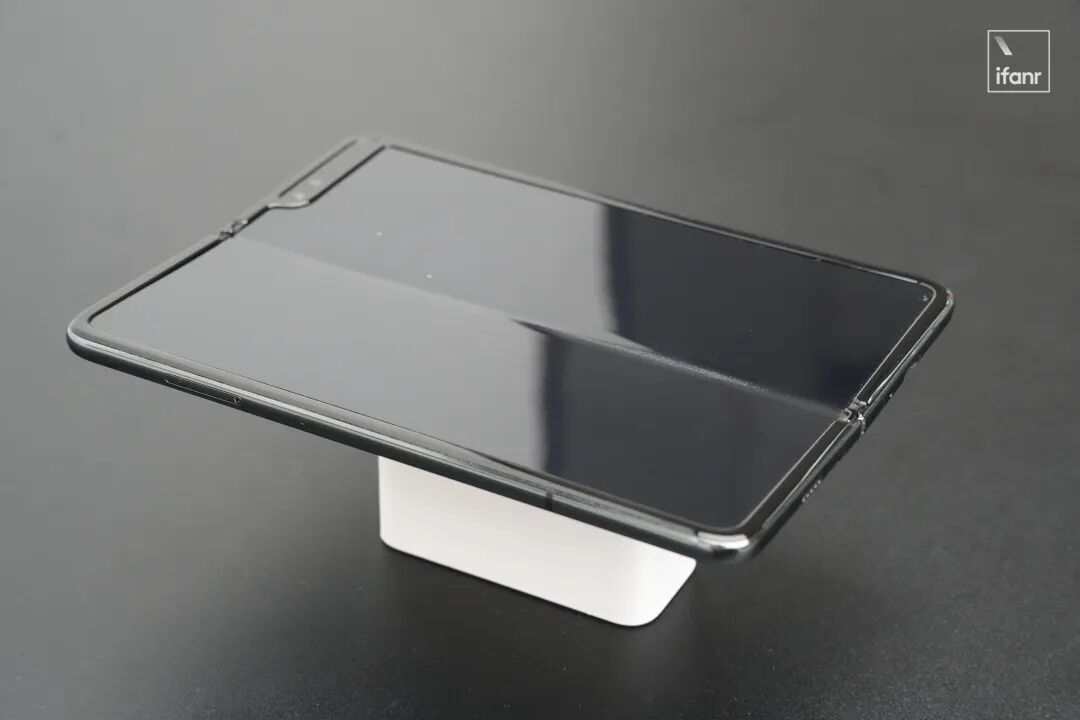
To make matters worse, the marketing methods of mobile phone manufacturers for foldable screens in the past few years have also contributed to this misperception.
When looking at the press conferences of foldable - screen models now, manufacturers often go to great lengths to promote features such as "floating windows", "workbenches", and "multi - windows", completely ignoring how inconvenient it is to operate these "ticket - sized" windows.
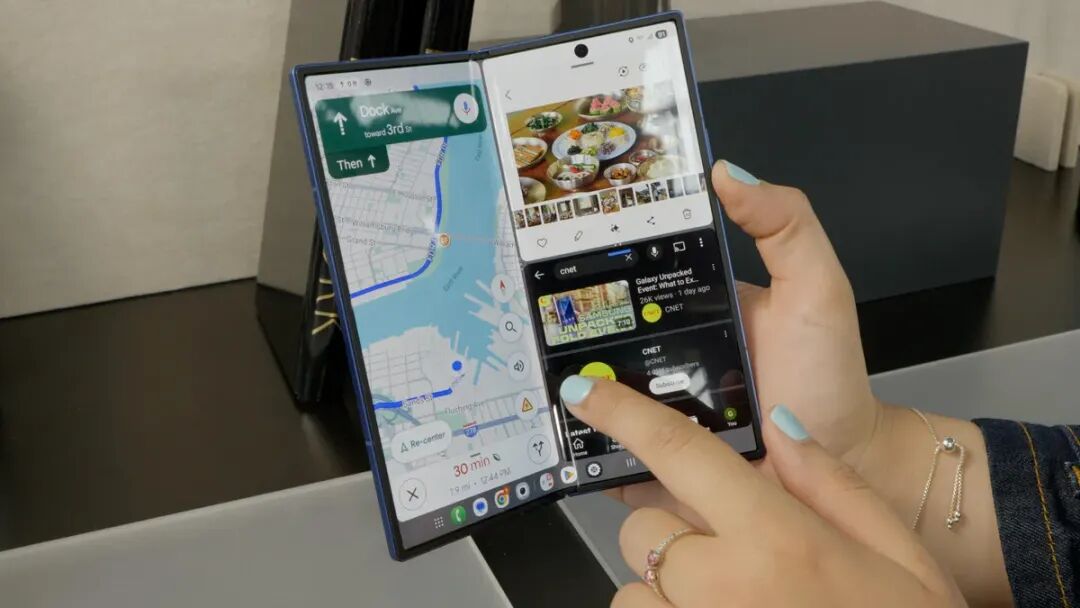
Image | CNET
Looking back at people's expectations when foldable screens first emerged in the market in 2019 and 2020, it's easy to find that:
Now we're all focused on how to split an 8 - inch screen into two or even three screens for use, completely forgetting that what we hoped for back then was a single 8 - inch large screen.
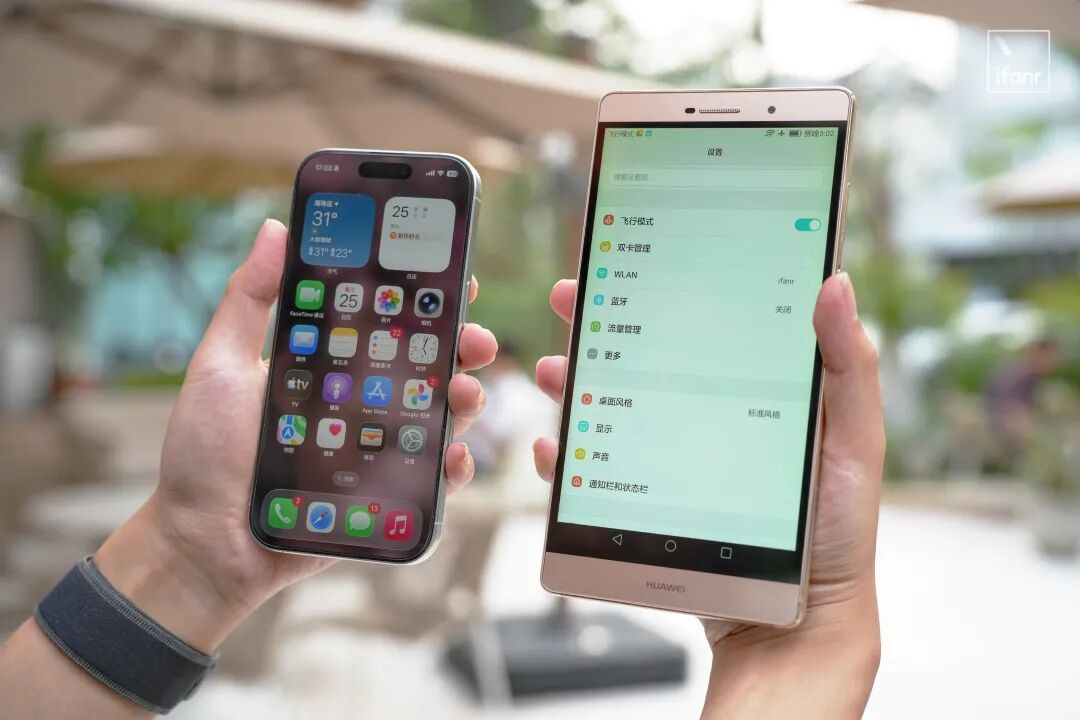
What the "crease" destroys is precisely this layer of experience. The reason why the Find N6 made my conservative friend waver is that it gives a strong hint of a complete large screen.
What Did the Find N6 Do Right?
We've briefly introduced in the product review what measures OPPO took to make the once - prominent crease of the Find N6 almost invisible.
Related Reading: The First "Crease - Free" Phone Comes for All Those "Afraid to Fold" | OPPO Find N6 Review
As the usage time increases, the product is officially on sale, and more technical details surface, we can finally systematically understand the technical route OPPO has chosen.
To put it simply: The Find N6 can make the crease shallower or even self - repair, not because of some alien technology, but by maximizing the existing flexible - screen support technology.
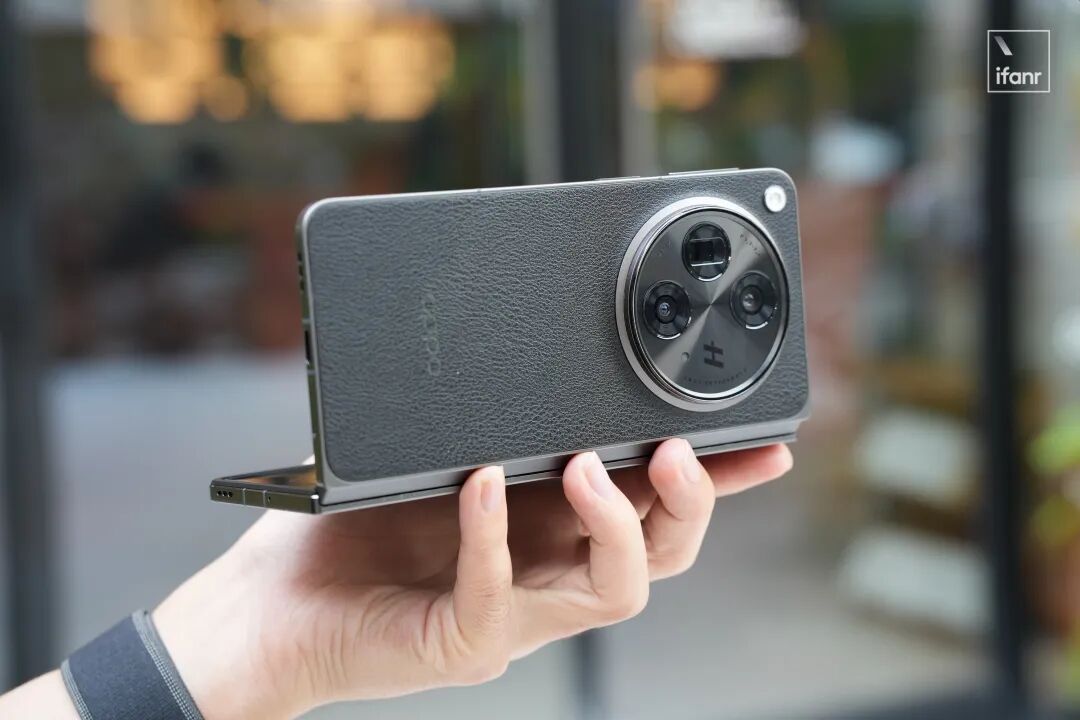
For example, although the hinge of the Find N6 is just a mechanical structure that controls the opening and closing of the phone body, it also plays a crucial role in the flatness of the screen.
In previous foldable - screen mobile phones, the central hinge needed to connect the two sides with several pairs of gear torsion structures to provide sufficient friction and stability for the opening, closing, and hovering postures of the phone body.
Due to factors such as volume, thickness, and structural design, most previous models only had three sets of torsion structures. For example, last year's Find N5 used this "tri - axis" hinge:
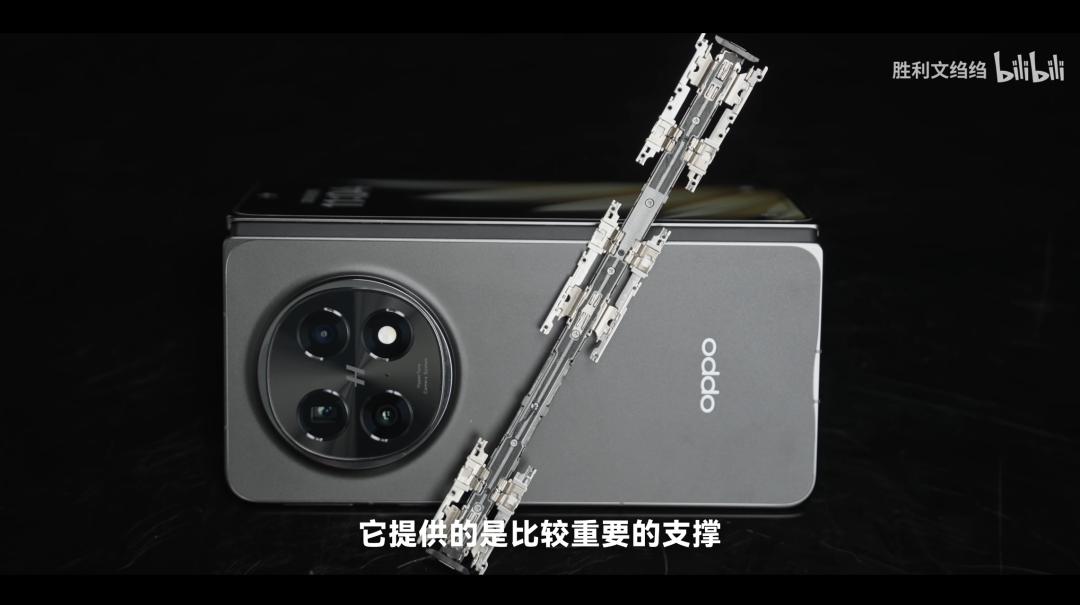
Image | Bilibili @Victory Wenzhou
Although this design saves space, the unequal spacing between the three sets of torsion structures leads to uneven support of the hinge for the screen, and it's easy to have the problem of the crease being "deeper at the top and shallower at the bottom".
With the Find N6, OPPO chose a simple yet difficult way to solve this problem - Since the tri - axis hinge provides uneven support, replace it with a quad - axis hinge.
Although the structural design of the Find N6's phone body has become more complex, the hinge's support for the screen has become much more even, allowing engineers to focus on reducing the depth of the crease:
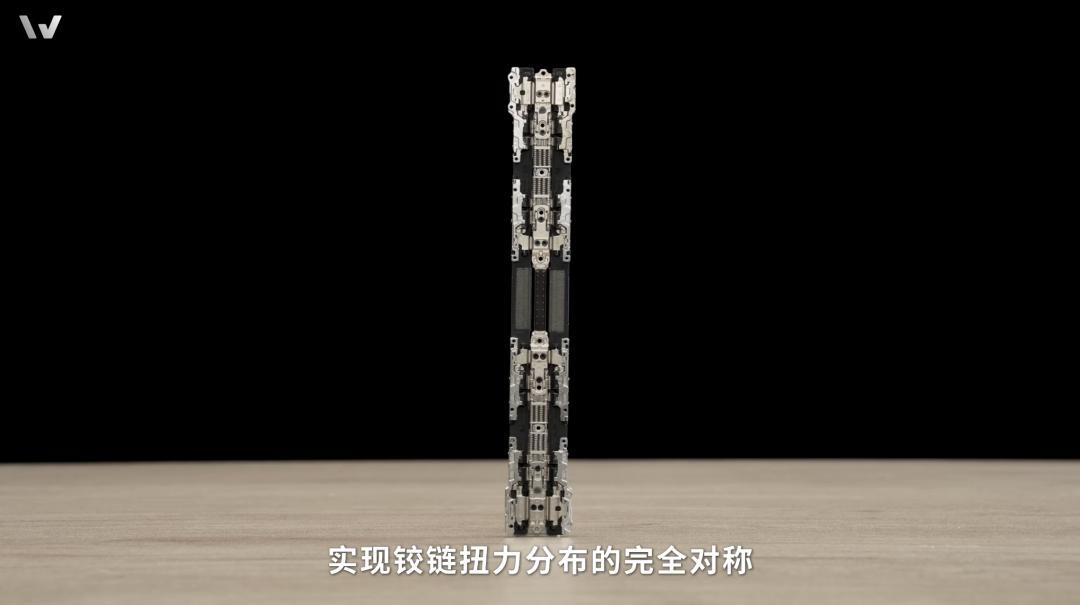
Image | Bilibili @Differential WekiHome
After solving the problem of even support, the next step is to solve the problem of flat support.
Although manufacturers will flatten the top layer of the hinge to make all the parts form a flat surface when unfolded, the slight tolerances during production and assembly still result in height differences between the parts, giving the screen a chance to sink.
To solve this problem, OPPO chose to do something that all model enthusiasts would do: Spray a layer of putty.
More precisely, it uses a three - dimensional ink - jet printing technology with extremely high flow - control accuracy, combined with 3D scanning, to spray filler on the depressions of the hinge and then perform light curing to provide more support points for the screen.
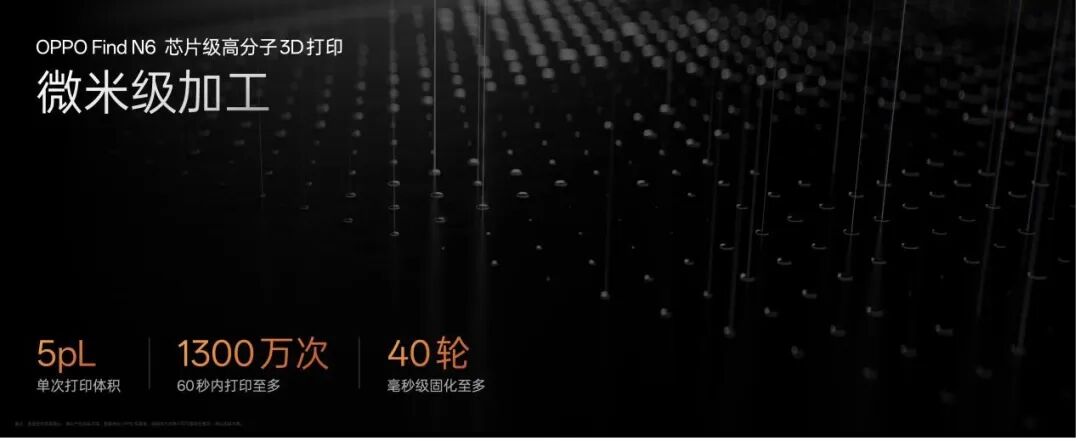
Image | OPPO
This technology is also "device - specific". OPPO even set up a separate production line to individually "level" the hinge of each Find N6 leaving the factory:
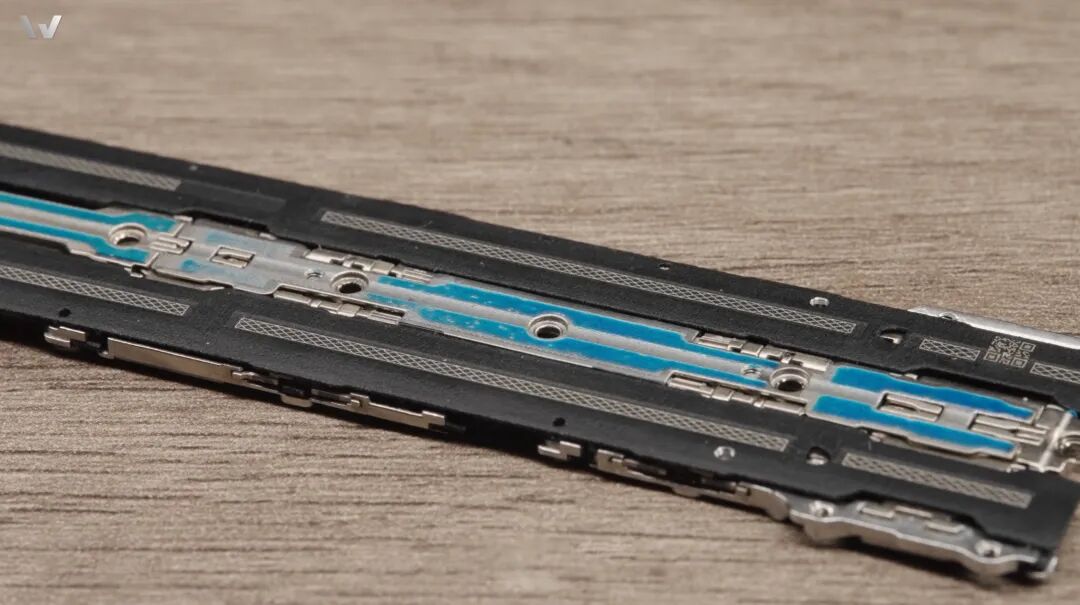
Image | Bilibili @Differential WekiHome
On the other hand, the screen of the Find N6 itself also plays a very important role.
After all, the formation of the crease is not only due to the insufficient support of the hinge. "The screen sinking on its own" is also an important factor -
Although the surface screen can be made of flexible materials, the support plate below the screen cannot directly withstand such a large - angle and high - intensity bending.
Therefore, whether it's stainless - steel foil, carbon fiber, titanium alloy, or spliced materials, a mesh structure needs to be etched in the middle to release stress:
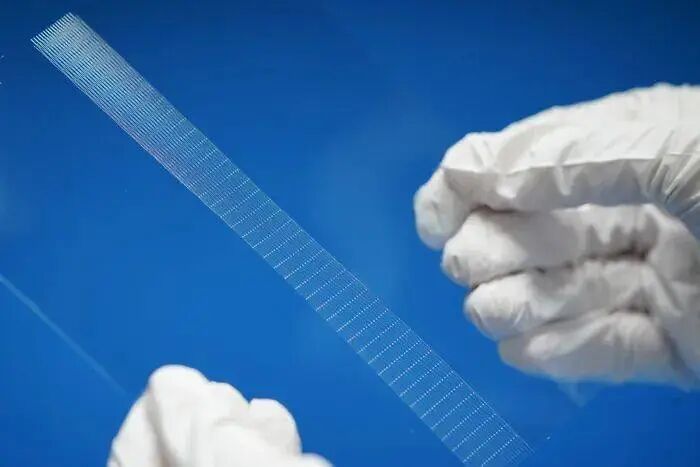
Glass - material support plate developed by eCONY, the supplier of Samsung's ultra - thin glass
But the hollowed - out mesh of the support plate is exactly at the position of the foldable - screen crease, which leads to a contradiction: The mesh structure must be soft enough to bend, but if it's too soft, it will be bent by the screen, deepening the crease.
To solve this problem, the Find N6 addresses the issue from two aspects: the process of the support mesh and the screen material.
On the one hand, although the support mesh of the Find N6 is still made of traditional metal, it uses the same etching process as Samsung's, reducing the slit width of the support mesh from 0.1mm to about 0.03mm:
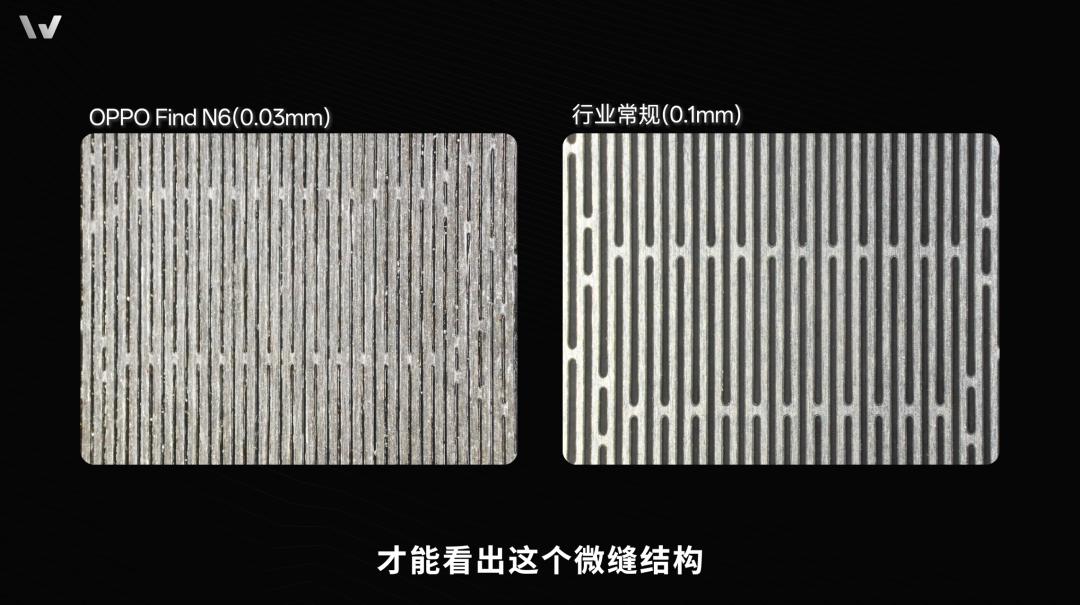
Image | Bilibili @Differential WekiHome
With smaller slits, the support mesh has higher strength, providing stronger support for the upper - layer flexible material when the screen is unfolded, making the crease less "concave".
At the same time, the Find N6 also increases the thickness of the UTG glass on the screen surface and the composition of the optical adhesive (OCA) between each layer of the screen.
In addition to increasing the screen strength, the thicker UTG glass also makes the screen less likely to sink and form a crease. The improved optical adhesive can reduce the creep between the layers of the OLED screen and provide a margin for rebound after flattening, allowing the crease to "self - repair" slowly.
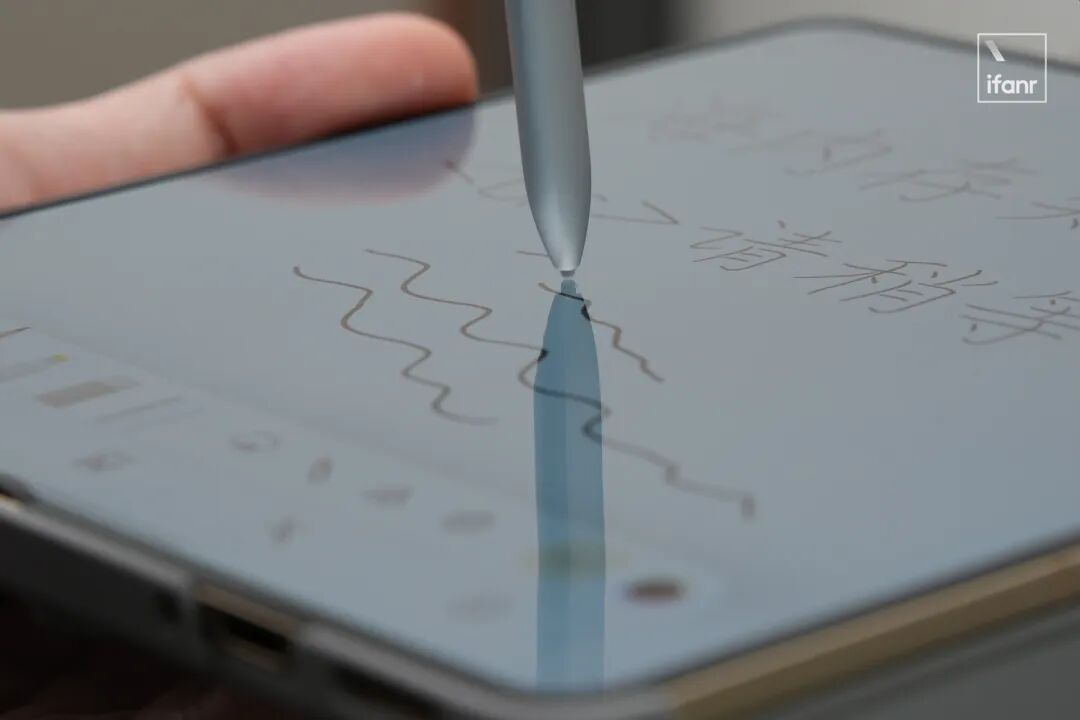
In this way, relying on the "bottom - to - top" cooperation of the hinge and the screen, the Find N6 has indeed achieved the once - unattainable dream: A foldable screen with an almost invisible crease.