The most comprehensive introduction to NTN
In recent years, the concept of NTN has become extremely popular.
So, what exactly is NTN? Why has NTN gained such popularity? Will it change the landscape of the communications industry?
In today's article, let's find out.
What is NTN
The full name of NTN is Non-Terrestrial Networks, which refers to non-terrestrial networks.
Terrestrial networks are the cellular base station networks and Wi-Fi networks that we use every day. As the name suggests, non-terrestrial networks are networks that are not deployed on the ground, but rather "networks in the sky."
Many people equate NTN with satellite communications. In fact, this is not rigorous.
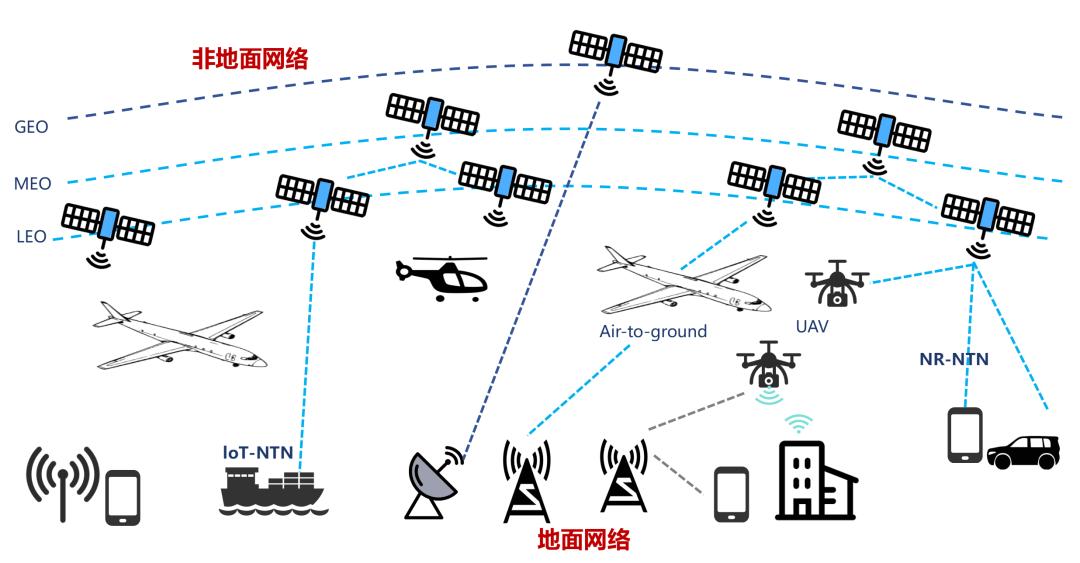
Strictly speaking, NTN includes various levels of communication network systems such as satellites (LEO - Low Earth Orbit, MEO - Medium Earth Orbit, GEO - Geostationary Earth Orbit), high-altitude platforms (High-Altitude Platforms, HAPS, such as stratospheric airships and balloons), drones, and even future lunar communication relay nodes.
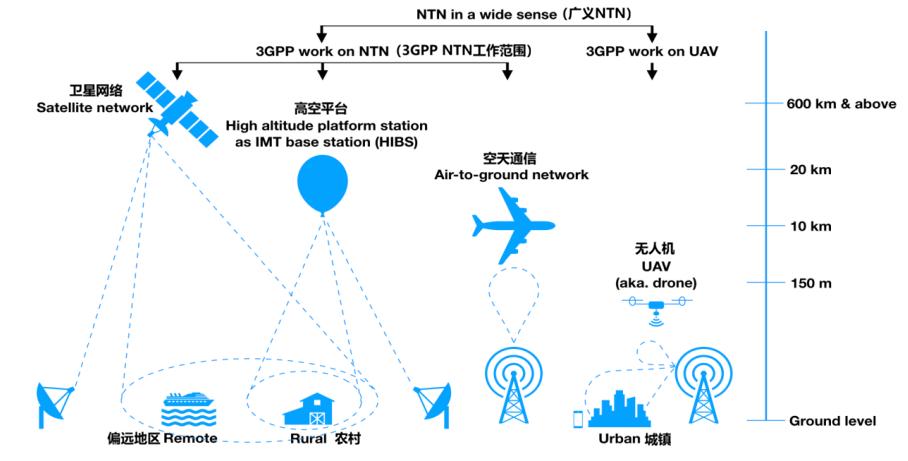
In other words, NTN is a three-dimensional communication network that is "hierarchically heterogeneous and collaborates on demand," aiming to achieve true full-area coverage.
Currently, the main research direction of NTN is temporarily focused on satellite platforms. Therefore, NTN can be tentatively understood as "a non-terrestrial network mainly based on satellites."
Why Develop NTN
The development of NTN is driven by demand. In general, it can be summarized in four words - blind spot coverage.
As we all know, we have established a well-developed terrestrial communication network on Earth, covering a large population.
However, the Earth is extremely large. For areas such as forests, deserts, Gobi deserts, mountains, and polar regions where few people go, due to construction conditions and costs, it is impossible to achieve effective coverage.
Taking China as an example, our terrestrial network is the most powerful in the world, achieving a population coverage rate of 99%. But what about the land coverage rate? It is only about 30%.
In addition to land, the bigger problems come from the ocean and the sky.
The ocean area of the Earth accounts for 71% of the Earth's surface area, and the network coverage rate is only 10% (offshore). For the sky, the terrestrial network can only provide very limited ATG (Air-to-Ground) services.
As the saying goes, "The higher you stand, the farther you can see." Placing signal transceiver facilities at a higher position can achieve "overlooking" wide-area coverage and eliminate the blind spots of the terrestrial network.
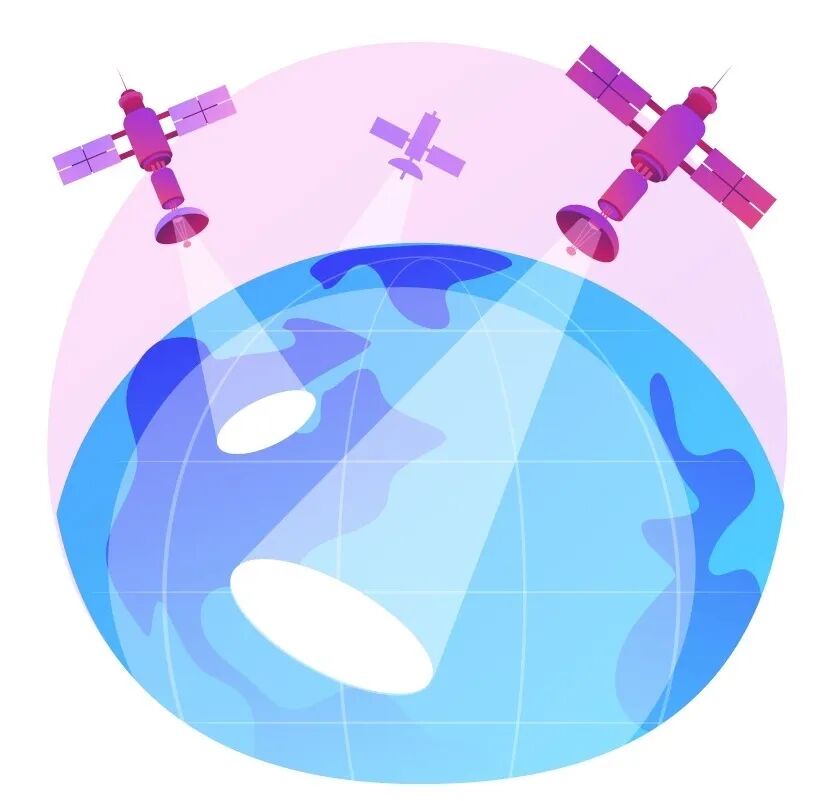
All along, the development paths of terrestrial networks and non-terrestrial networks have been independent of each other. Satellite communications have their own standards, frequency bands, terminals, and ecosystems. The entire technical system is relatively closed, belonging to a "small circle."
As the main promoter of terrestrial network technology standards, the 3GPP standards organization gradually realized when researching 4G/5G standards that the scope of human activities is constantly expanding. If the communication network is limited to terrestrial cellular base stations, it is doomed to be unable to break free from the constraints of geographical location and cannot meet the needs of various scenarios such as emergency communications, ocean shipping, polar scientific research, forest fire prevention, and low-altitude logistics.
Breaking down the barriers between terrestrial networks and non-terrestrial networks, fully integrating technologies such as satellite communications into terrestrial communications, expanding the boundaries of network connections, and building an "integrated communication network of air, space, land, and sea" has become an inevitable choice for 3GPP.
Traditional satellite communication companies are actually very willing to integrate with terrestrial networks.
On the one hand, terrestrial networks have a large user base, which means a larger market scale. On the other hand, terrestrial networks also have a mature large-scale industrial chain, which can create favorable conditions for the development of satellite communications from various dimensions such as terminals, protocols, and production.
The two hit it off. Thus, NTN was born.
Development and Evolution of NTN
NTN is the product of the in-depth integration of terrestrial networks and non-terrestrial networks. However, 3GPP is still mainly responsible for leading the way.
In 2017, when 3GPP was formulating the R15 standard (the first version of 5G), they launched research on NTN. At that time, they defined the NTN deployment scenarios and relevant system parameters, and studied the NTN channel model.
Later, in the R16 stage, 3GPP studied the integration architecture of satellites and 5G systems, as well as the design of NTN scenario solutions, which pointed the way for the work of relevant 3GPP technical specification groups.
In 2020, in the R17 stage, NTN made a major breakthrough.
R17 officially incorporated NTN into the 5G standard system, for the first time defining two architectures of satellite transparent forwarding and regenerative forwarding, and standardizing the access process for terminals to directly connect to satellites.
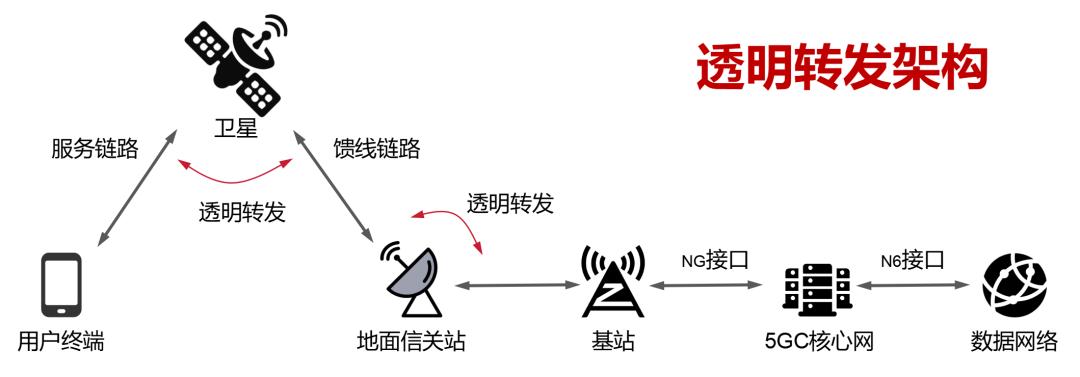
In the above architecture, the link between the satellite and the user is called the service link (Service Link). The link between the satellite and the gateway station is called the feeder link (Feeder Link), also known as the satellite radio interface (SRI).
In the satellite transparent forwarding architecture, the satellite only acts as a relay for radio frequency signals and does not perform any signal processing. Devices such as the NTN gateway on the ground are responsible for performing core functions such as signal demodulation, decoding, and protocol stack processing, and are the key hubs connecting the satellite and the terrestrial core network.
In this mode, the satellite does not need to be too complex. The system design is lighter and the deployment is faster, which significantly reduces the cost of satellite manufacturing and launch, and is especially suitable for large-scale deployment of low-orbit constellations.
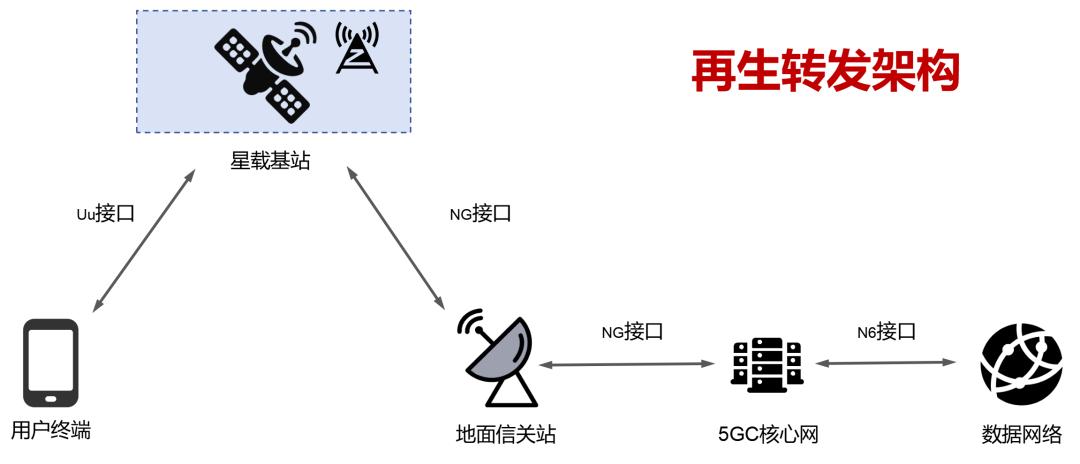
In the regenerative forwarding architecture, the satellite not only receives signals but also performs operations such as demodulation, decoding, routing, and even protocol processing. It is equivalent to the satellite assuming the function of a base station and truly becoming a "space base station."
It should be noted that the regenerative forwarding architecture can implement all the functions of a gNB (5G base station) on the satellite, or it can implement some functions, which is determined by the requirements and scenarios. For example, integrating the DU (Distributed Unit) function of a 5G base station onto the satellite and deploying the CU (Centralized Unit) function on the ground to form a hybrid architecture of "on-satellite DU + ground CU."
Different functional distributions will involve different specific networking, as shown in the following figure:
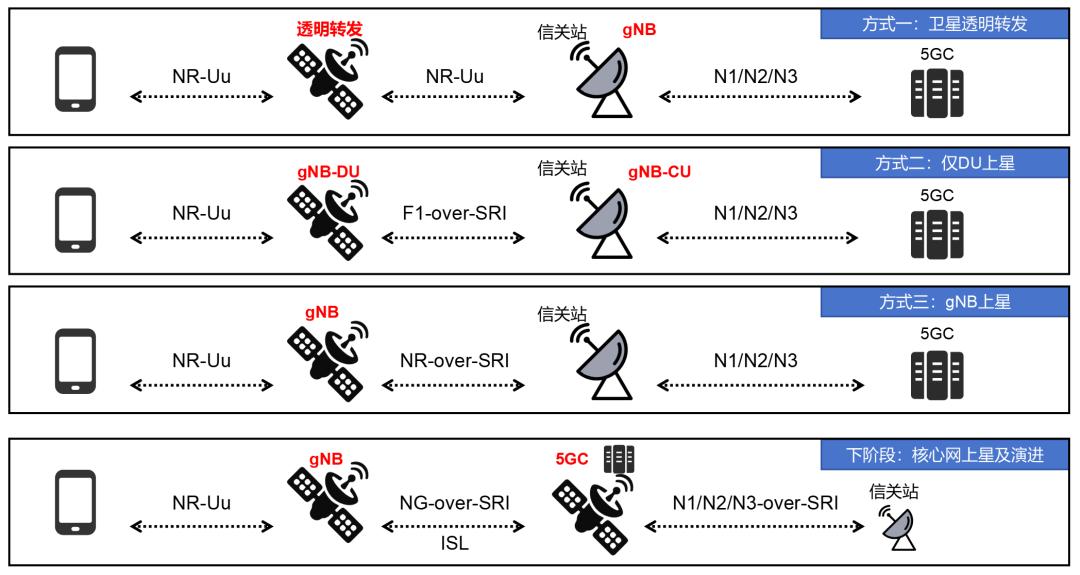
The regenerative forwarding architecture places higher requirements on the satellite's payload space, computing resources, and energy supply. However, it also improves the performance and flexibility of the network and enables more complex inter-satellite networking. The link between satellites is called the inter-satellite link (Inter-Satellite Link, ISL).
This mode is also equivalent to a form of edge computing ("capability sinking"), which moves the computing and intelligent capabilities to the orbit, making the communication link shorter, the delay lower, and the response more agile.
As the early stage of NTN, R17 focused on researching the improvement of the transparent forwarding architecture and mobile protocols and did not conduct in-depth research on the regenerative forwarding architecture. At this time, the priority was to quickly make NTN "usable."
Let's take a look at the classification of NTN in terms of applications.
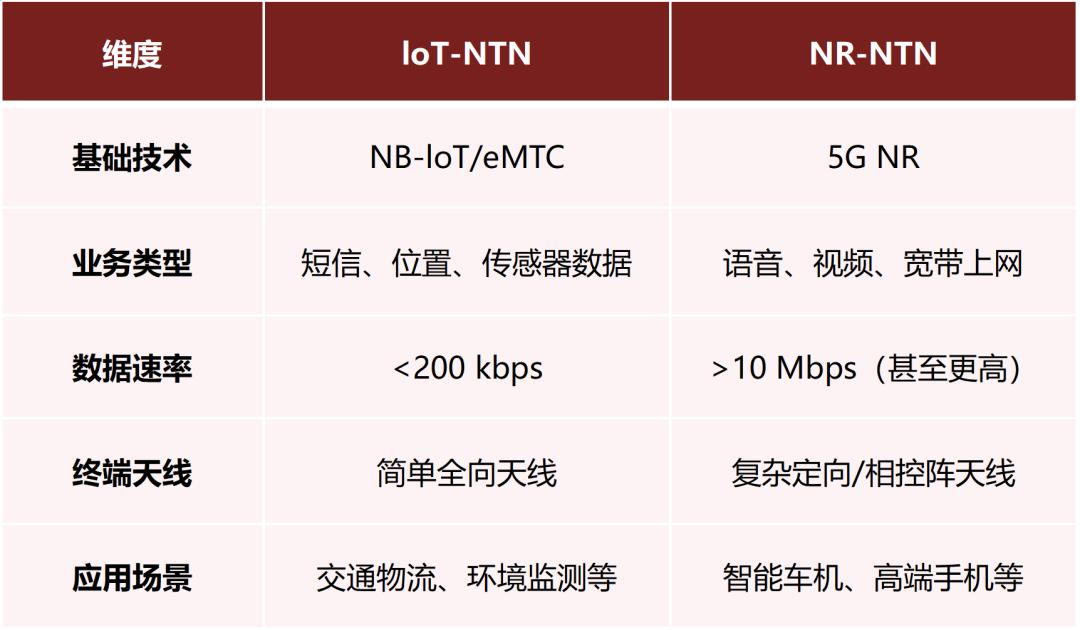
R17 enhanced the LTE NB-IoT (Narrowband Internet of Things) and eMTC (Enhanced Machine Type Communication) technologies, aiming to enable such Internet of Things devices to access the terrestrial mobile network through satellites to meet the needs of scenarios such as agriculture, environmental protection, and logistics.
Actually, as you can see, just like the three major scenarios of 5G, 5G NTN has also been subdivided into two major technical branches: NR-NTN and IoT-NTN.
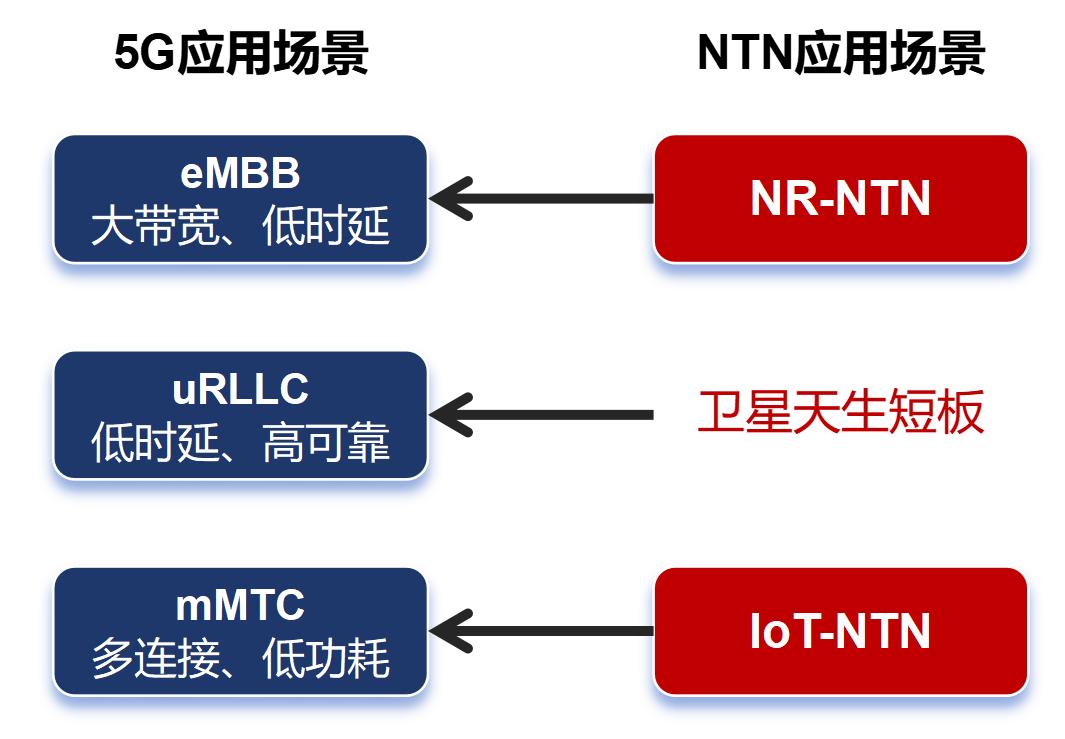
NR-NTN is comparable to 5G NR (eMBB scenario), achieving high bandwidth and low latency, targeting wide-area broadband access, and supporting high-throughput requirements such as high-definition video backhaul and remote collaboration.
IoT-NTN is comparable to NB-IoT and eMTC (mMTC scenario), focusing on the ubiquitous connection of a large number of low-power Internet of Things terminals.
Now let's talk about the frequency bands of NTN.
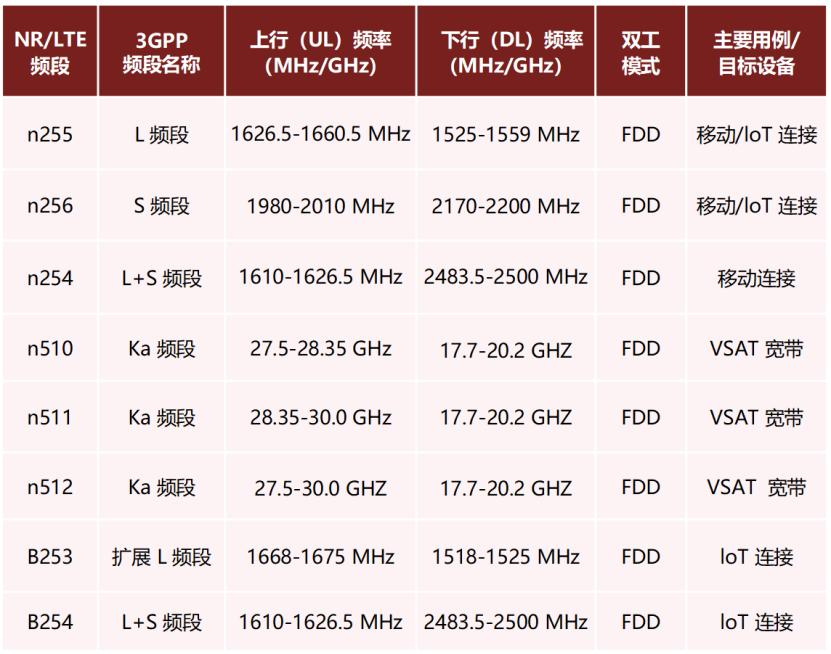
The work in Release 17 mainly focused on using transparent payloads and operating in n255 (L band) and n256 (S band) within FR1. These two frequency bands are also the basic frequency bands for traditional satellite communications. To put it simply, it is all for quick adaptation. The bandwidths of the two frequency bands are not large, so they cannot support high-bandwidth services and mainly implement basic services.
R15 - R17 are the 5G era, and R18 - R20 are the 5G-Advanced era. After entering R18, the NTN technical standards are also continuously evolving.
In the R18 stage, on the one hand, it focuses on the enhancement of the transparent forwarding mode, such as frequency band expansion, coverage enhancement, mobility and service continuity enhancement, etc. On the other hand, it also starts to promote the implementation of the regenerative forwarding mode, that is, actively promoting the "base station in space."
From R17 to R18, the 3GPP NTN strategy has shifted from the initial "usable" to "easy to use," emphasizing optimization and expansion to achieve higher-value broadband services and more powerful network integration.
R18 supports higher throughput by introducing higher frequencies (Ka band), clearly supports VSAT terminals, and enhances mobility and coverage. R18 also adds the NR-NTN FDD frequency band n254 and the LTE IoT-NTN FDD frequency bands B253/B254.
In the R19 stage, 3GPP officially defined the regenerative forwarding mode of NTN and increased research on new satellite communication scenarios. In addition to base stations, R19 also starts to research the "core network in space" - running the core network on satellites.
In terms of frequency bands, R19 further expands the frequency bands, for the first time introducing the Ku band (n247/n248, etc.) and improving the L/S bands, achieving a complete NTN spectrum map from low to high frequencies.
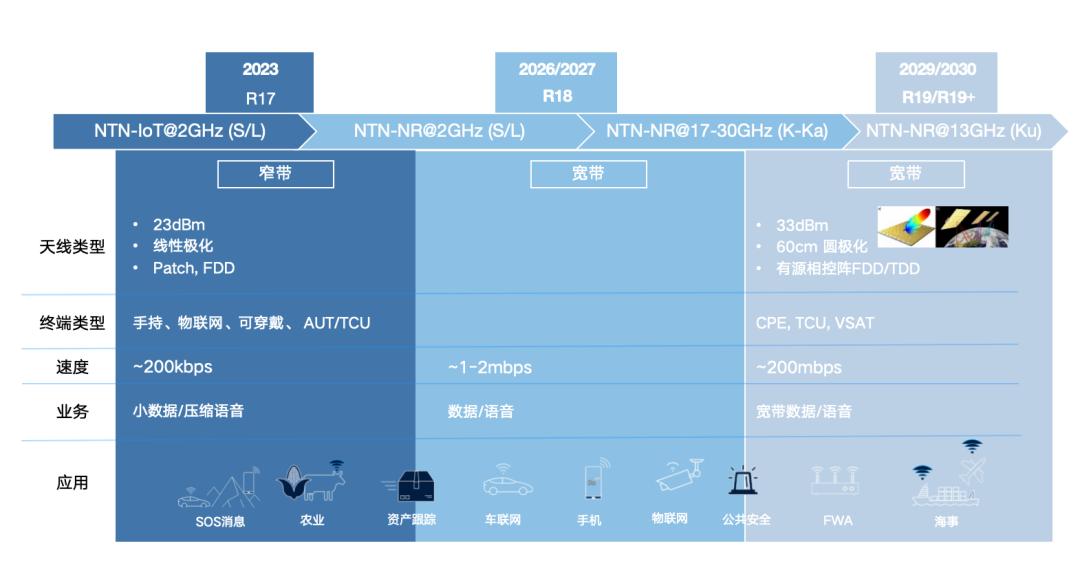
Image source: Rohde & Schwarz
In the R20 stage, it mainly deals with some remaining issues of 5G NTN. At the same time, in combination with 6G requirements, further research is carried out on aspects such as multi-frequency band management, coordination between high and low-orbit satellites, enhancement of core network capabilities, and spectrum sharing between satellites and the ground.
In R21 and subsequent versions, 3GPP will focus on promoting enhanced features such as seamless satellite-ground handover, cross-constellation roaming, and AI-driven dynamic resource scheduling, and promote the construction of NTN spectrum rule coordination and orbital resource co-management mechanisms to lay a solid foundation for 6G.
It is worth noting that R21 for the first time includes "Earth - Moon space" in the scope of standardization, marking that NTN is extending from Earth's orbit to deep space.
Challenges Faced by NTN
The advantages of NTN are wide coverage, strong flexibility, and fast deployment. The reason why it is currently booming is that the industry highly recognizes the value of NTN - it can quickly make up for the coverage shortfall and show irreplaceability in key and high-value scenarios.
However, the development of NTN also faces many challenges.
Firstly, there are challenges in the wireless communication link.
The satellite - ground link distance of NTN (hundreds to tens of thousands of kilometers) is much higher than that of traditional terrestrial communications, and the path loss is 30 - 50 dB higher than that of terrestrial macro stations.
The biggest impact of the distance is the unavoidable delay. When using geostationary satellites, the delay exceeds 500 ms. Even when using low - orbit satellites, the