Raysee Technologies Achieves Mass Production of 2D Addressable VCSEL Chips, Already Implemented in Automotive LiDAR and Intelligent Robots | Latest Frontline
Author | Qiao Yujie
Editor | Yuan Silai
It is reported that Shenzhen Ruishi Intelligent Technology Co., Ltd. (hereinafter referred to as "Ruishi Technology"), a domestic compound semiconductor manufacturer, has recently achieved large-scale mass production of two-dimensional addressable VCSEL (Vertical Cavity Surface Emitting Laser) chips. Previously, this type of product was long restricted by issues such as yield, cost, and reliability, resulting in slow industrialization progress. The mass production of Ruishi Technology means that this technological route has started to enter the stage of practical application.
As an important branch in the field of optical chips, VCSEL chips are widely used in scenarios such as 3D sensing, facial recognition, and lidar ranging and imaging. Compared with traditional edge-emitting lasers, they have advantages in terms of power consumption, modulation speed, and array integration. They are more suitable for perception systems that require large-scale light array output and can support precise detection in complex environments with higher efficiency.
Since the structured light solution was introduced in consumer electronics around 2017, the demand for VCSEL chips has gradually increased and extended to fields such as automobiles and robots.
Founded in 2018, Ruishi Technology initially carried out a systematic layout around the design, manufacturing, and packaging of VCSEL chips, and gradually built up the full-link capabilities from R & D to mass production. It has achieved large-scale shipments in multiple fields such as consumer electronics, automotive, and intelligent sensing. The data disclosed by the company shows that as of the end of 2025, the cumulative shipment volume of its VCSEL chips has exceeded 200 million, serving over a hundred customers.
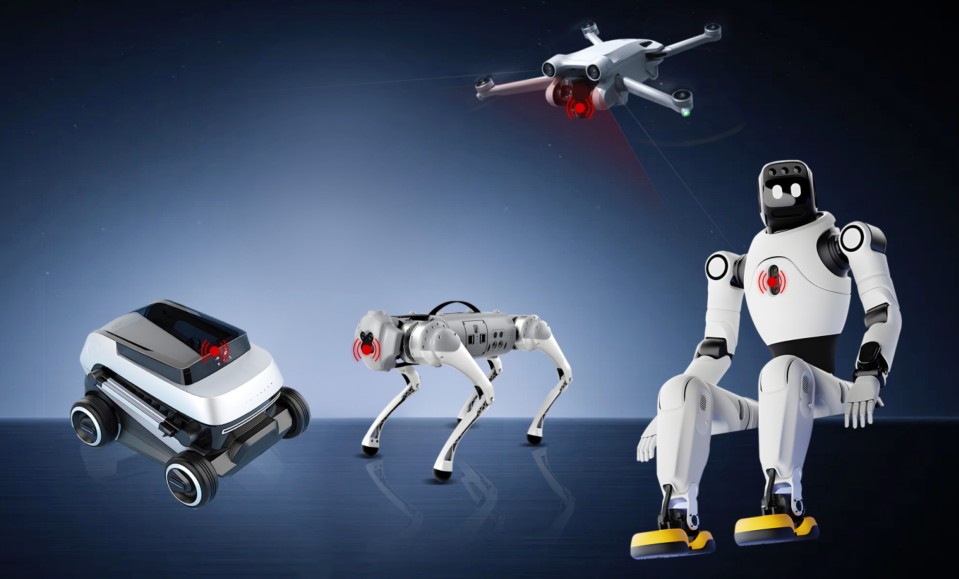
Image source: The enterprise
After completing the accumulation of basic products and industrialization capabilities, Ruishi Technology began to advance towards the higher-order two-dimensional addressable VCSEL. Different from the "overall light emission" method of traditional VCSEL arrays, the two-dimensional addressable structure can independently control individual light-emitting units, thereby achieving dynamic modulation of the light beam. This ability is considered an important technological foundation for supporting solid-state lidar (such as Flash LiDAR) and more complex 3D perception systems.
In the automotive field, two-dimensional addressable VCSEL chips can be used in short-range perception and blind-spot compensation systems, and support the evolution of some lidars towards a non-mechanical scanning architecture; in the field of intelligent robots, they can improve the accuracy and flexibility of robot environmental perception.
Previously, there were long-existing bottlenecks in the engineering implementation of two-dimensional addressable VCSELs. These include issues such as crosstalk between arrays, increased drive complexity, and consistency control in large-scale manufacturing. Dr. Wang Yang, the founder of Ruishi Technology, introduced that the company has solved the crosstalk problem during multi-point collaborative work through optimization in epitaxial structure design and drive solutions, and on this basis, improved the stability and mass production yield of the devices.
Currently, Ruishi Technology's two-dimensional addressable VCSEL chips have been successfully applied in the scenario of automotive lidar and are installed in multiple leading new energy vehicles, including projects such as Didi's driverless taxis. In the field of robots, the chips have been applied to a new generation of digital lidars suitable for various application scenarios, demonstrating wide adaptability.
On the manufacturing side, Ruishi Technology has simultaneously strengthened its production capacity and quality assurance capabilities. The enterprise has now built two dust-free optical packaging and testing factories for chips in Hefei and Xi'an. It has passed multiple authoritative quality system certifications and has the ability to ensure full production for 24 hours. The consistency and stability of mass-produced products meet industry application standards.
It is understood that Ruishi Technology is deepening cooperation with domestic automobile manufacturers such as BYD to promote the penetration of two-dimensional addressable VCSEL chips into mid - and low - end new energy vehicle models. At the same time, the enterprise has carried out joint R & D with multiple leading robot enterprises and is actively exploring emerging application scenarios such as embodied robots and lawn mowing robots.