Elon Musk officially announced a 1 - terawatt chip plan, and a partner from HSG strongly supported it, saying: xAI will win.
Last week, Elon Musk boldly declared, "If we can't buy chips, we'll make them ourselves!"
Musk announced the construction of a new wafer fab called "Terafab," with the goal of achieving an annual computing power of 1 terawatt. He also plans to send data centers into space.
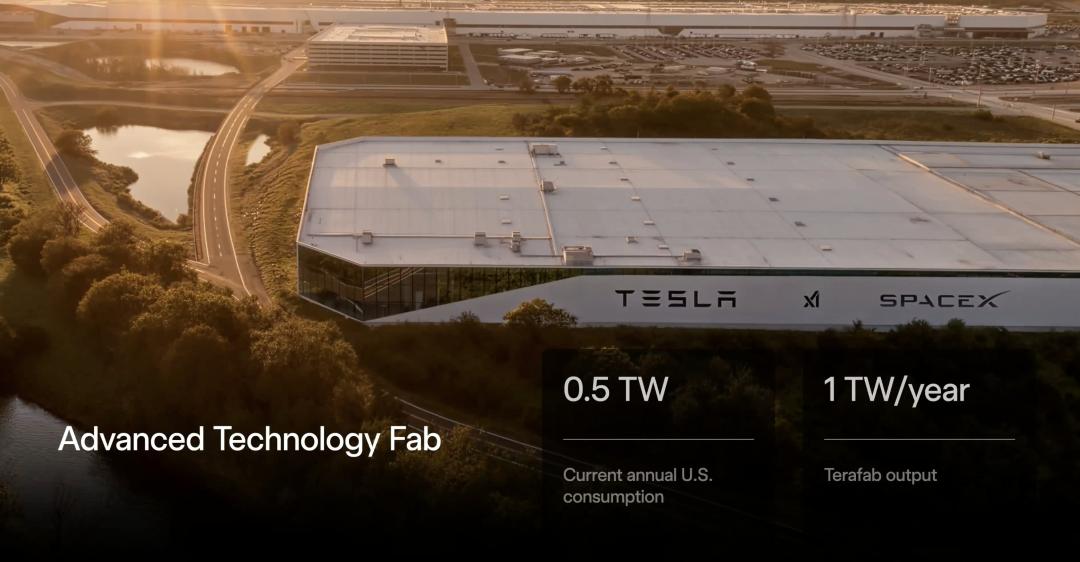
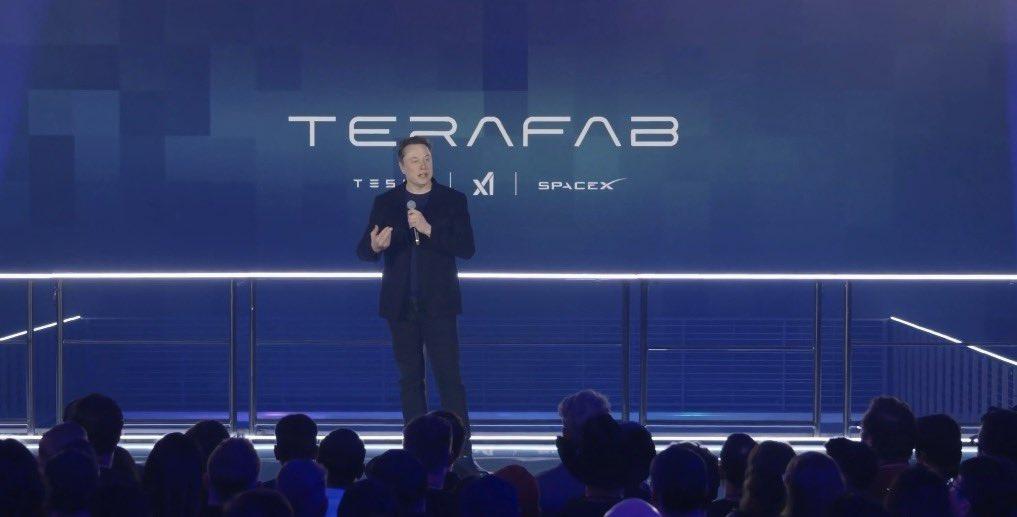
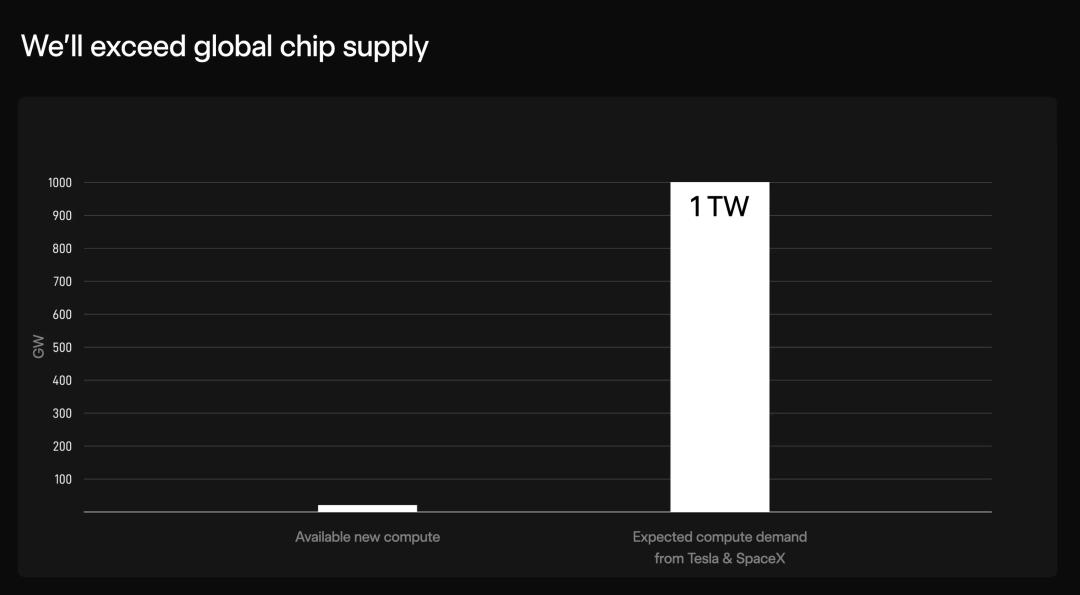
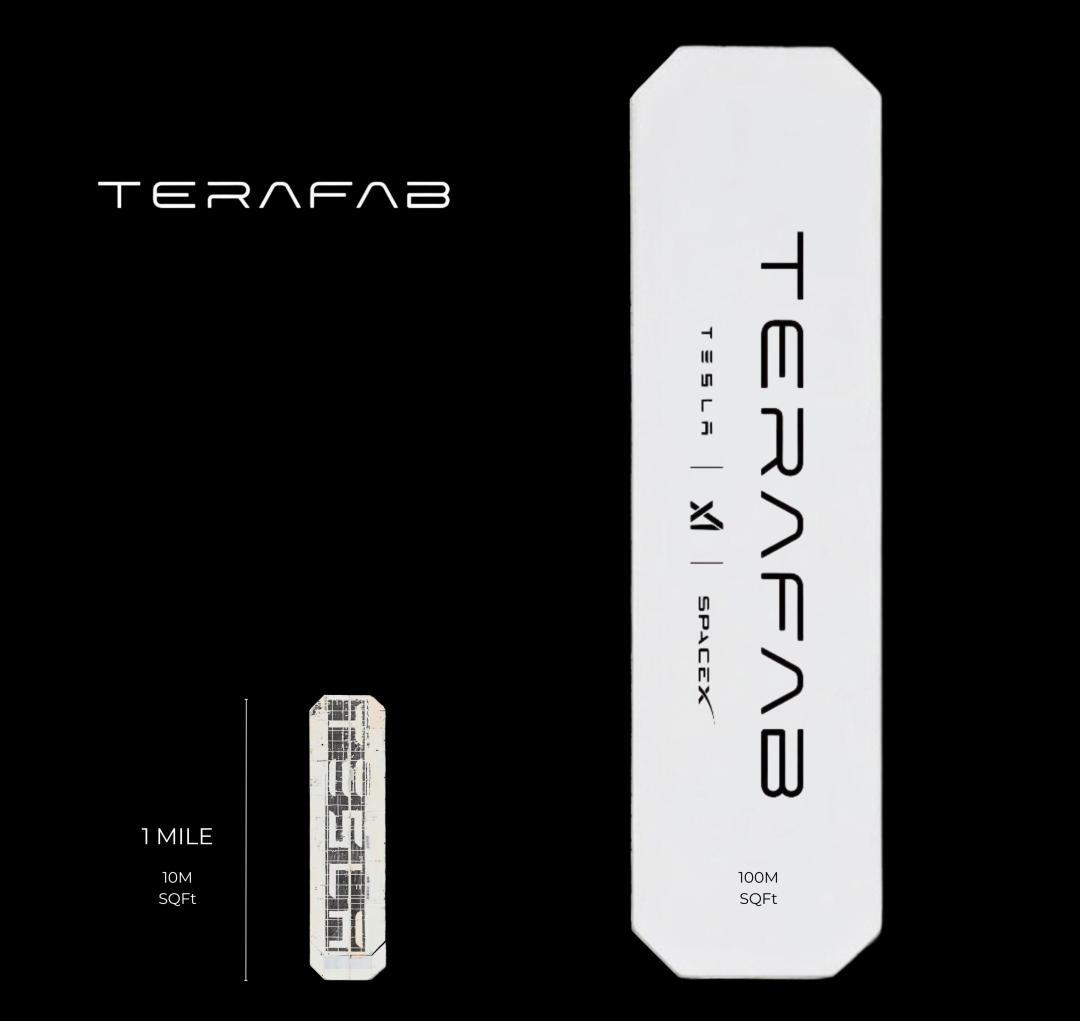
This new chip factory is located in Austin, Texas, USA. Its purpose is to achieve recursive improvement of chips and explore non - traditional computing methods. The ultimate goal is to lead human civilization towards an interstellar civilization and conquer the stars.
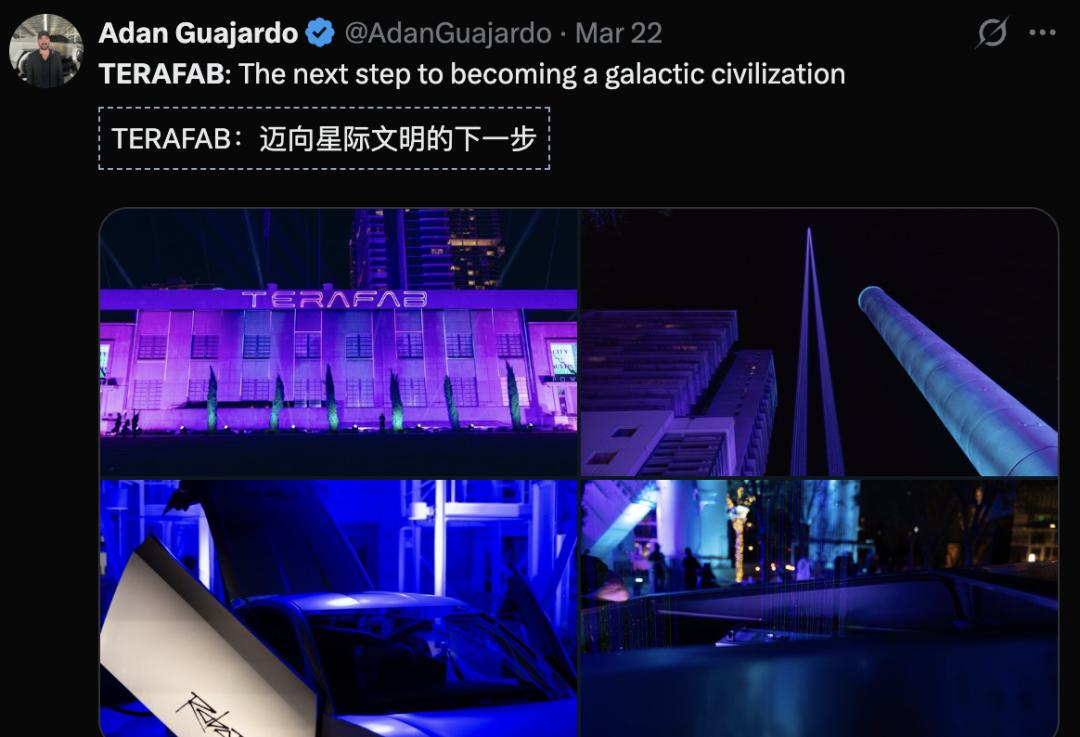
However, the scale of the factory is unprecedented, and the ultimate ideal is too grand. Some people think that Musk is just hyping, boasting, and making empty promises.

Just now, Shaun Maguire, a partner at Sequoia Capital, a well - known US venture capital firm, strongly supported Musk and made a controversial judgment:
xAI will win.
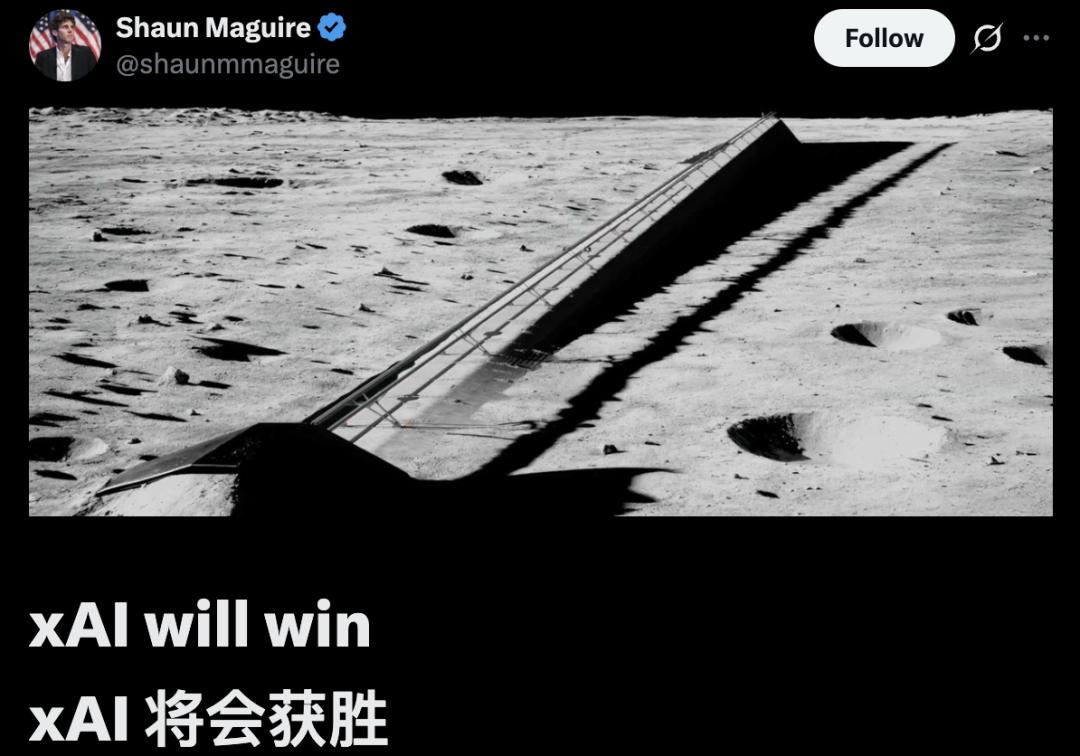
He believes that people have underestimated Musk again, especially xAI.
Shaun is not just an onlooker. He is a partner at Sequoia and has led or co - led Sequoia's investments in projects such as SpaceX, X/xAI.

In other words, he is not only a technical investor but also one of the earliest and most determined backers of Musk's ecosystem.
The important thing about this long article is not that Shaun "supports Musk again," but that he tries to bring the outside world's understanding of Musk back from a "political figure" to a "technology organizer."
On the surface, Musk's public image has indeed changed in the past few years.
Five years ago, more people regarded him as a technology fanatic. Now, more people first notice his political stance, controversies on social platforms, confrontations with regulators, and media storms.
But in Shaun's view, these things have not changed Musk's underlying working style. He is still chasing the goal he has always pursued: finding the biggest bottleneck restricting technological leapfrog and then removing it at all costs.
Shaun also made another very important judgment in the article:
Even if Musk + xAI wins, it doesn't mean that other cutting - edge laboratories will lose. Digital intelligence will be one of the largest markets in history, and physical intelligence may ultimately be even larger.
The root cause of the market's misjudgment of xAI lies not in the model rankings but in the fact that the outside world no longer understands Musk from the perspective of a "technology organizer."
Musk's Truly Scarce Ability: Foreseeing the Future
Shaun's article mentioned an important ability of Musk: the ability to identify inflection points.
In those extremely counter - intuitive and hard - to - see technology bets, Musk's intuition may be one of the strongest in the world.
He is probably right about 80% of the time. For example, "focusing only on computer vision," "reusable rockets," and "AlexNet being the path to AGI."
Looking back today, these judgments seem like common sense. But when they were non - consensual, not many people dared to place heavy bets.
The same is true in AI.
In 2012, AlexNet emerged, pushing deep learning from the edge of research to the main stage.
The NIPS 2012 paper proved that deep and large convolutional neural networks, combined with GPUs and big data, could improve image classification to an unimaginable level.
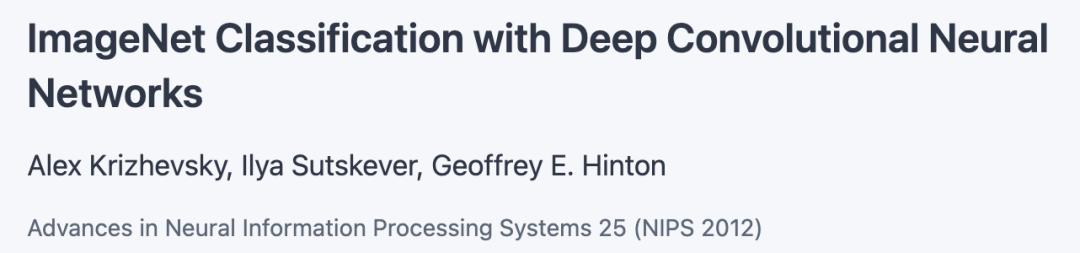
Everyone knows the importance of this today.
But the real challenge was to understand it in real - time in 2012 and 2013. Before that, neural networks had been in a slump for many years.
AlexNet was not just a simple improvement in accuracy. It was almost like announcing that the combination of computing power, data, and deep networks might rewrite the entire AI roadmap.
More importantly, Musk clearly linked this to real - world problems very early on.
He didn't just stop at "this paper is important." He quickly connected visual intelligence with autonomous driving.
The core of Tesla's subsequent roadmap, whether recognized by the outside world or not, is based on a very strong premise:
If humans mainly drive by vision, then machines may also learn to drive mainly by vision. This bet later evolved into Tesla's more explicit camera - first path.
Let's look at deep reinforcement learning at the end of 2013.
In December 2013, DeepMind proved that the combination of deep neural networks and reinforcement learning could directly learn control strategies from pixel inputs.
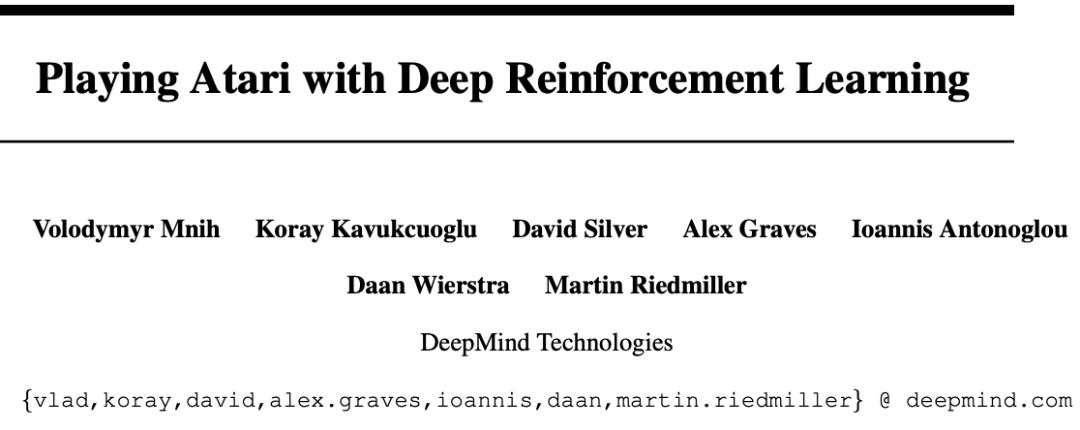
Title: Playing Atari with Deep Reinforcement Learning Link: https://arxiv.org/abs/1312.5602
After that, AI not only "understood" the world but also began to show the prototype of "learning to act."
Google reacted very quickly to this.
On January 26, 2014, Google confirmed the acquisition of DeepMind. The time from the appearance of the paper to the confirmation of the acquisition was very short.
It's worth noting that Musk had become one of the co - founders of OpenAI at that stage.
So, what Shaun wants to prove is not that "Musk is always right," but that whenever a major, counter - intuitive, and highly future - oriented technology inflection point appears, he can often recognize it before most people react and then place bets immediately.
He Understood AI Early but Missed the Most Critical Turn
At this point, we have to puncture the myth a little.
Although Musk is good at predicting technology, he is not always right. He understood a lot, but he did miss a critical turn.
This turn is the language model.
The problem is that AI does not develop along a single main path.
In 2017, the Google team proposed the Transformer.
The paper "Attention Is All You Need" almost rewrote the underlying architecture of natural language processing. Instead of relying on RNN and CNN, it used the attention mechanism to directly model global dependencies, greatly improving the parallel training efficiency and opening the technical channel for the subsequent explosion of large language models.
Looking back today, this is of course the main gateway to the era of large models.
But Musk did not rearrange his AI priorities immediately after the emergence of the Transformer, as he did with AlexNet and DeepMind. He underestimated the speed at which the language route would become the main entrance to AGI during this period.
The real turning point was on November 30, 2022.
On that day, OpenAI officially released ChatGPT, which was a detonation point that first pushed the capabilities of large models to the public on a large scale.
Three months later, on March 9, 2023, xAI was established. On July 12 of the same year, Musk officially announced xAI to the public and emphasized that this company would closely cooperate with ecosystems such as X and Tesla while maintaining its separate corporate entity.
This time difference is very short. Therefore, it seems that a certain judgment was corrected in a very short time.
Shaun speculates that ChatGPT made Musk accept again that language is also a feasible path to AGI, and it is not a supplementary path but one of the main paths that must be added.
This is not about giving up the visual route. On the contrary, it is about adding the language route back to the larger technology blueprint.
Vision is responsible for interacting with the world, language is responsible for abstraction, compression, reasoning, and generalization; robots are responsible for action and feedback; the platform is responsible for data distribution and user interfaces; and computing power infrastructure is responsible for truly amplifying everything.
The establishment of xAI shows that Musk finally accepts that AGI cannot be advanced only by the visual system.
xAI has also become the last key piece of the puzzle in Musk's technology map. After adding this piece, the previously independent elements: the X platform, Grok, Tesla's visual stack, Optimus, the training cluster, and real - world data, can finally be unified and explained.
xAI: With Computing Power in Hand, No Worries about AI
Now, let's apply this framework to xAI.
The outside world thinks it's in a mess recently:
More than half of the 12 founding members have left in the past year.
In terms of code ability and revenue, xAI currently lags behind Anthropic and OpenAI.
Many people therefore claim that xAI has "fallen behind."
But from another perspective, Shaun believes:
At xAI, computing power (compute) is Musk's top priority, and the model ability ranking comes second.
Now, xAI's computing power has entered the track of "accelerating towards dominance."
Many people will object. For example, Google's data center hardware is very powerful, such as MEMS optical switches and TPUs.
Musk himself also posted a tweet:
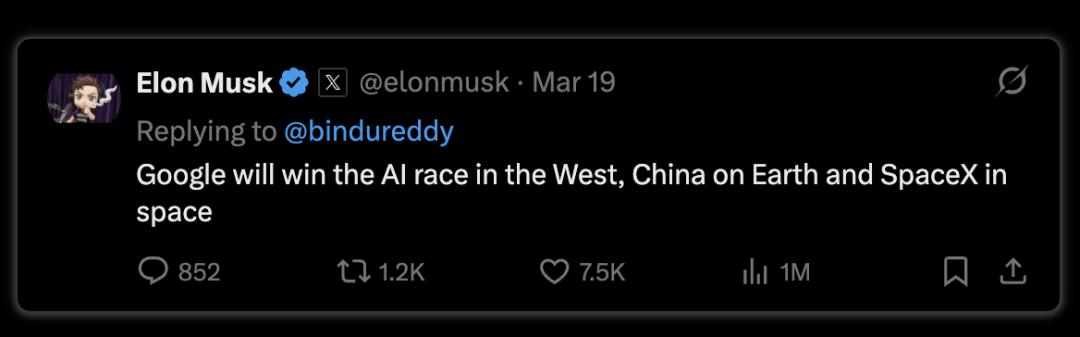
It can be specifically interpreted as:
Google will have the largest computing power in the West on Earth.
China will become the region with the largest computing power on Earth.
SpaceX will become the entity with the largest computing power in space.
But ultimately, space will win.
The key is that with the progress of Colossus 2, SpaceX's confidence in the "orbital data center," and SpaceX's hardware execution ability, Musk has "lowered" "computing power" from xAI's top priority because everything is progressing smoothly at present.
So, Shaun Maguire judges that xAI's two top priorities now are the model and a new priority: the product.
Claude Code can be said to be the first real - sense AI product. Many things before it were more like "interfaces." A real "product" has a super - strong backend and a minimalist frontend.
ChatGPT also follows this model: a breakthrough - level backend is provided to the public through a prompt input box. The difference with Claude Code is that it turns the model into a system where "the whole is greater than the sum of its parts."
Analogous to early Google: Strictly speaking, the original Google Search was not a "product" but a genius - level backend with a white page and a search box on the outside.
Subsequently, Google built up its moat with Android, Chrome, free Gmail, SSO, Docs, Drive, etc.
Claude Code is the first step for AI to move from