AI glasses are still catching up with the iPhone era.
In January 2026, Meta founder Mark Zuckerberg pushed AI glasses back into the spotlight with a confident speech during the company's fourth-quarter earnings conference call.
Zuckerberg said bluntly that billions of people around the world wear glasses or contact lenses to correct their vision. It's hard to imagine that in a few years, most people won't be wearing AI glasses. The current development stage of the AI glasses industry is very similar to that of smartphones when they were just starting out more than a decade ago. More convincingly, Meta's AI glasses sales in 2025 increased by more than three times year-on-year. Such a growth rate has made the entire industry see the possibility of an explosion.
Meanwhile, the popularity of AI glasses in the domestic market has long been high. The assertion that "2025 is the first year of Chinese AI glasses" has been widely spread in the technology and capital circles. But beneath the excitement, is the explosion of AI glasses really ready? Can it, like smartphones, disrupt people's lifestyles and become the next mainstream intelligent terminal?
The Logic of Big Companies
The popularity of the AI glasses track can be seen from the frequent layouts of all parties in the market. Among international giants, Meta has the most determined layout. At the beginning of 2026, it made a strategic adjustment, planning to cut jobs in departments such as VR and the metaverse, and divert the released funds and manpower to the field of AI glasses.
In the domestic market, first of all, big companies have entered the fray, using their respective ecosystems to launch suitable AI glasses products.
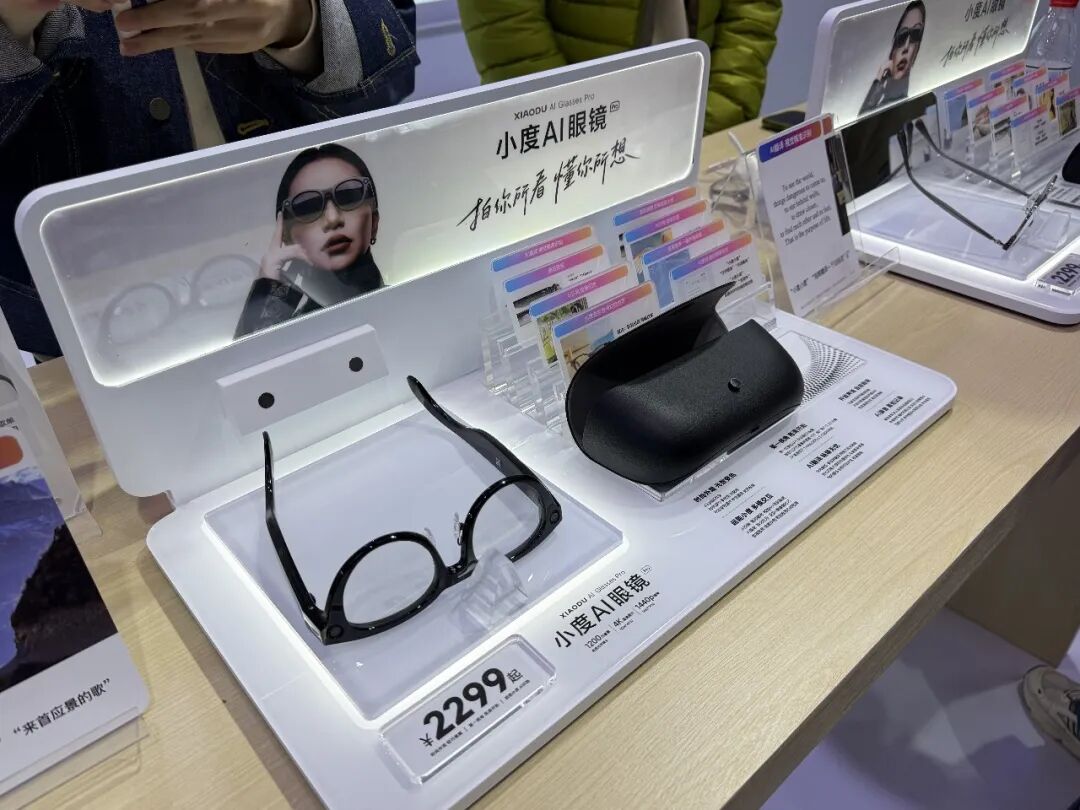
On November 10, 2025, Xiaodu Technology, a subsidiary of Baidu, officially launched the Xiaodu AI Glasses Pro, featuring practical functions such as AI translation, meeting minutes, AI object recognition, and AI memos. Quark, a subsidiary of Alibaba, officially released its AI glasses on November 27, 2025, deeply integrating core scenarios of the Alibaba ecosystem such as Alipay, Gaode Map, and Taobao.
More notably, those entering the AI glasses track are no longer limited to traditional technology companies but span multiple industries such as automobiles, mobile phones, and even medicine, forming a fierce pattern of the "Battle of a Hundred Glasses."
On December 3, 2025, Li Auto released its first AI smart glasses, with a starting price of 1,999 yuan. These glasses are equipped with the "Li Auto Buddy," which is powered by Li Auto's self-developed MindGPT - 4o large model. It not only supports functions such as answering questions and navigation but also integrates Li Auto's car ecosystem. By wearing the glasses and speaking, users can remotely control the vehicle. At the same time, it is equipped with a 12-megapixel camera with a 105° ultra-wide-angle lens, supporting 0.7-second quick shooting, live photos, and video recording. According to Li Auto executives, the glasses were in short supply, with tens of thousands of units sold out in three hours and two months' worth of production capacity sold out in three days.
As the traditional hegemon in the field of intelligent terminals, the mobile phone industry has not missed this potential "next-generation product" - AI glasses. Mainstream mobile phone manufacturers such as Xiaomi and OPPO have laid out their plans, regarding AI glasses as an important move to extend their own ecosystems and seize future entry points. The AI glasses launched by Xiaomi in 2025 are equipped with a 12-megapixel camera and the Xiaomi HyperOS system, enabling first-person perspective video calls and live broadcasts. They are also equipped with Super Xiaoai, supporting functions such as intelligent question answering, translation of 10 languages, meeting minutes, control of mobile phones and smart home devices, and scanning payment with the glasses.
In addition, the three major telecommunications operators have also entered the market. In April 2025, the Smart Home Operation Center of China Mobile released a new product, the "China Mobile Aijia AI Glasses," at the 5th China International Consumer Products Expo. This product features four major scenario selling points.
In July 2025, China Telecom's Tianyi AI officially launched its first smart wearable device - the Tianyi AI Smart Glasses. Driven by the Qualcomm Snapdragon AR1 chip and combined with the Tianyi Xingchen large model, it can also free users' hands for functions such as taking photos and videos, recognizing food calories, providing intelligent travel explanations, and answering knowledge questions.
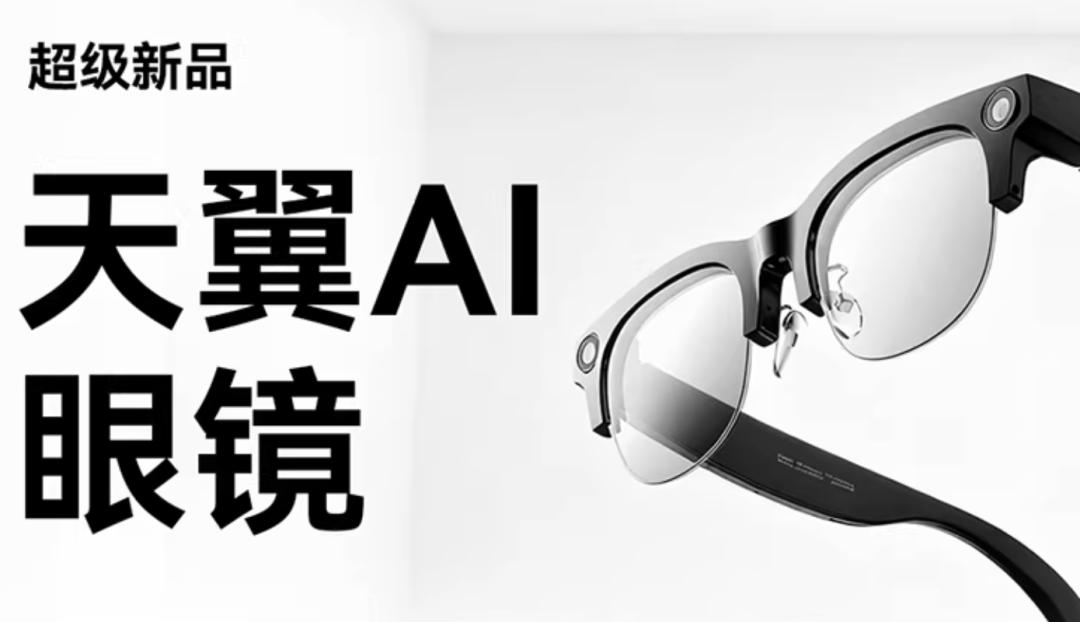
*Image source: Tmall China Telecom official flagship store
China Unicom, as early as September 2024, jointly developed eSIM AI sports glasses with its partners. However, these glasses are more inclined to AR glasses. In the field of AI glasses, China Unicom's strategy is to "achieve the goal indirectly." On January 5, 2026, Thunderbird Innovation announced the completion of a Series C+ financing of over 1 billion yuan, in which the United Innovation Fund under China Unicom participated in the investment. It is worth noting that the China Mobile Chain Leader Fund was one of the lead investors.
In the market, there are many brands like Thunderbird Innovation that focus on the fields of AR and AI glasses. Together with it, Xingji Meizu, XREAL, Rokid, and INMO, known as the "Five Little Dragons of AR Glasses," have now become the first echelon in the AI glasses market.
Actually, there is a clear and firm core logic behind the fact that giants are betting on AI glasses.
The World Health Organization once released data showing that there were about 2.6 billion myopic people in the world in 2020, and it is expected to increase to 3.4 billion by 2030. As long as this group of people can be converted into users of AI glasses, it will be enough to support a huge market.
What the giants value more is that AI glasses may become the next Internet entry point. In the PC era, Microsoft and Intel occupied important ecological niches in the PC era with the advantages of the Windows system and chips respectively. In the smartphone era, a group of technology giants such as Apple, Huawei, and Xiaomi emerged, and a series of huge Internet industries such as social media, e-commerce, entertainment, and office were derived.
Now, the smartphone industry has entered the era of stock competition. Giants must find the next core terminal that can carry Internet traffic. But under the boom, can AI glasses really take on this important task?
Realistic Obstacles
Nvidia CEO Jensen Huang once used the term "iPhone moment" to describe the revolutionary transformation moment from concept to commercial application of technology. The current high - level attention and active layout of all parties in the industry towards AI glasses seem to indicate that its iPhone moment is just around the corner.
However, beyond the beautiful imagination of all parties in the market for the AI glasses track, AI glasses still face many real - world difficulties, which make them far from the status of the next mainstream terminal. In other words, AI glasses are still on the way to catch up with the "iPhone moment."
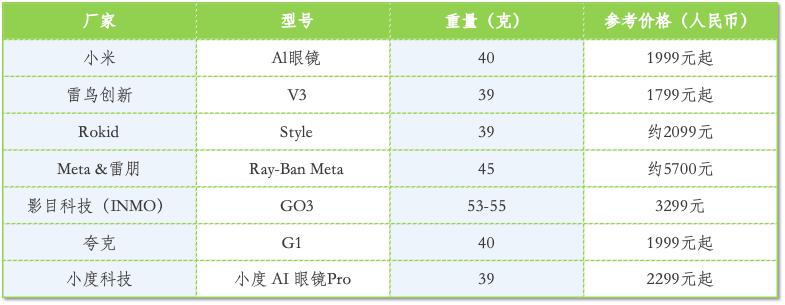
The most intuitive and most influential factor on the user experience is the shortcoming at the hardware level. Under the constraints of physical laws, AI glasses face a painful balance in the four dimensions of "weight, computing power, battery life, and heat dissipation." Almost all manufacturers are making compromises by "robbing Peter to pay Paul" in these four aspects.
For example, in terms of weight, traditional glasses generally weigh no more than 15g, and many are below 10g. AI glasses need to have a series of electronic components such as cameras, microphones, chips, and batteries built - in, and their weight is generally several times that of ordinary glasses. Wearing them for a long time will put pressure on the nose bridge, causing obvious soreness and even affecting the cervical spine.
If the weight of the glasses is to be continuously reduced, the battery capacity needs to be reduced, which directly leads to the shortcoming of battery life. The industry tracking report "Intelligent Glasses Productivity Series II: Catalyzed by Large Models, AI Glasses Stand Out" released by Guotai Haitong Securities in January 2026 shows that the continuous use time of most AI glasses is between 2.5 and 4 hours, which is difficult to meet the all - day needs. However, many brands currently use charging cases to recharge the devices in time to make up for the battery life shortcoming.
In addition, the heat dissipation problem is also prominent. The chips of AI glasses are close to the skin. Once the chips generate heat during high - speed operation, even a temperature rise of just a few degrees will make users feel uncomfortable. If the chip's computing speed is forced to decrease, problems such as freezing and delay will occur, which in turn affects the user experience.
Moreover, due to the immaturity of the process, AI glasses are still in the stage of continuous trial - and - error. Even Meta's glasses, which are as powerful as they are, had frequent "failures" during the product launch, which really made Zuckerberg "lose face." For this reason, the return rate of AI glasses remains high. According to statistics from the industry media XR Vision, the return rate of AI glasses on platforms such as JD.com and Tmall has generally reached about 30%.
In addition to the problems of the product itself, the compliance risks brought by AI glasses are also on the table. The cameras and microphones built - in AI glasses can collect users' visual and auditory information in real - time. Once this information is leaked or misused, it will pose a serious threat to users' privacy and security.
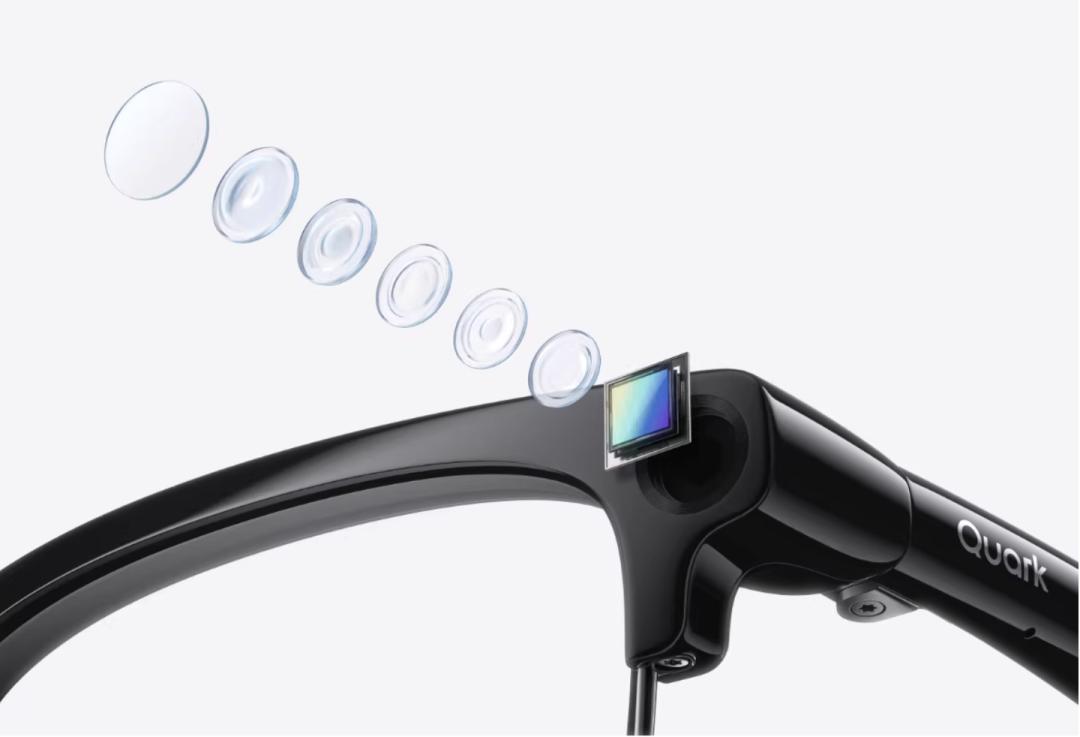
*Image source: Tmall Quark Smart Device Flagship Store
Currently, some manufacturers have taken corresponding optimization measures to reduce the risk of privacy leakage:
For example, Meta's AI glasses will light up an LED indicator when taking photos or videos. Domestic manufacturers such as Xiaodu and Xiaomi have also added functions such as "mandatory lighting of the indicator for recording/photographing" and "one - key turn - off of the camera/microphone" to their products in an attempt to alleviate users' privacy concerns.
However, some indicators are difficult to notice in strong light environments, the encryption system may be cracked by technical means, and problems such as the ability to still take photos smoothly after the shooting indicator is physically covered still exist. Enterprises still cannot fundamentally solve the privacy risk problem.
It is worth mentioning that if AI glasses are used as a shooting device, the data storage requirements generated by a large amount of high - definition materials may also bring non - negligible hidden costs. For example, many manufacturers have launched cloud storage services for AI glasses products to improve users' product experience, and paying for cloud storage membership in the long term is also a continuous investment.
The Jingzhe Research Institute also noticed that as a digital product integrating a variety of electronic components and is supposed to be used in all - weather scenarios, the waterproof ability of many AI glasses products may not be ideal. On Xiaohongshu, some users reported that their AI glasses were damaged by water ingress when used in rainy days, and some users found that the lenses malfunctioned after washing the glasses. Some users are also worried that sweat may seep in through the seams of the temple arms during long - term use, causing damage to the device.
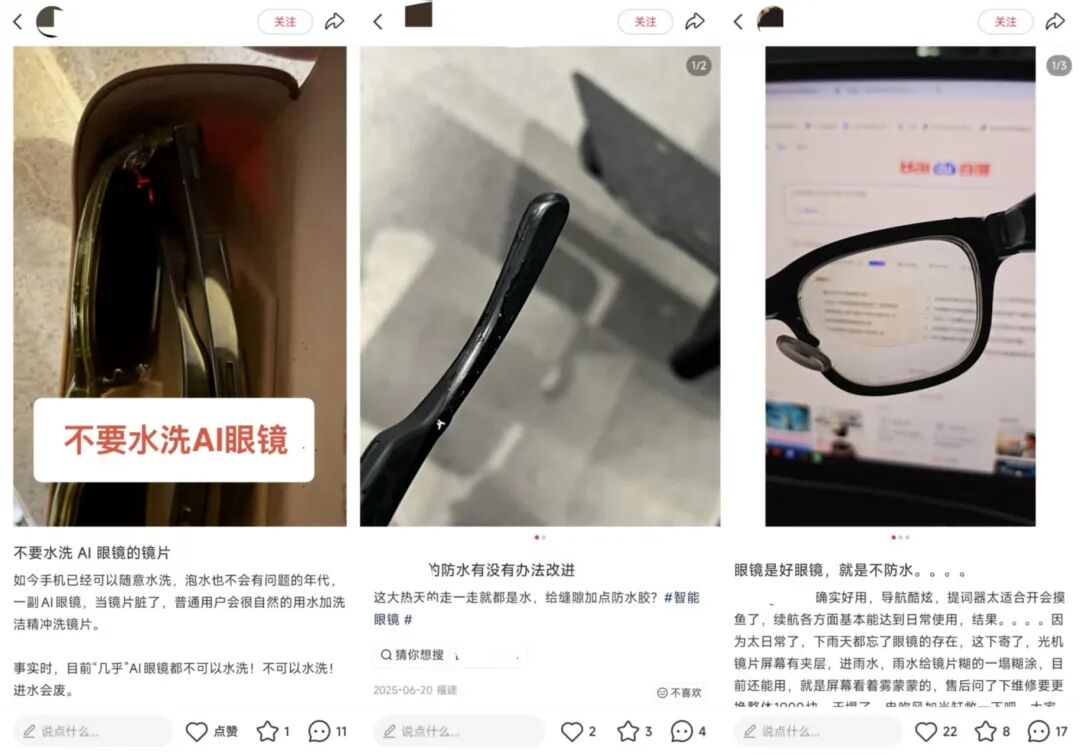
When checking the product parameters of major brands, the Jingzhe Research Institute found that most brands' AI glasses can only prevent sweat and splashes of rainwater, and the product pages of a few brands do not clearly state whether they can be washed, soaked, or used in scenarios such as swimming or taking a bath. Some products use open - type and magnetic charging ports and do not have waterproof certification. When the Jingzhe Research Institute further asked the customer service of the brand's Taobao flagship store, it was clearly informed that "the lenses and charging ports must not come into contact with water stains." If the AI glasses malfunction due to improper use, users may face after - sales repair costs ranging from a few hundred to a few thousand yuan. Compared with the general price range of 1,000 to 2,000 yuan for AI glasses, the repair cost is obviously a bit high.
The Ultimate Form of AI Glasses
Despite being restricted by many unfavorable factors, as a "star" in the consumer electronics field, the sales of AI glasses are still growing rapidly.
Previously, the report data from Wellsenn XR showed that the global sales volume of AI glasses in 2024 was 1.52 million pairs, and it was expected to increase to 3.5 million pairs in 2025, a year - on - year increase of 130%. At the beginning of this year, the data from Wellsenn XR showed that the global sales volume of AI glasses in 2025 had reached 7.46 million units, twice the expected total.
The rapid growth of sales figures is first due to the low base of AI glasses, and second due to Meta's efforts - Meta sold more than 7 million AI glasses throughout 2025, contributing more than 90% of the sales volume.
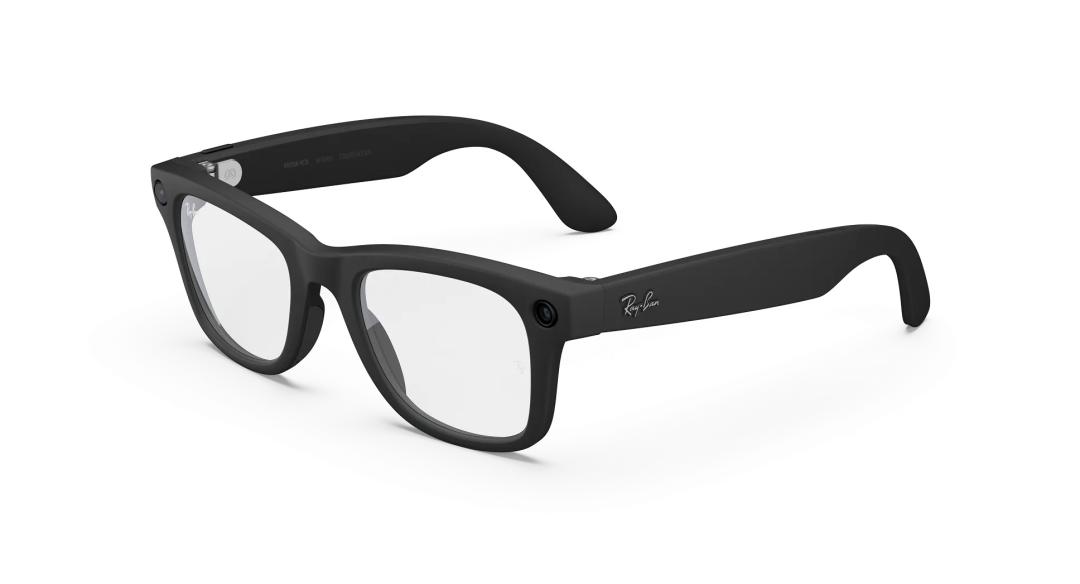
*Image source: Meta official website
However, in terms of market size, AI glasses are still just a "niche toy," and there is still a long way to go before their "iPhone moment." Its shipment volume in 2025 was less than one - third of the monthly shipment volume of global PCs, and even less than one - tenth of the monthly shipment volume of global smartphones. The key to whether the market size of AI glasses can be further increased in the future lies in the richness of its functions and the applicability of its application scenarios.
Currently, the functions of most AI glasses on the market are mainly concentrated on a few basic functions such as first - person perspective shooting, real - time translation, near - eye navigation, and voice assistants. The frequency of using these functions is far from the level that would make ordinary people