In the second half of the intelligent era, Wei brand's V9X redefines the concept of "automobile" with its AI intelligent agent.
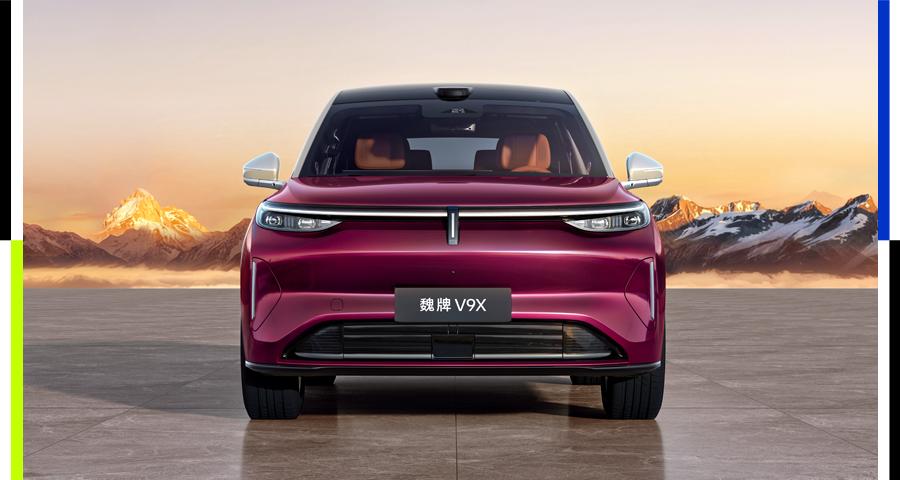
In recent years, the compression of costs and R & D cycles has made the homogenization in the automotive industry more and more obvious. The difficulty for consumers to choose a car has been greatly increased. The industry needs a game - changer to open a new era.
Recently, Zhao Yongpo, the CEO of Wei brand, put forward a view on social media. In his opinion, the development of the Chinese automotive industry has gone through three stages and is now moving into the fourth stage. Among them, the first three stages are: the 1.0 era dominated by joint - venture enterprises, during which German, American, and Japanese models were popular in the market, Chinese consumers initially established the concept of family cars, and the local automotive industry started; in the 2.0 era, Tesla set off a storm of electrification and intelligence globally, and the electrification of the Chinese market entered the budding stage; in the 3.0 era, Chinese independent brands, with their keen market sense, rapid product layout, and innovative intelligent experience, are becoming the core force to attract consumers and drive industry transformation.
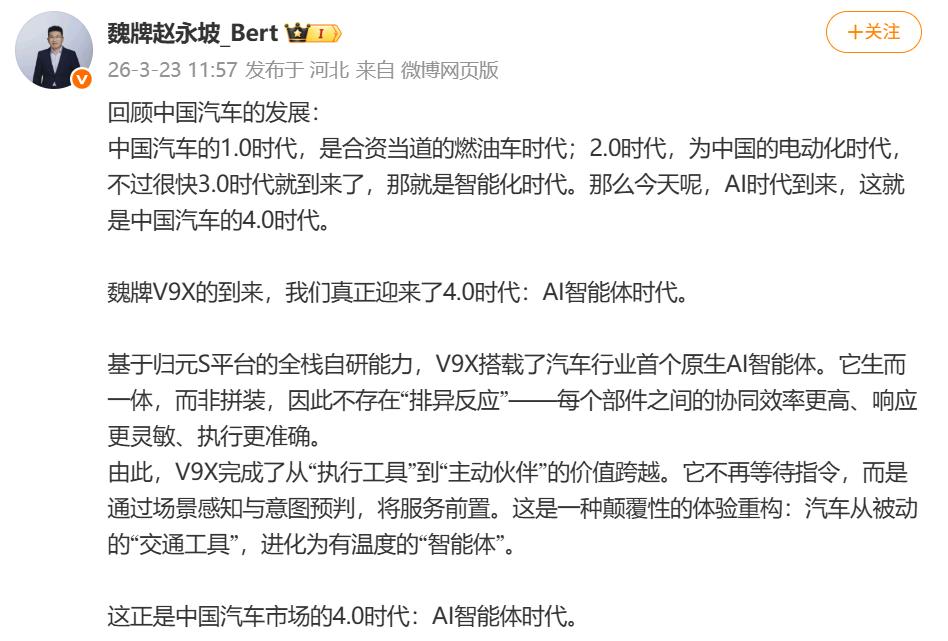
However, after nearly a decade of development, the momentum of the 3.0 era has begun to show signs of fatigue.
The price war has continuously squeezed profits. Enterprises have to cut manufacturing costs, which in turn erodes the basic quality of products. The product iteration speed has accelerated, and the R & D cycle has been extremely compressed. Some unproven technologies have been rushed into mass production, and even caused fatal accidents. The reliability and safety reputation of the automotive industry are being overdrawn. The innovation of new products remains at the superficial level of function stacking, and the industry is gradually falling into ineffective involution.
The extensive growth model that previously relied on speed and scale is facing a severe test of its sustainability.
At this moment, more than ever, a game - changer is needed to open the real 4.0 era: let the car subvert the usage experience with AI intelligent technology, complete the value leap from an "execution tool" to an "active partner", and at the same time, make safety and quality no longer a concern for consumers.
The door of the era has been knocked, and the Wei brand V9X is the first key.
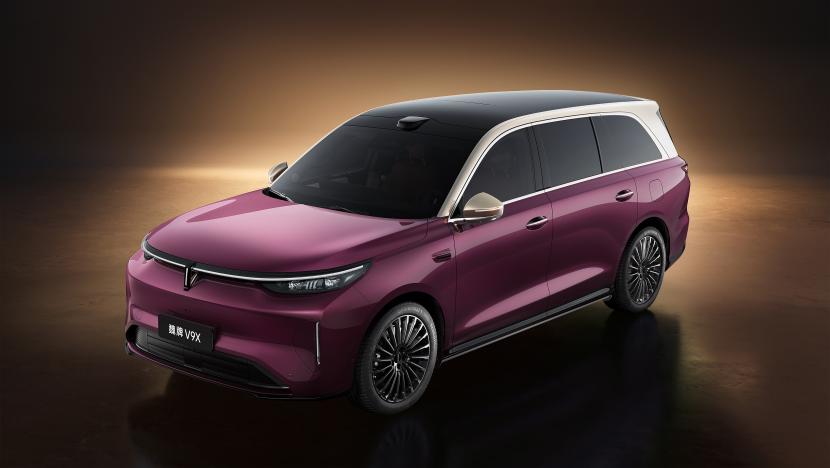

The Wei brand V9X brings cross - era technological innovation
Every era change in the Chinese automotive industry stems from the innovation of core technologies. The core of the Wei brand V9X's breakthrough is the new upgrade of AI. Its concept is no longer to stuff AI into the car system, but to allow most of the car's functions and the perceived information to be called by AI, realizing the species evolution from a "smart car" to an "AI intelligent agent".
In the 3.0 era, the core functions of the cockpit intelligent assistant were still voice recognition and the access of large models to cockpit voice conversations. Users needed to give commands, and the system responded passively. The cockpit intelligent agent "Xiaowei" of the Wei brand V9X can already provide services for passengers actively by processing multi - modal data such as voice, vision, and temperature, breaking away from the traditional space interaction mainly based on "giving commands" and becoming a real and active "car butler".
In addition, the evolution from a "machine" to a "butler" also means the continuous upgrade of the cockpit assistant's capabilities. For example, in the case of "recognizing people", when the male owner in the driver's seat says "turn on the seat massage for my wife", "Xiaowei" can accurately identify the seat where the female owner is sitting and execute the command, no matter whether she is sitting in the front passenger seat or the back row. From now on, the interaction logic of the car's intelligent cockpit based on space will undergo a change and evolve into a more natural interaction mode centered on people.
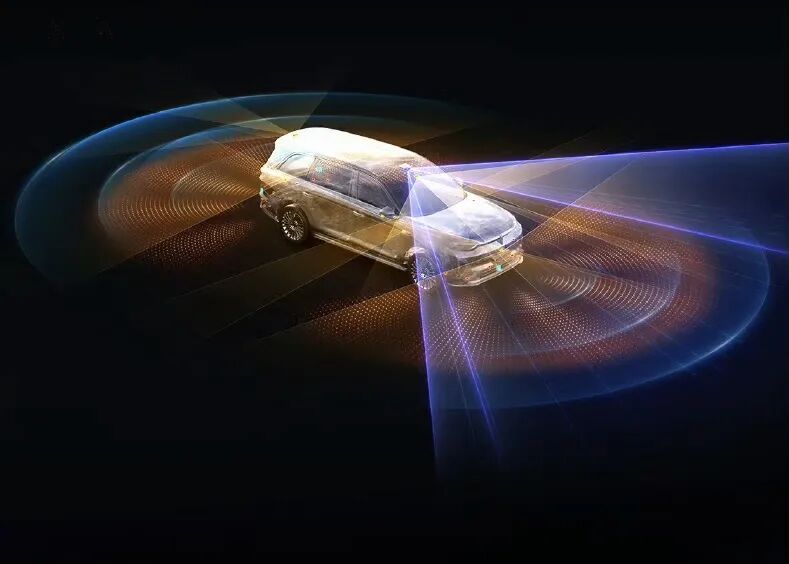
The driving intelligent agent "Xiaowei" of the Wei brand V9X has the auxiliary driving ability in the first - tier of the industry. It supports full - scenario map - free NOA in urban and highway scenarios, as well as functions such as multi - level memory parking and intelligent parking. With the support of the VLA large model, it also has high - order capabilities of "understanding, seeing, and thinking".
Currently, the mainstream level of the map - free solution in the industry is still the logic of braking and avoiding after seeing obstacles. However, the auxiliary driving of the Wei brand V9X can recognize construction scenarios or the line - of - sight occlusion behind stationary large vehicles, predict possible risk scenarios like a human being, and has defensive driving ability, decelerating in advance instead of braking after seeing. For example, when the vehicle is passing through a narrow road with roadside parking, the vehicle will decelerate in advance and keep away from roadside vehicles, avoiding the risk of the "sudden appearance" scenario.
At the same time, the car system screen will display the whole - link thinking process of the system from perception, decision - making to execution, and present it on the car system screen in the form of CoT thinking cards, enabling users to understand at a glance why the system "decelerates" and "changes lanes", enhancing users' understanding and trust in the auxiliary driving. Drivers can also command the vehicle to change lanes, overtake or park by the roadside through simple voice commands. So far, the auxiliary driving system of the Wei brand V9X not only brings a more convenient travel experience to users but also greatly enhances the sense of security of the auxiliary driving.
The leap - forward upgrade of AI is a huge challenge.
The difficulty lies not only in the advanced architecture and powerful algorithms but also in enabling every component of the car to have an intelligent "language" and "thinking". Ultimately, this is a fundamental reconstruction of the logic of the traditional automotive industry chain. The successful implementation of the Wei brand V9X provides an answer to this difficult problem.
The foundation of the Wei brand V9X is the Guiyuan S platform built by Great Wall with decades of accumulation.
The key to the Guiyuan S platform lies in the independent R & D of its core components, which gives Great Wall unprecedented technological depth and definition power. This "movable - type printing" - style technological philosophy enables the Guiyuan S platform to meet the full - scenario vehicle - using needs of consumers more diversely.
Through the in - depth transformation of AI nativization, vehicle intelligence is no longer limited to the superficial forms of "screen interaction" and "voice commands". It is transforming into a deep - seated ability that covers the whole vehicle and runs through the experience, bringing more active and systematic services and travel experiences to users.
Relying on the fully self - developed Guiyuan S platform, the Wei brand V9X realizes the standardization of hardware interfaces, the labeling of software functions, and the nativization of AI, allowing complex functions to be freely combined like movable - type printing, endowing the vehicle with almost infinite scenario adaptation and function derivation capabilities. The 36 - year accumulation of Great Wall Motors has realized this unique value in the new era.

No matter how good the AI intelligence is, it must be based on the powerful 'three major components of a car'
In the 2.0 and 3.0 eras of pursuing intelligence, the mechanical essence of cars was once covered by the noisy innovation concepts. However, "a good car" is actually the premise of "a good AI". A solid chassis and power are the physical basis for the intelligent system to operate stably and execute accurately. Without this basis, intelligence cannot truly support driving, let alone empower the experience.
Great Wall not only has a clear understanding of this underlying logic but also has the determination and strength to realize it.
Whether in the fuel or electric era, power has always been the heart of a car. Mastering this subject requires at least ten years of study to just get started, twenty years to get a glimpse of the essence, and thirty years to be qualified to present one's own understanding. This also explains why many new - energy vehicle startups enter the market through range - extended electric vehicles: the structures of components such as engines and gearboxes are extremely complex, and the development difficulty is extremely high. For new - energy vehicle startups that have just entered the field, they can only choose the range - extended power system, which is of lower difficulty and based on the "borrowed" approach.
Great Wall is undoubtedly a senior player in this long - term competition.
The Wei brand V9X is equipped with Great Wall's latest understanding of the power system: the Super Hi4 hybrid solution. This is the world's only hybrid solution that integrates a 2.0T engine, a 4 - speed hybrid - specific gearbox, an 800V high - voltage platform, and 6C ultra - fast charging. In an era when 1.5T engines are prevalent in plug - in hybrid and range - extended vehicles, the technical threshold of the 2.0T plug - in hybrid architecture is high enough to discourage most enterprises. It can be said that only those who can come up with this complex architecture can claim to truly master the technical depth of plug - in hybrids. The value of this power solution lies in enabling the vehicle to maintain 4 - second - level acceleration performance in both fully - charged and power - depleted conditions, achieving true "full - scenario high performance" while also taking into account excellent energy consumption performance. This ensures that the basic services of the "AI intelligent agent" are always equally sensitive and reliable, and at the same time, it provides a power experience comparable to that of a V8 engine in the fuel era.
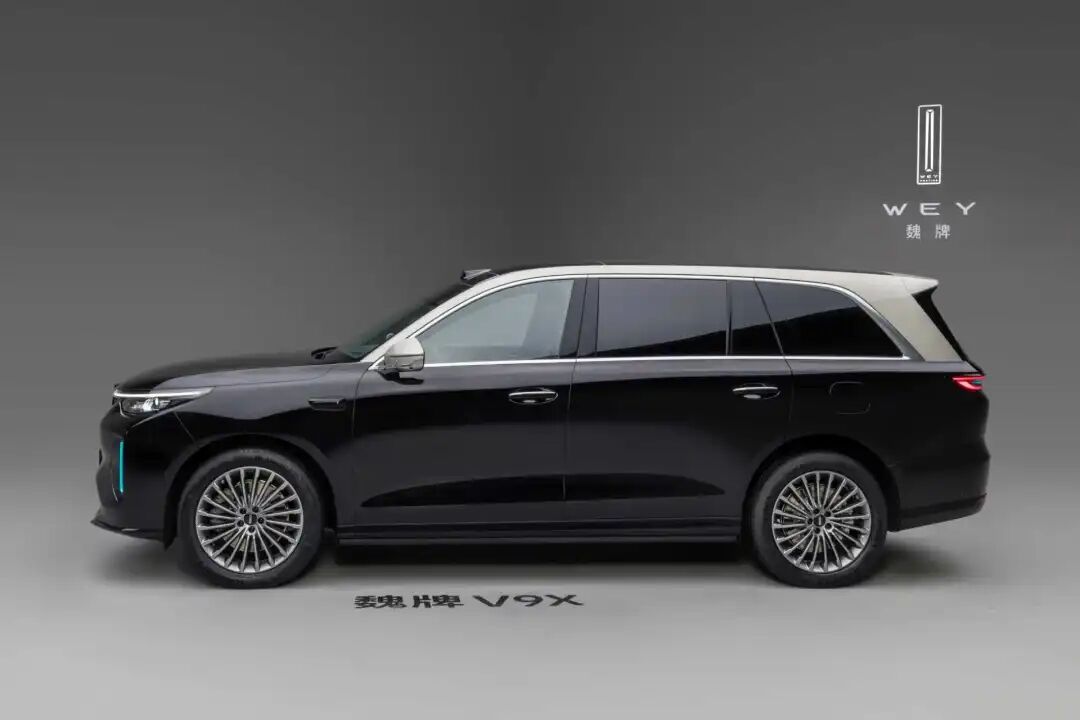
The Wei brand V9X goes a step further and is also equipped with a fully self - developed intelligent chassis.
It integrates hardware such as double - chamber air suspension, EDC continuously variable damping shock absorbers, and rear - wheel steering, and realizes algorithmic linkage through the self - development of the underlying layer of all core execution mechanisms. This means that the chassis is no longer a passive component but a limb that the "AI intelligent agent" can precisely control, becoming an extension of perception and execution.
While new - energy vehicle startups are still at the entry - level stage, Great Wall Motors has completed the self - developed closed - loop from engines, gearboxes to electric drives and batteries. This long - term accumulation enables Great Wall to break away from the "following" thinking in hybrid architecture design and create a top - level solution like the Super Hi4.
The technical foundation of full - stack self - development and the strategic determination to always adhere to the mechanical quality of cars are the fundamental reasons why Great Wall Motors still maintains strong competitiveness after experiencing multiple market changes.

From 1.0 to 4.0, the problem of quality perception of Chinese independent brands
The construction of quality perception has been a core issue that the Chinese automotive industry has been unable to break through for decades. Stereotypes such as "tacky", "rough", "lagging", "copying", and "lack of design" have long hung over domestic cars. Now that the industry is moving towards the fully intelligent 4.0 era, Great Wall Motors clearly realizes that it must truly overcome the mountain of quality to lead Chinese cars to a new height.
In the construction of quality perception, design is the most intuitive manifestation. The 3.0 era of intelligence has been going on for a decade, but Chinese automotive design is still in the exploration stage and has once fallen into a cycle of chasing traffic and borrowing styles. When a car worth about 500,000 yuan still faintly shows the outline of other cars, where can the real quality perception expected by Chinese consumers come from?
The classic Eastern aesthetics does not pursue ostentatious power or deliberate elegance. The core that touches consumers lies in its calm temperament, natural rhythm, and appropriate blank space. The aesthetic concept of the Wei brand V9X is exactly in line with the charm of classic Eastern architecture.
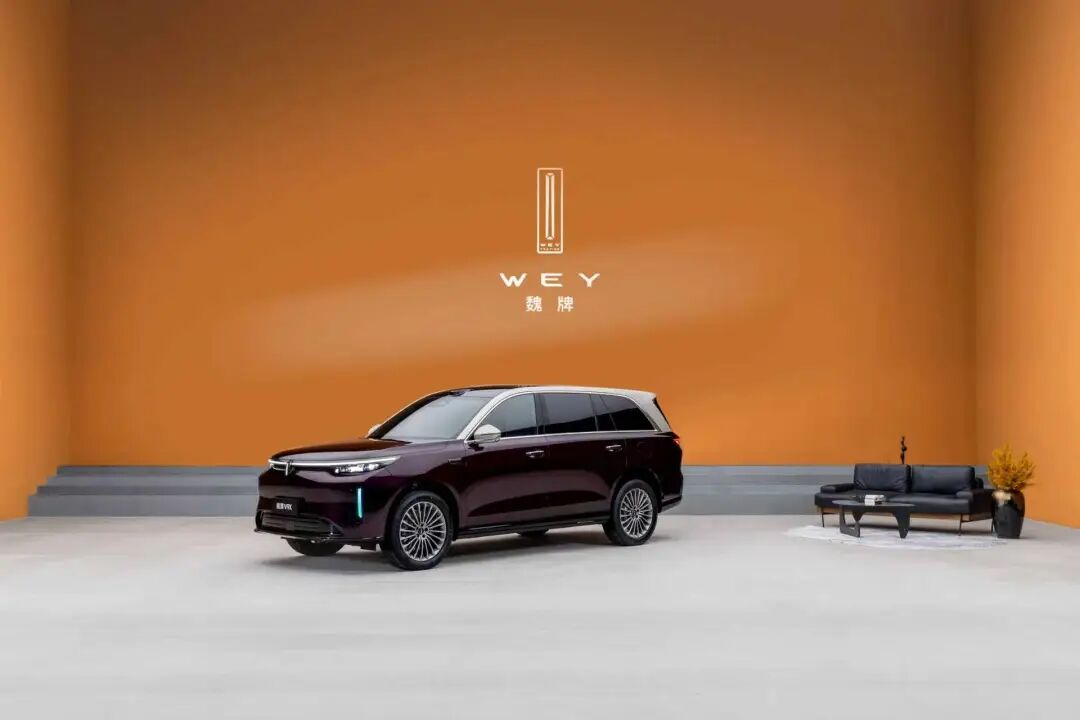
The Wei brand V9X abandons complex lines and redundant edges and corners, and only uses a smooth and stretched shoulder line to run through the body, extending from the front of the car to the rear in one go. This line is the soul of the vehicle's posture and the essence of the design that most tests the skill.
The vehicle's body posture is a difficult point in automotive design. Many enterprises pursue space, which leads to a thick rear end and makes the whole car look bloated. While ensuring the internal space, the Wei brand V9X adopts a "rear - sitting" rear - end design, combined with the elegant and straight waistline on the side of the car, making the whole car present a sense of massiveness like Mount Tai. This kind of design, which was previously only seen in million - level luxury cars, shows a simple and extraordinary style.
The front - face design has become another major highlight of this car. For a long time, the Chinese automotive industry has been hovering between borrowing and breaking through in the shaping of car logos and front - face languages. The Wei brand V9X uses advanced lighting technology to provide its own answer: it organically integrates the floating car logo with the front - face lamp group, not only breaking the traditional standing logo used by luxury cars but also outlining a unique hierarchical Eastern aesthetic artistic conception with light and shadow.
In terms of interior, Wei Jianjun once directly said, "The Wei brand V