Space computing power competition: Elon Musk is in charge of making grand promises, while the Chinese are in charge of implementation.
The battle for computing power on Earth is yet to reach a conclusion, but tech giants have now set their sights on space for the future development of computing power.
Elon Musk has claimed that he plans to establish an orbital data center in space consisting of one million satellites. Meanwhile, Chinese manufacturer Dreame has announced an even more ambitious plan to deploy two million satellites.
This is like the concept of a Dyson sphere.
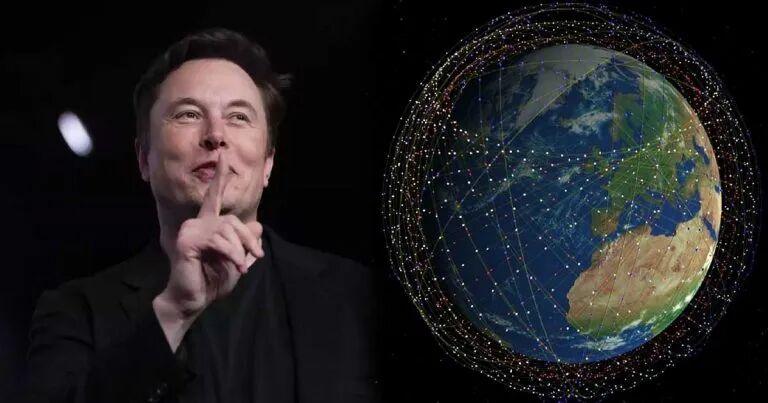
Does it sound like a wild fantasy? However, if you take a closer look at China's intensive efforts in the "space computing power" field over the past year, you'll realize that these are not isolated cases but rather a microcosm of a large - scale trend.
Space Computing Power: The Strategic Switch in the AI Era
China was the first country to send computing power into space.
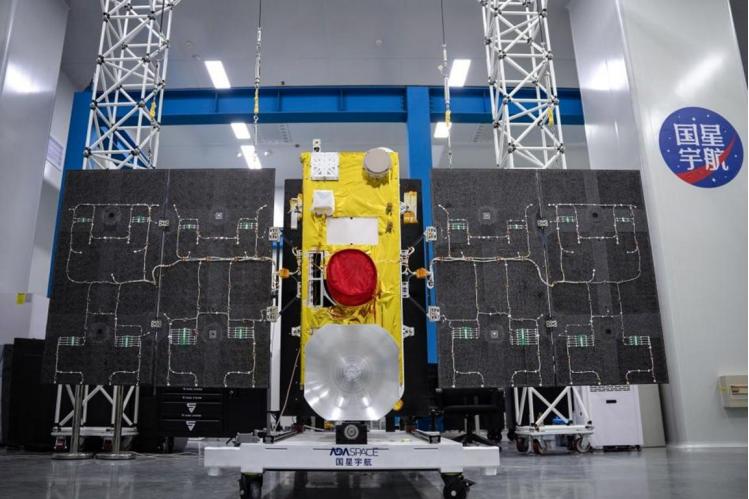
In May 2025, Chengdu Guoxing Aerospace and Zhijiang Laboratory jointly launched the world's first space - based computing satellite constellation, with 12 computing satellites entering orbit simultaneously. Each satellite is equipped with a space - based AI model with 8 billion parameters, and the maximum computing power of a single satellite can reach 744 TOPS, which means 744 trillion operations per second. With the coordinated operation of the 12 satellites, the overall on - orbit computing power reaches 5 POPS, or 5 quadrillion operations per second, capable of supporting the on - orbit deployment and inference of large models with 140 billion parameters.
This is the first mission of the "Three - Body Computing Constellation," and its ultimate scale will be in the thousands.
Guoxing Aerospace also has a more radical "Star Computing" plan: 2,800 computing satellites, with 2,400 dedicated to inference and 400 for training. The goal is to complete the networking of a thousand satellites by 2030 and finish the full deployment by 2035, forming a space computing power network with 100,000 P - level inference and one million P - level training capabilities.
But the question arises: Why send computing power into space? Aren't ground - based data centers good enough?
The answer lies in a figure that most people are unaware of: Today, the amount of data generated daily by remote - sensing satellites in orbit is massive, but less than 10% of it is ultimately transmitted back to Earth. Why? Because satellites can only transmit data back to Earth when they pass over ground stations, and this window is usually only about 10 minutes long.
The raw data from a single high - resolution remote - sensing satellite image can reach several hundred gigabytes, which is impossible to transmit within 10 minutes. The remaining data either has to wait in line for the next over - pass or is simply discarded.
Zhao Hongjie, the executive vice - president of Guoxing Aerospace, has calculated that if all remote - sensing images and sensor data are transmitted back to the ground - based cloud for processing, the bandwidth cost would be prohibitively high, and the response delay could range from several seconds to dozens of seconds. However, if the computing power is in orbit, the satellite can analyze the data on - site after taking photos and only transmit the "answers," such as a set of coordinates or an early warning, which is only a few kilobytes of data and can be transmitted within a few seconds.
In essence, these companies are betting that "satellite data services" will evolve from the current "selling of photos" to "selling of conclusions" (intelligence after AI analysis).
The core of this transformation is the shift from "space - sourced data processed on Earth" to "space - sourced data processed in space" - data is collected, processed, and decisions are made in space, and the ground only needs to receive the results.
The most important reason for China to focus on this area is that in the future, space computing power may become a "strategic switch" that most countries cannot avoid, just like GPS.
Just as the GPS master control station is in the United States, if the control of future space computing power constellations is in the hands of a certain country, in theory, it could selectively refuse to provide services to specific regions or prioritize the processing of its own data while delaying that of other countries.
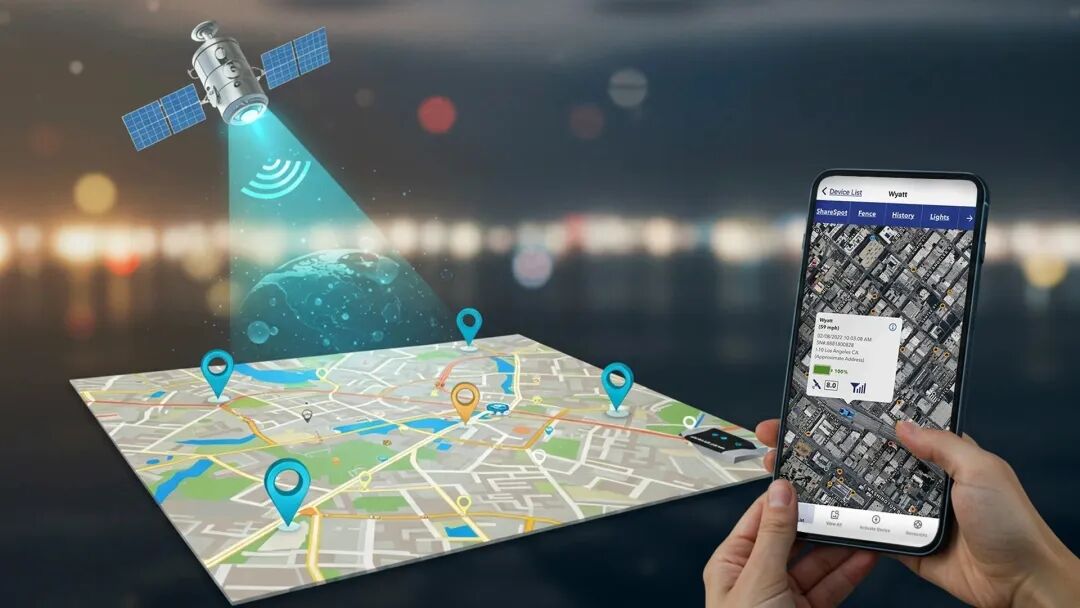
In the future, if a country's agricultural, financial, and emergency response systems rely on another country's space computing power services, the provider doesn't need to cut off the network. Simply "delaying the push" or "reducing the analysis accuracy" can make the relying country lag behind in dealing with pest outbreaks, futures trading, and disaster responses. This kind of "soft choke - hold" is more covert and harder to defend against than the "hard network cut - off" of GPS.
Therefore, developing space computing power has become a necessary move for China to "safeguard data sovereignty" in the AI era.
Countless Potential "SpaceXs"
There is a deep - seated misunderstanding among many people about China's space industry: They think it's all about how powerful the rockets are, how advanced the engines are, and how high - tech the materials are. However, in the space computing power field, the real deciding factor is actually a rather "mundane" thing - manufacturing.
Let's start with some data. Traditional communication satellites follow the "durable goods" model: each one can cost hundreds of millions of dollars, has a designed lifespan of 15 years, and it may take several years from design to production. Each satellite is like a carefully crafted "work of art."
Today's low - orbit computing satellites are taking a completely different path: the cost is being reduced to the level of millions of dollars, the designed lifespan is 3 to 5 years, and if one breaks, it can be replaced without much concern.
SpaceX's Starlink satellites are the pioneers of this "affordable" approach. It is estimated that the cost of each first - generation Starlink satellite was about 500,000 to 1 million US dollars, and the cost of the second - generation satellites has dropped to about 250,000 US dollars. They adopt a mass - production model similar to an automobile assembly line. At its peak, SpaceX's factory in Seattle could produce 10 satellites a day.
However, SpaceX's model has a natural threshold: It is a highly vertically integrated and closed - loop system. It manufactures its own rockets and satellites, conducts its own launches, and manages its own operations.
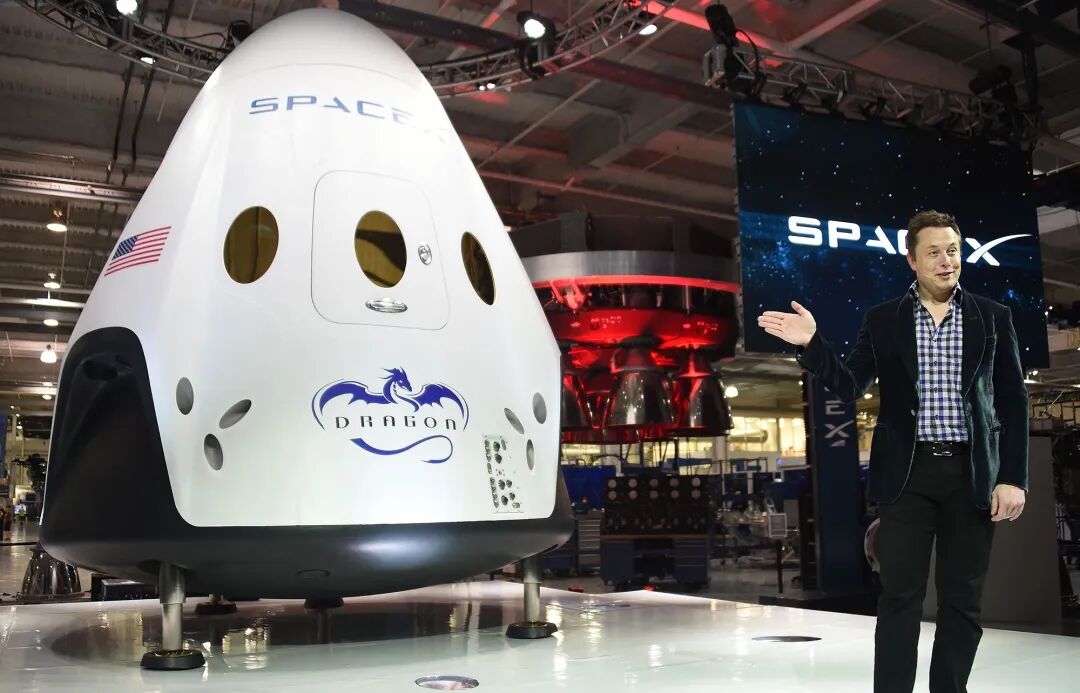
Only Elon Musk can implement this model in the United States because, as a privately - held billionaire, he has bypassed the bloated and intertwined military - industrial complex in the United States.
For decades, giants like Boeing and Lockheed Martin have formed an "iron triangle" with the Department of Defense, NASA, and Congress.
Boeing and Lockheed Martin have long relied on "cost - plus contracts" from the government. This means that the government reimburses all the costs incurred by the company plus a fixed profit margin. Once this contract logic is in place, companies have no incentive to reduce costs. As a result, the single - launch cost of NASA's SLS rocket is as high as 4.2 billion US dollars, 60 times that of the Falcon 9.
The "scary" part of China's manufacturing lies in the opposite - it doesn't need to "escape" from anything. Currently, the cost of every aspect of rocket and satellite manufacturing in China is driven down through market competition. This open and distributed supply chain operates efficiently on its own.
With the entry of private rocket companies such as Zhuque, Lijian, Hyperbola, and Tianlong, the launch price has been reduced from about 115,000 yuan per kilogram in 2020 to about 75,000 yuan per kilogram in 2024 and is still declining. This is real price - cutting through competition - if your price is high, customers will go to other companies.
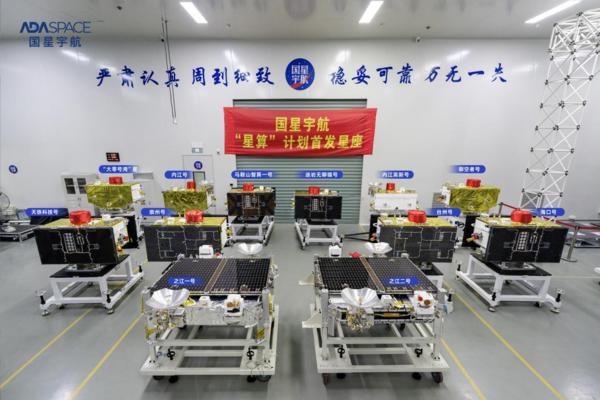
The cost of 50 - kilogram micro - satellites has dropped from hundreds of millions of yuan in the early days to 2 million yuan today due to industry competition. The cost of Changguang Jilin - 1 satellites has dropped from hundreds of millions of yuan in the 2010s to less than 5 million yuan. This is not the result of a single company's cost - cutting but the outcome of intense competition among multiple companies in the entire industry.
In addition to the satellite itself, chips are also an important example.
The high cost of traditional aerospace chips is mainly due to monopoly. There are less than five global manufacturers capable of producing radiation - hardened chips, and the only buyers are national space agencies. The sellers can set any price they want, and if you don't buy, you can't go to space.
Oriental Space, a domestic rocket company, has come up with a different approach: instead of making the chips themselves "radiation - resistant," they make the system "self - healing." Specifically, they use ordinary industrial - grade chips and run three sets simultaneously. If one chip is damaged by cosmic rays, the other two chips can correct the error through voting and automatically switch. This "triple - redundant architecture" was first proven feasible by SpaceX on the Dragon spacecraft.
Once industrial - grade chips can be used, the competition among dozens of manufacturers such as Qualcomm, Intel, and Cambricon is introduced. Instead of "five monopolies setting sky - high prices," it's now "dozens of companies competing to offer market prices," and the cost of a single chip has been directly reduced from hundreds of thousands of yuan to the level of tens of thousands of yuan.
This is the terrifying aspect of Chinese manufacturing. Although SpaceX also has the advantage of scale, with the ability to produce 10 satellites a day, its scale is "one - company scale," while China's scale is "industry - wide scale."
Heaven in a Grain of Sand: The Space Technology in Your Hands
By now, some people may think that terms like "space" and "satellites" are far from daily life. However, the foundation of China's space manufacturing industry actually lies in the things you touch every day.
Take polyimide film as an example. The name may sound intimidating, but you've probably come across it. The golden bubble - wrap in many express packages is often made of polyimide material.
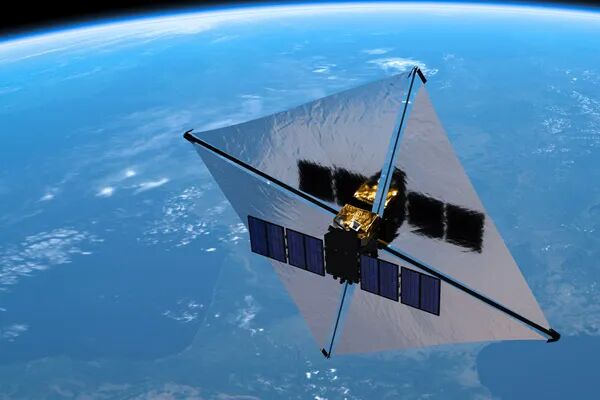
When used in satellites, this film becomes a "de - orbit sail." After a satellite reaches the end of its lifespan, the sail automatically unfolds, creating resistance in the thin atmosphere and dragging the satellite into the atmosphere to burn up, preventing it from becoming space debris.
Domestic company Ruihuatai has become the leading supplier of aerospace - grade polyimide film. It not only provides the only domestic aerospace - grade CPI film, which is the core material for flexible solar panel encapsulation, but has also participated in SpaceX's supply - chain certification.
Let's look at the PCB boards used in satellites. Technically, they are similar to the green circuit boards in your mobile phones.
Kingboard Circuit is the world's largest supplier of automotive PCBs and is also a qualified supplier for Huawei and NVIDIA. In 2024, it completed the proof - of - concept for over a hundred high - difficulty products and started mass - supplying PCBs for low - orbit satellite communication.
For the same company with the same set of technical capabilities, its products have expanded from mobile phones and cars to satellites. The logic behind this is: China's PCB industry accounts for over 60% of global production capacity and has accumulated technical expertise in high - end processes such as high - frequency high - speed boards and HDI. This expertise was developed through market competition in the consumer electronics and automotive electronics sectors and can now be directly applied to the satellite field.
There is also the flame - retardant glue used in electric vehicle battery packs. It is similar to the "space glue" used to bond satellite solar panels, as they are based on the same type of silicone rubber formula.
Domestic company Kangda New Materials has become one of the world's largest suppliers of structural adhesives. It first achieved a 60% market share in the wind - turbine blade field with its epoxy resin structural adhesive. In April 2024, it officially announced that it had applied the same product system to the aerospace field.
After learning about these, you'll notice an interesting phenomenon: The "hidden champions" in China's space race are not certain aerospace research institutes but the satellite production lines in Taizhou, the battery material workshops in Ningde, and the film production lines of Ruihuatai.
Zhang Tao, a deputy to the National People's Congress and a professor at Beihang University, said straightforwardly during this year's Two Sessions that China's current launch cost is about 50,000 yuan per kilogram and is expected to drop to 25,000 yuan per kilogram by 2026. With technological advancements such as AI - assisted additive manufacturing, the manufacturing cost of satellites is decreasing at a double - digit rate annually.
The arrival of this inflection point is due to the seamless transition ability from civilian to aerospace applications. This is the scenario that Chinese manufacturing is most proficient in and is the real magic behind the reduction of satellite costs from hundreds of millions to millions of yuan.
Space - Based Community: The First Cross - Border Infrastructure
After discussing the issues of technology and cost, let's talk about a bigger question: What does this "space computing power" infrastructure mean for humanity?
Here's a real - life story: In May 2025, China's International Development Cooperation Agency and the United Nations' International Fund for Agricultural Development signed an agreement to launch a project called "SAT - CARE." This project uses satellite - based digital solutions to help Tanzanian farmers obtain soil moisture and pest - disease early - warning information, which is directly sent to their mobile phones. The project has an investment of $2.268 million, directly benefiting 5,000 small - scale farmers and indirectly covering 1 million farmers.
