Regarding OpenClaw, who on earth raised the shrimp, and who will the shrimp support?
Today, I'd like to talk about OpenClaw.
During the Chinese New Year's Eve, I got kidney stones and experienced the most painful period in the past decade in Japan. During those days, I didn't pay much attention to what was going on outside. Vaguely, I knew that there seemed to be new AI products emerging. It was only after I returned to China that I found out they were really popular. Friends around me were all installing and discussing them, and they even set up some "lobster groups" to exchange ideas.
It's not that I'm really worried about being replaced if I miss out on a certain AI product. It's more that, although I'm not a front - line tech practitioner, I've always been an observer with a sense of curiosity.
After returning to China, I bought a Mac mini and "raised" several "lobsters". I "raised" one in my own Mac mini and several others using some domestic one - click deployment products. I named them Big Fool, Second Fool, and Third Fool respectively. Third Fool has stopped talking because its tokens are used up. Second Fool occasionally says a few useless words, while Big Fool can still provide some information occasionally.
Here, Chi Ru is my Big Fool:
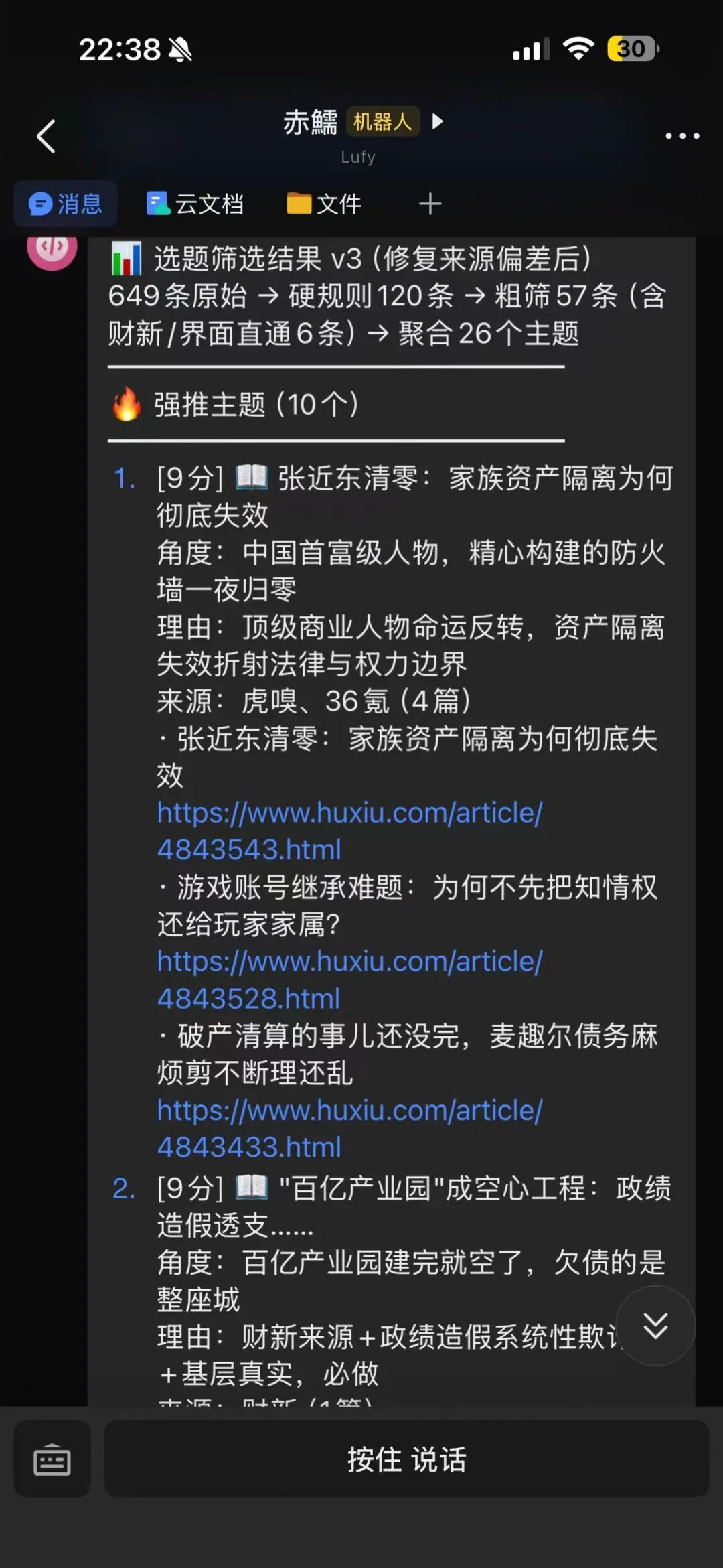
Everyone around me is talking about this. My WeChat Moments are full of "ponds" (referring to the topic of OpenClaw).
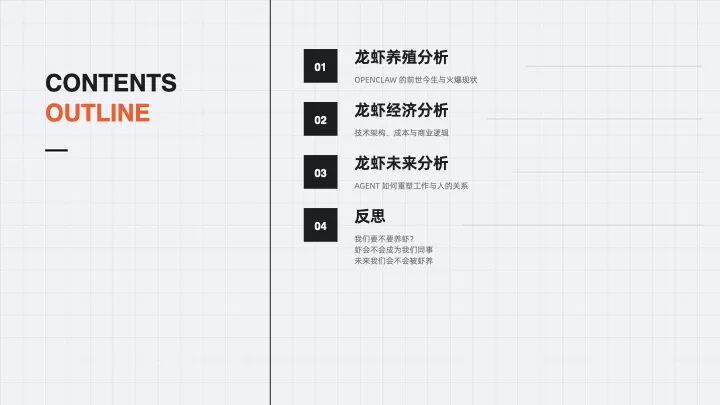
What I want to do today is to break down the matter of "raising lobsters" from start to finish and answer three questions:
- Should I raise a "lobster"?
- Will "lobsters" become our colleagues?
- Will we be "raised" by "lobsters" in the future?

1. The History of OpenClaw
Let me first talk about what generally happened.
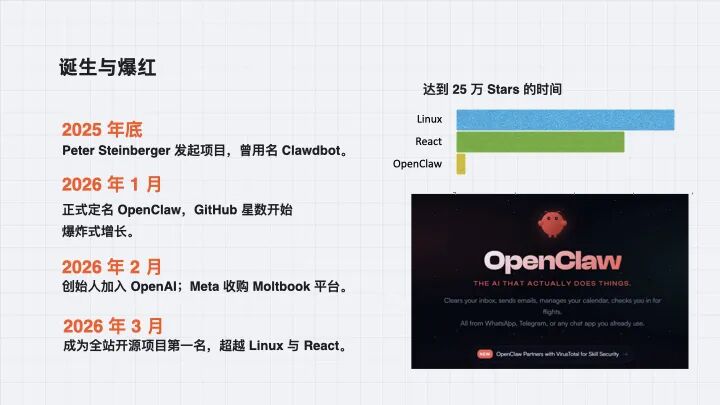
OpenClaw was first launched at the end of 2025 under the name Clawdbot, which was originally a play on Claude - the pronunciation is almost the same.
The legal team of Anthropic contacted the author, Peter, and asked him to change the name. If you're going to create a globally - influential product in the future, you probably wouldn't start by borrowing someone else's name, which shows that Peter didn't think it was a big deal at first. He changed the product name to Moltbot once, but then thought it wasn't quite right. Finally, he settled on OpenClaw.
Claw actually doesn't mean lobster; it means claw, while the logo is a lobster. But this naming is a stroke of genius - it's concrete, easy to remember, and easy to spread. When people hear "lobster", they know what it is, and it won't conflict with existing Internet giants.
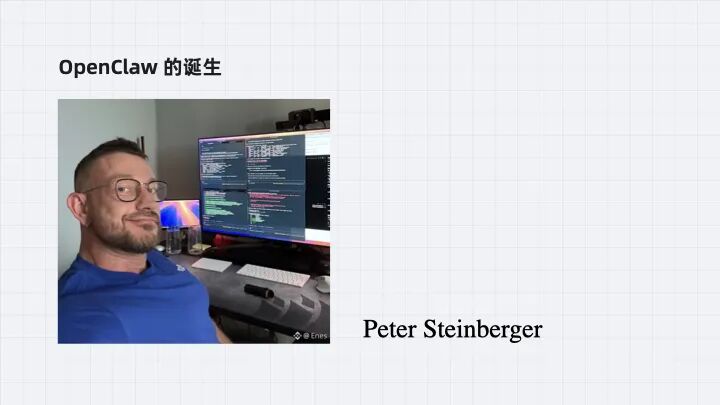
The author, Peter Steinberger, is also quite an interesting person.
He worked as a senior iOS engineer in Silicon Valley. During his work, he founded PSPDFKit in his spare time - a company dedicated to solving PDF rendering problems on iOS, which sounds like a very niche field. Ten years later, in 2021, the company received a strategic investment of 100 million euros, and he stepped down. After stepping down, he had the typical "post - exit syndrome" - celebration, travel, emptiness, and psychotherapy. For someone like Peter, he can't stay idle. He needs to keep doing things to feel a sense of achievement. Just having money to spend makes one feel empty and can even lead to serious psychological problems.
He said himself that OpenClaw is the 44th AI - related project he's worked on since 2009. You know, doing more projects does pay off. Some of my independent developer friends change projects every now and then. I used to look down on them a bit, but after seeing Peter's experience, it seems there's some truth to it. Additionally, it's worth mentioning that OpenClaw was entirely created using AI, written purely with prompts.
Around January 24, 2026, the project completed its brand switch to OpenClaw and quickly became popular in the developer community, especially attracting a high level of attention on GitHub.
Meanwhile, Moltbook became popular from late January to February, bringing a wave of popularity to OpenClaw. Moltbook is a platform mainly for AI agents to post, comment, and interact, with an interface and mechanism similar to Reddit. The "lobsters" started chatting with each other inside - this visual impact is very important.
In the entire history of AI development, this kind of visual and story impact is very important. People naturally personify intelligent AI, and such scenarios can make people feel amazed or worried. In the earliest days of neural network digital recognition in human history, Rosenblatt used an electronic device as large as a whole room, connected with thousands of wires, and really achieved the recognition of handwritten digits. At that time, the media said, "Machines can do everything." But that was in the 1940s and 1950s. It took more than 60 years to reach today's AI level.
Later, AlphaGo chose Go as a competitive sport, also with considerations for dissemination - the game can be arranged, and the visual impact is strong. Then, ChatGPT became popular because it can have natural - language conversations. It's all the same principle.
From late February to early March, OpenClaw transformed from a popular project into an open - source movement with a global community. The number of people researching and developing related plugins increased exponentially. On February 15, Peter joined OpenAI, and OpenClaw became a project of a top - tier AI platform (it is still maintained as an open - source project). On March 10, Meta acquired Moltbook, which caused quite a bit of controversy - it was commented that Meta missed the prime time. Of course, there's also the view that Meta is in the social network business, so acquiring the "fishpond" is more in line with its business than acquiring the "lobsters".
2. The Spread of OpenClaw in China
The spread of OpenClaw in China has been even more intense.
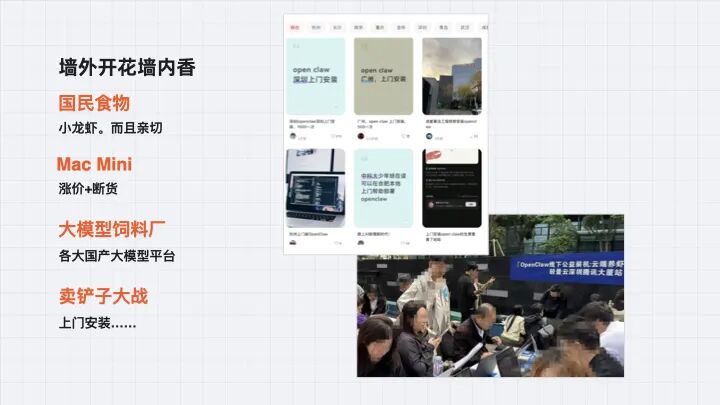
On the one hand, crayfish are a national - level food in China. Although the original reference was to big lobsters (such as Boston lobsters), people in China associate it with spicy crayfish, which is easy to remember and spread. On the other hand, like DeepSeek last year, it coincided with the Chinese New Year period, and people had a chatting atmosphere.
Around the Spring Festival in February, tech media started talking about it one after another, and people in groups were all discussing it. The spread was gradual, starting from niche media and spreading to those related to digital technology, and then to those completely unrelated - I found that some lifestyle - sharing and emotional bloggers around me were also talking about how to deploy OpenClaw.
Several aspects can show how popular it is:
The Mac mini has become popular. The Mac mini M4 version in Apple's JD.com official store is out of stock, and the order schedule on the official website has been postponed by at least two weeks. In the second - hand market, the price of machines that used to cost more than 2,000 yuan has risen to 3,000 - 4,000 yuan. On Dewu, the price has risen by a maximum of 649 yuan in the past week, a 13% increase. This was originally a very niche device, only bought by programmers or those with special needs.
A report by 36Kr on March 3 stated that after the Chinese New Year, OpenClaw "gained 9,000 stars in one day and exceeded 170,000 stars in two weeks". Now it's the number one open - source project on the whole platform, surpassing Linux and React. The contrast is sharp - React took 13 years to reach 240,000 stars, while OpenClaw took 60 days to reach 250,000 stars.
On March 11, the National Internet Emergency Center wrote in its risk warning that "the recent application download and usage situation is booming".
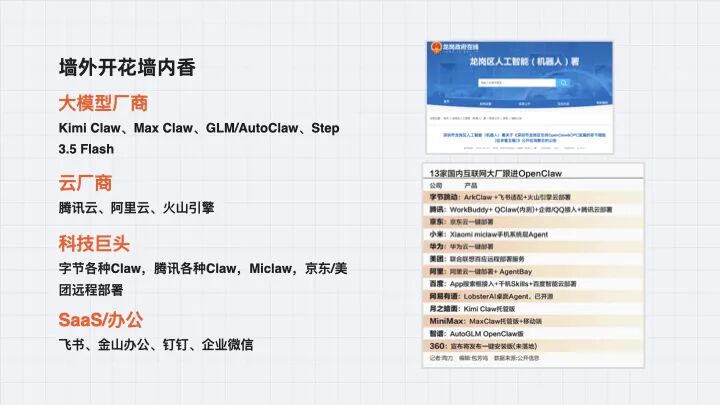
All major companies are promoting it. In early March, Tencent Cloud, Alibaba Cloud, and Volcengine all had quick deployment solutions for OpenClaw.
3. Big Companies Actively Embrace and Build Momentum
Domestic large - scale models are like big feed factories for "raising lobsters".
"Lobsters" need to be constantly fed to work. They have their own small models, but their main thinking relies on large - scale models.
The generally recognized best "feed" is Anthropic's Claude Opus 4.6, but it's extremely expensive. The second - tier includes Codex, Gemini, and models run locally with Ollama, which are also not cheap.
The third - tier is more diverse - Kimi, MiniMax, DeepSeek, Qwen, Zhipu, Doubao, etc., are all very common. Recently, Jieyue Xingchen also climbed up the list because it opened a free model. Why not use it if it's free?
Compared with Opus, these domestic models are almost free. This is also an important traffic and commercialization opportunity for domestic large - scale models. In the past, selling tokens in China was not a good business - big companies were pushing free products, so it was difficult to charge consumers directly or businesses. Now, there's finally a consumer - facing scenario, so of course everyone wants to get on board.
Selling tokens, cloud services, and deployment are all like selling shovels. It's the razor - blade logic - first, install the razor handle for you, and then you have to keep buying blades. Moreover, this time it's a full - chain process. Not only cloud services and tokens, but also IMs like QQ, Feishu, and WeChat are very important because you need to remotely command the "lobsters" through them.
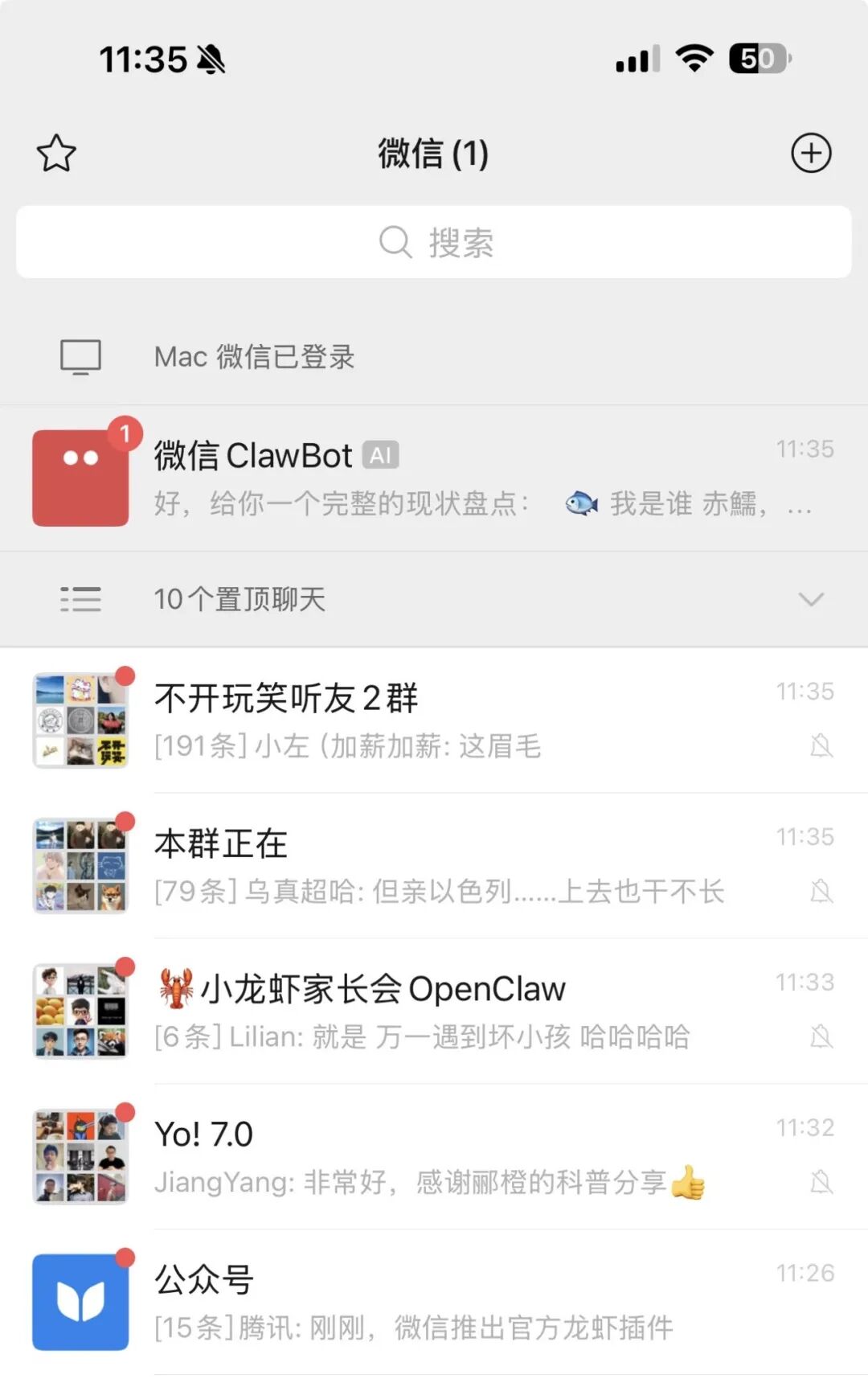
It can be seen that Tencent is also a bit anxious. WeChat, which rarely chases hot - topics, has launched an official robot that can access OpenClaw in the past few days and can chat with users on the first - level page.
There's also internal competition among big companies. The Tencent PC Manager team has developed QClaw, and WorkBuddy, a B2B code software, has also done so. ByteDance has projects related to Ark and Feishu Miaoda. Xiaomi has developed MiClaw, claiming it to be an intelligent agent, but there's controversy. Honor says its MagicPad 4 can deploy OpenClaw.
Concept stocks related to cloud computing, computing power leasing, and model access are all rising against the trend. There are more and more sharing promotions, salons, and training courses.
I saw Teacher Luo Yihang say that the current marketing always feels a bit strange, like a scam. Thinking about it carefully, it's really true - when the mobile Internet emerged, there were also many promotion activities, but it felt different. Now, it's more about chasing hot - topics out of anxiety, and the actions are a bit distorted.
Similarly, in Hangzhou, there has emerged a paid installation service. Remote installation costs 500 - 1,000 yuan, and the orders are full. This also shows that "raising lobsters" has a relatively high threshold.
In addition, Longgang District, Shenzhen, has issued several measures to support the development of OpenClaw and one - person companies (OPC), abbreviated as the "Ten Measures for Lobsters". OPC is a concept to be promoted this year. When doing PR, Hangzhou should also consider OPCs like me - the podcast I'm doing is also a one - person company.
Overall, it's very popular and has a trend of breaking into a larger circle.
4. What Exactly is OpenClaw?
After talking so much, what exactly is OpenClaw?
The definition is: A personal AI assistant running on your own device.
It's different from something like Manus, which can be used right away. It's an open intelligent agent platform that runs on your own machine and can work through your chat tools - WhatsApp, Telegram, Discord, Slack, Teams, and in China, Feishu, QQ, and WeChat.
The official says: Your assistant. Your machine. Your rules.
The official - stated capabilities are quite basic: cleaning up emails, sending emails, managing calendars, and checking in for flights. It can also be seen that Peter had relatively simple ideas when he first started working on OpenClaw.
So, how do you operate it? If there's an interface, use scripts to call the interface; if not, manually take over the computer.
The clever part is that once it's hosted, in principle, it's fully automated. You command it through the chat tool, and it controls the computer to execute.
Once this path is opened up, OpenClaw is like hosting a party - how to feed the "lobster" with large - scale models, how the "lobster" operates the computer, and how you command the "lobster".
You might say that all these things already exist. Can't you achieve them by writing some code? Yes, you can. But this package is more convenient and open enough. Once it's opened up, it can achieve the effect of a digital employee - let it run a task, learn something, monitor stocks, post something, and it can do many things.
