Xiaomi released its new SU7, and this time the entrance was crowded with rival companies.
In an era when three car models are developed and three model updates are made within a year, the Xiaomi SU7, which had its generational update after a two - year interval, can be considered a latecomer.
Judging solely from the press conference, the new SU7 is more like a one - sided student making up for its weaknesses: there is a slight improvement in performance, with the focus placed on battery range and comfort features. At the last part of the press conference, Lei Jun stated that the prices of materials are rising. To show his sincerity, the price of the new car has increased by a mere 4,000 yuan compared to the old model.
As the direct predecessor of the new SU7, the first - generation SU7 was launched in March 2024 and discontinued in February this year, with a cumulative delivery volume of 381,000 units. For the first mass - produced car of a new car manufacturer, this is incredibly strong.
Over the past two years, the sudden appearance of the SU7 has been repeatedly dissected, studied, and replicated in the new energy vehicle industry. When Xiaomi was developing updated models, its peers were also eager to enter this niche market.
With the release of the new SU7, various coupe and shooting brake models from competitors, which target the young and sporty market, are pouring in non - stop.
The Victory of the One - Sided Student
Whether intentionally or not, Xiaomi has tapped into a niche market with relatively less competition: pure - electric performance cars.
In 2021, Xiaomi announced its entry into the car - making business. Against the backdrop of the booming domestic new energy vehicle market, the industrial chain has made rapid progress driven by downstream demand. As a new entrant, Xiaomi does rely on the so - called "mature supply chain," but it also faces homogeneous competition. Therefore, Xiaomi chose a differentiated path.
The first - generation SU7 was a concentrated display of Xiaomi's car - making concept, mainly manifested in two aspects:
Firstly, space gives way to styling.
Compared with contemporary pure - electric vehicles, Xiaomi deliberately lengthened the front of the SU7 and consciously lowered the vehicle height, ultimately creating a shape with a proportion close to that of traditional luxury fuel - powered cars. Regarding the sacrifice of space, Xiaomi's approach is to lengthen the body and make up for it as much as possible with the wheelbase.
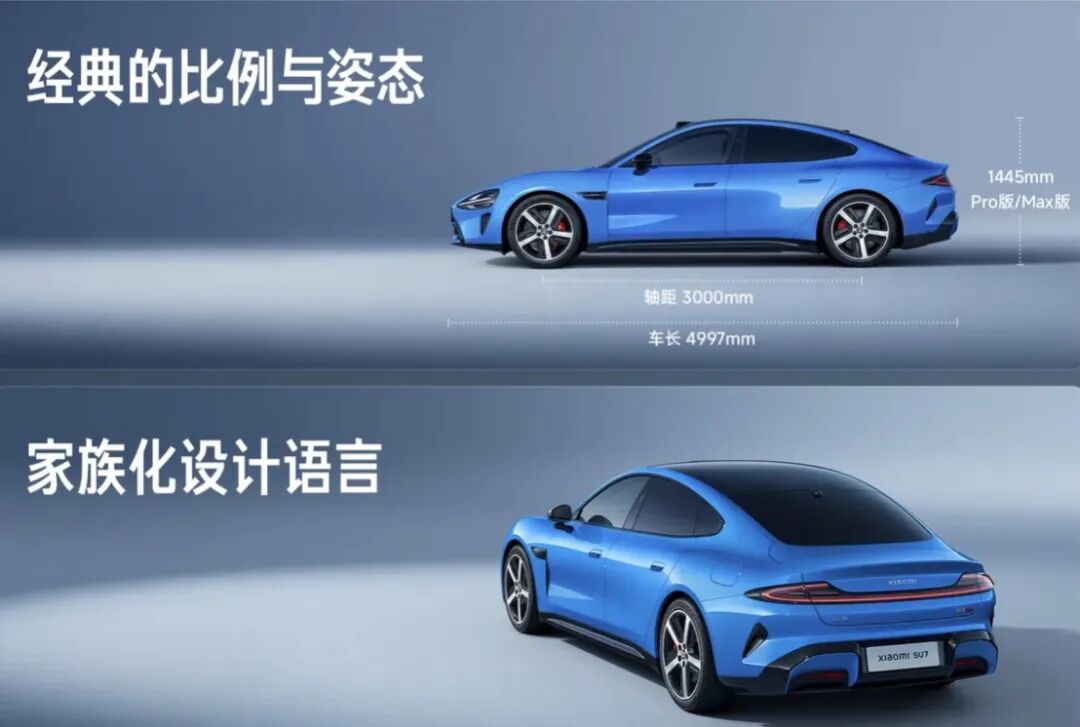
The new SU7 almost retains the design of the old model.
Secondly, performance and power are emphasized.
As a novice in car - making, Xiaomi invested its R & D expenses in components related to performance, such as high - speed motors, and quickly established its brand image using publicly recognized evaluation criteria like track lap times.
This concept of "meeting personalization while considering practicality" is more evident in the SUV model YU7.
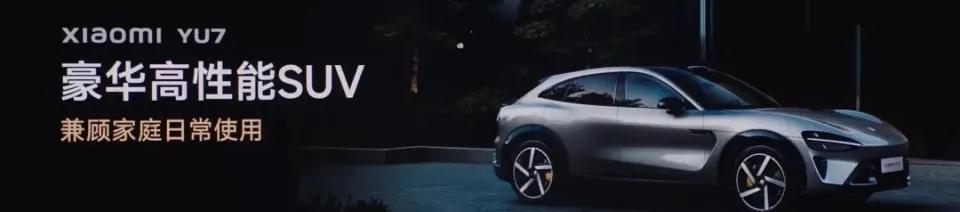
The YU7 is actually a coupe disguised as an SUV: a long front that is beautiful but lacks practicality, a body height (1608mm) lower than the mainstream SUVs, and power far beyond "daily use" all make the product definition of the YU7 far from that of mainstream SUVs.
In the promotional materials of the YU7, Xiaomi also straightforwardly used the phrase "suitable for daily family use":
The automobile business is a scale - based one. Car manufacturers need to spread R & D costs through sales volume. Therefore, mass - market models will tacitly pursue the "greatest common divisor," making trade - offs in appearance, space, and energy consumption to cover a wider range of consumers.
Xiaomi's concept goes against this trend, sacrificing weaknesses for strengths, and has achieved great success.
Objectively speaking, when the Xiaomi SU7 was launched in 2024, two market trends contributed to its popularity:
Firstly, the aesthetics of electric vehicles are returning to those of fuel - powered cars. In the early days of electric vehicles, they needed distinct symbols to differentiate from fuel - powered cars, so most of their designs were unconventional. However, changing from refueling to charging does not change the aesthetics of the mainstream consumer group. As electric vehicles become more popular, their designs are starting to return to tradition.
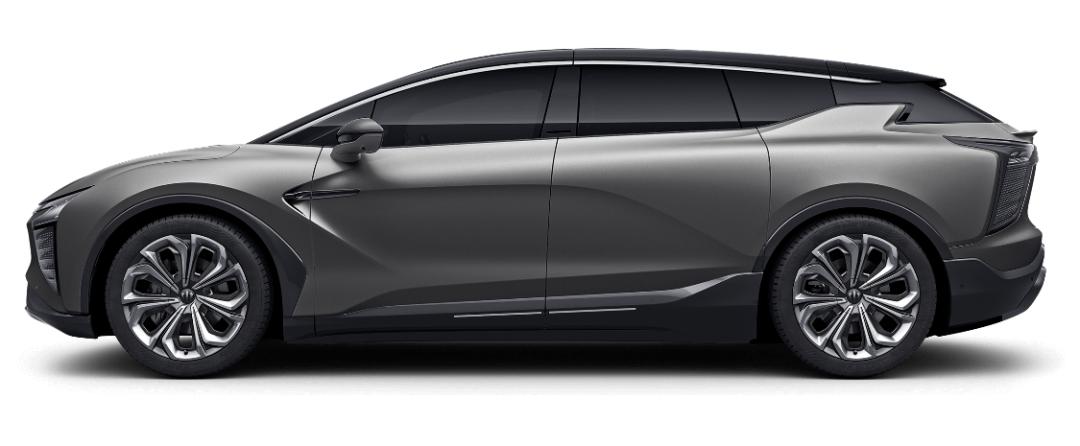
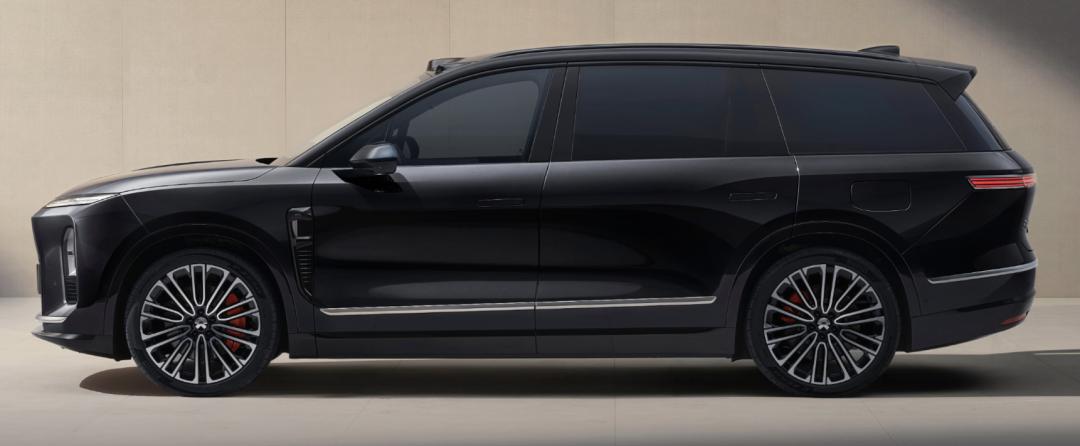
The above is the HiPhi X launched in 2020, and the below is the NIO ES8 launched in 2025.
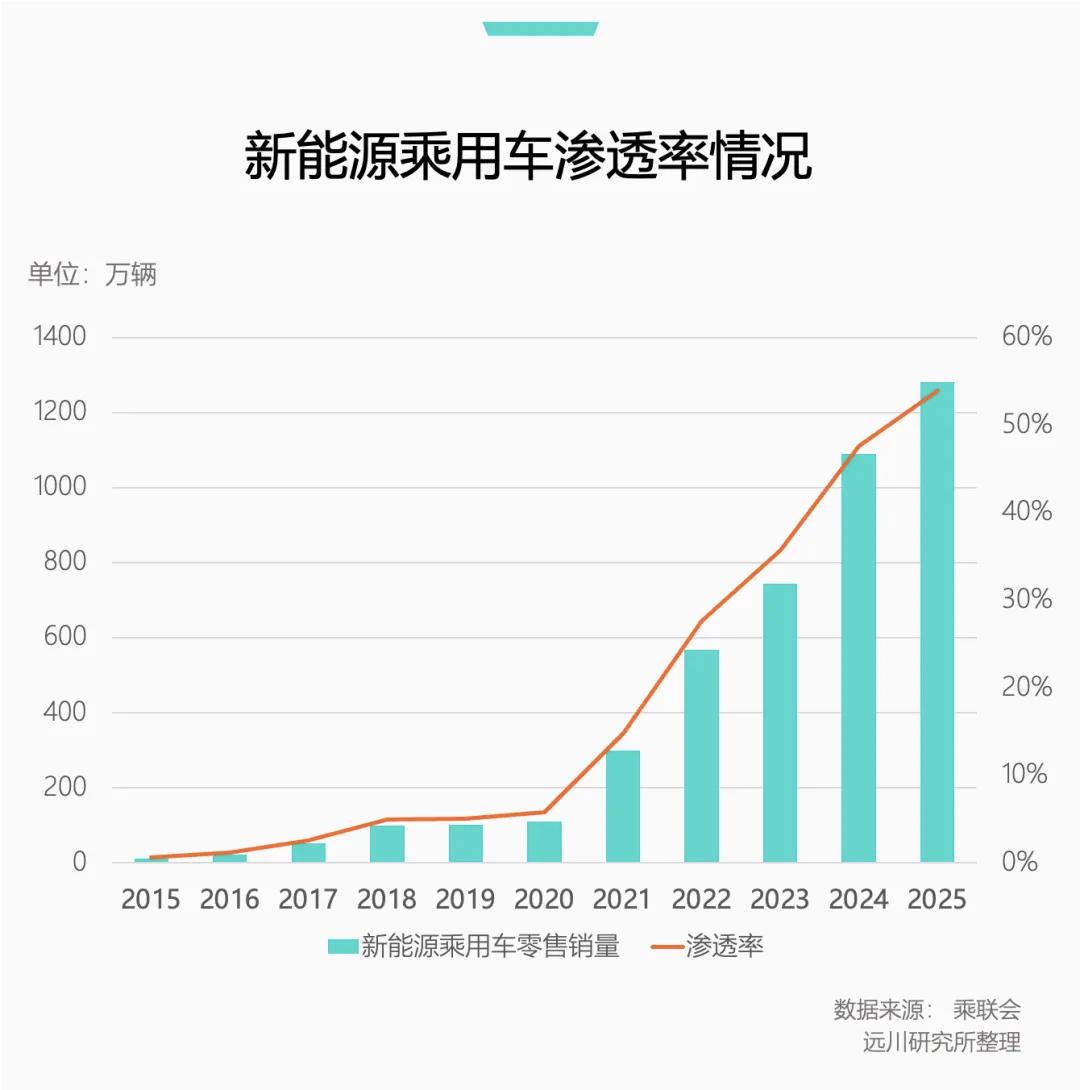
In 2024 when the first - generation SU7 was launched, the penetration rate of new energy vehicles in China reached 47.6%. The proportion and styling of the SU7, which are closer to those of fuel - powered cars, match the mainstream aesthetic preference.
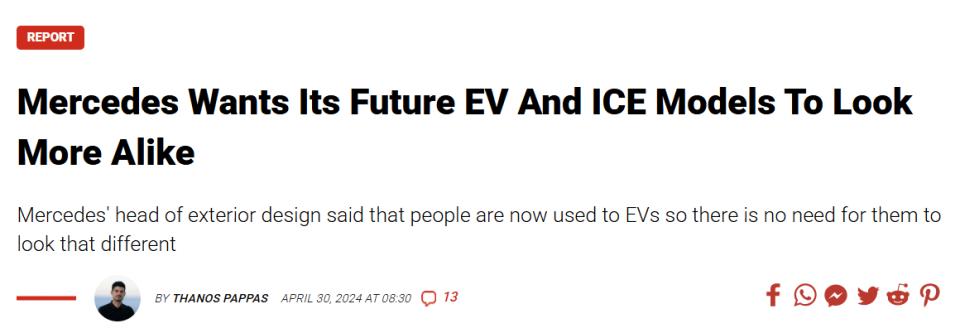
After the failure of the EQS, Mercedes - Benz stated that electric cars still need to look like fuel - powered cars.
Secondly, the scale of the "non - practical market" is expanding. From 2014 to 2023, the proportion of non - family users in the Chinese automobile market increased from 10% to 22%. During the same period, the proportion of car buyers aged 21 - 30 increased by 11%, and the average age of first - time car buyers decreased significantly.
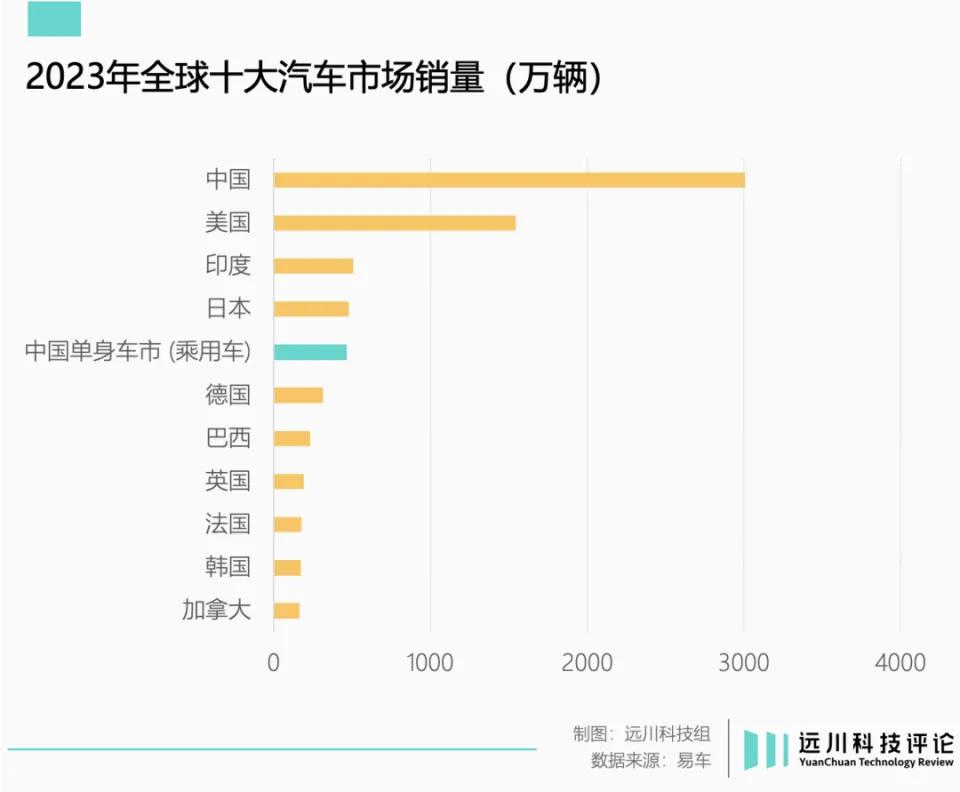
The needs of non - family users are more inclined to personalization. There are definitely more young people who like the BMW M4 than the BMW X5. When the SU7 was launched, it happened to provide an electrified alternative to BMW M and AMG for young first - time car buyers.
With the hot sales of the SU7 after its launch, new energy vehicle manufacturers deeply involved in the price war quickly found a like - minded target.
Identifying Needs
The Xiaomi SU7 is not the first model in the new energy market to focus on exterior design and emphasize power performance.
The Tesla Model 3 has always been the market leader in the pure - electric sedan segment priced above 200,000 yuan. However, from a product positioning perspective, the Model 3 only takes advantage of the low - cost power of electric vehicles and introduces a large number of new technologies to reduce costs. Its positioning is closer to that of the electric version of the Toyota Corolla.
The first - generation XPeng P7 and NIO ET5 are more similar to the SU7 in terms of positioning. They both target the young market and are well - known for their outstanding appearance. The long front and low height of the XPeng P7 are widely praised. However, neither of them emphasized performance too much and instead focused on comfort.
The difference with the SU7 is that Xiaomi did not use performance as just a "selling point" for a single model. Instead, it conducted R & D around performance, used quantifiable track lap times in conjunction with a series of marketing and communication efforts, and made performance the value proposition of the entire brand.
When the SU7 was launched, the competition in the domestic new energy vehicle market was already very fierce, and there were many well - rounded models with no obvious weaknesses. In this situation, Xiaomi made its performance advantage long enough, which was more conducive to opening up the market.
However, at the press conference of each model, Lei Jun spent the most time on design elements such as paint colors and body proportions, as well as comfort features such as sun protection and zero - gravity seats.
The reason is easy to understand. Performance and lap times are responsible for awakening consumers' sense of identity with the brand image, but the real factors that dominate consumer decisions are still how good the car looks and how comfortable it feels to sit in.
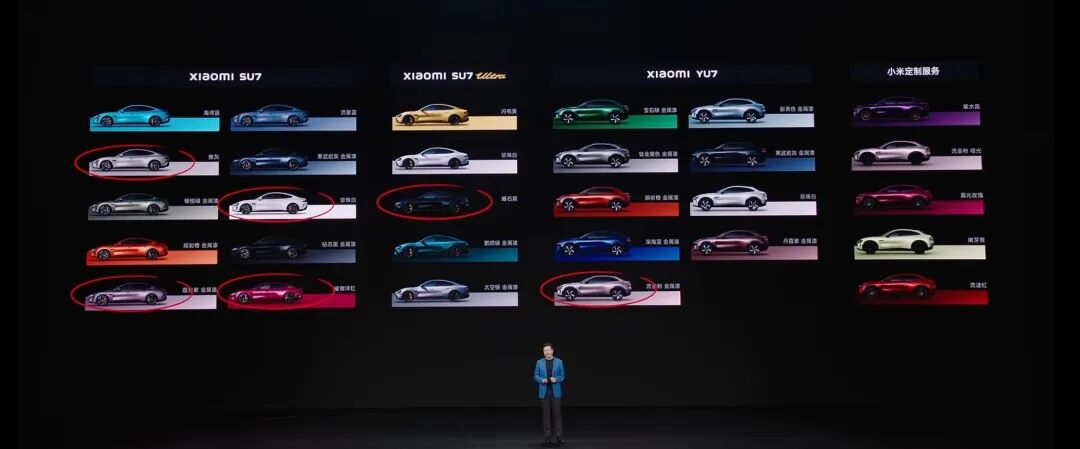
The paint color options provided by Xiaomi Auto.
This is a common approach in the consumer goods industry. Not every Arc'teryx consumer climbs mountains, and not every Red Bull drinker takes risks. However, a small can of Red Bull allows ordinary people to have something in common with those fearless individuals.
Throughout 2025, the first - generation SU7 sold 40,000 more units than the Model 3, and its sales volume was nearly twice that of the Mercedes - Benz C - Class.
One's own failure is terrible, but the success of peers is even more distressing. The hot sales of the Xiaomi SU7 have made everyone realize that although the pure - electric performance car market is small, the competition intensity is low, and there are still good profit margins.
Once a new methodology is verified by the market, it is destined to attract a large number of followers.
Li Auto used range - extender technology to open up the niche market of new energy SUVs for family use. A large number of car manufacturers followed in Li Auto's footsteps, and Li Auto's performance last year turned into a loss. The Great Wall Tank became popular overnight with its off - road positioning, and for a while, various new energy box - shaped vehicles emerged in large numbers.
Similarly, during the two years from the launch to the update of the SU7, various coupe and shooting brake models have also entered the launch cycle. Without exception, they all focus on driving performance and sporty styling, and their marketing and communication focus on "youth," "sports," and "driving pleasure."
The competition in the coupe market named after the number "7" is particularly fierce. Although some models' performance cannot match that of Porsche, they look more like Porsches than Xiaomi's cars.
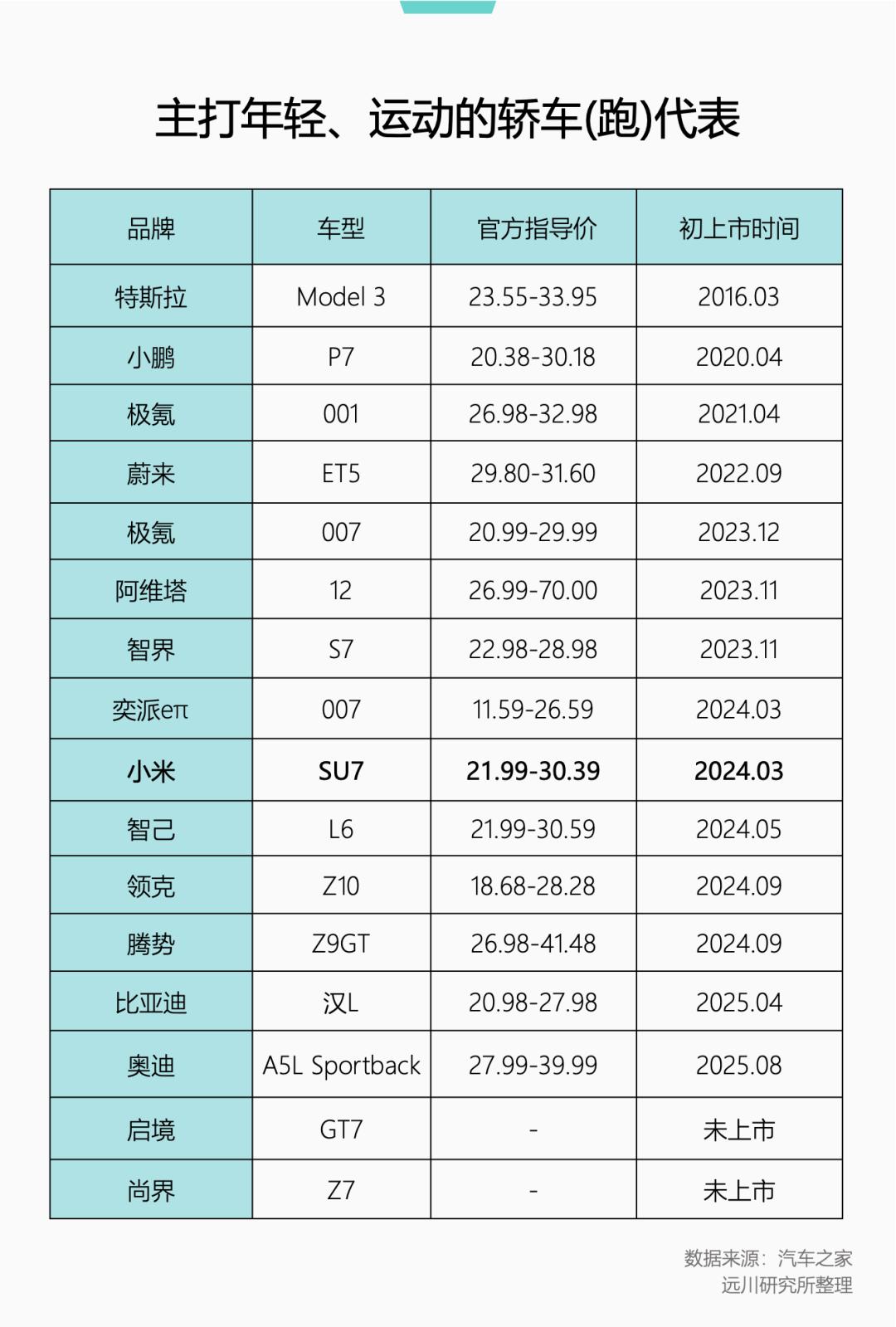
Compared with two years ago, the new SU7 is now facing a crowded field of competitors, but this time, no one is advising Mr. Lei to give up.
I Can Be Sporty Too
According to Lei Jun, Xiaomi has invested a total of 40 billion yuan in car - making over the past five years. In the first three quarters of last year, the revenue contributed by the automobile business alone reached 67 billion yuan. It is estimated that every competitor is asking themselves: Why does Xiaomi's money last so long?
To put it simply, Xiaomi's strategy for its automobile business can be summarized in three points:
Firstly, focus on the technical field of performance/sports, make intensive investments in core areas such as high - speed motors, and establish the brand image using publicly recognized evaluation criteria.
Secondly, design targeted models based on the personalized needs corresponding to the brand image. That is, instead of being a well - rounded model, focus on strengthening the strengths. This is actually similar to Li Auto's success.
Thirdly, use highly efficient and well - paced marketing and communication to quickly spread the brand influence.
This strategy is worth referring to, but it is difficult to replicate entirely.
Before entering the car - making business, Xiaomi was already a brand with extremely high topicality and exposure.
In the real consumer market, it is already very difficult to make consumers aware of one's brand and know what models it has. Xiaomi continued to use the Xiaomi brand instead of creating a new one, which means it inherited the brand assets in full.
Interpreting this strategy as "Lei Jun daring to use the main account" is not entirely correct. For established car manufacturers in the process of "transformation," although the main brand has popularity, it also has business goals and organizational structures based on the corresponding business, and it is difficult to make major changes. Using a new brand to start afresh is a very practical business decision.
Efficient marketing is one of the key factors in the rapid growth of Xiaomi Auto (note that we are not saying that Xiaomi "only relies on" marketing). Especially for new energy vehicles, a clear brand image is extremely important. Before proving "what I can offer," it is crucial to clarify "who I am."
For example, after announcing the names of the SU7 and YU7, Xiaomi will consciously guide consumers to remember the "popular names" of "Su 7" and "Yu 7." The format of "name + standard/Pro/Max" allows consumers to intuitively distinguish between high - and low - end models.
If you don't believe this, please definitely remember the full name of a model: Geely Emgrand L Raytheon Hybrid 1.5TD DHT Pro 100km super clean.
There is a common marketing shame on social media, which means an almost unwavering emphasis on so - called R & D and products and an avoidance of marketing and communication. It seems that if a company is good at marketing, it implies that its products are of poor quality.
However, in fact, the idea of "only need to make good products" is very naive. Automobile companies have always been the largest clients in the advertising industry. Behind every successful automobile brand, there are a group of advertising and marketing geniuses.
Relying on the prosperous new energy vehicle industrial chain, meeting the real needs of the new generation of consumers, and opening up the market through differentiated technology R & D and product positioning - this approach is very suitable for new brands to stand out, but it also has its limitations.