Elon Musk officially announced: Produce 1 trillion watt chips annually, marking the first shot for humanity's journey towards an interstellar civilization.
[New Intelligence Yuan Introduction] Elon Musk has once again turned the impossible into "what's happening"! Tesla, SpaceX, and xAI are launching three-pronged attacks. The construction of the Austin TERAFAB factory has officially begun, aiming directly at a computing power of 1 terawatt (1 trillion watts). Musk's goal is to propel humanity from a Type I civilization to a Type II civilization!
Musk is serious~
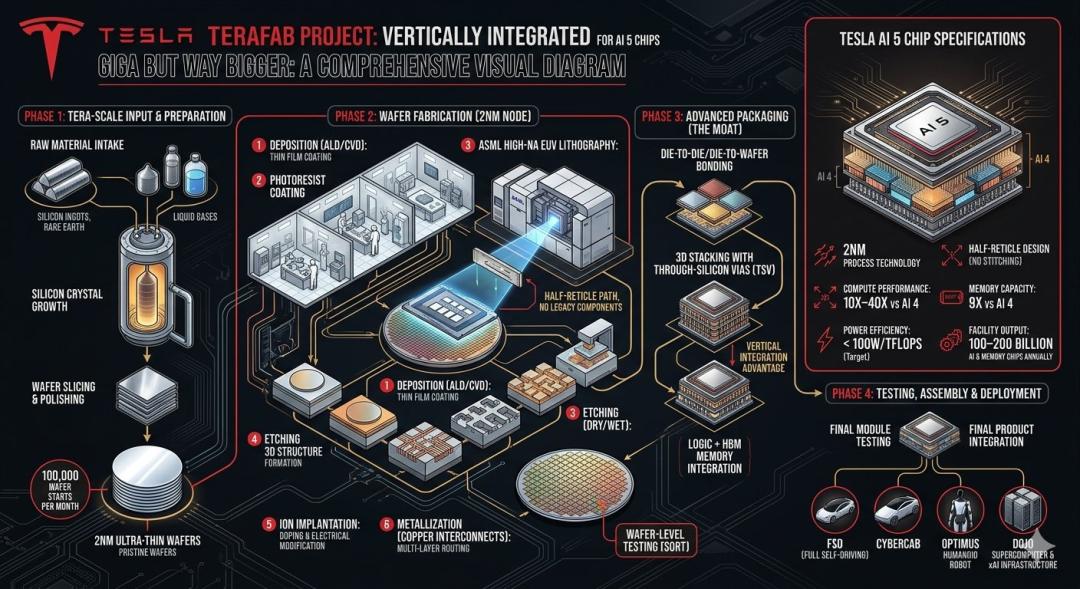
Tesla, SpaceX, and xAI are jointly building the largest chip manufacturing factory, TERAFAB, in history.
It integrates logic chips, memory chips, and advanced packaging technologies under one roof, with an annual planned computing power production capacity of 1 terawatt (1 trillion watts).
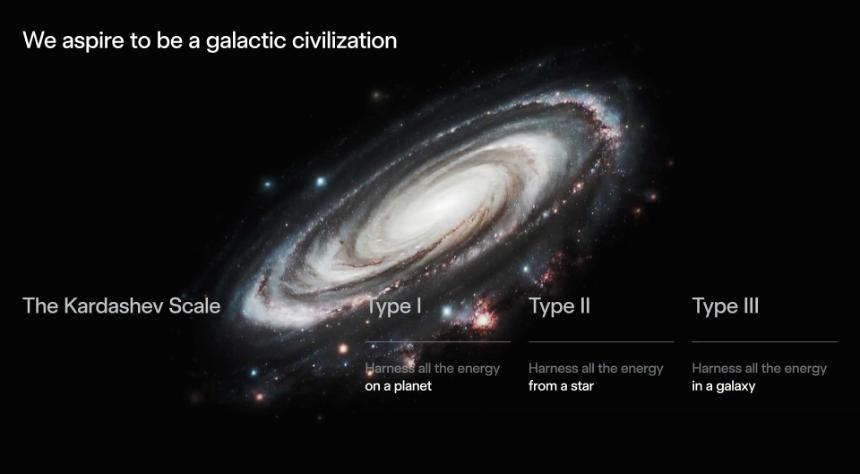
This time, the goal is truly sky-high. Musk's ultimate goal is a galactic-level civilization, that is, a civilization that can fully utilize the entire energy of a galaxy like the Milky Way.
Tesla tweeted that this is the next step towards an interstellar civilization; Musk said, "The most exciting era is ahead."
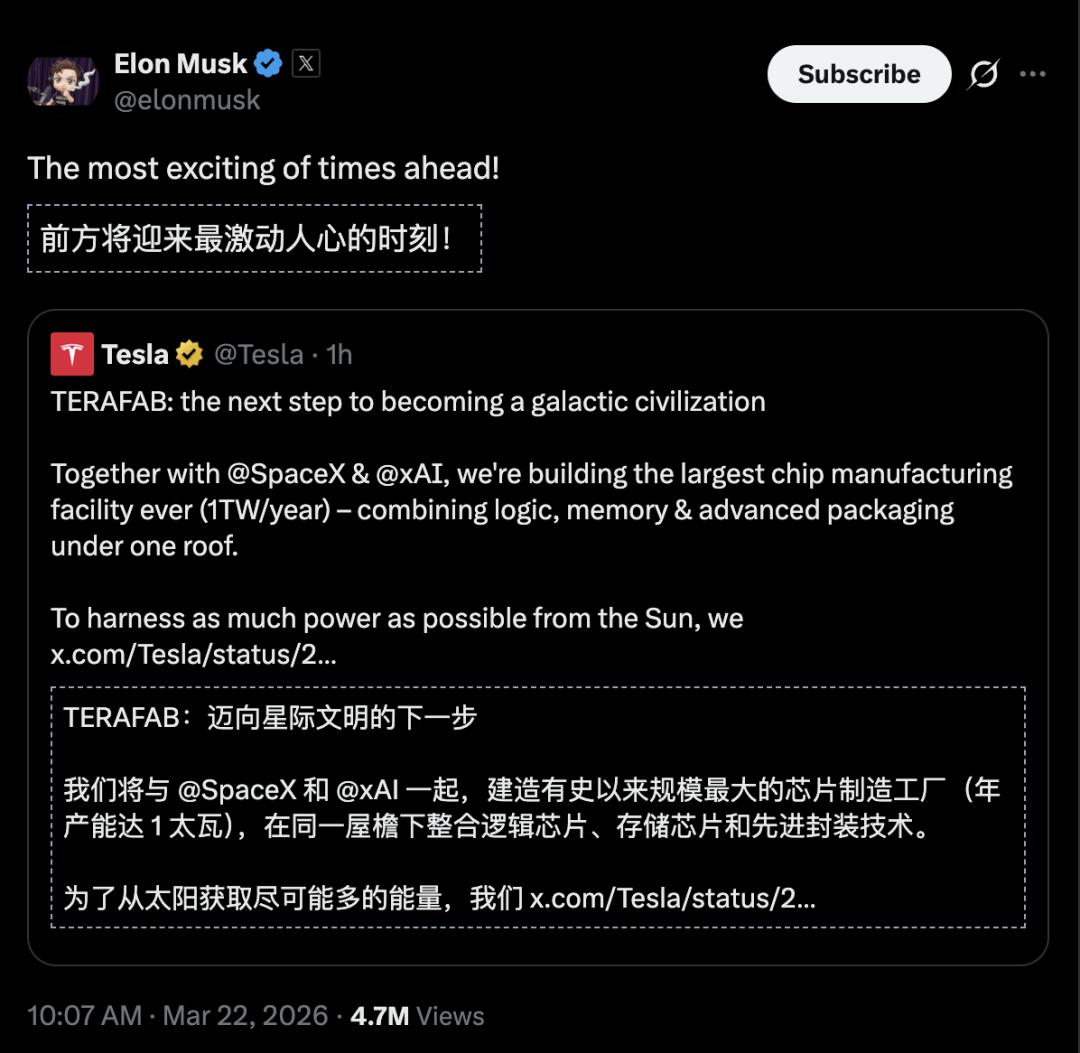
This computing power factory is designed to obtain as much energy as possible from the sun to propel humanity from a Type I civilization to a Type II civilization.
Journey: The Vast Cosmos
Currently, humanity only utilizes a tiny fraction of the solar energy that reaches this planet.
The total global electricity production on Earth is only about one-trillionth of the sun's total energy. This means that even if the energy output of civilization is increased by a million times, it would still only be one-millionth of the sun's energy.
In other words, human civilization is still far from reaching the upper limit of a Type I civilization.
The energy received by the Earth only accounts for about one two-billionth of the sun's total radiation, and the goal of a Type II civilization is still "a long way off."
In the universe, the Earth is so tiny; in the vastness of the universe, worldly disputes are just trivial matters.
Humanity aspires to become a civilization that expands into the Milky Way, with interstellar spacecraft that can take anyone anywhere at any time, and build magnificent cities on the moon and Mars.
Musk hopes that humanity will spread throughout the entire solar system in the future and send interstellar spacecraft to other star systems.
This is the most beautiful future.
To achieve all this, humanity needs to harness the power of the sun.
Therefore, although TERAFAB has terawatt-level computing power, it is still tiny on a cosmic scale.
To achieve this extremely arduous goal is indeed fraught with difficulties for humanity. What is truly needed is for SpaceX, xAI, and Tesla to join hands to jointly build this epic TERAFAB project.
To obtain as much energy as possible from the sun, we need to launch 100 million tons of solar energy collection devices into space every year.
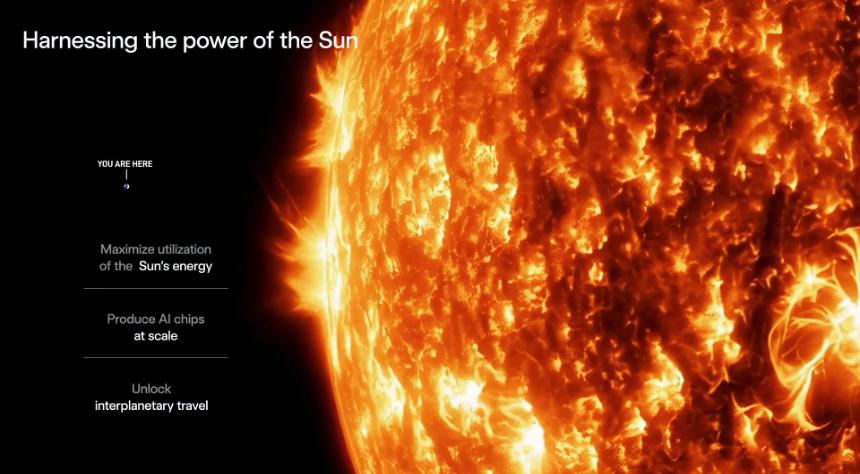
SpaceX's Starship is a crucial piece of the puzzle because to expand computing power and energy scale, one must go into space. This means you need to send a huge payload into space, and the Starship will make this possible.
Let's get a direct sense of how big the Starship is:
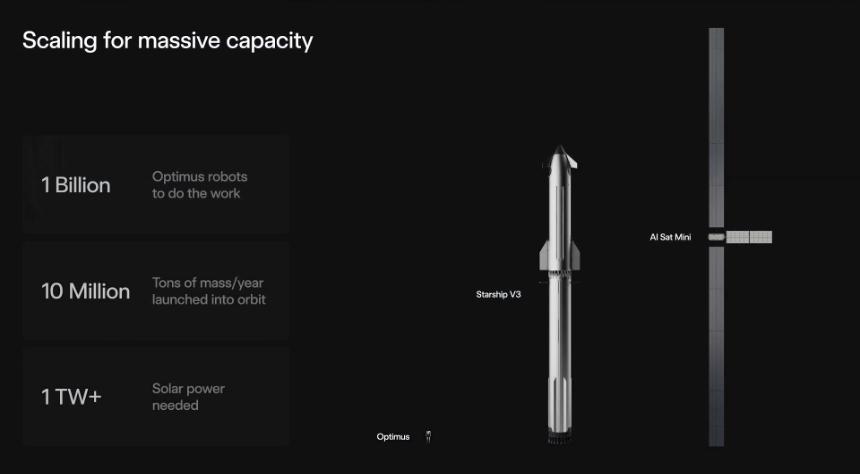
The Optimus robot on the far left is used as a reference, with a height of about 1.7 meters.
In the middle is the Starship V3 rocket, and the Starship V4 will be even taller and larger. SpaceX is in the process of increasing the payload capacity of the Starship B3 from 100 tons to 200 tons.
On the far right is a rough schematic of a miniaturized AI satellite. Its power is about 100 kilowatts.
To achieve terawatt-level computing power annually, it is necessary to
Have the ability to send hundreds of millions of tons of materials into orbit every year
Solar-powered AI satellites
Millions of Tesla Optimus robots participating in the construction
To achieve this goal, there is no need for new breakthroughs in physics, and there is nothing impossible.
On this basis, Musk will build terawatt-level solar power generation capacity.
In this way, the power generation problem - the problem of solar energy - is solved.
Therefore, the remaining key pieces of the puzzle are the chip problem and the computing power problem.
All of these require a large number of chips: Just the Optimus robots alone need 100 - 200 GW of chips, and in addition, terawatt-level (1000 GW) chips are needed for the solar AI satellites.
For reference, the current global annual production capacity of AI computing is about 20 GW.
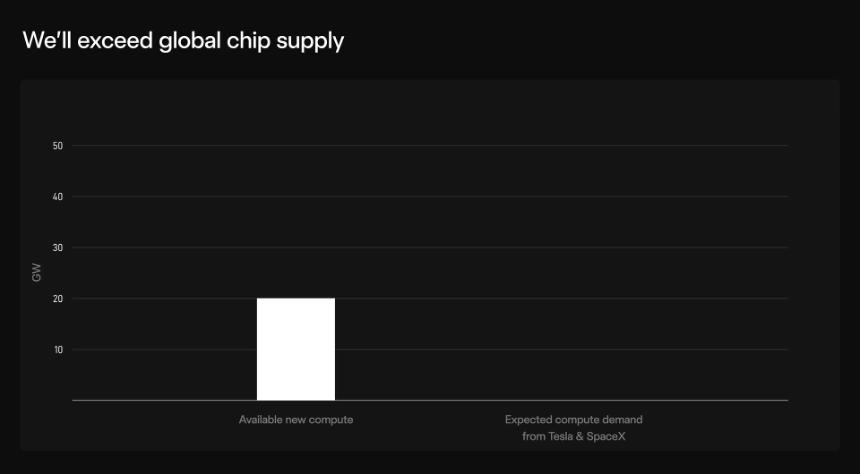
This exceeds the total production capacity of all current global chip manufacturers, and even the expected production growth by 2030 cannot meet the demand.
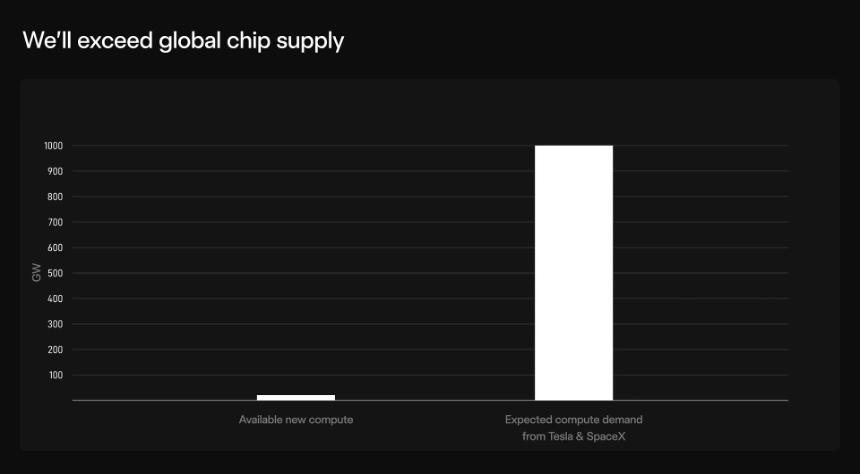
So, today's TERAFAB is precisely to solve this crucial missing link and jointly move towards that future among the stars.
The Terawatt Computing Power Behemoth Officially Begins Construction
Musk announced the construction of the first brand-new chip factory, TERAFAB, in Austin.
This advanced technology wafer fab will have all the equipment needed to manufacture any type of chip (logic chips or memory chips). At the same time, it has all the equipment needed to manufacture photomasks.
In other words, within a single building, Musk can complete the production of photomasks, the manufacturing of chips, the testing of chips, and the production of new masks - thus achieving an extremely fast recursive cycle of chip design improvement.
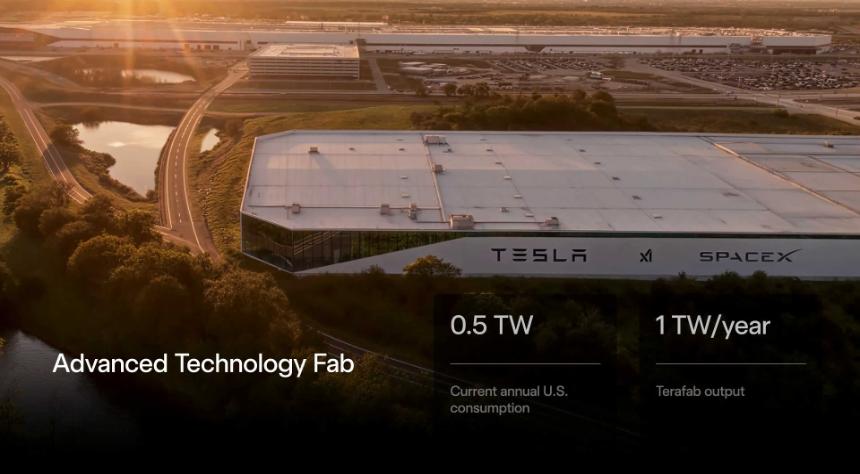
According to Musk, there is currently no place in the world that can simultaneously meet all the conditions for manufacturing logic chips, memory chips, packaging, testing, remaking masks, and continuous iterative optimization.
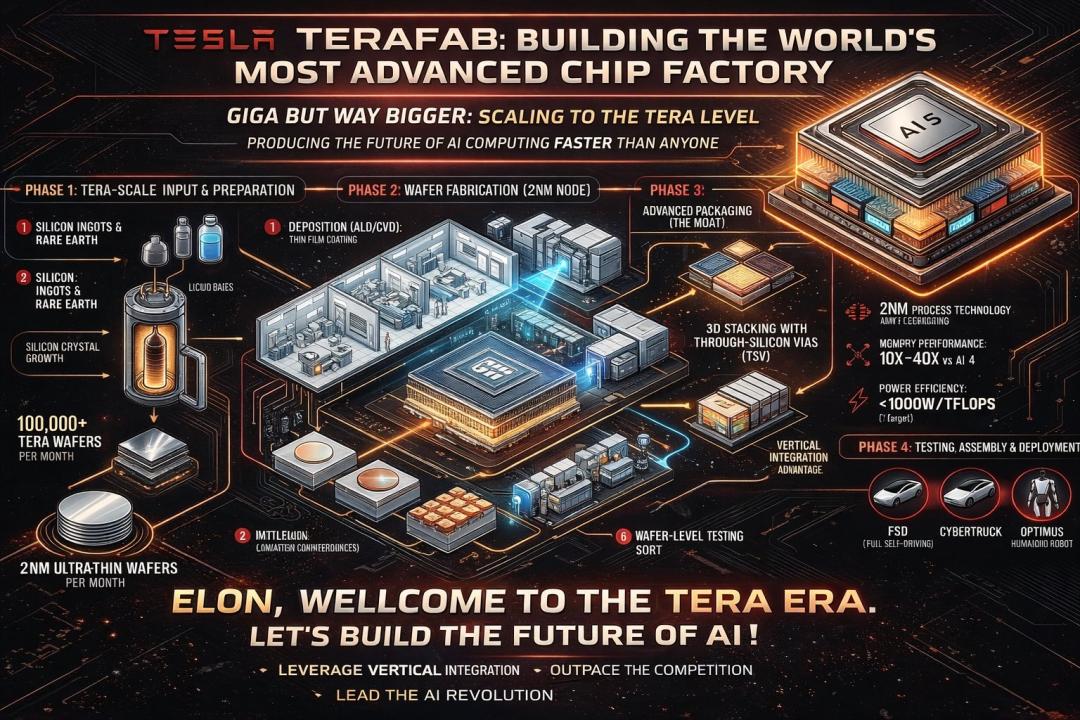
Moreover, Musk not only wants to do traditional computing but also challenges the limits of physics and computing, trying all kinds of bold and even crazy ideas.
But all this can only be done when you have such a rapid iterative cycle.
This is the core advantage in Musk's mind: the ability to complete chip manufacturing, testing, design modification, and the manufacturing of new chips within the same building. This iterative optimization ability will be an order of magnitude ahead of anywhere else in the world.
In general, Musk plans to manufacture two types of chips.
One will be optimized for edge inference.
This type of chip is mainly used in Optimus robots and vehicles, but especially in Optimus. Because Musk expects the production volume of humanoid robots to be 10 to 100 times that of cars.
If the global annual car production is about 100 million, then he expects the annual production of humanoid robots to be between 1 billion and 10 billion.
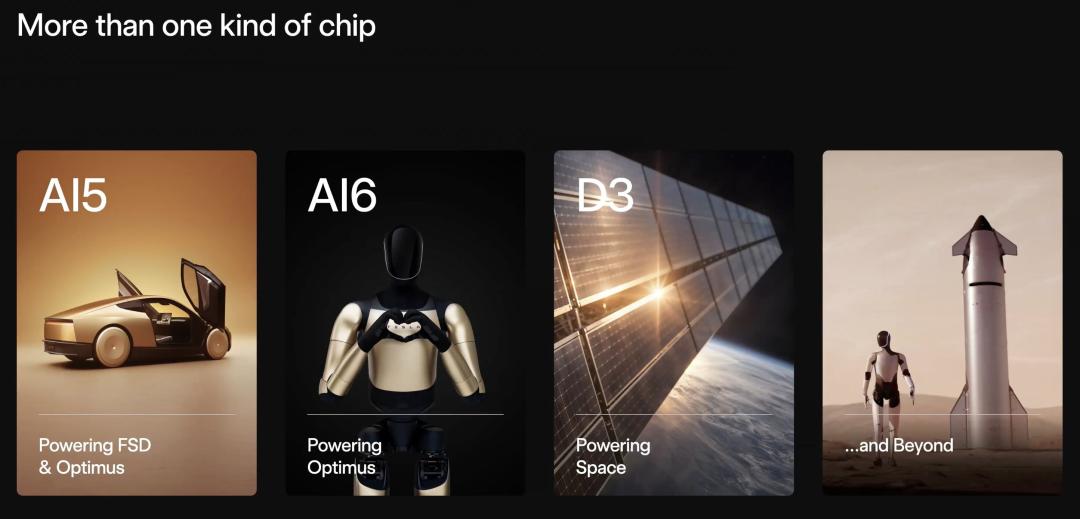
In addition, Musk also needs a high-power chip specifically designed for space, which needs to take into account the harsh environment in space: high power, high-energy ions, high-energy photons, electron accumulation, etc. In short, designing chips in space has many different constraints compared to designing chips on the ground.
Future: An Era of Abundance
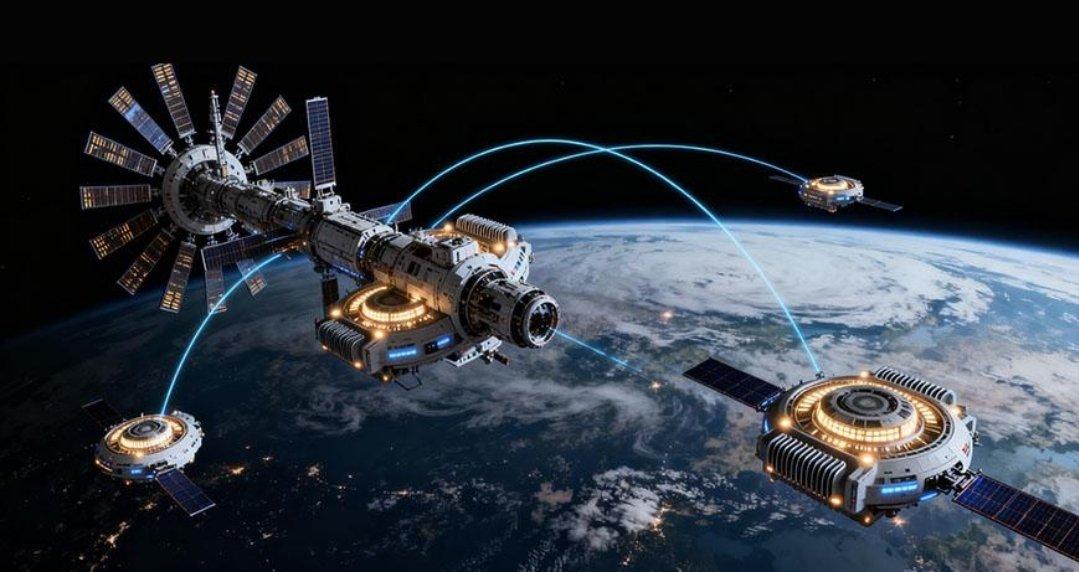
As for space computing, Musk speculates that it will account for the majority of computing in the future. Because the electricity on Earth is limited.
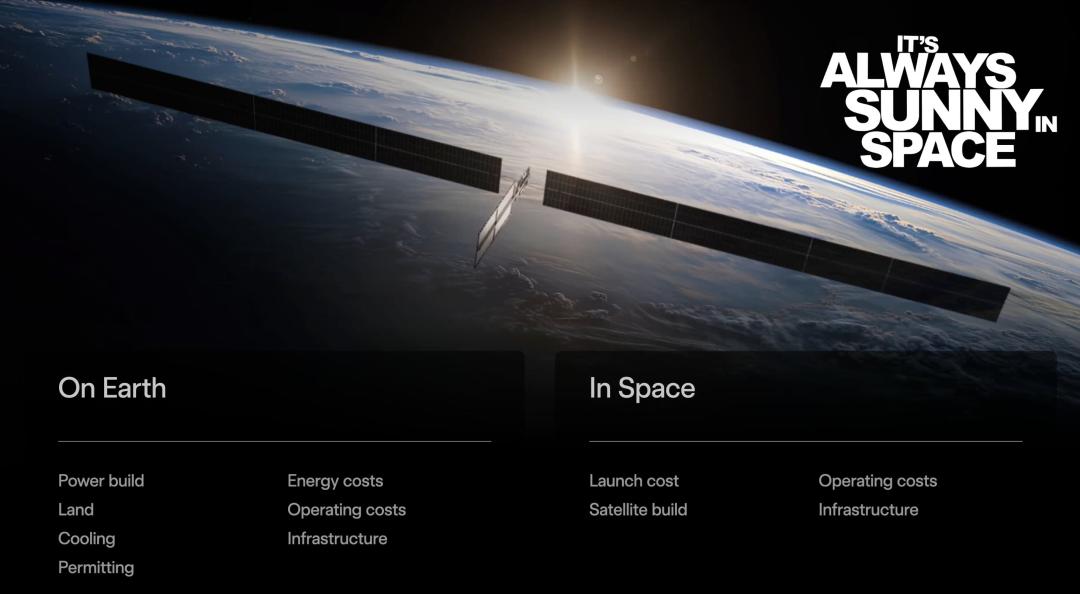
So he believes that the annual chip demand on Earth is probably about 100 to 200 gigawatts, while the chip demand in space may reach the terawatt level. This is probably due to the power constraints on the ground.
But space has an advantage: it is always sunny there. This is very ideal.
It may only take two or three years for the cost of sending AI chips into space to be lower than the cost of ground deployment. Because in space, you don't need batteries as much because there is always sunlight.
In space, the solar energy obtained will be at least five times that on the ground because there is no atmospheric attenuation, no day-night alternation, no seasonal changes, and it can always face the sun directly.
This can maximize the utilization of solar energy. In fact, the cost of space solar energy is lower than that of ground solar energy because there is no need for thick glass or brackets to withstand extreme weather.
Therefore, once the cost of entering orbit drops to a lower level, deploying AI in space will become extremely attractive and basically an undisputed choice.
More importantly, after going into space, you will reap the benefits of economies of scale, and things will become easier over time.
Conversely, when you want to continuously increase electricity on the ground, you will encounter the problem of insufficient space. Good locations will be occupied, and then you will face the NIMBY (Not In My Back Yard) dilemma.
So in fact, it will become more and more difficult and costly to increase electricity on Earth.
But in space, the situation is exactly the opposite - over time, the cost will become lower and the difficulty will become smaller. These are very important points.
Hearing this, you must be thinking: What's next after TERAFAB?
How to reach the petawatt level? This is obviously the next question.
The answer is: Build an electromagnetic mass driver on the moon, in conjunction with robots, Optimus, and of course, a large number of humans.
With it, you can achieve petawatt-level computing power and send this computing power into deep space.
Because the moon has no atmosphere and its gravity is only one-sixth of the Earth's, you don't need a rocket at all. You can directly use electromagnetic acceleration to accelerate the payload to the moon's escape velocity.
This will significantly reduce the cost again and achieve a goal