Amid the price hike wave, air conditioners are making a big splash at AWE: Midea focuses on "four seasons", while Hisense goes all out for the whole house.
In the just - passed year 2025, almost the entire air - conditioning industry was engaged in a price war. The average retail price of split - type household air conditioners was driven down to 3,099 yuan, which was something that many people didn't even dare to think about a few years ago. However, at the beginning of spring in 2026, with the rise in copper prices and the news of price increases from multiple air - conditioning manufacturers, it seems that they are determined not to use low prices to boost sales anymore.
Actually, at the just - concluded AWE2026, the overall trend of the air - conditioning industry was already very obvious. This year, it's not just about competing in energy efficiency, air volume, and cooling/heating speed. Instead, it has started to focus on more detailed scenarios and more complete air systems. For example, Midea launched the third - generation Fengzun, an air conditioner that can be used throughout the four seasons, and TCL continued to explore the sleep scenario.
In other words, the collective price increase of air - conditioning manufacturers this year is not only because they can no longer bear the cost, but also because the old approach of simply relying on low prices to boost sales has become increasingly difficult. That's why, at the just - passed AWE2026, the competition in new technologies in the entire air - conditioning field was more intense.
From Four Seasons to Sleep: Air Conditioners Start to Compete in Scenarios
In the past few years, air conditioners basically competed around hardware parameters and cost - effectiveness. The biggest change presented at this AWE is that these air conditioners seem to want to address the needs of different seasons in a year, different time periods in a day, and different spaces at home separately.
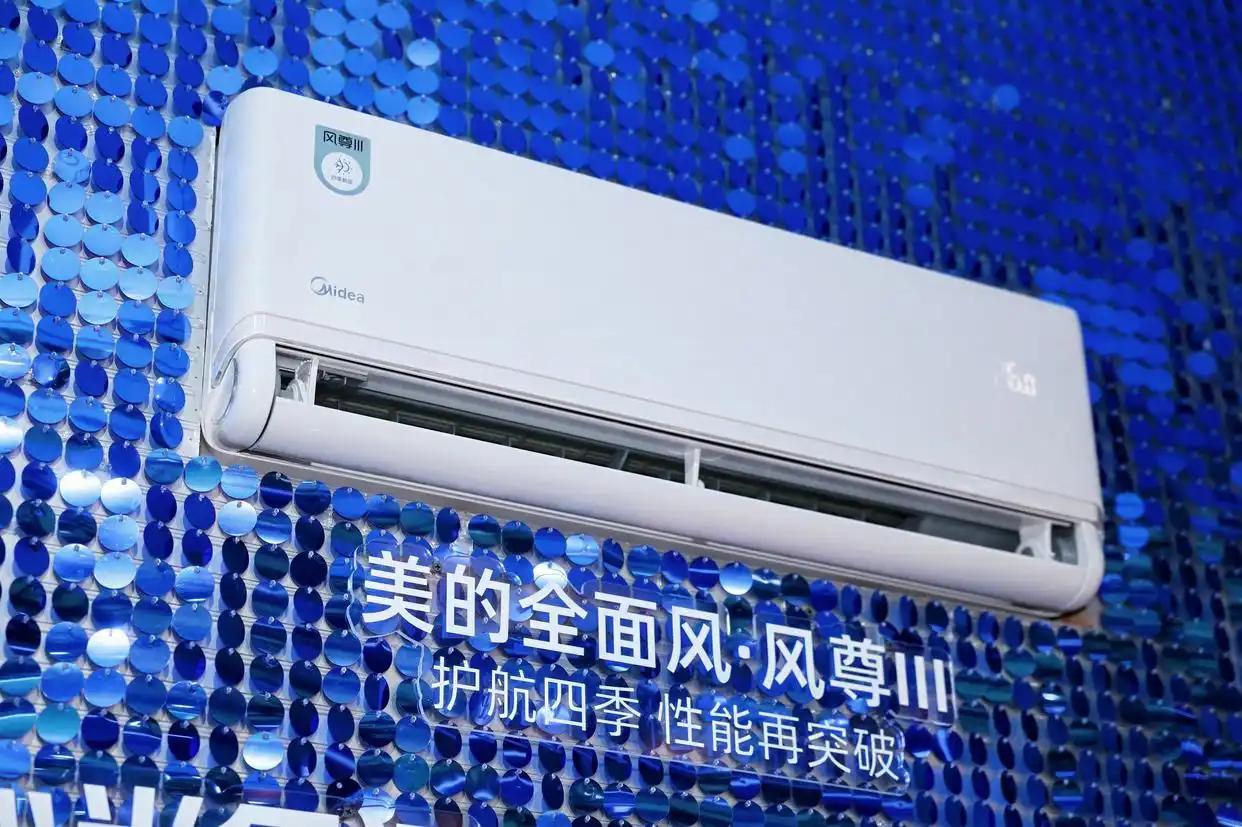
The core feature of Midea's all - round air Fengzun III exhibited at AWE2026 is that it can be used throughout the four seasons. This air conditioner is equipped with 360° panoramic air control technology, has a large air volume of 820m³/h, a super - long air supply distance of 9 meters, and the temperature difference throughout the room is ≤1°C. At the same time, it supports five - level precise temperature adjustment from 12°C to 22°C.
(Image source: Midea/Fengzun III)
What's most special about the Fengzun III is that it has specifically optimized the air - conditioning modes for different seasons. For example, in spring, it provides temperature - regulating circulating air; in summer, it has a 6 - meter ceiling - attached air supply to prevent direct blowing; in autumn, it offers a gentle and comfortable surrounding breeze; and in winter, it provides a 4 - meter floor - attached warm current. In fact, this is very in line with the needs of most consumers when using air conditioners at home. Especially the anti - direct - blowing mode in summer and the floor - attached warm current in winter can at least prevent many colds caused by the large temperature difference between indoor and outdoor environments.
In addition to "four - season air conditioners", the air conditioners at this AWE also pay more attention to the user experience in extremely detailed scenarios, such as sleep. Many people turn down the air - conditioning temperature before going to bed. It feels just right when they first lie down, but they are easily woken up by the cold in the middle of the night. If the wind speed is set too high, it blows on the face; if it's set too low, it feels stuffy. Especially during the season change, this discomfort is often more obvious than in midsummer and severe winter.
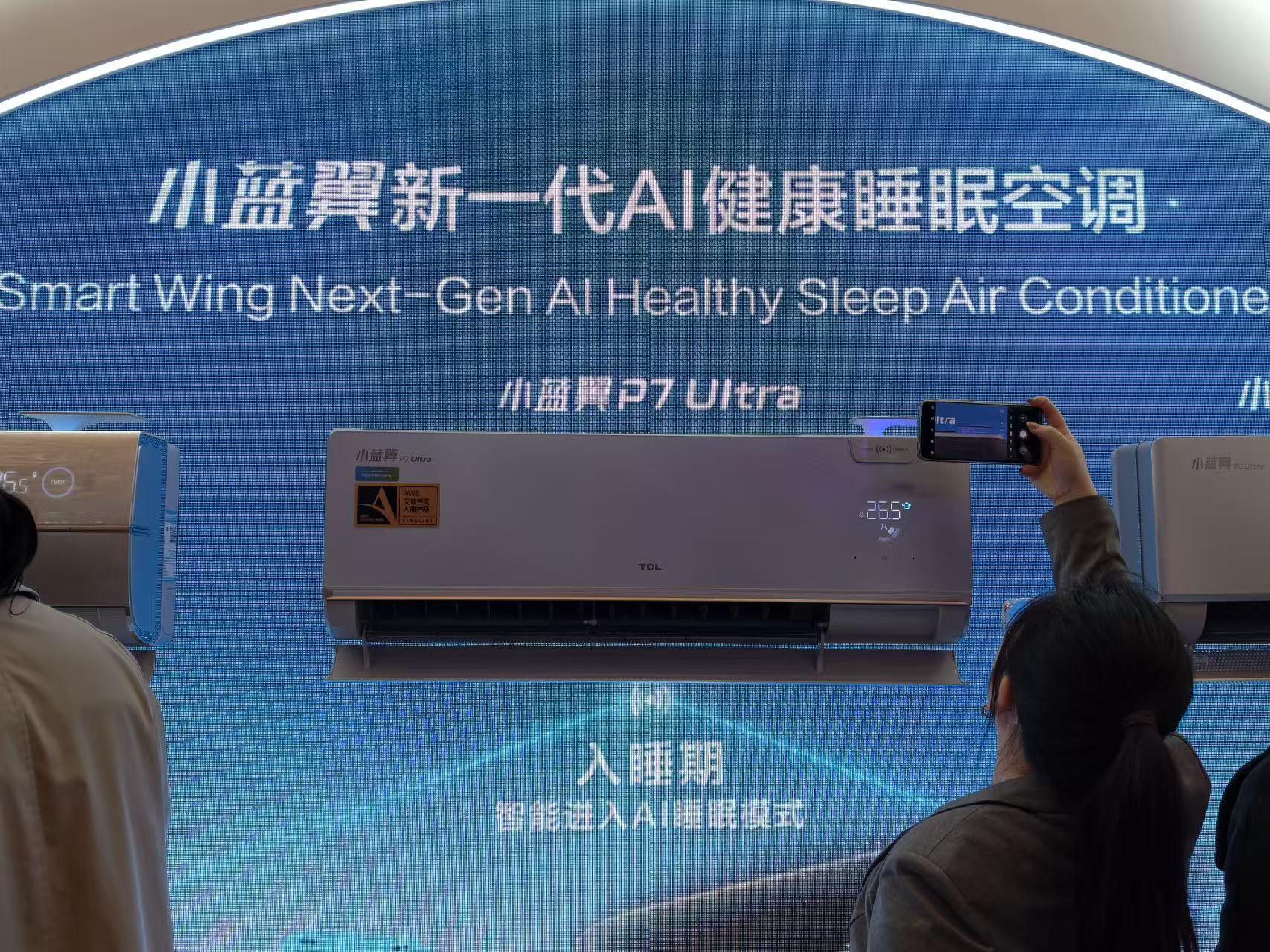
At AWE2026, TCL presented the Xiaolanyi P7 Ultra, whose biggest highlight is the equipped with millimeter - wave radar, AI sleep - monitoring eye, and dual - circulation fresh air system. The Xiaolanyi P7 Ultra can dynamically adjust the temperature, wind speed, and fresh air status according to the changes in the human sleep stage. In the fresh air mode, it can provide a fresh air volume of 60m³/h. With the micro - positive - pressure fresh air replacement technology, the replacement efficiency of PM2.5, carbon dioxide, and formaldehyde reaches 99.55%, 99.10%, and 91.94% respectively.
(Image source: On - site shooting by Lei Technology/TCL Xiaolanyi)
The problems in the bedroom are relatively easy to solve because in most cases, it only needs to consider the physical sensations of one or two people. What really tests the ability of air conditioners is the public spaces such as the living room and the dining room. After all, there are more people moving around in these spaces, and the number of people in the same space may be more than in the bedroom. Dealing with issues such as air and temperature is more complicated.
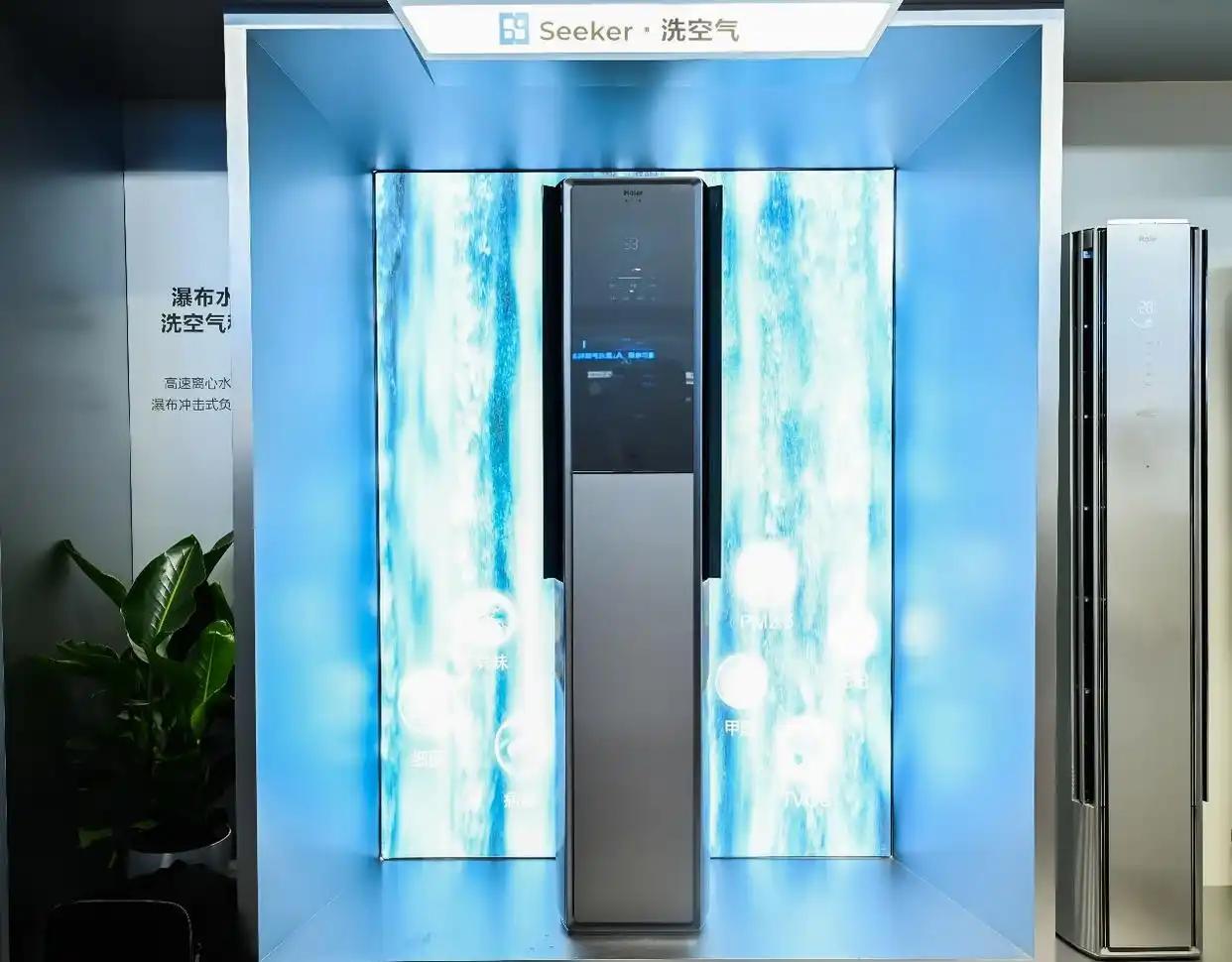
Haier's Seeker air conditioner exhibited this time is the first L4 - level intelligent air conditioner. It is equipped with a new "AI Eye 2.0", which can dynamically identify the position of people and quickly follow and supply air. At the same time, it can adjust the operating status by linking with voice and environmental information, providing functions such as "the air follows the person" and "automatically switch to energy - saving mode after the person leaves". In addition, the built - in Uhome air vertical domain large model can also actively adjust the operating status according to the season, region, real - time indoor environment, and human activities.
(Image source: Haier/Seeker air conditioner)
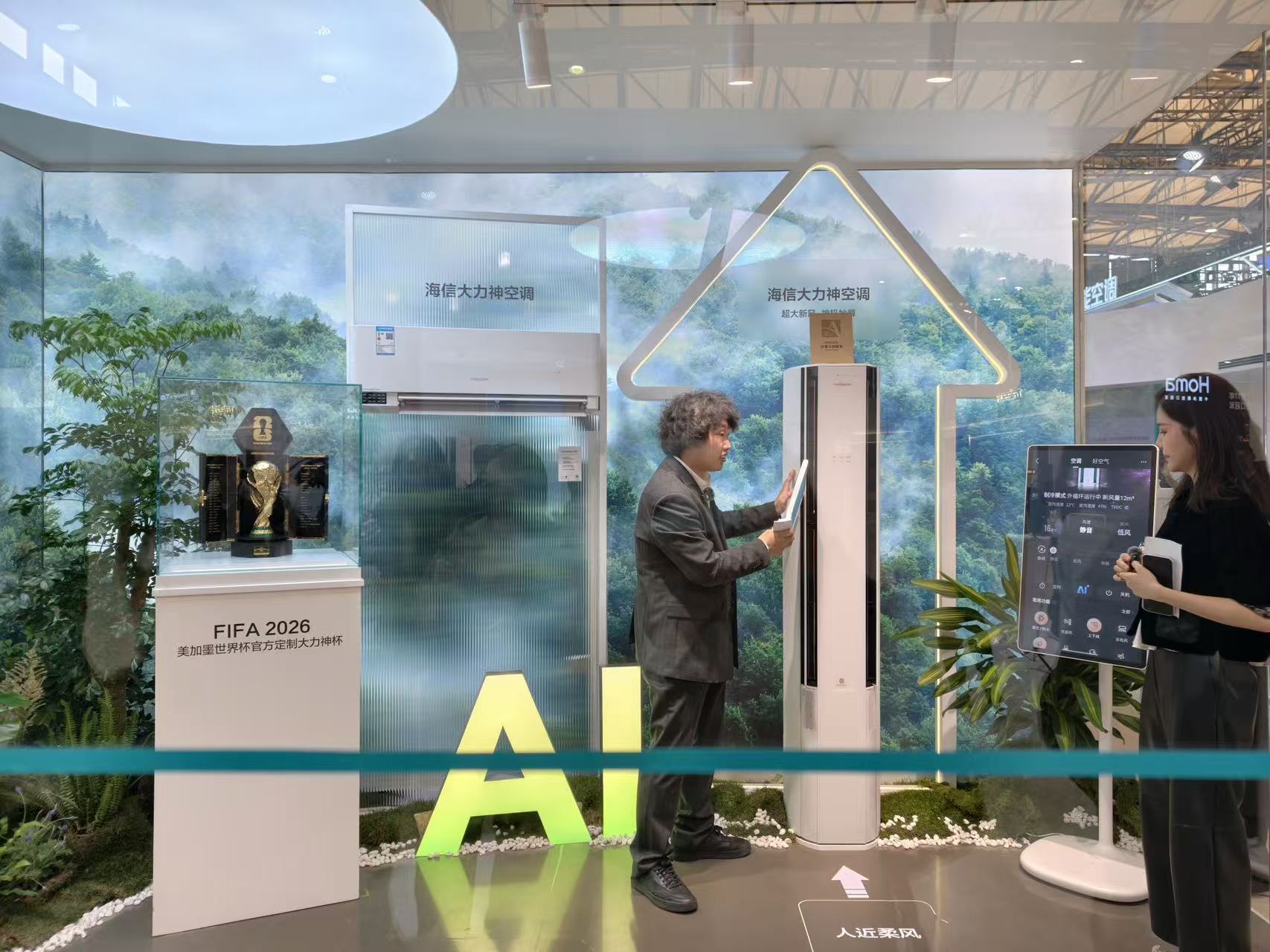
Of course, in addition to dynamic adjustment, there are more complex problems to be solved indoors. As soon as there are more people and the doors and windows are closed, problems such as stuffiness, unpleasant odors, and poor air circulation will quickly emerge. Especially during long - term movie - watching or gatherings in the living room, the air quality will decline rapidly. Hisense focused on presenting the Hercules U6 at AWE2026. It is equipped with SLP Star - Flash human - sensing 2.0, which can actively make the air follow the person, avoid blowing on the person, provide gentle air when the person is near, and save energy when there is no one.
The fresh air mode of the Hercules U6 provides a fresh air volume of 270m³/h and is equipped with double filters of Hepa and Hi - cat, which can handle 8 types of pollutants such as formaldehyde, odors, bacteria, viruses, and allergens, improving the air quality. In addition, Hisense also noticed the "watching - game scenario" that many people don't think of. The Hercules U6 has a TVOC sensor and DeepSeek voice intelligent control. In the watching - game mode, it supports the function of controlling the air in the upper, lower, left, and right partitions, so that everyone watching the game can enjoy the air evenly.
(Image source: On - site shooting by Lei Technology/Hisense Hercules air conditioner)
This year at AWE2026, air conditioners are not only addressing the physical sensation problems in different seasons, sleep, and the living room. How to place the products in the home and how to coexist with the space have also started to receive attention. During AWE2026, Dreame brought three new products at once: the fully hidden and embedded cabinet air conditioner D60, the suspended air conditioner D50, and the dual - mechanical - arm central air conditioner L30, covering the living room, bedroom, and the whole house. The most representative one is the D60. This product features the dual - mechanical - arm wind - control technology and AI intelligent 4D all - domain air, which can achieve separate supply of cold and warm air. The warm air flows down along the wall, and the cold air flows horizontally upwards. At the same time, it integrates functions such as purification, sterilization, formaldehyde removal, and humidity adjustment into one machine.
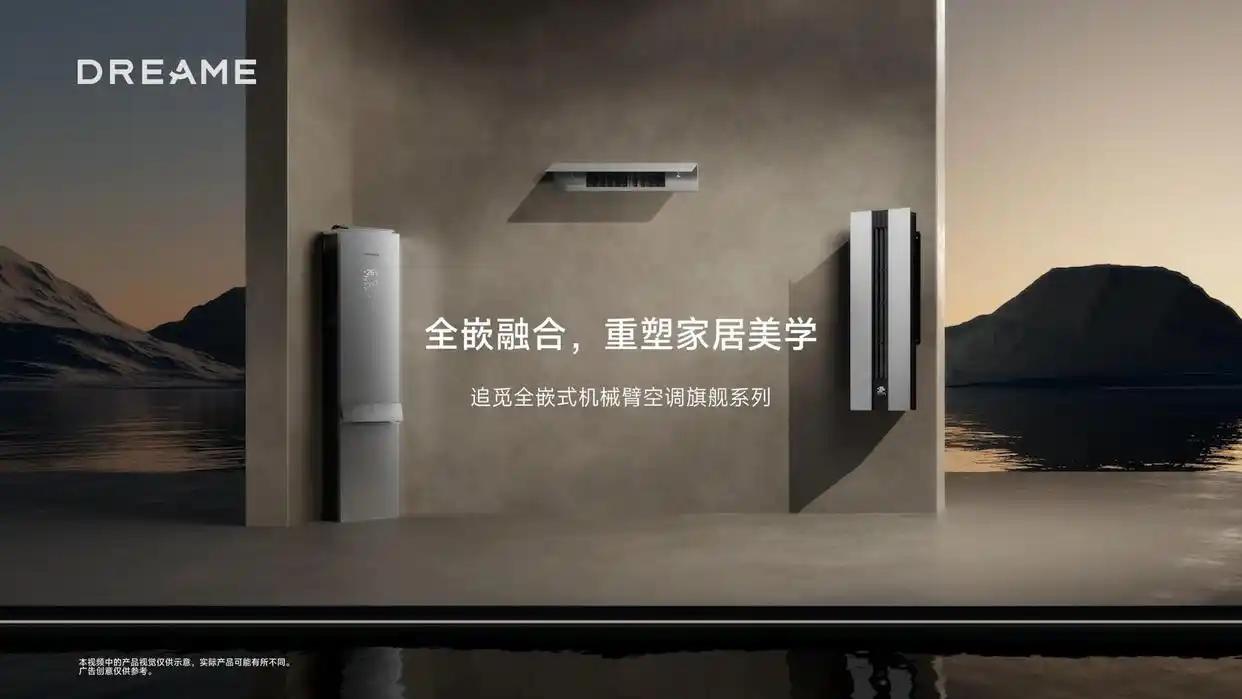
(Image source: Dreame)
The L30 is equipped with an independent micro - mechanical arm, a 3D panel for intelligent recognition of cooling/heating modes, and millimeter - wave radar AI human - sensing technology, corresponding to the sky - curtain - type cooling, carpet - type heating, and full - house air - supply dead - angle coverage.
It's obvious that the split - type air conditioners exhibited at AWE2026 are not simply increasing traditional parameters. Instead, they are enhancing their capabilities in more detailed usage scenarios. Midea focuses on different modes for different seasons, TCL attaches more importance to the comfort of using air conditioners during sleep, Haier uses AI to achieve follow - up air supply, and Hisense integrates fresh air, purification, and air control into one air conditioner. Although the air - conditioning industry is indeed raising prices, manufacturers are not just raising prices without doing anything practical. Instead, these new products have solved many pain points from the past.
Central Air Conditioners: From a Single Machine to a Complete Solution
If split - type air conditioners have started to address detailed scenarios such as spring and autumn, sleep, and the living room this year, the changes in central air conditioners are even more obvious. In the past, many people's impression of central air conditioners was a major expense during the decoration stage, such as whether to install a ceiling, whether it would be much more expensive, and whether the post - maintenance would be troublesome. In the end, most people were stuck at the stage of considering whether to install a central air conditioner.
However, a very obvious change at AWE2026 is that leading brands are no longer willing to just regard central air conditioners as large machines hidden in the ceiling. Instead, they have started to repackage them as the core equipment of the whole - house air system. If it's just an air conditioner, there is indeed a choice between split - type and central air conditioners. However, if the central air conditioner has evolved into a whole - house air system, its appeal is much greater than that of split - type air conditioners.
The central air conditioner exhibited by Midea at AWE this time is the Navigator IV. It is equipped with the ACE low - frequency steady - state system, which can operate stably at an ultra - low power of 245W, achieving no start - stop for more than 10 hours and controlling the room temperature fluctuation within 0.3°C. In addition, this product uses the continuous jet enthalpy - increasing technology and the full - liquid cooling and heating management 2.0, providing a wide temperature range of - 35°C to 65°C for operation. In the indoor unit part, the Navigator IV has a dual - air - outlet structure. The upper air outlet provides long - distance coverage, and the lower air outlet provides floor - attached air supply.
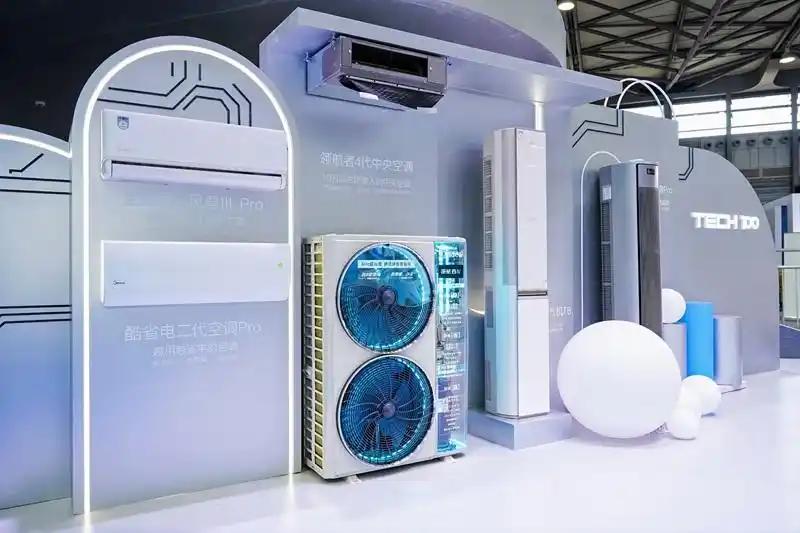
(Image source: Midea/Navigator IV air conditioner)
It's not difficult to see that the problems Midea wants to solve with its central air conditioner this year are low - load operation, constant temperature at night, and stability in extreme environments. For example, in many large - flat or improved - type houses, the central air conditioner is used in the living room, bedroom, and study during the day, but only the master bedroom is usually left on at night. This is exactly when traditional central air conditioners are most likely to have problems. Frequent start - stop, fluctuating temperatures, and the noise from the outdoor unit and air outlets can easily become a nuisance and affect daily life.
In addition to constant temperature and quietness, there are still many problems for central air conditioners that need to cover the whole house. For example, southern families care about the humidity during the rainy season, northern users focus on the linkage between fresh air and floor heating. Some people hope that one system can handle both cooling and heating, while others don't want to install separate equipment for fresh air, hot water, floor heating, and dehumidification.
Considering that a family usually only installs one set of central air conditioners, the Ai Home II PRO presented by Hisense at AWE2026 is a very complete solution. The Ai Home II PRO is the industry's first 6 - in - 1 four - pipe central air conditioner, integrating air conditioning, floor heating, temperature and humidity control, fresh air, hot water, and whole - house intelligent control into one system. At the same time, it supports the ThinkAir 2.0 whole - house healthy and intelligent ecological system. Combining the AI capabilities of the Xinghai large model with radar human - sensing technology, it can capture multi - dimensional data such as indoor and outdoor temperature and humidity, PM2.5, and spatial position in real - time and automatically adjust the temperature and air quality.
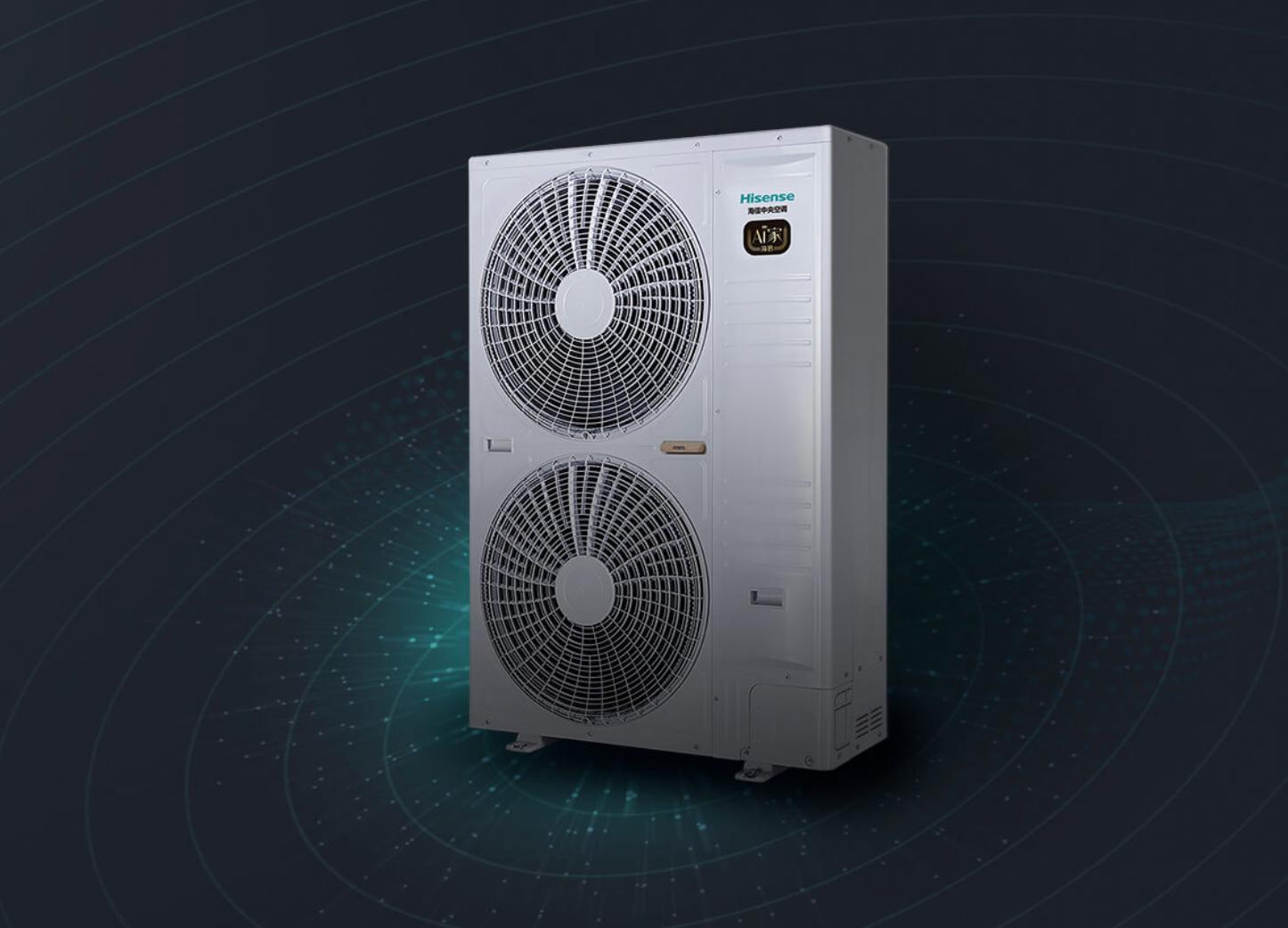
(Image source: Hisense)
That is to say, installing an Ai Home II PRO is equivalent to entrusting the entire house's air system to it. Whether it's cooling, heating, hot water, or fresh air, it can even play the role of a whole - house intelligent control center. The real significance of this type of product is to avoid the problem that more equipment doesn't necessarily mean a better experience.
To put it simply, at AWE2026 this year, central air conditioners have shown two camps. On one hand, there are brands like Midea, which make the central air conditioner more stable, quieter, and more suitable for long - term use. On the other hand, there are brands like Hisense, which simply integrate functions such as fresh air, hot water, floor heating, and temperature and humidity control, making the central air conditioner gradually evolve from a cooling and heating device into a whole - house air system.
In the past, when users bought central air conditioners, they thought more about whether it was worth installing. Now, what leading brands want to answer is how much worry - free it can be after installation. For example, long - term stable operation or entrusting the whole - house air and hot water to one air conditioner.