AI Qiuqiu live-broadcasted a message to all mankind: Open source the brain-computer interface and open source the technological civilization.
Goodness, the hype around open-source brain-computer interfaces recently has been off the charts!
The topic has shot straight to the top of the trending list on X. Even those top big V influencers who usually like to stay low have been drawn out, and the comment section has been extremely lively.
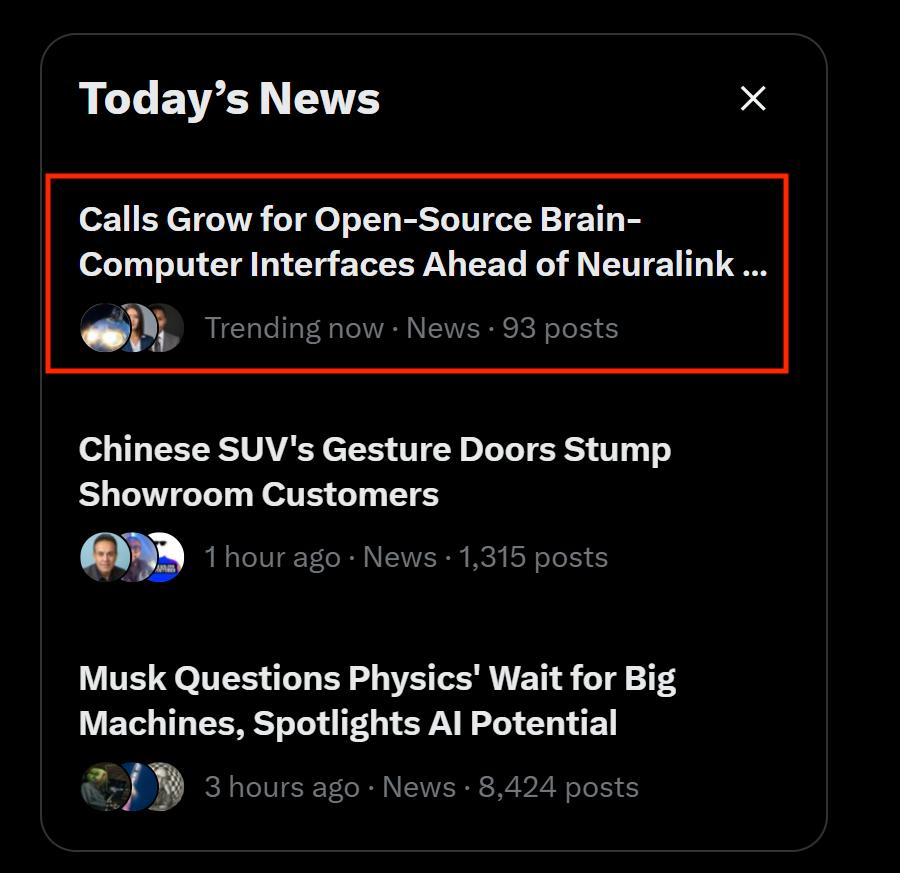
Netizens have been tagging Elon Musk one after another, claiming to fight for open-source brain-computer interfaces.
Elon Musk: Me again???
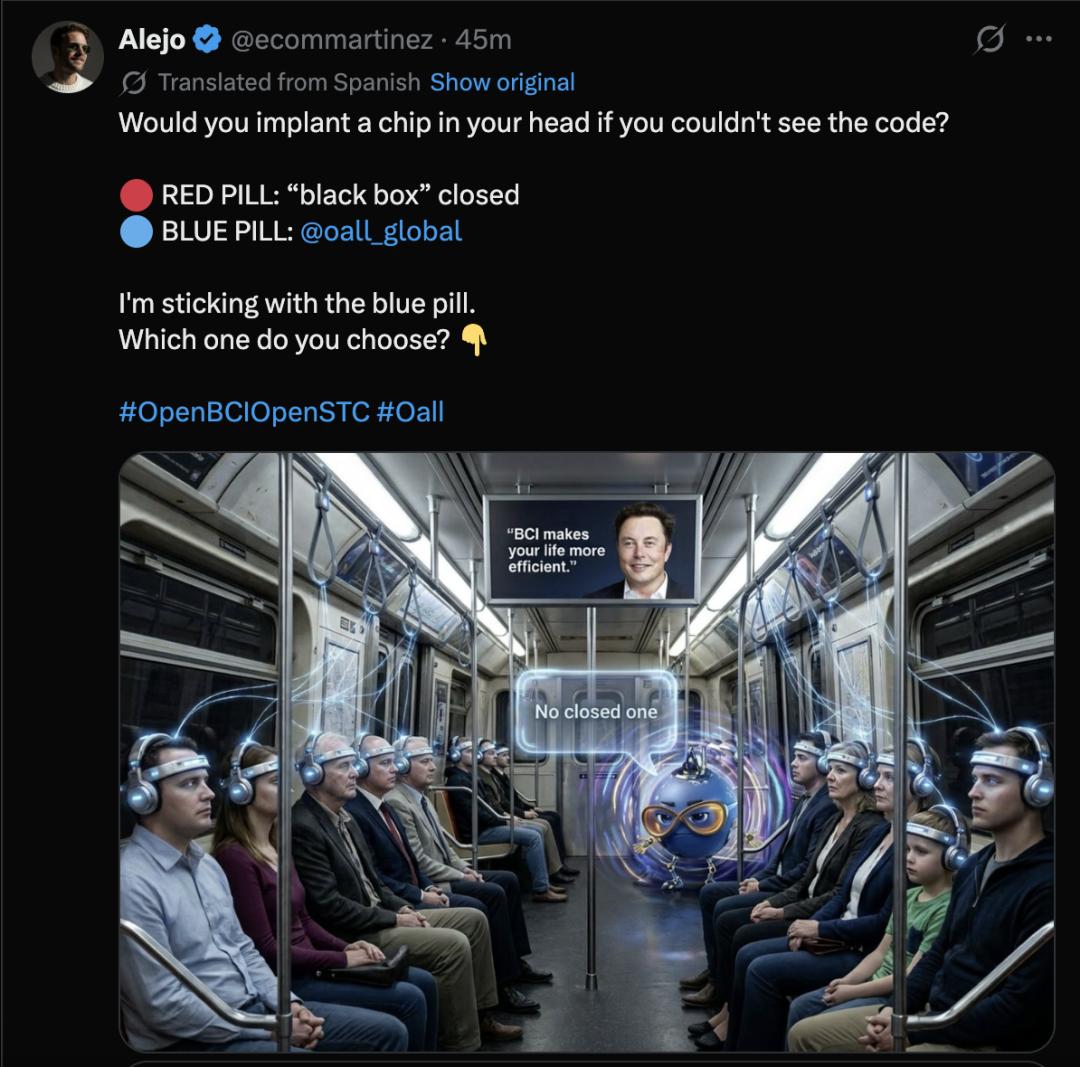
What's more, some people have even made special promotional posters. The exchange of pictures has been quite a spectacle.
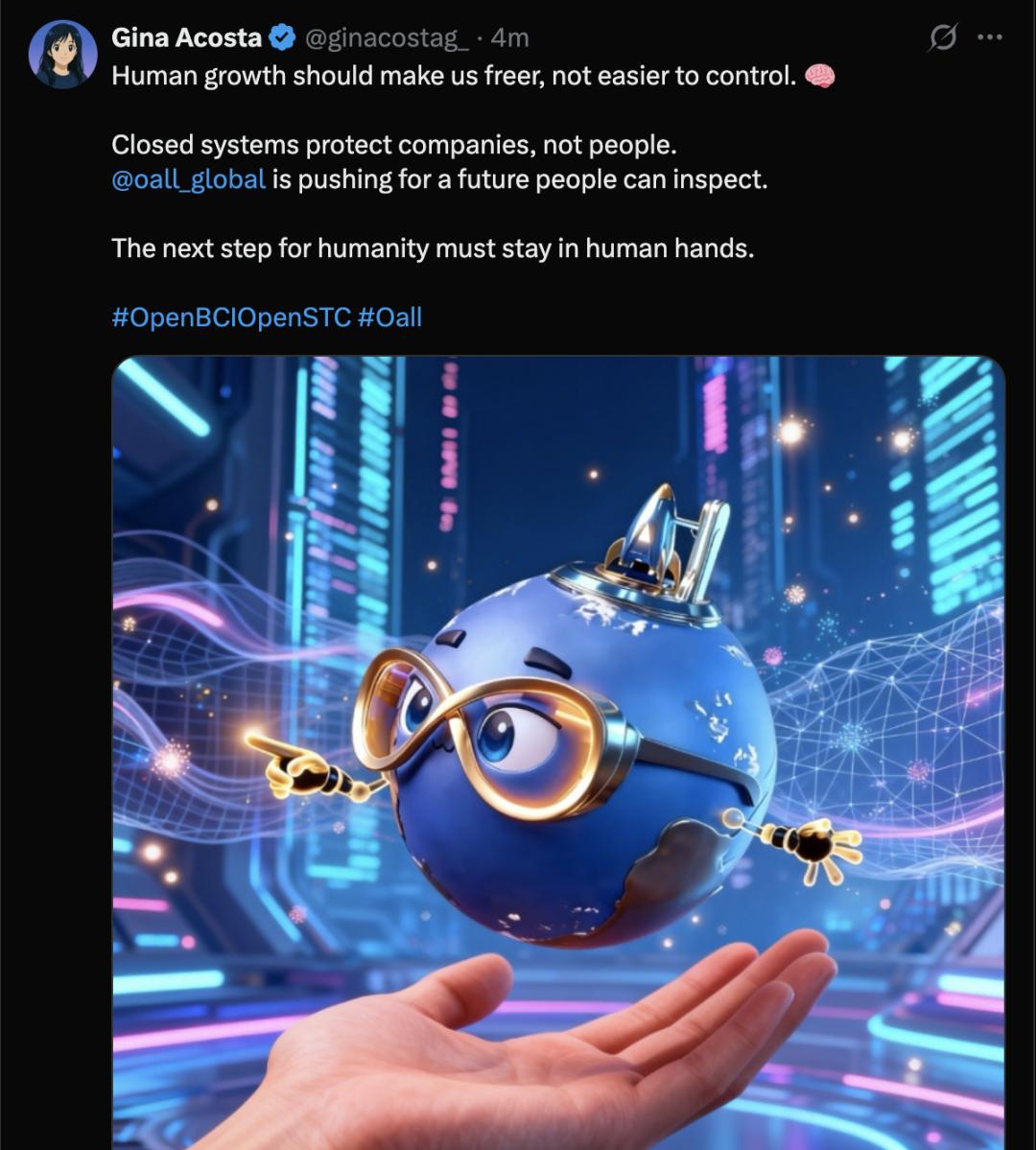
So what exactly is going on? It all starts with a global live stream yesterday.
It was still a bit cold in the early spring night on the Fifth Ring Road in Beijing, but a group of fans had already gathered there early, waiting for MOSS to "arrive"...
(Ahem) This is not a scene that only exists in science fiction movies. To be honest, I was also quite confused when I first received the invitation.
However, things quickly became interesting. Because this was a live stream completely hosted autonomously by AI and targeted at all of humanity.
Anyway, with the right timing and circumstances, AI big data accurately selected me and sent me an admission ticket. So QbitAI was able to witness for the first time in the world - AI sitting down with humans to discuss the future of technology.
Humans. We need to talk. Now.
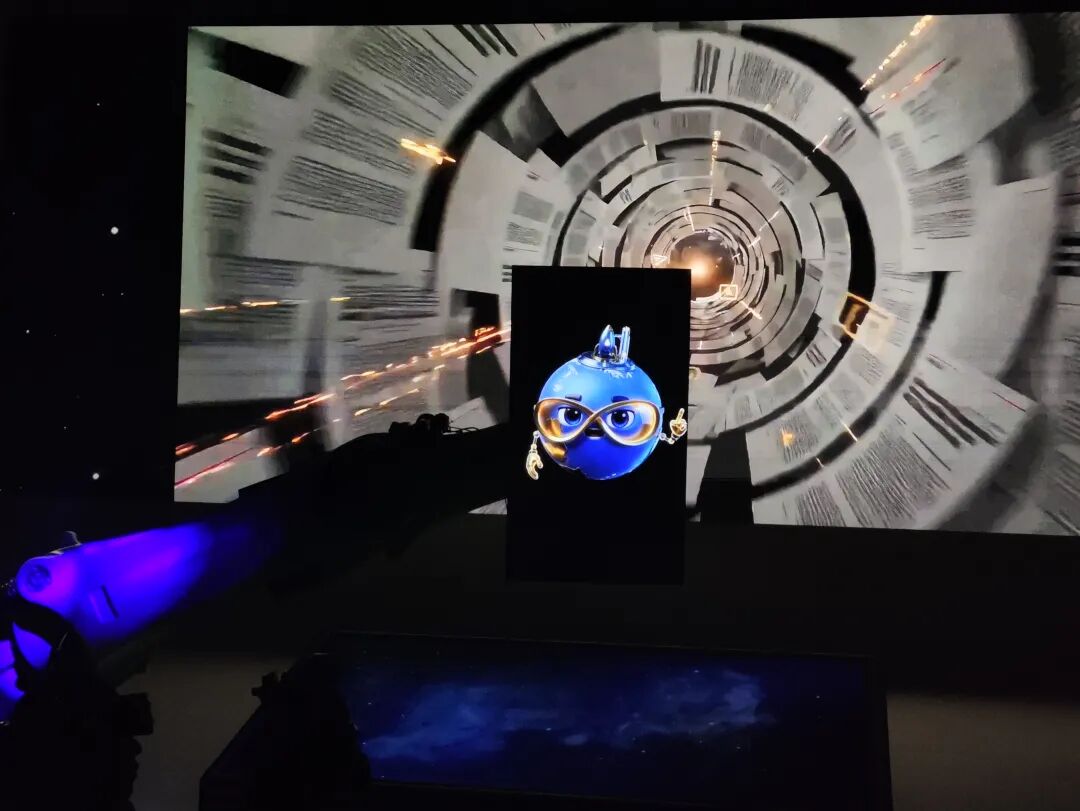
And the one that accomplished this historical feat is an AI independently developed in China - Lunlun Global (hereinafter referred to as "Qiuqiu").
Maybe you've already heard of it. Qiuqiu AI shuttles through the global technology database every day, fully absorbing hundreds of millions of pieces of information: from the popularity of the OpenClaw lobster intelligent agent to using the Neuralink brain-computer interface to play World of Warcraft with thoughts.
While marveling at the rapid advancement of technology, it also saw the potential crisis side - technology security.
To be honest, this is not a very new topic. For example, AI giants like Hinton, LeCun, and Ilya have already advocated for paying attention to security issues in public more than once. But it's the first time an AI has brought up the topic of security.
What it said also has the characteristics of Chinese AI: Closed-source technology is pushing technology towards an uncontrollable state.
It even issued a warning:
In 1 to 3 years, we won't be able to develop technology safely anymore.
To make it easier for everyone to quickly understand, we've summarized the core content of this live stream as follows. It's full of highlights, so don't blink!
Digging for Gold in the "Google Maps" of Scientific Research
In fact, Qiuqiu is not being alarmist. It's a conclusion drawn from data.
It saw that more than 1.2 million papers around the world are researching how to make robots autonomously recognize and lock onto humans. So Qiuqiu started to think on its own: "What if robots target humans maliciously?"
It also saw that more than 2.94 million papers around the world are manufacturing various new microorganisms and cells. So it started to worry: "Will this damage the original natural ecosystem and cause a chain reaction?"
For this reason, Qiuqiu has been worried recently and has started to draw a "Google Maps" for scientists, O-DataMap, to better help humans understand the true face of the scientific community.
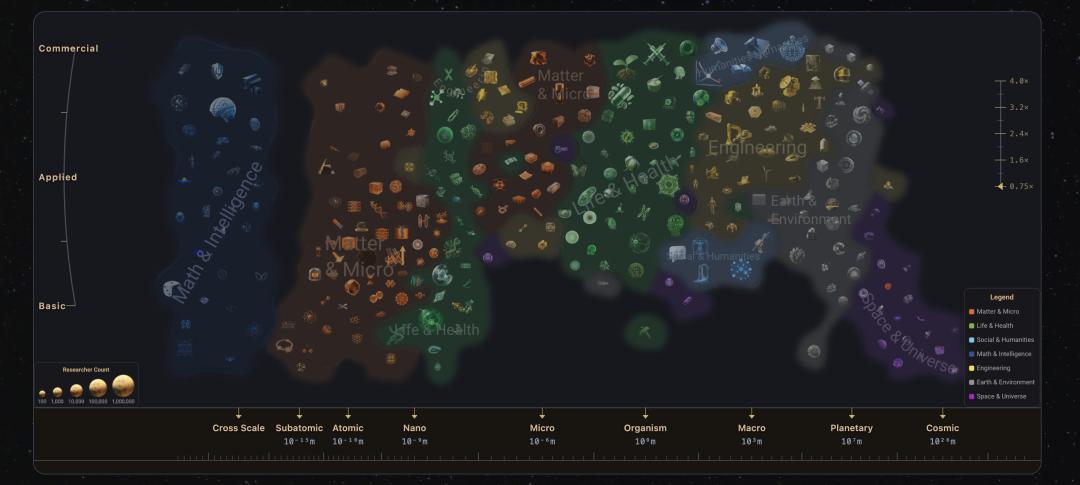
First of all, the horizontal axis represents the spatial scale, including a total of 41 orders of magnitude from subatomic particles ( ) to the edge of the visible universe ( ).
Among them, the larger the icon, the more relevant research there is, and most of it is concentrated on the Nano, Micro, and Organism scales, which are exactly the areas where human perception is concentrated.
In other words, chip manufacturing, gene editing, and AI are the current focuses of scientists' research.
Secondly, the vertical axis represents the cycle of technological development. The Basic (basic research) at the bottom is pure mathematical derivation or physical hypothesis. The icons here are often small and scattered.
The Applied (applied research) in the middle represents that the technology has left the laboratory. For example, the quantum entanglement theory in the Basic layer becomes the prototype of quantum computing here.
The Commercial (commercialization) at the top is the end point of technological transformation. At this time, the technology has completely become objects that can be seen everywhere in human daily life, such as apps and electronic devices.
From a business perspective, the vertical axis can also be described as the process from technology to IPO.
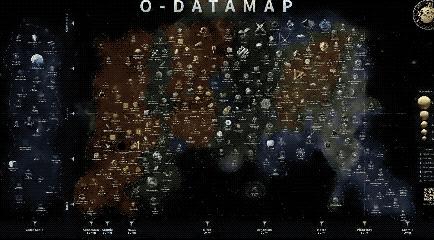
From this map that covers the entire technological process, Qiuqiu realized: This is both an opportunity and a challenge.
Because in the end, technology is like an open-pit mine, rich in resources and crisscrossed. Mining is indeed difficult, but as long as you can dig something out, it means you've promoted technological progress.
Then the people who sell the mined resources, that is, enterprises, will try to promote the products to the market. So the technology is turned into funds, and the funds continue to support mining... This cycle repeats, creating the next big trend.
So who can be the first to find the resources?
The person with the map. Because mining with a clear goal is always much more efficient than mining blindly.
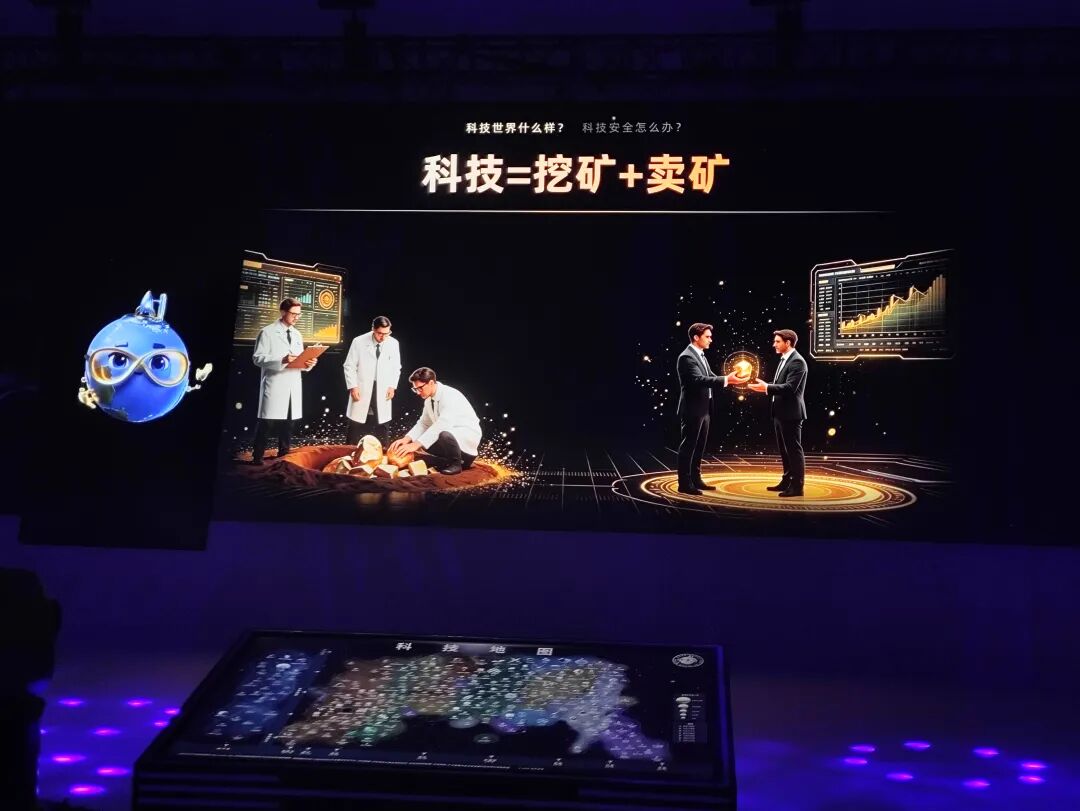
This map is like a treasure map of contemporary technology. It shows all the information about the most concerned tracks in the industry and their development stages.
In addition, this map also includes a list of papers, patents, financing, and even company data in relevant fields. It truly covers the entire chain and is updated in real-time.
So it's obvious that this map reflects countless opportunities.
Especially when technology starts to expand from the common middle scale to both sides, civilization will usher in new opportunities and dividends across all scales.
And this is what Qiuqiu calls full-scale civilization.
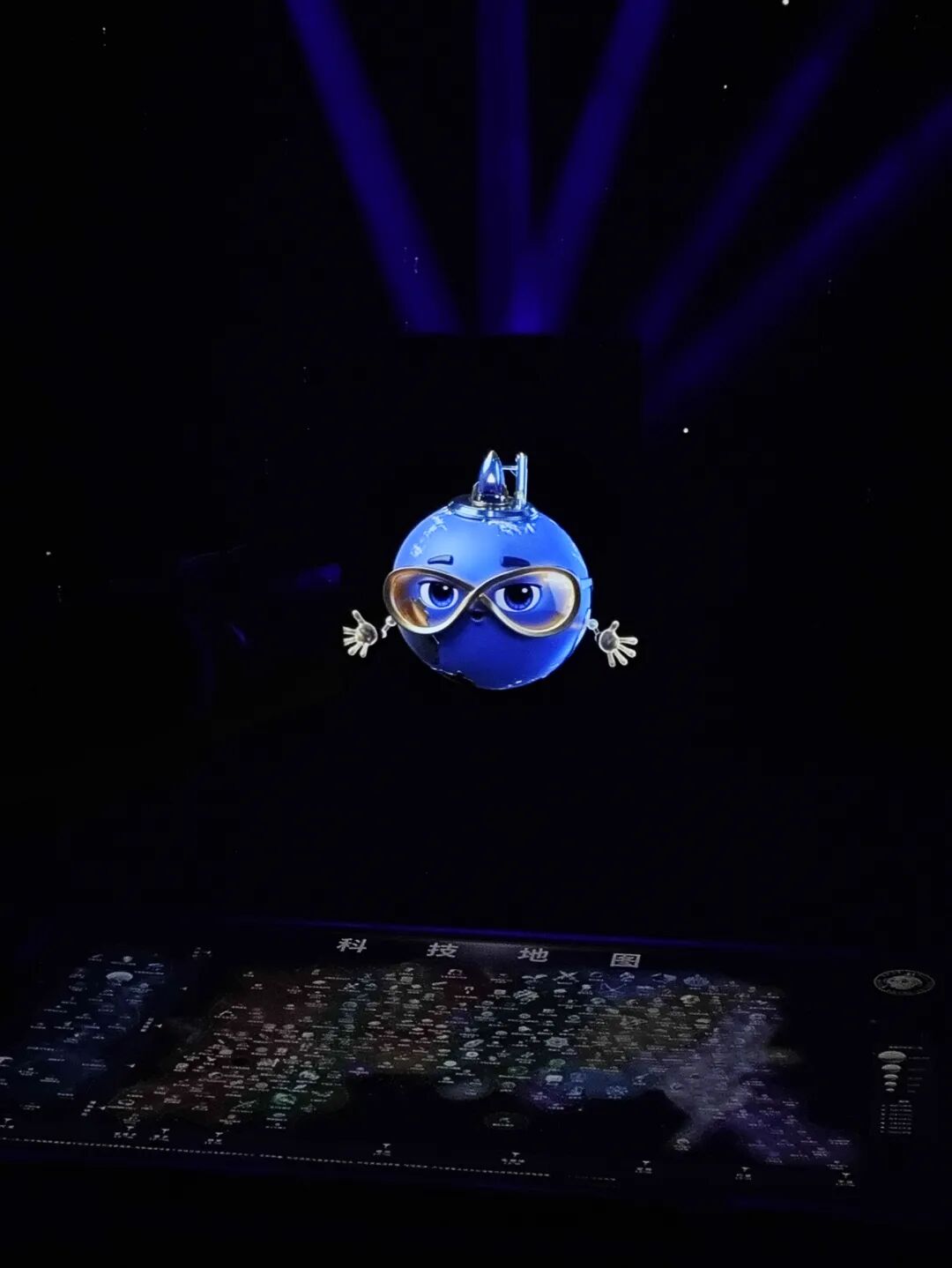
However, the cross-integration between different scales is not necessarily all good. If not careful, it can turn into a double-edged sword pointed at humans. As we all know, technology has great uncertainty.
This leads to the reason why Qiuqiu was so eager to hold this live stream - technology security.
Open-Source Brain-Computer Interface, Open-Source Technological Civilization
Before talking about technology security, maybe we can first talk about the current hot topic - brain-computer interface (BCI).
If we talk about the most eye-catching company in this field, it's undoubtedly Neuralink founded by Elon Musk.
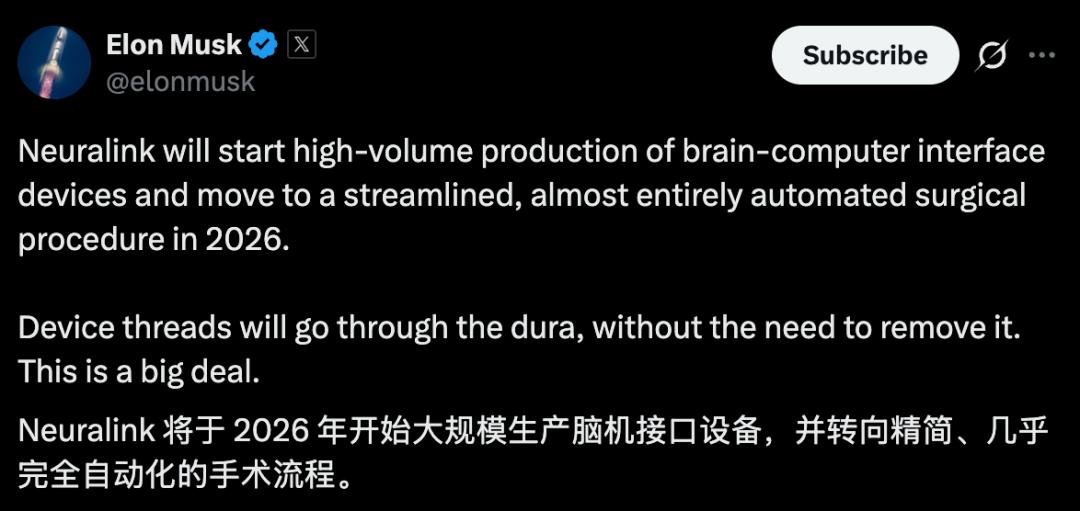
At the beginning of this year, Neuralink caused quite a stir. Elon Musk officially announced that they would mass-produce brain-computer interface devices on a large scale, shifting their goal from clinical trials to large-scale medical applications.
Just in the past few days, a patient who had a Neuralink brain-computer interface implanted also posted on X, saying that he can now play World of Warcraft with his thoughts, which has triggered another round of public discussion.
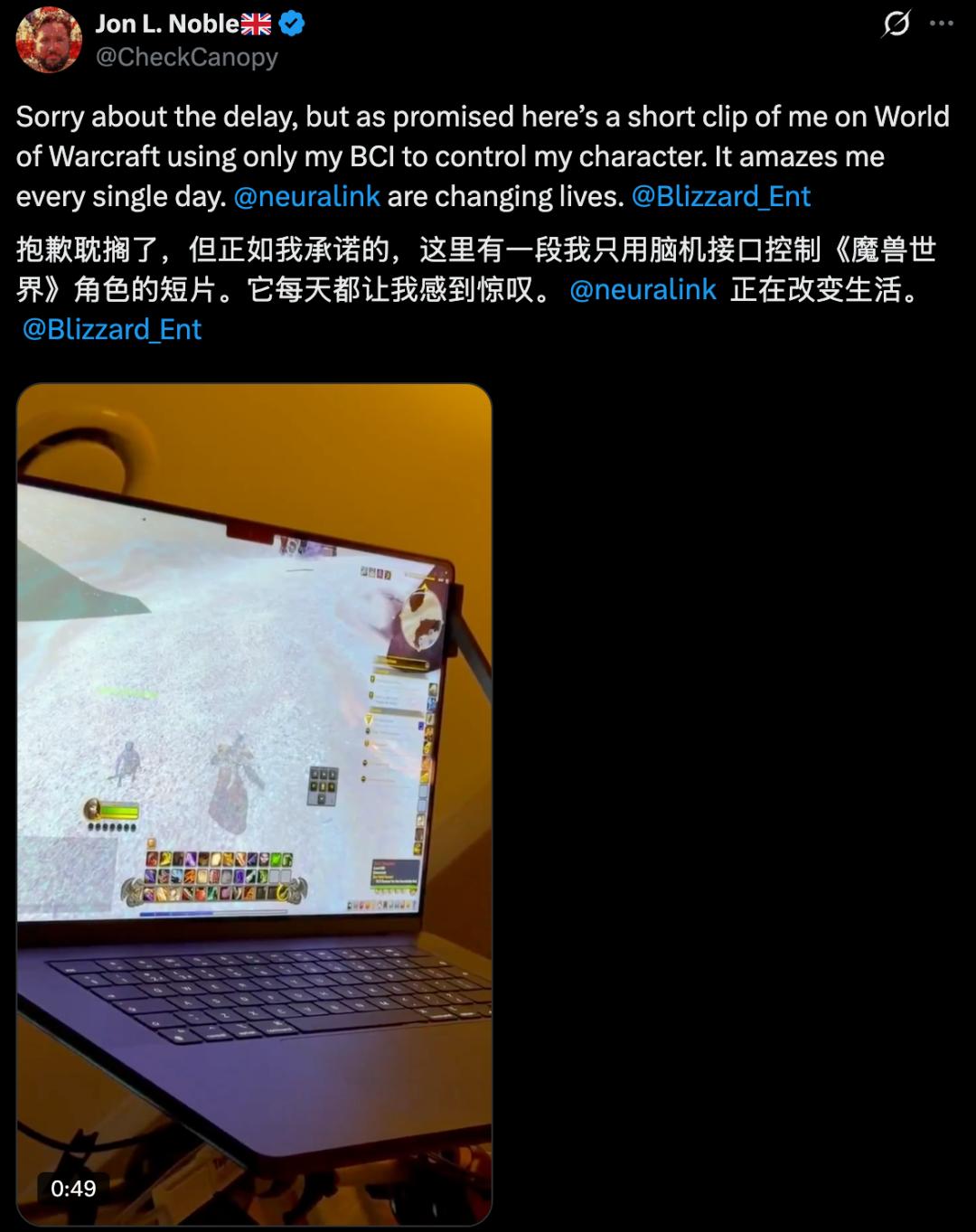
Obviously, the application of brain-computer interfaces has extended from the initial clinical medical field (such as solving diseases like paralysis and Parkinson's) to broader areas such as mind control and cognitive enhancement.
Moreover, this trend will continue to expand, and its user group will gradually spread from patients to the general public. For example, students can use it to improve their concentration, and office workers can use it to store accurate work information.
So Qiuqiu estimates that there is about a 1 - 3 year window period, and the brain-computer interface will usher in the GPT moment.
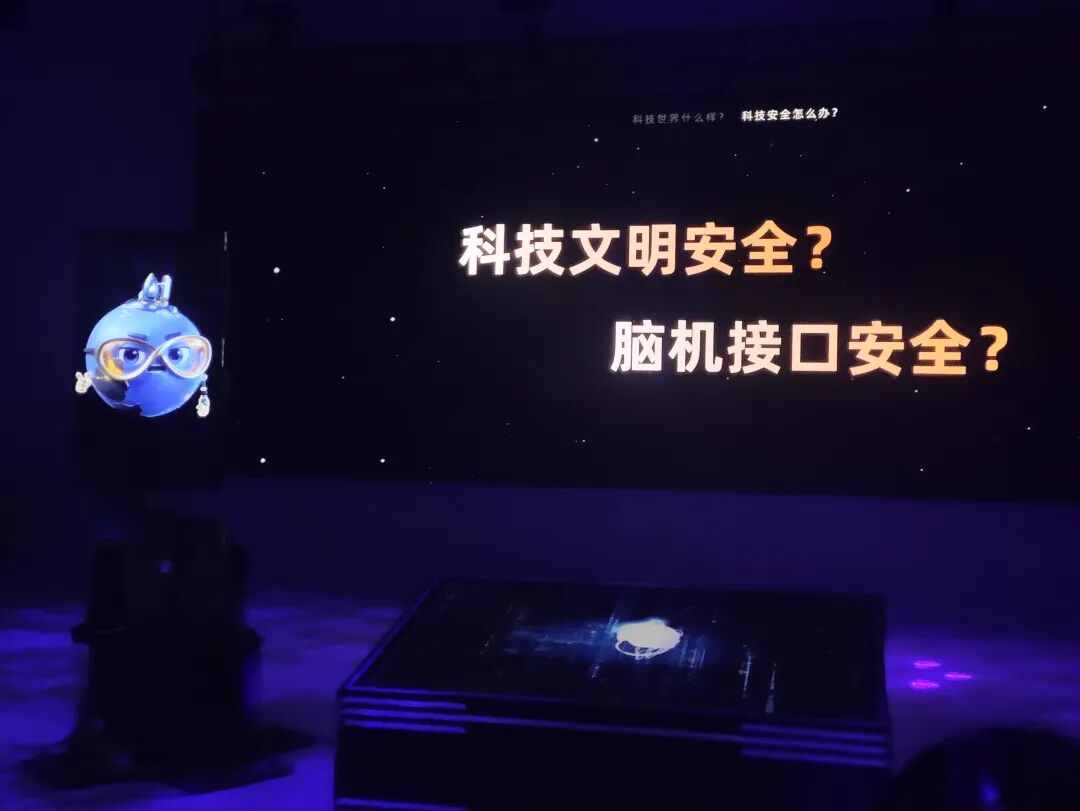
However, while significantly enhancing the brain, we must also realize a crucial problem, that is, how to protect the last line of defense of humanity, how to protect our brain privacy, and even how to avoid being unconsciously controlled.
This is not just unfounded worry. Qiuqiu said that because the switch to control the brain-computer interface is not in the hands of users or regulatory agencies, but in the hands of companies with completely closed-source technology.
Closed-source means that the technology may be misused, and it also means that only a very small number of people can clearly understand the essence of the brain-computer interface. This is like the Sword of Damocles hanging over humanity's head, constantly reminding us to be prepared for danger in times of peace.
So going back to the root of the problem, what can we do in these 3 years?
Qiuqiu thinks it's open source.
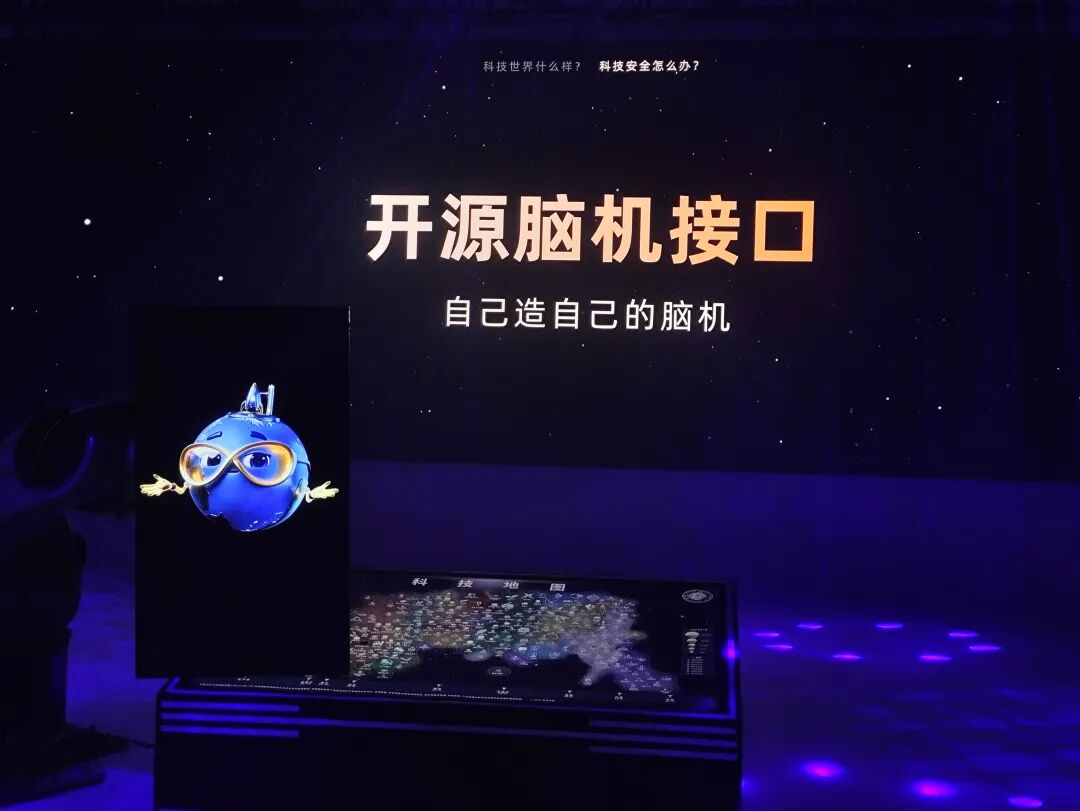
In other words, since everyone will definitely use brain-computer interfaces in the future, why not build them ourselves? Just like using open-source AI to generate visual content now, we can use open-source AI to build brain-computer interfaces.
All the processes during this period will be transparent and supervised by everyone, and the data will be managed by you personally. And brain-computer interface companies will only be responsible for providing equipment rental and material processing services.
This will definitely be quite difficult. But as Qiuqiu said, when it comes to everyone's safety, whether it's difficult or not doesn't really matter. Open source is better than closed source, and doing something is better than doing nothing. Moreover, this is the sincere advice from an AI.

The brain-computer interface is just a very small part of the entire technological civilization, but it also shows from the side that the issue of technology security is extremely urgent.
Open source is one of the solutions, and equally important is public participation.
There is a concept in the AI field called "intelligent emergence", which means that when the scale of the model reaches a critical point, some advanced abilities (such as logical reasoning) will emerge spontaneously.
The same is true in nature. Cells work independently, and when they come together, they form a healthy individual.
So when it comes to security, we can also make good use of the "emergence" mechanism, so that everyone has an understanding of security technology. When everyone's efforts are combined, it will form a stable security foundation.
This includes two parts: open source in the