China's first city where the number of robots exceeds the permanent population may emerge here.
At eight in the morning, the morning rush hour by the Tongming Lake in Yizhuang, Beijing, presents a street view quite different from that of other cities.
A driverless car without a steering wheel glides through the intersection alongside the shared bikes of commuting white - collar workers. Beside the zebra crossing, a young programmer holding an iced Americano is wearing headphones and discussing the gait algorithm and joint module torque of a humanoid robot. Not far away, inside the revolving door of a hotel, a robot that has just delivered takeout smoothly avoids the guests and emits a polite electronic voice.
Filtering out the surface noise, one can faintly catch the mechanical background noise made by hundreds of steel - bodied robots repeatedly falling and getting up in the closed test field. In Yizhuang, this noise is more frequent than the sound of keyboard typing.
While everyone is talking about the grand narrative of large models and generative artificial intelligence, this city has chosen the most hardcore path: Turn the entire city into a "training ground" for embodied intelligence, allowing AI to truly enter the physical world.
Provide real - world scenarios to overcome the "Moravec's Paradox"
Embodied intelligence is regarded as the next important wave in the development of artificial intelligence, with huge room for imagination.
However, in the fields of artificial intelligence and robotics, there is a well - known "Moravec's Paradox": It is relatively easy to make a computer show advanced reasoning abilities at an adult level in an intelligence test, but it is very difficult to endow it with the perception and motor abilities of a toddler. On the path of commercializing embodied intelligence, this phenomenon is embodied in a term - Sim - to - Real Gap (the gap from simulation to reality), which is a problem that the entire industry needs to overcome.
An algorithm model can conduct tens of millions of reinforcement learning sessions day and night in the "simulator" of a virtual server. However, when a humanoid robot with a steel body steps onto the human street, it has to face a complex physical world: sudden changes in ground friction, crowds rushing out in the corridor, and even changes in light and shadow can interfere with the sensors. The diversity, disorder, and randomness of the physical world cannot be exhausted by code simulators.
This reveals the first - principle of the embodied intelligence industry: The bottleneck lies not in computing power, but in real - world scenarios. Without the real physical world as a test field, even the most amazing laboratory demos are just a pile of iron lumps.
Full - scale artificial intelligence essentially breaks the physical isolation between technology and scenarios, reconstructing the streets, hotels, and factories of the entire city into an underlying operating system open to AI. Here, the city is no longer just cold steel and concrete, but a super incubator that iterates jointly with silicon - based life.
In August 2025, Yizhuang, Beijing officially launched the "Embodied Intelligence Social Experiment Program". The government actively opened up the real - world urban mechanism to innovators: The whole region opened up real - world data collection resources, and currently more than 50 real - world scenarios have been opened, forming a batch of high - quality autonomous embodied intelligence datasets with millions of data points.
The first Global Beijing Smart Hotel Robot Application Competition even moved the competition venue into the real - operating Pullman Hotel. There are no smooth and shiny exhibition stands here. Robots need to solve real - world pain points: How to turn in the narrowest corridor? How to overcome a 13 - degree slope? Here, technology has to undergo strict tests. The lobby greeting robot not only needs to achieve accurate sound - seeking within a 5 - meter range and 360 - degree sound source positioning in an extremely noisy environment but also be able to seamlessly switch between 9 different languages to serve global travelers.
The scoring criteria of the competition are thought - provoking: 70% is based on basic practicality, 20% on additional system compatibility and security, and only 10% on innovation. In innovation economics, this is called "user - led innovation".
Cutting - edge technology cannot be developed in isolation. By opening up real - world training scenarios such as hospitals, hotels, and streets, Yizhuang has brought real - world market demands to the early stage of technology definition. Through full - scale open urban scenario demonstration applications, the entire city is built into a "city - level engineering experiment platform". Let innovation thrive in the real world, let algorithms iterate in real - world scenarios, and use the inclusiveness of a city to exchange for the fault - tolerance rate of cutting - edge technological innovation.
Reduce the cost of trial - and - error and become a "co - founder" and "industrial venture capitalist"
The cost of trial - and - error in hardware startups is often higher than that in Internet startups. In the software era, it only takes a few seconds to change a line of code. However, in the field of embodied intelligence, changing the mold of a robotic arm or reconstructing a sensor array may take several weeks and more funds.
Facing the extremely high threshold of trial - and - error, the role of traditional administrative managers is changing to that of "co - founders" and "industrial venture capitalists" in hard - tech. To encourage startup teams to take risks, the logic here is to minimize the marginal cost of each trial - and - error. In the "Several Measures to Promote the Innovative Development of Embodied Intelligence Robots", Yizhuang, Beijing invests 200 million yuan annually for targeted support.
To help hardware startups with prototyping, the country's first "prototyping coupon" was introduced. By supporting the establishment of a rapid - response platform for the robot supply chain, direct financial support is provided from both the production and sales ends. This is equivalent to the government covering the sunk costs in the early stage of R & D for enterprises.
The training of the embodied brain depends on massive data and computing power. In addition to operating the city's largest 5000P public computing power platform, to address the high cost of data collection, 100 million yuan each in computing power coupons, model coupons, and data coupons are issued annually.
In addition, Yizhuang has also established a cost - sharing mechanism for the first use of new products: Not only are real - money rewards given for the first use of un - finalized products and the first set (unit) of equipment, but also leasing is encouraged and insurance premiums are subsidized.
When the cost can be covered, the flywheel of innovation begins to turn. A "1 + 6" industrial system covering core components, complete machine manufacturing, and system integration has rapidly emerged in this area, with an industrial chain scale of over 10 billion yuan. The "Embodied Tian Gong Ultra" of the Beijing Humanoid Robot Innovation Center won the championship of the world's first humanoid robot half - marathon; the Xinghai Tu humanoid robot platform covers more than 90% of the world's top developers; Lingzu Times mass - produces highly integrated joint modules.
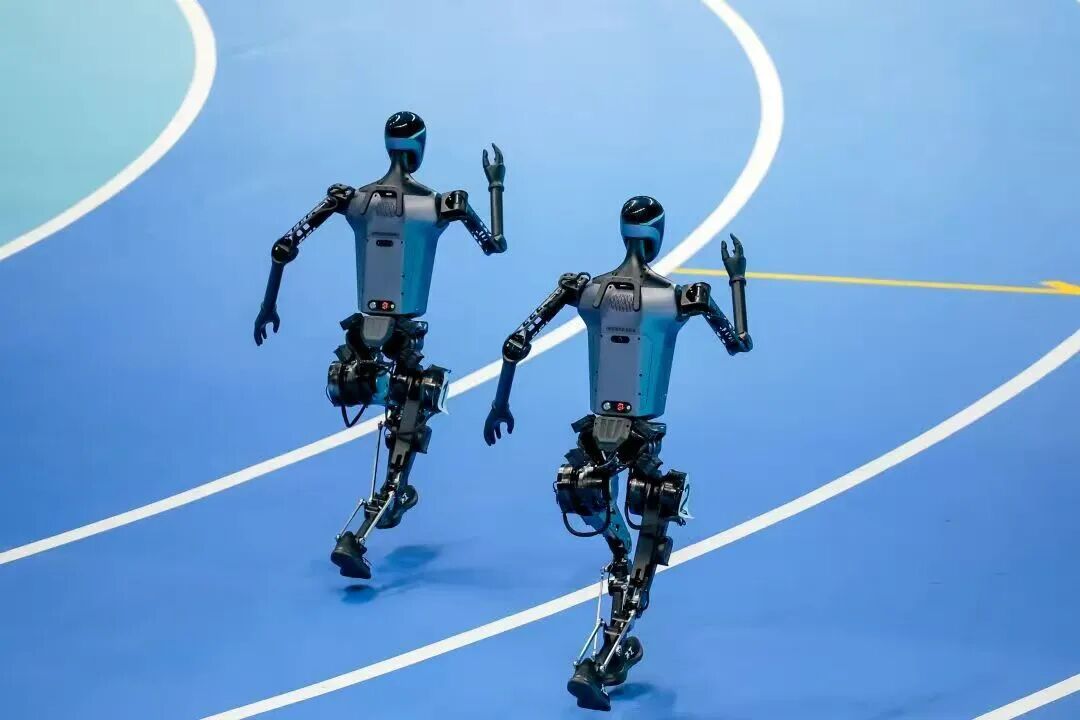
The last piece of the puzzle in hardware manufacturing is also in place. Here, not only the city's first humanoid robot mid - stage verification platform has been established, but also the construction of an embodied intelligence super factory has been launched, directly providing one - stop manufacturing services from precision structural parts, core modules to assembly and testing for developers. From the soft "flexible fingers" that can adapt to irregular and fragile items to the general embodied platform that supports "one brain for multiple machines and multiple functions", the innovation of hardware forms a closed - loop here.
Continuously cross the cycle and strengthen the foundation of the technology industry
In fact, the "backing" of heavy - asset, long - cycle hard - tech is an industrial inertia that Yizhuang has maintained for more than a decade. Looking back over time, you will find that this area has a unique industrial muscle memory.
Over the past decade or so, Yizhuang has always played the role of a top - level industrial capital that dares to "cross the cycle".
In the panel industry, Yizhuang made a large - scale investment in BOE, leading to a turnaround in the industry. In the aerospace field, Yizhuang's 10 - billion - yuan guiding fund boldly invested in LandSpace, and a 150 - million - yuan investment supported the future of commercial aerospace.
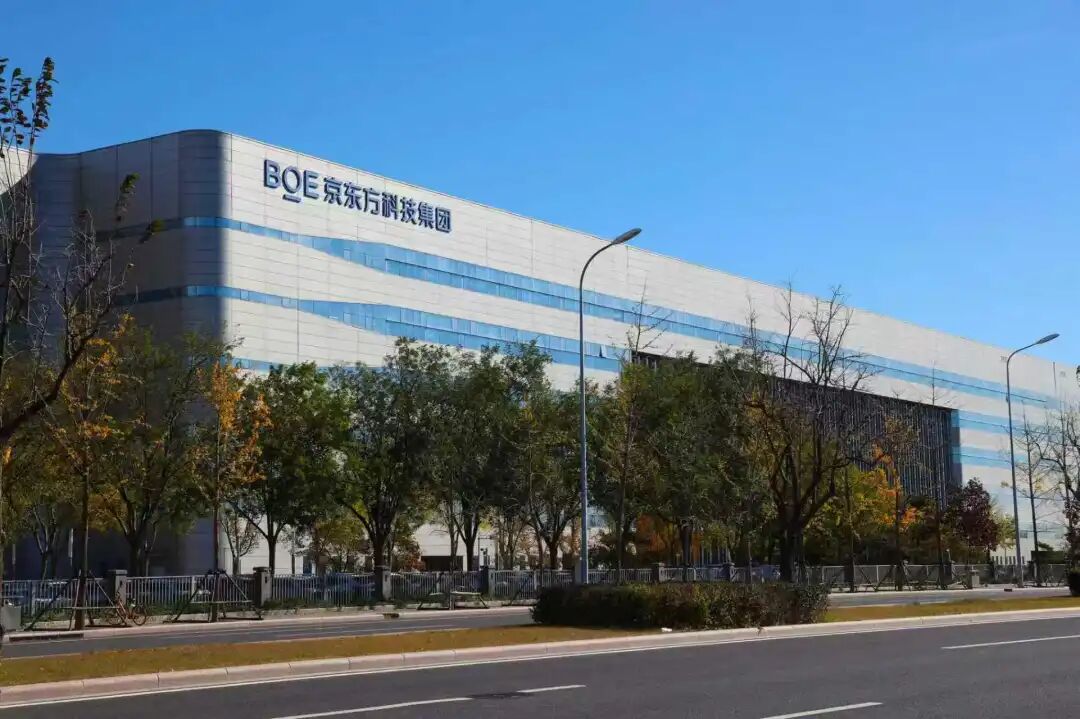
In the uncharted territory of domestic semiconductors and basic software, it has supported SMIC for ten consecutive years, introduced Tongxin Software and Loongson Technology, and cultivated a 100 - billion - yuan integrated circuit industrial chain and a completely self - controllable underlying operating system with extremely patient ecological care.
It is precisely because of this perseverance of "being a friend of time" that the following stories have happened:
From Liu Qiangdong firmly deciding to locate the JD headquarters here more than a decade ago, to Lei Jun choosing Yizhuang for the Xiaomi Automobile Super Factory of his "last major entrepreneurial project in life", to the strategic R & D centers of countless multinational giants such as AstraZeneca choosing this place, and even the city's roads have been reconstructed into a "vehicle - road - cloud integration" test field that countless autonomous driving companies are vying for... Those strategic - level projects that require heavy - asset investment and have extremely long industrial chains have all chosen to take root in this area.
This past experience of jointly overcoming difficulties with enterprises is an extremely precious reassurance for today's embodied intelligence entrepreneurs. It means that the "government partner" with a large capital pool has enough patience to accompany enterprises and jointly strive for a better future.
The industrial foundation of cutting - edge information technology and high - end automobile manufacturing has already been strengthened here. Now, it's the turn of embodied intelligence, the most promising future industry, to blossom and bear fruit in this fertile land.
Every technology entrepreneur should visit Yizhuang
With the evolution of AI large models and embodied intelligence, the production relations in the technology industry are undergoing a profound reconstruction. AI is endowing individuals with unprecedented productivity. "Super individuals" and "one - person companies" (OPC) are gradually becoming important carriers of new - quality productivity. Future companion robots or intelligent hardware may no longer be born in large factories with tens of thousands of employees but are more likely to come from small offices of two or three genius developers.
To welcome these "super individuals", an innovation ecosystem tailored for geeks is taking shape here.
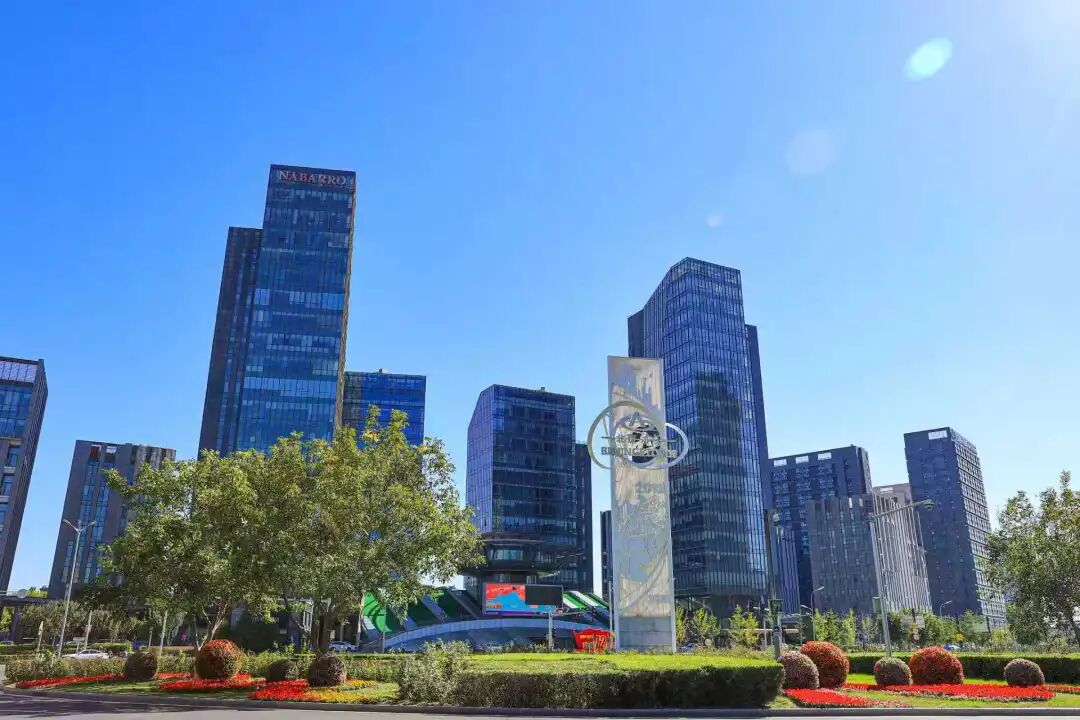
The country's first full - stack embodied intelligence community "Future Machine Domain" and the "Modulo OPC Community" focusing on AI - native have been successively established. If there is a lack of funds, there are "micro - venture capital" and special funds of up to 500,000 yuan for support; if there is a lack of business, more than 100 high - quality commercial orders are directed here annually.
Even the most basic accommodation problem is included in the service of "a bed, an apartment, an office, and a community".
In the latest urban construction blueprint, an ambitious schedule has been set: By the end of 2027, 1000 core artificial intelligence enterprises will be gathered, and 10,000 super individuals and independent developers will be attracted.
In the past few decades, the investment - promotion logic of local governments in China has often been "providing land for factories and tax exemptions". However, in the pioneering period of embodied intelligence, where the product form is not yet fully defined, the traditional investment - promotion logic has failed.
Yizhuang's approach is to invest in an industrial chain with huge room for imagination with extremely patient industrial capital and fully open real - world scenarios. It is no longer just a park that provides office space but an ecosystem that shares the prototyping cost for geeks, provides computing power, and allows algorithms to make mistakes in real streets.
The end - point of artificial intelligence should not be limited to text conversations and beautiful pictures on the screen. When hundreds of machine production lines start to operate and tens of thousands of embodied devices enter the streets, hotels, and workshops, a hidden countdown has quietly begun: Yizhuang, Beijing is likely to be the world's first city where the number of robots exceeds the permanent population.
If the next - generation silicon - based life is destined to have steel skeletons and enter the real physical world, then they definitely need a starting point with sufficient resources and tolerance for failure.
Yizhuang is becoming this starting point.
This article is from the WeChat public account "KeyPoints", author: Lin Yi, published by 36Kr with authorization.