CIO, here's a choice for you: Would you run a "one-person company"?
In the current era of the AI tool explosion, the idea of an individual with an intelligent agent accomplishing what used to require a whole team is transitioning from science fiction to reality. As OpenClaw and AI intelligent agents become buzzwords in the tech circle, an alluring thought begins to swirl in the minds of many CIOs:
I have the technology, experience in digital construction, and a perspective on corporate management. Moreover, AI can assist me in handling numerous tasks. Why not quit my job and start my own business?
For the CIO community, is this path truly viable? What is truly needed to run a one - person company? What challenges will be faced when taking action? What changes need to be made?
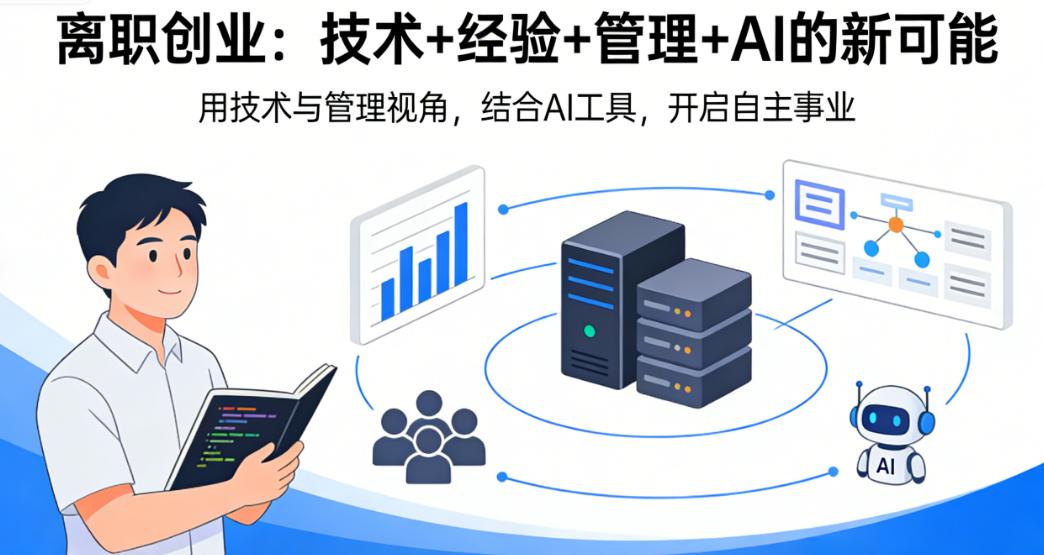
Today, Lao Yang will objectively dissect this issue and provide you, who are pondering this question, with a reference answer.
Why do capable CIOs want to start a business?
Let's return to the initial question: Can a CIO run a one - person company?
The answer is: Yes, but only if you know exactly what you're doing.
So, what factors make some CIOs willing to abandon stability and embark on this path? Lao Yang's analysis is as follows:
First, the market environment is changing.
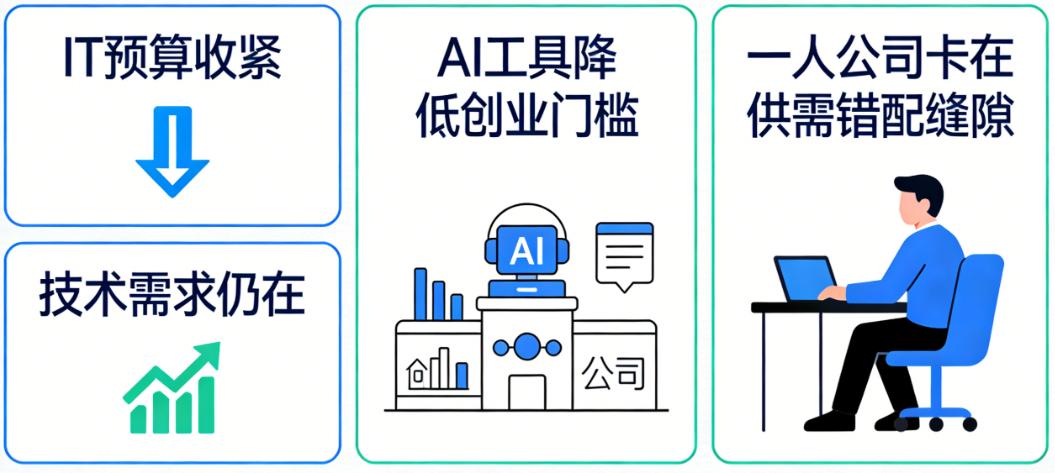
Enterprise IT budgets are tightening, yet the demand for technology persists. AI tools have lowered the threshold for entrepreneurship to an all - time low. A one - person company fits precisely into the gap between supply and demand mismatch.
Second, age is a reminder.
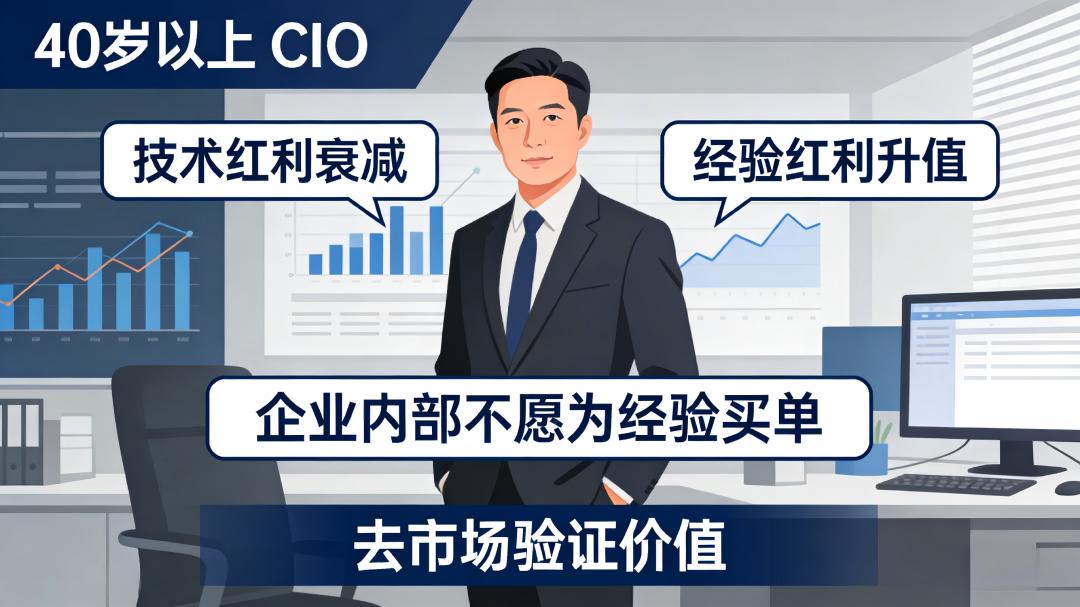
For CIOs over 40, the technological dividend is waning, but the experience dividend is increasing in value. The problem is that enterprises may not necessarily be willing to pay for this experience. Instead of having their cost - effectiveness calculated, it's better to validate their value in the market.
Third, involution is exhausting.
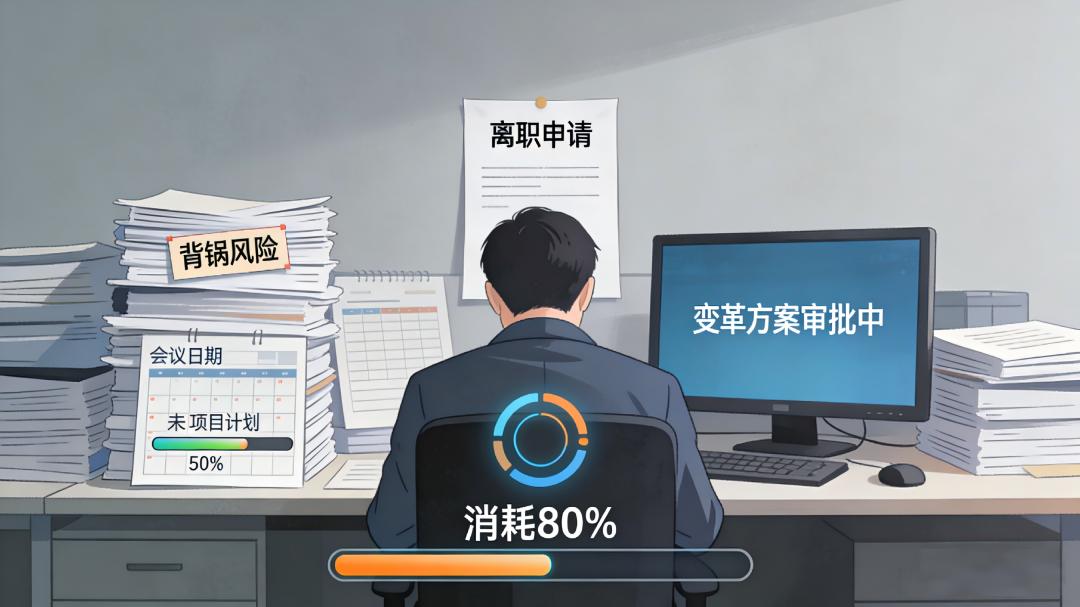
Upward management consumes the time for actual work, the risk of taking the blame is rising, and the sense of powerlessness due to the inability to drive change accumulates over time. When work becomes a drain rather than a source of creation, the thought of leaving emerges.
Fourth, personal development is calling.
"CIO" is a position, not an asset. The logic of a one - person company is: Package your capabilities into a product and let the market set a price for it. The return of a sense of control and the awakening of a sense of craftsmanship are motivations beyond money.
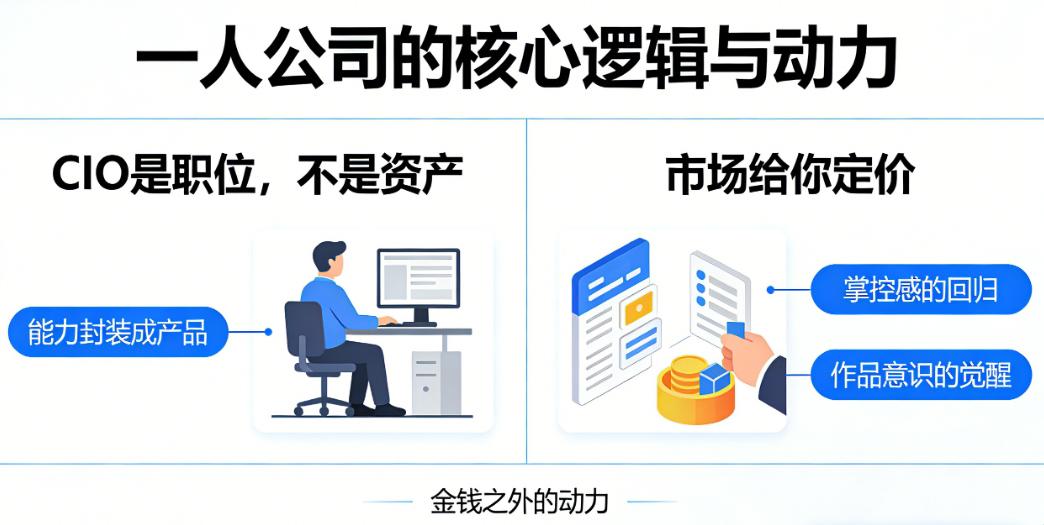
Of course, there are also several underlying factors driving this trend: The decentralization of corporate governance has diluted the value of the information department; the reuse rate of experience has increased from 1 to N, which is an irresistible temptation; the need for inter - generational inheritance, with a desire to leave something for the industry; and the redefinition of "certainty" has led some people to choose another form of uncertainty.
Why is a CIO suitable for running a one - person company?
Don't rush to think about "whether to" or not. First, ask yourself "whether you are qualified".
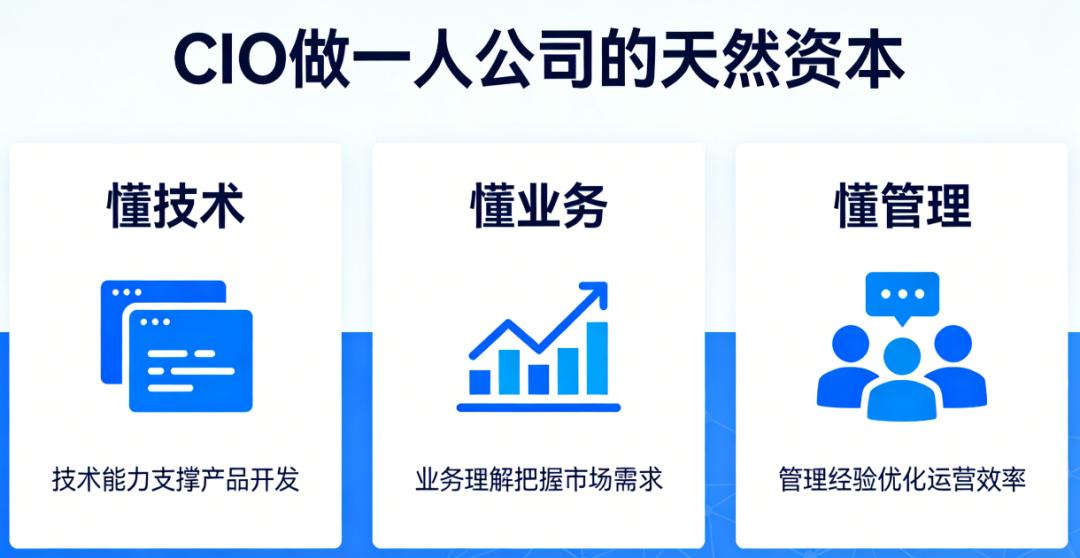
A CIO's resume hides the natural capital for running a one - person company.
Understand technology. This is not just about "being able to use AI to write copy". It means truly understanding the architectural logic, data flow, and security boundaries of enterprise - level systems. When intelligent agent tools emerge, a CIO can quickly judge: What problems they are suitable for solving, what problems they are not suitable for, and how to integrate them with the enterprise's existing systems. This judgment cannot be achieved overnight through a few tutorials.
Understand business. After years of working in informatization, some CIOs know better than most technical personnel where the pain points of the business department lie. The problem of scattered customer data that keeps the sales director awake at night and the reconciliation process that drives the finance manager crazy are problems that a CIO can map out with eyes closed. This "business translation" ability is difficult to replace for pure technical personnel.
Understand management. A one - person company is not about "one person doing the work", but "one person operating a company". Quoting, signing contracts, delivering, collecting payments, providing after - sales service, and filing taxes are all tasks. A CIO has witnessed how many projects fail in an enterprise and also knows how to make a project succeed. This "pit - avoiding experience" is invaluable.
The combination of these three "understandings" forms the confidence for a CIO to run a one - person company. However, this is only the starting point, not the end.
What is truly needed to run a one - person company?
Many people think that a one - person company is just "one person + several AI employees". This picture is appealing, but it misses the most crucial element.
Need a "product anchor" that can be monetized
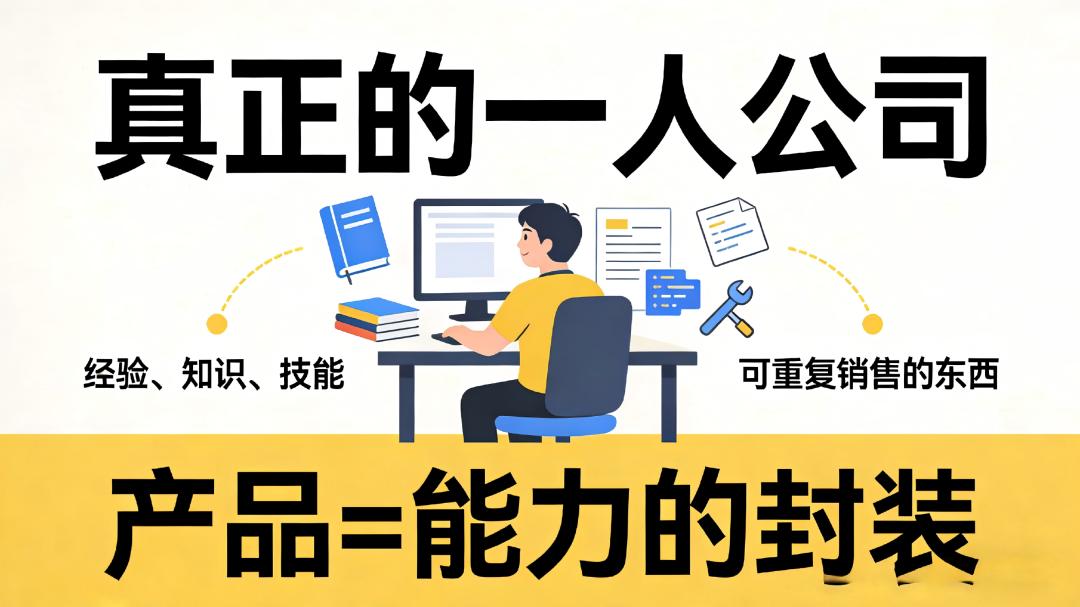
No matter how powerful AI is, there must be something to sell to customers. Is it selling services, software, solutions, or your expert time? This "anchor" determines all your actions.
A common mistake that many technical personnel make when starting a business is: I understand this, so I'll offer consulting and training services. However, consulting and training are about selling time, which is difficult to scale. A real one - person company needs products = encapsulation of capabilities - packaging your experience, knowledge, and skills into something that can be sold repeatedly.
Need a complete chain of "receiving orders - delivering - collecting payments"
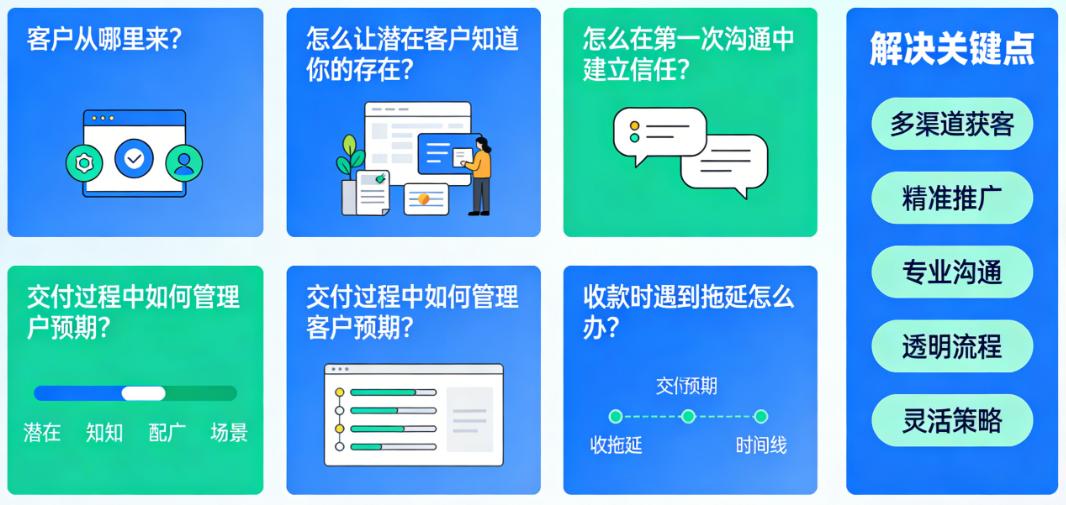
In an enterprise, a CIO only needs to worry about the technical aspect. However, in a one - person company, all aspects are your responsibility.
Where do customers come from? How can you make potential customers aware of your existence? How can you build trust in the first communication? How can you manage customer expectations during the delivery process? What should you do if there are payment delays? These "non - technical problems" can each become a bottleneck.
Need continuous update of industry knowledge
AI technology is evolving too rapidly. A project that was promising last year may be eliminated by the market this year. A one - person company has no "learning period" buffer - if you don't understand a new technology today, it may affect your customers' choices tomorrow.
This means that if the experience advantage brought by the CIO position is not continuously updated, it may be quickly diluted.

What real challenges will be faced when truly taking action?
After discussing what is needed, let's take a look at what the glamorous reports won't mention.
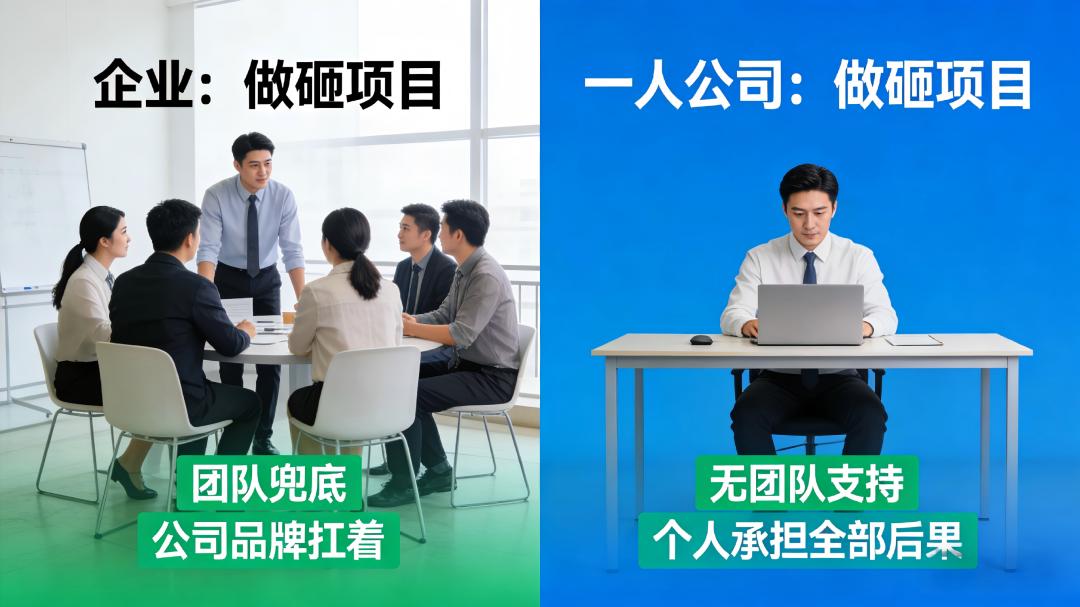
Challenge 1: No one shares the risks
In an enterprise, if a project fails, the team and the company's brand can take the blame. In a one - person company, a failure is entirely your own.
Contract disputes, delivery errors, and customer complaints - you have to bear the consequences of each incident alone. The lack of risk management is the most fatal shortcoming for a solo entrepreneur.
Challenge 2: Psychological pressure due to unstable income
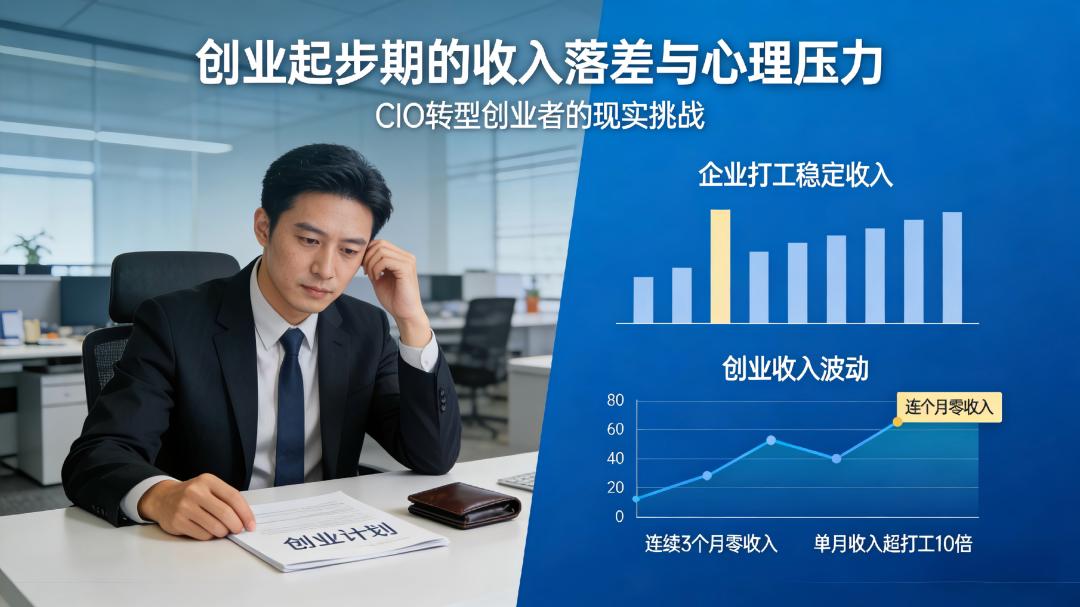
The income curve of a one - person company is completely different from the stable monthly salary of a corporate executive.
There may be no income for several consecutive months at the start - up stage. Even after the business model is established, the income fluctuation is much greater than that of working in an enterprise. For CIOs who are used to a stable income, the psychological pressure caused by this gap is often seriously underestimated.
Challenge 3: The sense of role - tearing
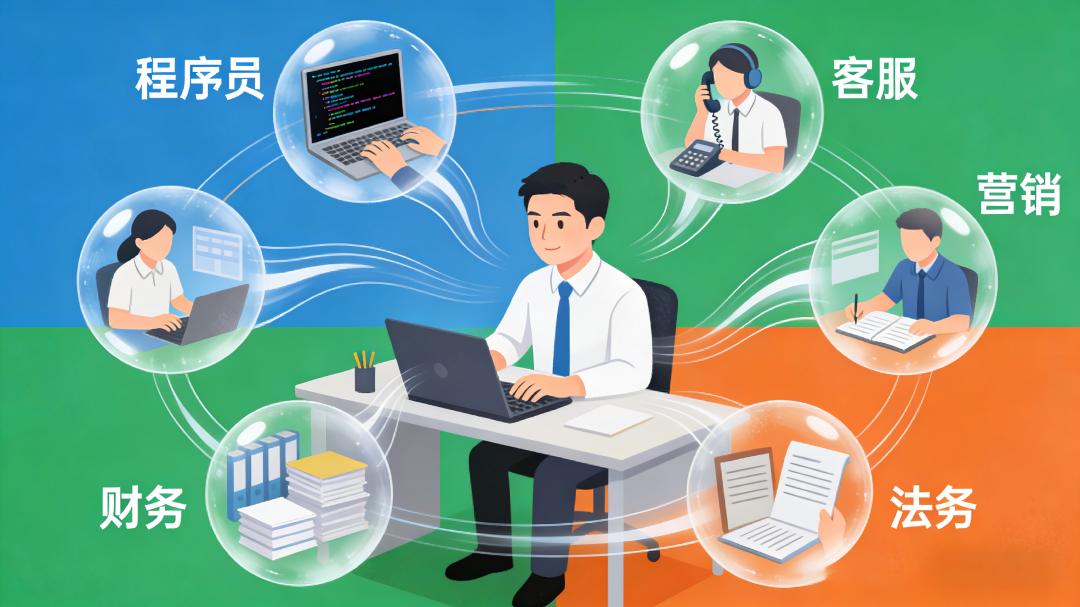
The founder of a one - person company has to seamlessly switch between being a programmer, a customer service representative, a marketer, a financial officer, and a legal advisor every day.
Writing code in the morning, replying to customer messages in the afternoon, researching tax policies at night, and thinking about promotion in the middle of the night. For a technical leader in an enterprise, these "public - facing" tasks may be outside their comfort zone. However, in a one - person company, no one else will do these for you.
Challenge 4: Frictional costs with policies and systems
A one - person company is a new thing, and many existing policies have not caught up.
Entrepreneurs often have multiple identities as operators, laborers, and service providers. Their income fluctuates greatly, but the existing social security payment methods are relatively rigid, resulting in a relatively high payment pressure. Once a company is established, social security and taxes have to be paid as required, which may become one of the main costs at the start - up stage. Invoice issues, contract issues, and financing issues - you have to handle each of them on your own.
What changes need to be made? From "manager" to "craftsman"
If you still want to give it a try after reading the above challenges, then the following fundamental changes are needed.
Change 1: From "assigning others to work" to "working on your own"
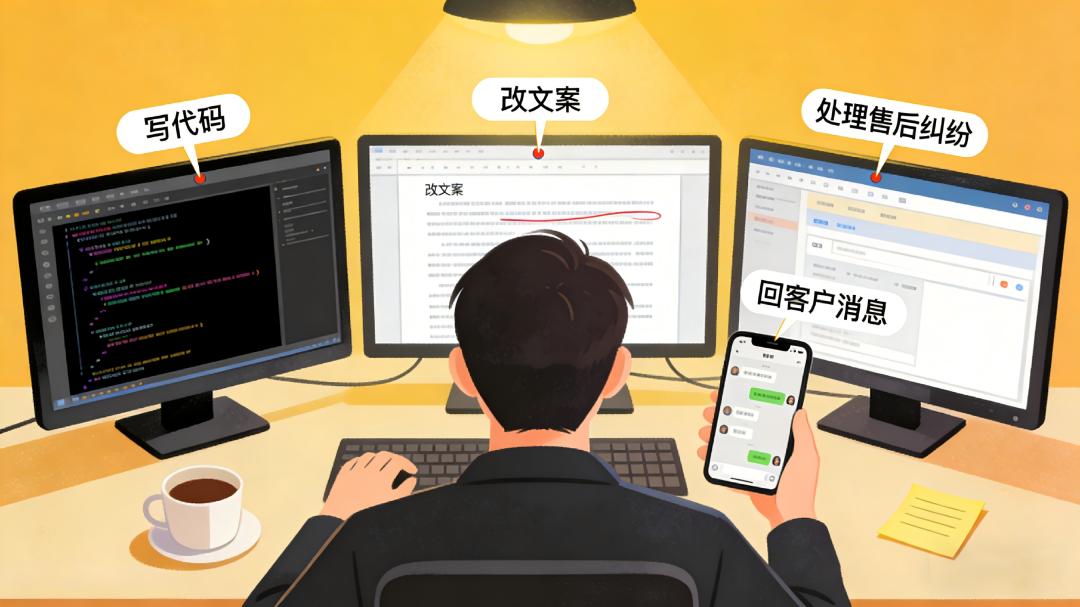
In an enterprise, a CIO's work mode is to set directions, assign tasks, and monitor progress. In a one - person company, all the "unassigned tasks" are yours. Writing code, revising copy, replying to customer messages, and handling after - sales disputes are all your responsibilities.
This means that the "management ability" that a CIO is proud of may not be useful at the start - up stage because there is no one to manage. What really matters is whether you can fix a tricky bug on your own at 2 a.m.
Change 2: From "pursuing perfection" to "pursuing adequacy"
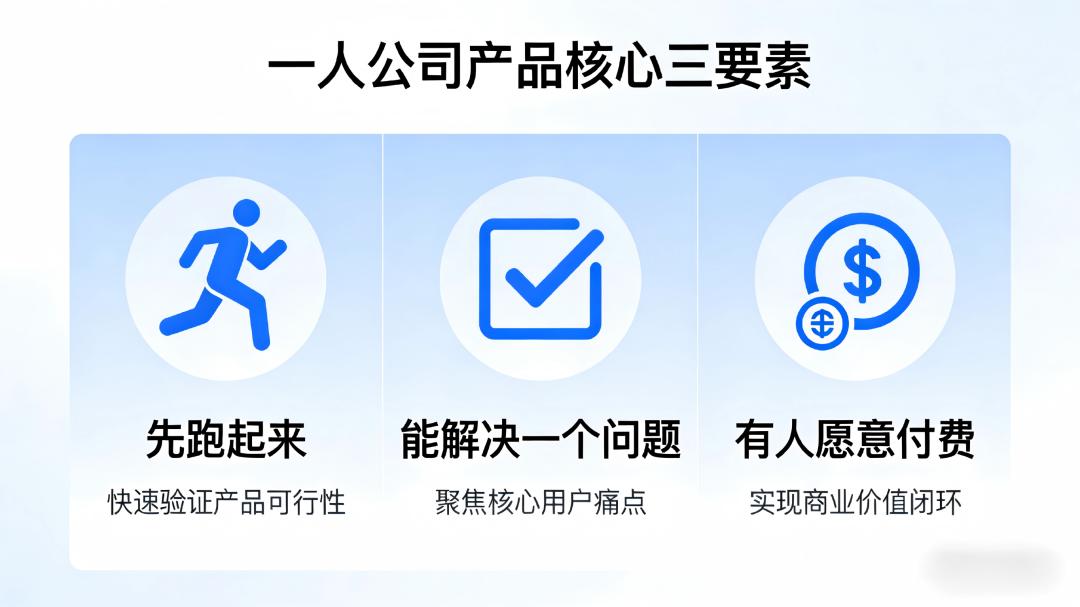
Enterprise - level projects focus on stability, reliability, and comprehensiveness. The products of a one - person company focus on getting started, solving a problem, and having someone willing to pay.
Give up the pursuit of being large and comprehensive, and focus on solving a specific problem in a specific scenario. A valuable product should not be a toy, but it also doesn't need to be a work of art that takes three years to polish.
Change 3: From "internal perspective" to "market perspective"
In an enterprise, your users are internal business departments,