The Roadster, highly praised by Elon Musk, is here: It might be the most powerful supercar, but it can't save the Model 3/Y.
"Is the 'best car of the human - driven era' approaching?"
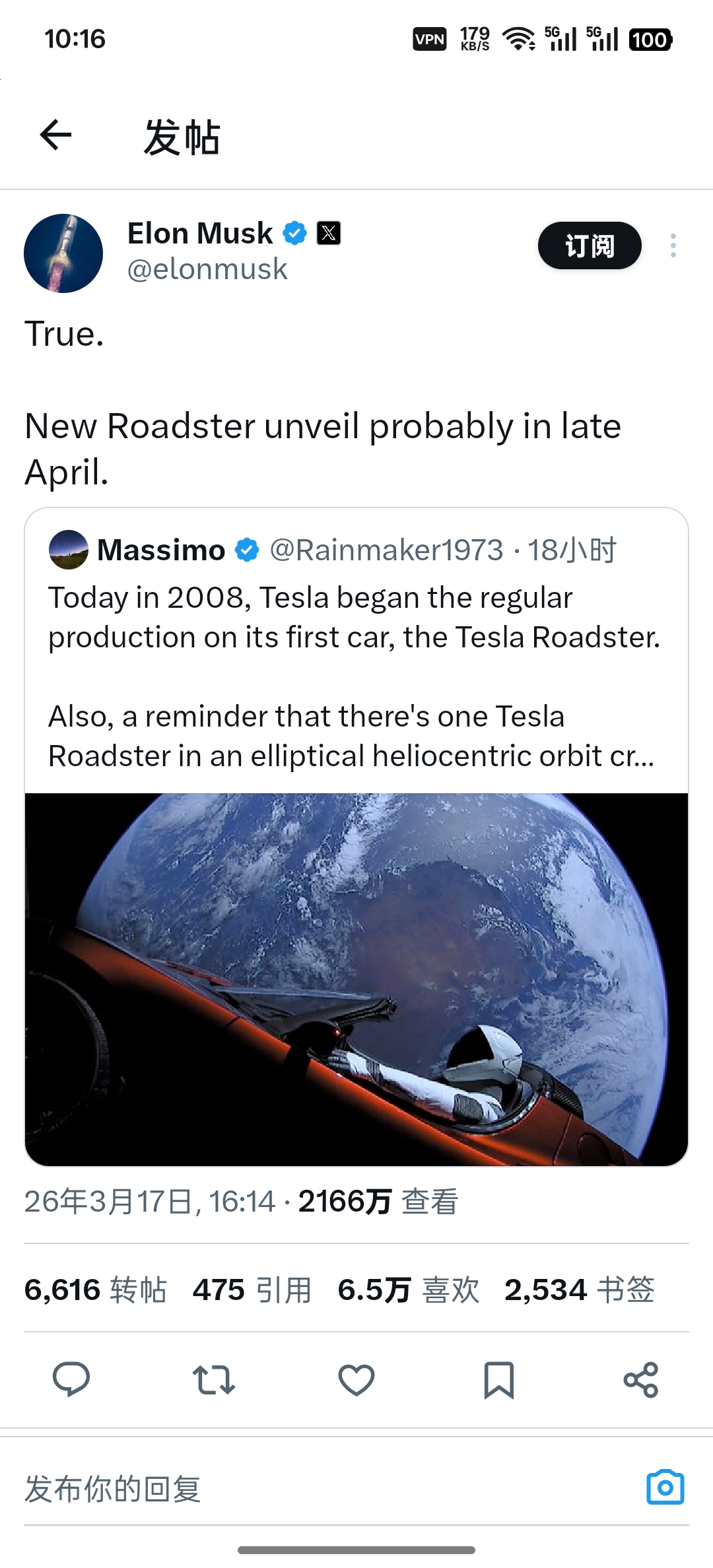
On March 17th, Tesla CEO Elon Musk announced on the X platform that the super - car model Roadster is expected to be released in late April.
(Screenshot: X platform)
Musk once said bluntly that users who buy Ferraris don't prioritize safety, and the same goes for the Tesla Roadster. If your top criterion for buying a car is safety, don't choose the Roadster.
He even said, "The Roadster will be the best among the last batch of human - driven cars."
As the global new - energy vehicle industry has developed to date, Musk and Tesla, as pioneers, have made great contributions. However, whether the Roadster can be regarded as the best model in the human - driven era is still worthy of discussion.
Roadster: Aiming to Be the Purest Super - Car
As early as 2017, Tesla released the second - generation Roadster, originally scheduled to go on the market in 2020 with a starting price of $200,000 (about 1.375 million yuan). Affected by multiple factors, the launch time of the model has been postponed repeatedly.
It wasn't until November 2025 that the US financial media "Business Insider" reported that Tesla had restarted the R & D work of the Roadster in the summer of that year.
Similar to Tesla's electric pickup truck Cybertruck, although the Roadster has not been launched, some of its parameters have been announced on the official website. The mass - produced version may have some details adjusted.
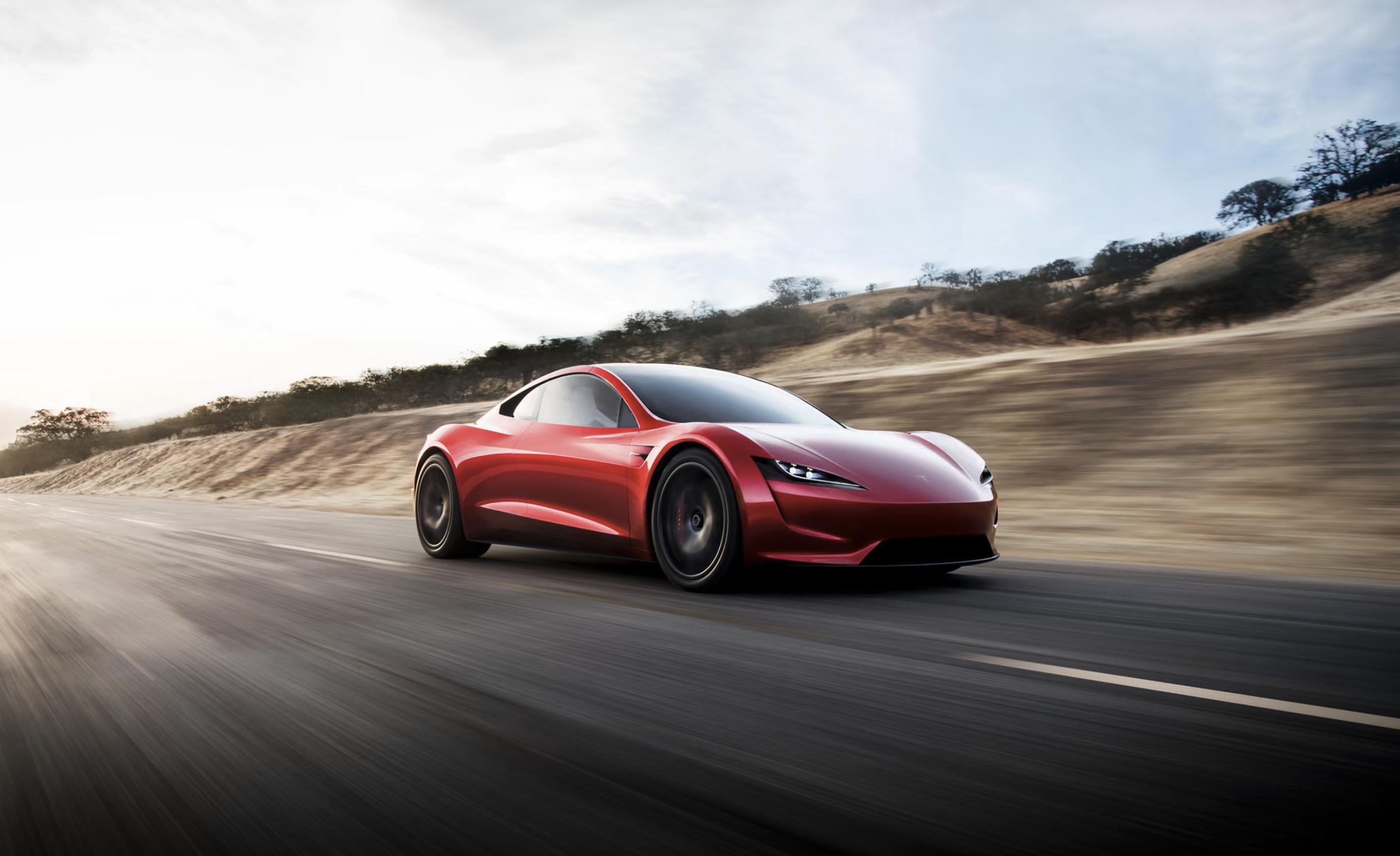
According to the official statement, the Roadster is positioned as a pure - electric four - seat convertible super - car. Its body posture is lower than that of the Model 3. The sharp front face, paired with an ultra - small air intake grille and smooth lines, all highlight the identity of this pure - electric super - car. It should be noted that the car is also equipped with a lightweight, removable glass roof, which can be placed in the trunk after being removed to enable convertible driving.
(Source: Tesla)
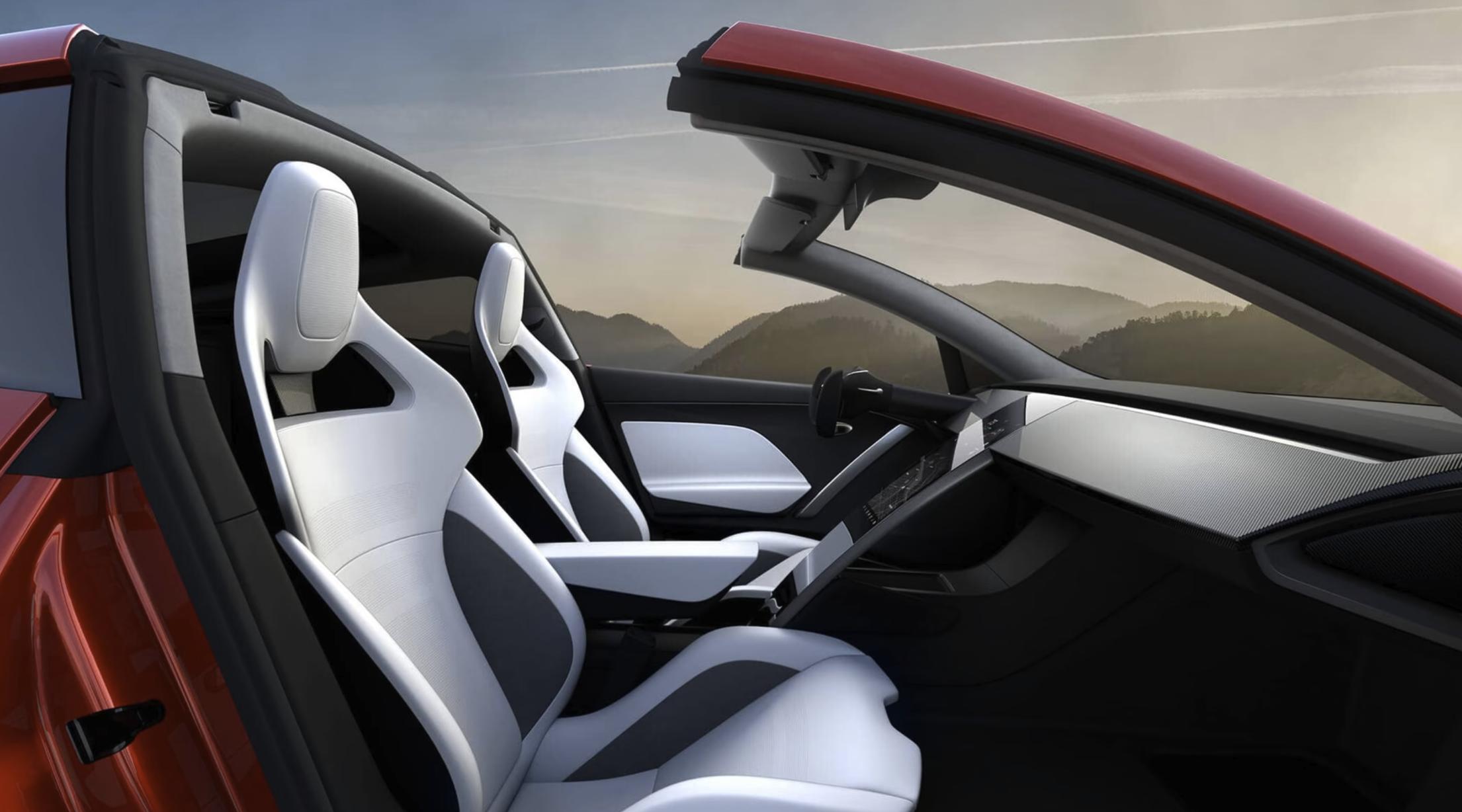
The interior of the Roadster still adheres to the design style of simplicity and a sense of technology. The color - contrast design of the black cockpit and white seats, combined with the vertical central control large screen, keeps Tesla's brand style unchanged.
The biggest highlight of this car is its super - strong power. The three - motor four - wheel drive system can provide a torque of up to 10,000 N·m. It only takes 2.1 seconds to accelerate from 0 to 100 km/h, 4.2 seconds from 0 to 160 km/h, and its maximum speed exceeds 400 km/h. With a 200 kWh large - capacity battery, the car has a pure - electric range of up to 1,000 km.
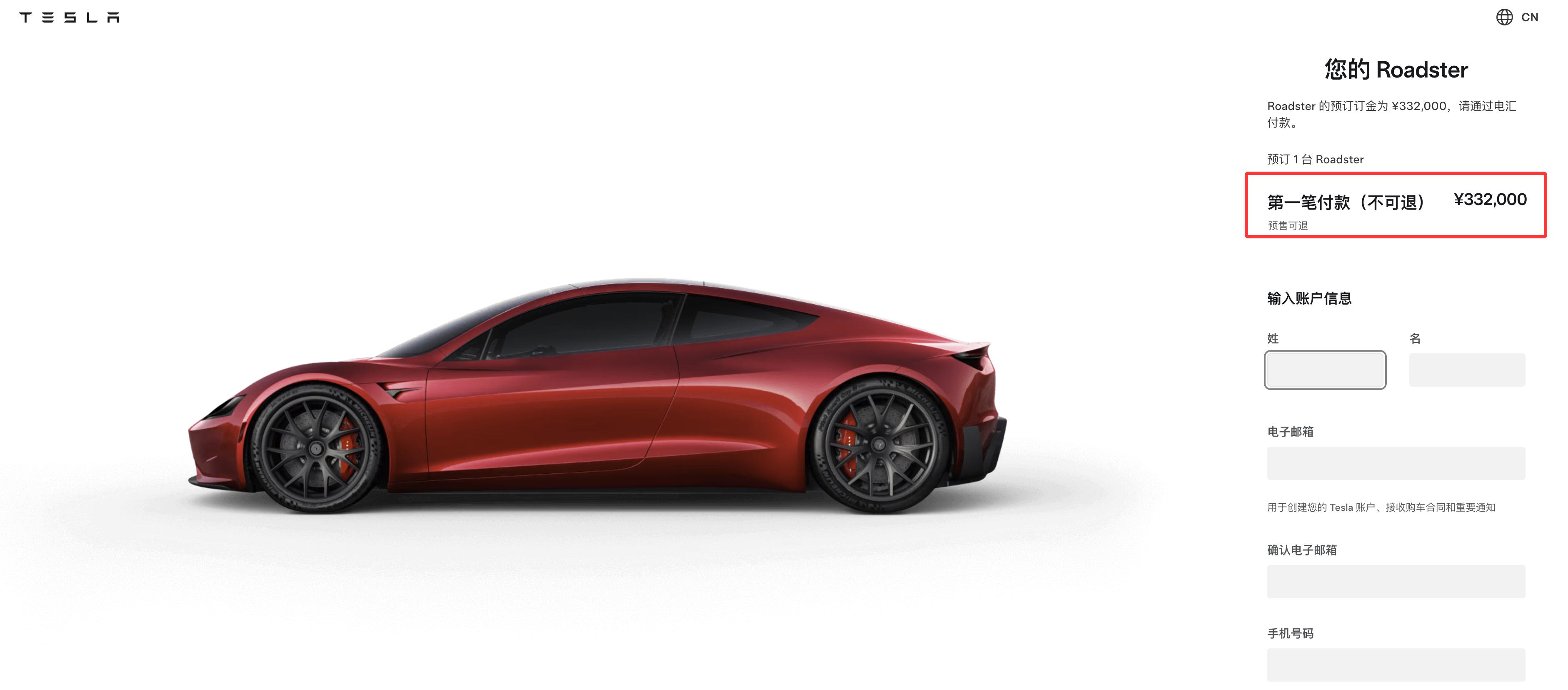
On the Tesla official website, we can also find the pre - sale page of the Roadster, with a deposit of 332,000 yuan.
(Source: Tesla)
In comparison, domestic high - end pure - electric super - cars also have remarkable strength:
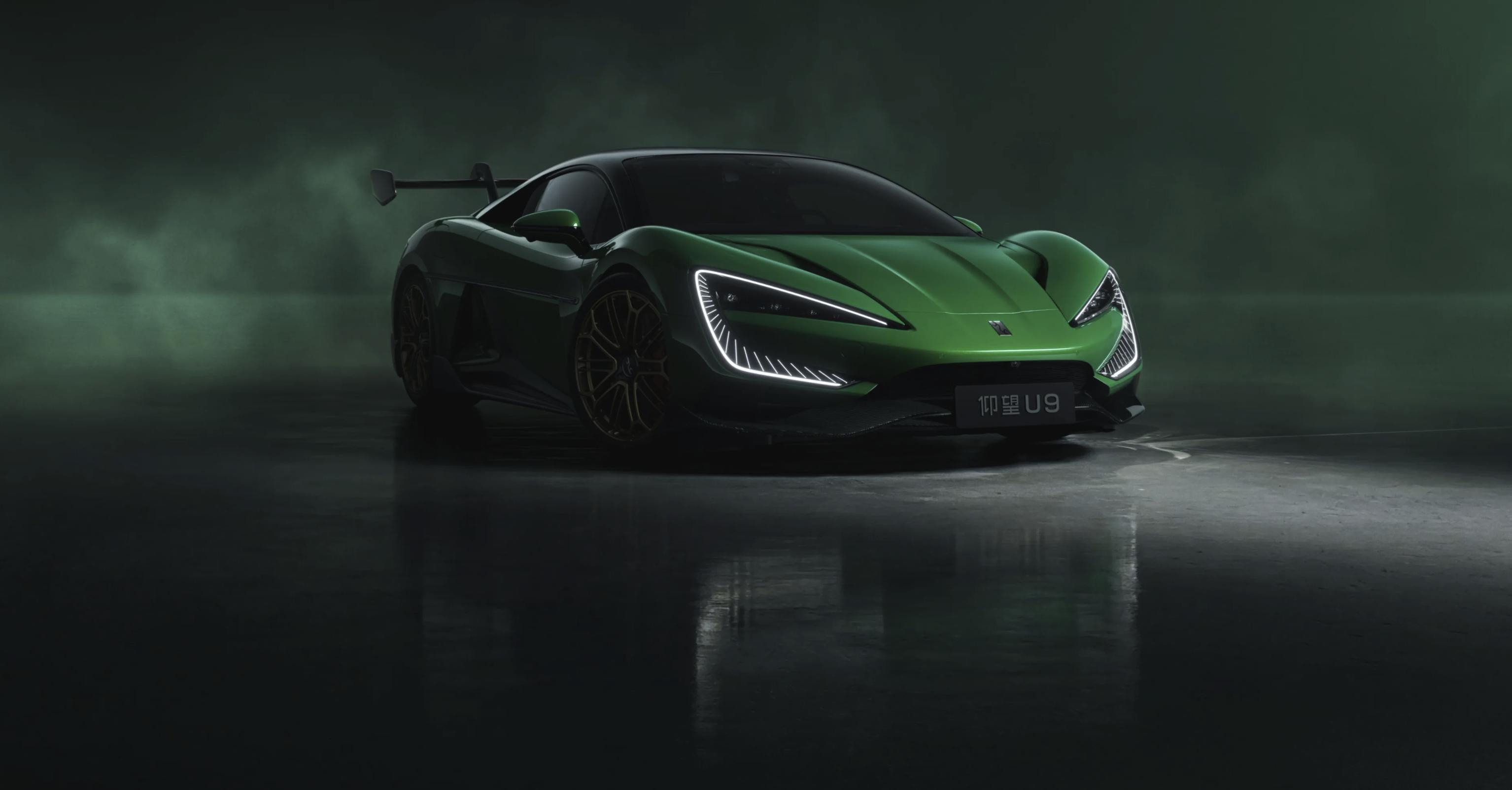
The domestic sports car Yangwang U9 is based on the e - Quad platform. It has a peak torque of 1,680 N·m, an acceleration time from 0 to 100 km/h of 2.36 seconds, a measured maximum speed of 391.94 km/h, and a range of 450 km under the CLTC condition;
The Xiaomi SU7 Ultra Nürburgring limited - edition has a maximum torque of 1,770 N·m, an acceleration time from 0 to 100 km/h of 1.98 seconds, a maximum speed of 350 km/h, and a range of 520 km under the CLTC condition.
(Source: Yangwang)
It's not hard to see from the comparison that after domestic brands started to make efforts in the super - car field, the Tesla Roadster doesn't have an absolute lead in straight - line acceleration. The acceleration time from 0 to 100 km/h of domestic pure - electric luxury super - cars is also around 2 seconds.
The real advantages of the Roadster are more reflected in its convertible design, electronic control experience, and a super - long range of 1,000 km, which are still hard to match for current domestic super - cars.
The advantages of domestic super - cars lie in aspects such as interior and comfort. Different from the Roadster, which emphasizes both simplicity and a sense of technology, domestic super - cars pay more attention to driving and riding experiences. They are equipped with all possible features like seat ventilation, heating, and massage, as well as large central control screens and dashboards.
The Roadster is a pure super - car. In order to pursue a more excellent and cool driving experience, it even puts safety in a secondary position, which is completely different from the concept of domestic high - end models that focus on comprehensive safety and comfort.
(Source: Tesla)
Roadster: A Substitute to Replace the Model S
In 2008, Tesla's first mass - produced model, the Roadster, was officially delivered. By the time it was taken off the market in 2012, a total of about 2,450 units had been delivered. In an era when pure - electric vehicles were mainly used for low - end transportation, and only a few high - end models remained in the laboratory and were hardly seen by consumers, the Roadster was like a thunderbolt out of the blue.
In 2017, Tesla released the second - generation Roadster. At that time, Tesla didn't have a deep cooperation with the Chinese supply chain, and the Shanghai Gigafactory hadn't started production yet. Tesla was on the verge of bankruptcy and didn't have the capacity to mass - produce this car.
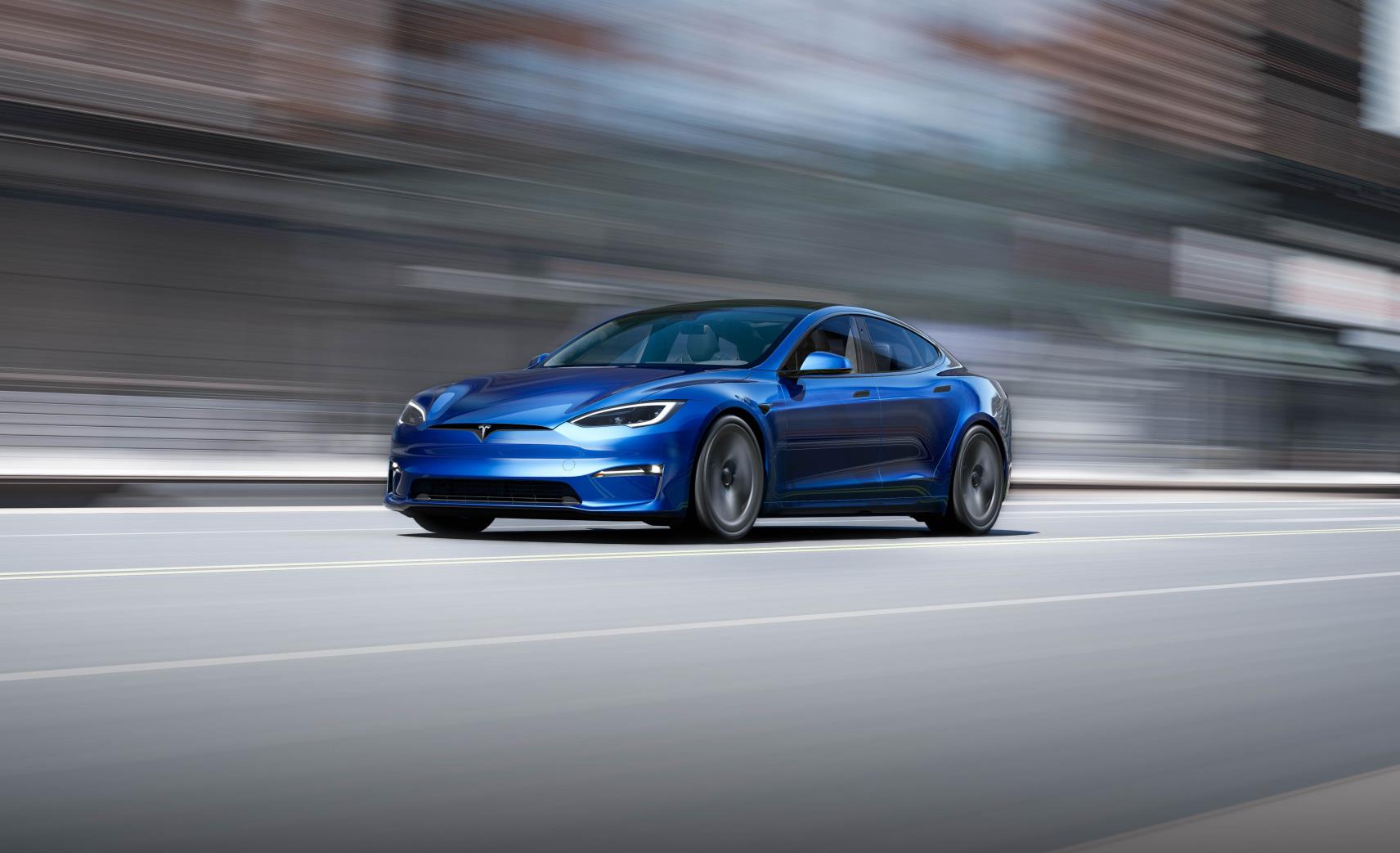
After the Shanghai Gigafactory went into production in 2019, Tesla entered a period of rapid growth. At this time, the Model S/X had established a foothold in the high - end pure - electric market, and the market didn't have such a high demand for niche high - end super - cars like the Roadster. Naturally, Tesla was reluctant to invest too many resources in promoting its R & D and mass production.
(Source: Tesla)
Although Musk said in the Q3 2024 earnings call that the Roadster project was still in progress, by then, five years had passed since the originally promised production time. It's more likely that the project team had been disbanded. Now, Tesla's overall electric vehicle business has fallen into a growth bottleneck and just needs a landmark model to revive its brand image.
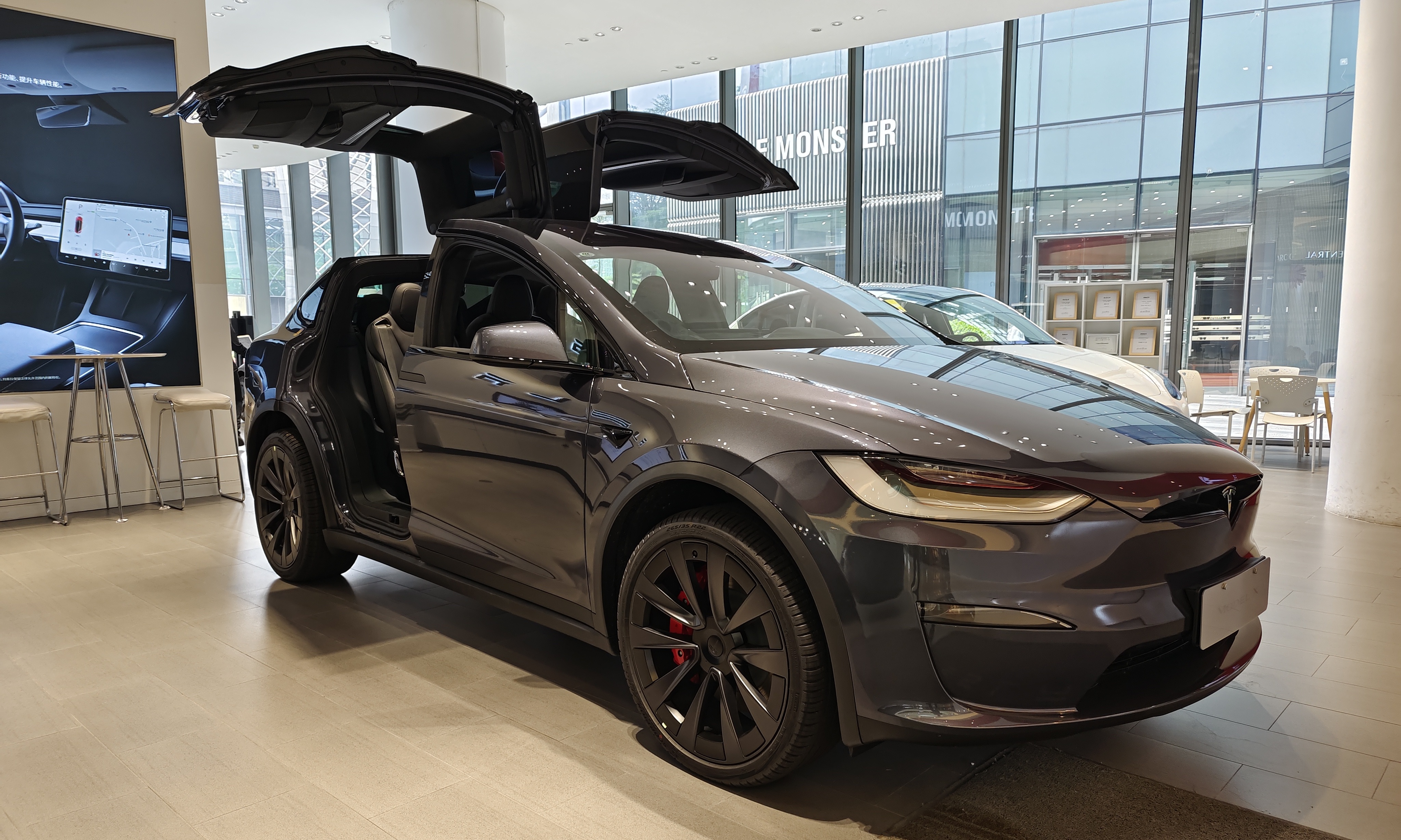
Musk announced in the Q4 2025 earnings call that the Model S and Model X would be discontinued before the second quarter of 2026. The reason for Musk's decision to discontinue the Model S/X is simple: the products couldn't be sold.
The designed annual production capacity of the Model S/X is 100,000 units, but the actual utilization rate is only 30%. In 2025, its sales only accounted for about 2% of Tesla's total sales. According to Musk himself, a production capacity utilization rate of 60% is a barely - sustainable stage, and a rate of 50% is "extremely painful".
Isn't the Model S/X production line with a utilization rate of only 30% an even heavier burden?
(Source: Video taken by Diantong)
The earnings data shows that in 2025, Tesla's total revenue was $94.827 billion, a year - on - year decline of 2.93%. The net profit attributable to shareholders was $3.794 billion, a year - on - year plunge of 46.79%. The sales volume was also under pressure. In 2025, Tesla's global sales volume was about 1.636 million units, a year - on - year decrease of 8.6%, and it has declined for three consecutive years.
To boost sales, Tesla has also abandoned its strategy of not doing traditional advertising in recent years, increasing its advertising on platforms such as YouTube and Facebook, and repeatedly reducing the prices of its volume - driving models, the Model 3/Y, for promotion. However, these actions have had little effect and have instead further raised the marketing cost.
Tesla's expansion of new - energy vehicles in the European and American markets has been hindered due to factors such as the adjustment of environmental protection policies, changes in policy orientation, and personal controversies surrounding Musk. In China, the world's largest new - energy vehicle market, Tesla's sales have declined for three consecutive years, mainly because the brand and product's leading advantages are getting smaller and smaller.
(Source: Tesla)
It's undeniable that before 2023, Tesla led the development of the new - energy vehicle industry, but domestic manufacturers have never stopped chasing Tesla. With huge R & D investments, domestic cars in the same price range have caught up with Tesla in terms of space, intelligent driving technology, exterior and interior design, entertainment, and comfort hardware configurations.
Domestic manufacturers have continuously made efforts in the high - end market and have gradually gained consumer recognition in this field. According to the data on the average price of cars in the Chinese market in 2025 released by Jielanlu, the average price of Tesla cars is 266,000 yuan, which has been surpassed by domestic brands such as NIO, Li Auto, Xiaomi, and Wenjie.
The strategic value of a super - car is far greater than its direct sales revenue. In essence, it is a brand's technology laboratory, image amplifier, magnet for capital and talent, and a must - answer question for high - end development and long - term competitiveness, rather than just a sales - volume business. After the discontinuation of the Model S/X, Tesla urgently needs a super - car to showcase its technological strength and enhance its brand value.
As the Roadster, which once defined the electric super - car and carried Tesla's pioneer identity, naturally becomes the best choice to undertake this mission. However, the current question is, can Tesla really reverse the continuous decline in its overall sales volume with just one niche super - car?
Roadster: By No Means a Lifesaving Medicine for Tesla
With a starting price of $200,000, the Roadster is destined to belong to only a very small number of people. Perhaps Tesla can indeed showcase its technological strength through this car, but the truly valuable technology is the one that can be applied to volume - driving models such as the Model 3 and Model Y, so that ordinary users can buy and use it.
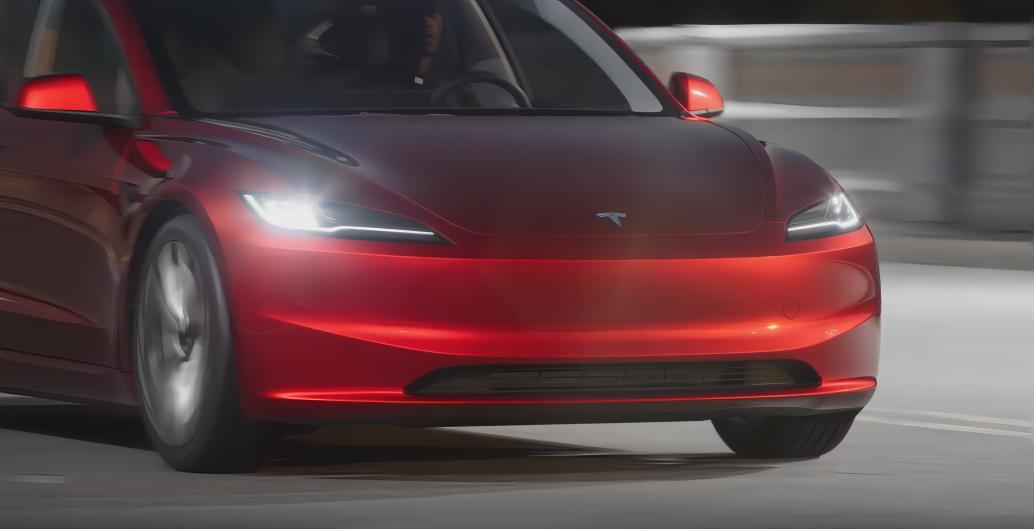
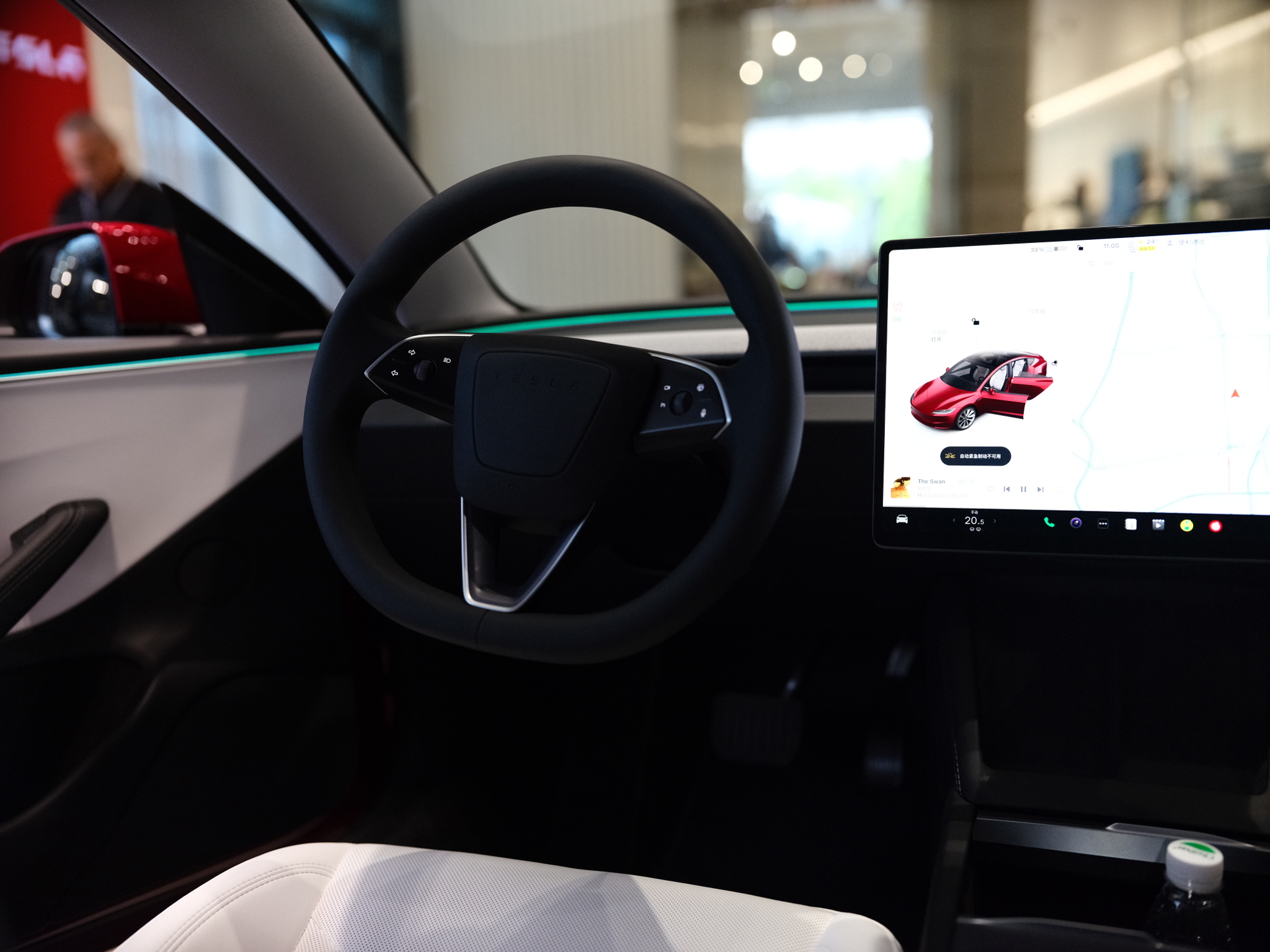
The Model 3 was launched in 2017, and the Model Y was launched in 2020. While domestic new - energy vehicles are updated every two or three years, these two models have never had a real update, only minor detail adjustments. Their space structure has hardly progressed, and they have always been very conservative in terms of comfort configurations.
(Source: Tesla)
Domestic new - energy vehicles in the same price range are frantically adding various comfort configurations inside the car. Seat ventilation and heating have almost become standard features, the massage function is rapidly popularizing, more and more models are equipped with rear - seat screens or support rear - seat magnetic tablets, a small number of luxury cars are also equipped with projectors and screens, the ambient lights are becoming more and more gorgeous, and the sound quality is also getting better.
For a long time, the Model 3/Y has often been ridiculed by netizens as a "bare - shell house" due to its simple interior design and few comfort configurations. In the stage when the product strength of domestic new - energy vehicles couldn't match Tesla's, consumers could still accept its slight deficiencies. Now, the configurations, functions, and quality of domestic new - energy vehicles are in no way inferior to Tesla's. With more and more products for consumers to choose from, Tesla has naturally gradually "fallen out of favor".
In the view of Diantong, Tesla needs to develop a new platform for the Model 3/Y, optimize the product's exterior and space design, and add more configurations related to entertainment and comfort.