After a decade of localization, millimeter-wave radars have finally come to their spring.
At the end of last year, Chengtai Technology, a leading company in millimeter-wave radar, submitted its prospectus. The founding team with the aura of Huawei, the deep tie-up with major customer BYD, and the prominent strategic losses are typical features of current new energy vehicle suppliers.
Millimeter-wave radar is the main and only product of Chengtai Technology. Its 5.5th generation 4D high-resolution millimeter-wave radar has successfully hitched a ride with BYD. In the first half of last year, 97.4% of Chengtai's revenue came from BYD, which can be rounded up to be part of the Fudi system [1].
Having received orders from the big brother, it's natural to take the heat. Since 2022, as the automobile price war raged on, the average selling price of Chengtai's millimeter-wave radar has been continuously decreasing. In the first half of last year, the price of the high-performance forward radar was already cut in half.
Correspondingly, the gross profit margin has also shrunk significantly. The profit per unit is less than 20 yuan, which is only enough to buy a cup of milk tea.
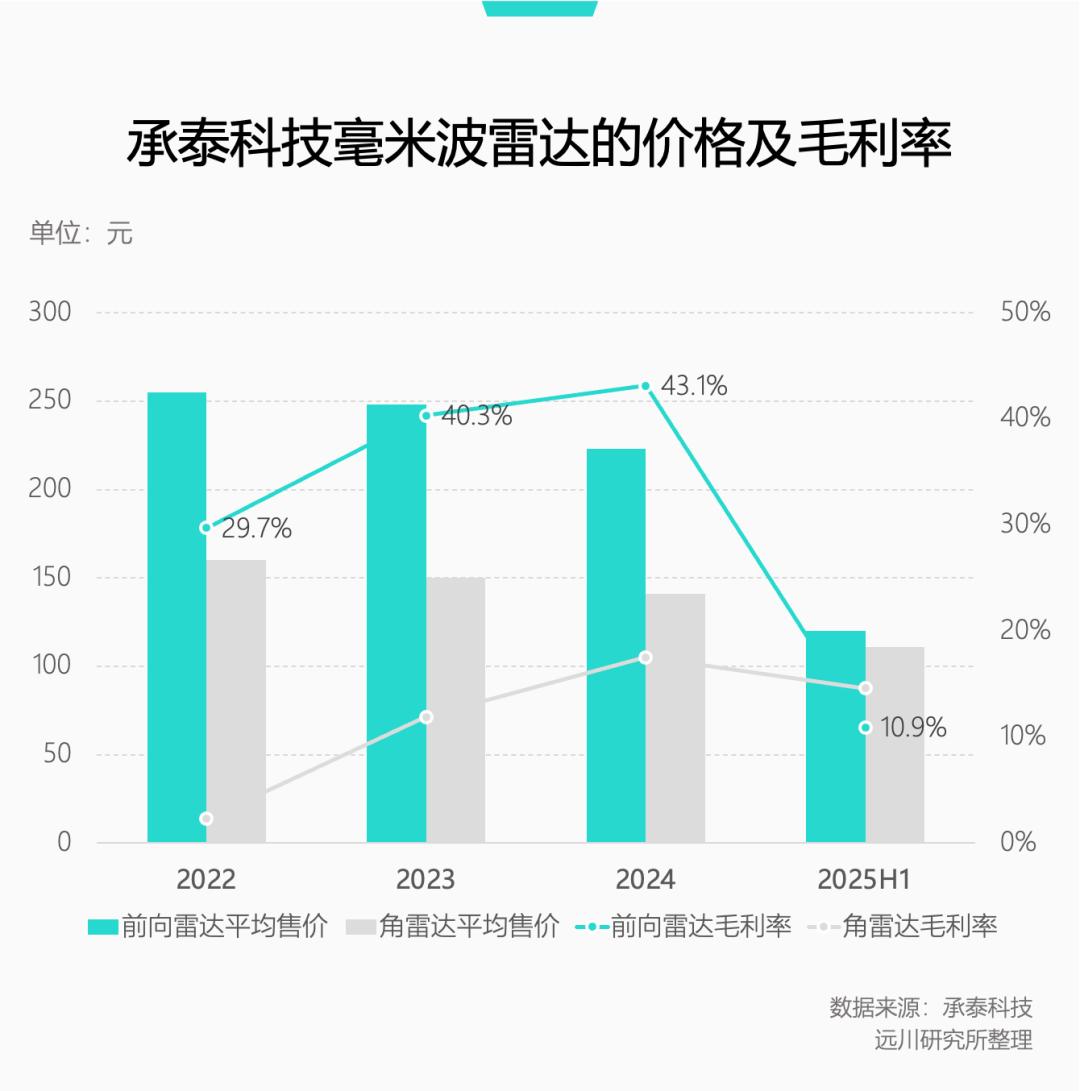
The price war is not a good thing in the current environment, but it is ultimately a signal and an inevitable stage for market integration and clearance. It only took a decade for domestic millimeter-wave radar to go from near barrenness to a fiercely competitive red ocean.
Imperfect Sensor
Tesla, which has been advocating the pure vision route, also had an affair with millimeter-wave radar in the early years.
In the famous car accident in 2016, a Model S with assisted driving crashed into an 18-wheel truck crossing the road, which first exposed the shortcomings of the vision solution. Due to the backlight on a sunny day, the camera failed to recognize the white truck compartment that "blended in" with the sky, ultimately leading to a tragedy [2].
After the accident, Musk immediately decided to promote millimeter-wave radar and changed the previous sensor architecture of "vision first, radar second" to strengthen the AEB function.
In other words, Tesla is not a born vision school. It also got distracted along the way.
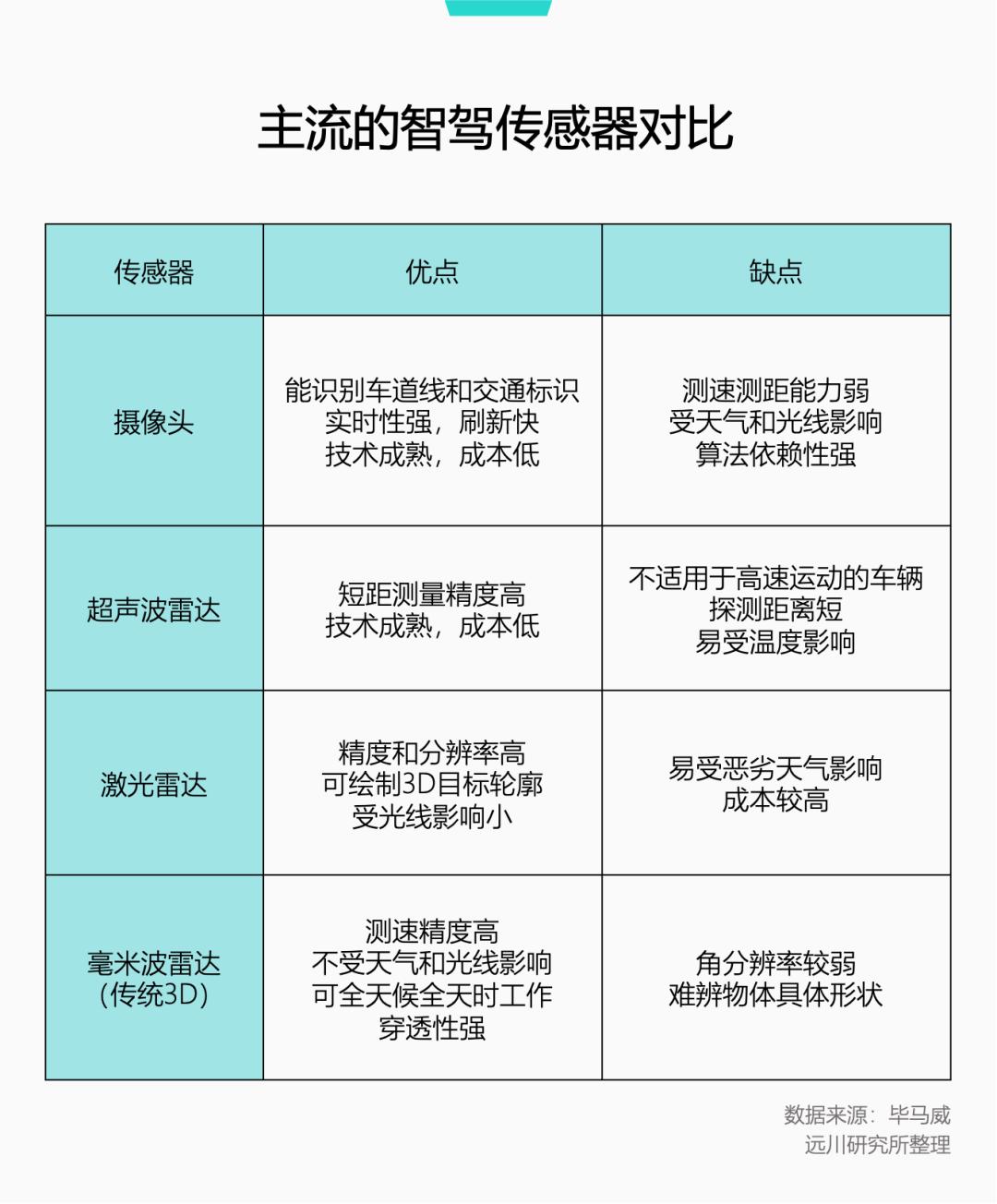
For assisted driving, the chip is the brain, and the sensors are the eyes, used to perceive information about the surrounding environment. The mainstream sensors include ultrasonic radar, camera, millimeter-wave radar, and lidar.
In theory, the camera is the closest to the human eye, but it needs to be paired with an algorithm to accurately perceive. Moreover, the camera has high requirements for light, and both dim and bright light affect its vision.
Millimeter-wave radar and lidar belong to active sensors, which directly emit electromagnetic waves for detection. There is no problem of "being able to see" or not, and they are less affected by light, which can make up for the shortcomings of the camera.
Tesla ultimately chose millimeter-wave radar mainly because of cost. At that time, a lidar cost tens of thousands of dollars, while a millimeter-wave radar could be installed in a vehicle for a few hundred dollars.
The advantages and disadvantages of millimeter-wave radar are very obvious. On the one hand, it is not affected by light and weather and can work 365 days a year without difference. Especially in rainy and foggy weather, the detection effect of lidar is significantly weakened, while millimeter-wave radar is completely unaffected.
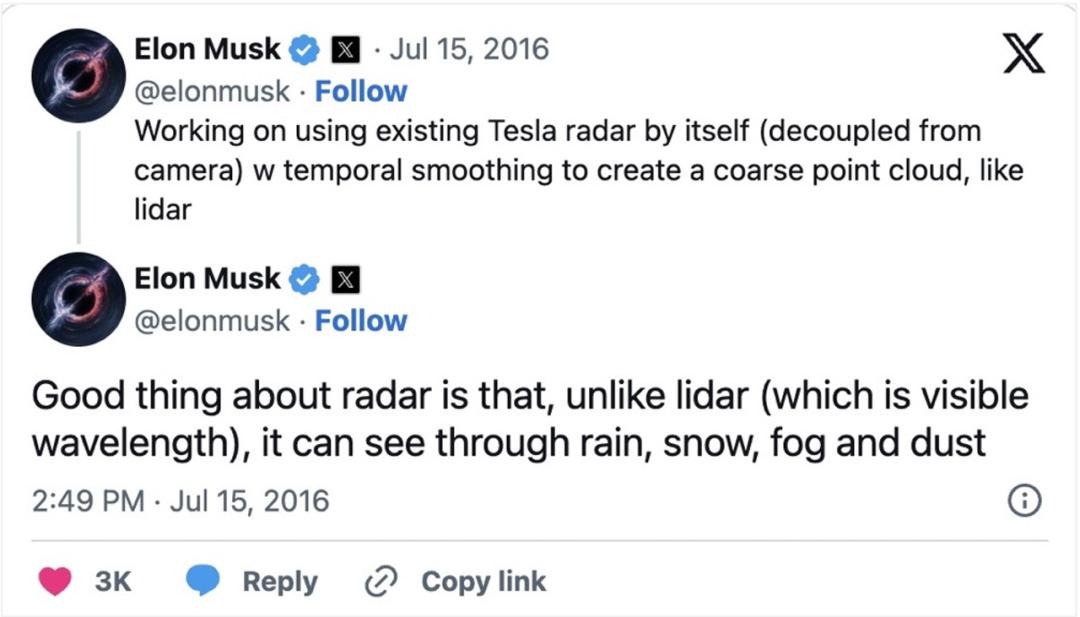
Musk once hoped to use millimeter-wave radar to achieve the effect of lidar.
On the other hand, millimeter-wave radar has a natural shortcoming in resolution, like a "sensitive blind person".
First, the horizontal angular resolution is very low, that is, the emitted beam is wide, making it difficult to distinguish adjacent objects. Once the distance becomes far, it is easy to mistake two motorcycles driving side by side for a large truck.
Second, it has no pitch angle information and lacks the ability to measure height. Objects at different heights are projected on the same two-dimensional plane, making it difficult to distinguish between a roadblock vehicle and an overpass. Once the algorithm fails to recognize accurately, it may either cause "ghost braking" or drive straight into the 9¾ platform.
Based on this situation, millimeter-wave radar usually filters static objects as clutter to avoid false alarms. However, this inevitably leads to missed alarms. Therefore, in most assisted driving systems, millimeter-wave radar has to follow the instructions of the camera.
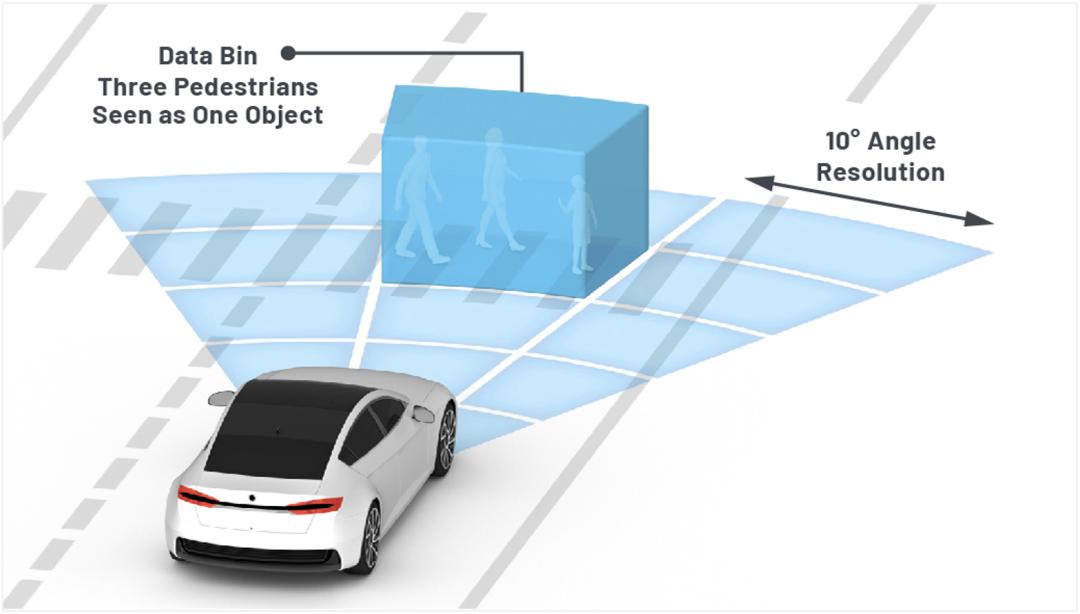
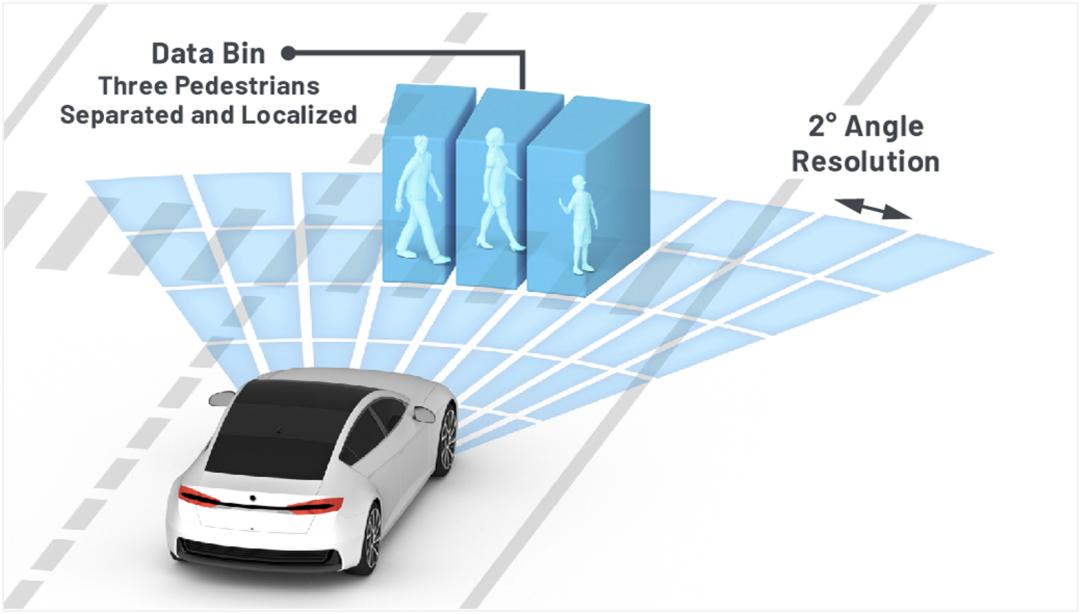
Angular resolution refers to the minimum included angle to distinguish two adjacent targets; Image source: ADI
In contrast, the angular resolution of lidar is far higher than that of millimeter-wave radar. Early mechanical lidar could perform 360-degree rotational scanning with several internal lasers to complete 3D modeling. The more the number of beams, the denser the point cloud, and the clearer the imaging.
Musk originally hoped to use software algorithms to break through the performance ceiling of millimeter-wave radar. However, the radar resolution is bound to the hardware configuration, and the rough field of view is more of a problem with the design itself. Software can change the world, but it can't change physics.
In 2021, with the major breakthrough of Tesla's self-developed vision algorithm, millimeter-wave radar became a victim. Later, only the camera remained on the appearance of new cars.
While Tesla firmly adheres to the pure vision route, the abandoned millimeter-wave radar has regained its vitality in China.
The "4D" Transformation
Just before Musk cut off the use of millimeter-wave radar, the latter completed a major technological upgrade, evolving from 3D to 4D.
3D millimeter-wave radar only provides information on speed, distance, and azimuth angle and lacks the ability to measure height. As the name suggests, 4D millimeter-wave radar can additionally provide pitch angle information.
Among 4D millimeter-wave radars, there is a type of imaging radar, which is characterized by a significant improvement in resolution and a denser point cloud. It can outline the contour of the target object and has a greatly improved ability to distinguish between roadblock vehicles and overpasses.
Therefore, 4D imaging millimeter-wave radar is not simply adding a "D", but has a structural improvement in perception ability.
Around 2020, major manufacturers successively released their 4D imaging radars. International Tier 1 suppliers such as Continental and ZF were busy delivering the first batch of fixed-point projects. The industry as a whole was in a stage where the technology was not particularly mature and the cost was not particularly affordable, and large-scale application seemed quite difficult.
What Musk didn't expect was that the 4D imaging radar almost followed the script of lidar. With continuous technological breakthroughs and a rapid decline in cost, it has made lidar feel extremely pressured in just a few years.
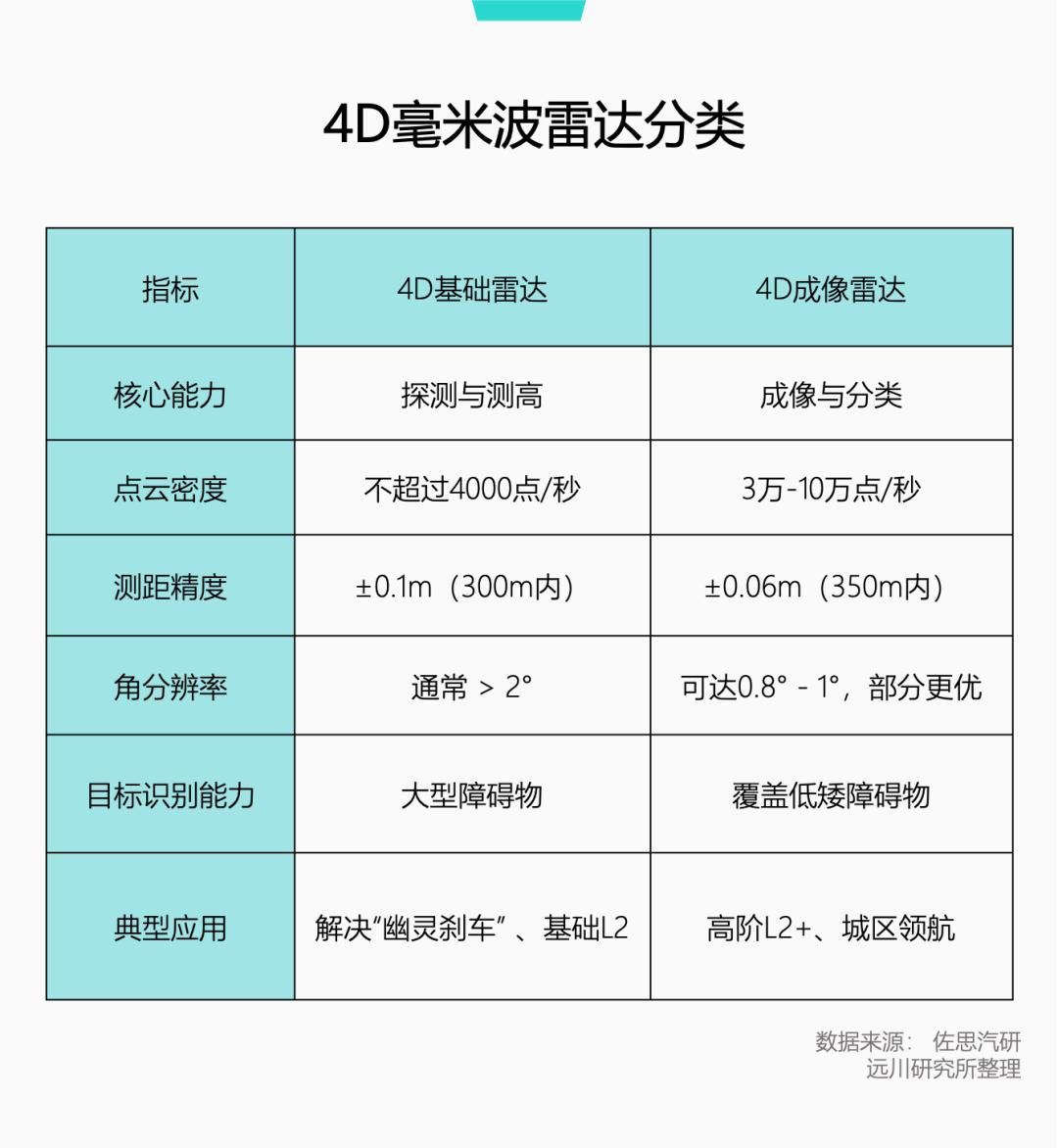
The performance of millimeter-wave radar is closely related to an indicator - angular resolution. Angular resolution is related to the antenna aperture. The larger the aperture, the clearer the radar can see. Similar to the satellite dish decades ago, the larger the dish, the stronger the signal.
However, cars can't drive with a large dish on the roof, so they have to find other ways to increase the aperture.
The mainstream solution is to cascade multiple RF chips. Several identical chips are placed on a single PCB board, and the MIMO (Multiple-Input Multiple-Output) technology is used to virtually create more antenna channels, thereby increasing the virtual aperture.
To put it simply, the antenna aperture is equivalent to the size of a mosaic puzzle, which determines the theoretical upper limit of clarity. The antenna channels are the pieces of the puzzle. The more the number, the richer the details of the picture and the clearer the imaging.
For example, a 4T4R (4 transmitters and 4 receivers) configuration is equivalent to 16 virtual channels. By cascading four RF chips, theoretically, 16 transmit channels and 16 receive channels can be obtained respectively, and the number of virtual channels increases to 256, which effectively increases the antenna aperture.
Compared with the 3T4R configuration of 3D radar, which is equivalent to 12 channels, the number of available channels of 4D imaging radar is more than 10 times that. The advantage is higher resolution, but the disadvantage is that the cost and power consumption will increase, and it will also be more difficult to obtain reliable radar signals, which requires an upgrade of the computing power of the back-end processor, affecting the whole system.
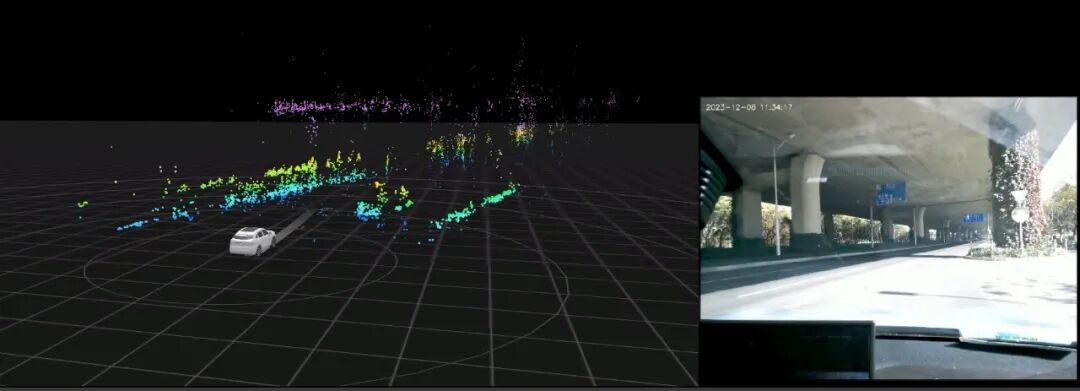
4D imaging radar usually needs to generate a point cloud first and then outline the target contour based on the back-end algorithm; Image source: Saien Lingdong
Currently, 4D imaging radar can already match the performance of 64-line lidar, but there is still a gap compared with high-beam lidar. This has led to the market demand for 4D imaging radar to diverge along two paths:
First, for mid - and low - end models that are extremely sensitive to cost, car manufacturers are happy to use 4D imaging radar to replace lidar to reduce the cost of assisted driving. Given that the price of lidar is getting lower and lower, 4D imaging radar has to follow suit.
Second, for flagship and high - end models that don't care about cost, 4D imaging radar, cameras, and lidar are all available. In theory, the three complement and are redundant with each other.
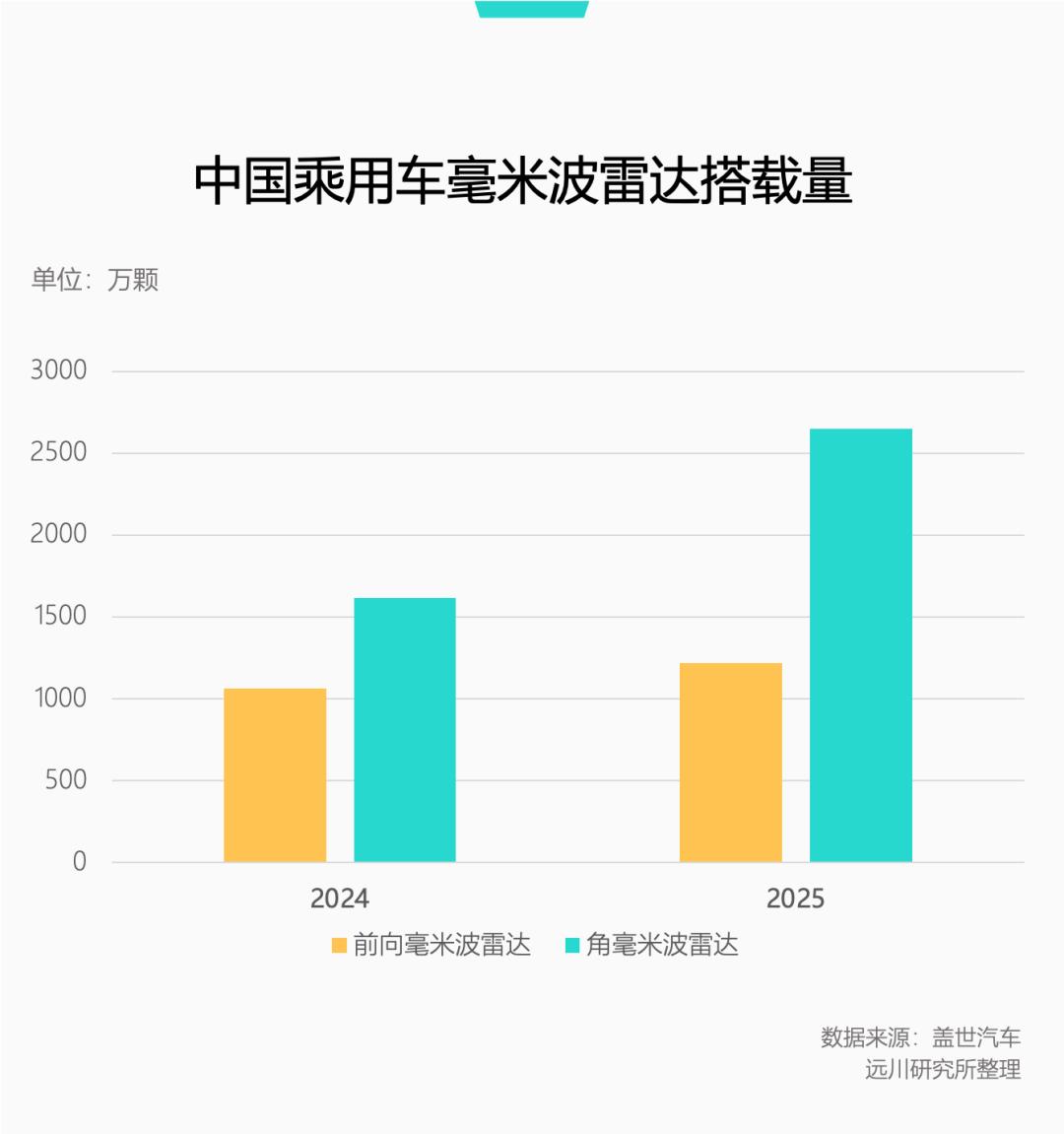
In the slogan of "intelligent driving for all", last year, the installed quantity of 4D millimeter-wave radar in passenger cars exceeded 15 million units, accounting for one - third of the total millimeter-wave radar. Among them, the delivery volume of cascaded 4D imaging radar was nearly 2.6 million units [4][5].
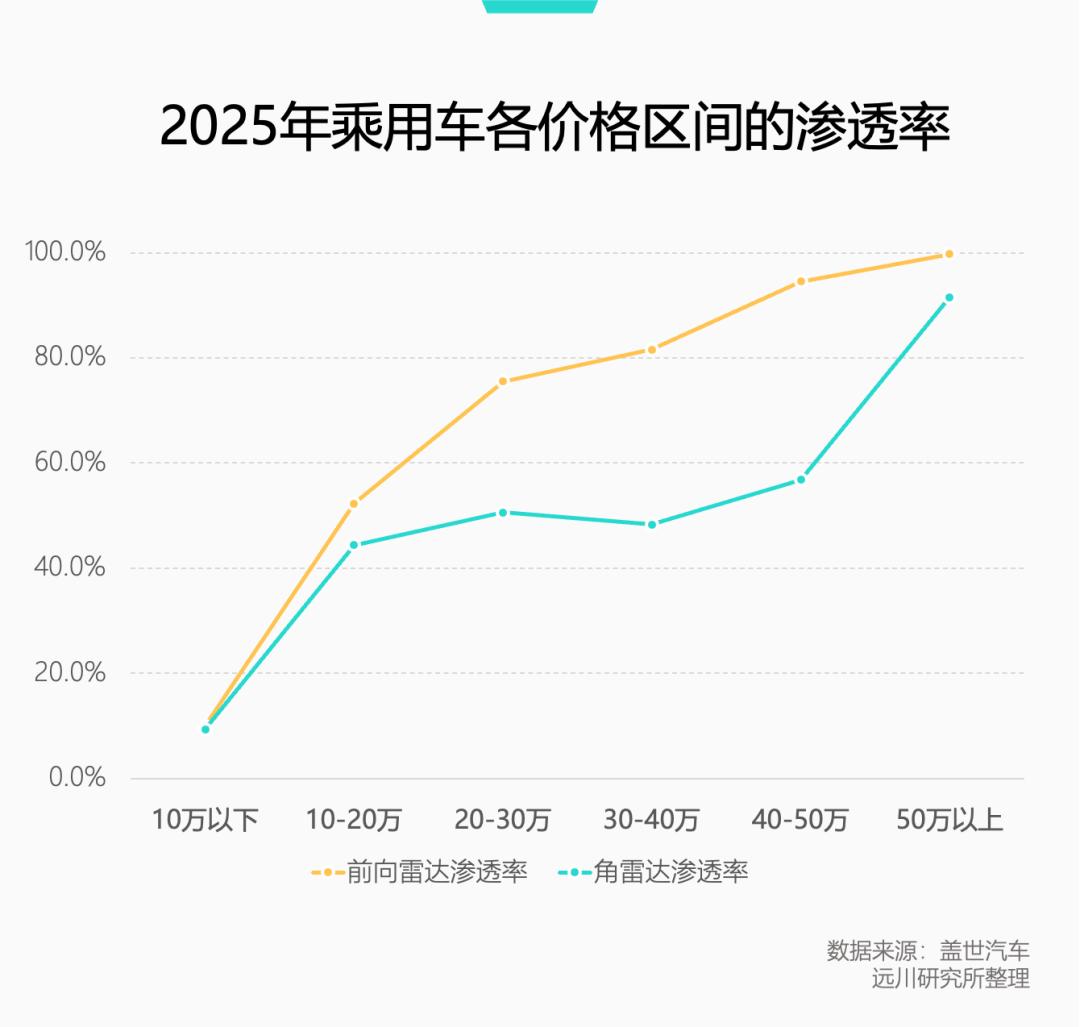
It took more than a decade for 3D millimeter-wave radar to replace 2D millimeter-wave radar (which could only measure distance and speed) because the former was expensive and only available for luxury cars.
Today, 4D millimeter-wave radar is starting to replace 3D radar, but with the participation of Chinese companies, things are not that simple.
Taking Shortcuts is Not Shameful
In a car, apart from the in - cabin millimeter-wave radar, there are mainly forward radar and corner radar outside the cabin. Corner radar is mainly used for blind - spot monitoring and lane - change assistance; forward radar is related to active safety, and the applicable scenarios include ACC and AEB. It has higher performance requirements, which also means stricter screening of suppliers.
In the forward radar market, Bosch, Continental, and Denso together account for about 70% of the market share - this is a figure after being diluted by a large number of Chinese companies.
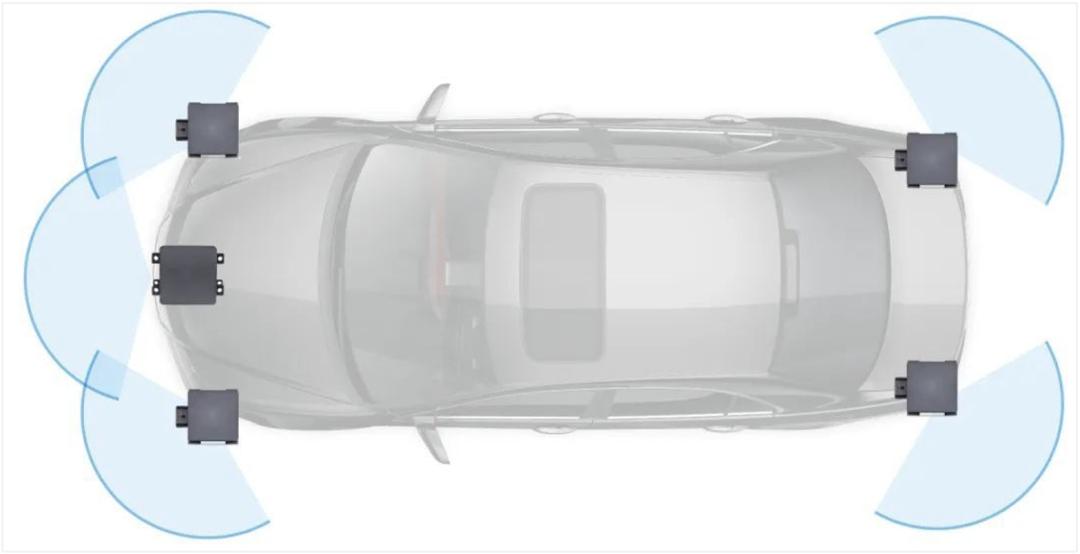
The mainstream millimeter-wave radar configurations are 3R and 5R. 5R means 1 forward radar plus 4 corner radars.
In the first decade of this century, the story of millimeter-wave radar mainly took place outside China, and the entire market was firmly controlled by international Tier 1 suppliers. The most representative ones are Autoliv, Bosch, Continental, and Delphi (later split into Aptiv) behind the "ABCD" letter combination.
Bosch and Continental started researching millimeter-wave radar in the last century. With the idea of "improving one generation, designing the next generation, and pre - researching the future generation", they have long held the technological dominance.
Since radar involves multiple disciplines such as microwave communication, signal processing, antenna design, and algorithm development, and also has high manufacturing barriers, in the first wave of domestic entrepreneurship, returnees were an important branch. Another group is startup companies with relevant technical backgrounds, and Chengtai Technology is one of them.
Around 2015, millimeter-wave radar startup companies were successively established. At that time, the wave of new energy vehicles swept across China, and the government was also preparing to introduce the AEB project into the new vehicle safety test system C - NCAP, which to some extent ignited the entrepreneurship wave of millimeter-wave radar.
However, since high - quality resources were all in the hands of international giants, most domestic companies could only start with corner radar - that is, start from "marginal" functions such as blind - spot monitoring, and also