Just now, the Turing Award was presented to the father of quantum cryptography. A casual poolside chat 40 years ago gave birth to a multi-billion-dollar industry.
[Introduction] The prestigious Turing Award for 2025 has been announced! This year's Turing Award goes to the two giants in quantum information, Bennett and Brassard. An accidental encounter on the beach 40 years ago brought the two together and directly reshaped the future of global communication and computing.
Just now, the 2025 ACM Turing Award was announced.
This year's Turing Award goes to the founders of quantum information science - Charles H. Bennett and Gilles Brassard!
This time, ACM recognized their core contributions to the foundation of quantum information science and the transformation of secure communication and computing fields.
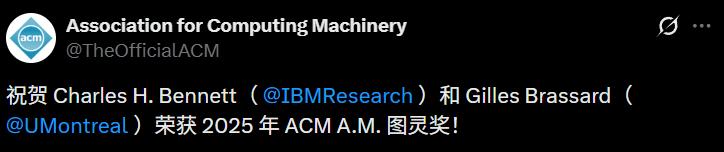
This is the first time since 1966 that the Turing Award has been given for work related to quantum physics.
This is not only a tribute to these two masters in both physics and computer science, but also a milestone in the history of computing science: the Turing Award has officially returned to the physical essence of computing from the peak of deep learning.
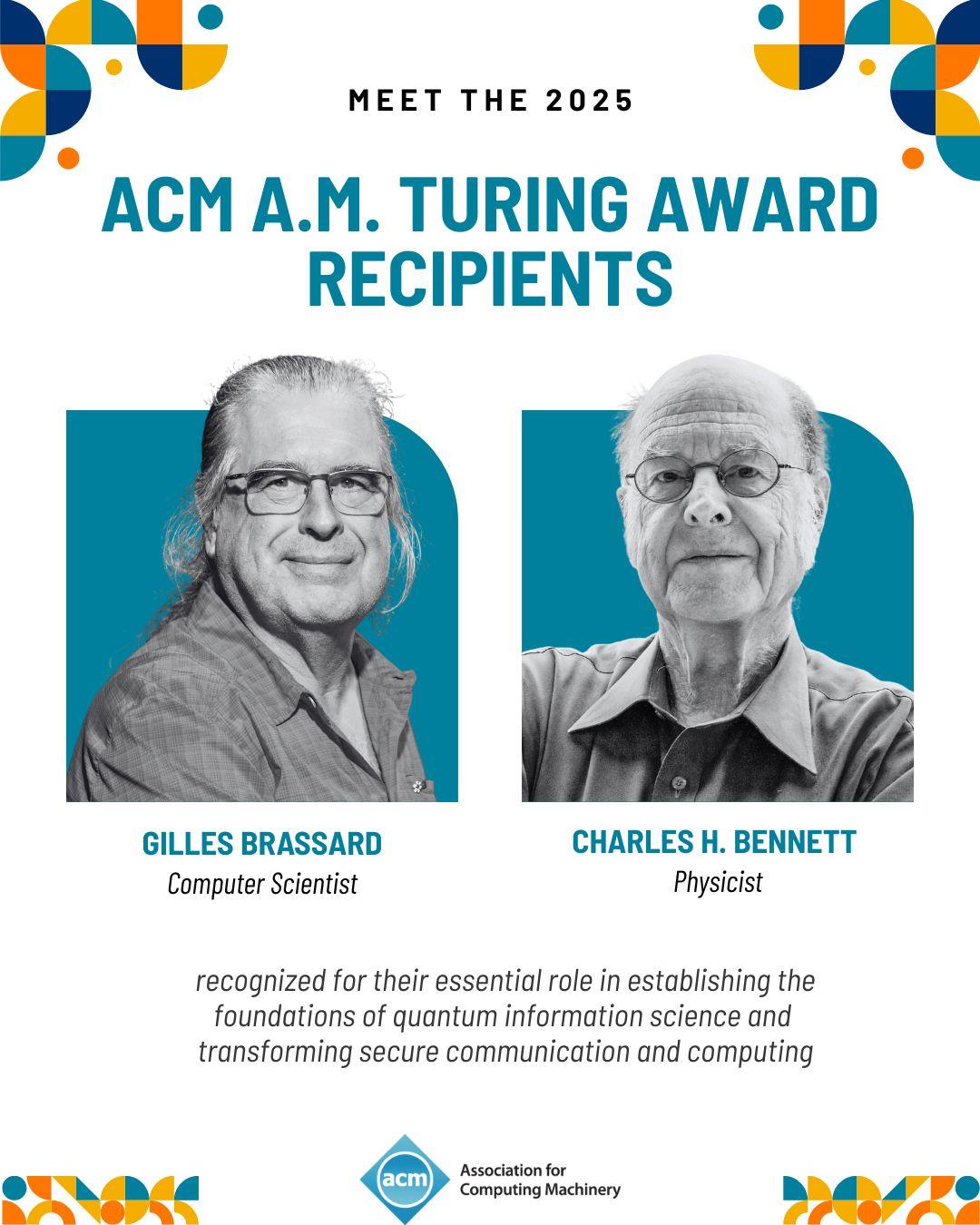
The ACM Turing Award is often hailed as the "Nobel Prize in the computer field". It comes with a $1 million prize, funded by Google.
Netizens have expressed that the two deserve this award!
The Turing Award is Settled, and the Two Giants in Quantum Information are Crowned
The names of Charles H. Bennett and Gilles Brassard have echoed at the intersection of physics and computing science for more than forty years.
One is an American physicist who has been deeply involved in IBM for half a century, and the other is a Canadian computer scientist who entered university at the age of 13.
More than forty years ago, they accidentally met on a beach in Puerto Rico, thus kicking off a legendary cross - disciplinary cooperation between physics and computer science.
They invented quantum cryptography and discovered quantum teleportation. Almost single - handedly, they transformed "quantum information science" from an edge subject into a global industry worth billions of dollars today.
It is worth mentioning that their award comes at a time when the United Nations has designated 2025 as the "International Year of Quantum Science and Technology".
The Quantum Revolution in the "Swimming Pool"
For Bennett and Brassard, the starting point of their cooperation was on a beach in San Juan, Puerto Rico in 1979.
At that time, both were attending the IEEE Annual Symposium on Foundations of Computer Science.
Bennett was a physicist at the IBM Research Laboratory, and Brassard was a young computer scientist who had just obtained his doctorate from Cornell University and was scheduled to give a cryptography report on the last day of the conference.
Bennett noticed his name and thought this person might be interested in a crazy idea.
So, while swimming in the sea, Bennett swam straight towards this unknown Canadian and started talking about something incredible:
His old friend Stephen Wiesner had invented a method to create "unforgeable banknotes" using quantum mechanics.
"I couldn't leave the water at that time, so I had to listen politely," Brassard recalled later.
But as he realized that this strange scheme was serious science, his doubt quickly turned into fascination. "This was probably the most bizarre and magical moment in my career."
Brassard pointed out a loophole in the quantum money scheme - while it was impossible to forge banknotes, it was extremely difficult to spend them because only the issuer could verify their authenticity. So, he proposed to combine Wiesner's scheme with cryptography technology.
Ten minutes later, when the two swam back to the shore, the core idea was finalized.
This "chat - up" in the swimming pool gave birth to the first quantum cryptography protocol in human history.
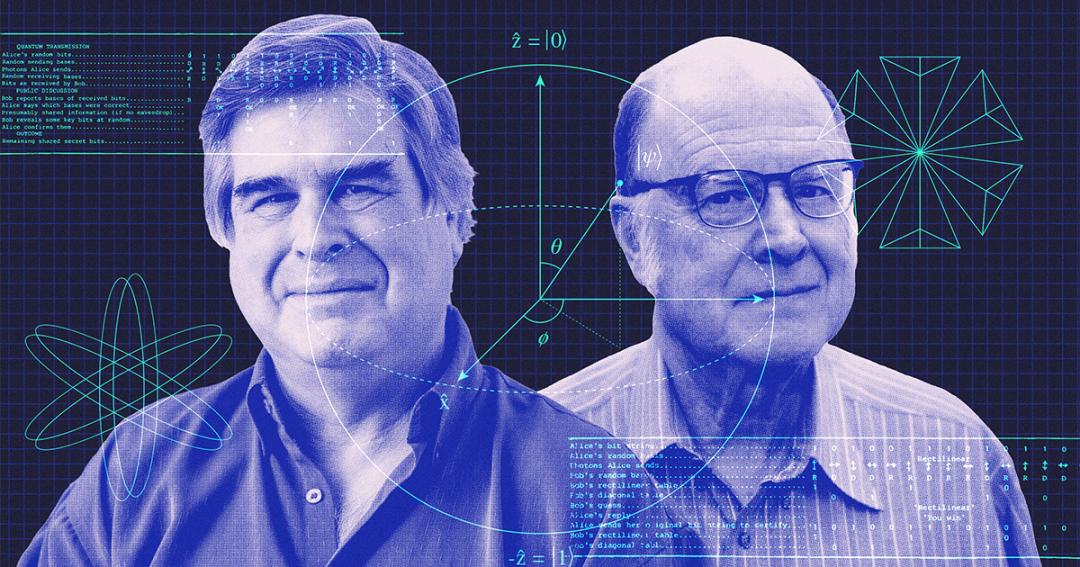
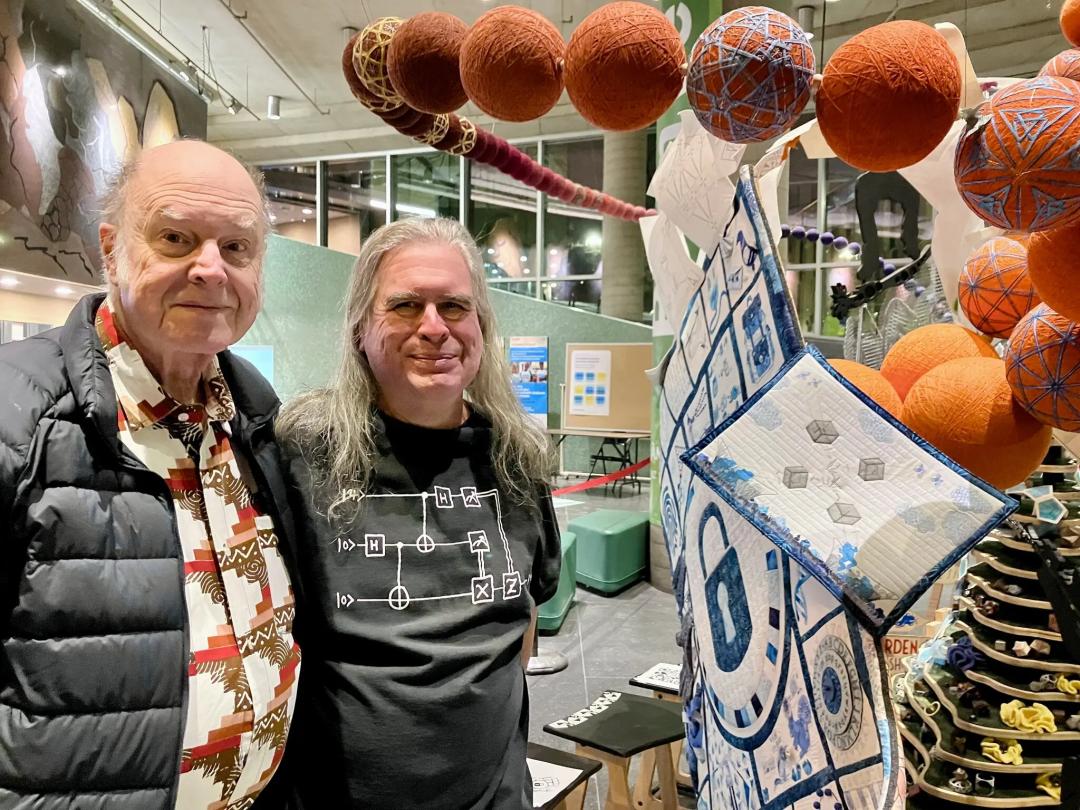
Gilles Brassard (left) and Charles Bennett (right) are among the world's first scientists to connect quantum physics with information theory.
BB84, Absolute Security Guarded by Physical Laws
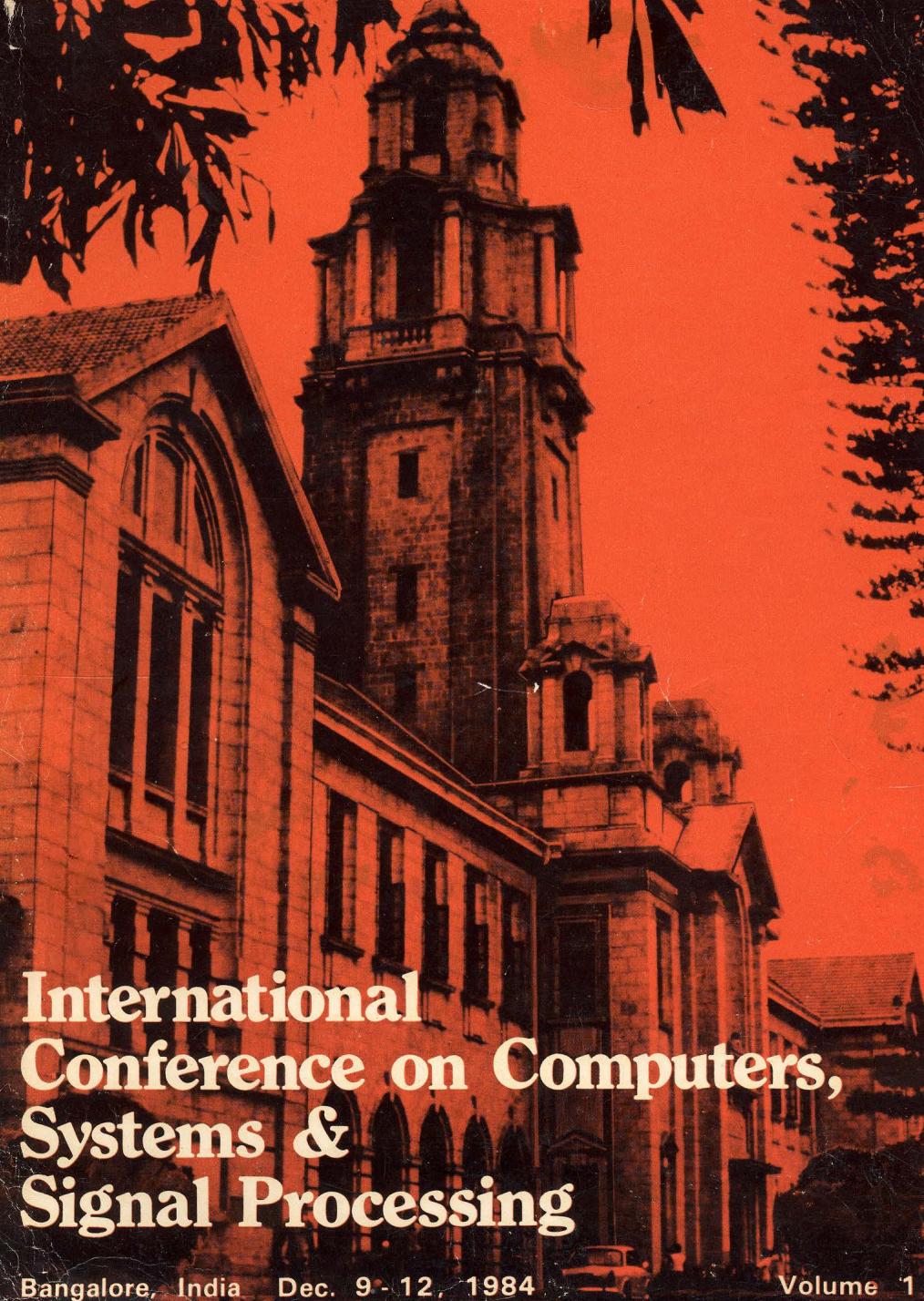
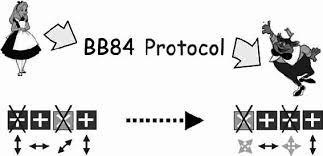
In 1984, Bennett and Brassard published the paper "Quantum Cryptography: Public Key Distribution and Coin Tossing" that changed everything, proposing the BB84 protocol named after the initials of their names.
And this is also the world's first quantum key distribution (QKD) scheme.
https://arxiv.org/pdf/2003.06557
It solves an ancient cryptography problem: how can two people establish a truly secure encryption key on an insecure communication line?
The security of traditional cryptography is based on mathematical problems - for example, the "difficulty" of factoring large integers.
But "difficult" does not mean "impossible".
The revolutionary aspect of BB84 is that its security does not rely on any mathematical assumptions but is directly based on physical laws.
According to Heisenberg's uncertainty principle, a quantum state cannot be copied or measured without causing disturbance -
Any eavesdropping behavior will cause the quantum state to collapse, leaving an indelible trace in the information, and both communicating parties will definitely notice.
This is not "difficult to crack" in engineering, but "impossible to crack" in physics.
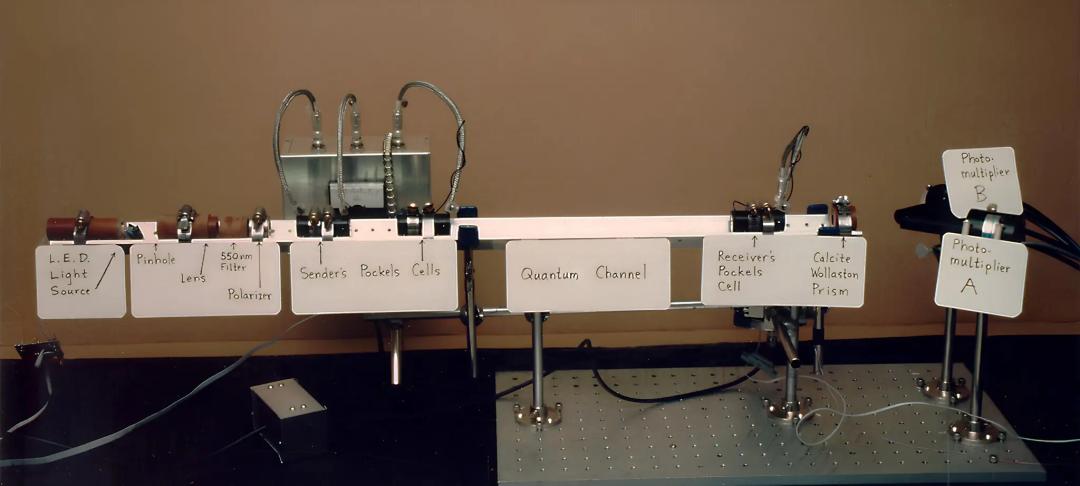
In October 1989, exactly 10 years after their first encounter in Puerto Rico, their experiment was successfully carried out, demonstrating the quantum key distribution over a distance of 30 centimeters.
Today, variants of BB84 have been put into use in global quantum communication networks, and the demonstration distance of satellite links has exceeded 1000 kilometers.
Quantum Teleportation, from a Philosophical Wonder to a Practical Resource
If BB84 rewrote the rules of cryptography, then another discovery by Bennett and Brassard in 1993 directly challenged people's fundamental understanding of "information transmission".
In this year, Bennett, Brassard and four other collaborators jointly proposed "Quantum Teleportation".
They proved that by using quantum entanglement and classical communication, a complete and unknown quantum state can be transmitted between two distant locations without physically transporting the particle carrying this quantum state.
This discovery fundamentally refreshed people's understanding of information transmission.
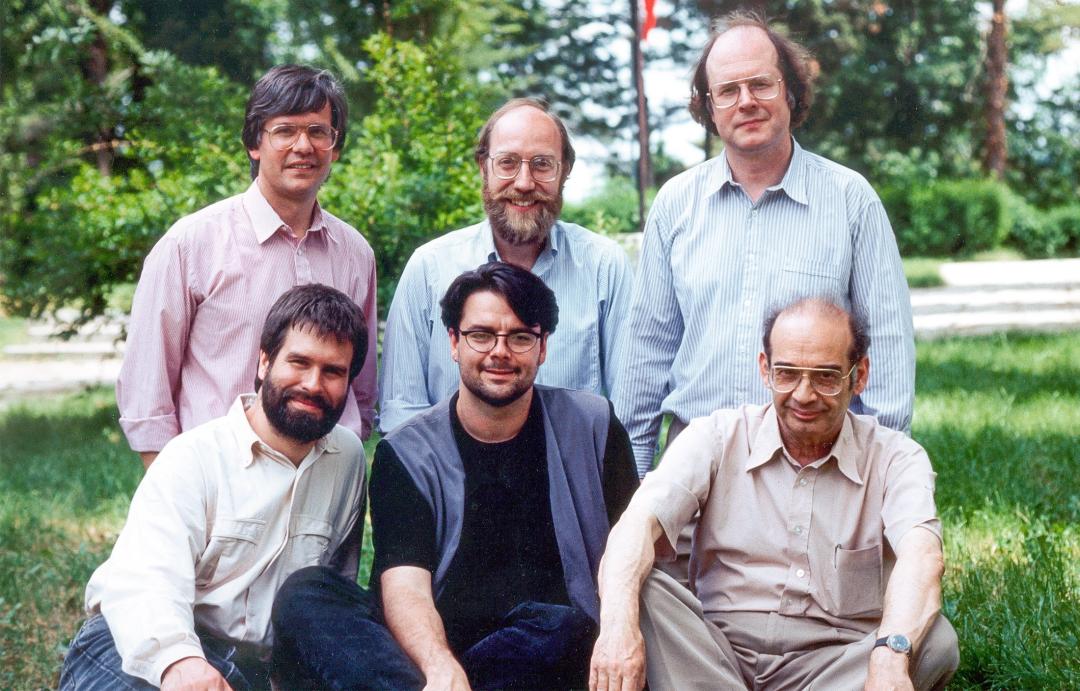
The six researchers who invented quantum teleportation took a group photo in 1994. Starting from the top - left corner and going clockwise, they are: Richard Jozsa, William Wootters, Charles Bennett, Asher Peres, Claude Crépeau and Gilles Brassard.
Quantum entanglement is one of the most mysterious phenomena in quantum mechanics - once two particles are entangled, no matter how far apart they are, measuring one of them will instantly determine the state of the other.
Einstein once mocked it as "spooky action at a distance".
The contribution of Bennett and Brassard lies in proving that this quantum entanglement, which was once mainly regarded as a philosophical wonder, can be a practical resource.
In 1997, the team of Austrian physicist Anton Zeilinger successfully verified quantum teleportation in an experiment. In 2022, Zeilinger also won the Nobel Prize in Physics for related experiments.
In 1996, Bennett and Brassard further proposed entanglement purification technology, showing how to strengthen imperfect entanglement into high - quality entanglement.
This is a key step towards scalable quantum communication and also lays the foundation for building the future quantum Internet.
A Physicist and a Computer Scientist
One important reason why the cooperation between Bennett and Brassard is so profound is their complementarity: one is a physicist, and the other is a computer scientist.
The discipline of quantum information science itself was born from the collision of two once - distinct fields.
Charles H. Bennett was born in New York in 1943. He obtained a bachelor's degree in chemistry from Brandeis University in 1964 and a doctorate from Harvard in 1970, with a research focus on computer simulation of molecular dynamics.
In 1973, he joined the IBM Research Laboratory and has never left since, for more than 50 years.
At IBM, he followed in the footsteps of the famous physicist Rolf Landauer to study the physical basis of information processing.
He first proved that general computing can be both logically and thermodynamically reversible, and then reinterpreted the classic paradox of Maxwell's demon in 1982, pointing out that the real thermodynamic cost lies not in obtaining information but in destroying it.
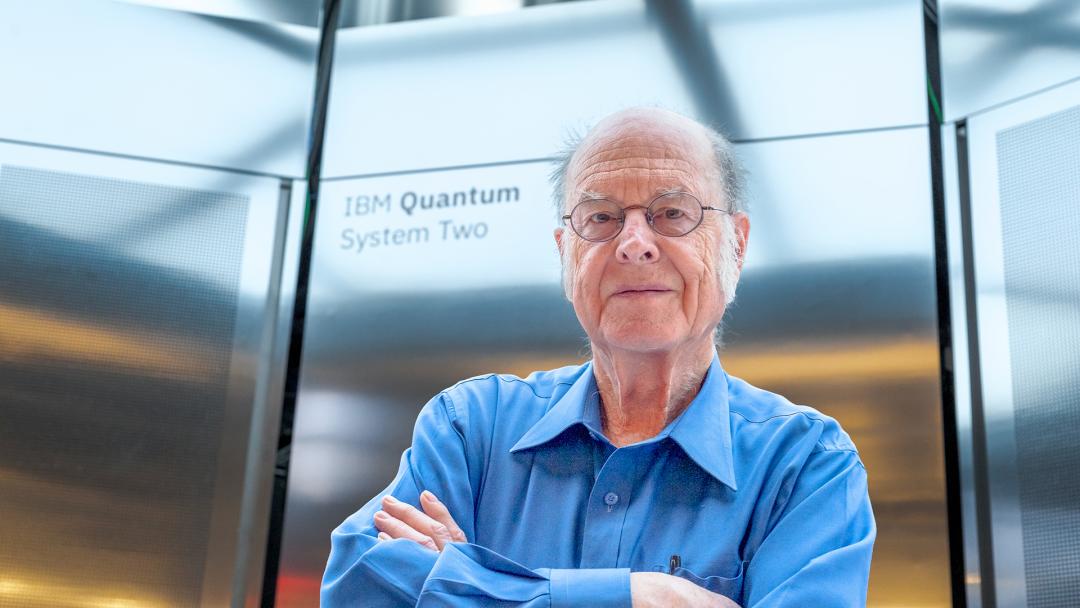
Bennett has a well - known quote to describe quantum information:
"Quantum information is like information in a dream" - it cannot be copied, and observation changes it. This characteristic is both a limitation and a resource.
He is a member of the US National Academy of Sciences and a foreign member of the Royal Society.
Gilles Brassard was born in Montreal in 1955.
He was fascinated by mathematics from a young age, and this passion was inspired by his brother Robert Brassard.
At the age of 13, Brassard entered the University of Montreal to study computer science, obtaining a bachelor's degree in 1972 and a master's degree in 1975.
He then went to Cornell University for a doctorate under the supervision of John Hopcroft, the 1986 Turing Award winner, and obtained his doctorate in 1979.
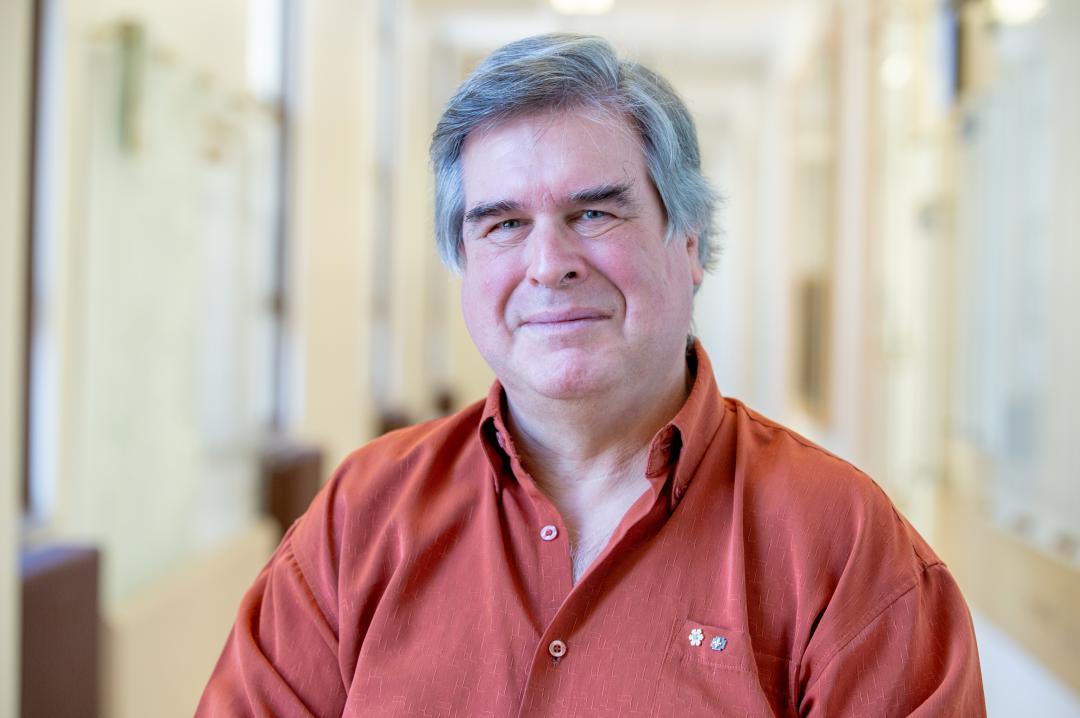
During his time at Cornell, he accidentally read a cryptography paper and was immediately inspired, shifting his entire doctoral research direction to cryptography.
After obtaining his degree, he immediately returned to the University of Montreal to teach and has never left since. From 2001 to 2021, he served as the Canada Research Chair in Quantum Information Science.
Brassard is a member of the Royal Society, a foreign member of the US National Academy of Sciences, and a recipient of the Order of Canada. He is widely regarded as the father of Canadian quantum information science and one of the earliest pioneers in this field globally.
Coincidentally, their award records highly overlap - they jointly won the 2018 Wolf Prize in Physics, the 2019 BBVA Foundation Frontiers of Knowledge Award in Basic Sciences, and the 2023 Breakthrough Prize in Fundamental Physics.
The Turing Award is the latest crowning achievement of their more - than - forty - year cooperation.
Why did ACM choose to award the 2025 Turing Award to these two quantum pioneers?
Because the theories they pioneered forty years ago are reshaping the future of computing from multiple dimensions.
This $1 million prize is a tribute and summary of the quantum information field in the past half - century.
Reference: HYZ
https://awards.acm.org/turing
This article is from the WeChat official account "New Intelligence Yuan". Editor: Editorial Department. Republished by 36Kr with permission.