Apple's COO Visits China Again, Inspecting Long - standing "Apple Supply Chain" Companies Foxconn and Sunwoda
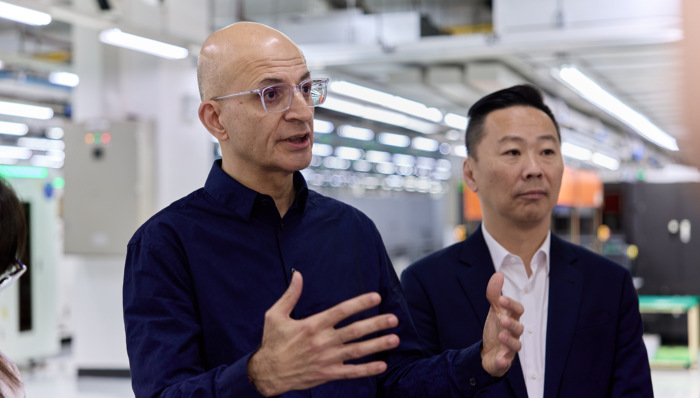
Apple COO Sabih and Jiang Jiheng, General Manager of Foxconn Business Group, visited Foxconn's production line. (Photo source: Apple)
In less than half a year, Apple's executive team has launched a new round of visits to China.
On March 17, Sabih Khan, Apple's Chief Operating Officer, successively visited Sunwoda's battery factory in Shenzhen, Foxconn's iPhone final assembly line, and the iPad final assembly business at Foxconn's Chengdu factory.
These are two extremely senior Chinese suppliers in the "Apple supply chain". Sunwoda's cooperation with Apple began with the iPod and has lasted for 20 years. Currently, it provides finished batteries for product lines such as the iPhone, iPad, Mac, Apple Watch, and AirPods. Foxconn has always been the core contractor for iPhone assembly, and now its business cooperation covers a wider range.
Sabih Khan's itinerary covered key links from battery production to whole - unit assembly, and also relatively comprehensively presented the latest progress of the Chinese supply chain in intelligent manufacturing.
Inside Sunwoda's battery factory, the iPhone battery production line has completed multiple rounds of automation upgrades. Different from the long and noisy production lines in the traditional impression, the equipment layout here is more compact, the operation rhythm is faster, and the overall noise is significantly reduced. The main reason behind this is that Sunwoda has upgraded the traditional belt conveyor to a magnetic levitation production line, using electromagnetic force to move objects.
A person from Sunwoda told Jiemian News that this production line has gone through four iterations in the past decade. First, it moved from manual to automated, then saved a lot of space by introducing a turntable line. The third - generation introduced a one - dimensional magnetic levitation production line, and the latest fourth - generation is a six - dimensional magnetic levitation production line with high flexibility and high precision.
Currently, its one - dimensional magnetic levitation production line has been fully applied to the iPhone production line. The six - dimensional magnetic levitation production line, with its rich dimensions and higher adjustment freedom, can quickly deploy battery production programs based on different volumes and shapes. The time has been shortened from 2 hours to 6 minutes, a reduction of 95%.
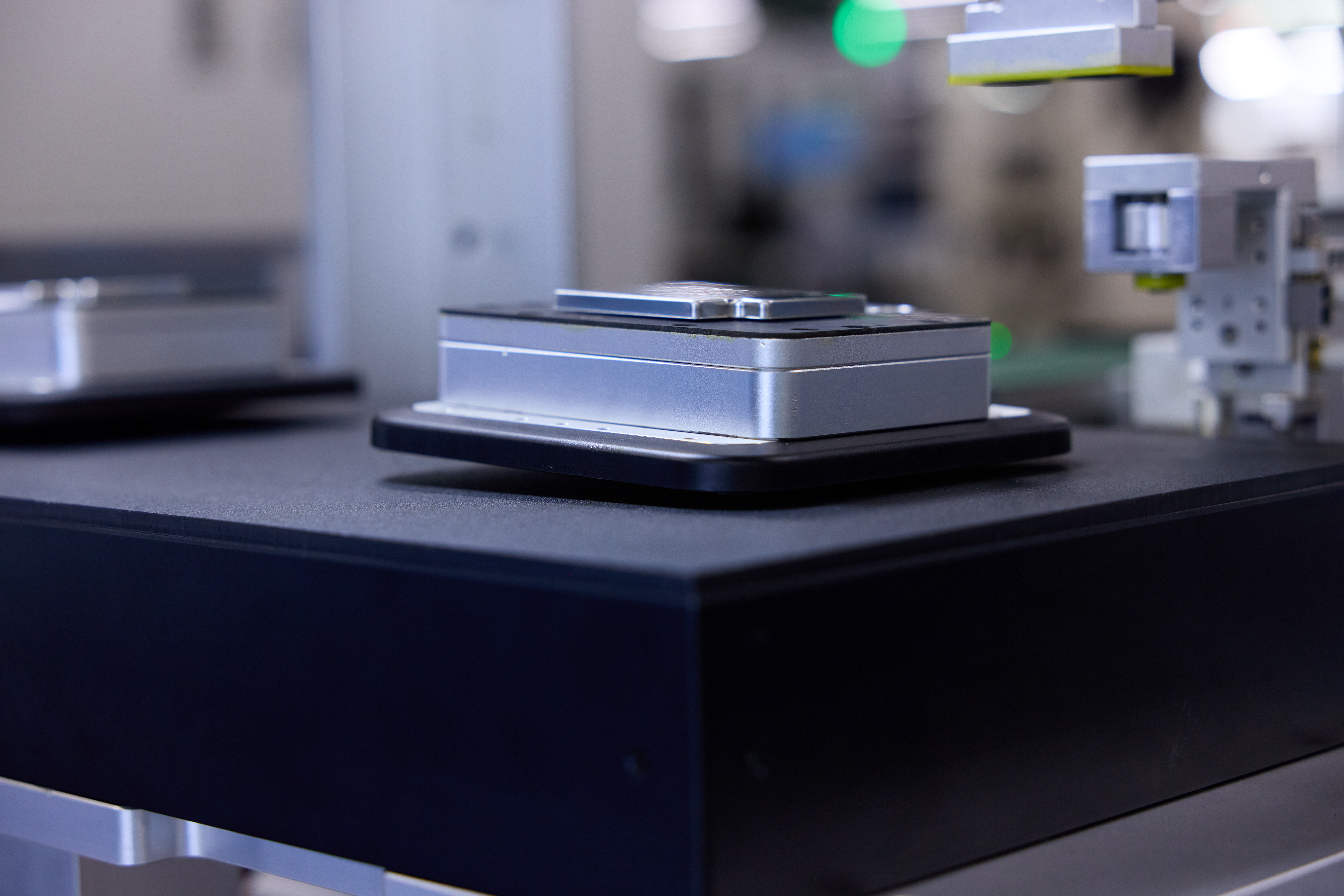
Sunwoda's six - dimensional magnetic levitation production line. (Photo source: Apple)
Sunwoda has also vigorously adopted digital twin as an important supporting tool for production line operation. Through real - time collection and modeling of equipment operation data, engineers can obtain real - time data and images through Apple Vision Pro to remotely diagnose and debug equipment. As a result, the abnormal handling time of on - site equipment has been shortened by 72%. At the same time, digital twin is also used for production line design optimization, searching for better operation schemes by simulating different parameter combinations.
In the quality inspection link, Sunwoda and Apple jointly developed a set of automatic optical inspection equipment that uses an iPhone to detect iPhones. It uses the iPhone as a visual collection terminal and combines its built - in GPU and neural network engine for local inference to take pictures and detect the six sides of the battery.
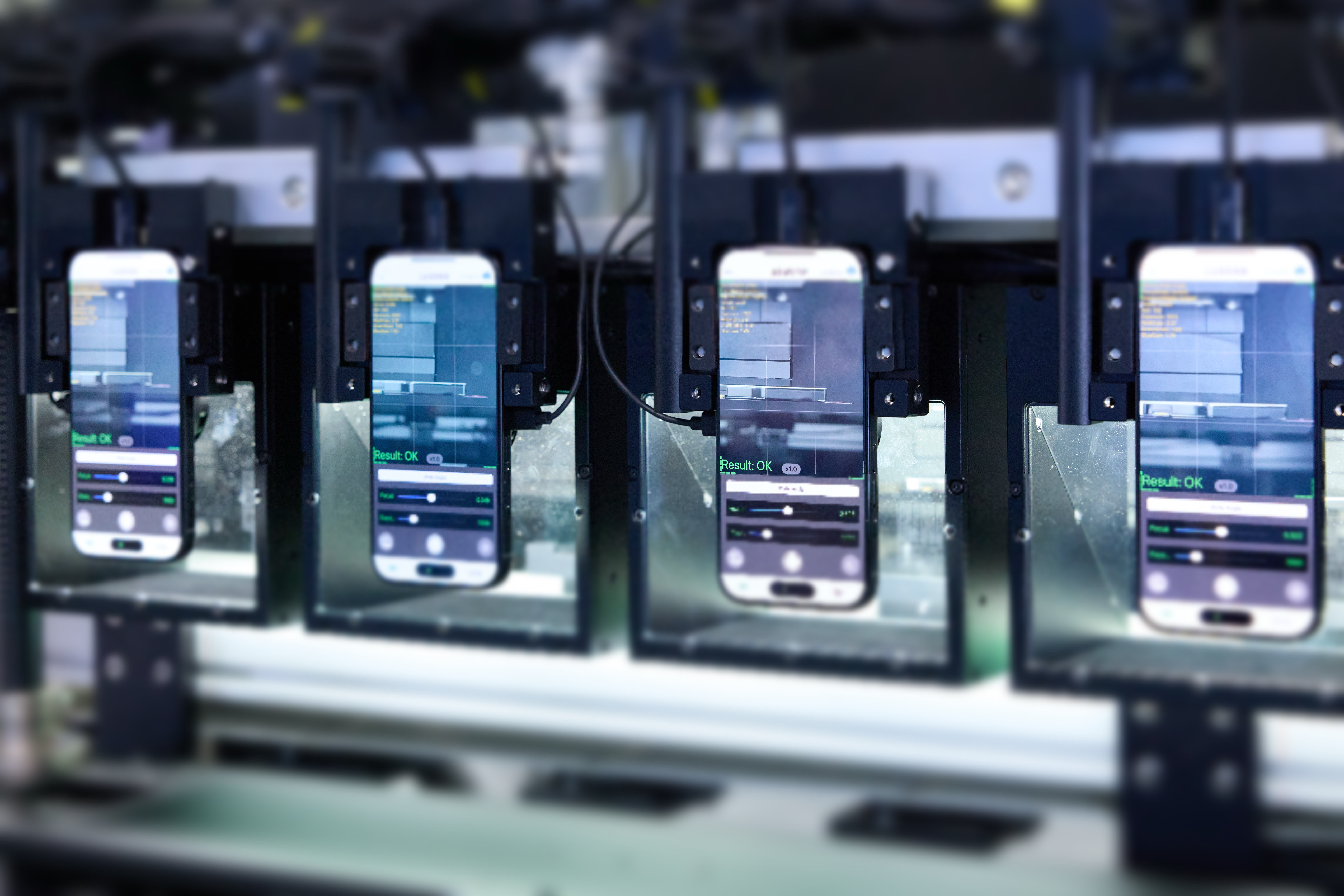
Sunwoda's automatic optical inspection equipment. (Photo source: Apple)
Subsequently, Sabih Khan went to Foxconn's Shenzhen Guanlan factory and visited the iPhone motherboard production line and the whole - unit assembly line.
As a partner that has been involved in the manufacturing of iPhones since the first generation, Foxconn's investment in automation and digitalization is mainly reflected in the integration ability at the system level. The unmanned motherboard production "lights - out factory" is a concentrated manifestation of this ability.
In a monitoring room of about dozens of square meters, electronic screens covering two walls and a large transparent glass window form the central control center of the lights - out factory. Looking into the factory from here, there are neatly arranged flexible production lines, automatic material vehicles for transporting materials, and collaborative robots for loading and unloading.
The process from loading and unloading, robot pick - and - place, logistics transportation to carrier board return has been completely unmanned. The central control center panel uses digital twin technology to manage the production status in a unified manner, achieving real - time and centralized scheduling of equipment operation, rhythm control, and abnormal handling.
In Chengdu, Foxconn's factory is operating the final assembly line of the MacBook Neo, which was just launched two weeks ago. On this production line, the engineering teams of both sides collaborated on automatic screw technology to develop screws without rivets and simplify the process. The factory started the iPad final assembly business in 2010 and has since expanded its business to the final assembly lines of MacBooks and Apple Watches, as well as the display production line and the casing production line.
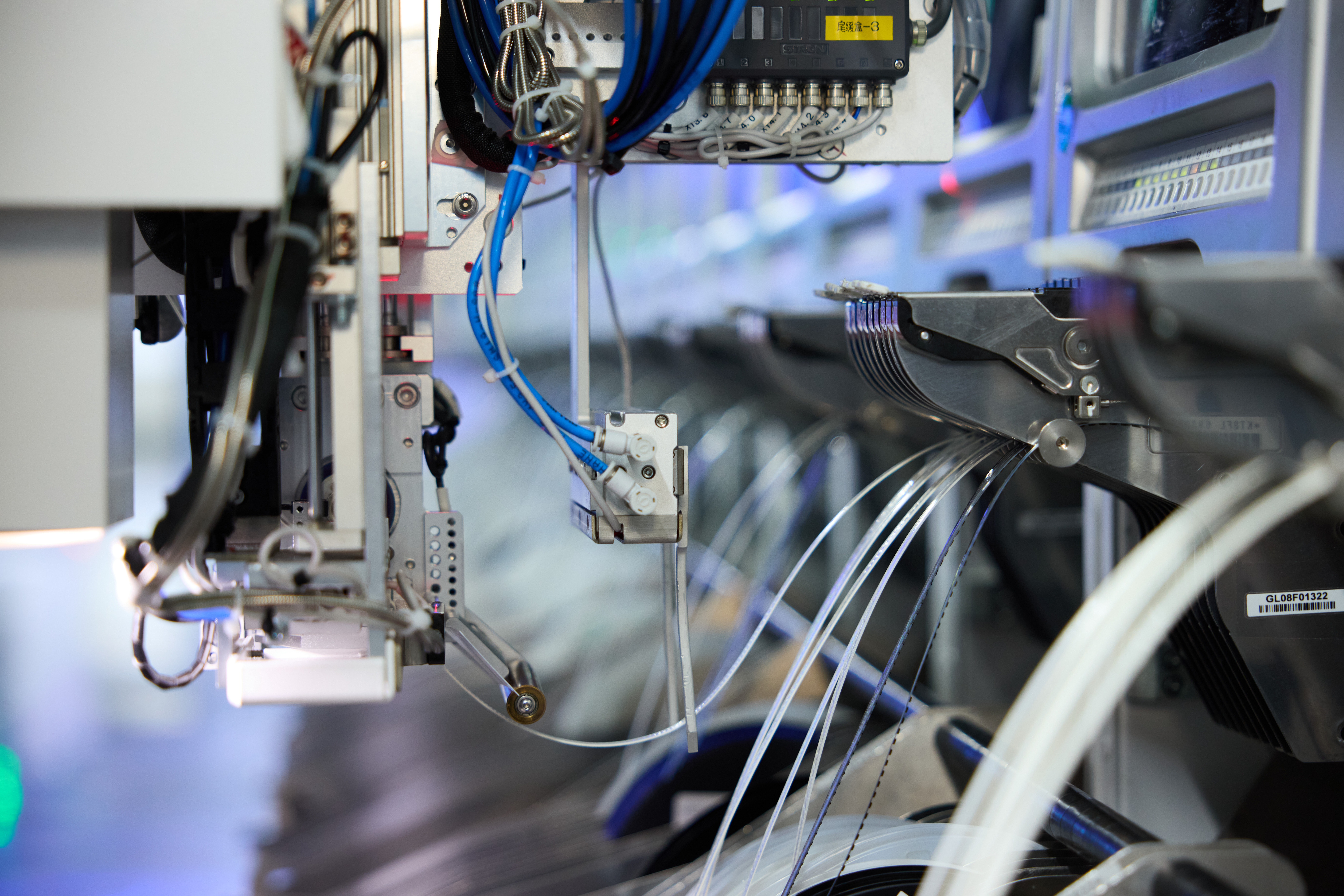
Automated feeding equipment on Foxconn's production line. (Photo source: Apple)
Sabih Khan recalled that his first visit to Shenzhen dates back to the end of the last century. The long - term cooperation between Apple and Sunwoda and Foxconn is the best example of how the two companies can jointly achieve a great achievement. "The cooperation between the two companies will create greater value than one company working alone. We have a symbiotic relationship."
In addition to highly recognizing the achievements of Chinese suppliers in intelligent manufacturing, Sabih Khan mentioned that he had studied China's new round of "Five - Year Plan", which mentions development goals such as manufacturing, talent, and "AI +", all of which are reflected in the production workshops of Apple's Chinese suppliers.
In an increasingly intelligent manufacturing production environment, there are concerns and anxieties in public opinion about the value of workers. Sabih Khan believes that the core work the company can do is to continue to implement the talent cultivation plan and invest in corresponding education funds, and promote the improvement of workers' skills through courses such as AI, programming, leadership, and communication skills to help workers' long - term career development. In 2026, the company plans to cooperate with suppliers to launch a new "AI +" training course.
In fact, against the background of the globalization trend of the industrial chain, the overseas layout of Apple's core suppliers such as Foxconn has attracted particular attention. This makes it increasingly important for manufacturers to position the role of Chinese factories in the global manufacturing process and formulate development priorities for them.
Jiang Jiheng, General Manager of Foxconn Business Group, summarized the development of the group in the past nearly four decades. The core is to be consistent with the strategies of customers, the development of the industry, and also highly coordinated with the development direction of the country.
He told Jiemian News that in Foxconn's future development priorities, AI will play an extremely important role. "This is an industrial trend and a very big opportunity. I think everyone should embrace this technological change." In addition, improving the quality of product engineering services, maintaining talent cultivation, and green manufacturing are also key tasks for the enterprise.
Regarding the globalization trend of the industrial chain, Jiang Jiheng believes that this is something that will happen at different stages of the industry. In this process, Foxconn's Chinese factories are still the most core bases for engineering verification, development, and manufacturing. This is due to the advantages of the Chinese supply chain in terms of technical talent accumulation, the government - enterprise effect supported by the government, and having the most complete industrial ecosystem.
"Any innovative concept can be quickly turned into a mass - producible product (in China). This is really not easy," Jiang Jiheng said.
In addition to manufacturing capabilities, green production is also an important part of this visit. Sunwoda has achieved 100% use of renewable energy in Apple's dry production links by building a photovoltaic system and has established a recycling system covering the entire battery life cycle. Foxconn's relevant factories in China have also achieved 100% renewable energy power supply and participated in the zero - landfill waste project.
Apple revealed that in the past year, its Chinese suppliers have saved about 55 billion liters of fresh water through the clean water project, which is equivalent to filling the West Lake four times.
This article is from Jiemian News. Author: Wu Yangyu. Republished by 36Kr with permission.