ZhiYuan Goes Left, Unitree Goes Right: 20 Companies Battle in Embodied Intelligence. Who Represents the Future?
During the Two Sessions in 2026, the heads of relevant national departments stated that China will focus on building six emerging pillar industries and six future industries.
- Six emerging pillar industries: Integrated circuits, aerospace, biomedicine, low-altitude economy, new energy storage, and intelligent robots
- Six future industries: Quantum technology, biological manufacturing, green hydrogen and nuclear fusion energy, brain-computer interface, embodied intelligence, and 6G
Among the six emerging pillar industries and six future industries, embodied intelligent robots represented by humanoid robots occupy one spot in each category, making them the most prominent "stand - out stars".
Since the beginning of 2026, the field of embodied intelligent robots has witnessed a series of stage shows, capital dramas, and intense competitions.
Based on the annual sales data, capital market financing performance, and the performances at the Spring Festival Gala of the Year of the Horse, CES 2026, and MWC26, Lei Technology presents a list of the top 20 Chinese embodied intelligent robot brand enterprises at the beginning of 2026.
It should be noted that this article only lists Chinese embodied intelligent robot brand enterprises that have started mass production and delivery. Those robot brand enterprises that have not yet carried out mass production and delivery are not included.
Mass - production pioneers: Zhipu and Unitree, a two - way competition
In 2025, known as the "year of mass production of Chinese humanoid robots", a startup founded in 2023 (Zhipu) and an established startup founded in 2016 (Unitree) jointly occupied 71% of the global humanoid robot market, becoming the biggest winners among the first - movers.
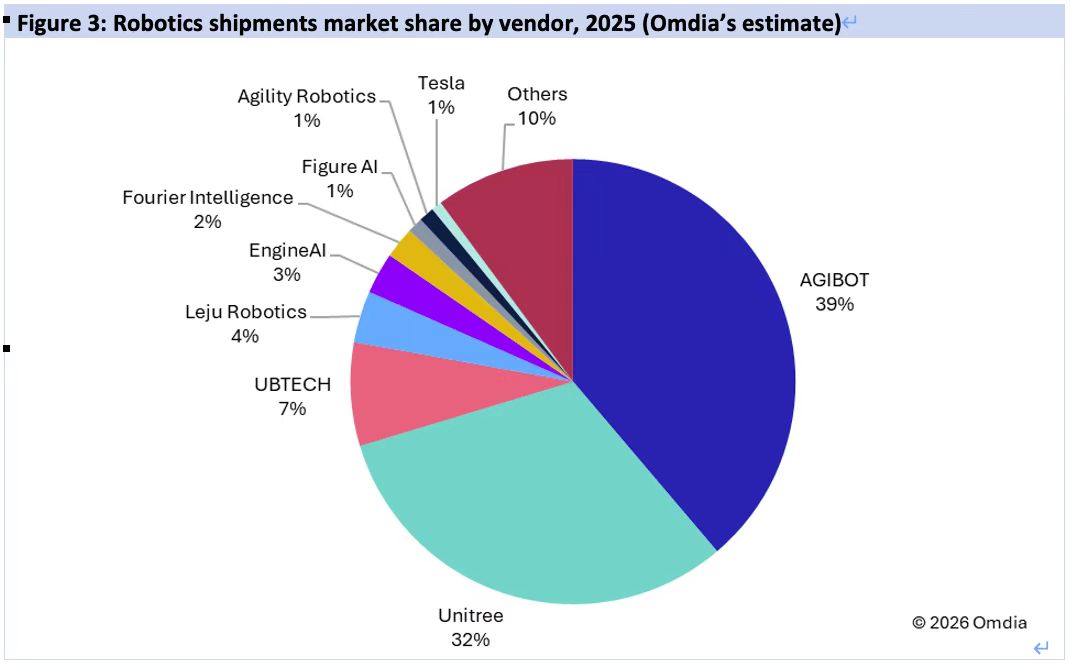
Source: Omdia
After entering 2026, these two Chinese "mass - production pioneer" enterprises in the field of embodied intelligent robots began to show different development styles, especially in the implementation routes of robot application scenarios.
On the stage of the Spring Festival Gala of the Year of the Horse on CCTV, Unitree's humanoid robots presented a more exquisite martial arts performance. The "human - robot co - martial arts" with human actors demonstrated the "highest level" of current motion control and action training of embodied intelligent robots.
At CES 2026 and MWC26, Unitree continued to follow the "performance show" route. Most of the exhibition area was set up as a "fighting arena" for humanoid robots for passers - by to watch.
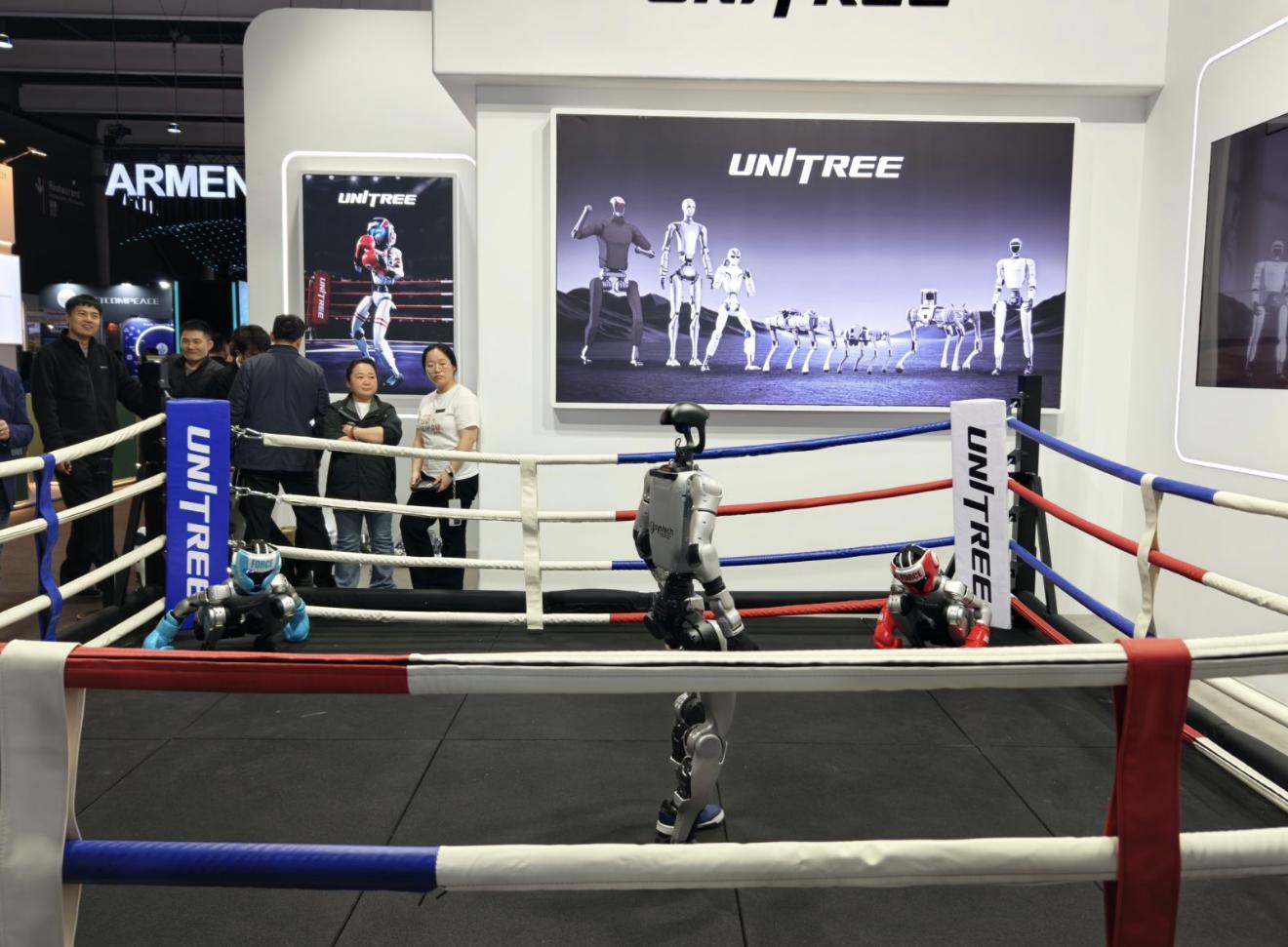
Source: Lei Technology's on - site shooting at MWC26
In contrast, although Zhipu hosted the "world's first large - scale robot evening party" before the Spring Festival of the Year of the Horse and evened the score in the "performance competition" with Unitree, its more significant actions and postures were fully demonstrated at the "stage shows" of CES 2026 and MWC26. That is, it began to strive for the implementation of embodied intelligent robot technologies in various practical application scenarios and the construction of an equally important service market system such as leasing.
The reporting team of Lei Technology at MWC26 clearly felt Zhipu's "pragmatic" style in robot application scenarios and its ambition to build a global service ecosystem in Barcelona.
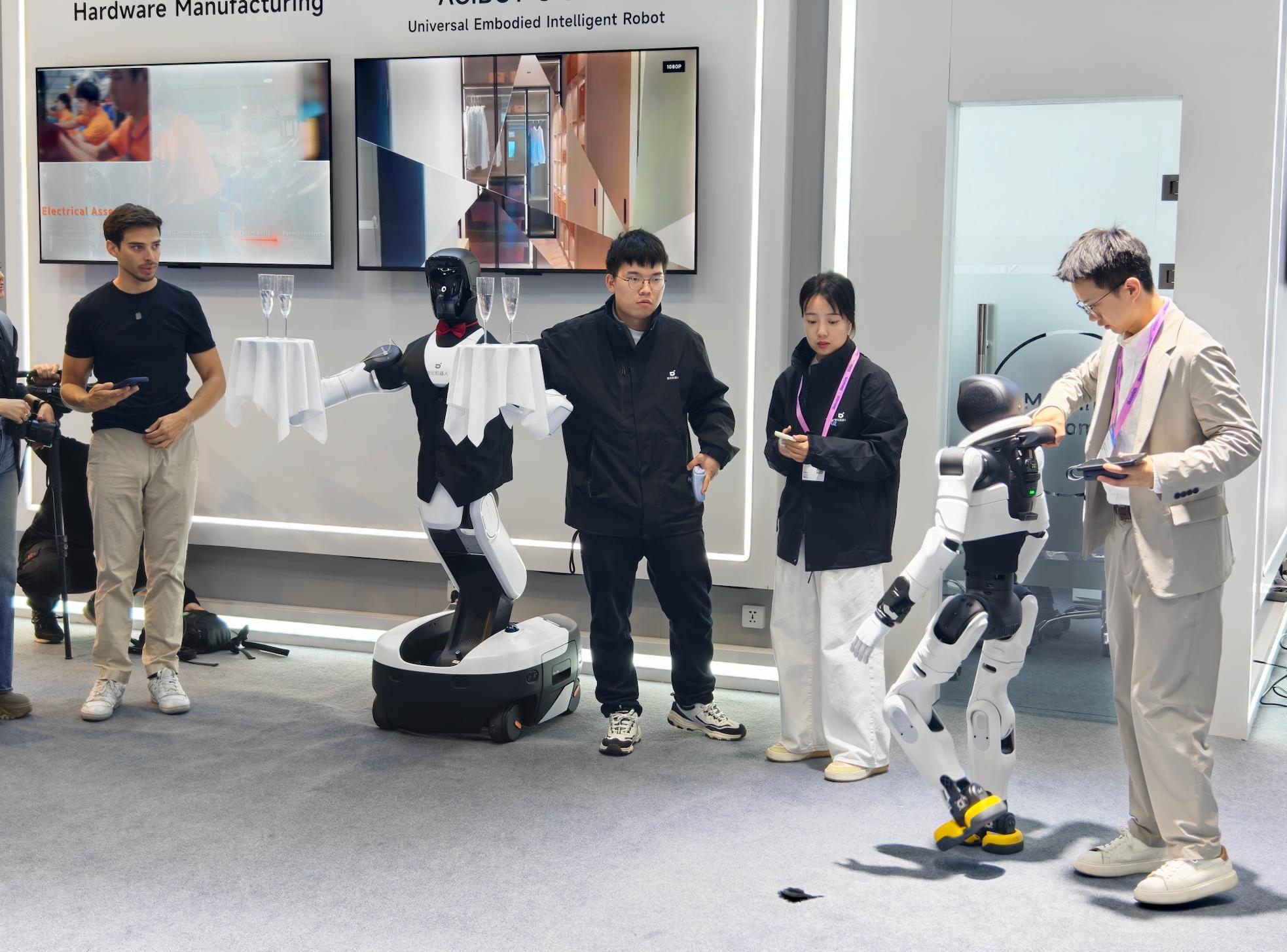
Source: Lei Technology's on - site shooting at MWC26
As the current leading enterprises, the different technology application routes emerging between Zhipu and Unitree are of great significance as a weather vane for the development of the entire embodied intelligent robot industry.
At the current stage of development, should embodied intelligent robots focus more on the implementation and application adaptation of technologies in real - world work scenarios (especially simple work scenarios), or on the training and improvement of individual skills (especially performance skills)? The robot market sales data for the whole year of 2026 will provide a preliminary answer.
In addition to Zhipu and Unitree, the enterprises ranked among the top in the global humanoid robot market sales in 2025 announced by Omdia also include Ubtech, Leju, Zhongqing, and Fourier.
As the "first humanoid robot stock", Ubtech was founded in 2012. In recent years, it has been promoting the process of "entering factories and workshops" of industrial - grade large humanoid robots and has achieved initial results. However, its enterprise - level customers are highly concentrated in automobile enterprises, and its public - sector customers mainly use robots for data collection and training/testing. The overall application scenarios are still limited.
Leju was founded in 2016 by a group of graduates from Harbin Institute of Technology. It has built a full - stack technology system covering "brain - cerebellum - operating system - body" and has successively launched small/medium/large humanoid robots, achieving mass delivery and application in scenarios such as scientific research, business, industry, and family.
In October last year, Leju filed for guidance and registration for an A - share listing. In the same month, Leju completed a nearly 1.5 - billion - yuan Pre - IPO round of financing led by Shenzhen Investment Holdings. In Leju's previous financings, Tencent participated in more than one round.
Zhongqing was founded later than Zhipu (October 2023). However, the "tough style" of its humanoid robots impressed the reporting team of Lei Technology at CES 2026. Zhongqing's newly launched full - size humanoid robot T800, which is claimed by the official to have capabilities in running, fighting, etc. "exceeding 80% of normal men".
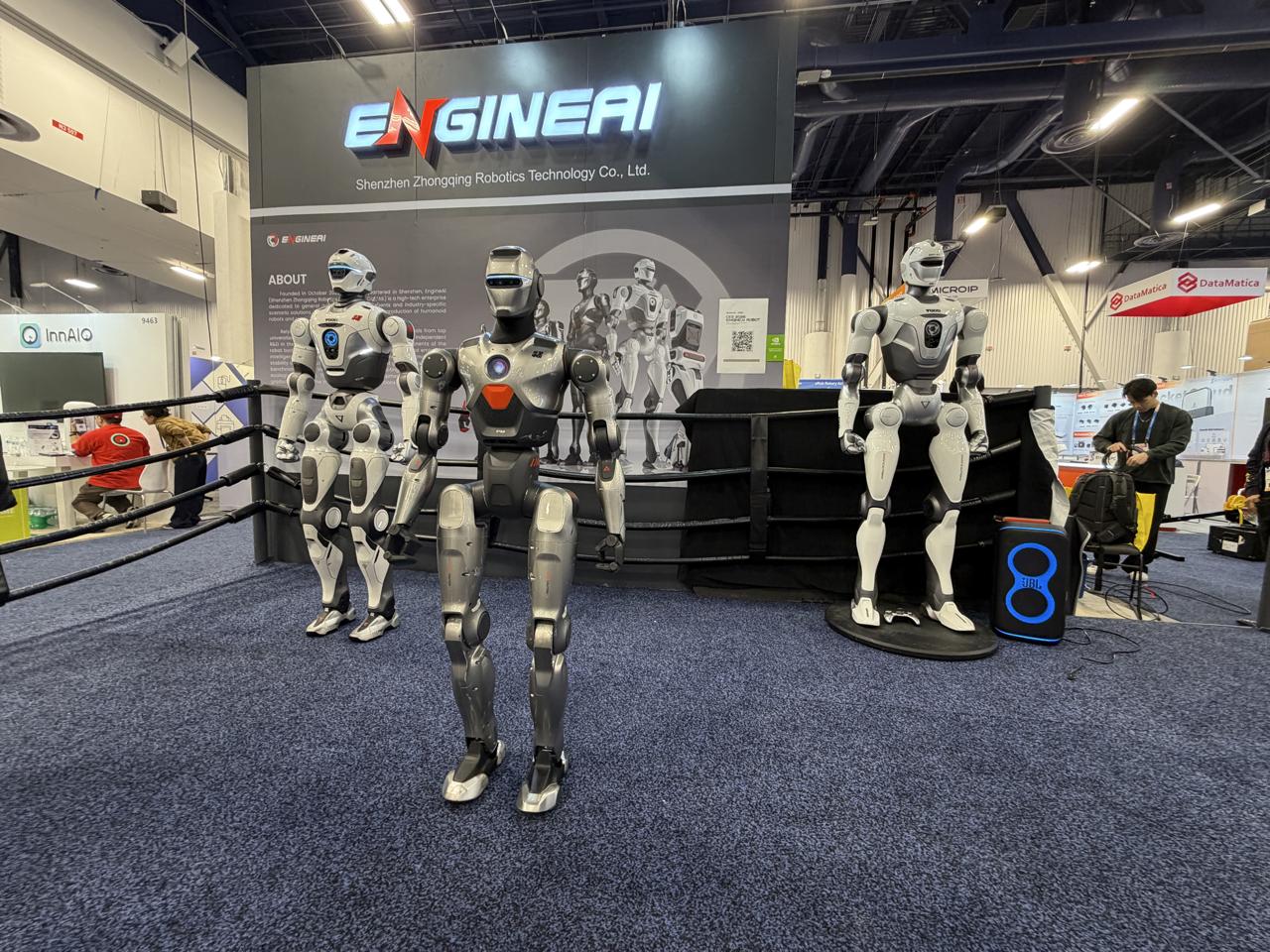
Source: Lei Technology's on - site shooting at CES 2026
The R & D team of Zhongqing's robots once led the research and industrial implementation of China's first batch of legged robots and has full - stack self - research capabilities, covering core technology fields from robot body design and key components to motion control algorithms and embodied intelligence.
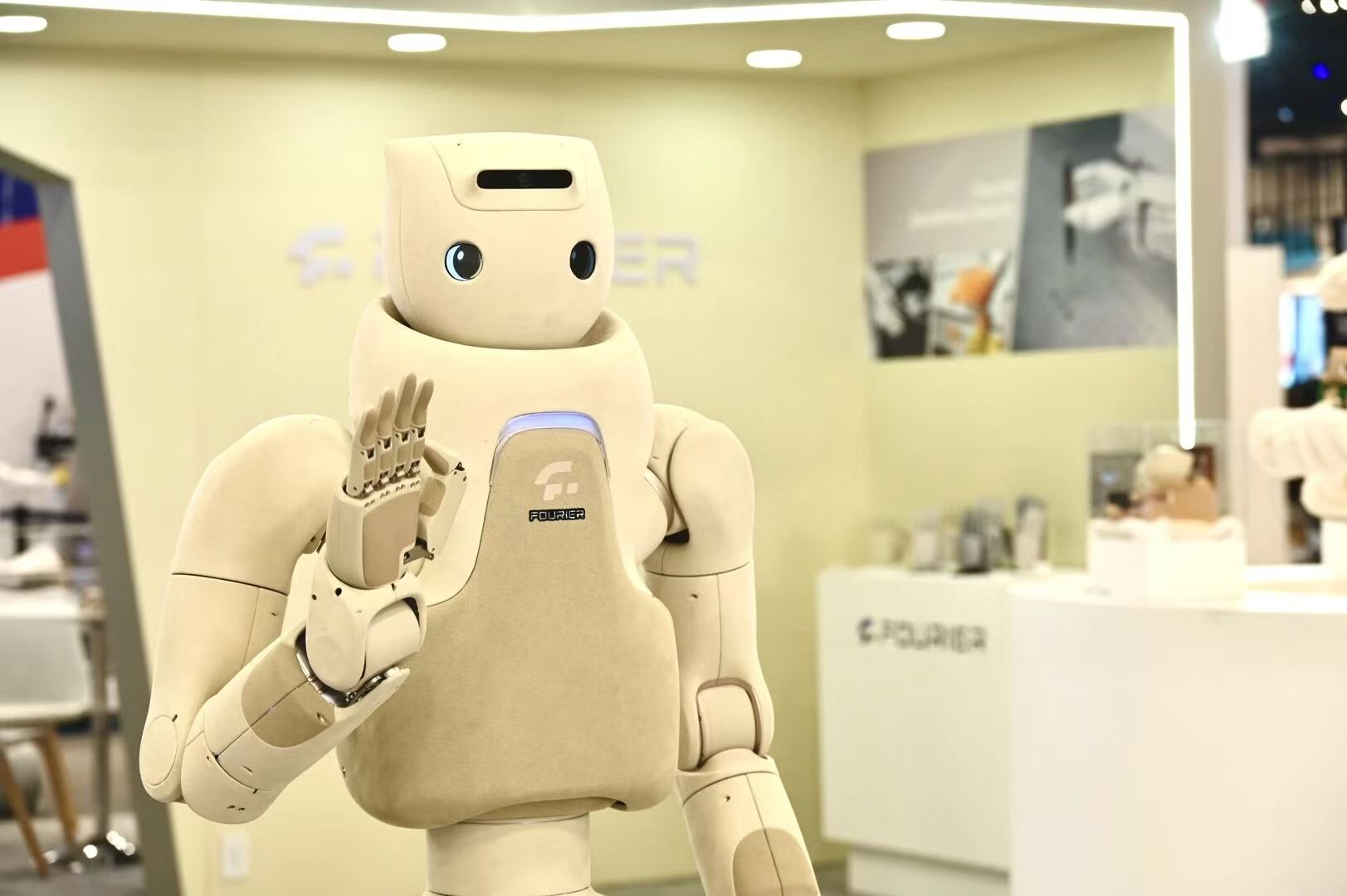
Also at the CES 2026 stage, in sharp contrast to the "tough and masculine spirit" of Zhongqing's robots, Fourier's new - generation full - size humanoid robot "Care - bot" GR - 3 uses Morandi - colored interior fabrics, eliminating the "coldness and mechanical feeling" of traditional robots.
Source: Fourier
Fourier was founded in 2015. Compared with other large robot manufacturers, Fourier's humanoid robots emphasize the "emotional companionship" attribute and continue to focus on the customer group in the health - care industry.
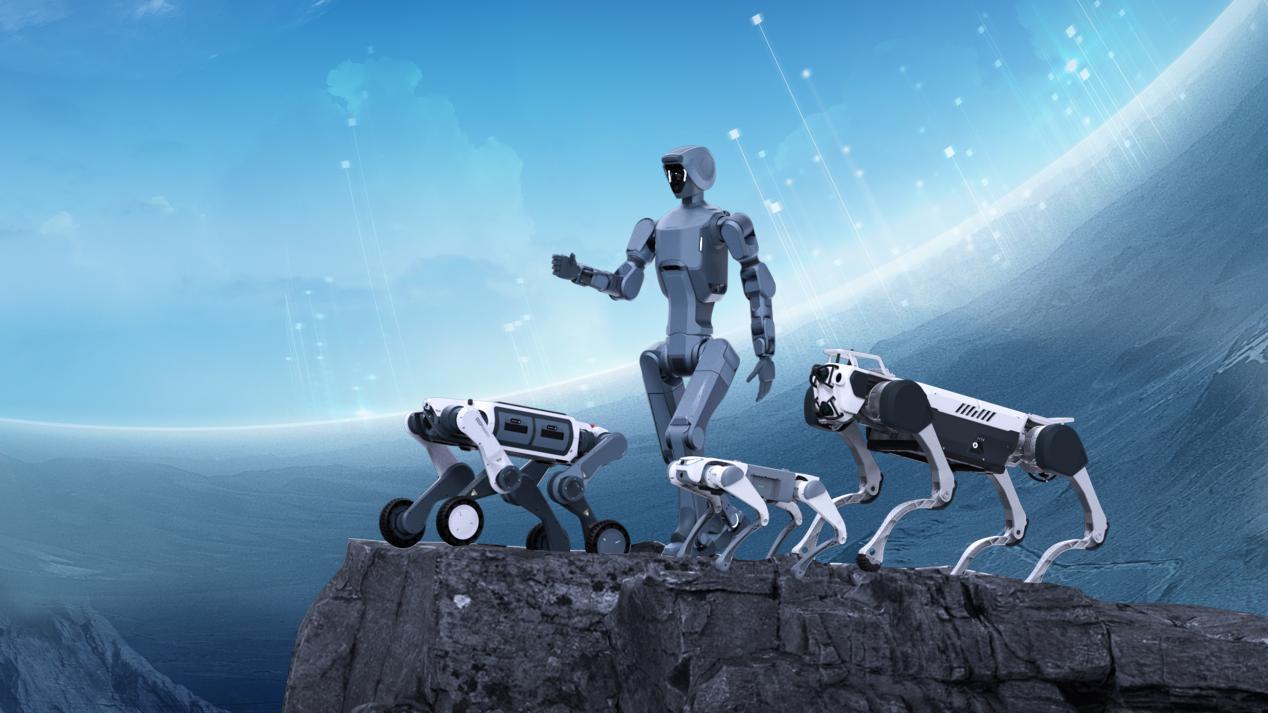
Among the unlisted brand enterprises, there is one that has gained considerable popularity in recent years. It is DeepRobotics, which, like Unitree, is one of the "Six Rising Stars in Hangzhou" but focuses on the application of quadruped robot technology.
DeepRobotics was founded in 2017 and focuses on the R & D, production, sales, and service of quadruped robots, humanoid robots, and core components. At the beginning of December last year, DeepRobotics completed a Series C financing of over 500 million yuan, with China Telecom, China Unicom, etc. participating. At the end of December, the company launched its IPO.
Source: DeepRobotics
DeepRobotics was the first in the world to achieve fully autonomous inspection of substations by quadruped robots and also the first in the world to launch an emergency fire - fighting solution. In addition, the first overseas industry application project of domestic quadruped robots (Singapore Power Grid), the world's first "robotic Tibetan antelope", and the industry's first live - broadcast project from the "robot dog's perspective" (Scottish Premiership) were all created by DeepRobotics.
Stage rookies: Magic Atom and Galaxy Universal invest hundreds of millions
Compared with the "single - flower blooming" of Unitree's robots at the Spring Festival Gala of the Year of the Snake on CCTV, the "hundred - flower blooming" posture of multi - brand robots on the stage of the Spring Festival Gala of the Year of the Horse undoubtedly reflects the fierce competition in the current embodied intelligent robot market.
As representatives of rookie brand enterprises, Magic Atom, Galaxy Universal, etc. finally took the stage at the Spring Festival Gala of the Year of the Horse.

Source: CCTV
It is reported that each robot enterprise participating in the Spring Festival Gala of the Year of the Horse on CCTV paid approximately 100 million yuan in sponsorship fees. For many robot enterprises, their total annual marketing budget may have been only this amount or even less in the past.
Magic Atom, Galaxy Universal, etc. invested hundreds of millions to obtain the "entry ticket" to this top - tier show in the Year of the Horse. The strength, financial resources, and courage of these brand enterprises should not be underestimated.
Magic Atom belongs to the Dreame ecosystem and was founded later than Zhipu and Zhongqing (December 2023). It only took two years for Magic Atom to take the stage at the Spring Festival Gala on CCTV, which is closely related to the strong support of the Dreame ecosystem.
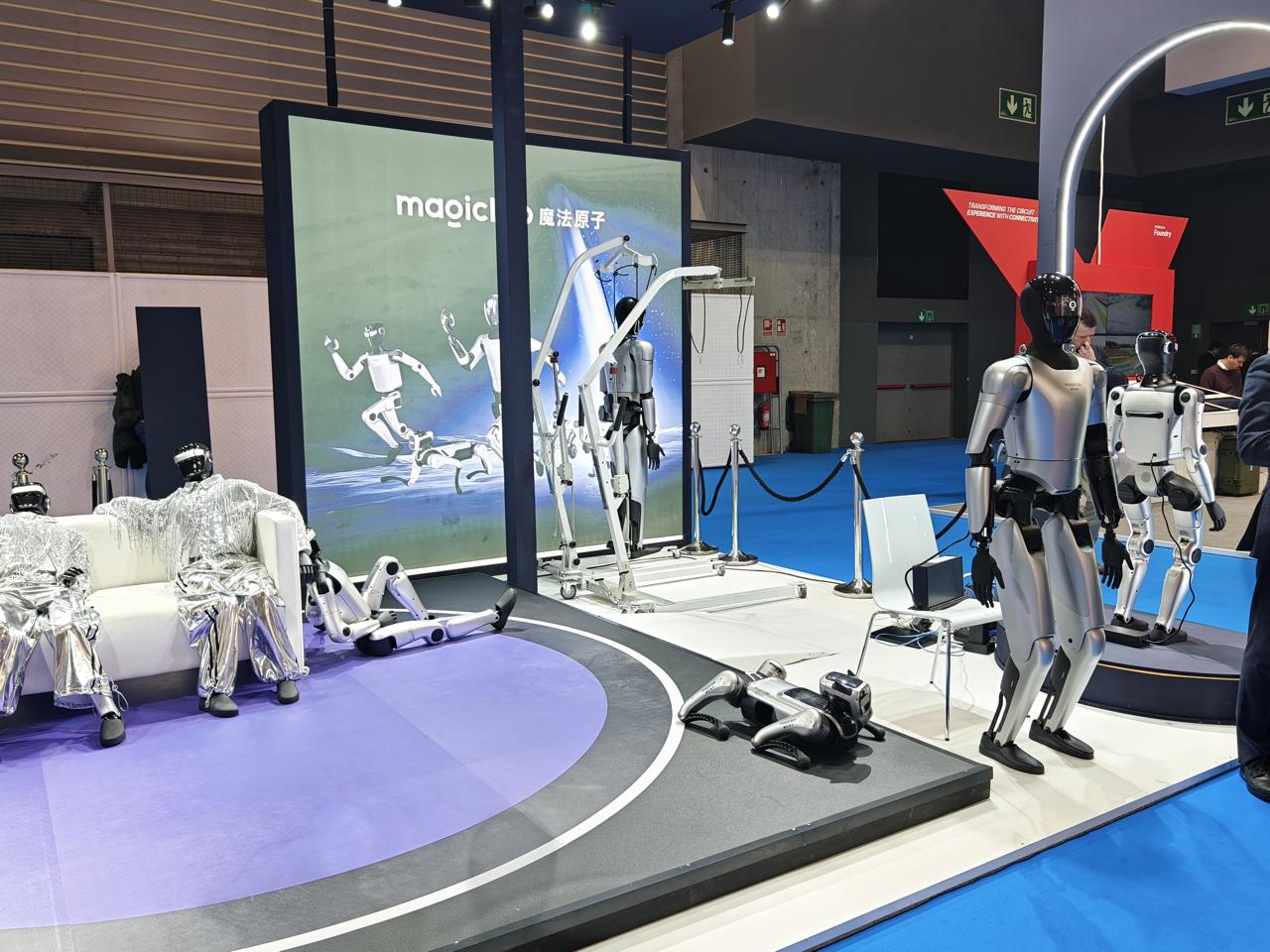
In terms of products, Magic Atom brought the same robots as those at the Spring Festival Gala of the Year of the Horse to MWC26. According to the on - site experience of the reporting team of Lei Technology, Magic Atom aims to impress more consumers and customer groups through a multi - product matrix for full - scenario robot applications.
Source: Lei Technology's on - site shooting at MWC26
In the field of humanoid robots, Magic Atom launched the MagicBot Z1, known as the "world's first electric - drive somersaulting robot", which focuses on entertainment scenarios such as performances. Another product, the MagicBot Gen1, is known as the "world's first multi - robot collaborative operation robot" and focuses on life and work scenarios. At the MWC26 booth, the MagicBot Gen1 appeared as a "shopping guide" to interact with global merchants and could switch fluently between Spanish and English.
It is worth mentioning that Gu Shitao, the co - founder of Magic Atom, previously revealed that the company will strive for an IPO this year.
As another embodied intelligent robot enterprise participating in the Spring Festival Gala of the Year of the Horse on CCTV, Galaxy Universal was founded in May 2023. Since last year, this enterprise has gained quite a reputation, especially in the capital market.
In December last year, Galaxy Universal completed a financing of over 300 million US dollars (currently about 2.07 billion yuan) led by China Mobile, breaking both the single - round and cumulative financing records in the domestic embodied intelligent industry. Its corresponding valuation reached 3 billion US dollars (currently about 20.7 billion yuan).
On March 2 this year, Galaxy Universal announced the completion of a new round of financing of 2.5 billion yuan, once again refreshing both the single - round and cumulative financing records in the domestic embodied intelligent industry. It is worth noting that the National Integrated Circuit Industry Investment Fund also participated in Galaxy Universal's new - round financing, which is its first investment in an enterprise in the embodied intelligent track. Galaxy Universal said that it has become the unlisted enterprise with the highest valuation in the humanoid robot track.
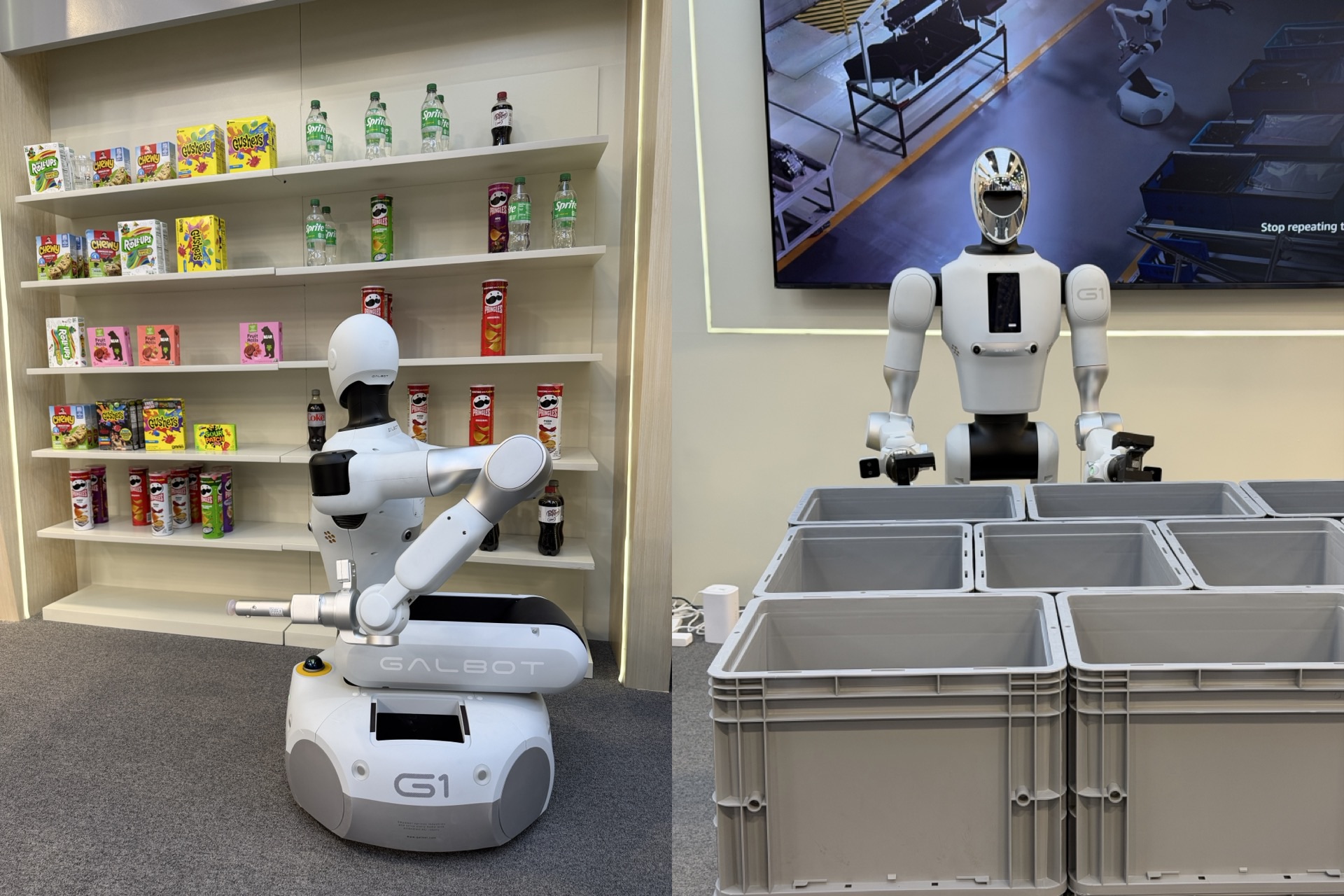
Regarding humanoid robots, Galaxy Universal emphasizes a "pragmatic" technology application route. At CES 2026, the reporting team of Lei Technology saw a prominent slogan at Galaxy Universal's booth: "AI - Driven Autonomous Robots, Born for Productivity". The robots at the booth demonstrated two core skills: one is to pick and deliver goods from the shelves, and the other is to carry boxes, with the whole process being automated.
Source: Lei Technology's on - site shooting at CES 2026
There are also established robot enterprises like Reeman that turn stage shows into scenario shows. Reeman was founded in 2018. Zheng Suibing, the founder of the company, once told the media, "We build robots not to create a human - like being, but to create a tool that can work in specific scenarios."
After years of development, Reeman currently has three core products: a full - stack self - developed integrated joint module, an ultra - lightweight humanoid robotic arm, and a remote operation