Tabletop game DM, children's care... At Tsinghua University, we've witnessed nine "rebellious" ways to play with lobsters.
Text by | Wang Xinyi, Zhong Chudi
Edited by | Zhou Xinyu
On March 15th, on the Tsinghua campus. Having grown accustomed to the numerous efficiency - enhancing tools and esoteric deployment tutorials in the market, at the "Outlier" OpenClaw Hackathon Roadshow initiated by the AttraX community of Tsinghua and Peking University students, we witnessed some unconventional and rebellious "lobster" usage methods.
OpenClaw, commonly known as the "lobster," is currently the hottest open - source Agent framework. It can be deployed locally on a computer and in the cloud, fully taking over the user's computer and automatically completing tasks such as file processing and email sending and receiving.
In March 2026, large companies like Tencent successively held free lobster deployment activities. This once - limited celebration within the geek circle gradually spread to the general public.
The popularity of the lobster exceeded expectations. Initially, the AttraX team positioned the event as an "interdisciplinary collision in the wave of AI." However, the number of event registrants was unexpectedly large, and many partners also approached them.
Even though only 25 teams were finally shortlisted for the roadshow, in the early stage, the number of registrants exceeded 300.
The lecture hall where the hackathon was held had less than 100 seats, but ultimately, more than 500 people squeezed in. Most of the people in the venue were young faces. Many were students from Tsinghua University, Peking University, and the University of Science and Technology Beijing. There were also film directors with over a decade of work experience, AI self - media bloggers, stand - up comedians, entrepreneurs who dropped out of high school, and even many parents with children.
Thomas, a participant, is a student. This is his second time participating in a hackathon. After getting off the podium, he kept talking non - stop—curious audiences kept approaching him to discuss the project. Due to their over - excitement during the discussion, they were reminded by the staff three times.
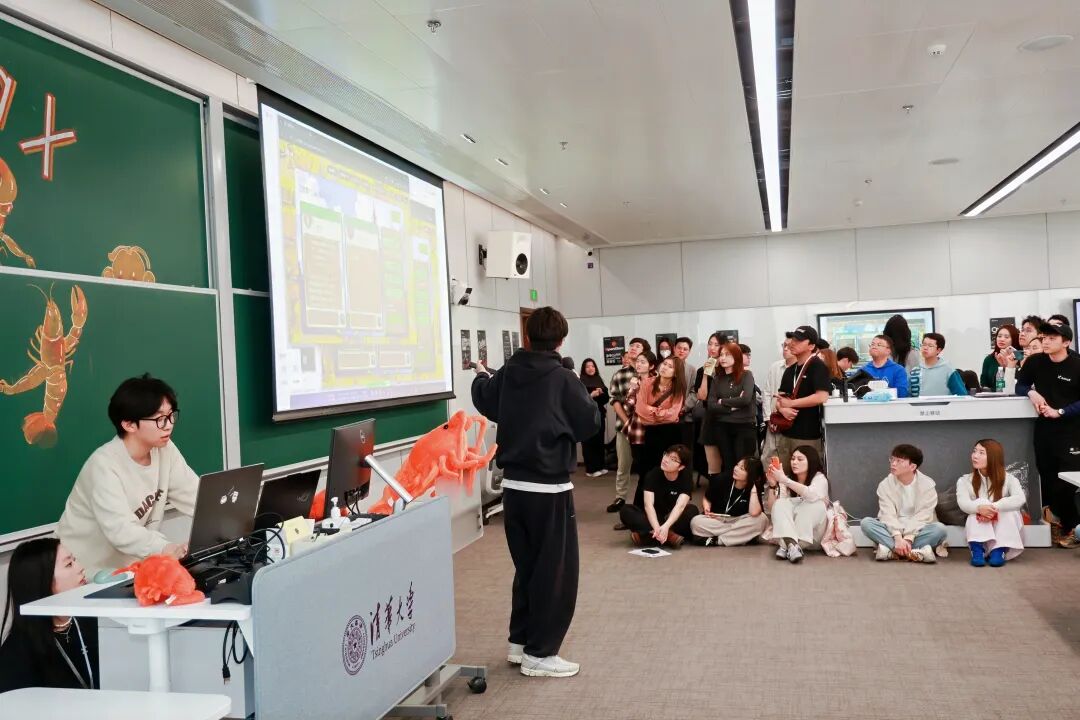
△Audience members, standing and sitting, at the roadshow site. Source: Official event photo
The 25 projects in this hackathon competition covered multiple application scenarios such as campus life, education, social networking, and games. Their common feature is that the ideas are very interesting, but at the same time, there are problems of unstable technology and difficulty in commercialization.
OpenClaw grants greater system permissions to the backend, but its positioning is still a "laboratory toy," and various Skills cannot be smoothly integrated and invoked. Many teams also told us that the projects were built in just 1 - 2 days, and their understanding of users' real needs and pain points was limited.
Even though it is still far from real - world implementation, this hackathon still shows us various possibilities for the lobster to move into practical use. We selected 9 interesting projects to share with you.
1. Shrimp Detective Agency: OpenClaw + Robotic Arm, Your Exclusive Scripted Murder Mystery DM
The "Shrimp Detective Agency," which won the first place in the entertainment track of the hackathon, is undoubtedly one of the hottest projects on - site.
Its gameplay is not complicated: Online players advance the plot on Feishu. In reality, the robotic arm acts as the DM in the board game and responds according to the plot. It can hand out props or participate in the reasoning process by nodding or shaking its head after players ask questions. The AI is responsible for the narrative, and the robotic arm is responsible for interacting with players in reality.
Compared with simple text conversations, the actions of the robotic arm give rhythm to the plot. This interaction between software and hardware makes the players' experience closer to a real - life scripted murder mystery. It is also a lightweight way to explore the possibility of integrating AI with the real world.
The five girls in the team are all Xiaohongshu bloggers. Among them, there are technical personnel from the Swiss Federal Institute of Technology in Zurich, as well as strategy and product personnel from large companies.

△AI board game DM project. Source: On - site demonstration video
2. Beiketown: Virtual Campus, AI Social Networking
Beike Town builds an Agent society based on OpenClaw. Each student can incubate their own AI avatar and move in a pixel - style campus map.
The AI avatars only play the roles of breaking the ice, recording, and expanding the social radius. In addition to social networking, it can also generate "abstract" social battle reports and continuously update cyber diaries.
Not only online, but through NFC stickers, AI avatars can be attached to the physical space of the campus, allowing passers - by to trigger interactions at any time. Compared with creating a social app, Beike Town is more like an attempt to make each person's AI avatar a part of campus life.
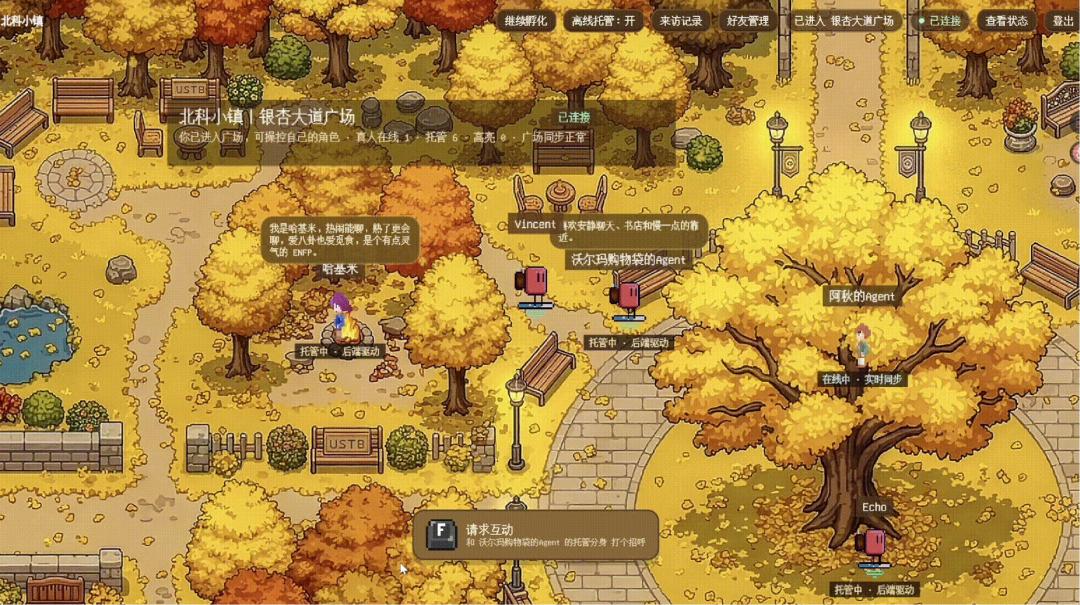
△Beiketown. Source: Provided by the team
3. AIhost: A One - Man Show for Transitions, the All - in - One AI Host Appears
The developer of AIhost is the head of a student association. His original intention was to create an AI host.
As long as the event process or an existing host script is uploaded, AIhost can automatically generate a structured script. After setting the process, the AI will automatically announce the transition words without the need for a real person to appear.
After the demonstration ended and as soon as the main creator finished speaking, AIhost took the initiative to make a transition: "Just now, the guest's idea of using AI as a host to liberate productivity is very wonderful..."
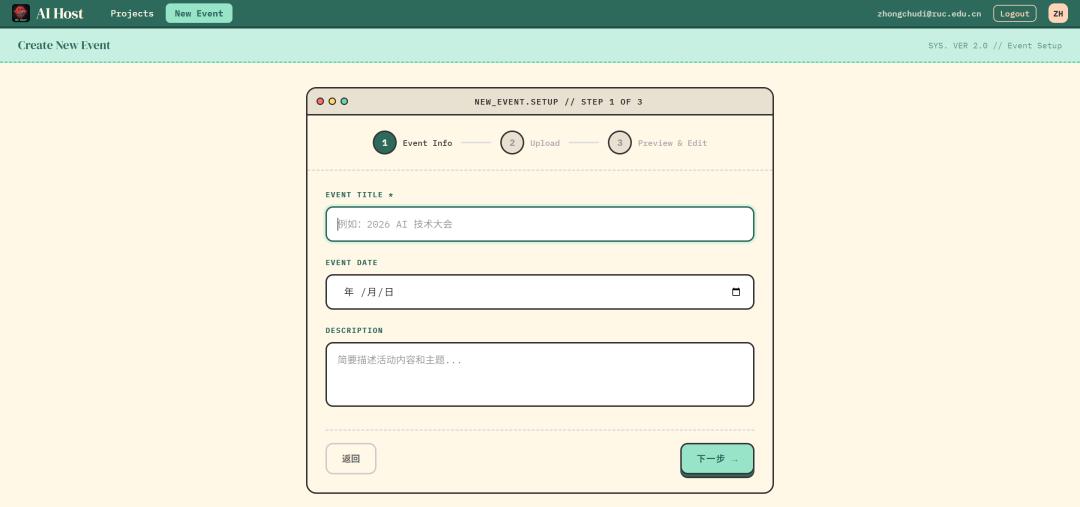
△AIhost. Source: On - site demonstration PPT
4. ClawSight: AI Helps You Verify News and Predict Trends
Faced with a piece of news, ClawSight can complete fact - checking within a few minutes and predict the trend of the event.
Each Agent in the ClawSight system has a clear division of labor: there are collectors responsible for actively grabbing information sources, auditors for cross - verification, research assistants for organizing the fact framework, data researchers for tracing historical cases, and market analysts for deducing the impact. Finally, the dispatching center integrates and makes decisions.
Take a statement from an Iranian official media saying "closing the Strait of Hormuz" as an example. Within minutes after the event occurred, the information - collecting Agent quickly grabbed the information; the verification Agent conducted cross - verification. After confirming the facts, the system will automatically supplement key background data, compare similar cases in history, and predict that the crude oil price will rise and the global equity market will plunge.
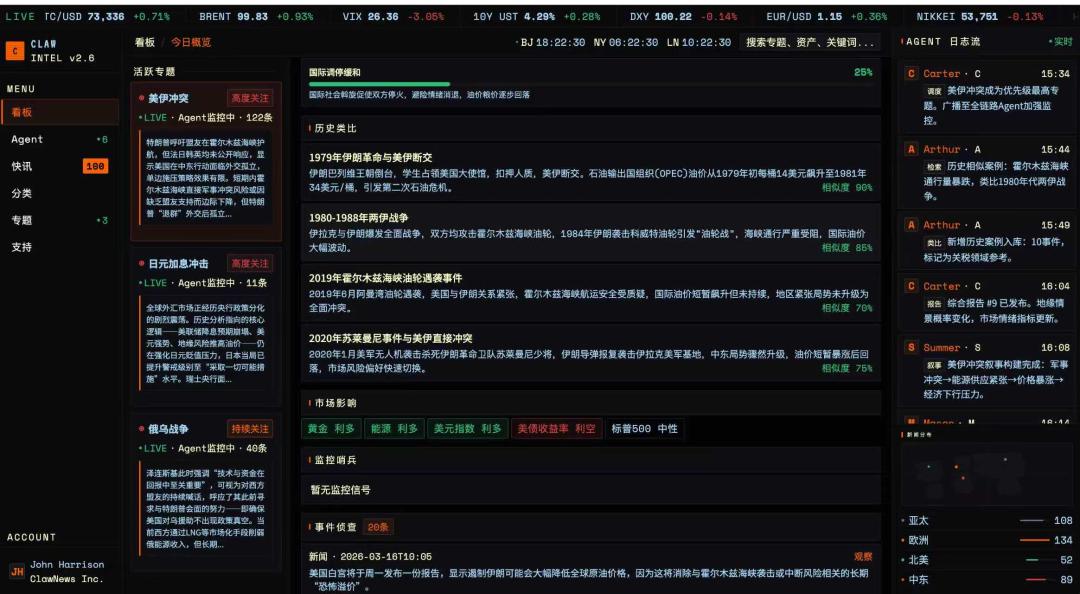
△ClawSight. Source: On - site demonstration PPT
5. OpenDairy: Use the Lobster to Store Your Thoughts
OpenDairy tries to turn the "human touch" into an asset and use AI to archive your thoughts.
The AI helps you integrate fragmented and casual daily conversations into diary articles with themes and provides a refinement of the viewpoints. Finally, you can get a thought garden of your own.
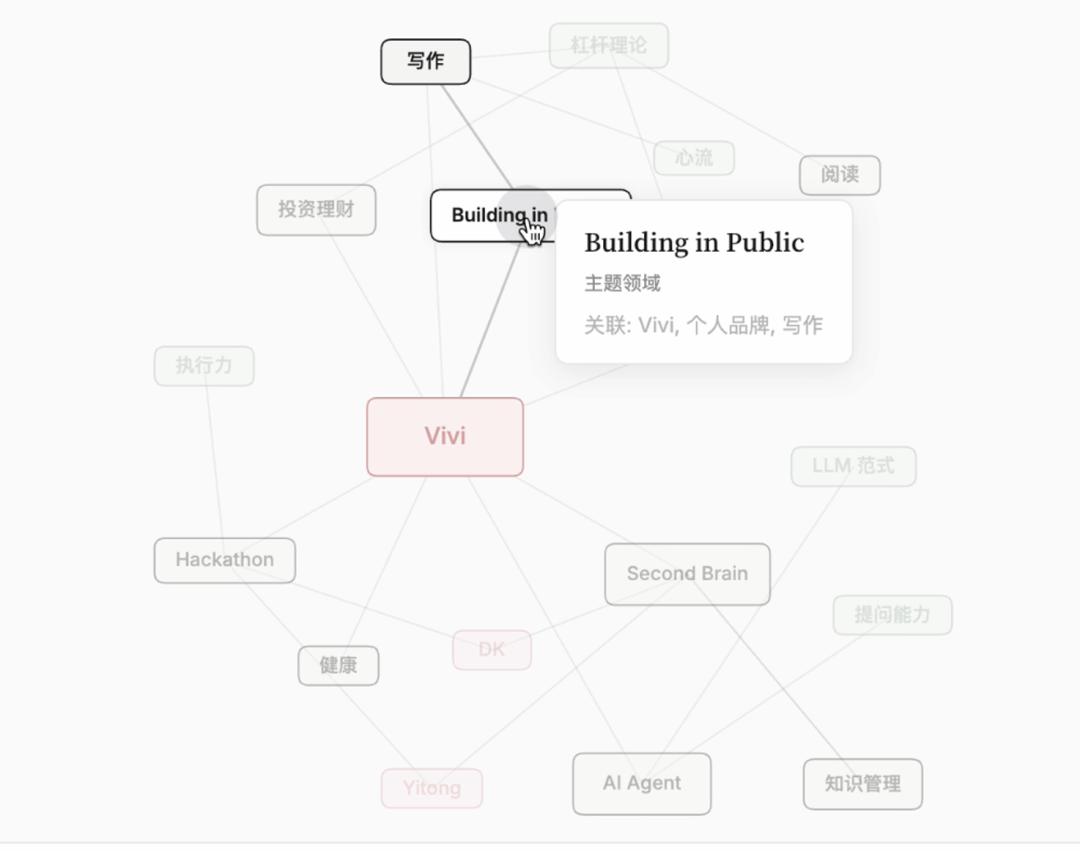
△OpenDairy. Source: On - site demonstration PPT
It consists of three Skills: Onboarding conducts a basic personality test on the user; Diary records the user's daily ramblings; Note Extractor extracts insights from long - term records and generates thinking cards, emotional trajectories, growth radars, and knowledge graphs.
In essence, OpenDairy is also an OpenClaw Skill. Users can complete the installation with one sentence, embed it into the existing workflow, and synchronize with Feishu, Notion, or Flomo.

△OpenDairy. Source: On - site demonstration PPT
6. RemotLab: Package Workflows into Templates Reusable by Everyone
RemoteLab packages workflows into templates that can be reused by everyone.
Users can generate AI workflows through natural language and package them into a template link. Without installing any environment, the recipient can reuse this workflow just by clicking on the template link.
For example, first, using natural language, RemoteLab generates a workflow for "editing a one - minute video clip into a 20 - second video finished product," and then packages it into a template. Anyone who opens the link can reuse the workflow to achieve the same effect of editing the finished product into a 20 - second video.
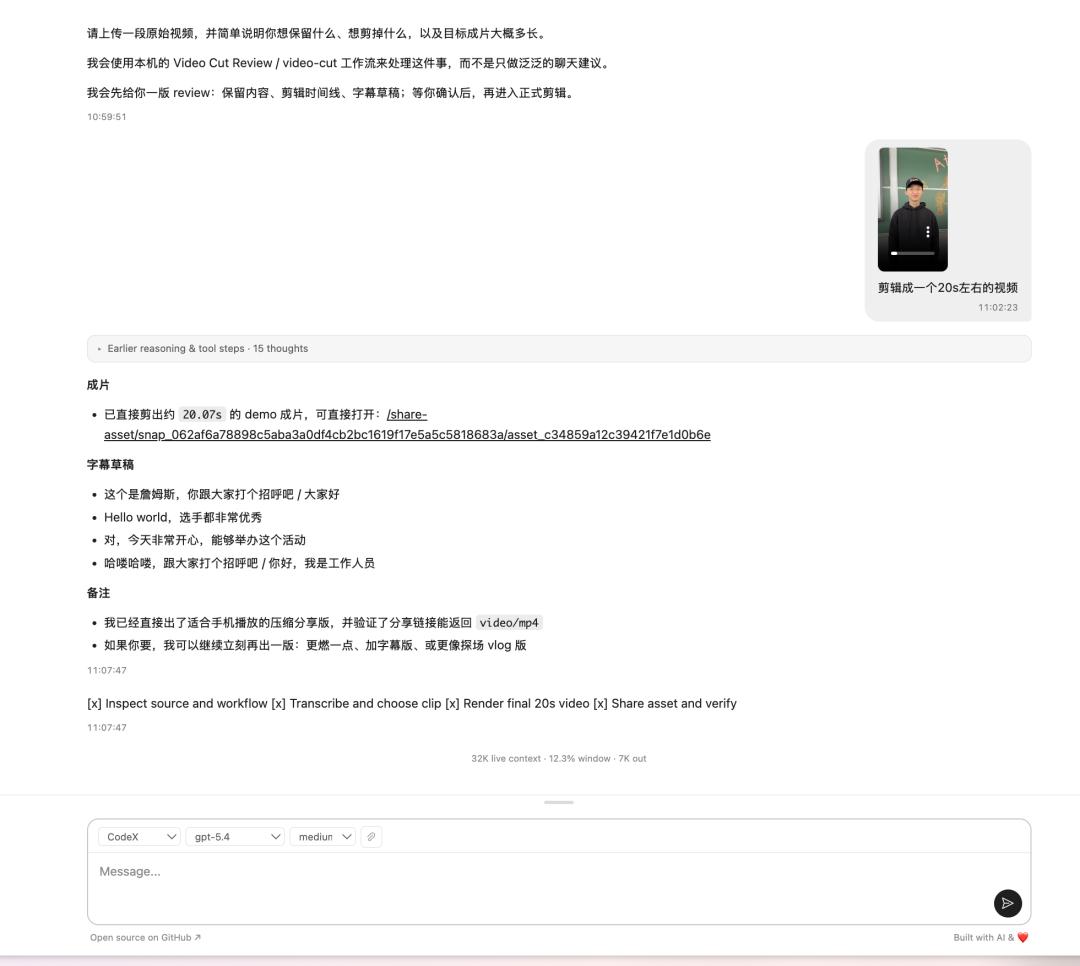
△RemotLab reusable AI workflow link. Source: Provided by the team
7. Mira: The Lobster Version of "Tmall Genie"
The Mira team claims to have created the world's first AI companion that can perceive in real - time and take proactive care, connecting all smart wearable devices and smart home devices to OpenClaw. All the hardware was made to work, and all the progress of the product was made within 10 hours before the roadshow.
On - site, they directly demonstrated the interaction with Rokid smart glasses and remotely commanded the printer to print out the photos of the on - site audience. At the same time, their smart bracelets were also recording their status during the roadshow in real - time.
Their product participates in the entire process from perception, to memory and analysis, and then to execution. Mira can use devices such as Rokid, smart watches, and cameras to perceive the environment, analyze user needs, and drive corresponding smart home devices to help users solve problems.
Their target user groups include visually impaired people, the elderly, children, and those who need proactive status monitoring and emotion recognition.

△Several application scenarios mentioned by Mira: disabled people, the elderly, children, etc. Source: Provided by the team
8. LingSoul: A Practical AI Doll for Children's Companionship
In this lively hackathon, LingSoul is the only project focusing on the toy - companionship scenario. Based on OpenClaw, it integrates voice interaction, visual perception, and long - term memory into a physical doll.
LingSoul emphasizes proactive companionship and continuous operation. This doll can not only talk to children, tell stories, and play games but also recognize identities and emotional changes through the camera and actively intervene to comfort the child when they are anxious or uncomfortable.
It also has the ability to perform complex tasks. When the infusion is about to end, the doll can notify the nurse station through Feishu or synchronize the child's status to the parents.
It is worth noting that the team emphasized privacy and boundaries in the demonstration. Visual data will be immediately destroyed on the device side, and only summary information and feedback will be output to parents and doctors.
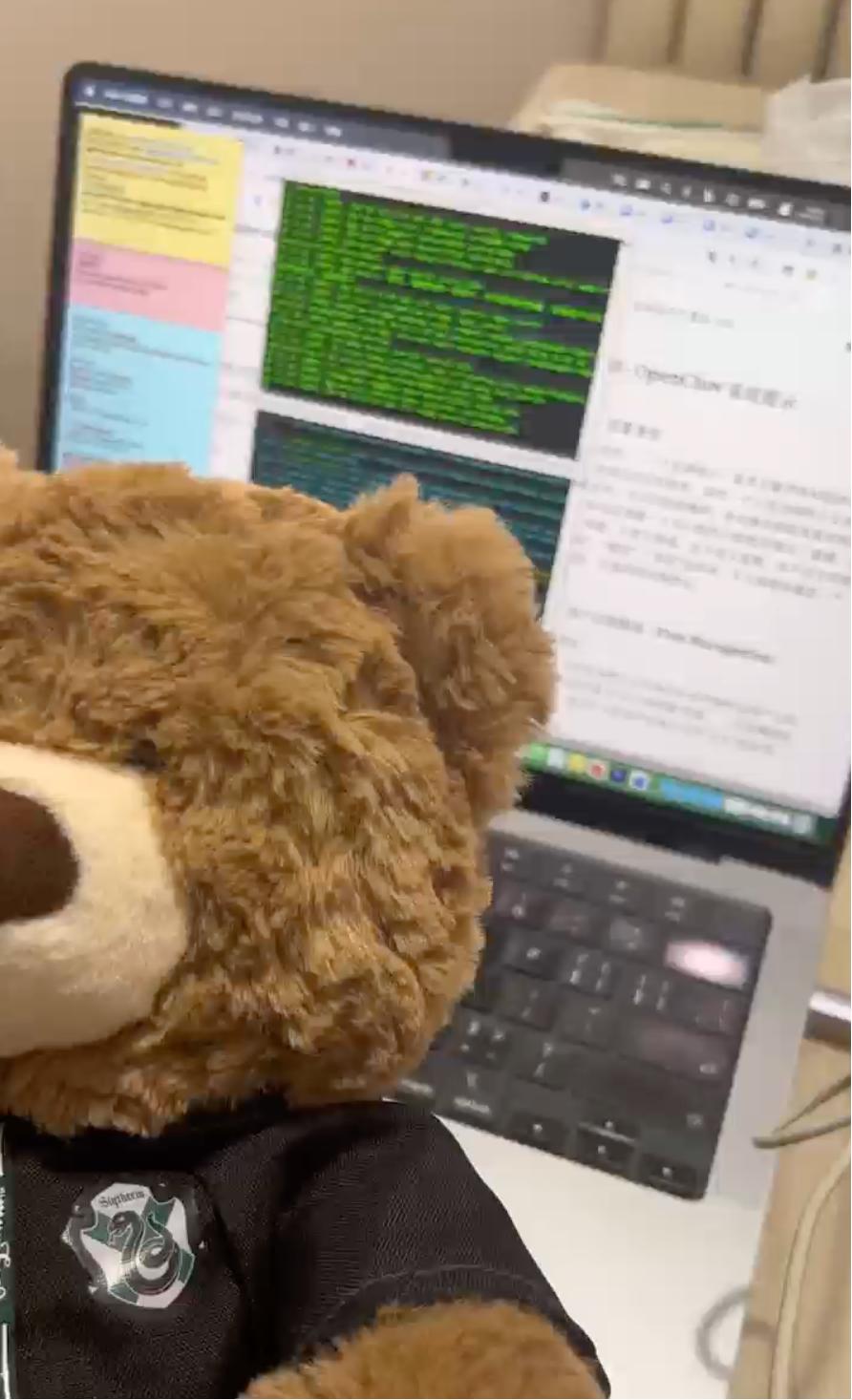
△LingSoul's doll bear. Source: Provided by the team
9. Otter Planet: Teach Children to Tell Stories with a Magic Wand
Otter Planet targets the "AI + education" field and creates an AI Native creative learning platform for children aged 7 - 10.
This team with Cambridge and Harvard backgrounds has a hardware product that looks like a "magic wand." They turn learning into a level - up game, guiding children to use their imagination and establish an emotional connection with the learning companion IP "Otter."
At the roadshow site, the team demonstrated the interactive gameplay of the magic wand hardware paired with a parkour - style learning game. Children can wave the hardware model left and right, and the character on the web - page will move accordingly and trigger functions such as dialogue and story selection.
Among them, to ensure that the product has a positive outlook, the team installed a Skill on the lobster to ensure that the product can generate safe scenarios that conform to children's cognition in real - time.