Special Report on AWE 2026: Welcome to the Golden Age of Physical AI
"At last year's AWE, when people mentioned Ecovacs, they still thought of it as a company mainly focused on floor-cleaning robots. At this year's AWE, we hope to present the complete picture of Ecovacs as an embodied intelligence company." A relevant on-site official from Ecovacs told reporters.
This statement precisely summarizes the core tone of this year's AWE.
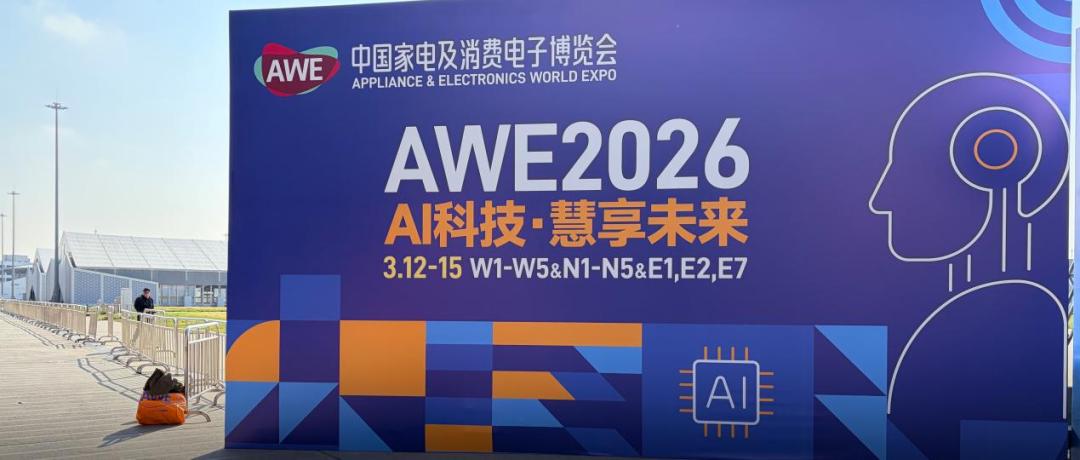
On March 12, 2026, AWE 2026 was held as scheduled in Shanghai. Although the early spring wind outside the venue still carried a chill, the inside of the venue was ablaze with enthusiasm, and the number of visitors far exceeded that of previous sessions.
Strolling through the venue, a clear trend became increasingly prominent: The AI that once remained in code is accelerating out of the virtual world and deeply integrating with physical devices, giving rise to a wave of physical AI centered around embodied intelligence.
As physical AI enters the stage of industrial implementation and explosion, an "arms race" to reshape the value of life has fully begun, and home appliance giants are going all out to compete for the right to speak in the new era.
"Embodied Intelligence" Takes the Center Stage
Physical AI has undoubtedly become the focus of AWE 2026.
There was a time when people associated AI with software-related things. However, as its implementation progresses, AI technology has had a wonderful chemical reaction with the physical world, enabling entities such as home appliances, robots, and smart cars to have the complete capabilities of "perception, decision-making, and execution", breaking the limitation of traditional software AI, which is "able to see but unable to touch".
"The 'ChatGPT moment' of 'physical AI' is about to arrive." Jensen Huang, the CEO of NVIDIA, has high hopes for it. "The next wave of artificial intelligence is 'physical AI'."
In this regard, embodied intelligence has become the MVP of AWE 2026, which speaks volumes.
Robots are the most intuitive carriers of embodied intelligence. In previous sessions, they mainly served as a backdrop, but in this session, they have become the well-deserved protagonists, and more or less all participating enterprises are involved.
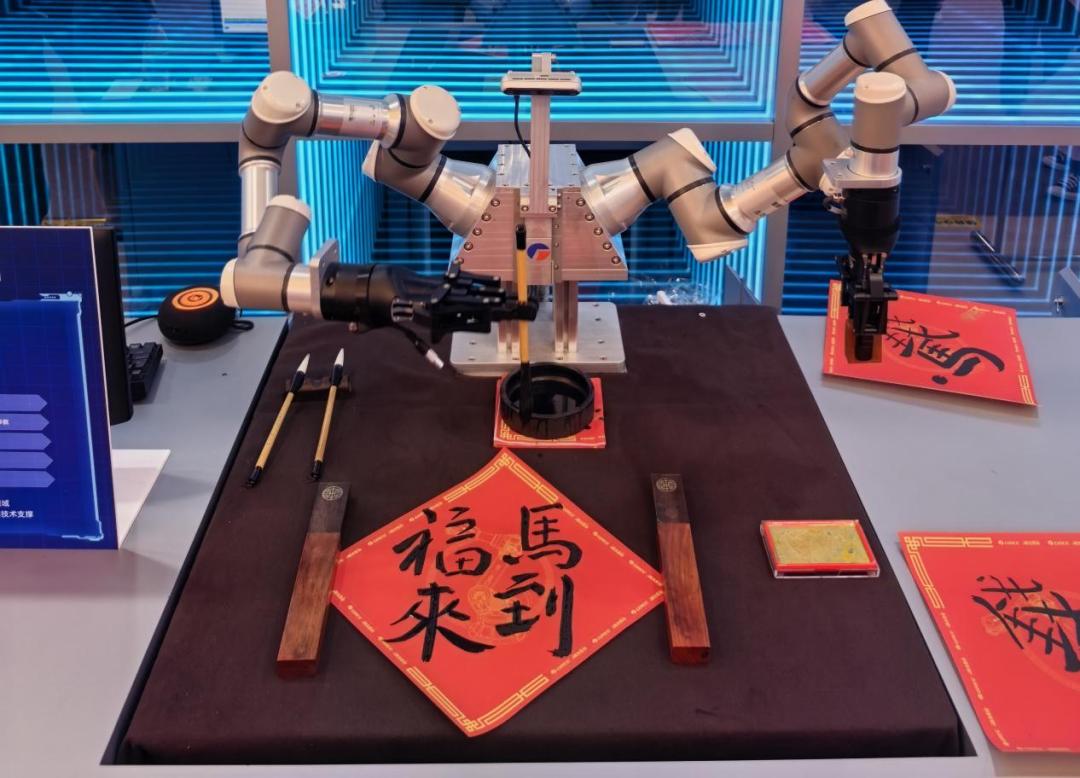
At the scene, reporters saw Unitree's G1 humanoid robot, which occasionally punched at the air during a boxing match, but its flaws did not conceal its merits; they saw Stone Intelligence Aviation's A1 robot doing embroidery work, pulling the thread, inserting the needle, and piercing with great skill; and they saw Haier Smart Home's companion robot, which has functions such as reminding the elderly to take medicine and monitoring falls...

Beyond showing off skills, embodied intelligence also emphasizes practicality.
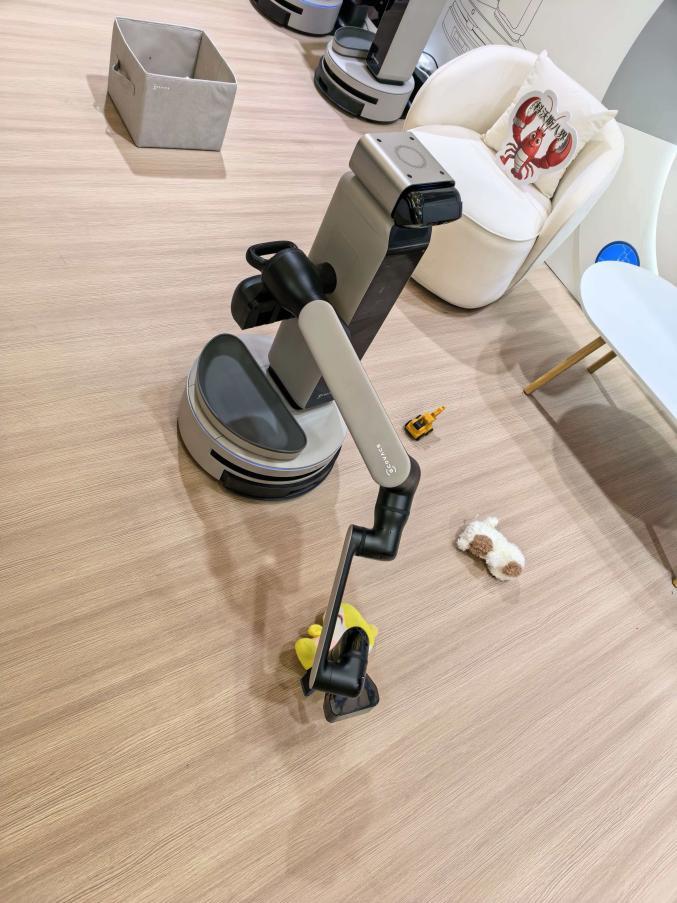
The most typical example is Ecovacs' household service butler robot, "Bajie". Equipped with the currently popular OpenClaw, it has transformed from passive intelligence to active intelligence and has become a model for the iteration of traditional service robots into embodied intelligence robots.
"Bajie" is a household service intelligent agent with self-learning, self-evolution, and self-thinking functions.
Qian Dongqi, the chairman of Ecovacs, told reporters: "'Bajie' can help you put away toys, put dirty clothes into the washing machine, and tidy up the table... We believe that only when robots serve the family can AI coexist with humans and truly enhance the happiness of life."
Put simply, Ecovacs has made robots truly become human companions, freeing humans from repetitive labor. This is the ultimate value of embodied intelligence.
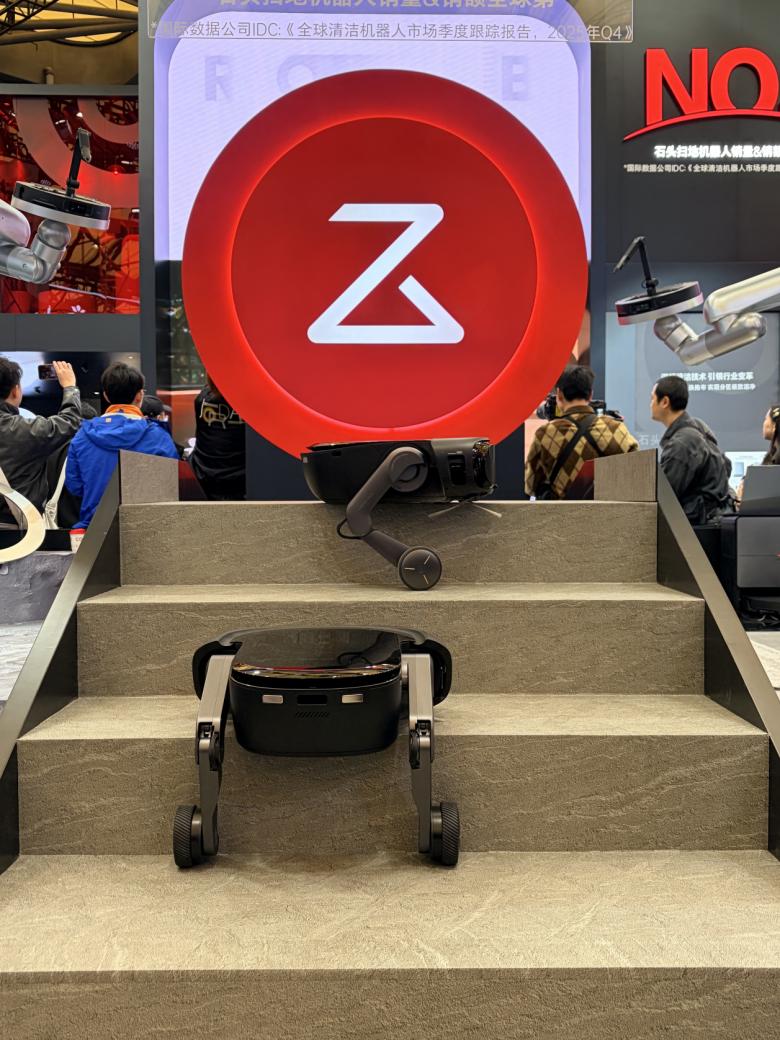
Beyond Ecovacs, Roborock is also remarkable. It brought the world's first wheel-legged floor-cleaning robot, G-Rover. Each wheel leg has the functions of stretching, lifting, and lowering, and can be independently raised and lowered. It can imitate human movement patterns to make small jumps, flexible turns, and sudden stops, and has the ability to move stably in complex terrains.
The wheel-legged floor-cleaning robot can work on stairs, making it suitable for three-dimensional application scenarios with stairs, breaking the limitation that household robots can only move on a two-dimensional plane.
Continuous Breakthroughs in Innovation Boundaries
Embodied intelligence is the "external form" of physical AI, while scenario-based innovation is the "internal soul" of physical AI.
In the past, competing in parameters, performance, and price was the focus. After entering the era of physical AI, those who can carry out scenario-based innovation will have the right to define the rules of competition.
The entry of air conditioners into the era of free movement is the best proof.
Traditional air conditioners need to be installed by professionals before they can be used, which is difficult for ordinary people. Moreover, due to the fixed installation position, it is difficult to achieve uniform temperature control, and the phenomenon of uneven heating and cooling is common. Although traditional mobile air conditioners can be moved, they require manual adjustment of the position and simple installation.
At the scene, reporters saw MOVA's AI mobile air conditioner, which completely solved the above pain points.
The AI mobile air conditioner can accurately detect the position of the human body and automatically follow the user. Whether the user is in the living room, bedroom, or study, they can enjoy a suitable temperature at any time. At the same time, it can also independently identify the ambient temperature and dynamically adjust the cooling power to avoid energy waste.
Yang Xiangwen, the person in charge of MOVA's mobile air conditioner business, said: "We have always been thinking about whether an air conditioner can break free from the shackles of pipelines and transform from a cold, fixed device into an intelligent partner that can establish an emotional connection with users and move freely?"
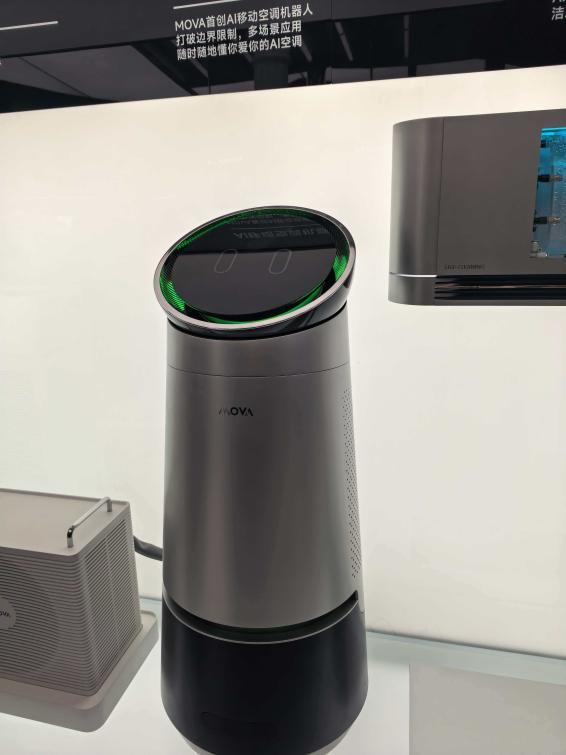
The shift from "people chasing the air conditioner" to "the air conditioner chasing people" is a result of physical AI reconstructing the product form to meet users' core needs for a sense of technology, intelligence, practicality, and convenience. By doing so, it breaks out of the involution and opens up a new blank market, giving the industry greater room for growth.
It can be seen that the underlying logic of scenario-based innovation is that physical AI evolves from passive to active, from passively executing instructions to actively understanding needs, and becomes a warm, perceptible, and practical intelligent partner.
To this end, MOVA has built a home AI system. With its continuous perception and autonomous prediction capabilities, it can understand users' habits and predict their needs, thereby reducing human intervention and greatly improving the quality of life.
Hu Bin, the global business president of MOVA's household appliances, said: "A real AI home appliance is not about making users feel 'I'm using AI', but about making users feel 'life has improved'."
When it comes to scenario-based innovation, one cannot ignore the hottest booth at this AWE - Dreame.
Now, Dreame no longer presents itself as a cleaning expert but as a hard-tech giant. Its full-ecosystem layout of "people, cars, homes, space, and chips" has become another important direction of innovation, namely full-ecosystem innovation.
At Dreame's booth, reporters saw a series of innovative products integrating physical AI technology, covering fields such as mobile phones, automobiles, home appliances, chips, energy, batteries, and space exploration, building a full-scenario intelligent ecosystem.
Take the AURORA mobile phone officially launched at the scene as an example. Dreame has equipped it with the native operating system AURORA AIOS 1.0.
It features AI imaging, AI privacy security, AI intelligent agents, and AI aesthetic design, and is expected to be officially released in the second half of 2026.
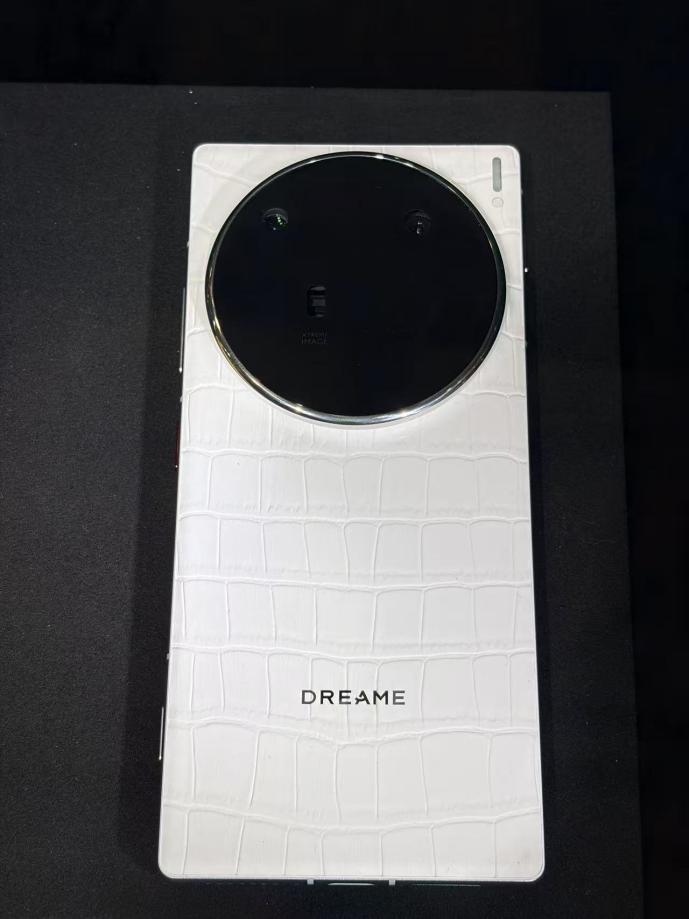
Liu Yang, the global business person in charge of Dreame's AURORA mobile phone, told reporters: "What we are doing is not simply stacking hardware but making the hardware differentiated to achieve a result of 1 + 1 > 2. The AI algorithm fully unleashes the hardware's capabilities and directly creates a gap in imaging professionalism."
That's why Dreame's booth was extremely popular.
At this AWE, Dreame independently rented Hall E7 for the first time. The scene was crowded with people, and the estimated number of visitors on March 14 even exceeded 100,000, setting a record for the number of visitors to a single-brand pavilion in AWE history.
An Explosion of New AI Terminal Species
As physical AI continues to mature, industries across the board are actively embracing it, trying to integrate it into product design and services to promote industrial upgrading. There has been an explosion of new species in AI terminals.
Reporters saw that the Qianwen AI glasses made their debut in China. They can not only have conversations and take photos but also book hotels and order takeaways. Haier's Yunxiu intelligent tea dryer can use AI to intelligently identify tea and precisely adjust the drying temperature and time for different tea varieties. Enya's cyber guitar has built-in AI accompaniment and intelligent teaching functions, allowing beginners to experience the joy of playing the guitar...
Among them, Ronshen's refrigerator is particularly worth mentioning.
Due to the Chinese people's habit of stockpiling goods, the freezer of a refrigerator is often filled up unconsciously. As a result, the food stored for a long time becomes less fresh, which is a major pain point of traditional refrigerators.
Against this background, Ronshen's "Big Ice Elephant" refrigerator stands out.
The "Big Ice Elephant" has an ultra-large freezing space of 267L, far exceeding the mainstream range of 80L - 120L. More importantly, it adopts a super-low temperature design of -36°C, making it the only refrigerator in the industry where salmon can still be eaten raw after being frozen for 30 days and then thawed.
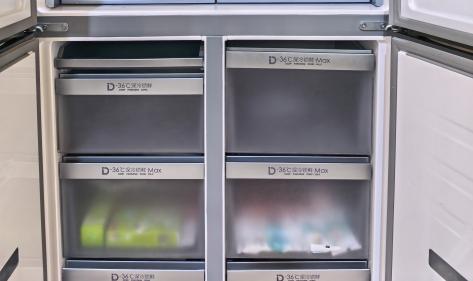
A on-site staff member of Ronshen's refrigerator told reporters: "The super-low temperature of -36°C will not cause a significant increase in power consumption. Relying on the intelligent system, it can consume only one kilowatt-hour of electricity per day."
In addition, Ronshen's Xiwang refrigerator can also be regarded as a new species.
Compared with the "Big Ice Elephant" refrigerator, the Xiwang refrigerator has a stronger AI background. Relying on the Xinghai large model, it is the first in the industry to feature an AI intelligent four-season fresh-keeping function, which can intelligently match the lighting mode according to the season.
For example, in spring when all things revive and more green leafy vegetables may be stored, the operating time of the blue light band can be extended to reduce the loss of chlorophyll and vitamin C.
Another example is in summer when the sun is scorching and more fruits may be stored. The operating time of red and purple light can be extended to increase the production of reducing sugar, vitamin C, and carotenoids.
It is not difficult to see that the Xiwang refrigerator achieves the goal of maximizing the freshness and nutritional value of fruits and vegetables by intelligently adjusting the operating time of light waves.
Relevant data shows that compared with ordinary refrigerators, the vitamin C retention rate of fruits stored in the Xiwang refrigerator has increased by 31.6%, the lycopene retention rate has soared by 328.6%, and the chlorophyll retention rate of vegetables has increased by 73.4%. Coupled with the intelligent dynamic water mist moisturizing and AI negative ion high-energy sterilization and odor removal module, it can maintain a 70% optimal humidity and reduce the weight loss rate of fruits and vegetables by 56.8%.
That is to say, the Xiwang refrigerator has completely broken the traditional perception that "refrigerators can only keep food fresh, not nourish it" and can lock in the taste and nutrition of food to the greatest extent.
Complementing Ronshen's refrigerator, Hisense's TV also shone brightly at this exhibition.
As one of the global leaders in the TV industry, Hisense, with its self-developed AI picture quality chip and light-color co-control algorithm, has for the first time overcome the industry problem of "unable to precisely control light and color simultaneously", thus becoming the global pioneer of RGB-Mini LED TVs.
At this AWE, Hisense's TV has taken another step forward.
For many years, TVs have had difficulty presenting the color cyan accurately and vividly, resulting in an unnatural "break" in color transition. Now, Hisense has successfully solved this problem.
The Hisense RGB-Mini LED TV UX2026 displayed at the scene, relying on the globally pioneered Linglong 4-core true-color backlight and the upgraded AI picture quality chip H7 Pro, will no longer show color deviation, graying, or distortion when presenting cyan-green images such as lakes, skies, and auroras.
This means that the vividness, realism, transparency, and delicacy of RGB-Mini LED TVs have reached a new level, completely rewriting the "rules of the game" in the high-end TV market.
From Ecovacs' embodied intelligence to MOVA's AI mobile air conditioner and then to Ronshen's refrigerator, each product tells the story of the transformative power of physical AI.
By rooting in user needs, delving deep into technological innovation, and focusing on scenario implementation, Chinese home appliance brands have found the optimal solution in this transformation, taken the lead in the global competition, and are seizing the strategic high ground for the future of the industry.
Data from the Ministry of Commerce shows that China's air conditioner production