2026 AWE Observation: Consumer hardware is becoming the most suitable "physical container" for AI.
As AI terminals mature in the home scenario, they will further enter a broader industrial space, such as hotels, shopping malls, office buildings, and even factories. In this sense, those seemingly scattered product innovations at this year's AWE may actually be foreshadowing something much bigger, that is, the AI - driven new industrial era is gradually approaching.
The kitchen, the floor, and the living room may be just the first three entrances to this change. As more and more AI terminals enter the real world, a new industrial cycle will also unfold.
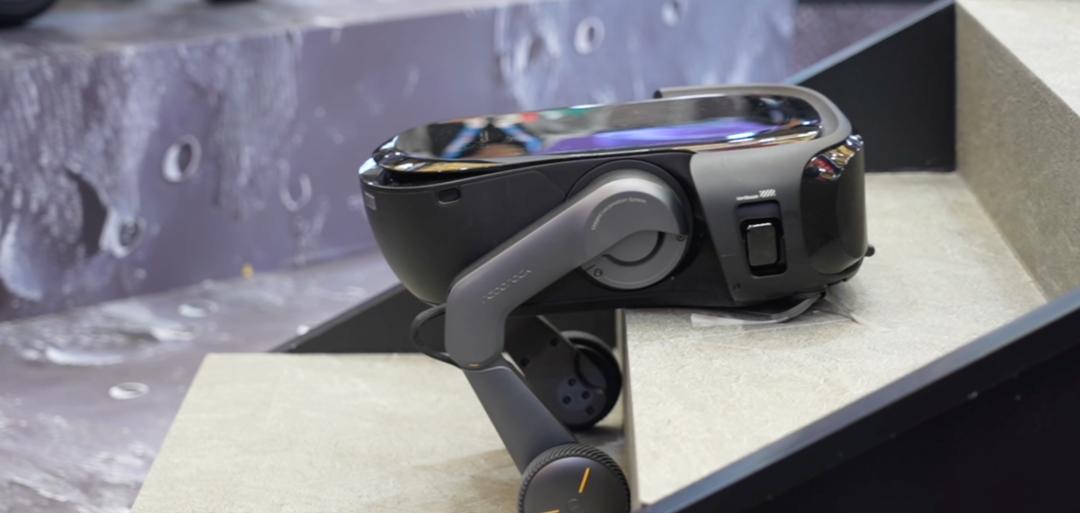
At a booth in the Shanghai New International Expo Center, a floor - sweeping robot was slowly moving forward. In front of it was a simulated staircase. The robot paused for a second, extended its wheel - legs, lifted its body, and then stepped over the steps.
A few meters away, a floor - sweeping robot extended its mechanical arm, picked up the slippers on the ground, put them aside, and then continued to clean.
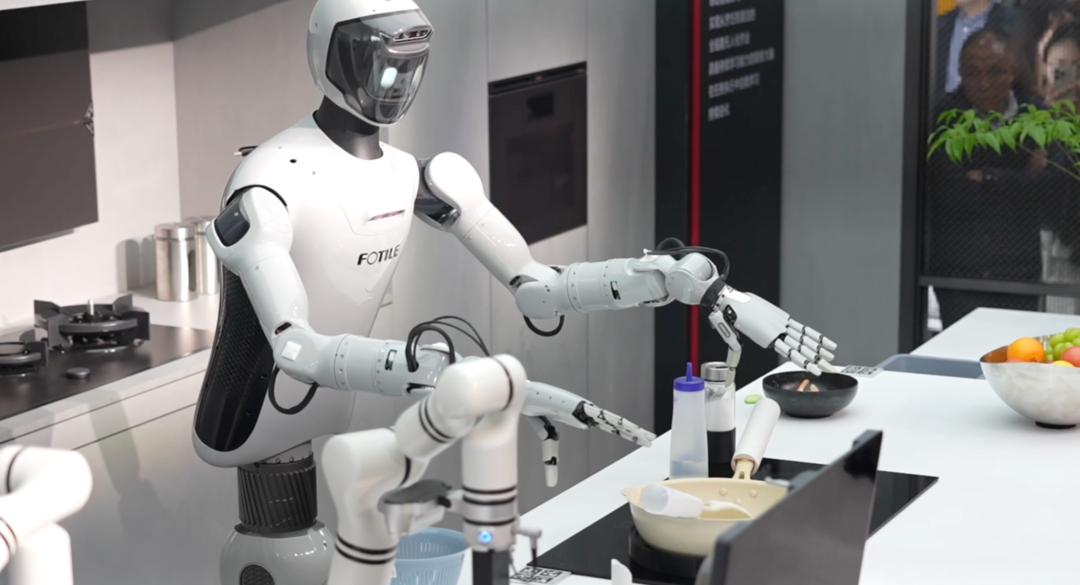
In another exhibition hall, a robot was stir - frying ingredients in the kitchen. The mechanical arm picked up the spatula and turned the ingredients in the pot. The movement was not very smooth, but it was enough to cook a simple home - style dish.
If these scenes are viewed separately, they are more like demonstrations in a robot laboratory. But at this year's AWE, these scenarios have become repeated product capability displays on the booths.
As one of the world's three major home appliance and consumer electronics exhibitions, AWE has always been regarded as an important window for observing changes in the consumer electronics industry. From traditional home appliances to cleaning appliances, from intelligent terminals to home robots, almost all manufacturers will showcase their most important product directions for the next few years here.
The most obvious change at this year's AWE is that the capability boundaries of many traditional "home appliances" are becoming increasingly blurred.
The Disappearing Parameters and the Arrival of the "System"
If you walk around several exhibition halls in the Shanghai New International Expo Center, it's easy to have an illusion: this no longer seems to be just a traditional home appliance exhibition, but more like an emerging AI hardware experimental field.
In the kitchen appliance area, the two most popular booths are from Fangtai and Robam. In the past few decades, innovation in the kitchen appliance industry has almost revolved around mechanical structures. For example, range hoods have larger air volumes, stoves have stronger firepower, and steam ovens have more precise temperature control. In essence, they are all "more useful tools". Although there is the support of AI, it is mostly used as an auxiliary function.
But at this year's AWE, both companies are talking about the same thing: the AI kitchen.
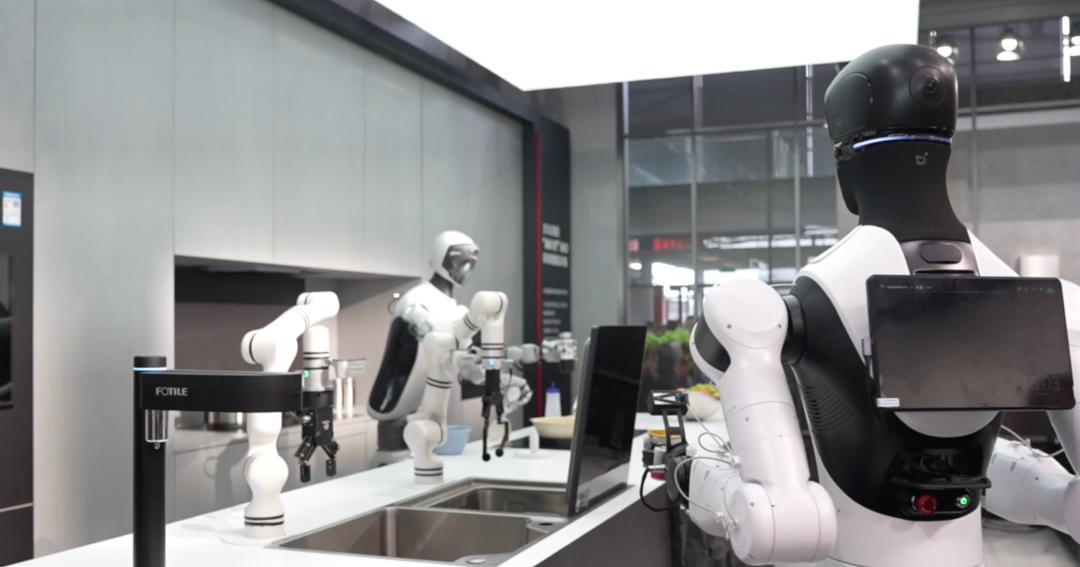
In the center of the Fangtai booth, the third - generation AI integrated cooking center equipped with the self - developed "Royal Chef Large Model" can accurately identify ingredients, dynamically match firepower and temperature control, and complete standardized cooking; the AI olfactory recognition range hood that was unveiled simultaneously can predict the generation of oil fumes and adaptively adjust the air volume, achieving a smoke - control experience without manual intervention throughout the process.
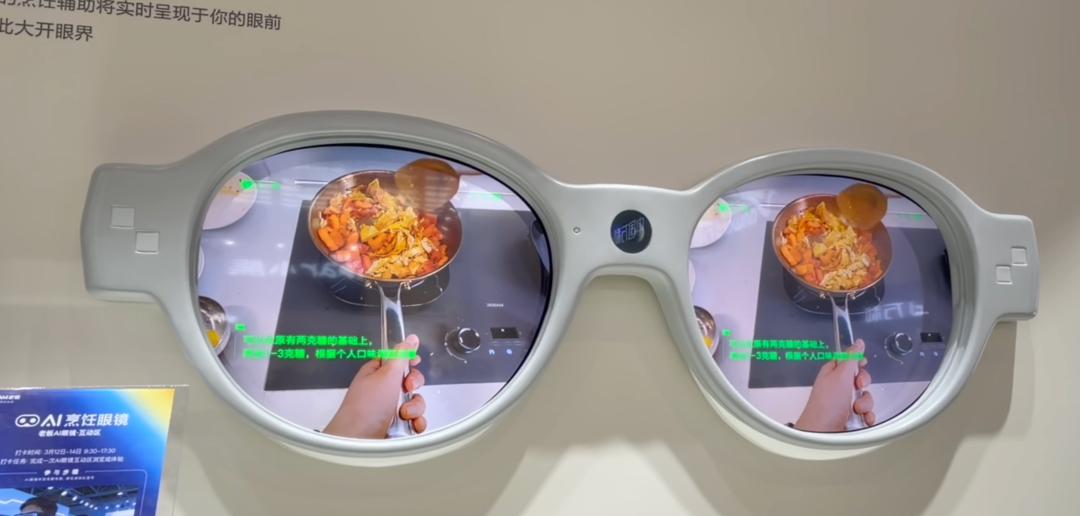
Robam presents another idea. The globally launched AI cooking glasses are equipped with the self - developed "Gourmet Chef" cooking large model, which can identify ingredients in real - time, push recipes, and control the heat. Through the upgraded ROKI digital kitchen appliance system 4.0, it can automatically link kitchen appliances to complete the whole - process cooking.
If kitchen appliance companies are transforming the kitchen, cleaning appliance companies are transforming another part of the home space.
Dreame occupied an entire exhibition hall with an ultra - large scale of 7,378 square meters, becoming the brand with the largest booth at this year's AWE. It created a full - scenario ecological matrix covering cleaning appliances, smart home appliances, smart cars, smartphones, self - developed chips, and embodied intelligence. Among them, the X60Pro disc version is equipped with Dreame's globally first - created second - generation bionic mechanical arm technology, achieving the dual - extreme expansion of a 16 - cm mop and a 12 - cm side brush, strongly breaking through the capability boundaries of floor - sweeping robots in complex home scenarios.
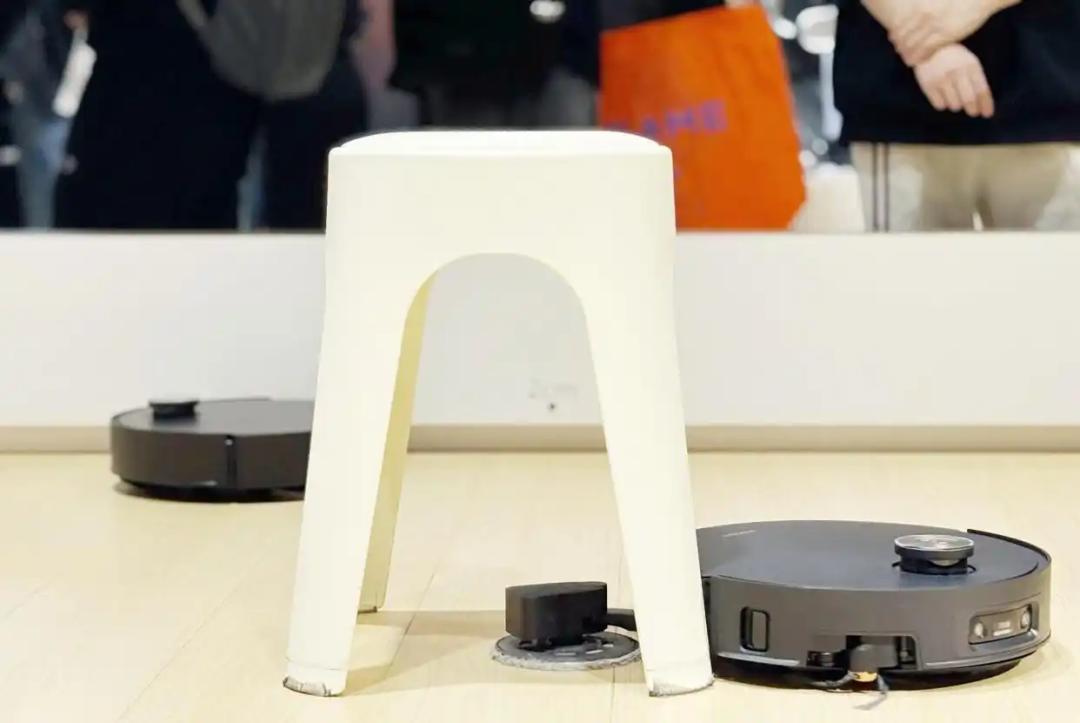
On the Roborock booth, its globally first wheel - legged floor - sweeping robot G - Rover made its domestic debut. This product can expand the scope of automated cleaning from a single plane to a three - dimensional space, aiming to systematically solve the ultimate cleaning problem of multi - story residences. At the same time, the new flagship floor - sweeping robot G30S Pro is inspired by the planetary complex terrain obstacle - crossing technology and can stably cross a double - layer obstacle height of up to 8.8 cm, easily coping with typical obstacles in Chinese families such as sliding door tracks and carpet edges.
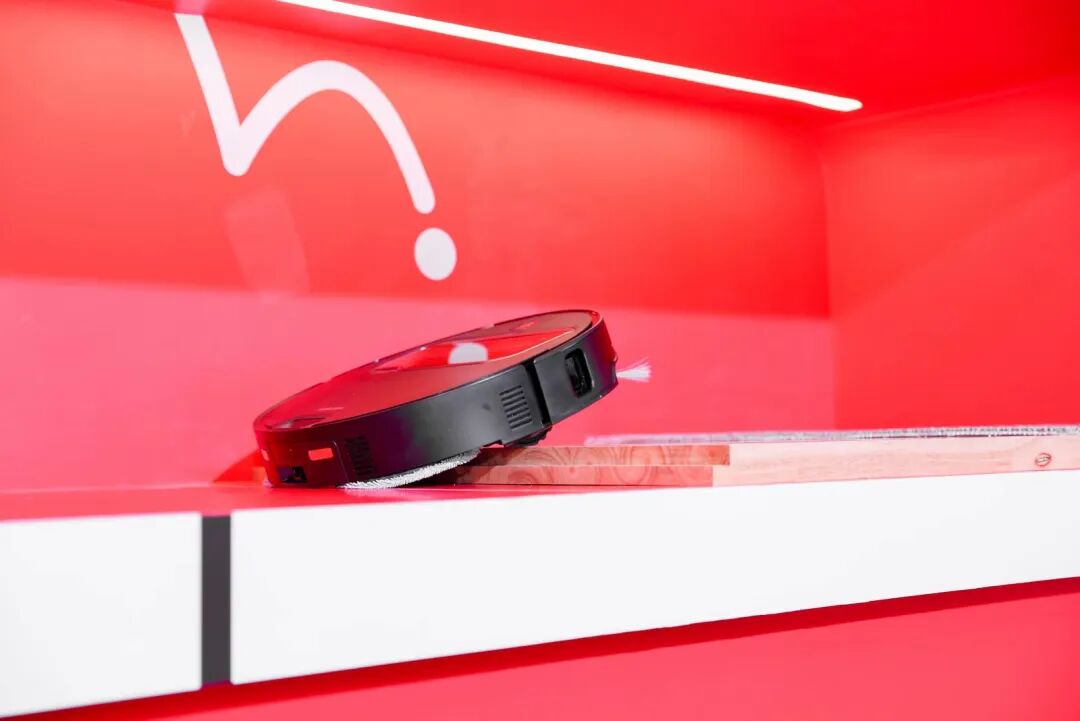
The young - oriented brand MOVA brought a full range of AI new products covering cleaning, light cooking, and coffee - drinking around the full - scenario living needs of the young group. Among them, products such as the new AI intelligent coffee machine and AI light - kitchen cooking machine rely on AI taste learning and precise temperature control algorithms, can independently adapt to user preferences, and complete the production of store - level coffee and standardized light meals with one click, creating a lightweight, full - scenario young - style AI living solution.
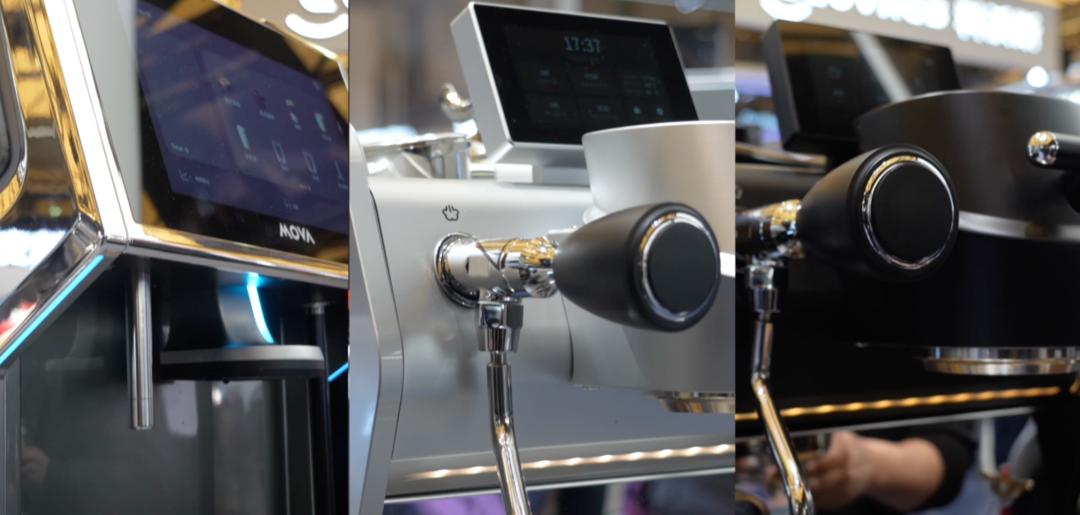
Although these product forms are very different, from an industrial perspective, they all point to the same direction, that is, home robots.
If kitchen appliance companies are creating kitchen systems and cleaning appliance companies are developing home robots, leading manufacturers such as Haier, Huawei, and Xiaomi are targeting the core entrance and AI scheduling center of the whole - house intelligence.
At the Haier Smart Home booth, the globally first - exhibited L4 - level intelligent home appliance Seeker series completely breaks the logic of traditional home appliances "passively executing instructions". The upgraded AI Eye 2.0 technology can independently complete the unmanned operation of full - scenario housework, upgrading single - product intelligence to a whole - house intelligent entity that can actively predict needs.
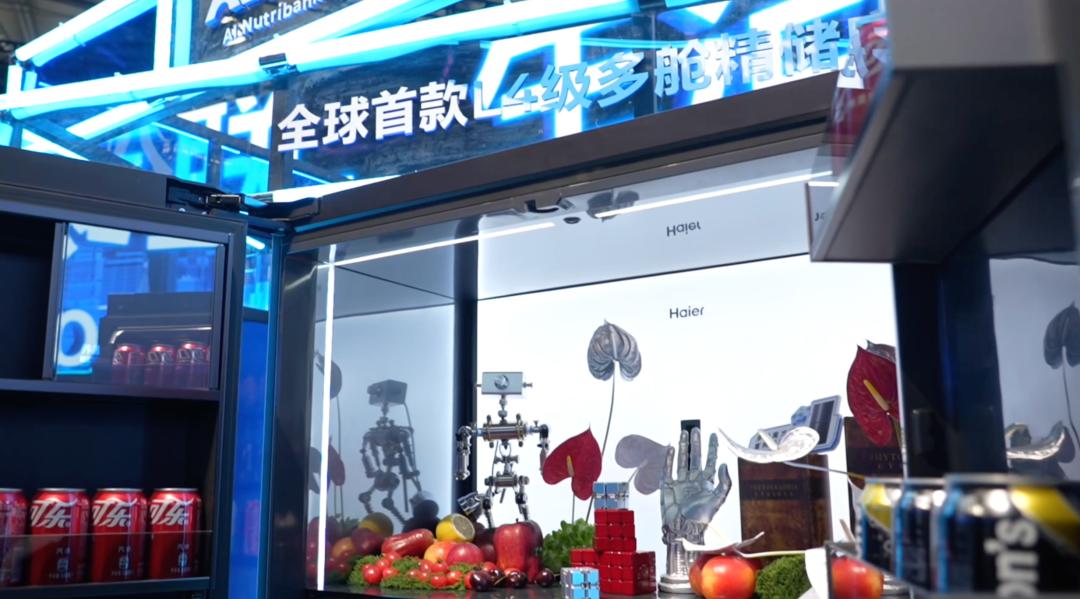
The booths of Huawei and Xiaomi present another full - scenario ecological narrative, showing a complete set of terminal ecosystems. Mobile phones, TVs, home appliances, and cars can all be incorporated into the AI system.
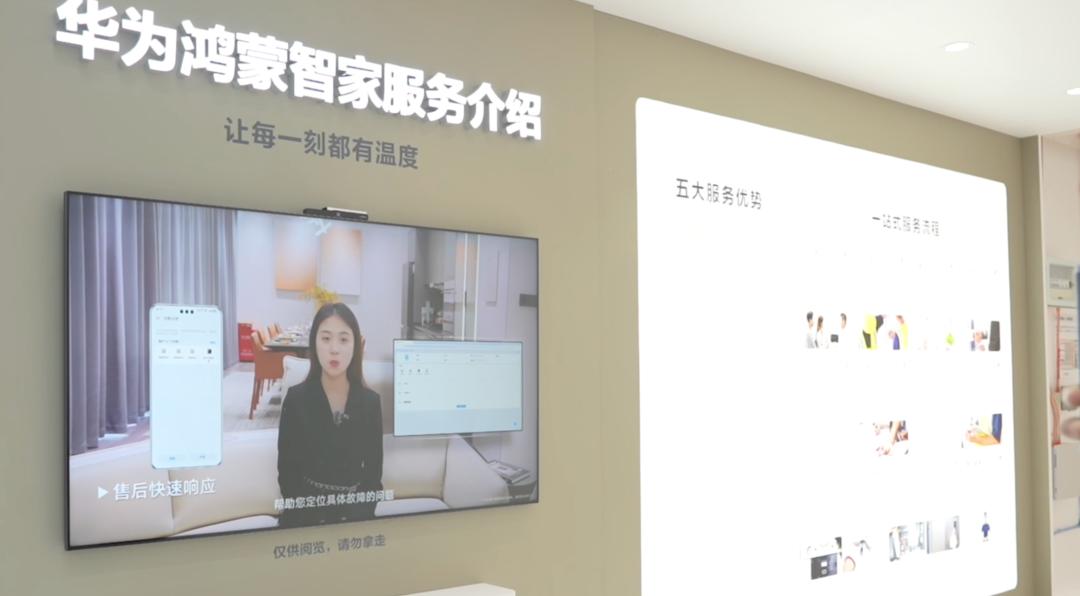
Huawei's released HarmonyOS Smart Home Xiaoyi Butler 6.0 is deeply integrated with the Pangu large model, achieving unified scheduling of more than 3,000 terminals with AI as the core;
Xiaomi demonstrated a whole - house intelligent system called Miloco. This is the first application and implementation of Xiaomi's self - developed base large model Xiaomi MiMo in the home scenario, with the goal of promoting the deep integration of AI and the physical world and becoming an important part of the home brain.
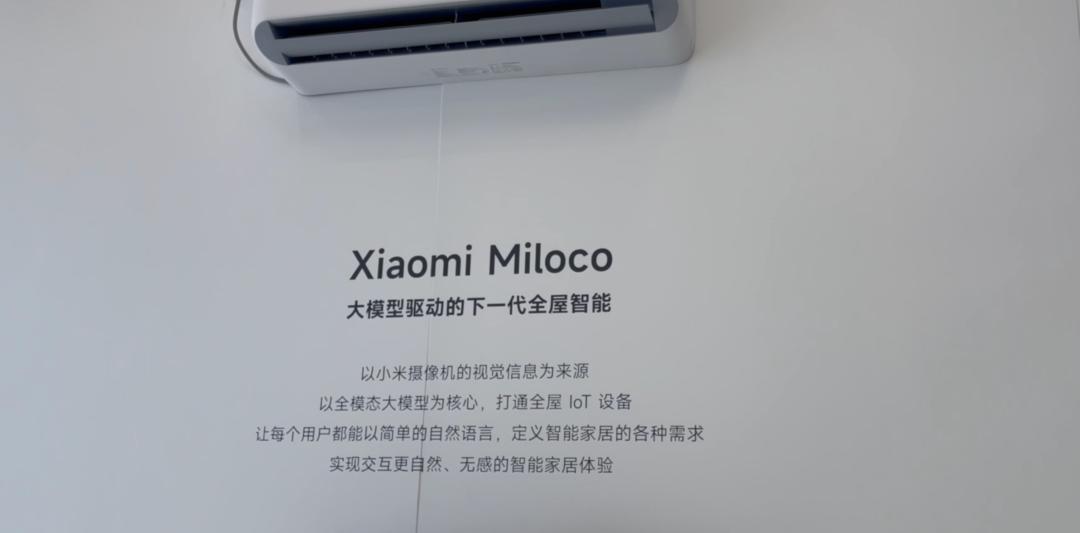
On the surface, the form of the devices doesn't change much, but in fact, the core change lies in the underlying system. It should be noted that in the past, the industry has been talking about "full - scenario interconnection", but now AI has become the scheduling core of terminals.
Generally speaking, traditional kitchen appliance companies are building AI kitchen systems; small home appliance companies such as cleaning appliance companies are implementing the prototype of home robots; full - scenario intelligent manufacturers are creating a whole - house smart ecosystem with AI as the core. These hardware devices that could only be connected to the Internet are gradually gaining "five senses" and growing "hands and feet", truly entering the physical space closest to consumers.
Consumer Hardware: The Most Suitable "Physical Container" for AI
Consumer hardware is entering a new technological cycle.
If we look at the long - term time axis, the consumer electronics industry has experienced several clear generational changes: from personal computing terminals in the PC era, to smartphones in the mobile Internet era, and then to the device interconnection stage represented by IoT and smart home. Each leap essentially corresponds to an expansion of underlying technological capabilities and a reconstruction of the relationship between humans and devices.
Now, as AI capabilities enter terminal devices, a new cycle is gradually taking shape, that is, the era of AI terminals.
The key reason for this round of change is that AI is redefining the capability boundaries of hardware. In the past few decades, the logic of home appliance products has been relatively simple, that is, humans issue instructions and devices execute tasks. Whether it's a washing machine, an air conditioner, or a floor - sweeping robot, they are essentially passive tools.
However, when AI capabilities start to enter the device itself, this logic begins to be broken. Devices can understand the environment and adjust strategies according to the situation. Floor - sweeping robots can plan routes according to the room structure; kitchen devices can recommend cooking methods according to ingredients; home systems can automatically adjust device states according to user habits. In other words, hardware is moving from "passive execution" to "active service".
At the same time, the development path of AI itself is also changing. In the past few years, the main applications of AI have remained in the digital space, such as search, recommendation, and content generation, which essentially occur within the screen. But at this year's AWE, another trend can be seen, that is, AI is starting to enter the real space, such as kitchens, cleaning equipment, and home systems.
This means that for the first time, AI is starting to enter the real world of households on a relatively large scale.
If we further analyze this change, we can find a very obvious structure. The seemingly diverse product innovations actually focus on three spaces: the kitchen, the floor, and the living room. The kitchen corresponds to operation tasks; the floor corresponds to movement tasks; and the living room undertakes interaction and scheduling functions.
These three types of spaces exactly constitute the three most basic capabilities for AI to enter the real world: operation ability, movement ability, and understanding and decision - making ability. Therefore, these consumer electronic devices closest to users are becoming the first batch of entrances for AI to land in the physical world.
Looking further along this logic, the changes in a large number of products at this year's AWE are actually converging towards the same direction, presenting the primary form of "embodied intelligence". When floor - sweeping robots start to have more complex movement methods, when automated cooking assistants appear in the kitchen, and when the whole - house system can understand user intentions and conduct cross - device collaboration, the boundary between traditional hardware and AI is rapidly disappearing.
It can be said that AI is getting a "body".
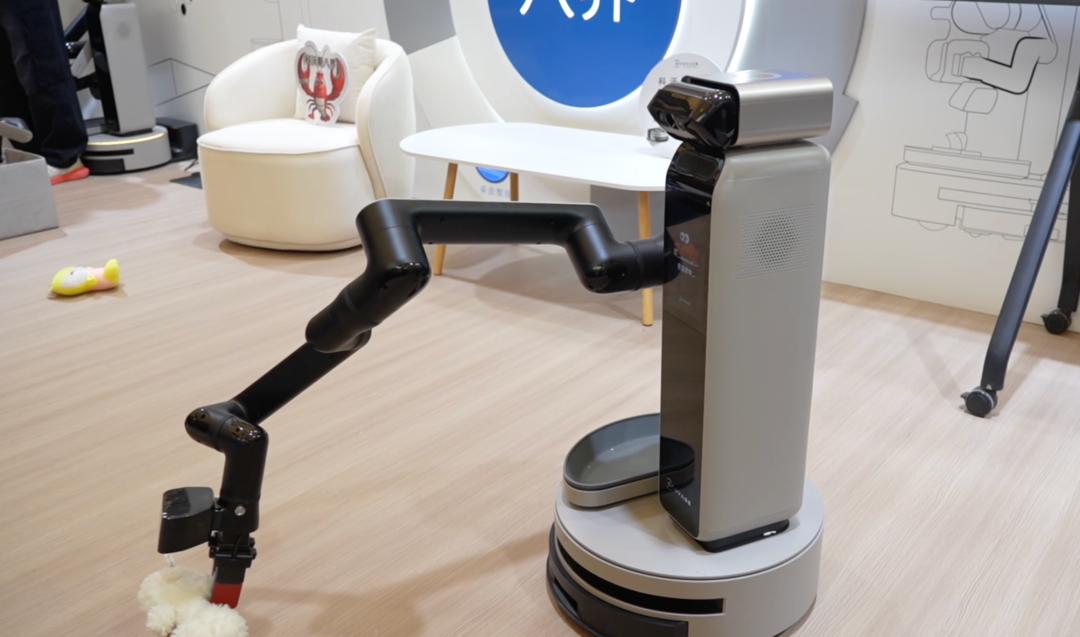
The kitchen, the floor, and the living room, which are the most basic and high - frequency scenarios in daily life, exactly form the earliest landing points of this "body". The corresponding hardware naturally becomes the most direct physical carrier of AI.
From this perspective, the changes presented at this year's AWE are not just an upgrade at the product level, but more like a clear industrial signal: AI is moving towards the physical world.
The consumer electronics industry is likely to be the first field where this process occurs and reaches a large scale. The reason is not complicated because the home scenario naturally has a large number of real and high - frequency tasks, such as cleaning, cooking, environmental control, and device management. These tasks are complex enough and have a certain degree of standardization, making the home space the most ideal and feasible test field for AI to land.
The AI - Driven New Industrial Era is Opening
What will the future AI terminal hardware look like?
Judging from the current development path, three different directions of exploration are emerging simultaneously in the consumer electronics industry.
The first is the space - systematic route represented by kitchen appliance companies. In this path, AI will not become a separate device but will be integrated into a specific space. Kitchen systems, cleaning systems, and even air systems will gradually become complete automated modules.
Therefore, in this model, devices are no longer simply interconnected but are unified and coordinated by AI. The kitchen is no longer just a collection of multiple kitchen appliances but a cooking system that can understand ingredients, plan processes, and execute automatically. The core advantage of this route is the in - depth understanding of specific scenarios.
In contrast,