The AI migration of 800 million users: DingTalk breaks itself and creates "Wukong"
By Aikes
Just as a snake leaves faint traces in the grass and a vein runs through a long distance, there are often hidden clues and foreshadows.
Before the Spring Festival in 2026, some netizens noticed that the logo of the new headquarters building of DingTalk in Hangzhou's Future Science and Technology City had quietly changed. The iconic blue lightning was replaced by an image of the Monkey King in red and gold. The news quickly spread on social media, and some even speculated that it was a "plain business war" as DingTalk didn't want to be "inferior" to the logo of its opposite competitor. DingTalk remained silent on this matter.
It wasn't until March 16th that a corner of the mystery was finally revealed. Alibaba announced the official establishment of the Alibaba Token Hub (ATH) Business Group, led directly by CEO Wu Yongming. It coordinates Tongyi Lab, the MaaS business line, the Qianwen Division, the AI Innovation Division - and a name that had never appeared in the public eye before: the Wukong Division. An internal document shows that the Wukong Division is positioned to "build a B - end AI - native work platform and deeply integrate model capabilities into the enterprise workflow."
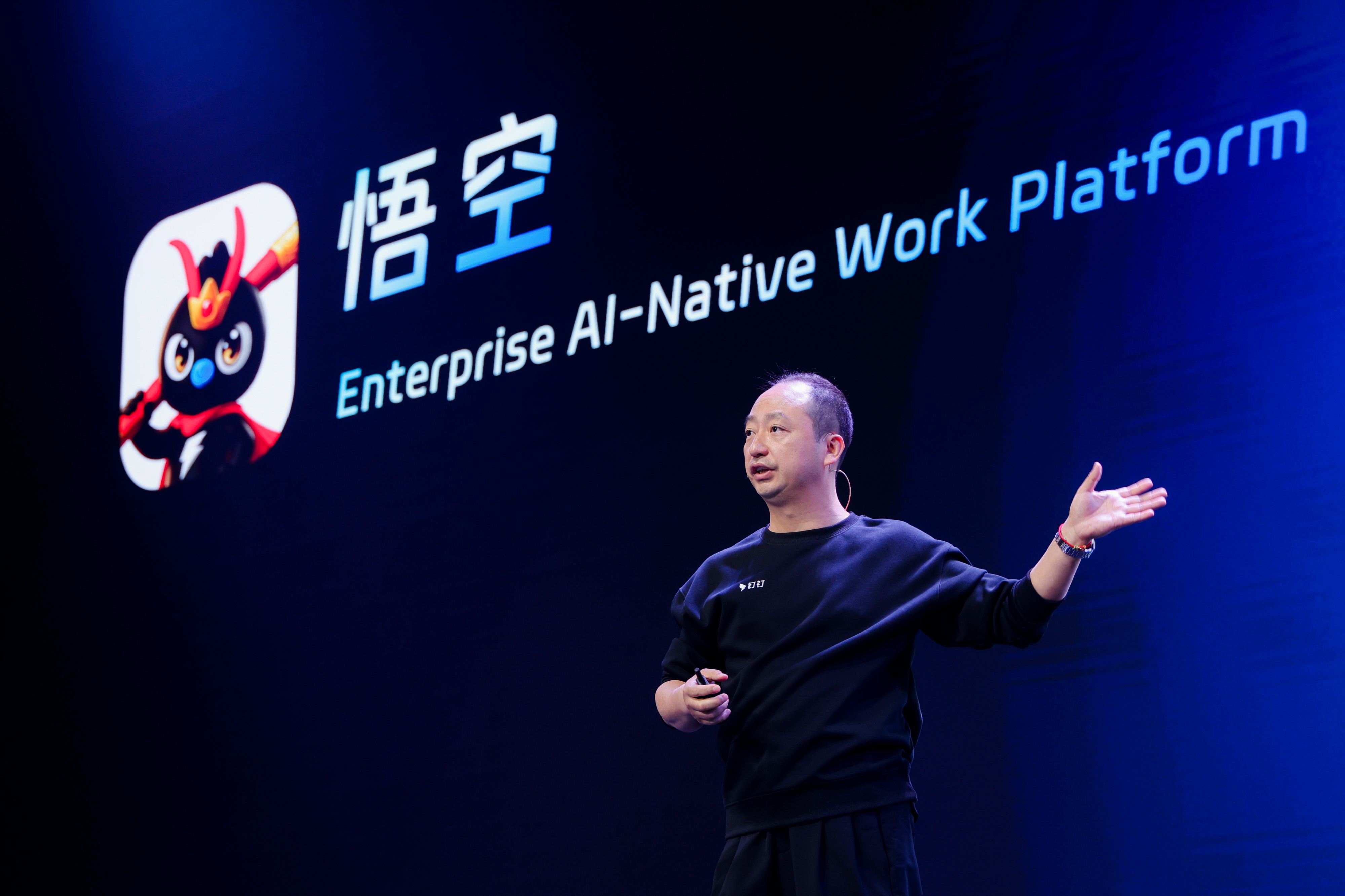
On the second day after the establishment of Alibaba Token Hub, Alibaba launched "Wukong," the world's first enterprise - level Agent platform. Wu Yongming, the CEO of Alibaba Group, appeared at the launch event of "Wukong."
This is a brand - new product that grew out of DingTalk. DingTalk, a national - level work platform with 800 million users and tens of millions of enterprise organizations, completely shattered and rewrote its underlying system to create an enterprise - level AI - native platform for the Agent era.
This is not a simple product iteration but an unprecedented AI migration.
In the history of global Internet products, no enterprise - level product of this scale has ever dared to choose self - subversion at the peak of its user scale. What DingTalk is doing this time is to reconstruct all graphical user interfaces (GUI) into command - line interfaces (CLI). This means that the AI system can bypass manual operations, directly call the enterprise's IT infrastructure, independently plan tasks, generate instructions, and dispatch the "Agent Legion" for coordinated operations.
In other words, in the past, people used software, and in the future, AI will use software. And DingTalk has chosen to be the pioneer in transforming itself into "software that AI can directly operate."
01
From Laiwang to DingTalk, and Wukong Born from DingTalk
To understand Wukong, one must first understand Chen Hang (nicknamed "Wuzhao") and the history he has experienced.
In 2013, Alibaba launched a social product called "Laiwang" to compete with WeChat, which was operated by Chen Hang. Laiwang was once highly anticipated but was defeated in the direct competition with WeChat. This history is often mentioned within Alibaba, and it is precisely this experience that has given Chen Hang a more profound understanding of "product subversion" than anyone else.
In 2014, Chen Hang led the core members of the Laiwang team and started anew in Ma Yun's apartment in Hubin Garden in a somewhat "exiled" state. They gave up the fantasy of C - end social networking and turned to the blue ocean of enterprise services, which was almost untouched at that time. DingTalk 1.0 was born, marking the enlightenment moment of China's enterprise - level SaaS. In the following 11 years, DingTalk has grown into China's leading enterprise collaboration platform.
Now, Chen Hang believes that the birth of Wukong is another rebirth of the same magnitude after the transformation from "Laiwang to DingTalk."
"In the past 11 years, DingTalk has accumulated 800 million users and tens of millions of enterprise organizations. Today, we break DingTalk apart and rebuild it with AI to create Wukong," he said at the DingTalk launch event on the 17th.
In fact, the birth of Wukong was not an overnight success. As early as August 25, 2025, at the end of the first press conference after Wuzhao's return to DingTalk, a mysterious AI hardware was not revealed. By the end of December at the Mulan version of DingTalk launch event, the mystery was solved, and the AI hardware DingTalk Real was introduced. In Chen Hang's vision at that time, this was an operating environment for enterprise AI agents.
"Actually, what was installed in Real at that time was 'Lobster'," Chen Hang said at the speech on the 17th.
At the Mulan version of DingTalk launch event at the end of December, Chen Hang made two important announcements: he announced DingTalk's new positioning - Agent OS, the world's first work - intelligent operating system built for AI, and launched the enterprise AI hardware DingTalk Real.
There was a reason for Chen Hang to name the 1.1 version "Mulan." The magnolia flower is one of the oldest known flowering plants on Earth, symbolizing primitive and powerful vitality. "The 1.1 version is the new body prototype. It's like a tadpole losing its tail and growing limbs," he used a biological metaphor to explain this change.
This metaphor is worth elaborating. In nature, the process of a tadpole turning into a frog is far more drastic than people imagine. It's not just a simple "growing up" but a complete body reconstruction. The proteins in the tadpole's body will break down through peptide chains, completely deconstructing the amino acids. The body will turn into a mass of nutrient solution under the wrapping of the skin, and then, guided by DNA, a brand - new body will be reshaped on the basis of this nutrient solution.
"In fact, DingTalk is the same," Chen Hang said. "The 1.0 version is the start - up stage, where the dissolution begins, and the team gets ready. The 1.1 version is the process of dissolving the body, and after that, the body needs to be rebuilt."
In Chen Hang's mind, the Mulan version of DingTalk is just an "intermediate state." This intermediate state is often chaotic, rough, and not very good - looking. Just like the stage when a tadpole loses its tail, it is neither a fish nor a frog. But it is precisely this seemingly "ugly" state that contains the most drastic change energy.
The Mulan version established a clear path: in the past, DingTalk was for people to use, and in the future, it will be for AI to use. Chen Hang clearly stated in a media interview at that time: "The core essence of the new - generation DingTalk is to connect AI and agents (Agents) to the physical world, and people will have fewer and fewer opportunities to directly interact with information." This path was set as early as AI DingTalk 1.1.
However, change never follows a set script.
Around the Spring Festival in 2026, the sudden emergence of OpenClaw shocked the entire technology industry. This product demonstrated another possibility for AI Agents - lighter, more flexible, and closer to users' usage habits. Its popularity disrupted the original rhythm of DingTalk's team's plan for the Agent OS architecture and Real hardware deployment.
But the answer provided by OpenClaw is incomplete. In Chen Hang's view, it is even "irresponsible." "We've always been thinking about how to put the lobster in the box and prevent it from running wild. Now, Wukong is here to subdue the shrimp soldiers and crab generals," he said.
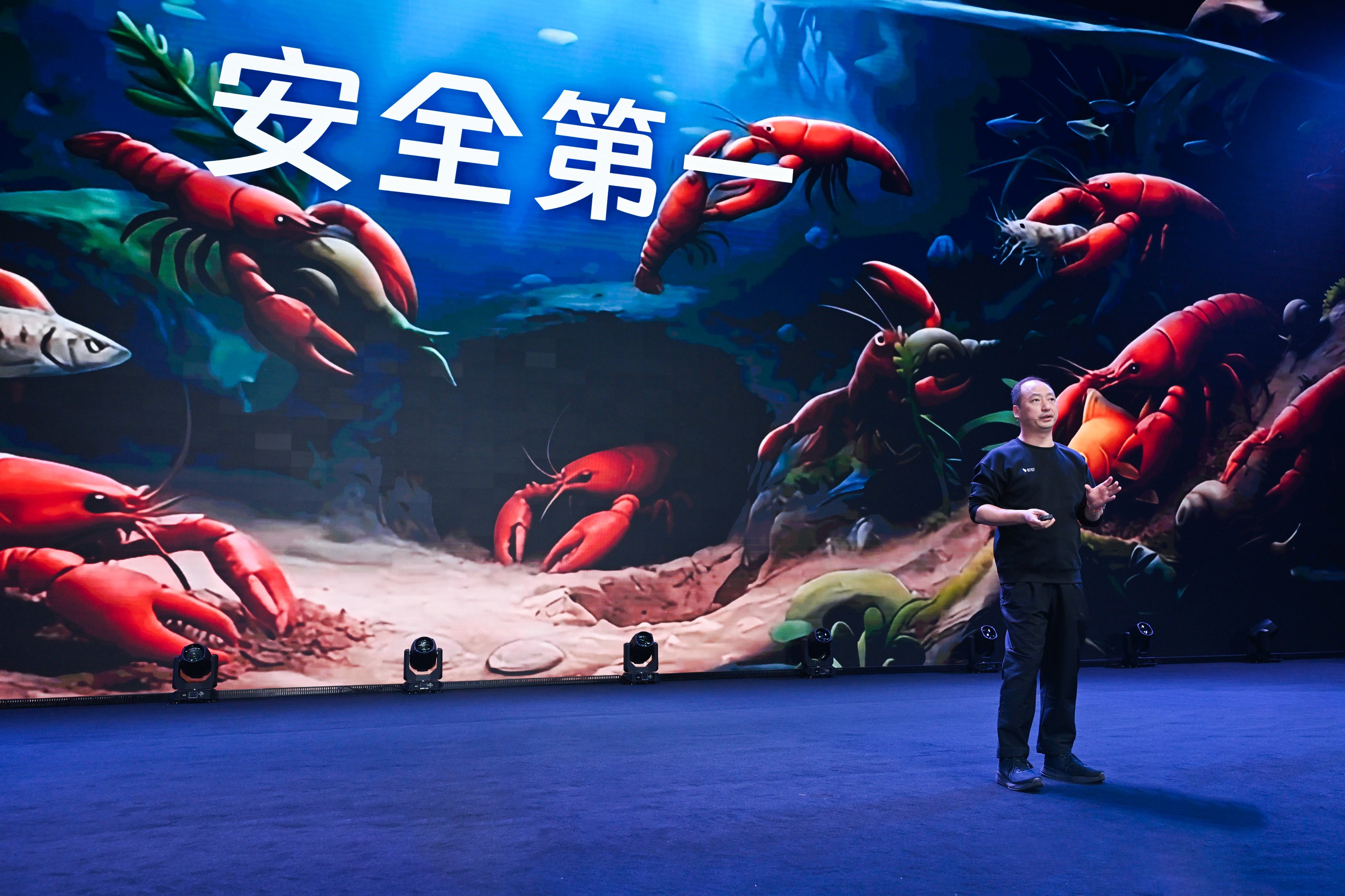
Although OpenClaw performs well in personal scenarios, it has never solved a key problem: enterprise - level security and controllability.
In an enterprise environment, AI Agents need to access sensitive business data, perform key operations involving funds and personnel, and comply with complex permission systems and compliance requirements. A freely running Agent without a sense of boundaries is not an empowerment but a risk for enterprises.
This is precisely where DingTalk's moat lies after 11 years of accumulation. DingTalk naturally has the enterprise's organizational structure, permission system, approval process, and data assets. It knows who each employee is, what they can do, and what they can't do. When an AI Agent needs to run within an enterprise, there is no more suitable "runtime environment" than DingTalk.
02
After Qianwen, the New Map of Alibaba's AI
It's worth noting that the name "Wukong" has extremely rich metaphorical space in the Chinese context. The Monkey King, who was born from a stone, represents a subversive birth; his 72 transformations mean the ability to adapt and change infinitely; and the background of "making havoc in Heaven" points to an impact on the existing order.
An interesting detail is that there are actually two logos, DingTalk and Wukong, on the DingTalk headquarters building. "DingTalk" faces west, representing the journey to "obtain scriptures," while Wukong faces east, representing the return from the journey to obtain scriptures.
What exactly is Wukong? In one sentence, it is the world's first enterprise - level AI - native work platform. It is an enterprise - level, more secure, and commercially deliverable AI - native work platform. After its official launch, Wukong can connect to platforms such as DingTalk, Slack, and WeChat. DingTalk users can also use the Wukong Agent embedded in the latest version of DingTalk.
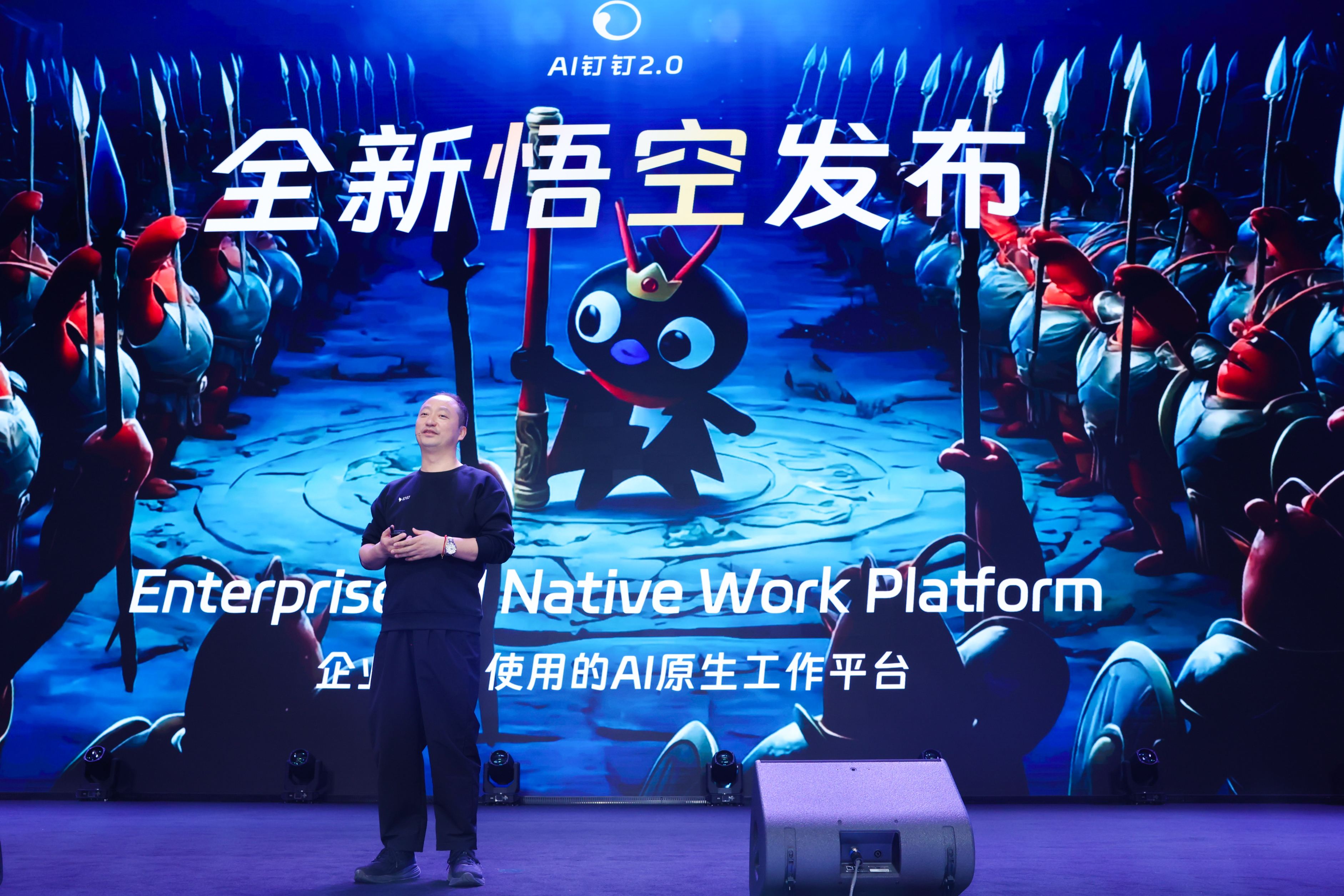
To create Wukong, DingTalk rewrote its underlying code and fully CLI - ized (Command - line Interface) to ensure that all capabilities can be called and operated by AI.
The interaction logic of traditional enterprise software is: people - GUI (Graphical User Interface) - system. People complete work by clicking, filling in forms, and approving. What Wukong aims to do is to transform this chain into: AI Agent - CLI/API - system. AI directly calls, and people only need to input their intentions.
Take a specific example: A company needs to develop and launch a new application. In the traditional process, this requires product managers to write requirements, engineers to write code, testers to accept, and operators to deploy, which may take weeks or even months. With Wukong, it can directly connect to the Alibaba Cloud CLI interface and independently link the entire process from code writing, database deployment, environment testing to application launch, compressing the original weeks - long workload into a few hours.
If we raise our perspective from the product level to the industrial level, the significance of Wukong goes far beyond the evolution of DingTalk itself.
The establishment of the ATH Business Group on March 16th reveals Alibaba's latest thinking on its AI strategy. In this new organization with the core goal of "creating tokens, delivering tokens, and activating token applications," the Wukong Division is entrusted with the mission of "building a B - end AI - native work platform and deeply integrating model capabilities into the enterprise workflow."
This means that in Alibaba's AI map, Wukong occupies an extremely crucial ecological niche. After Qianwen App broke through in the consumer market, Wukong is the next tough battle that Alibaba is fighting in the enterprise market. If Qianwen solves the problem of "letting everyone use AI," then Wukong aims to solve the problem of "letting every enterprise use AI well."
For Alibaba Group, the combination of DingTalk and Wukong validates the start of a new flywheel: "Agent autonomous operation + MaaS base + cloud resource consumption." As enterprises deploy more and more AI Agents on Wukong, the computing power and model calls consumed by these Agents will be directly converted into the revenue of Alibaba Cloud and Tongyi's large - scale models. This is a more imaginative business model than traditional SaaS subscriptions.
03
The New Era of toB: A Large Ecosystem and Great Opportunities
In the internal discussions of DingTalk, some compared the position of Wukong to "DingTalk in 2015." In that year, DingTalk opened a door to the Chinese toB market in a completely unpromising track. Now, Wukong is going to open the door to enterprise services in the Agent era.
In the past forty years, the paradigm of enterprise software has experienced multiple leaps from mainframes to PCs, from local deployment to cloud - based SaaS. Each leap has redefined the meaning of the "entrance." In the PC era, the entrance was Windows; in the cloud era, it was the browser; in the mobile era, it was the super - app. In the AI Agent era, the entrance will be a platform capable of hosting Agent operations.
Whoever has the largest enterprise user base, the most complete organizational data, and the most abundant business scenarios is likely to become the largest traffic entrance in this era. Measured by this standard, DingTalk, with 800 million users and tens of millions of enterprise organizations, is undoubtedly one of the strong competitors.
But Wukong's ambition goes further. It is understood that the Skills of B - end business capabilities of Alibaba Group's Taobao, Tmall, 1688, Alipay, Alibaba Cloud, etc. will be gradually connected to Wukong. This means that Wukong is not only an operating environment for AI Agents but also a super - hub connecting Alibaba's entire - domain business capabilities. Enterprises can not only encapsulate their internal workflows into AI skill packages and build their own digital barriers but also conduct commercial distribution in the Wukong AI market, aiming to form the world's largest toB work skill market and entrance.
This ecological concept has already had specific implementation scenarios. Take the e - commerce scenario as an example. Wukong can autonomously perform complex tasks such as generating product detail pages and managing operation data for Taobao stores. These capabilities were previously scattered in different tools and teams, and now they are integrated by Wukong in the form of Skills.
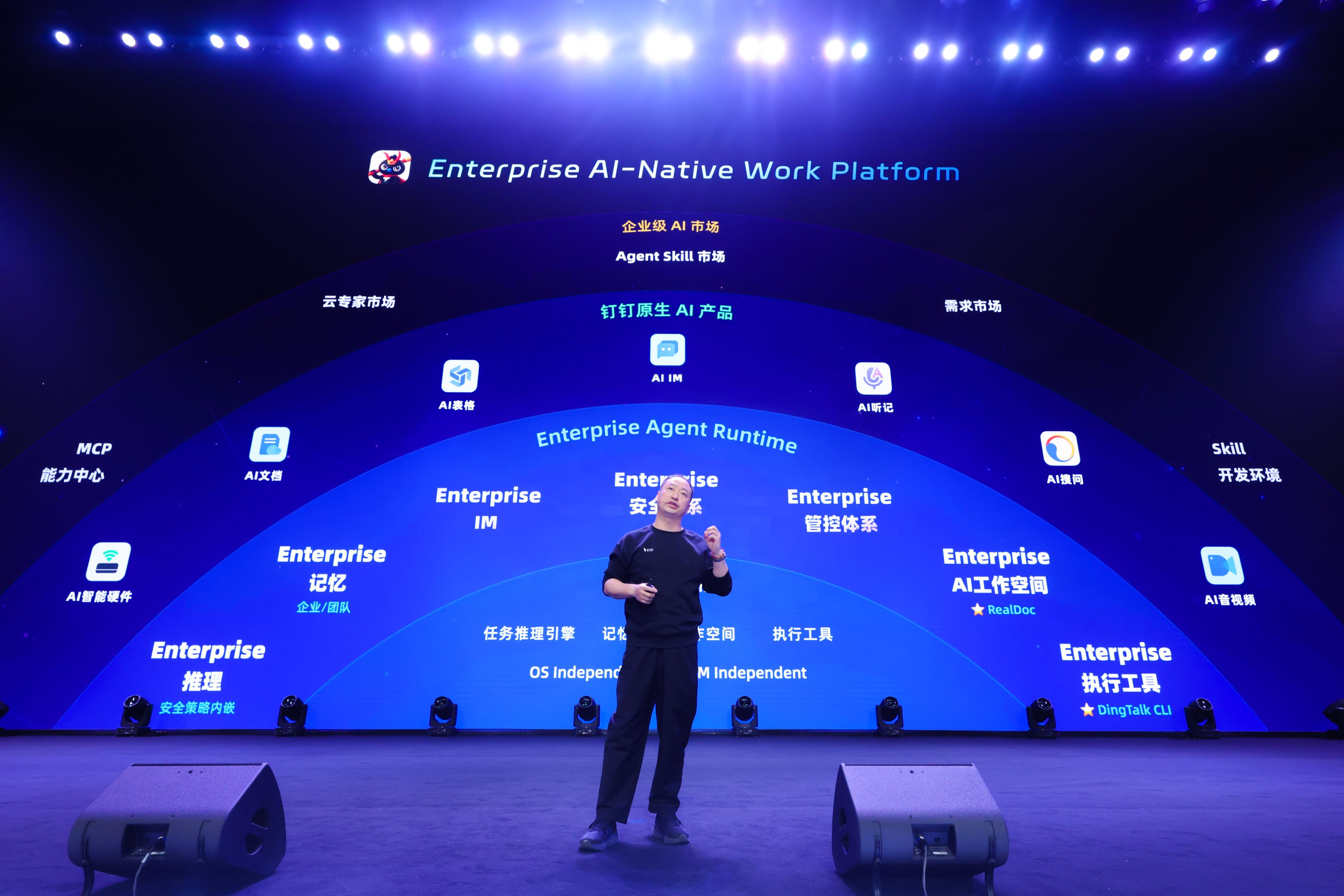
In other words, Wukong is not just building a product but an enterprise service ecosystem centered around AI Agents. When Alibaba's business infrastructure is atomized and made callable in the form of Skills, and when enterprises' own workflows are also encapsulated into reusable AI skill packages, an unprecedented toB application market is taking shape. This may be a more subversive platform opportunity than the App Store because what it trades is not software but "work ability" itself.
When all enterprise service providers, SaaS companies, and developers can encapsulate their capabilities on Wukong to form the world's largest toB work skill market, if this logic holds, the impact will be subversive. Traditional software companies that used to rely on ERP, OA, and HR systems will face a difficult choice: either migrate to Wukong and atomize their capabilities into Skills, or gradually be marginalized in the era of Agent scheduling.
History never repeats itself simply, but it always rhymes.
In 2015, Chen Hang rebuilt from