AWE2026 Concludes: On the Eve of AI "Awakening", Who is Defining the Future?
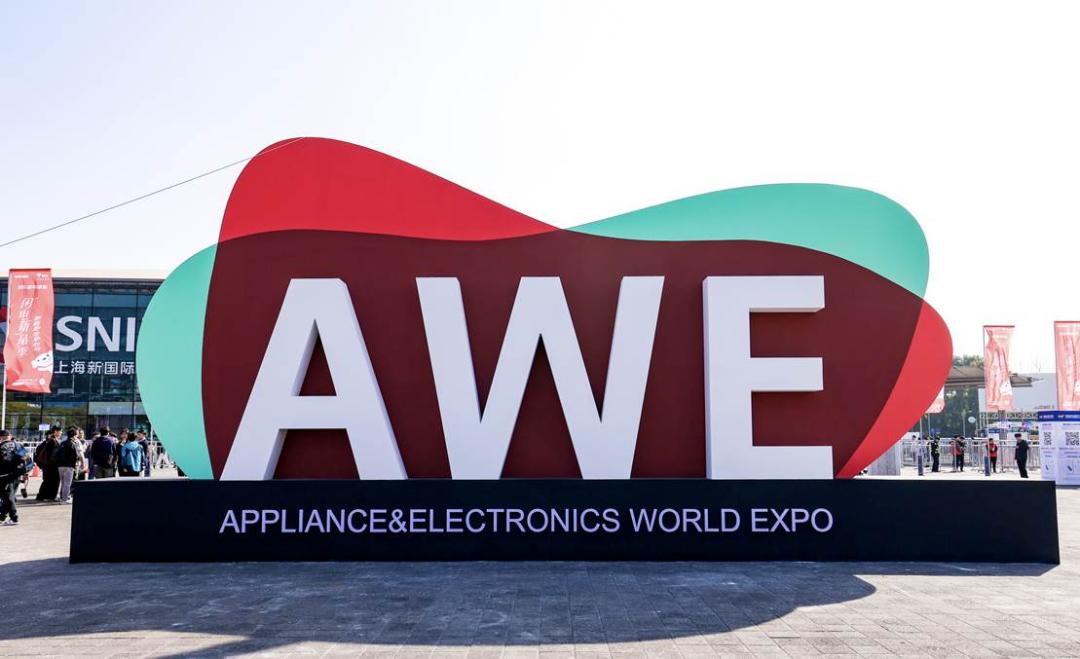
AWE 2026 seems to be "an origin point of intelligent civilization". The intelligent interactions scattered throughout the exhibition halls are previews of future living.
Whether it's the wheeled - legged robot from Roborock, the bionic quadruped from Dreame, or the humanoid robot from Unitree, they are no longer just simple "replacements" but "thinking" executors that can free people from repetitive labor and allow them to engage in more creative lives.
The future is here. In the era of AI "awakening", we can dance with technology and touch the infinite possibilities of a smart life in every tiny interaction.
This year's AWE can be regarded as a grand carnival about the "future home".
With an exhibition area of 170,000 square meters, over 1,200 enterprises, and more than 200,000 visitors, they jointly witnessed the largest AWE in history.
Here, the future has arrived: a vacuum cleaner robot that can climb stairs, an AI kitchen that can recognize the state of ingredients, a voice assistant that understands spatial orientation, and even an air - conditioning robot that can move and supply air indoors... AI is turning cold household appliances into warm intelligent agents.
Home appliance giants are competing to showcase their understandings and ambitions: Haier Smart Home has rented out the entire Hall N5 for ten consecutive years, systematically presenting its concept of "Level L4 intelligent home appliances"; Dreame has occupied Hall E7 with an exhibition area of over 11,000 square meters, constructing a giant closed - loop spanning "vehicles, people, homes, the sky, and chips"; Fangtai and Robam, one uses robots to achieve "unmanned cooking", and the other reconstructs "human - machine co - kitchen" with AI glasses...
Amid the excitement, there is an even more important milestone approaching. On May 1st, the first set of "national standards for smart home appliances" in the Chinese home appliance industry, "Intelligent Technology Requirements and Evaluations for Smart Home Appliances" and "General Requirements for Application Scenarios of Smart Home Appliances", will be officially implemented.
Although the GB/T standards are not legally mandatory, they provide an industry coordinate system.
Previously, there was no unified standard in the industry to measure "intelligence". Therefore, we saw a situation of "a hundred flowers blooming and diverse opinions": Haier defined Level L4, Fangtai divided it into Levels L0 - L5, Huawei unified the language with HarmonyOS, and Dreame and Roborock pushed vacuum cleaner robots into the three - dimensional space. Each enterprise is using its own narrative logic to compete for the right to interpret "intelligence".
The introduction of the new national standards is expected to "end" this "intelligence melee". The two national standards will clearly define the meaning of "intelligence" in terms of "intelligent capabilities" and "scenario effects" and divide smart home appliances into five levels from L1 to L5 .
As Qu Zongfeng, the deputy director of the China National Household Appliance Research Institute, said when releasing the "Standardization Work Roadmap for the Smart Home Industry" at the AWE opening ceremony, in the future, intelligence will no longer be a simple stacking of functions but must be transformed into tangible value for users. Results, rather than parameters, will become the only measurement standard.
In response to new challenges such as "hallucinated output" and privacy leakage brought by large models, the roadmap also proposes original technical requirements such as AI security classification and credible data specifications, fastening the seat belt for the in - depth implementation of "artificial intelligence +".
This means that those previously diverse "AI + home appliances", "smart home appliances", and "whole - home intelligence" will be put into a unified evaluation framework, and consumers will also have authoritative standards for comparison and reference.
Looking at AWE 2026 from this perspective, we will find that it is not only a stage for new product showcases but also a grand self - expression for enterprises. Each brand is trying its best to depict its vision of the future before the standards are implemented and intends to engrave the mark of "more intelligent" in users' minds.
On - site Report from AWE: Embodied Intelligence Enters Your Home
Another year of AWE has arrived. It is still crowded with people and has a high concentration of AI.
From the theme of "AI Technology, Enjoy the Future", we can feel the core of this grand event. In the 170,000 - square - meter exhibition halls, over 1,200 enterprises are translating "intelligence" into different languages of life.
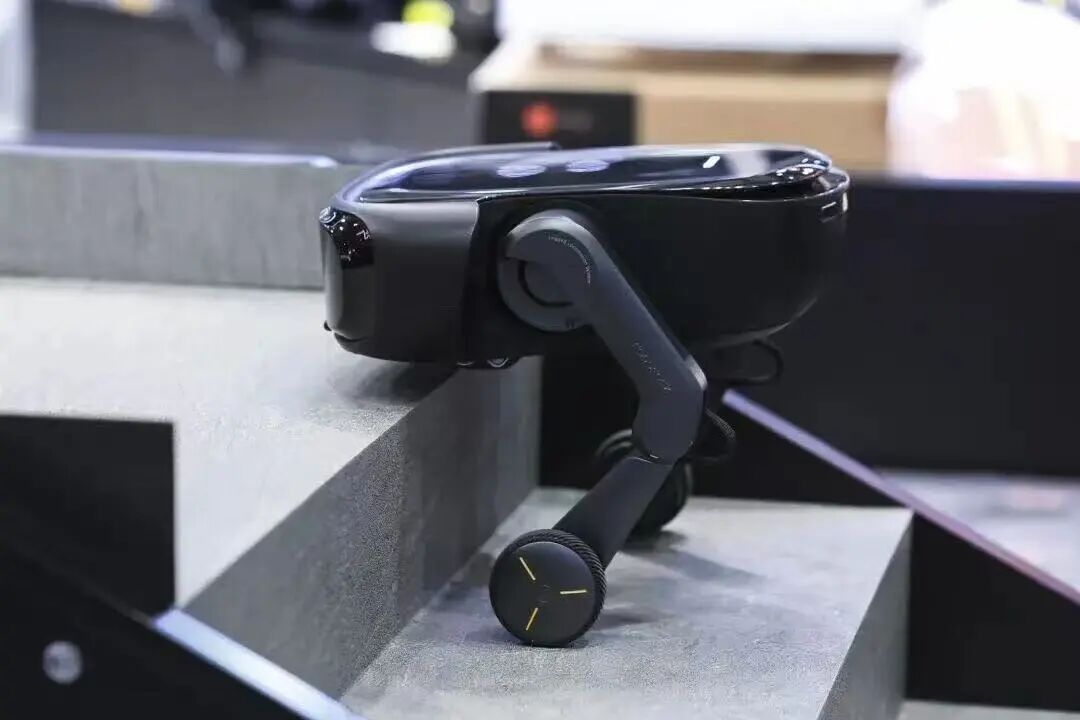
The cleaning sector can be regarded as the "battlefield" with the most concentrated cutting - edge technologies. The G - Rover exhibited by Roborock is no longer just a vacuum cleaner robot that "runs on the ground". It is equipped with a structure similar to legs, allowing it to climb stairs, cross steps, and traverse slopes, attempting to extend its cleaning ability from a flat surface to a three - dimensional space like a duplex house.
The G30 Space Exploration Edition displayed at the same venue is like a "storage butler". Its 5 - axis folding bionic manipulator can recognize small items such as socks and grab them into the storage box.
Ecovacs exhibited its first butler robot "Bajie" equipped with the "Crayfish" system and the bionic companion robot "Maotuaner", aiming to transform robots from "cleaning tools" to "home assistants" and even "emotional partners".
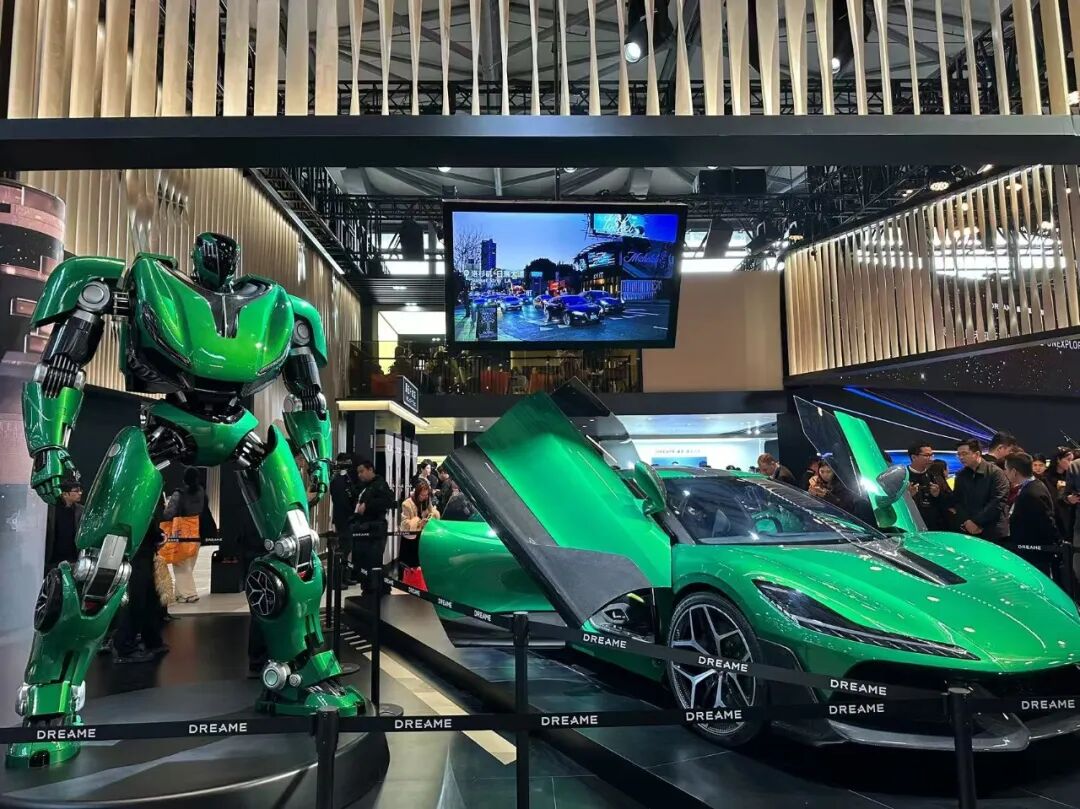
Dreame rented out the entire Hall E7 to showcase its "cleaning universe". The newly released Cyber X adopts a dual - modal adaptive chassis: it uses wheels to move on the ground and switches to bionic quadruped climbing when encountering steps; the H15 Pro Heat floor washer can clean the floor with 85°C hot water and deeply clean the roller brush with 100°C boiling water during self - cleaning.
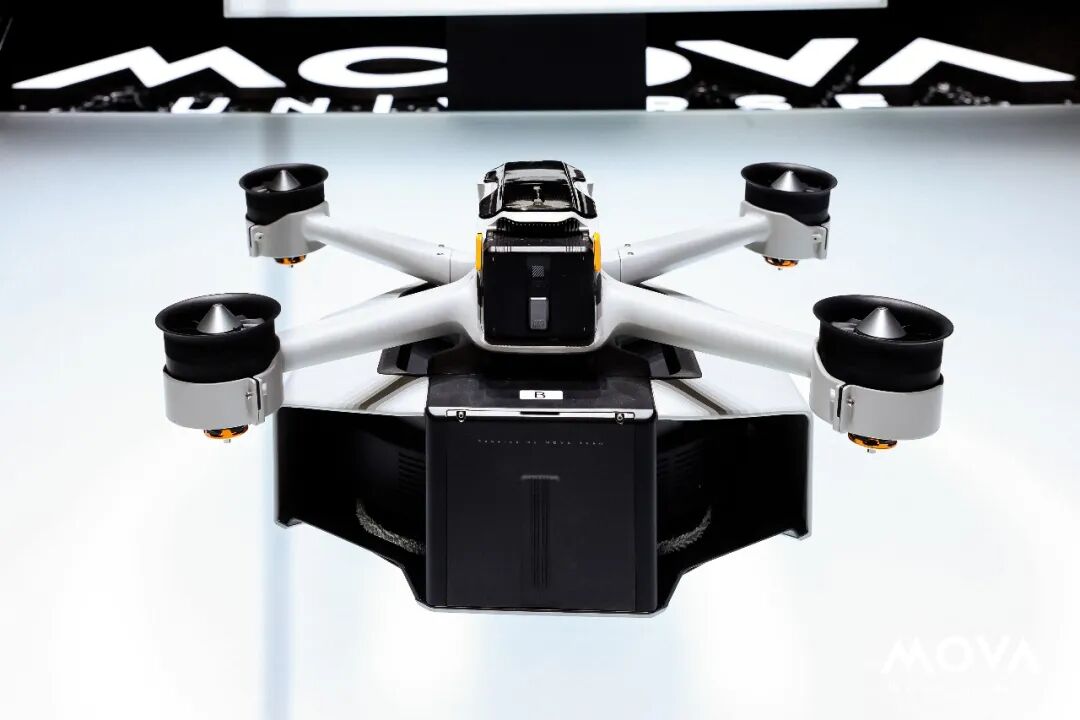
The most science - fiction - like scene comes from the Pilot 70 of MOVA, which is a "flying vacuum cleaner robot". It is connected to a commercial - grade drone power system and can cross floors through flight hoisting, covering traditional cleaning dead corners such as the top of a sunroom. During the on - site demonstration, the device slowly rose from the ground and hovered about one meter above the exhibition stand. The rotating cleaning module started to handle the simulated ceiling, and almost all the onlookers simultaneously took out their mobile phones.
The Omphalos air purifier next to it is also eye - catching. It will actively "follow people". When the staff moved back and forth at the exhibition stand, the device slowly turned, always aiming the air outlet at the human body.
The home appliance giant Fangtai directly brought the "future kitchen" to the exhibition hall. The high - precision robotic arm is responsible for stir - frying, and the humanoid robot completes tasks such as picking vegetables, arranging dishes, and cleaning. The two sets of devices work in collaboration, forming a complete process from preparing ingredients to washing dishes. The action of the robotic arm turning the wok was deliberately adjusted to be softer, giving a sense of "life".
The folding and invisible range hood is almost attached to the ceiling when not in use, and the "Sentry Stove" is equipped with a human - sensing radar. The fire automatically goes out when the cookware leaves the stove.
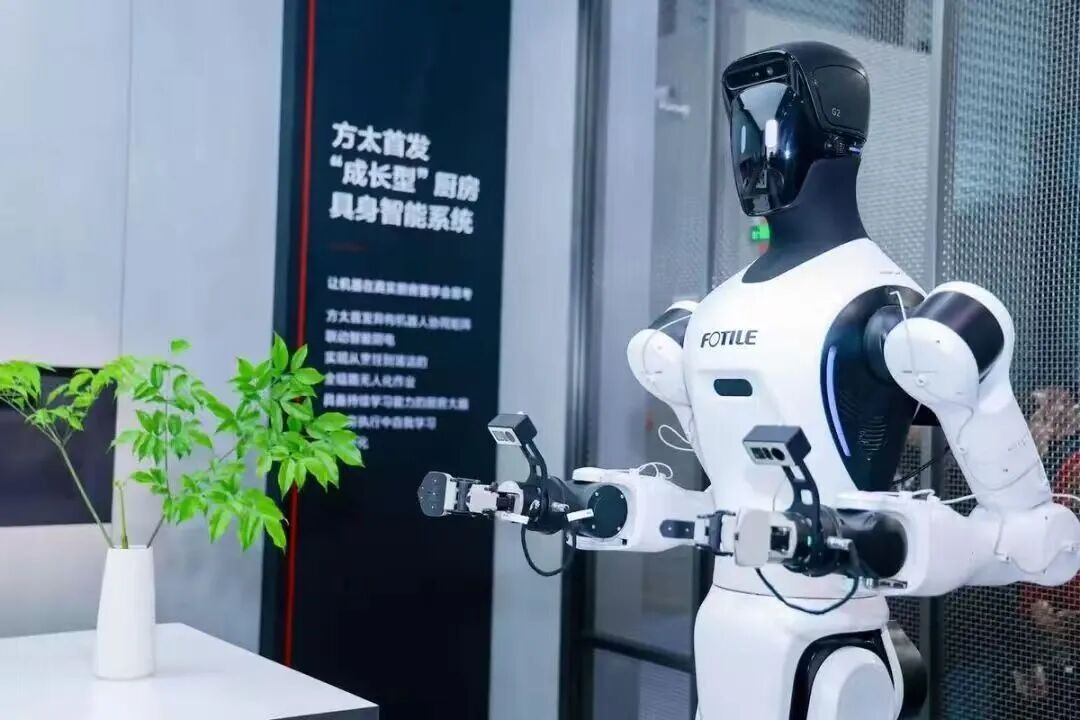
Robam put AI into a pair of cooking glasses. When you wear the glasses and face the stove, prompts such as "It's time to add salt" and "5 milliliters of soy sauce" will appear in real - time on the edge of the lens. The Food God large model it is equipped with can understand cooking logic and learn your taste.
The ecological player Huawei HarmonyOS Smart Home divided the 3,200 - square - meter area into eight experience zones, including lighting, air, and sleep. A staff member stood in the middle of the room and said, "Execute the relaxation scenario." The lights turned warm yellow, the air conditioner was adjusted to 26 degrees, and music started to play. The whole process took about three seconds. In the "3D orientation lighting control" demonstration, when the user described the position instead of naming the device, the corresponding light immediately turned on.
Haier has rented out Hall N5 for ten consecutive years. This year's theme is "AI Life, Boundless Evolution". Inside the hall is a 1:1 restored home space. The core product is the Seeker smart appliance suite, which is equipped with the AI Eye 2.0 technology and is known as the world's first set of Level L4 intelligent home appliance systems certified by a third party. In the simulated kitchen, the "Haiwa" household robot moves ingredients between countertops, and the range hood automatically adjusts the firepower after the water boils.
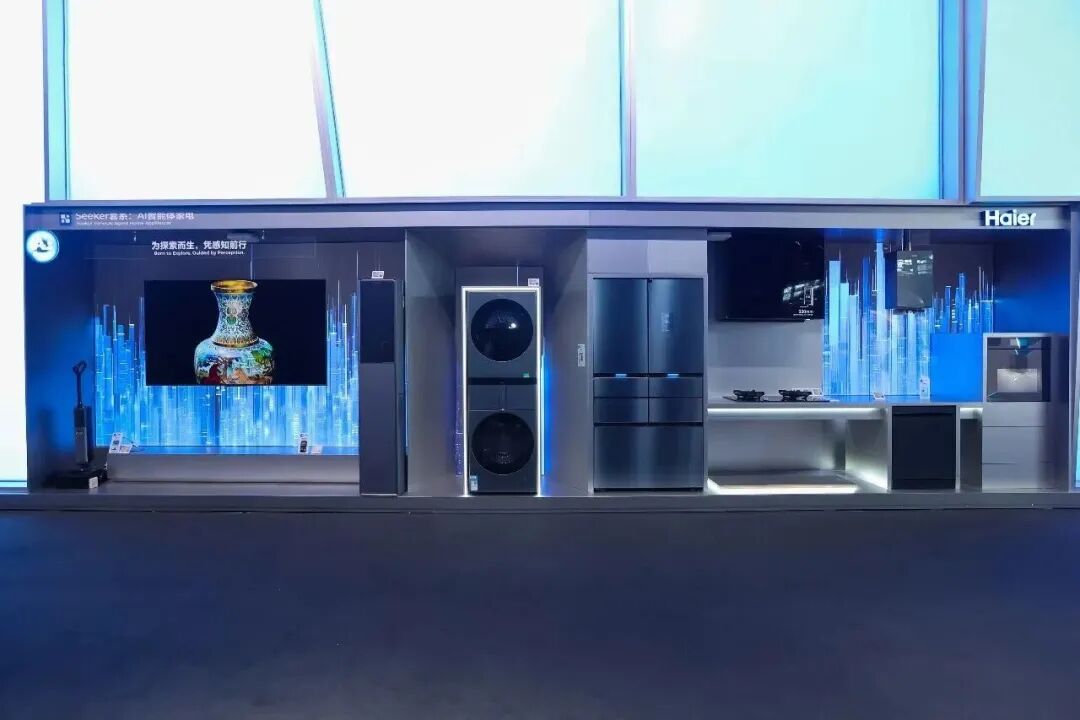
Scenes such as robotic arms stir - frying, humanoid robots boxing, and AI glasses providing real - time guidance on stir - frying, which used to only appear in science - fiction movies, are now being materialized by products in the AWE exhibition halls.
Replacement or Enhancement of Humans: The "Melee" Before the Standards are Implemented
AWE is like a carnival, with new products from various companies taking turns to appear. However, behind the excitement, there is a hidden battle about the "technical yardstick", and the interpretation of "Level L4" is a typical example.
The meanings of "Level L4" in the mouths of different enterprises vary greatly. The Seeker suite released by Haier Smart Home claims to be the "world's first set of Level L4 intelligent home appliances", and the industry's first Level L4 smart home appliance certification issued by the China National Household Appliance Research Institute was also displayed on - site.
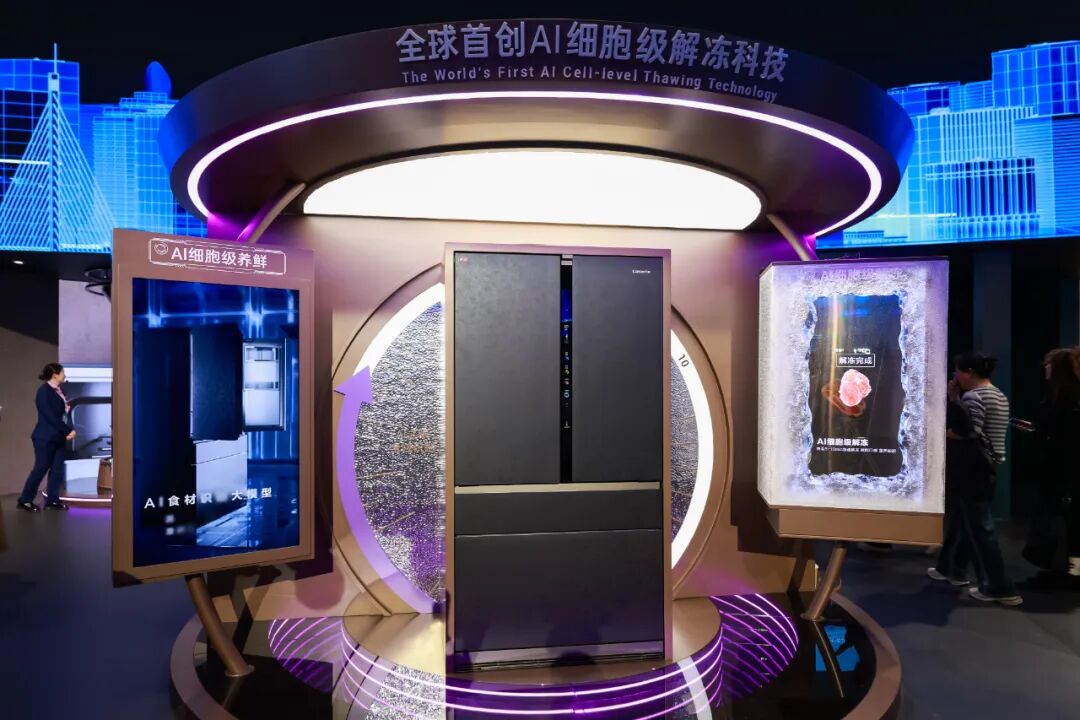
The AI Eye 2.0 is the core technical support for the Seeker suite. The Seeker refrigerator equipped with this technology can not only automatically recognize all the ingredients put into it and match the appropriate preservation mode but also issue real - time instructions to other devices in the suite through the smart home brain, such as linking the oven to preheat, adjusting the suction of the range hood, and planning the program for the dishwasher, all without human intervention. Haier's Level L4 emphasizes "the capabilities that can be demonstrated and verified today".
Fangtai has a completely different time frame. Its "AI fully - managed smart kitchen" jointly developed with the Zhejiang Humanoid Robot Innovation Center divides the intelligent level into L1 to L5, where L5 is the ultimate form of "AI full management". Currently, Fangtai self - assesses that it is still at Level L2 and expects to reach Level L4 in 3 - 5 years.
Both companies are talking about Level L4, but one is "available today" and the other is a "future vision". This "confusion" is exactly what the new national standards are trying to end.
A deeper divergence stems from the redefinition of ecological sovereignty. During AWE, the interconnection standards formulated by the Ministry of Industry and Information Technology were repeatedly mentioned, which is regarded as a crucial step in breaking the "fragmentation" of smart home enterprises. Before this, different enterprises had taken different paths.
Huawei wants to be the maker of connection standards. Its HarmonyOS Smart Home has brought together more than 3,000 brands, and the Xiaoyi Butler supports spatial perception interactions such as "3D orientation lighting control". The goal is to become the operating system of the home and control the entrance through protocols rather than hardware.
Haier bets on vertical integration. The UhomeOS platform allows partners to develop once and deploy on multiple platforms, and the access can be completed in as fast as seven days. Haier's advantage lies in that it not only has a large number of home appliance hardware but also participates in the formulation of industry standards. In the stage when the standards are not yet unified, this "hardware + platform" integration is often more efficient.
Fangtai's strategy is more flexible. Its smart kitchen is connected to multiple platforms such as HarmonyOS, Tmall Genie, and Rokid simultaneously, without betting on a single connection system. This combination of "vertical depth + horizontal compatibility" is essentially a risk hedge against the uncertainty of standards.
In comparison, Dreame's display of the "vehicle, person, home, sky, and chip" ecosystem is more radical. From vacuum cleaners to sports cars, from smartphones to satellite chips, Dreame has chosen "full - stack self - research". However, many products are still in the planning stage and have not been actually launched, and the feasibility of the ecological vision remains to be tested by time.
In this competition around technology and ecological sovereignty, there is also a more philosophical thinking with an "end - game flavor": Should AI "replace humans" or "enhance humans"?
Fangtai's cooking robot kitchen focuses on "unmanned full management". The underlying logic is that cooking as household labor should be replaced by machines; Robam's AI cooking glasses bet on "human - machine co - creation" to enhance human capabilities, and the decision - maker is still "human" itself.
The cleaning sector is the same. Roborock believes that wheeled - legged climbing can adapt to most terrains; Dreame wants to conquer stairs with bionic quadrupeds; and MOVA believes that flight hoisting is the ultimate solution for villa users. Behind these three solutions are