How powerful are single-person companies? Being acquired by a social media giant, a former Meta employee earning 2 million per month, and a post-95s entrepreneur creating 120 overseas apps.
Innovation for all, entrepreneurship for the masses.
Somehow, the wave of entrepreneurship has picked up again. However, different from the previous model where several experienced people joined forces, in the AI era, only one person is needed, namely the "one-person company".
A one-person company, as the name suggests, is a company run by a single individual. The entrepreneur acts as both the boss and the employee, as well as the product manager, the operator, the business developer, and so on.
Especially with the recent popularity of OpenClaw, it has given birth to a batch of nascent one-person companies. All one needs is an idea and a viable commercialization plan. Coding, product development, and channel operation can nominally be handed over to AI. Everyone can be a boss and have decision-making power. It seems that this has transformed from a professional aspiration into a real business trend today.
Imagine, right at this moment, if you were to start a company alone and become a boss overnight, what would you do?
One person, from 0 to 10 million
In fact, overseas, there are already many successful cases of the "one-person company" model.
For example, the dating app Plenty of Fish (hereinafter referred to as POF) was independently developed and operated by its founder Markus Frind for nearly five years before being acquired by Match Group.
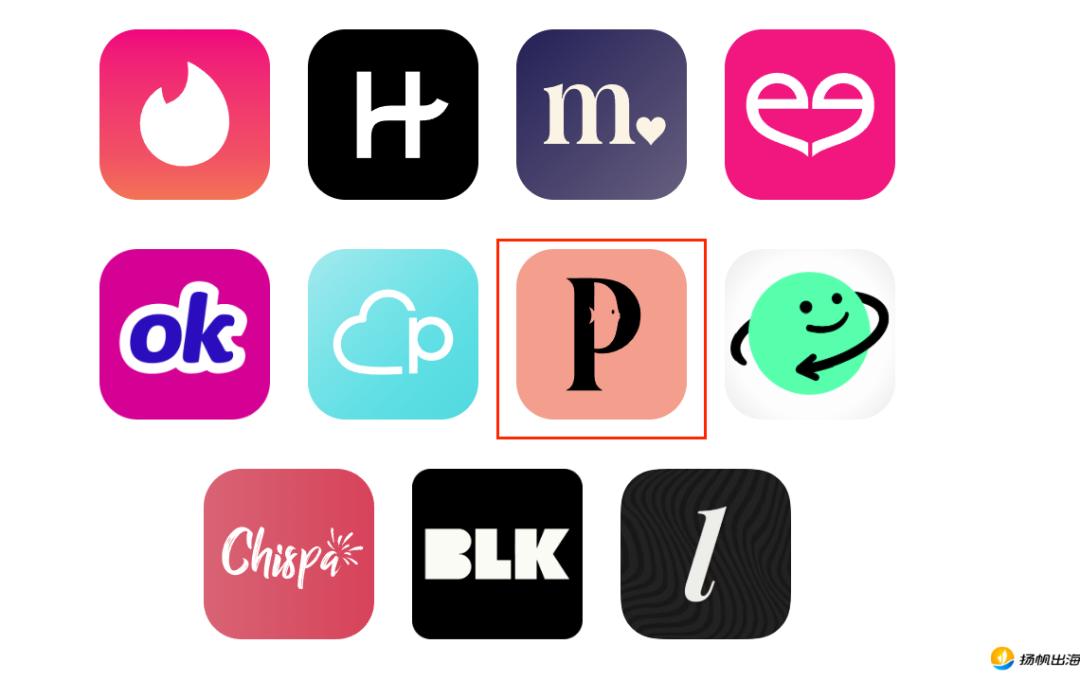
Product matrix under Match Group. Image source: Match Group official website
In 2003, Markus Frind created POF all by himself. At that time, it was just a rudimentary website (pof.com), with no partners, no financing, and no employees, and was completely self-operated. While competitors like Match.com were still adopting the "paid subscription" model and had hundreds of employees, POF chose to be completely free. This "innovation" enabled it to achieve viral growth through word-of-mouth with almost no promotion expenses.
A year later, the website started to make a profit, and Markus Frind quit his full-time job to operate the product from his home in Vancouver full-time. By optimizing the code, he made the website run on very few servers. If a task needed to be repeated daily, he would write a piece of code to automate it.
Different from many entrepreneurs who work day and night to optimize their products, Markus Frind once publicly stated that he only works 1 - 2 hours a day and believes that busyness is a sign of "poor management". In an era when AI was not yet popular, relying entirely on automation and algorithms, he minimized the operating costs. This seemingly "leisurely" way of entrepreneurship brought him great commercial value.
In 2006, Markus Frind posted a $900,000 Google advertising check online, which was the settlement amount for two months of the product. In 2008, he told The New York Times that POF's net profit had reached the tens of millions of dollars level.
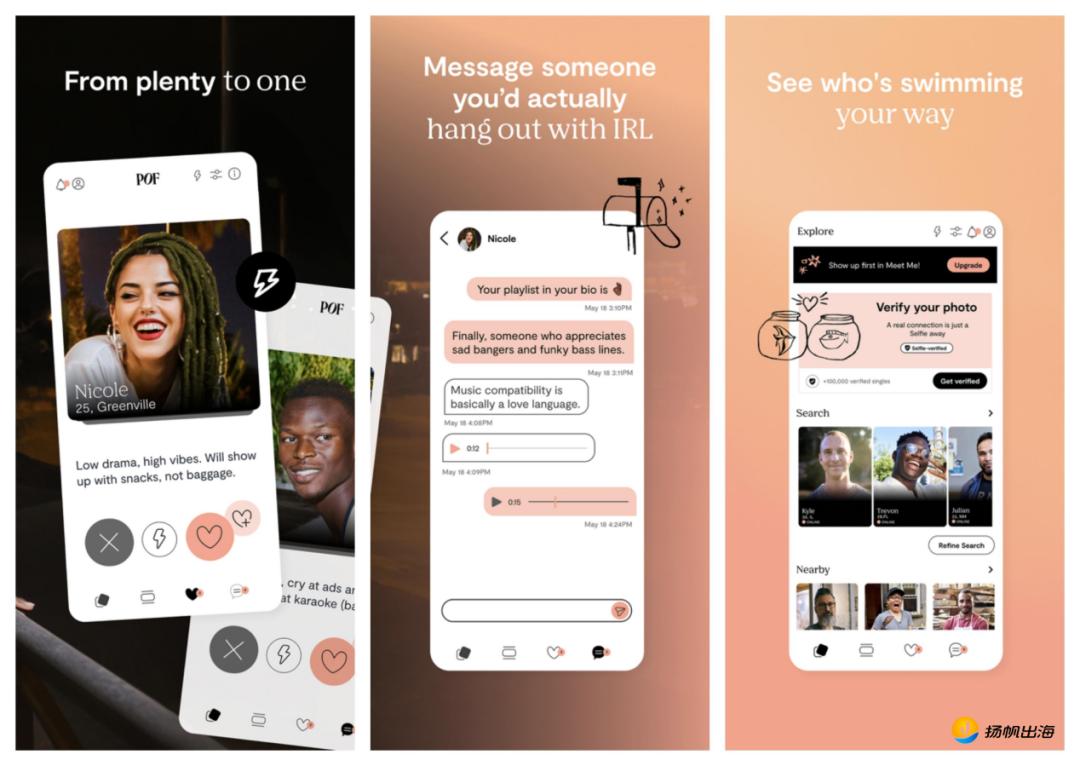
(POF app page. Image source: Diandian Data)
In less than five years, from 0 to 10 million, with only one person.
In 2008, he started to recruit employees in Vancouver, officially ending the "one-person company" model. In 2015, POF was acquired by Match Group for $575 million. It's worth noting that until the acquisition, POF only had 75 employees, and the equity structure of the company remained unchanged. There was no external investment and no equity dilution. Markus Frind held 100% of the company's shares, and the acquisition money all went to him.
To this day, POF still belongs to the first echelon among Match Group's various social product matrix. Diandian Data shows that the product's daily revenue still remains at around $65,000, and it has a high brand influence in the European and American markets.

(POF's global daily revenue from January 1, 2026, to March 8, 2026. Image source: Diandian Data)
Use AI to expand business overseas
More than 20 years ago, Markus Frind single-handedly created a popular social app. Now, with technological upgrades and the wave of AI sweeping across, one-person companies can not only achieve local operations but also go global and move towards a broader market.
Recently, the Hangzhou Political Consultative Conference website reported that Zhang San, a man born in Hangzhou in 1997 who graduated from a vocational high school, started using AI last August to mass-produce APPs for the overseas market, forming an "assembly line". He launched more than 120 apps in five months, and 90% of them had paid conversions, making it a reality for one-person companies to go overseas.
When it comes to "one-person companies", many people think of creating a product. Especially nowadays, the threshold for creating a website or an APP has been significantly lowered by AI. People with a little technical background can create one in half an hour, and even complete beginners can create a simple demo in a week after learning.
So, besides apps, what else can a one-person company do?
Another one-person company in Hangzhou engaged in overseas business provides new ideas. According to public information, the founder is Wu Peiwen, a former Meta employee with 8 years of cross-border marketing experience and familiar with overseas platform rules and traffic.
Based on his previous work experience, he provides full-process AI marketing services for small and medium-sized cross-border brands, including intelligent advertising placement and optimization, multi-language generation, user analysis and data review, 7×24h automatic customer service, etc. The overall automation rate exceeds 90%. Human intervention is only required for determining the direction, breaking down tasks and putting forward requirements for AI, as well as reviewing, optimizing, and accepting the results.
The unit price of this AI marketing service is between $3,000 - $5,000, and the monthly cost can be controlled between 3,000 - 8,000 RMB, mainly for AI tool calls and cloud service fees. Currently, the company's monthly revenue is about 2 million RMB, 90% of which comes from 15 long-term and stable customers, and the net profit rate exceeds 65%.
One is a young entrepreneur without a high education or a glamorous background, and the other is a "veteran in the industry" with a big company resume, resources, and technology. Both are in Hangzhou, targeting the overseas market, and have realized their entrepreneurial visions of "one-person companies" with the help of AI.
Although the former's mass production may not have stable long-term income and is a bit of a "quantity over quality" approach, gambling on a few successful ones; the latter requires a large amount of experience and resource accumulation, and it's difficult to directly replicate the model. However, their common ideas of light assets, high automation, and standardized processes during the solo entrepreneurship process are the key points worthy of attention.
One-person companies are reshaping the workplace
It's often said that entrepreneurship depends on the right time, place, and people. A person at the right time may create a product that is not perfect but still make a mark. So, in the current wave of one-person companies, should you "get on board"?
First of all, the obvious advantages of a "one-person" company, as can be seen from the above cases, are, on the one hand, low costs. Here, the costs not only refer to the rent of the office space and the costs saved by AI automation processes but also the communication and time costs of internal collaboration compared to multi-person companies. Instead, it's efficient collaboration between humans and machines.
On the other hand, it allows for trial and error. If one idea doesn't work, you can try another. The decision-making power is completely in the hands of the individual, which is much easier than in a partnership where changing ideas requires collective decision-making and unified thinking.
In addition, in the past six months, Jiangsu Province, Shanghai, and Shenzhen have all issued policy support for one-person companies. For example, establishing communities, providing tax incentives, offering low-cost workstations, and free accommodation, etc., to provide a friendly communication space and convenient conditions for people with ideas and creativity.

(The "Artificial Intelligence +" Action Plan of Jiangsu Province mentions support for the "one-person company" model)
However, the current policy support mainly focuses on the construction of the local innovation and entrepreneurship ecosystem. For one-person companies engaged in overseas business, problems such as localization and overseas compliance are always pain points.
Another major pain point is blind and excessive reliance on AI. Just like many people think that "raising a lobster", after continuous "training" to make it have memory and automatically execute according to the set instructions, everything will be fine. Even in most of the current one-person company cases, they rely on AI to operate, but the core "one person" is always the key to controlling the project and needs to be "above AI".
Perhaps, with the AI wave and relevant policy support, the right time has come. The current market is looking for those "right people", and the "right people" are exploring a broader market in the upsurge.
Conclusion
"You don't have to be in a group; one person can be an army." With the popularization of AI tools significantly lowering the threshold for entrepreneurship, one person can complete the entire process from product design to operation with the help of technology. It's foreseeable that in the near future, more and more people will choose to be their own bosses and pursue freedom and higher value. The one-person company represents the infinite possibilities given to individuals by the era.
This article is from the WeChat official account "YANGFAN CHUHAl", author: Zimo, editor: Huohuli. Reposted by 36Kr with authorization.