Don't be in a hurry to pronounce the death sentence on battery swapping.
In the new energy vehicle industry, once there is a breakthrough in the charging experience, battery swapping becomes the control group.
In early March, BYD released its Megawatt Flash Charging 2.0. The biggest highlight is the charging speed: it takes a minimum of 9 minutes to charge the battery from 10% to 97%. Even in an experimental environment of minus 30 degrees Celsius, it only takes more than ten minutes to charge the battery from 20% to 97%.
Although BYD benchmarked against gas stations throughout the press conference, it was NIO's battery swapping stations that took a beating on social media after the conference.
A few days later, Li Bin, the founder of NIO, was a guest on CCTV [1] and continued to support the battery swapping route: No matter how fast ultra-fast charging is, it can't be faster than battery swapping. At the same time, he considerately suggested that for the health of the battery, use slow charging instead of fast charging whenever possible.
Seemingly conflicting remarks have once again pushed BYD's flash charging and NIO's battery swapping into the spotlight.
Battery Swapping VS Flash Charging
The most core breakthrough of BYD's Megawatt Flash Charging is solving the problem of "trickle charging".
Trickle charging occurs in the final stage of battery charging. Charging is a process that starts fast and then slows down. It's very fast to charge the battery to 80%, after which it enters the trickle charging state, and the speed drops significantly. The process from 90% to "fully charged" takes a very long time.
This is related to the working principle of lithium batteries. Simply put, the movement of lithium ions from the positive electrode to the negative electrode is like people looking for parking spaces. It's easy to find a parking space when the parking lot is empty, but when 80% of the spaces are occupied, it becomes difficult to find a space.
Fast charging means that lithium ions have to move quickly from the positive electrode to the negative electrode in a very short time. When a large number of lithium ions rush in, some ions may not have time to embed into the negative electrode and instead pile up on the graphite surface. The lithium ions then turn into metallic lithium, which is the "lithium plating" phenomenon.
Over time, metallic lithium forms dendrites. Once the dendrites pierce the separator between the positive and negative electrodes, it may cause a short circuit.
Most car manufacturers measure the charging speed based on the range of "10% - 80%". This is not only due to the characteristics of lithium batteries but also to reduce battery attenuation and extend battery life.
Therefore, BYD's test benchmark from 10% to 97% only takes 9 minutes, which is highly valuable. At the same time, it only takes 5 minutes to charge from 10% to 70% (the "usable state"), which is theoretically very close to the 3 - minute level of battery swapping.
What's even more valuable is Wang Chuanfu's statement that "the flash charging of the second - generation blade battery has no impact on its lifespan".
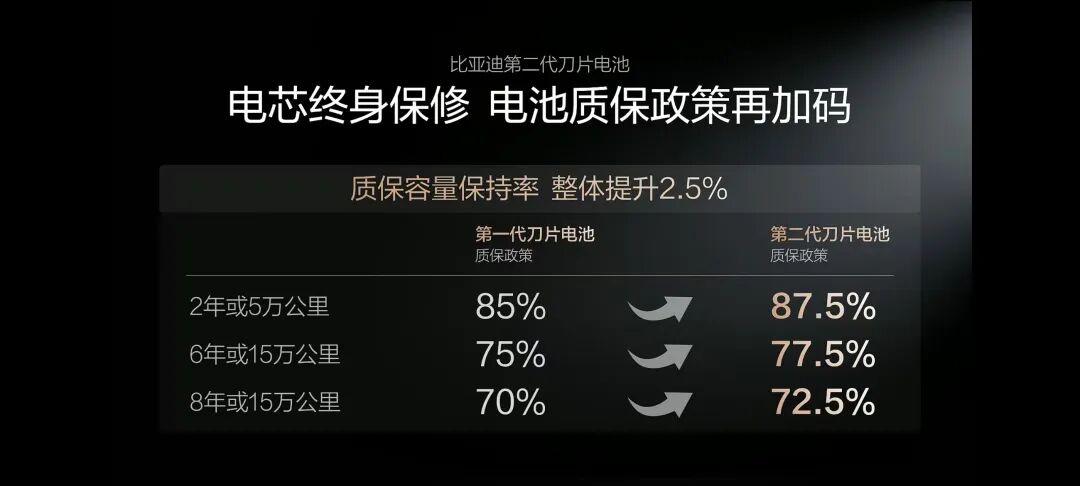
Ultra - fast charging accelerates the occurrence of lithium plating. At the same time, it also heats up the inside of the battery, increasing the instability of the electrolyte and thus affecting the lifespan. This is the key reason for the capacity attenuation of lithium batteries.
A decade ago, power battery technology was not very mature, and the battery management system (BMS) was quite mediocre. The core chips and algorithms were in the hands of overseas suppliers [1]. It was extremely difficult to solve the contradiction between ultra - fast charging and long battery life.
In the past decade, battery companies including CATL and BYD have carried out a lot of practices, such as building ultra - high - speed ion channels between the positive and negative electrodes and modifying the graphite negative electrode. The purpose is to allow lithium ions to be quickly intercalated and de - intercalated, greatly improving the impact of ultra - fast charging on battery life.
On the other hand, technological progress can only "improve" this impact and cannot completely eliminate it. Therefore, Li Bin's statement is also correct. As long as charging relies on the movement of lithium ions to do work, losses are inevitable, which is determined by physical characteristics.
Data from the research institution Geotab also proves this point. In a sample of more than 20,000 vehicles from 21 models, the average annual capacity attenuation of batteries is 2.3%. The annual attenuation rate of batteries that are frequently fast - charged (above 100kW) is twice that of those that prefer slow charging [2].
Theoretically, the batteries in NIO's battery swapping stations are charged slowly, so the battery attenuation will be slower. According to NIO's official statement, the attenuation rate of each battery in the swapping stations is strictly controlled below 15% [4].
In this case, even if the vehicle exceeds the 8 - year/160,000 - kilometer battery warranty threshold, the battery capacity can still remain at about 85%, far exceeding the current warranty standard.
In this framework, although new car owners may get an old battery when swapping, old car owners can get a new battery. The longer the vehicle is used, the greater the value of battery swapping.
In essence, BYD's flash charging and NIO's battery swapping do not have a relationship of mutual substitution.
No Life - and - Death Struggle
As the global new energy sales champion, BYD's market target is obviously to replace the fuel - powered vehicle market, which accounts for nearly half of the annual sales, rather than NIO, which sells just over 300,000 vehicles a year.
The architectures of BYD's flash charging stations and battery swapping stations are actually quite similar. Both are small - scale energy storage systems. Exaggeratedly speaking, BYD could directly skip charging and put the batteries from the energy storage system into the car, but then it would become a NIO battery swapping station.
In terms of experience, flash charging and battery swapping each have their own advantages and disadvantages. In real life, consumers don't only consider how fast the charging is when buying a car. The way of energy replenishment is neither the most important nor the most decisive factor in the car - buying decision.
From another perspective, for the two companies, battery swapping and flash charging are actually the products of their own business strategies.
In the early days, NIO invested heavily in building battery swapping stations. The core goal was to solve the problem that the charging efficiency was far inferior to the refueling experience. After 2020, the three - electric components of new energy vehicles entered a period of rapid technological progress, and the efficiency advantage of battery swapping has indeed weakened.
In the past, the biggest shortcoming of NIO's battery swapping stations was that the length and width of the battery packs were fixed. New models had to make some compromises to be compatible with the old standards.
In this situation, when upgrading models, the compatibility of battery packs must be considered. Once a new platform is adopted on a large scale, the old batteries in the swapping stations will become an asset burden, which may also damage the battery swapping experience.
Since the fourth - generation battery swapping stations, NIO's multi - brand battery swapping at the same station has gradually been implemented. The fifth - generation battery swapping stations based on flexible design are expected to have better compatibility.
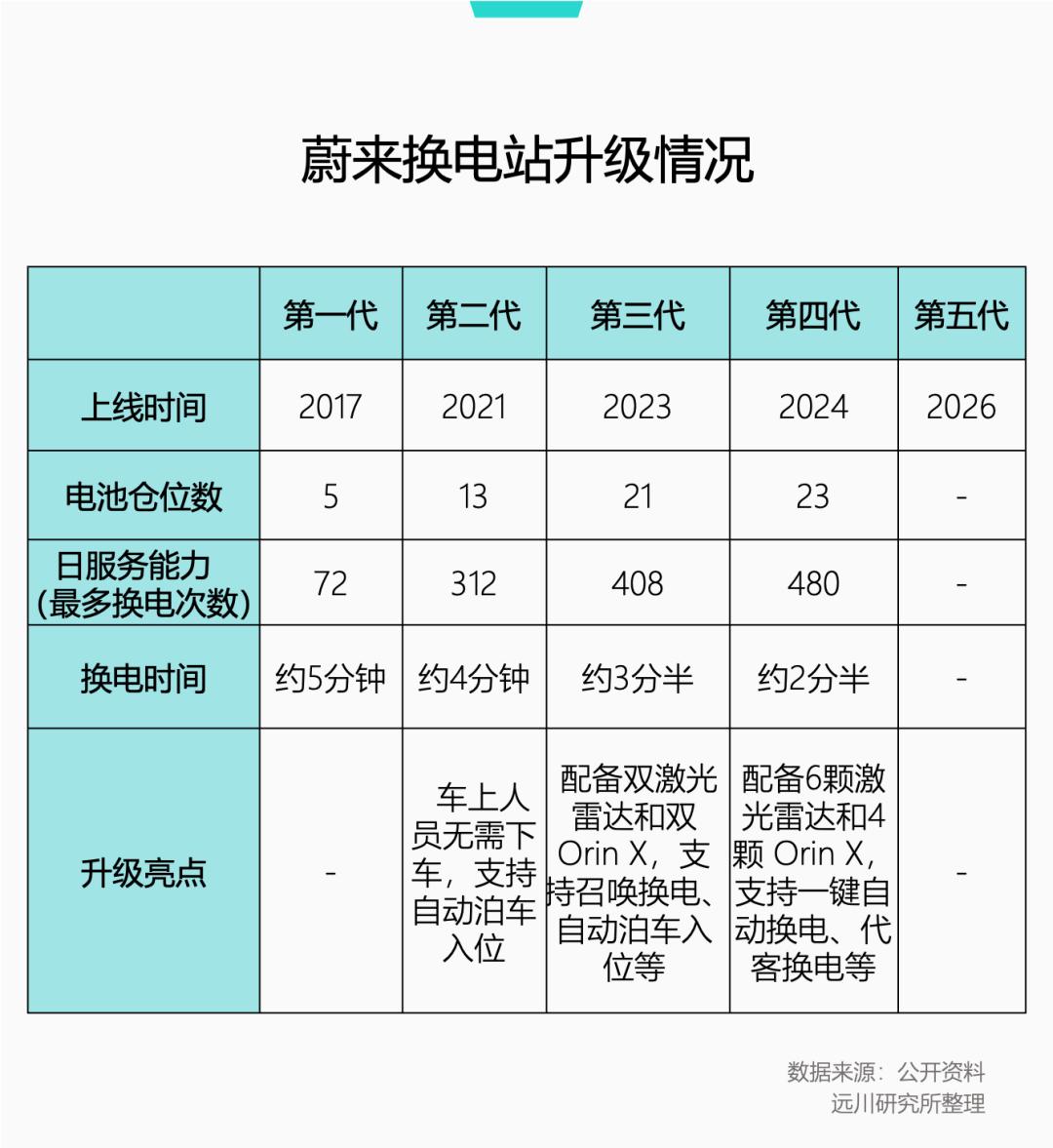
From an operational perspective, the battery swapping system brings more operational flexibility to NIO:
Firstly, separating the vehicle and the battery. Based on the BaaS model (Battery as a Service), the ownership and use rights of the battery are separated, which significantly lowers the threshold for buying a NIO vehicle and successfully boosts car sales.
Secondly, value - added services based on battery swapping. For example, in long - distance travel scenarios, a 150 - kWh large battery can be rented.
Thirdly, battery recycling. Since NIO has accumulated a large number of battery assets, the retired batteries can be used as energy storage batteries or recycled to extract precious metals.
BYD's purpose of developing flash charging is also clear. It not only wants to show off its technological strength but also has considerations for the high - end car market.
Over the past years, BYD has had few competitors in the market below 200,000 yuan. However, in the luxury car market above 200,000 yuan and even above 300,000 yuan, BYD has never been able to replicate the same dominance.
Therefore, we speculate that BYD's Flash Charging 2.0 also takes into account increasing the attractiveness of high - priced models and thus raising the overall average sales price of cars.
To achieve a megawatt - level (1000kW) charging speed, both ultra - high voltage and ultra - large current are required (P = U * I). The second - generation blade battery is available, and the flash charging stations are built. However, without the corresponding high - voltage architecture in the vehicle, the effect of flash charging cannot be realized.
The full - domain high - voltage architecture means an increase in vehicle costs, which objectively makes it difficult to cover the entire price range.
Therefore, since the release of the e - Platform 3.0 Evo in 2024, some of BYD's models have been upgraded to the full - domain 800V architecture. Last year, the Super e - Platform mainly featured the full - domain 1000V architecture, with the Han L and Tang L being launched first. All these are to lay the foundation for the large - scale promotion of flash charging stations this year.
Currently, the models using BYD's high - voltage platform architecture are mainly high - priced models such as the Han, Tang, Denza, and Yangwang. To experience the high - efficiency of flash charging, you can't buy a very cheap car.
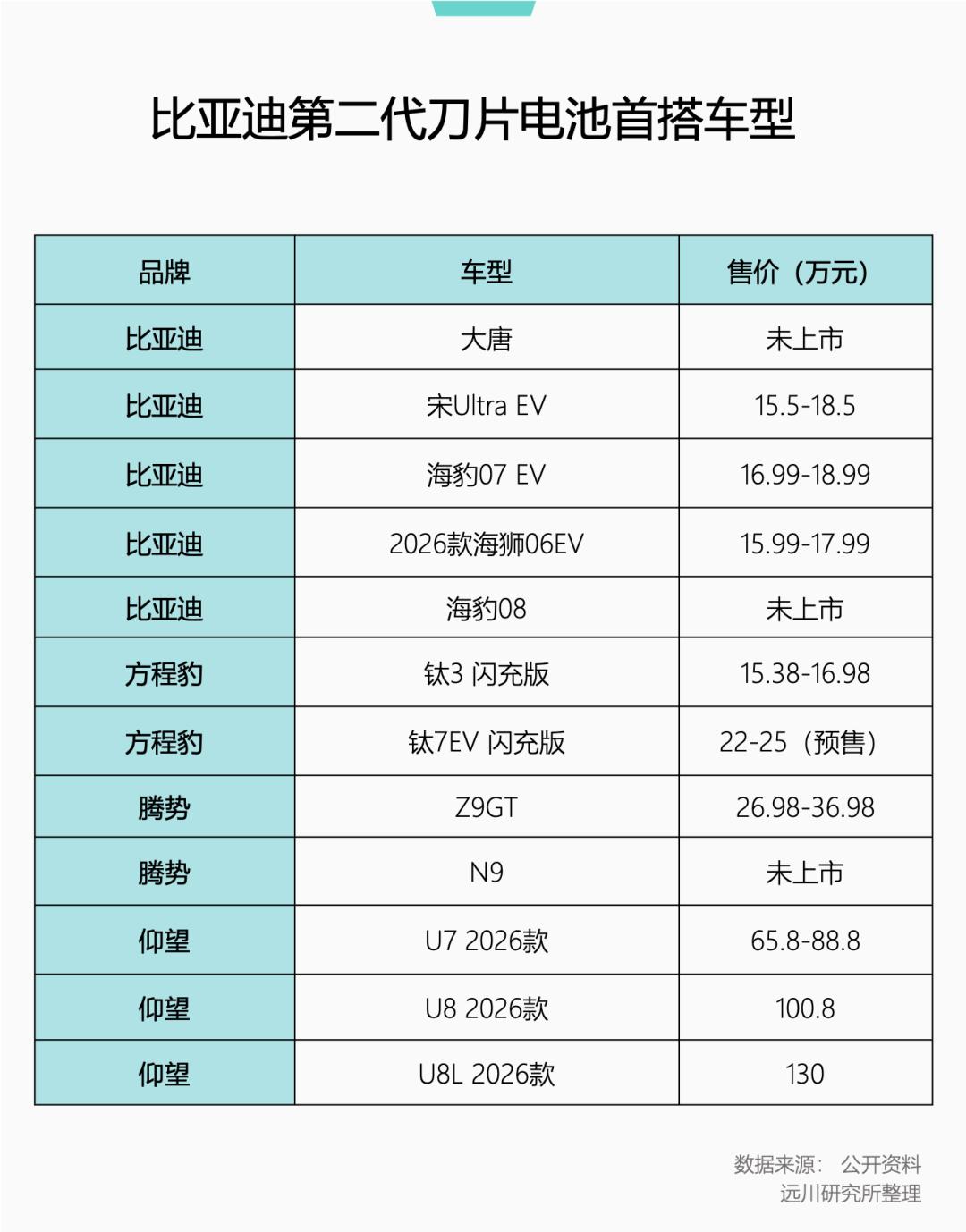
After BYD released Flash Charging 2.0, all new and old owners of the Han L and Tang L received a 366 - day free flash charging privilege without exception. However, the BYD Qin, which contributes 35% of the sales volume of the Dynasty series and sells 660,000 units a year, doesn't have this privilege.
Ultimately, there are differences in the energy replenishment efficiency between battery swapping and flash charging, but they are far from a relationship where one wants to replace the other.
After all, it's unlikely that NIO's past losses are mainly due to building too many battery swapping stations; and BYD's lack of presence in the high - end market is definitely not because consumers think BYD's charging is slow.
References
[1] How can battery swapping solve the problem of "different lifespans of the vehicle and the battery"? The complete transcript of NIO's Li Bin on CCTV's Dialogue, NIO
[2] China's New Energy Vehicle Power Battery Industry Development Report (2016)
[3] New Geotab data shows EV battery health remains strong as fast charging use increases, GEOTAB
[4] Unveiling the black technology behind NIO's battery swapping: It's not just about separating the vehicle and the battery, NIO
This article is from the WeChat official account "Yuanchuan Technology Review" (ID: kechuangych), author: Xu Shanshan. Republished by 36Kr with permission.